







Directory of North American nightclubs |
||
|
|
||
|
|
|
|
|
|
||

CALIFORNIA |
|

ILLINOIS |

MICHIGAN |

NEW JERSEY |

NEW YORK |
|
|
|
|
|
|
|
|


Directory of North American nightclubs |
||
|
|
||
|
|
|
|
|
|
||
|
CALIFORNIA |
|
ILLINOIS |
|
MICHIGAN |
NEW JERSEY |
NEW YORK |
|
|
|
|
|
|
|
|
Cuban music has managed to conquer so many hearts around the world that even many who were not born on the island have come to feel a great fascination for it. Such is the case of the bandleader and leader of Los Boleros Latin Band, Rudy Furlan, with whom we were able to talk for a few minutes about his career and his band.

Although Rudy was born in Guatemala, he moved to the United States when he was just three months old and has lived in the country ever since. His parents loved music and having parties at home, where various members of the family brought out guitars and broke into song to lighten the mood.
Most of his parents’ friends loved to sing boleros and the Latin classics of the time, which Rudy found pleasant and enjoyed musical activities of the adults around him to the point that he wanted to participate in those impromptu gigs within his means.
Soon after, he started taking guitar lessons at the age of nine, but it was at 16 that he started to take music more seriously and realized that he wanted to play the genres his parents always listened to such as bolero, cumbia, Cuban son, danzón, among others. Only drawback he found was that he could not find boys his age who wanted to play that kind of music, added to the fact that the communication possibilities that we enjoy today did not exist.
So, Rudy had no choice but to start forming small bands with kids who lived on his block and play rock and other local genres that were normally played back then. However, this whole situation changed when he placed an ad on Craigslist (online classified company). That is when he finally managed to get the people he needed to play what he finally wanted to play and how he wanted to play it.
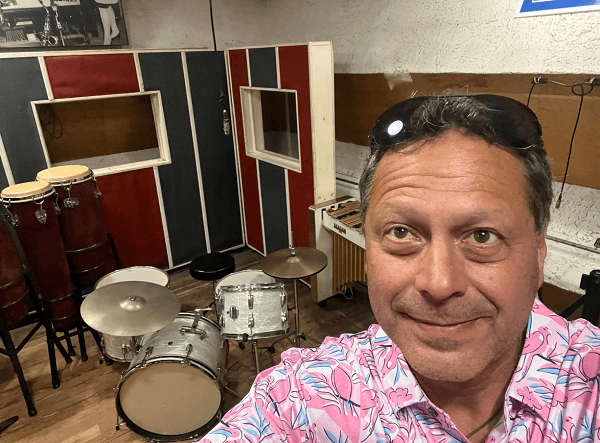
Rudy finally fulfilled his dream of playing his parents’ favorite music as an adult and managed to recruit a group which he named Los Boleros Latin Band. The artist chose this name as a tribute to the genre he liked to listen to since his childhood, plus he likes how the name sounds.
In the early 2000s, he set up the band’s website to have an internet presence, which was not very common for Latin bands in Northern California in those years. There was so much rock and soul in that area, but Latin music did not have the boom that it has acquired today.
Practically from day one, they managed to have a lot of work in many events, which led several talented musicians to contact Rudy to work with him. One of them is vocalist Felix Samuel, who comes from Cuba and joined Los Boleros Latin Band in 2009. Felix comes from a family of professional musicians, so it was easy for him to integrate into his family’s craft and exercise it with the same talent and momentum as his relatives.
Something interesting to say about Samuel is that his talent began getting noticed, so he was recruited by an HBO producer to soundtrack the film ‘‘Hemingway & Gellhorn’’ with Nicole Kidman and Clive Owen.
Another important member of the band is Zareen Tangerine, who is also a vocalist in the group and joined it in 2000, making her one of the first to join Los Boleros Latin Band.
Another fundamental part of the band is David Somers, who is currently the group’s saxophonist, although he also plays the flute to perfection.
Among other members, we can also mention bassist David Pinto, percussionist Dominic Cabrera and Oswaldo Carvajal, who also plays for La Moderna Tradición.
A few years ago, Rudy bought an album by Buena Vista Social Club, which he says changed his life completely and made him change direction in terms of the music. He listened to the material every day for months, to the point that he even memorized the songs and started playing them with his guitar.
When forming Los Boleros Latin Band, his musicians played many songs from that album and other great artists such as Eliades Ochoa, Ibrahim Ferrer, Compay Segundo, Omar Portuando and many others.
Those already mentioned were some of the greatest inspirations Rudy and the members of the band had for their project, this being the vision with which the artist wants to go on through time as far as possible.
Read also: Producer, composer, and guitarist Oscar Almonte innovates with Dominican music
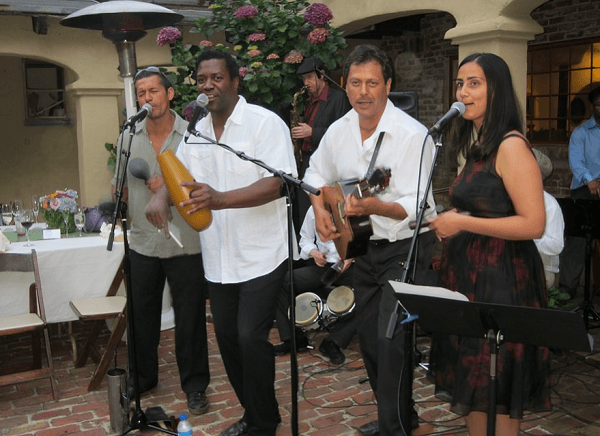
Once again, the Venezuelan talent in the United States is a source of inspiration for the subject of these lines and it is the turn of Venezuelan musician, sound engineer and DJ Eduardo Ron. The artist has kindly taken a few minutes of his time to answer our questions about his career and group, so here are the most important topics of our conversation.

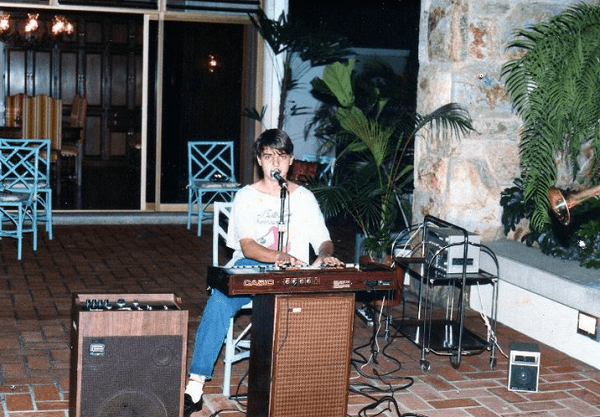
Since Eduardo was just a five-year-old boy, he proved to have a very capable hearing at home and already liked music very much, so his parents decided to enroll him in piano lessons, although he confessed that the instrument was not his thing. At school, he became part of bands with which he gradually found his preferred style and genres.
With these groups, he even competed in school band contests in Caracas, which are very common in the city. Over time, the only one of his close friends who ended up devoting himself to music was him, to the point that he became a ‘’one-man band’’ who took care of almost everything in his own musical project.
It was until 20 years ago where he began to include singers, percussionists and other musicians to be part of his group. That is when he changed the name to ‘’Fondo Blanco’‘, taking Eduardo’s last name, which is Ron (rum in Spanish), as inspiration.
From a very young, Eduardo always liked to have contact with the part of the audio and equipment, which led him to study sound engineering at the Taller de Arte Sonoro. In addition to that, although he loves percussion and masters it to some extent, he was a keyboardist and singer for many years. He is no longer doing either at the moment, as he has decided to devote himself entirely to music production, mixing and mastering.
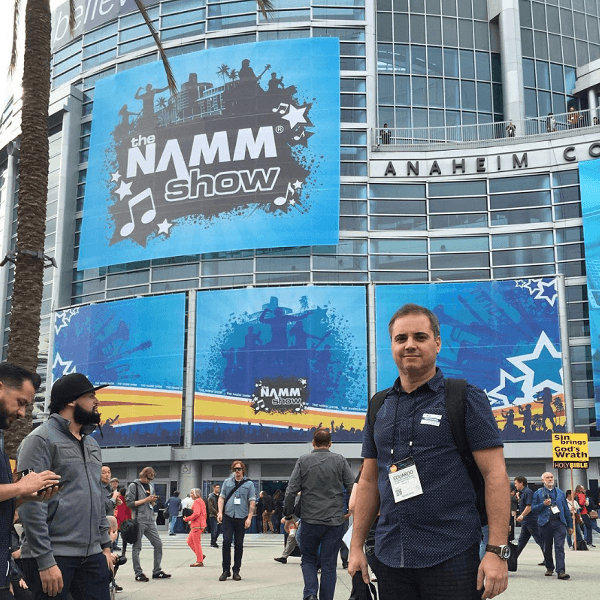
About 14 or 15 years ago, Eduardo decided to move to the city of Miami due to the political and economic situation in Venezuela at that time. For the same reason, he had no choice but to start from scratch with the project in these new lands and return to play, something he had not done for years, but the situation warranted.
The artist describes the Miami music market as complicated, since the competition is fierce. A huge advantage he had was that he studied English since he was very young, so the language issue was not a problem for him, but that did not make the other drawbacks easier to solve.
One of the first surprises Eduardo got was that, in Miami, he has done no more than 50 events a year, while in Venezuela he had as many as 140 in a year. This is because the market is gigantic and it is difficult to make a big name in it, not to mention that live orchestras do not have as many bookings as before due to cost reductions.
Two years later, he had already got new artists working with him and his situation had stabilized successfully, although the process was not easy. Moreover, even today, he cannot demand exclusivity from those who work with him because he does not have the economic muscle for that, so he has a long list of musicians whom he calls for certain events. One of the first ones he always calls is Army Zerpa, whom he described as one of the best bassists and arrangers he knows, which is why he has become a key person for his project.
Fondo Blanco has been fortunate to share the stage with great artists such as Oscar D’ León, Ricky Martin, Gilberto Santa Rosa, Marc Anthony, among others. Of course, the contact with these luminaries taught Eduardo many things and he assures that one of the best shows he offered was during a Santa Rosa concert, where there were more than 12,000 people. He assures that this is one of those days he will never forget.
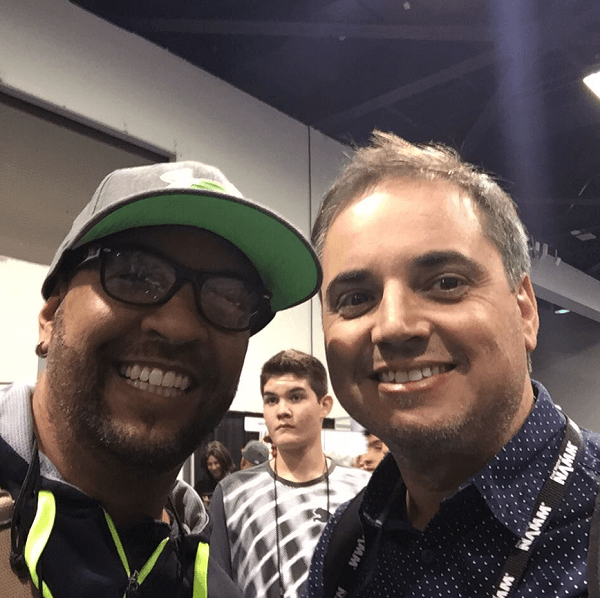
However, just as he has had very positive experiences as the previous one, obviously not everything is rosy. The Venezuelan told us that one of those not so good days was during a Ricky Martin concert, an event he had to open that day. It turns out that his equipment was damaged two hours before his turn and he had to try to fix it in front of the crowd of 30,000 people who came to see the Puerto Rican superstar, but nothing he did worked and the audience began to hiss.
That same day, Ricky Martin’s keyboardist asked him to borrow his keyboard because his was damaged and, when returning it, it was totally messed up and what Eduardo had there had been deleted.
Today, although he remembers this with humor, the experience was so unpleasant that it led him not to accept other proposals due to fear that the same thing could happen again. However, once these fears were overcome, he continued to play with his band and has managed to adapt to what the Miami market required both locally and internationally, which shows that the goals and targets should not be disregarded no matter however difficult the circumstances become and Eduardo Ron is a great example of that.
Read also: What a pleasure to talk to Pablo Pérez ‘‘El Alcalde de La Salsa’’
This song is part of his upcoming album “Sueño Alcanzado”, a production that will be released on May 30 and represents the culmination of years of musical research, fusing the classic salsa sound with jazz influences and the romantic tradition of boleros.
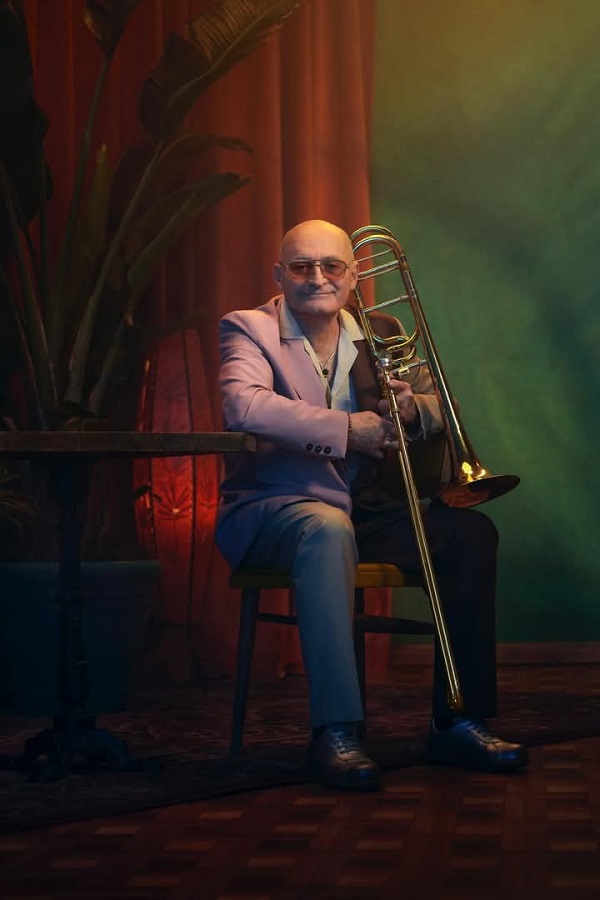
In “La Rumba Me Llama”, Dudamel brings his trombone to the forefront of a vibrant composition that captures the essence of the rumba as an inescapable call. With a musical structure that evokes the great salsa orchestras and an impeccable instrumentation.
The piece stands out for its meticulous arrangements, powerful brass and an irresistible cadence, faithful to the spirit with which Dudamel has approached his music. The track is an invitation to the dance floor and a testament to the rhythmic power that has defined his career.
The album Sueño Alcanzado not only takes its name from a personal concept of triumph, but also from one of his most significant pieces.
Dedicated to her son and with her special participation on violin, this piece encapsulates the spirit of a project that transcends the musical to become a testimony of life.
More than a nostalgic production, “Sueño Alcanzado”, of which the song “La Rumba Me Llama” is part, is the reflection of an evolution. The music that accompanied him since his childhood now takes a new form under his direction, in a creative process that has brought together talented musicians with whom he shares the same vision.
His orchestra, based in Madrid, has become the vehicle to continue taking his proposal to international stages, demonstrating that salsa is still alive in every note and every drum beat.
Oscar Dudamel Virtuoso Musician, Trombonist and Orchestra Conductor.
Oscar Dudamel, a Venezuelan trombonist, discovered his passion for salsa as a child when he first heard “La Murga” by Willie Colón. Although his formal musical training began with Maestro Pablo Canela and later continued within El Sistema as a classical musician, that early experience left a profound mark on him, inspiring his dream of playing the trombone and solidifying his love for salsa as his ultimate passion.
Dudamel was born on January 14, 1961, in Barquisimeto, Venezuela. He grew up in a musical family where every gathering was celebrated with music, fostering his passion for the art from a young age. His parents purchased him a trombone, and he began his studies at the Yamaha Music Academy.
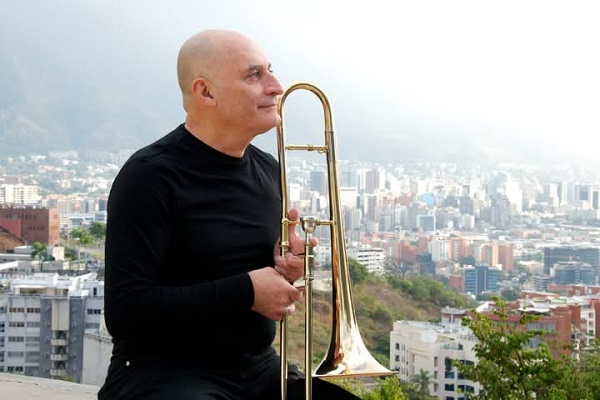
In addition to his Cuatro training, Dudamel began studying and playing various percussion instruments, further broadening his musical repertoire.
His academic training took place at the Lara State Conservatory in Barquisimeto, and at the National System of Youth and Children’s Orchestras and Choirs of Venezuela, also known as El Sistema.
During his teenage years, he became a member of the Youth Orchestra of Lara State (El Sistema Lara) and the Liceo Mario Briceño Iragorry Band, where he had the opportunity to expand his musical knowledge and explore various genres.
Over the years, he became a member of the Lara Youth Symphony Orchestra of Lara, part of the national network of Venezuela’s El Sistema orchestras, actively participating in classical music.
However, his fascination with the Caribbean rhythms of salsa never disappeared. Thus, he combined his classical training with his passion for salsa, performing with renowned artist and sharing the stage with legends of the genre, such as Héctor Lavoe, Ismael Rivera, Ismael Miranda, Celia Cruz, Justo Betancourt, Marvin Santiago, and other great artists.
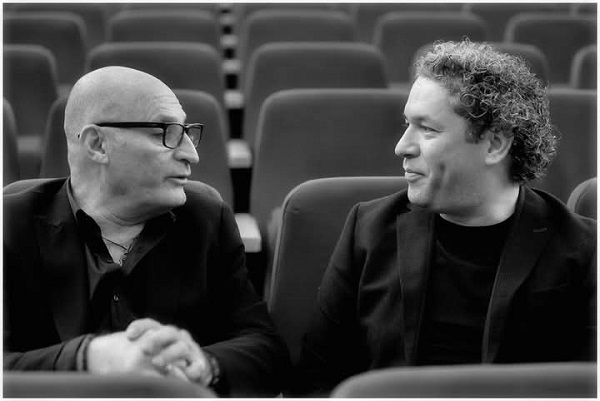
Dudamel’s surname is synonymous with music. He is the father of Gustavo Dudamel, one of the most acclaimed classical music conductors in the world. Gustavo’s well-known fondness for salsa stems from his father, who recently fulfilled his lifelong dream of releasing a solo album titled Sueño Alcanzado, dedicated to his son.

Research Sources:
Contact: Katie Baloian of Radio Notas (Compartiendo Ideas)
Alberto Crespo (Pianist and Arranger)
Also Read: Mariana “The Sonera of Venezuela and for the world”

As the curtain rose at the historic Alejandro Tapia y Rivera Theater in Old San Juan, the stage design by José “Quenepo” Ramos Vega, which revealed two transparent fabric borders held in the middle by an imposing white star, caught the attention of the audience. The red of the triangle of the Cuban flag was represented by the pendant unfurled to the left of the star, while the cloth representing the Puerto Rican flag was held on the right hand side of the same star. The inspiration of the design demonstrates that the Cuban and Puerto Rican flags are fraternal twins.
The opening lyric that resounded in the theater, which was filled to capacity, with the vocal power of Aymée Nuviola read: “A little bit of good salsa, a little bit of pure salsa, so that new people, get to know our culture”. From then on, the music obeyed Nuviola’s command, singing: “Let the clave get into your body, let the conga and the bongo move the floor”. Sure enough, three hours later we were still letting the stage delivery of the musical team continue to move the floor. Pete masterfully directed: Jean Carlos Camuñas on tumbadoras, Carlos Pagán on bongó, campana, güiro and maracas, Miguel Camilo on piano, Jorge Rivera on bass, Pedro Marcano and Víctor Ambert on trumpets, César Ayala and Léster Pérez on trombones and Saviel Cartagena on tenor and soprano saxophones.
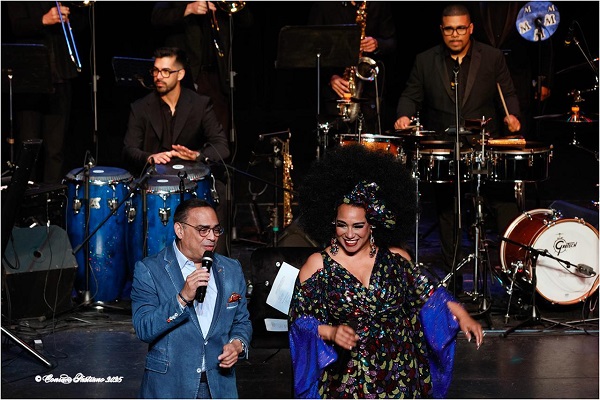
That first conversation with the audience served to connect with a: “we are survivors”, in clear reference to the COVID-19 pandemic, shortly before quoting Celia Cruz saying: “As Celia said so well: ‘Thank you Puerto Rico, for lending me your flag’. She also recognized actor Willy Denton, who played Pedro Knight when Aymée impersonated Celia Cruz in the soap opera Celia and who was among those present.
Nuviola boasted of having reached the fifth floor, as she recounted that she was going to record her version of ‘El ratón’ with Cheo Feliciano, whose unexpected death thwarted the long-awaited collaboration. However, Aymée decided to record it anyway, in order to pay tribute to Señor Sentimiento. The evening’s repertoire included: ‘Un poco de salsa’, ‘Salsa con timba’, ‘Yo sé que es mentira’, ‘El ratón’, ‘La tierra del olvido’ and ‘La gota fría’.
Many remember Aymée for her character of Celia Cruz in an acting performance that marked “a before and after” in the singer’s career. This was acknowledged by the actress, shortly before paying tribute to Celia, with her versions of ‘Cúcala’ and ‘Quimbara’, in addition to performing a medley of some of the songs with which Celia was crowned the Queen of Salsa. The medley included ‘Toro mata’ and ‘Bemba colorá’, among others.
The concert included a bohemian part during which Aymée accompanied herself on the classical piano to share with us her passion for the filin. The selected repertoire was: ‘Obsesión’, ‘Bésame mucho’, ‘Me faltabas tú’, ‘Perfidia’ and ‘Lágrimas negras’.
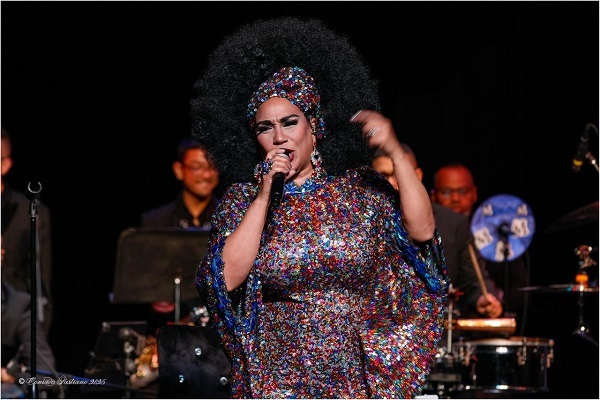
The climax of the concert came as the sonera took off ‘El cuarto de Tula’, Gilberto Santa Rosa -who was among the attendees- went up on stage to duet with Aymée, between each soneo to describe the scope of the talent of the Cuban who gave her sonero heart to Puerto Rico. El Caballero de la Salsa was also able to tell La Sonera del Mundo the fascination that the Puerto Rican public has for her. For their part, Aymée’s soneos expressed to Gilberto the admiration she has for him for being “a great maestro”.
The repertoire of this last section included the songs ‘Fiesta’ and ‘El manisero’, which incorporated correspondences between the singer and the pianist. The coda of ‘El manisero’ coincided with the closing of the curtain, while the audience shouted “another, another, another”. The ñapa corresponded to ‘Chan chan’, a song included in the album that won Nuviola a Grammy for his production A Journey through Cuban Music. The interpretation was sprinkled with the strength brought by the trumpets of Pedro Marcano and Víctor Ambert, along with the trombones of César Javier Ayala and Léster Pérez. Chan Chan’ announced the farewell with which Aymée Nuviola’s energetic “God bless Puerto Rico” resounded as the curtain came down on her first solo concert on Puerto Rican soil. For my part, I reciprocate: “God bless Aymée Nuviola and her team (including Paulo Simeón and Luis Solís)”.

Images: Conrado Pastrano
Also Read: Mel Martinez I come from Puerto Rico and Puerto Rico is Salsero