• Skip to primary navigation
  • Skip to main content

International Salsa Magazine

  • HOME
  • Previous editions
    • 2026
      • ISM / April 2026
      • ISM / March 2026
      • ISM / February 2026
      • ISM / January 2026
    • 2025
      • ISM / December 2025
      • ISM / November 2025
      • ISM / October 2025
      • ISM / September 2025
      • ISM / August 2025
      • ISM / July 2025
      • ISM / June 2025
      • ISM / May2025
      • ISM / April 2025
      • ISM / March 2025
      • ISM / February 2025
      • ISM / January 2025
    • 2024
      • ISM / December 2024
      • ISM / November 2024
      • ISM / October 2024
      • ISM / September 2024
      • ISM / August 2024
      • ISM / July 2024
      • ISM / June 2024
      • ISM / May 2024
      • ISM / April 2024
      • ISM / March 2024
      • ISM / February 2024
      • ISM / January 2024
    • 2023
      • ISM / December 2023
      • ISM / November 2023
      • ISM / October 2023
      • ISM – September 2023
      • ISM – August 2023
      • ISM July 2023
      • ISM Edition June 2023
      • ISM – May 2023
      • ISM April 2023
      • ISM March 2023
      • ISM February 2023
      • ISM January 2023
    • 2022
      • ISM December 2022
      • ISM November 2022
      • ISM October 2022
      • ISM September 2022
      • ISM August 2022
      • ISM July 2022
      • ISM June 2022
      • ISM May 2022
      • ISM February 2022
      • ISM January 2022
    • 2021
      • ISM December 2021
      • ISM November 2021
      • ISM October – 2021
      • ISM September 2021
      • ISM August 2021
      • ISM July 2021
      • ISM May 2021
      • ISM April 2021
      • ISM June 2021
      • ISM March 2021
      • ISM February 2021
      • ISM January 2021
    • 2020
      • ISM December 2020
      • ISM November 2020
      • ISM October 2020
      • ISM September 2020
      • ISM August 2020
      • ISM July 2020
      • ISM June 2020
      • ISM May 2020
      • ISM April 2020
      • ISM March 2020
      • ISM February 2020
      • ISM January 2020
    • 2019
      • ISM December 2019
      • ISM November 2019
      • ISM October 2019
      • ISM Septembre 2019
      • ISM August 2019
      • ISM July 2019
      • ISM June 2019
  • Spanish
  • Download Salsa App
    • Android
    • Apple

Search Results for: tropical

Omar Negron

USA / Florida / Tampa

Omar Negron, The Virtuoso of Trumpet and Percussion

Omar Negron was born in San Juan, Puerto Rico, on March 3, 1972. Music came into his life as a family legacy.

Omar Negron
Omar Negron

From the age of 3 he began to play percussion “las pleneras y el bongo”, guided by his maternal grandfather, his paternal grandfather who was also a musician and cuatro player and his grandmother who sang Puerto Rican trova.

At the age of 7, he entered the Carolina School of Music where he learned to read music to interpret it in percussion, which he had already mastered.

The first witnesses of his talent were his classmates at the Angel Ramos de Country Club elementary school in San Juan P.R, where he was part of the central show in several of the school activities, in some of them even imitating the singer Oscar de León. .

At the age of twelve, while attending his regular studies, he was alternately accepted at the Ernesto Ramos Antonini Free School of Music in San Juan.
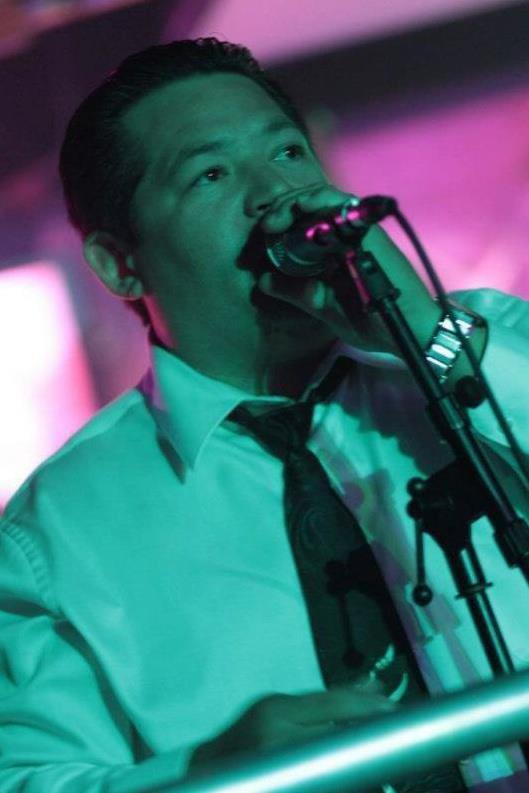
Omar Negron
Omar Negron singing

There he began to study Trumpet since there was no room for percussion.

However, the percussion teacher allowed him to be part of his class, so he (Omar Negron) studied Trumpet and Percussion simultaneously.

Proven his talent, Omar Negron had the opportunity to be part of the School’s dance band, where he began playing Bongo and years later he would play Trumpet.

He was part of some talent competitions where he ranked first as a singer.

Upon graduating from the Escuela Libre de Música, Omar Negrón received the Rafael Hernández medal for his versatility playing different instruments, including his voice.

His musical career

At just 16 years old, Omar Negron makes his first professional recording as a singer, thanks to an opportunity he received from Mickey Cora and his Cabala Orchestra, where he was able to record and perform the songs: “Wanting to Live With You” and “We Will Always Be Friends” .

Omar Negron
Omar Negron

In 1990, Omar Negron was recruited by the Conjunto Chaney after the departure of the singer José Cheo Andújar.

A year later he made his first recording with the Ensemble, in the production entitled “Somos Amigos” where he performed the song “En Trance”.

Omar made three more productions with the Chaney Ensemble under the Hit Makers record label, but unfortunately none were released.

In 1994, Chaney made a recording with the Musical Production label, entitled “La Escuela de la Salsa”, where Omar recorded the songs: “I’m back”, “Impulsos”, “I fell in love”, “You are the vice”, ” Gaining Sensuality”, among others. This production earned them several awards including a Gold Record and an ACE Award.

It was a season of success and presentations in Europe, the United States, Central America and South America.

In 2004 he was invited by maestro Willie Rosario to be part of his orchestra after the departure of singer Rico Walker.

Opportunity that he enjoyed for three years and allowed him to gain experience as a son player and interpreter of many of his hits.

However no new recordings were made during that season.

In 2013 he launched himself as a soloist with the song: “No Son Juguetes”, composition and arrangement by Frank Poupart, a song that was widely accepted among the fans of romantic salsa in Puerto Rico, the United States, the Canary Islands, Venezuela, Panama, Colombia. among others.

Then he recorded the song by Ricardo Montaner and Jorge Luis Chasin “Bésame” which made him the winner of two Fox Music Awards in the city of Houston, Texas.

The same theme was placed number one on the Italian and Swiss tropical music radio charts.

A year later, he recorded “Waiting for you” written by Jesse Villareal and arranged by the great experienced arranger Tommy Villarini.

This single allowed him to open doors in countries like Belgium, Turkey, and Germany in addition to the United States, Central and South America, especially in Panama where his music is well accepted.

In 2016, with much more accumulated experience and with the help of a new work team, Omar Negron launches his new single entitled “Por Si Mañana”, composed by Jorge Luis Piloto and arranged by Ramón Sánchez.

This song is the Salsa version of the ballad recorded by the well-known Colombian group Mojito Lite.

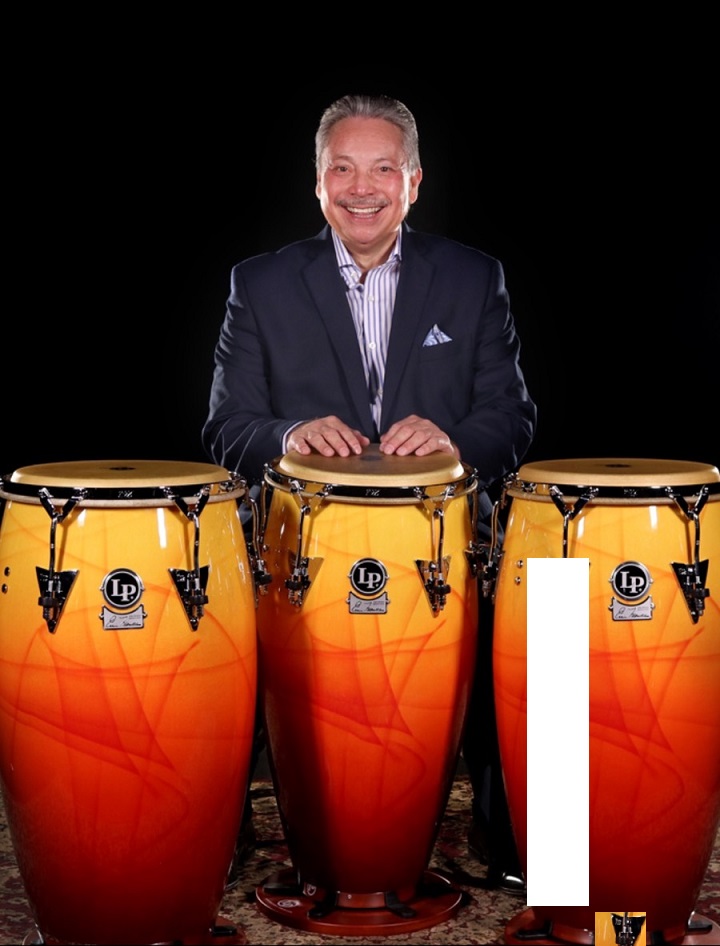
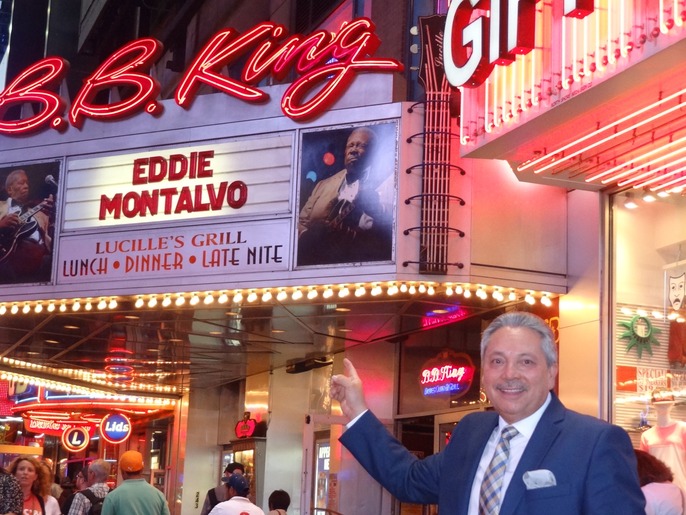
Eddie Montalvo

USA / New York / New York 

Eddie Montalvo, Was a personal friend of the singer and legend of Afro-Caribeña music Héctor Lavoe

Eddie Montalvo
Eddie Montalvo

Eddie Montalvo, two time Grammy award winner, born and raised in the South Bronx of New York City, descendent of Puerto Rican roots, found his passion for music at very early age.

His parents Leonardo and Carmen instilled in Eddie the richness of Latin music and the heritage of their Puerto Rican culture.

During his high school years, he ventured in the school band and decided to become a conga player.

In 1970 at the age of 17, Eddie’s first professional show was with Joey Pastrana which led to another show with Tony Pabon & La Protesta and Ernie Agosto y La Conspiracion.

Then immediately after studio recordings commenced with La Conquistadora de Martin Galagarza, Tony Pabon y La Protesta.

Then in 1976 Eddie joined the band Los Kimbos of Orestes Vilato as the band’ conga player.

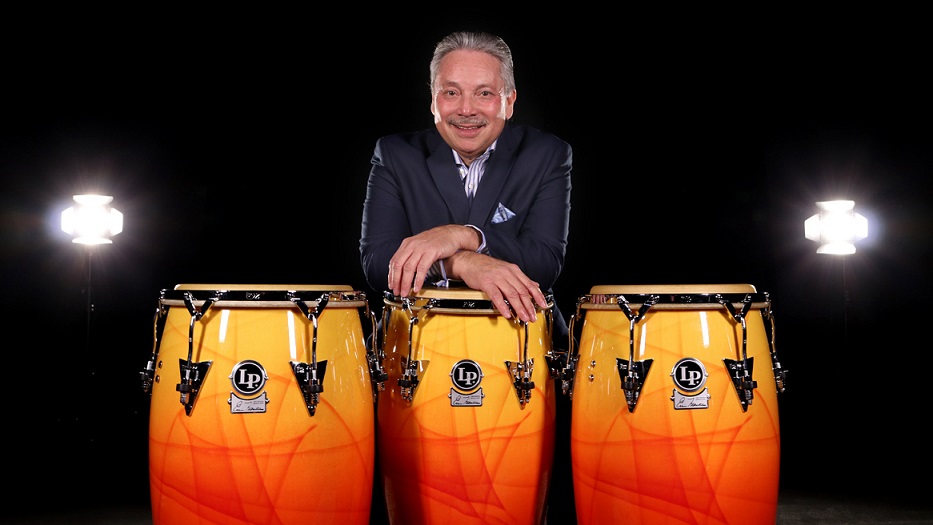
Eddie Montalvo and his congas

Montalvo’s distinctive and unique conga playing was spreading like wild fire among his peers and in the music industry which consequently led his endorsement in 1976 by the instrument company Latin Percussion and recordings with Luis Perico Ortiz, Nicky Marrero, Jose Fajardo, Pupi Lagaretta, Luigui Texidor, Los Kimbos, Hector Casanova, Santiago Ceron and renown artists such as Celia Cruz, Hector Lavoe, Fania All Stars and Juan Luis Guerra and with Johnny Pacheco where Eddie was a member of his band for two years.

Eddie has had the privilege to record in over 200 productions for renown artists, as well as up and coming artists.

In 1977 Eddie had the honor of joining the band of one of salsa’ greatest artists, Hector Lavoe. Not only did Eddie successfully embraced the roll of conga player with Hector Lavoe’s band, but also did back up chorus for him as well.

While his time with Lavoe, Montalvo was hired to record on the album “Siembra” with renown artists, Willie Colon and Ruben Blades which sold over 25 million copies worldwide and became one of the most prestigious Salsa productions of all times.

In 1979 Eddie proceeded to audition and became the youngest member of the renown Salsa band, Fania All-Stars.

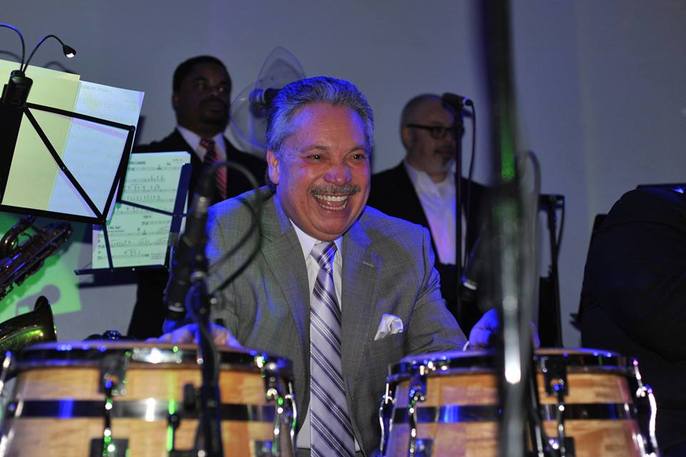
Eddie Montalvo on stage

After numerous accolades, worldwide notoriety and sold out concerts, today Fania continues bringing to the world the very best of Salsa of which Eddie continues being a member and is about to embark on Fania All Stars 2013-2014 World Tour.

During this time it’s when the opportunity of a lifetime presented itself. Ruben Blades approached Eddie in 1983 to join his world renown group, Seis del Solar.

After a series of successful tours around the world, Eddie recorded on the 1986 Grammy award winning album “Escenas” with Seis del Solar.

Then in June 2009, Ruben Blades reunited the Seis del Solar for the 25th Anniversary of Buscando America in an ambitious tour of the Americas.

Culminating  with the world tour of  Todos Vuelven in 2010 which earned Eddie a Latin Grammy win in 2011 for the live recording of Todos Vuelven Live Vol 1 & 2.

Eddie Montalvo also had the privilege of performing with Ruben Blades and Sting at the Amnesty International in Santiago, Chile.

Eddie Montalvo has achieved many goals and one of them was to record his first production titled On My Own in 1995.

He also had the privilege of participating in a supporting roll in the 2006 movie “El Cantante” based on the life of his personal friend and Salsa legend, Hector Lavoe, and also recorded in the sound track of the Broadway play The Capeman with Paul Simon.

In August 2012, Eddie Montalvo finally launches his new recording project titled “Desde Nueva York a Puerto Rico”.

Eddie Montalvo
Eddie Montalvo

This amazing production is a master piece in the making which was brilliantly produced by Eddie Montalvo and Jose Lugo, which has gathered some of Salsa’ greatest like: Ruben Blades, Cheo Feliciano, Willie Rosario, Papo Lucca, Domingo Quiñones, Rico Walker, Issac Delgado, Wichy Camacho, Pichie Perez and Tito Gonzalez.

Since Nueva York a Puerto Rico took the music industry by storm and earned Eddie an American Grammy nomination on February 2013 for Best Tropical Latin Album.

The first single of the album titled El Hijo del Ricachon featuring Ruben Blades received airplay in the Northeast and Puerto Rico.

The following singles Caonabo featuring Cheo Feliciano and Abicu featuring Tito Gonzalez are currently receiving airplay in Puerto Rico and throughout the Northeast of the U.S with much success.

This is one production all hardcore Salsa lovers cannot miss. Eddie is also presently showcasing and featuring his talent with Jazz artists like Lou Caputo, Dave Chamberlin, Joe Battaglia and Pucho & Latin Soul Brothers.

As one of the most sought after conga players, Eddie will continue to build his legend as a skilled clinician who shares his limitless knowledge of music to congueros and percussionists around the world.

Latin America – November 2019

“My best inspiration and my best teacher is my dad.” Inheritance, discipline and academic training forged the Padilla dynasty that empowers salsa.

Robert and Ricardo Padilla have a fundamental importance within the musical movement we know as salsa. The father is a historian, curator and consultant. The son is a journalist, producer and broadcaster.

The role of Robert Padilla, who tropical music connoisseurs consider the most important salsa collector in the world, is unrepeatable, as he weaves together history, characters, facts and archives; delivering a holistic approach to salsa as a concept.  His motivation is pure interest in preserving and spreading the culture.

The relevance of the museum that he conceived and guarded is unquestionable. He acquired the property and fitted out the building with the required specifications and ambience with the purpose of having a repository that keeps the salsa memory alive and in force.

When Ricardo was asked if his father influenced his training in the preservation of the musical archive, his successor answered: “That’s right. My dad and I have many things in common; among them, we love salsa. I grew up watching my dad play records and listen to music. But, my grandfather also had an influence because during the 1940s and 1950s, (the golden era of the Palladium, with Tito Rodriguez) Don Hector Padilla Rosado (RIP) had bodegas in New York.

My grandfather was part of what was happening there and danced mambo in that environment. My grandfather told me all that story and my father repeated it to me (…) the Padilla family would not be the Padilla family if we did not talk about my grandfather, Don Héctor. So we are three generations that in one way or another have dedicated ourselves to supporting music because it has changed our lives for the better.”

Robert Ricardo
My best inspiration and my best teacher is my dad.” Inheritance, discipline and academic training forged the Padilla dynasty.

Ricardo considers his father the biggest fan of salsa.  “Beyond being a historian, he is the number one salsa fan. My dad has the largest collection of tropical music in existence.” That collection includes records in different formats, photographs, memorabilia, videos and audios of live shows, all documented and classified. Recently to his already incalculable collection was added that of Don Mariano Artau (RIP), who was collecting and curating unique musical treasures for more than seventy years.

In Ricardo’s case, he studied Journalism at the University of Puerto Rico, Rio Piedras Campus. What the father began as a hobby, the son saw as a profession. The gratitude and admiration he has for his father is evident when he says: “I thank my dad (…) all those concerts he took me to as a child formed me. And all those people he connected me with, later became mentors for what I do today as a Salsoul programmer.” And he adds: “my greatest inspiration and my best teacher is my dad; and he will continue to be so in every sense of the word”.

Speaking of orchestras, the salsa sound that Robert favors is that of the duo that popularized Willie Colón and Héctor Lavoe. For his part Ricardo affirms: “I say that Willie Rosario doesn’t have a bad album. He is a role model; being true to himself, molding a sound supported by great arrangers that he himself chose to refine that style.

He is so special in so many areas (…) So much so that even his life has been compiled in a book, and at 99 years of age, without having the need to play, he continues to do so because music is not necessarily something that only generates money for him; it is something that generates motivation to continue living. Without detracting from Don Rafael Ithier with his mulatos, or Don Papo Lucca with that southern giant, or the orchestra of the King of the bass, Don Willie transcends music and is an example of how to live”.

Robert Ricardo
Robert and Ricardo Padilla have a fundamental importance within the musical movement known as salsa

The Padilla’s, organically; to the succession they added a good dose of discipline and polished themselves with the commitment to take their musical training -which has not yet culminated- seriously, becoming the most admired influencers of salsa.

This dynasty is committed to their self-imposed mission of excellence. They say goodbye as a team and almost in unison affirm: “we are at your service”. I responded gratefully with “we’re still in salsa”, knowing that neither Puerto Rico nor the salsa world can repay this dynasty for the monumental contribution to the culture and musical history of this archipelago that has been the cradle of the greatest exponents of salsa, which the Padillas empower by sharing these stories of Puerto Rico with the world.

Robert Ricardo
Ricardo Padilla Award

Read Also: 45 years of salsa career of ‘el más que canta’ was in style

Bella Martinez ISM correspondent – Puerto Rico

Life, Career, and death of Juan Carlos Formell

Juan Carlos Formell

Latin entertainment is in mourning the departure of one of its most talented figures, who leaves a very big void in all his followers and fans. We are talking about former composer, bassist, guitarist and member of Los Van Van Juan Carlos Formell, who sadly departed from this world on Friday, May 26th after a live performance in New York City.

In view of such an unfortunate loss for those of us who have spent years of experience promoting Latin music in all four corners of the world, we consider it appropriate to recall the most important moments in the life and career of this extraordinary artist and all that he contributed to the salsa movement during his lifetime.

Juan Carlos Formell died on May 26th
Juan Carlos Formell died on Friday, May 26th after a live performance in New York City

Story of Juan Carlos Formell

Juan Carlos Formell was born in the city of Havana on February 18, 1964 and was the son of Juan Formell and Natalia Alfonso. He was the oldest of three brothers who would also dedicate themselves to music.

Contrary to what people might think, the fact of belonging to the fourth generation of a musical family and being the son of world famous bassist Juan Formell did not make things easier for him on the path with music. When he was barely three weeks old, he was sent to live with his grandparents in the outskirts of the Havana city.

They were through many financial needs and Juan Carlos himself would admit in an interview years later that other children used to make fun of him for having holes in his shoes, but that did not make him desist from his dreams, far from it. He became interested in music at a very young age, which led him to train professionally at the Alejandro García Cartula Conservatory and the Amadeo Roldán Conservatory. 

In the 1990s, he concluded his studies at the National School of Arts in Cuba with almost three decades of life, so he made the decision to move to New York City to fully exercise his career as a musician. Before this, Juan Carlos had already accompanied several jazz orchestras on stage, but Cuban authorities banned him from traveling due to his regular yoga practice (considered subversive in his native country).

Since he could not leave Cuba directly, he had to use a tour with the Rumbavana orchestra in Mexico to cross the Rio Grande in Texas and later settle in New York. His process of adapting to this new country was not easy from any point of view, but it was all so worth it.

From then on, what came was success for the artist. During the course of his solo career, he recorded some five solo albums, one of which earned him a Grammy nomination in the category of Best Traditional Tropical Latin Performance in 2000.

Juan Carlos Formell at PiPiKi Studios
Juan Carlos Formell recording at PiPiKi Studios

Entry into Los Van Van

Los Van Van is one of the most important Cuban musical groups of recent times, which was founded by Cuban bassist Juan Formell, Juan Carlos Formell’s father. After having participated in several son and jazz groups, the musician decided it was time to innovate and change the style he was using until now.

It was then that he decided to incorporate new instruments and voices, which gave rise to a completely different concept baptized as Los Van Van and that gave much to talk about among critics of the time, and for the better.

After a very successful career in the group, Juan Formell died on May 1, 2014 at the age of 71 as a result of a heart attack during a concert in his hometown, Havana.

This unfortunate event is what led his son, Juan Carlos Formell, to join Los Van Van as a bassist. His brother Samuel was on the drum kit and his sister Vanessa was on backing vocals, so it can be said that this was a bit of a family business.

Since that moment, the intense activity that he had together with the rest of the group in performances, concerts and new songs earned him the recognition of the public in a very short time.

In spite of carrying the fame of his father on his shoulders, he did not let this stop him or be a limiting factor for him. On the contrary, he always left his family name and his father’s legacy high.

Unfortunately, 10 years passed before the artist left a huge void among those who respected and loved him.

Juan Carlos Formell on stage
Juan Carlos Formell performing on stage

Death

On May 26 of this year, Los Van Van was performing at the Lehman Center for the Performing Arts in New York. About 40 minutes after the start of the concert, Juan collapsed on stage in front of all the attendants.

Minutes later, he was aided by ambulances and a fire truck. He was then taken to the nearest health-care center, but unfortunately the doctors could do nothing for him. This is how his bandmates announced the sad news through their social networks.

At the end of the concert, Eduardo Livia himself confirmed the death when he walked off the stage and greatly regretted what happened. The cause of death was determined to be a heart attack and his life came to an end at the age of 59.

After this, the group continued with the rest of the tour they had planned and the performances they had outstanding were in honor of the great Juan Carlos Formell and all that he gave to music during his life.

Read also: Khary Rios and Mayra Rivera from La Poderosa 360

  • « Go to Previous Page
  • Page 1
  • Interim pages omitted …
  • Page 19
  • Page 20
  • Page 21
  • Page 22
  • Page 23
  • Interim pages omitted …
  • Page 50
  • Go to Next Page »

International Salsa Magazine (ISM) is a monthly publication about Salsa activities around the world, that has been publishing since 2007. It is a world network of volunteers coordinated by ISM Magazine. We are working to strengthen all the events by working together.