• Skip to primary navigation
  • Skip to main content

International Salsa Magazine

  • Home
  • Previous editions
    • 2026
      • ISM / January 2026
      • ISM / February 2026
    • 2025
      • ISM / December 2025
      • ISM / November 2025
      • ISM / October 2025
      • ISM / September 2025
      • ISM / August 2025
      • ISM / July 2025
      • ISM / June 2025
      • ISM / May2025
      • ISM / April 2025
      • ISM / March 2025
      • ISM / February 2025
      • ISM / January 2025
    • 2024
      • ISM / December 2024
      • ISM / November 2024
      • ISM / October 2024
      • ISM / September 2024
      • ISM / August 2024
      • ISM / July 2024
      • ISM / June 2024
      • ISM / May 2024
      • ISM / April 2024
      • ISM / March 2024
      • ISM / February 2024
      • ISM / January 2024
    • 2023
      • ISM / December 2023
      • ISM / November 2023
      • ISM / October 2023
      • ISM – September 2023
      • ISM – August 2023
      • ISM July 2023
      • ISM Edition June 2023
      • ISM – May 2023
      • ISM April 2023
      • ISM March 2023
      • ISM February 2023
      • ISM January 2023
    • 2022
      • ISM December 2022
      • ISM November 2022
      • ISM October 2022
      • ISM September 2022
      • ISM August 2022
      • ISM July 2022
      • ISM June 2022
      • ISM May 2022
      • ISM February 2022
      • ISM January 2022
    • 2021
      • ISM December 2021
      • ISM November 2021
      • ISM October – 2021
      • ISM September 2021
      • ISM August 2021
      • ISM July 2021
      • ISM May 2021
      • ISM April 2021
      • ISM June 2021
      • ISM March 2021
      • ISM February 2021
      • ISM January 2021
    • 2020
      • ISM December 2020
      • ISM November 2020
      • ISM October 2020
      • ISM September 2020
      • ISM August 2020
      • ISM July 2020
      • ISM June 2020
      • ISM May 2020
      • ISM April 2020
      • ISM March 2020
      • ISM February 2020
      • ISM January 2020
    • 2019
      • ISM December 2019
      • ISM November 2019
      • ISM October 2019
      • ISM Septembre 2019
      • ISM August 2019
      • ISM July 2019
      • ISM June 2019
      • ISM May 2019
      • ISM April 2019
      • ISM March 2019
      • ISM February 2019
      • ISM January 2019
    • 2018
      • ISM December 2018
      • ISM November 2018
      • ISM October 2018
      • ISM September 2018
      • ISM August 2018
      • ISM July 2018
      • ISM June 2018
      • ISM May 2018
      • ISM April 2018
      • ISM March 2018
      • ISM February 2018
      • ISM January 2018
    • 2017
      • ISM December 2017
      • ISM November 2017
      • ISM October 2017
      • ISM September 2017
      • ISM August 2017
      • ISM July 2017
      • ISM June 2017
      • ISM May 2017
      • ISM April 2017
      • ISM March 2017
      • ISM February 2017
  • Download Salsa App
    • Android
    • Apple
  • Spanish

Search Results for: trumpeter

Carlos “Patato” Valdés one of the best percussionists in the history of Latin Jazz.

On November 4, 1926 in the Los Sitios neighborhood of Havana, Cuba, Carlos “Patato” Valdés was born. Known as Patato, he is, quite simply, one of the best percussionists in the history of music.

Patato was born into a very santera and very musical family, his father was a tres player of Los Apaches, the port germ of two illustrious sonera groups: the Sexteto Habanero and the Sexteto Nacional.

He learned to play the tres and the botijuela before turning to percussion, first on the cajones and finally on the congas.

He was an extraordinary percussionist of outstanding participation with the “Conjunto Kubavana”, “La Sonora Matancera”, “Conjunto Casino” and the “Orquesta de Tito Puente”, among other groups, both Son and Latin Jazz.

Formed in rumbero gatherings and carnival groups, Valdés became a professional in the early forties, after trying his luck as a boxer and dancer.
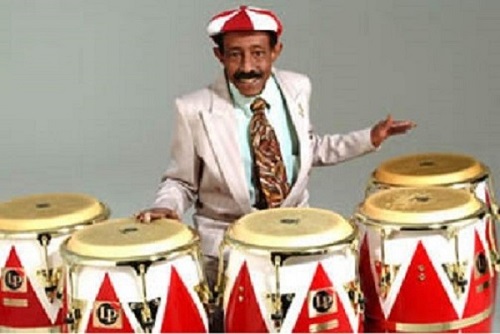
Carlos “Patato” Valdés uno de los mejores percusionistas en la historia del Jazz Latino

He played with Conjunto Kubavana, La Sonora Matancera and El Conjunto Casino. He accumulated nicknames: Zumbito (for his performances at the Zombie Club), Pingüino (for a dance he did on television) and Patato (for his small size), and in those days, dedicating oneself to music in Cuba guaranteed hardship. Besides, Patato wanted to experiment and that was not possible playing for dancers or tourists.

In 1954, he emigrated to New York, like his leather friends: Cándido Camero, Armando Peraza, Mongo Santamaría and the pioneer Chano Pozo (murdered there in 1948).

He immediately began working with Tito Puente. His first recording in the United States was the album Afro-cuban, by trumpeter Kenny Dorham, which opened with the intoxicating Afrodisia. Those were good times for tropical music.

He was the first percussionist to improvise “Solos” with 3 or more Congas at the same time. In addition, he was the creator of the “Congas Afinables”, instruments on which he would ride to dance making them sound rhythmically.

Patato Valdes was an excellent musician, an unforgettable person. Nervous and diminutive, he spoke with an impenetrable Cuban accent; he dressed elegantly, hiding the necklaces and bracelets of Changó and other “orishas”. He looked like a living caricature, but when he hit the percussions he became a divine creature: he had power, spectacularity, sense of melody.

Those skills made him an ambassador of Afro-Cuban rhythms in the jazz world, although he will also go down in history for his extraordinary rumba recordings.

In 1956, Patato appeared in the film Y Dios creó a la mujer, teaching the dances of his homeland to Brigitte Bardot. A great moment, although an implacable Guillermo Cabrera Infante criticized the actress’s movements: “she seems to commit suicide by dancing a cross between mambo and chachachá, a really toxic cross between mambo and chachachá”.

A flexible musician, Valdés sounded as comfortable playing with Machito’s big band as with Herbie Mann’s group. However, he felt indebted to the “rumba de solar” and in 1968 he recorded a revolutionary album with his friend Eugenio Arango, alias Totico.

The exuberant Patato & Totico had genuine Havana flavor, but enriched the basic percussion instrumentation with Cachao’s contrabass and Arsenio Rodriguez’s tres.Patato expanded the creative possibilities for percussionists by playing with three or more congas.

He also made their lives easier by developing a tunable conga: fed up with the traditional method (heating the leather over fire), he installed a metal hoop and keys for tensioning.
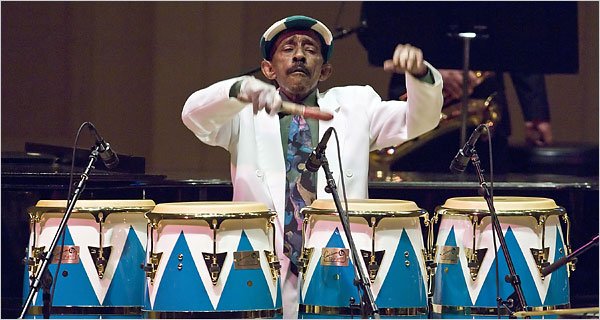
Carlos "Patato" Valdés
Carlos “Patato” Valdés

The LP company mass-produced his model, which was to become the standard for conga players. To promote it, he formed the Latin Percussion Jazz Ensemble with Tito Puente, Jorge Dalto and Alfredo de la Fé, among others, an orchestra that would end up becoming Puente’s big band in the early 80s.

It was during this period with Dalto that the album we have chosen for today began to take shape. It was titled “Patato, Master Piece” and it synthesizes all of Patato’s genius.

“Masterpiece” is an album that travels first class through tango, jazz, descarga, guaguancó and bolero, always in a masterful way and with a luxury crew made up of names like Jorge Dalto, Artie Webb, Michel Camilo, Jerry and Andy González, Nicky Marrero, Ignacio Berroa, Joe Santiago, Néstor Sánchez, Vicentino Valdés, and Sabú Martínez, among others.

The Art of Flavor.

Unfortunately Dalto had already passed away when in 1993 the project was released by the venerable German label Messidor, the same label that had already financed some impressive sessions of Patato with Mario Bauzá or Bebo Valdés, with whom he would later record the famous El Arte del Sabor.
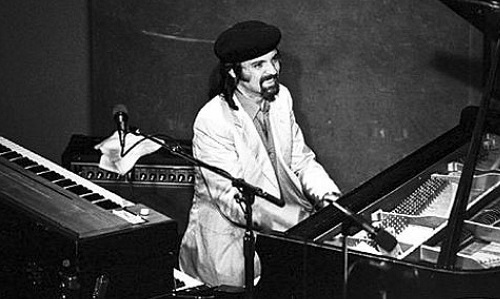
Jorge Dalton
Jorge Dalton

In fact, the great Argentine pianist had to be replaced for the last recording sessions that were made 6 years ago since his illness was too advanced, but he left us some incredible arrangements that were kept in the great majority of the themes.

Dalto left us in 1987 when he was only 39 years old. His replacement was nothing more and nothing less than a very young Michel Camilo.formed by 9 cuts among which we especially want to highlight the huge versions of Cute and Nica’s Dream, Masterpiece is an essential album for all lovers of Latin-jazz with capital letters and that is why we wanted to share it on a day as special as today.

Already recognized as a legend, Patato became more visible in the last 25 years: he had his own band, Afrojazzia, although The Conga Kings, with Cándido and Giovanni Hidalgo, turned out to be more popular.
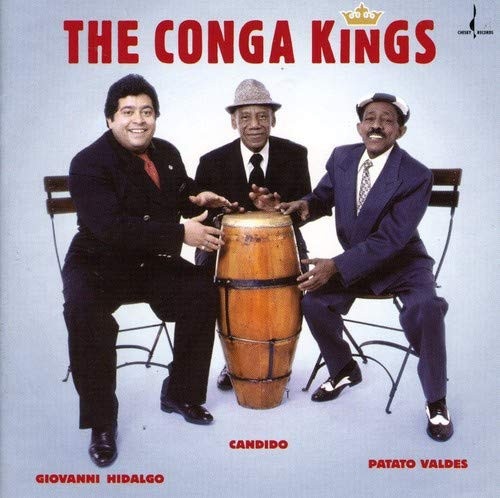
The Conga Kings Giovanni Hidalgo, Cándido Camero y Patato Valdez

He even made his way onto the modern dance floors, with a remix of San Francisco tiene su propio son. Just as he was returning from playing in California with the Conga Kings, his breathing began to fail.

The plane he was on had to make an emergency landing in Ohio to admit him to a hospital. The 81-year-old percussionist, a heavy smoker, was on his way to his beloved New York, but he would never get there. According to his relatives, he held out until December 4, the day of Santa Barbara, the Afro-Cuban equivalent of Changó, when the cables and tubes that kept him alive were removed.

Valdés died in Cleveland, USA, on December 4, 2007.

Fuentes: http://www.herencialatina.com/Patato/Patato_Valdes.htm

Imágenes: Martin Cohen de Congahead.com
Carlos “Patato” Valdés

You can read: Irakere was a Cuban group that developed an important work in Cuban popular music and Latin Jazz under the direction of Chucho Valdés

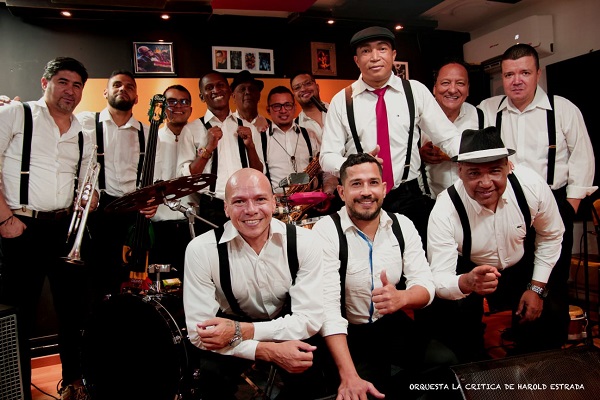
From Cali, Colombia, “La Crítica Orquesta” by Harold Estrada

With a unique, impacting, dynamic sound and with an explosion of musical energy, “La Crítica Orquesta” of Harold Estrada comes to us in this delivery, directly from the city of Cali, Colombia; who presents to the world, a different proposal with a clear and forceful message of much social sense in his interpretations. In a brief conversation we had with its director Harold Estrada, a young musician of great experience with Colombian Orchestras, he shared with us aspects of this successful group from Caleña.

Welcome Harold to International Salsa Magazine “The Only Salsa Magazine in the World”. First of all, tell us: since what date does “La Crítica Orquesta” come out? Thank you Professor Carlos Colmenárez, for the wonderful invitation that you make us from your city Barquisimeto, in our sister Venezuela, with a fraternal greeting and thus let us know a little more through you and this prestigious media; because let me tell you friend, that the Orchestra begins to sound since 2012, with an enterprising, constructive, quality and very professional work, in search of an authentic sound that identifies it and allows it to take its rightful place in the salsa environment here in Colombia and internationally.

De Cali, Colombia, “La Crítica Orquesta” de Harold Estrada

And in these 10 years of trajectory, have you had important participations in events and festivals? Indeed Professor Carlos, we had the honor of being present at the World Salsa Festival 2012 and also in the fairs of Cali, likewise several departments of the country have witnessed this magnificent evolution, seeking to remember the essence and expression of salsa Caleña with that characteristic sound and Orchestras that left their mark on the Afro-Caribbean and Colombian music.

Harold friend I understand that you develop a social and musical work in the city of Cali, tell us… Yes, our orchestra is developing and forming a “Collective of salsa to the street”, which is a program that is ready to rescue the Caleña culture, with the purpose of safeguarding the salsa in the city.

Which international artists have been accompanied so far by “La Crítica Orquesta”. Carlos, we have had the privilege of accompanying here in Colombia salsa artists of the stature of: Rafu Warner, Luigi Texidor, Chamaco Rivera, Ruben Sierra, Julio Lopez, Manny Fuentes, and more, demonstrating the musical support of the group.

What is the mission of “La Crítica Orquesta”? We are convinced that our mission is to make quality music for the enjoyment of the people, for the delight of the dancer and the ear of the music lover, but especially, music to free the spirit and cheer the soul.

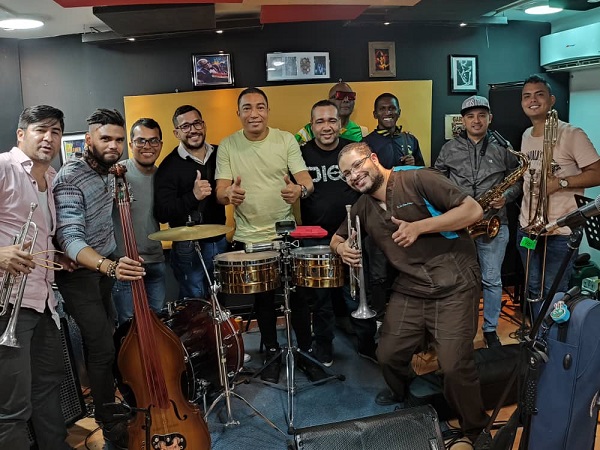
Who are the members of the Orchestra? “La Crítica Orquesta”, is conformed by: Harold Estrada (conductor and conguero), Oscar Eduardo González (Trumpeter), Cruz Ramón Mayora (Bongos player), Andrés Holguín (Trumpeter), Ramiro Lennis (Singer), Leo Bonilla (Trombonist), Andrés Felipe Silva (Bassist), Marco Felipe Ramírez (Timbalero), Carlos Alberto Cruz and Harrison Muñoz (Singers), Mauricio Bastidas (Saxophonist), Jerry Alejandro Figueroa (Pianist), Gregorio Gómez (Singer), by the way our bongos player, is Venezuelan, born in the city of Naiguatá, but since he was a child he lives in the city of Barquisimeto, to which soon will be back, the experienced and excellent musician Cruz Ramón Mayora Medina.

La Critica Orquesta de Harold Silva
La Critica Orquesta de Harold Estrada

As for productions, have you already recorded some? Yes Professor Carlos, we already have several songs and even videos on Youtube for the knowledge of all. And these are the titles, composers, arrangers and performers: “Cannabis”, this is the most recent single recorded just a month ago, with lyrics by: Einar Flores and in the arrangements Andrés Silva, both Colombians. “Canallón”, lyrics by Einar Flores (Colombia) and arrangements by Pedro Cruz, (Dominican Republic). “Dale Duro”, composer and arranger Luis Cabezas (Venezuelan), the interpreters are: Carlos Cruz, Harold Aguirre and Adrián Barragán, respectively.

Excellent friend Harold and the social networks of the Orchestra. On Youtube you can reach us as: Orquesta la Crítica de Harold Estrada, Instagram: lacriticadeharoldestrada and Facebook: lacriticaorquestacali; for bookings you can contact us at: +573147800543.

Upcoming concerts or events? We will be present God willing at the “Concierto Circulación”, on November 26 and also at the Cali Fair.

Thank you for accepting the invitation, brother and friend Harold Estrada and the whole Orchestra, for us it was an honor to have you in International Salsa Magazine salsagoogle.com, and from here we wish the greatest success to “La Crítica” of Colombia, a group that undoubtedly, is putting well in high the Salsa made in Cali.

The privilege is ours, Professor Carlos Colmenárez, and from Colombia, we will transmit you the best wishes of the Orchestra and the whole country, so that you continue to make known the salsa talent of your beloved Venezuela as well as of all the Salseros in the world. Thank you a thousand times for the support you give to “La Crítica Orquesta”, and on behalf of all its members, we send you blessings and wish you many successes and long life. You, the social communicators are a key factor to promote and publicize the musical work for Salsa made with quality and international flavor for the dancers and connoisseurs of the genre.

Until next time and we continue salseando…!

Carlos Colmenarez

You can read: Henry Valladares, a brilliant, versatile, and disciplined percussionist

International Salsa Magazine presents Alexander Abreu and his Habana de Primera

International Salsa Magazine presents a Cuban musician today considered by critics as one of the best trumpet players of the moment in Cuba and probably in the whole world.

He is Alexander Abreu Manresa, born on September 6, 1976 in Cienfuegos.

Owner of innate conditions and a unique talent to play the trumpet in a wonderful way.

Alexander Abreu, in spite of his youth, equals greats of the instrument such as El Guajiro Mirabal, Arturo Sandoval or Dizzy Gillespie, without ignoring that as a singer he has a melodious voice and, as if that were not enough, he also works as a composer and musical director.

He began playing trumpet at the age of ten, he studied music at the conservatory of music in his hometown Cienfuegos and at the National School of Art where he graduated in 1994 and in that same institution has served as a teacher, the impeccable way of playing his instrument allowed him to reach the top in Cuban music with only twenty years of age; he was part of the Cuban jazz group Irakere, worked with exponents of Cuban Timba Paulo FG and Issac Delgado and his Orchestra.

On the other hand, he has made recordings in other genres with musicians, composers and singers such as:

Armando Anthony Corea, known as Chick Corea, is an American jazz pianist, keyboardist and composer.

Arnaldo Rodríguez, young talented arranger, composer, singer and director of the Cuban Musical Group Arnaldo y su talismán, born in Ciego de Avila, Cuba.

Baby Lores, musician, singer and arranger from the city of Cienfuegos, the Pearl of the South.

Hugh Ramopolo Masekela, trumpeter, flugelhornist, cornetist, composer and South African jazz singer from South Africa.

James Morrison Catchpole, English soul and pop rock singer, songwriter and guitarist.

Luís Represas, Portuguese singer and composer.

Ron Sexsmith, Canadian singer-songwriter.

Alexander Abreu created, in 2007, his own group, which he called Havana D’ Primera, with several of the most talented Cuban musicians, the first presentation of the band took place on October 4, 2008 at the Cabaret Turquino of the Habana Libre Hotel in Havana.

With Havana D’ Primera, he has made three albums, they are: Haciendo Historia in 2011, Pasaporte in 2013 and La Vuelta al Mundo in 2015.

He has also released the singles: Rosa la Peligrosa, Me Dicen Cuba and Prohibido. Alexander Abreu Manresa is trumpet and lead vocalist of Havana D’ Primera, as well as composer, arranger and musical director of the group.

This work aims to highlight the enormous and excellent musical career of one of the best musicians of the island of Cuba in the new generation, with just thirty-eight years of age, the music of Alexander Abreu has transcended borders, his recordings exceed one hundred albums in different countries and in multiple musical genres.

From our website, we want to highlight the magnificent musical career of Alexander Abreu Manresa.

Despite his youth, Alexander Abreu’s musical gifts and excellence have allowed him to play and record with a great number of musicians and groups, not only in his native Cuba, but also in other countries of the world, to mention a few, we have then, as far as our music is concerned: Adalberto Álvarez, Amaury Pérez, Andy Montañez, Irakere, Juan Manuel Ceruto, Klimax, Mayito Rivera, Orquesta Sinfónica Nacional, Pablo Milanés, Pachito Alonso, Team Cuba, Teresa García Cataurla, Van Van and Yurumí y sus Hermanos.

Havana D’Primera nominated to the Latin Grammy Awards 2022

“We are nominated once again for the Latin Grammy Awards, this time with the album Será que se Acabó. But it’s not just me. Cuban music is nominated, which is reflected in this album with all the energy. I think it’s the most powerful album I’m going to make in the history of my life.” This is how Alexander Abreu announced the magnificent news.

Será que se Acabó, Havana D’Primera’s latest album, was nominated for the 2022 Latin Grammy Awards in the category of Best Salsa Album.

“At The Latin Recording Academy, we continually strive to support and encourage Latin music creators, and these nominees epitomize musical excellence and represent the great moment our music is going through,” said Manuel Abud, CEO of The Latin Recording Academy.

Alexander Abreu & Habana de Primera

You can read: Yissy García Calzadilla, former member of the Anacaona Orchestra, plays drums, timbal and bongo

Yissy García Calzadilla, former member of the Anacaona Orchestra, plays drums, timbal and bongo

On May 29, 1987, in Havana, Cuba, Yissy García Calzadilla was born.

With a great musical heritage that comes from her father and inspiration, Bernardo Garcia, who is a drummer of the ICRT Orchestra.

Since she was a child she has been inclined towards percussion and has her father as her first teacher.

At the age of 9 she began her elementary music studies at the “Manuel Saumell” school, later attending the Amadeo Roldan Conservatory where she excelled in the school’s Charanga band and was also a member of the Youth Symphony Orchestra.

As a student of the conservatory in 2004 she traveled to the island of Guadeloupe as part of a cultural exchange between music schools in both countries.

Also in 2005 she was invited as a soloist in the paila (Cuban percussion instrument) to play with the National Symphony Orchestra of Cuba under the direction of the prestigious conductor Zenaida Romeu. In the same year she obtained the Special Prize of the “Fiesta del Tambor” contest.

In 2006 he travels to Barbados to participate with the “Quinteto Chico de la Habana” (a group of outstanding students of the conservatory) in the Barbados Jazz Festival and shares the stage with prestigious jazzmen such as Horacio Hernández (El Negro), Giovanni Hidalgo, Arturo Tappin (saxophonist) and Roy Hargrove (trumpeter), his performance is reviewed by international television stations and for the English newspaper Daily Niticns.

In November of the same year he obtains a Special Performance MECION at the International Festival of Young Jazz Players “JOJAZZ” and plays drums with the Big Band of Canada.

It is in this same year that she graduates in Percussion with excellent grades.

Once graduated, she joined the female orchestra Anacaona with which she made multiple performances on stages all over the country, and also performed on national television and radio, recorded the album “No lo puedo evitar” for the Bis Music label, and has also accompanied the Buena Vista Social Club diva Omara Portuondo.

With a small orchestra format, he recorded in 2008 the song “Parampampán”, for the musical film: “Chico y Rita” by the Spanish filmmaker Fernando Trueba. And also participates in another recording of traditional music with an American singer, both in the Areito studios of the EGREM.

In 2009 she made two important international tours with Anacaona, first in several Canadian cities, among them, performing at the “Art Jazz Festival” in Toronto, and in the Lula Lounge of the same city, the “30th Montreal International Jazz Festival”, alternating with the famous salsa singer “La India” with whom she was also invited to play, During the days of this great festival she participated very actively in various Jan sessions with Canadian musicians and musicians from other countries, in the city of London in the “Sunfest”, the Festival “La Nuit de Africa” in Montreal in its 27th edition and in the cities of Chicoutimi in the Festival “Rhythms of the World” and in the City of Quebec in its festival “Musics of the World” in addition to other venues in some of these cities, monopolizing in all many applause and congratulations for his outstanding performance.

In September 2010 the Aruba Jazz Festival is presented where they have the responsibility to close the festival and also perform with great success with saxophonist David Sanborn with whom they have the honor of downloading to close his performance the first day of the festival, for all this they are welcomed with great success by the public and the press.

He has worked in Cuba with other important jazzmen such as Alexis Bosh and Orlando Cubajazz.

He also performs for a special program on French TV channel 33 about his musical life and appears on a web page of the Spanish magazine “The H”.

He competes again in the JOJAZZ Contest and obtains the 2nd place in interpretation.

He has also recorded the Cuban Television program “A todo jazz” with trumpeter Roberto García and saxophonist Emir Santa Cruz, and with the group “Joven Jazz” led by saxophonist Michel Herrera, with whom he also performs in Havana’s Jazz clubs. He has worked with the outstanding trumpet player Yasser Manzano and his group.

In early 2010 he made the national tour of the singer Cucu Diamantes and also participates in the film that was recorded of the same.

In June 2010 he performed with Anacaona a successful tour of Curacao presenting the show “Viva Cuba”, in order to raise funds for the fight against breast cancer, organized by the Sinte Rose Foundation of that country and also close the 1st International Film Festival of Aruba.

Solo career

Yissy and Bandancha.

In 2012 she decided to embark on her solo career, debuting as composer and leader of the project YISSY & BANDANCHA, a quintet that develops jazz from the fusion with other genres.

She is regularly invited to participate in the most important festivals in Cuba, such as Jazz Plaza, JoJazz, Ellas Crean, Havana World Music Festival, among others.

Along with her project, she develops an intense work of collaboration in record productions and with various artists and recognized groups in the country, as is the case of Interactivo, Alexis Bosch and Telmary Diaz.

In 2014 he participated in Argentina in the festival El sur suena a cubano, along with Kelvis Ochoa, William Vivanco and Yusa, whom he also accompanied on his tour of Japan. He participated in the recording of the album Feeling Marta, by singer Gema Corredera, and accompanied the Buena Vista Social Club diva, Omara Portuondo, on her tour of Mexico.

Since that same year and until now, he is part of the line up of the band Maqueque, led by the renowned Canadian saxophonist Jane Bunnet, with whom he has played in the most important festivals in Canada and USA, in addition to having recorded the album Jane Bunnett and Maqueque, winner of the 2015 Juno Award for Best Jazz Album.

She began 2015 with the recording of her debut album Última noticia, and with a tour with her band YISSY & BANDANCHA through several cities in the USA.

She was included in a documentary for Brazilian TV directed by filmmaker Max Alvim, which aims to collect the most outstanding of the vanguard of Cuban jazz today.

She was part of the concert Women of the World, led by M Alfonso. She participated, together with Brazilian artist Baddi Assad, in the Les Voix Humains festival, held in Havana and organized by the Leo Brouwer Office.

Invited by the prestigious drummer Terri Lyne Carrington, she gave a clinic on Cuban rhythms at Berklee College of Music.

The Tambor, Tumbadora or Conga is a percussion instrument of great importance in Latin music

The drum, tumbadora or conga as a soloist instrument in Cuban music or jazz bands, had as its first figure Chano Pozo, who, upon receiving the invitation of Mario Bauza and Dizzy Gillespie to participate in his big band, turned the world of jazz upside down.

This explosive union resulted in compositions such as Manteca or Tin Tin Deo.

They also created the roots of what is known today as Latin Jazz, which was originally called Afro Cuban Jazz “Cubop”.

After the surprising death of Chano Pozo, figures such as Cándido Camero, Carlos “Patato” Valdés, Mongo Santamaría, Armando Peraza, Tata Guines and Ray Barretto emerged who gave development and personality to the conga drum as a solo instrument.

It should be noted that Ray Barretto was born in New York and is of Puerto Rican descent.

He would be the first important figure in the world of conga drumming not born in Cuba. As a teenager, Barretto took care of his siblings in the evenings while his mother worked and spent hours listening to the radio.

There he was influenced by jazz and, in addition, his mother listened to Cuban and Puerto Rican music at home. This is how he formed his taste and love for music.

Mario Bauzá

He was a saxophonist in Justo Azpiazu’s orchestra and trumpet player in the Machín Quartet. Later, he joined Chick Webb’s orchestra as principal trumpet. In 1933 he was named director of the orchestra, and remained as such until 1937. Between 1937 and 1939 he played with the orchestras of Don Redman and Fletcher Henderson. And in 1938 he joined Cab Calloway’s band.

We can also affirm that Mario Bauzá is the musical godfather of two great jazz legends: Ella Fitzgerald and Dizzy Gillespie. Because it was Bauzá who made Calloway meet the then young trumpeter John Birks Gillespie, and Chick Webb incorporated Ella Fitzgerald into his band.

Chano Pozo

Luciano Pozo González, better known as Chano Pozo was born in Havana Cuba on January 7, 1915 and died in New York, December 3, 1948, was a Cuban percussionist, half brother of trumpeter Félix Chapolín.

Percussion instruments are instruments that produce sound when struck, shaken or percussed in some way.

This percussion can be done with drumsticks, with metal bars, with the hands, with keyboards or by striking two bodies against each other. This wide variety of possibilities allows for a wide range of sounds and types of instruments.

He shined shoes and sold newspapers, played music in many places and even danced in the well-known Havana comparsa of “Los Dandy”.

He belonged to the Abakuá Secret Society, which explains the perfect mastery he had of the drums of the rite. He had the habit of playing sacred rhythms on his congas, as well as singing Abakuá and Yoruba songs.

He worked in the public transmissions of the radio station Cadena Azul, together with figures of the stature of Charlie Parker and Dizzy Gillespie, being with Dizzy when he popularized the well-known theme of “Manteca”.

Dizzy Gillespie

He was born on October 21, 1917 in Cheraw, South Carolina.

Son of a bricklayer and occasional musician who treated him very badly.

The young Gillespie hit on everyone: “I was a devil, a strong devil”.

At the age of fourteen, he began playing the trombone, but soon switched to the trumpet, which he was already playing proficiently when his family moved to Philadelphia in 1935. There he got his first important contract with Frank Fairfax’s orchestra.

His life changed as he transformed from a thug in his youth to a true citizen of the world, supporting social causes such as racial integration.

Ray Barretto

Of Puerto Rican parents from Aguadilla, Raymundo Barretto Pagan was born on April 29, 1929 in Brooklyn, New York. He spent his childhood and youth in the Bronx and Spanish Harlem.

He grew up with his mother Dolores Pagan and his siblings Cecilia and Ricardo.

As a child, when he was only 10 years old, he listened to Arsenio Rodríguez, Machito, Duke Ellington, Benny Goodman, Harry James, Los Panchos, Pedro Flores, Daniel Santos and Miguelito Valdez.

At the age of 17, in 1946, he joined the U.S. Army.

In Germany he discovered his taste for music represented in Bebop, listening to the songs “Shaw Nuff” by Charlie Parker with Dizzy Gillespie and “Manteca” by Dizzy Gillespie with the Cuban Chano Pozo, who became his source of inspiration. It was at that time that he became thoroughly acquainted with jazz.

“The word percussion comes from the Latin percussio, a variation of the word percussus, which refers to the action of striking, shaking or vibrating something repeatedly.”

Percussion instruments have a great importance in music because, within a group of instruments, their usual function is to mark the rhythm of the piece. This means that they are often seen as the heartbeat of a musical composition.

Because of their primary role in creating and maintaining the rhythm of a piece, percussion instruments often work in conjunction with bass instruments, including the double bass or electric bass.

There are a large number of percussion instruments that can be classified according to different criteria. In this article you can find the most important classifications used today.

Many of these instruments are simple and rudimentary. It is due to their simplicity that percussion instruments are the oldest in the history of mankind.

The evolution of technology and music gradually allowed the development of more complex instruments, among which are wind instruments and stringed instruments.

Sources:

https://www.instrumentosdepercusion.com/

http://clasica.latinastereo.com/Salsero-del-mes/Mario-Bauza

http://old.latinastereo.com/html/genteLatina/salseroMes/RayBarretto/cronologia.shtm

  • « Go to Previous Page
  • Page 1
  • Interim pages omitted …
  • Page 11
  • Page 12
  • Page 13
  • Page 14
  • Page 15
  • Interim pages omitted …
  • Page 19
  • Go to Next Page »

International Salsa Magazine (ISM) is a monthly publication about Salsa activities around the world, that has been publishing since 2007. It is a world network of volunteers coordinated by ISM Magazine. We are working to strengthen all the events by working together.