






| DIRECTORY OF NIGHTCLUBS | ||
|
|
|
|
|
|
|
|
|
|
|
|
|
|
|
|
|
|
|
|
|
|
|
|



| DIRECTORY OF NIGHTCLUBS | ||
|
|
|
|
|
|
|
|
|
|
|
|
|
|
|
|
|
|
|
|
|
|
|
|
It is very important for us to show and provide coverage to the most important Latin music artists of today in the United States and now it is the turn of Chicagoan musician Caesar Vera, who very kindly accompanied us in this edition of International Salsa Magazine.
Caesar is the current director of Caesar Vera Y Su Sexteto NuevoSon, which we will talk about later along with other equally important issues for the musician’s career.

Although Caesar has developed his professional life in Miami and currently lives there, he was actually born in Chicago and spent the early years of his life there. His parents arrived from Cuba in 1966 in the freedom flights and, once in the United States, the Catholic Church helped them and placed them in Chicago, where he was born and lived until 1978. Later, the couple divorced and his father went to live in Miami, so Caesar spent long holiday periods together with him in that city.
The path with music for Caesar began in high school, when he became very interested in rock music, to the point of creating a band with some of his classmates. He played the drums and was a huge fan of Led Zeppelin, Kiss, Van Halen, and other groups of that style.
The only connection the young man had with Latin music was his grandfather, who loved to dance danzón and always played Orquesta Aragón records so that they could both move to the beat music in the living room of his house. Although these moments with his grandfather were very pleasant, he did not yet like this kind of music, but that would change over the years.
In Miami, there was a time when there were many Latin bands playing, and every corner had a nightclub with orchestras playing. Caesar and his friends used to attend these places a lot, which led the young man to finally become interested in these genres. This coincided with the arrival from Cuba of his uncle who was a musician and had a band there, which they talked about constantly, and he even taught his nephew to play instruments such as the tumbadora, bongos, timbales, and all minor percussion.
In 1987, what happened was a turning point for Caesar musically speaking, as he finally decided to take Cuban music more seriously and study its history to understand it better.

Before creating his own group, the wife of a friend who had a group invited him to play percussion with them, a proposal Caesar accepted, and he started playing the tumbadora with the orchestra. Something new in this case was that he had never played with an established band in formal performances, so it was something new for him.
By 1992, he had met the famous Cuban bongo player Juan Méndez, who had played with the Roberto Faz Orchestra, Roberto Torres, and Luis Santi Y Su Conjunto. Méndez told him that he needed a bongo player in an orchestra he was forming at the time and asked Caesar to fill the vacancy, to which he answered yes and remained in the group until 2003, that is, for around 11 years.
In addition to that, he was a replacement in various orchestras in Miami for a while, one of which was Gilberto Díaz Y Su Conjunto Los Profesionales. He was with them for two years, but by then traditional Cuban music, more specifically Cuban son, had captured his full attention. It just so happens that one of his orchestra fellows told him that Norberto from the group Norberto Y Marcela Y El Septeto Caribe called him because they needed a bongo player and asked if he was interested in the vacancy. Caesar did not think twice and went to play with the orchestra even though he did not have much experience with the bongos, but he took the risk anyway. It was with this group that he started playing traditional Cuban music and prepared to do the same once he became independent.

Still playing with Norberto and Marcela, Caesar started having his own creative ideas on how to lead an orchestra, but he could not carry them out because he was only a musician who collaborated with the orchestra, which started to bother him and cause him enormous dissatisfaction. One day, his wife saw him stressed and frustrated by the situation, leading her to ask him why he did not become independent and create his own project.
That is when he started thinking about it seriously until, in early 2007, he finally founded the group Fusión 4 with Carlos Alberto “El Flaco”, who had previously sung with Fajardo Y Sus Estrellas, Larry Harlow, and La Fania. They managed to play every Saturday at the Deauville Jazz Club for a year.
However, the sextet as we know it today was created just two years ago because it was costing to Caesar much to find work for such a large orchestra, especially after the pandemic when much of the live music scene fell off a cliff.
Today, some of its members are tres player Roberto Acosta, bassist Arturo Santi, conga player Hebert García, trumpeter Orlando Fraga, and singer Billy Velázquez.
Read also: Young promise of music Sofia Grace Doellefeld tells us about her dreams

To open the concert, the Cubanísimo concept, led by Puerto Rican bassist and cuatrista Jesús Algarín, set the mood for the audience. The young musician made a confident entrance, accompanying himself with powerful interpretations on his instruments, skillfully directing his own orchestra. Prior to Alain Pérez’s show, the musicians of Cubanísimo—cuatrista, singer, and director Jesús Algarín, trumpeter Miguel Ortiz, vocalists Carmen Jiménez and Gilberto Félix, bassist Félix Juan Algarín, bongos player Freddy Camacho, conga player Jeren Guzmán, and flutist Juan Ortiz—brought to life songs like ‘El yerbero moderno,’ ‘Esa niña,’ ‘El bodeguero,’ ‘La rosa oriental,’ ‘El paralítico,’ ‘Así fue,’ ‘Parampampam,’ ‘Lo que fue no será,’ ‘Que te pedí,’ and ‘El cuarto de Tula.’ Once the musicians, directed by Algarín, finished their set, Alain Pérez made his triumphant entrance.
The singer, bassist, guitarist, percussionist, pianist, orchestra director, arranger, and music producer had been in Puerto Rico on a handful of occasions as a backing musician for artists of the stature of Issac Delgado and Chucho Valdés, to name a few. This time, of course, he arrived as a solo artist and with force, to the rhythm of ‘El cuento de la buena pipa.’ Once on stage, the “guajiro,” who confessed in an interview to having “converted to flamenco,” showed that he felt at home while singing, dancing, guaraching, playing the bass, soneando, and rumbando. Once Alain and his orchestra warmed up the luxurious venue, which was overflowing with people, the virtuous multi-instrumentalist performed songs such as ‘ADN,’ ‘El sabor de mi rumba,’ ‘Amor fugaz,’ ‘Son con moña,’ ‘Hablando con Juana,’ ‘Shorcito,’ ‘Modo avión,’ ‘Batilongo,’ ‘La lámpara,’ ‘Pa’ to’ la vida,’ ‘La moneda,’ the title track from his most recent production: ‘Bingo,’ ‘Andaba solo’—a duet with the “Caballero de la Salsa,” Gilberto Santa Rosa—and ‘Pistolero,’ the latter loudly requested by the elegant audience.

During the show, the musician who defines himself as a guajiro, sonero, guarachero, and rumbero, delivered fusions characteristic of Alain’s great contribution to Latin music, within Afro-Cuban traditions influenced by his exposure to Hispanic folklore. Pérez built the show using a varied repertoire that included salsa, timba, son, and bolero in interesting fusions. Accompanied by his band—composed of Mauro Cabrejas, Josué Puig, Roberto Medina, Víctor Oliva, Alejandro Sosa, Robelis Arévalo, Julio Puig, Yunnier Stoker, Cristhian Díaz, Darío Andrés, Alejandro Fernández, and Isaac Cambar—Alain Pérez delivered on his promise: “a night full of Caribbean flavor, rhythm, and

energy.”
With the Puerto Rico performance, Alain successfully concluded his first solo tour of the United States with resounding success. That was the idea. Here in beautiful Borinquen, the audience while demanding makes sure the artist feels the love and respect with which they are received and celebrated. Congratulations!

Also Read: Bella Martinez, the irreverent Salsa writer

Europe / Holland

A girl with passion and talent, nominated for a Latin Grammy Award in the category Best Salsa Album, trumpeter Maite Hontelé is transforming the role of women in music. People in America, Europe and Asia have witnessed her magical talent and the way she performs on stage. Born in Holland, but Colombian in her heart, Maite’s music is a perfect mix of European elegance and tropical joy, which is reflected in her 4 albums:
Llegó la Mona, Mujer Sonora, Déjame Así, and Te Voy a Querer, the last two edited in vinyl.

Also known as ‘Mujer Sonora, Maite has collaborated with artists such as Rubén Blades, Buena Vista Social Club, Chocquibtown, Oscar D´ León, among others, all of them lured by her style. Immersed in Latin American music from her earliest years, she went on to study at the conservatory in Rotterdam, specializing in jazz, salsa, flamenco and Brazilian music.
She was also invited to take part in Buena Vista Social Club’s European tour.
She arrived in Medellín following her heart and her trumpet, releasing one record after another and touring internationally with her salsa band. Perhaps inevitably, she quickly made a name for herself in Colombia through her exploration of salsa in its many forms.

Oscar D´ León says “She is the best in the world, what a delight! The ways she plays is extraordinary, outstanding!”
Her next step in Europe: Fiestas de la Virgen del Pino TEROR, SPAIN – 5TH OF SEPTEMBER Stay with us four further information about the European tour! For further information https://www.facebook.com/fansmaitehontele/
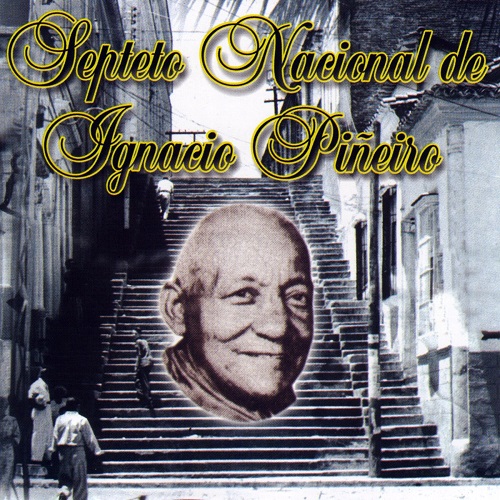
Pioneers of son, a rhythmic blend of African and Cuban music that evolved into salsa, mambo and Latin jazz, the group was the first son band to incorporate the trumpet as the main instrument.
Since Piñero’s death in 1968, after 41 years at the helm of the band, the Septeto Nacional De Ignacio Piñero has been led by a series of leaders.
Guitarist and composer Rafael Ortiz, who took over after Piñero’s death, bequeathed the position to vocalist Carlos Embale in 1982.

Ignacio Piñero was one of the Pioneers of Son Cubano
In 1906 he already knew and had assimilated the different toques of the African cabildos that existed in the neighborhood of Pueblo Nuevo, which he later incorporated into some of his creations.
He began his artistic career with the group claves and guaguancó El Timbre de Oro, later he directed Los Roncos de Pueblo Nuevo, in which he developed as a decimist and director, at the same time he took his first steps as a composer.
From this stage are: Cuando tú, tu desengaño veas, Dónde estabas anoche, El Edén de Los Roncos, Mañana te espero, niña. Later he joined the group Renacimiento de Pueblo Nuevo.
To the folkloric values that Piñeiro cultivated in these groups, he contributed a wider melodic-harmonic development and a greater depth and poetic flight.
In 1926 he was one of the founders, together with María Teresa Vera, of the Sexteto Occidente, with which he made his first tour to the United States in order to record an album with this group.
In 1927 he founded the Sexteto Nacional, formed by Ignacio Piñeiro, director and double bass; Alberto Villalón, guitar; Francisco González Solares, tres; Abelardo Barroso, lead vocals; Juan de la Cruz, tenor; Bienvenido León, baritone and maracas, and José Manuel Carrera Incharte (El Chino), bongo; that same year trumpeter Lázaro Herrera joined the group. With this septet he traveled to New York, where he recorded his first works.
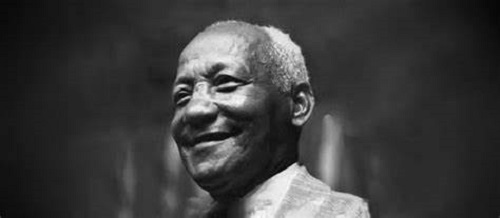
They performed at the Sans-Souci cabaret (1930); in 1931 they performed at the Lavín and CMCG radio stations; in 1932, at the Dos Hermanos Hotel, he premiered Buey viejo; that same year the American composer George Gershwin came to Havana, at the CMCJ radio station he listened to Piñeiro’s son Échale salsita, from which he later used the theme played on the trumpet in his Cuban Overture.
In 1933 he performed at the Fair-Exhibition A Century of Progress, held in Chicago, United States.
In 1934 Piñeiro retired from the septet, which from 1935 was directed by trumpeter Lázaro Herrera. In 1954, Piñeiro reappeared as leader of the septet, with which he appeared on the television program Música de Ayer y de Hoy.
As a composer, Ignacio Piñeiro broke, although he took elements from the form of the oriental son, in which its creators used the quatrain and the tenth; an example of this break is his son Buey viejo, from 1932:
Carretero no maltrates a ese pobre buey tan viejo, que ya doblbla la cabeza por el peso de los tarros, y por senda de guijarros va tirando la carreta, y nunca llega a la meta, término de su dolor.
Piñeiro was one of those synthesis cases that managed to capture, develop and express the full richness of the son.
The structural modifications, the cadence, the rhythm and the use of refined melodies and lyrics, achieved by this creator and interpreted by the Septeto Nacional, make it possible to say that the work of this singular artist, although he did not mark the boundaries of son (which corresponded to the Sexteto Habanero), he did turn it into a son that today we can call classic, which became a model for its further development.
According to Miriam Villa: “If we analyze the organization of the literary text, we observe in his work the formal use of metrically heterogeneous links subjected to rhythm, characterized by the presence of accented and unaccented elements within the system of units that are repeated at intervals between them.
Piñeiro must not have been concerned about the meter in the text as a pattern, since through the rhythm of the composition he achieves the contrast relations, making the change of meter express a change in the thematic movement, either from intermittences or accentuations or sometimes both, which give it different semantic nuances and alternations of tensions and distensions.
And elsewhere Villa states: “Another aspect that in relation to the literary text is reflected in Piñeiro’s creative work is that of the thematic contents; these are shown from a diversification with greater scope in relation to his contemporaries.
His work can be divided into multiple themes among which are love, homeland, philosophical reflection, politics, the bucolic, the infantile, expressed in a variety of forms: satirical, apologetic, humorous and with greater depth than in the sonorous production that preceded him and even with which he shared.
Ignacio Piñeiro Septeto Nacional
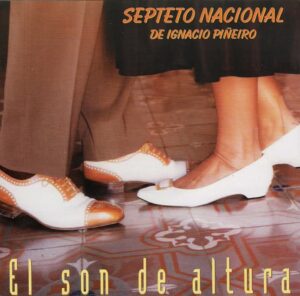
El Son de Altura (1998)
Tracks:
By:
Also Read: From Cuba El Septeto Son de Nipe vienen Abriendo Caminos