• Skip to primary navigation
  • Skip to main content

International Salsa Magazine

  • Home
  • Previous editions
    • 2026
      • ISM / January 2026
      • ISM / February 2026
    • 2025
      • ISM / December 2025
      • ISM / November 2025
      • ISM / October 2025
      • ISM / September 2025
      • ISM / August 2025
      • ISM / July 2025
      • ISM / June 2025
      • ISM / May2025
      • ISM / April 2025
      • ISM / March 2025
      • ISM / February 2025
      • ISM / January 2025
    • 2024
      • ISM / December 2024
      • ISM / November 2024
      • ISM / October 2024
      • ISM / September 2024
      • ISM / August 2024
      • ISM / July 2024
      • ISM / June 2024
      • ISM / May 2024
      • ISM / April 2024
      • ISM / March 2024
      • ISM / February 2024
      • ISM / January 2024
    • 2023
      • ISM / December 2023
      • ISM / November 2023
      • ISM / October 2023
      • ISM – September 2023
      • ISM – August 2023
      • ISM July 2023
      • ISM Edition June 2023
      • ISM – May 2023
      • ISM April 2023
      • ISM March 2023
      • ISM February 2023
      • ISM January 2023
    • 2022
      • ISM December 2022
      • ISM November 2022
      • ISM October 2022
      • ISM September 2022
      • ISM August 2022
      • ISM July 2022
      • ISM June 2022
      • ISM May 2022
      • ISM February 2022
      • ISM January 2022
    • 2021
      • ISM December 2021
      • ISM November 2021
      • ISM October – 2021
      • ISM September 2021
      • ISM August 2021
      • ISM July 2021
      • ISM May 2021
      • ISM April 2021
      • ISM June 2021
      • ISM March 2021
      • ISM February 2021
      • ISM January 2021
    • 2020
      • ISM December 2020
      • ISM November 2020
      • ISM October 2020
      • ISM September 2020
      • ISM August 2020
      • ISM July 2020
      • ISM June 2020
      • ISM May 2020
      • ISM April 2020
      • ISM March 2020
      • ISM February 2020
      • ISM January 2020
    • 2019
      • ISM December 2019
      • ISM November 2019
      • ISM October 2019
      • ISM Septembre 2019
      • ISM August 2019
      • ISM July 2019
      • ISM June 2019
      • ISM May 2019
      • ISM April 2019
      • ISM March 2019
      • ISM February 2019
      • ISM January 2019
    • 2018
      • ISM December 2018
      • ISM November 2018
      • ISM October 2018
      • ISM September 2018
      • ISM August 2018
      • ISM July 2018
      • ISM June 2018
      • ISM May 2018
      • ISM April 2018
      • ISM March 2018
      • ISM February 2018
      • ISM January 2018
    • 2017
      • ISM December 2017
      • ISM November 2017
      • ISM October 2017
      • ISM September 2017
      • ISM August 2017
      • ISM July 2017
      • ISM June 2017
      • ISM May 2017
      • ISM April 2017
      • ISM March 2017
      • ISM February 2017
  • Download Salsa App
    • Android
    • Apple
  • Spanish

Search Results for: trumpeter

De Tierra Caliente founder Bronson Tennis talks about his career and band

There have been many American musicians who have fallen to the charms of Latin music, which is a practically inexhaustible source of genres allowing them to experiment with in many ways. One of them is Bronson Tennis, with whom we have been fortunate to talk about his interesting career and current musical group, De Tierra Caliente.

Bronson playing
De Tierra Caliente founder Bronson Tennis playing the guitar

Bronson’s beginnings in music

Bronson Tennis began to put his eyes on music when he was just a child, when he was very attracted to the 1990s alternative rock movement in the United States. When he was only 11 years old, his parents bought him his first bass guitar and later he also wanted to learn to play the guitar and sing.

In family matters, Bronson and his three brothers are musicians and several of his cousins and uncles have also been musicians. In addition, his mother was a fine artist and his grandmother was an art teacher.

Both in school and church, the boy always chased opportunities to sing and show his vocal skills to anyone who wanted to hear. He also took advantage of all these spaces to learn as much as he could about music until he was old enough to exercise it professionally. 

Today, his main instrument is the guitar, although he also plays the cavaquinho (an instrument of Portuguese origin which is widely used in samba) and the roncoco, which is an adaptation of the Andean charango that he uses to play salsa and Cuban son.

Bronson posing for the camera
Bronson Tennis playing the guitar while posing for the camera

Professional debut in music

Bronson also told us that he began his career path as a bassist and chorister in several musical groups in the city of San Diego between 2006 and 2009. He then spent some time in Philadelphia, where he also played with other bands from a variety of genres.

It is interesting that he lived in Buenos Aires, Argentina, where he also worked as a bassist and singer in some bands. In fact, in that same country, he helped form a Caribbean funk band in which he learned a lot about these genres so foreign to what he played in his childhood and youth. He stayed about four years in Argentina, specifically between 2009 and 2012, until he moved to Brazil for about six months to continue learning more and more about Latin music, but it was not his last stop in South America, as he was also in Colombia for a while more.

Following this, he returned to Philadelphia and decided to form his own orchestra which he named De Tierra Caliente.

Prior to De Tierra Caliente

When Bronson returned to Philadelphia, he had the chance to meet some musicians from the Puerto Rican music scene in that city and saw that they had similar outlooks on music, so they got back in the saddle to prepare a formal project amongst themselves.

The artist assures that it was in Argentina where he learned what it takes to move forward with his band. ”Argentines are people who do everything with strength and confidence, whether in music or in soccer. No matter who or what they have to face, as they take on all the challenges with confidence and that is something we could all learn from Argentina.” Bronson said of his stay in that country.

Bronson and his band
(L to R) Papo Buda, Bronson Tennis, Eubie Nieves, Andy Meyer and Steve Cochran

In Brazil, he studied percussion and learned Portuguese, while Colombia taught him to play salsa, champeta, vallenato and many other genres. In short, each country he has visited gave him tools to facilitate his learning in everything about Latin music in various areas.

Precisely thanks to all this acquired knowledge is that Bronson finally felt able to form his own band in 2014 in union with fellow musicians who understood what he wanted to carry out.

How De Tierra Caliente started

Upon his return to the United States, Bronson was very clear that he wanted to incorporate all those elements learned in South America and the Caribbean, but giving them his own touch. It was then that he met conguero Papo Buda, with whom he agreed on much and began the recruiting process for the rest of the musicians.

After that, Bronson and Papo could add more artists to the group, resulting in a fairly consistent group over time. Since its founding, very few musicians have left the band and Bronson and those who remain have an excellent relationship with all of them despite no longer being band mates.

Among his greatest inspirations, Bronson mentioned many artists and groups of various nationalities and genres such as El Gran Combo de Puerto Rico, the Brazilian composer and singer Paulinho da Viola, the group Caribe Funk and many others.
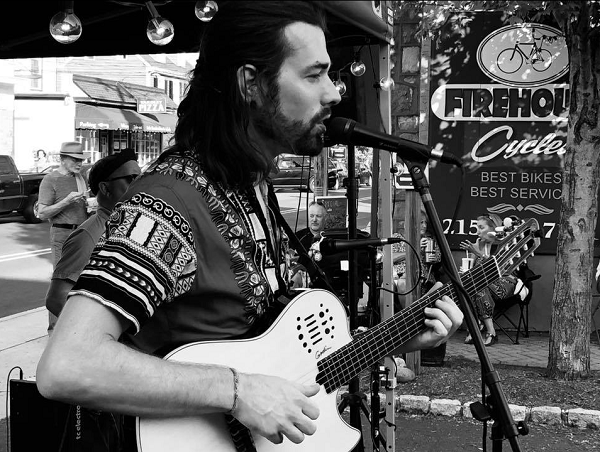
De Tierra Caliente playing
De Tierra Caliente playing live in Yardley

Read also: Latin jazz and mambo trumpeter Jonathan Powell and his great collaborations

Federico Betancourt “Pioneer of Salsa in Venezuela”

Latin America / Venezuela / Carabobo

Jesús Federico Betancourt was born in the city of Valencia, Carabobo state, on March 22, 1940. He was always attracted to music from a very young age.

Photo of Federico Betancourt on stage

In his adolescence, he liked Cuban rhythms, being influenced by Sonora Matancera, Mon Rivera, Eddie Palmieri and Joe Cotto. Before entering the entertainment world, he works at the Bank of Venezuela.

He affirms that he has not carried out formal studies at the musical level, learning the necessary theory to be able to perform as an orchestra conductor, but without interest in interpreting any instrument, but with a well-tuned ear, which has allowed him to remain in the music business for decades. , in fact on certain occasions he is named as the King of the Güiro.

Photo by Federico Betancourt

His career began when he entered the Los Selectos Orchestra, where they played songs by the Billos Caracas Boy’s and the Los Melodicos Orchestra, which were at their peak in the 1960s, all this in a particular way, said Orchestra did not go beyond that.

In 1965, Federico Betancourt decides to satisfy his artistic restlessness and founds a band called Federico y su Combo Latino. The members that made up this band were chosen from among the founder and together with Roberto Monserrat.

But it was not until the middle of 1966, when the twenty-six (26) year old undertook the recording of the LP that would make him famous forever. This record production entitled LLEGO LA SALSA, would mark an important stage in Venezuelan Salsa, because it was the first LP that made use of the word SALSA in the country.

Federico Betancourt
Federico Betancourt

Federico Betancourt himself recounts that the Venezuelan announcer Phidias Danilo Escalona had a Radio Program called LA HORA DE LA SALSA, EL SABOR Y EL BEMBÉ, where all the Cuban and Puerto Rican Caribbean rhythms that were fashionable at the time were placed, among those who highlighted La Sonora Matancera with Celia Cruz, Tito Puente, Joe Cuba, Tito Rodríguez among others, and who was the one who supported them the most in terms of recording the album.

The production was recorded under the Palacio label, and the LP was titled LLEGÓ LA SALSA, he affirms that the title was chosen without taking into account the importance that it would revert in the future, he also affirms that it was not the name that gave him success , the album was a “bump” in sales, since all the songs were the most requested at the time, using his words: “The album sold like hot cakes”.

The music lovers of the time requested it on specialized sites such as the LA SALSA album. Federico says: “The father of the word SALSA was Phidias Danilo Escalona, ​​he used it for the first time in his radio program, and I, humbly, with the success of my LP, gave him the push for its mass use.”

Federico Betancourt - Photo
Federico Betancourt – Photo

In Venezuela, the word SALSA was welcomed by the public willingly, since it suggested a mixture of flavors, which was exactly what happened in the Phidias program, but at the level of rhythms. After the appearance of Federico’s album, all the shows that were performed at the level of Caribbean and Cuban rhythms, carried the name of SALSA.

It is important to name the musicians who took part in this historic production: The musicians are: Ali Rojas Bongo and Cencerro, Roberto Monserrat Music Director and Timbal, Pedro Medina Congas, Alfredo Arcas Trombone, César Pinto Trumpet, Enrique Iriarte Piano, Rafael Prado Bass, Carlín Rodríguez Singer and maracas, Dimas Pedroza Singer, Federico Betancourt Güiro and Director of the Orchestra. The musical arrangements were by the famous trumpeter Eduvigis Carrillo (RIP). Production themes:


Llego la Salsa CD - Federico su Combo Latino
Llego la Salsa CD – Federico su Combo Latino
1.- Cocolía

2.- Conmigo
3.- El Pachanguero

4.- Sancocho Caliente
5.- Guaguancó Manía

6.- Celosa

7.- Despierta Rumbero

8.- No Critiquen
9.- Saoco

10.- Baila Yemaya
11.- Café Y Pan

12.- Que Me Querías

After the success obtained with the record work, the time came for the first international outing, which was to Colombia, in 1969. It happened because the singer of Los Melodicos, Víctor Piñero, informed Betancourt that he was stuck in Cartagena and Barranquilla with the themes El Cobrador and Federico Boogaloo. After the information, the young musician went to the neighboring country and got a contract for the famous Reina del Mar parties, in Cartagena, on November 11, 1969.

The experience of the band was so good, that in 1970 they returned to visit the country. From then until our days Federico y su Combo continues to be an emblematic and legendary band in Venezuela, for this reason the WEB of the classy salsero SALSA BRAVA, offers its respects to such an important salsa figure.

Discography
1966 Llegó La Salsa Palacio (LPS-6171)
1966 Salsa y Sabor Palacio (LPS-6185)
1967 Más Salsa Palacio (LPS-6205)
1967 Durísimo – Vol. 4 Palacio (LPS-6216)
1968 Federico Boogaloo Palacio (LPS-6228)
1968 Psicodélico Con Salsa Gilmar (LPG-110)
1969 Mejor Que Nunca Gilmar (LPG-111)
1969 Vibración y Ritmo Sonus (102-17080)
1970 Dos Sets Velvet (LPV-1539)
1970 La Machaca Velvet (LPV-1539)
1973 Federico Si Te Pone A Bailar Palacio (LPS-6332)
1975 Derrape De Salsa BASF (10.068)
1976 Siguelo Ahí…. a Lo Cortico BASF (10.070)
1977 Ayer y Hoy BASF (10.076)
1977 Esto Es Lo Mejor Palacio (LPS-6372)
1978 Mis Exitos y Más BASF (10.079)
1978 Sabor Foca (LPF-10.037)
1979 Federico y Su Combo Foca (LPF-10.120)
1979 Federico y Su Orq. – El Maestro Discomoda (DCM-1128)
1980 Federico y Su Orq. con Memo Morales Discomoda (DCM-1148)
1982 No Le Digan Integra (PF-14.075)
1983 Nuevamente Palacio (LPS-66.541)
1984 SaaaBroooSo! Palacio (LPS-66.552)
Compilation
1996 Mis Exitos y Más…Vol.1 Sonograma
1996 Mis Exitos y Más…Vol.2 Sonograma
1996 Mis Exitos y Más…Vol.3 Sonograma
2005 El Pionero De La Salsa Palacio
2008 Salsa De Oro Gilmar


North America / January 2025

Jonathan PowellEddie Muñiz Swing SabrosoDonald Vega

milonga

PBS

Thumbnail about the salsa museum

Las Maracas promo

Martinez attorney

Directory of North American nightclubs

Canada flag
CANADA

Ontario, Canada
ONTARIO

Canada, Vancouver
VANCOUVER

United States flag
UNITED STATES
California US circular flag

CALIFORNIA

Florida circle flag
FLORIDA
Illinois circle flag

ILLINOIS

Michigan Circle flag

MICHIGAN

NJ circle flag

NEW JERSEY

New York Cicle flaga

NEW YORK

Ohio State
OHIO

Pennsylvania Circle Flag
PENNSYLVANIA

tEXAS CIRCULAR FLAG
TEXAS

Virginia Cirular Flag
VIRGINIA

Washington DC circle flag
WASHINGTON DC


Eddie Muñíz continues to head Swing Sabroso

From this space, every day we are much more aware of the unusual wealth of Latin talent that makes up the New York’s music scene, which continues to show many artists and orchestras that do not surrender to high competition and give their best to earn their place and stand out from the rest.

This is the case of Ray Rodríguez & Swing Sabroso, whose current leader, Eddie Muñiz, gives us a broader picture of the way any artist should go to keep his name alive in public taste and avoid getting lost in the large artistic catalog where there is a lot of content to choose from.

Swing Sabroso leader Eddie
This is current Swing Sabroso bandleader Eddie Muñiz

Talented musician Eddie Muñiz’s beginnings in the world of music

Eddie, who was born in Brooklyn, USA, but communicates in excellent Spanish, had his first approaches to music in elementary school at the age of 13, when he played in several classical music and jazz groups to keep improving in these arts and find his style until he had his big break.

This opportunity came when the young man turned 17 years old, at which point he had his professional career in music with a group of friends, with whom he stayed for two or three years. After that, his next group was called ”Herencia Latina” whose director was the talented Ray Rodriguez and would become the starting point of his current orchestra Swing Sabroso. 

After leaving Herencia Latina, he joined Ismael’s conjunto for four years and subsequently played with Conjunto Clasico, Ray de La Paz, La Sonora Matancera, Tony Vega and many more.

About eight years later, the group did not go ahead and Ray moved to New Jersey, but as it happens, Eddie had to do the same for work reasons. Back then, Ray started a group he called Ray Rodriguez y Swing Sabroso, which invited Eddie to join the orchestra in 2000. 24 years later, it is he himself who moved such an ambitious project forward after Ray’s sad loss from the cancer on April 17, 2016.

Swing Sabroso singer
Singer Angel Rios, who is Swing Sabroso vocalist

Swing Sabroso

By the time Ray was in good health, the orchestra released two albums, one in 2005 and another in 2015. When the bandleader began to sicken, he knew he could not give the group the attention it required, so he asked Eddie to take the helm of the ship in his place as long as the group was only called Swing Sabroso, nothing else. 

At that time, the group only had two trumpets and a trombone, but Eddie was gradually enlarging it and adding more instruments to make the sound fuller. Being in total control of the orchestra, the artist released the album ”Swing Sabroso, Mejor Que Nunca” in the year 2022, when they played everything that the three albums included.

Swing Sabroso, Mejor Que Nunca
Cover of the album ”Swing Sabroso, Mejor Que Nunca”

Currently, Eddie is the oldest of all the Swing Sabrso members, but not for that things are always done his way. In fact, the artist assures that the younger musicians are frequently those who teach him what to do in certain cases.

Far more than a salsa orchestra, Eddie considers that ”Swing Sabroso” is also a family of musicians in which they support each other, despite the regrettable absence of its main founder, the great Ray Rodriguez. Even so many years later, Rodriguez remains the biggest influence on everyone working with Swing Sabroso. 

Read also: Dominican trumpeter Wilson Portuondo talks about La Sonora Nuyorkina

North America / December 2024

Wilson Portuondo Dec-2024

Christmas salsa songs 2024

Daniel Amat 2024Marimba Tropical

New Year Eve 2024/2025PBS

Thumbnail about the salsa museum

Las Maracas promo

Martinez attorney

Canada December 2024

CANADA

DIRECTORY OF NIGHTCLUBS

Dirty Martini
Dirty Martini Oakville
2075 Winston Park Dr
Oakville, OntarioN, Canada L6H 6P5
+1 905 829-8400

El Rancho
El Rancho
430 College St
Toronto, Ontario, Canada M5T 1T3
+1 416 921-2752

LULA LOUNGE
Lula
1585 Dundas West
Toronto, Ontario, Canada M6K1T9
+1 416 588-0307

Marlowe Restaurant & Bar
55 York Blvd
Richmond Hill, Ontario, Canada L4B 3B4
+1 905-771-8645

Sahara
Sahara
1855 Dundas St E
Mississauga Ontario L4X 1M1
+1 905 282-0316

Smokeshow BBQ & Brew
744 Mt Pleasant Rd
Toronto, Ontario, Canada M4S 2N6
+1 416 901-7469

Mangos Kitchen Bar
Mangos Kitchen Bar
1180 Howe Street
Vancouver, BC, Canada V6Z 1R2
+1 604 559-5533

Baza
Baza Dance Studios
1304 Seymour Street
Vancouver, BC, Canada V6Z 1R2
+1 778-379-2292

Studio Nightclub
Studio Nightclub
919 Granville street
Vancouver, BC, Canada V6Z 1L3
+1 604 620-6604
US December 2024

UNITED STATES

DIRECTORY OF NIGHTCLUBS

CALIFORNIA FLORIDA  ILLINOIS
MICHIGAN NEW JERSEY NEW YORK
OHIO PENNSYLVANIA TEXAS
VIRGINIA WASHINGTON
  • « Go to Previous Page
  • Page 1
  • Interim pages omitted …
  • Page 4
  • Page 5
  • Page 6
  • Page 7
  • Page 8
  • Interim pages omitted …
  • Page 19
  • Go to Next Page »

International Salsa Magazine (ISM) is a monthly publication about Salsa activities around the world, that has been publishing since 2007. It is a world network of volunteers coordinated by ISM Magazine. We are working to strengthen all the events by working together.