Since very recently, there has been a tool that gives machines and systems the ability to mimic many of the things humans do, such as writing texts, drawing, analyzing data, recognizing information, making decisions, among many others. Of course, we are talking about Artificial Intelligence.
One of the areas in which artificial intelligence has definitely impacted is music, reaching the point where it may even compose entire songs, write lyrics, and generate voices so realistic that they could easily be confused with those of humans. Because of the impact this set of technologies has had on the art world, we cannot stop talking about such an important issue that, whether we like it or not, has significantly changed and will continue to change the music landscape significantly.
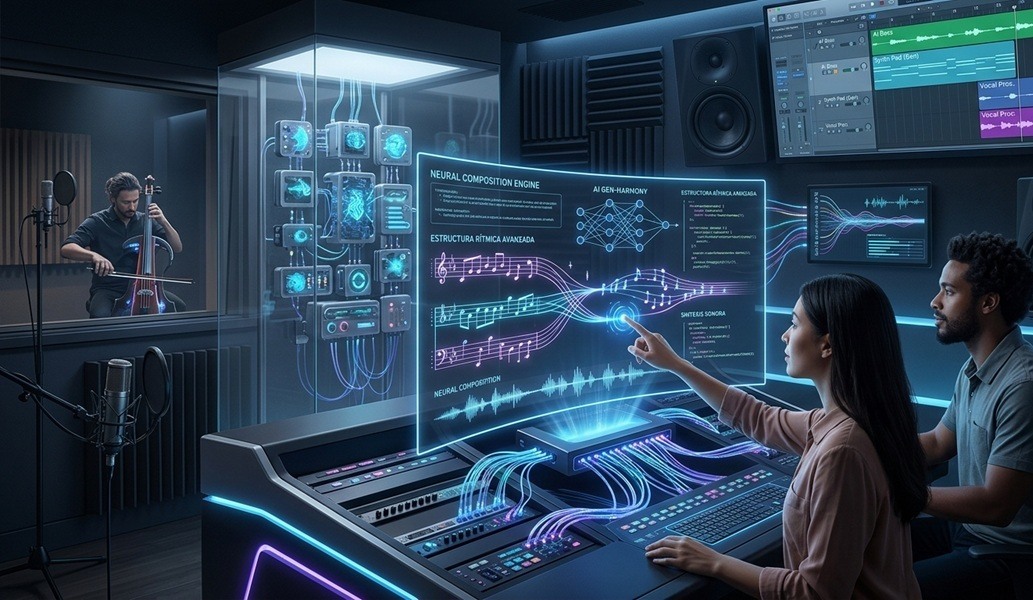
AI and Music
Even when this could cause discomfort, it is not a secret for anyone that every day there are more facilities for those who make music without having the necessary knowledge to produce something of high quality in many cases, so they ride on all possible resources to make their job easier and simpler.
Artificial intelligence makes producing, composing, mixing, and mastering much less complex processes, and in many cases, human intervention is not necessary. Artists and all kinds of music professionals now have a much wider range of possibilities with which they can cross boundaries technology did not allow before. For this reason, it is imperative that they are trained as best as possible in these tools so they can get the most out of them, but trying to keep the human touch that every artistic product needs.
Benefits of using Artificial Intelligence in music
As we have made quite clear, artificial intelligence offers numerous advantages to all those who learn to use it, but what would be some of them?
- Less chance of making mistakes: by limiting to the minimum human intervention, the chances of making a mistake that could harm the final result is very slim, delivering greater levels of confidence throughout any process.
- Speed and efficiency in the processes: anyone who has had the opportunity to compose or knows someone who does understands that it can be a rather slow and arduous process, but artificial intelligence can make things easier beyond imagination. Something that usually lasts days or even weeks can suddenly happen in seconds, making this technology a huge draw for any music creator.
- Greater creative possibilities: Because AI offers the ability to mix up styles and genres that an artist would not consider by himself, opening up a wide range of creative possibilities and helping to create unique and experimental songs.
- Highest adaptability: another of the virtues of AI is the ability to create lyrics, adjust them, and adapt them to existing melodies.
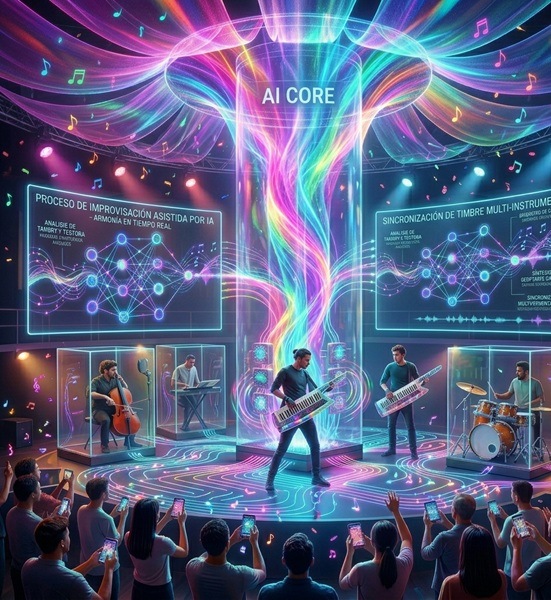
Challenges facing artists with artificial intelligence
So as we mentioned some of the virtues of AI, it is needed to be honest and admit that it can bring some problems when not used correctly. For an artist, there are certain things that can be harmful if he does not have the right training and a clear idea of what he/she wants to achieve:
- Little originality: this is one of the aspects that most concerns those who criticize excessive use of AI in music, since this technology is based on pre-existing data. While it is true that AI can generate new things, its production only comes from previously made content.
- Low emotional depth: one of the main criticisms against AI in the realm of artistic creation is the lack of emotional depth it sometimes offers. Music has been understood as one of the most emotional and human expressions an artist can convey, but unfortunately AI is occasionally unable to replicate it with the same intensity. These platforms cannot always grasp this emotional component, which is so necessary to create music with the level of authenticity and depth required to touch the hearts of audiences.
- Concerns about job security of musicians: due the legal gray areas over which AI still navigates, there are many worries about job security of artists. Because this technology is capable of reproducing vocals and compositions that may well compete with those of humans, this could mean that the livelihoods of many workers of the music industry could be seriously affected.
Copyright law in relation to Artificial Intelligence
One of the most common doubts regarding AI is how the matter of copyright is handled, especially in the music industry, where there have been more than one scandal involving this topic. According to Intellectual Property Law, any copyrightable work should be completely original and created by a natural person. Could we say that an AI-powered song is original? Well, let’s see.
Given that originality has no clear definition in the law, the courts and the legal literature have set up the term, which results in the objective approach and the subjective approach.
The subjective approach holds that a work is original if it is a true reflection of its author’s personality, while the objective approach makes references to creating something that did not exist before. The predominant approach in most countries that have enacted appropriate legislation on this matter is the subjective one, making it difficult for works created using AI to be protected by law. However, companies that provide this technology generally point out that the rights to the material created by their AI belong to them.
In view of the above, the law is very clear that the author must be a natural person, making it impossible for a work created with AI to be legally protected. It is for the same reason that, even if the objective approach predominates at some point, it would still be very difficult to protect this material.
What can we conclude from all this?
It is clear that Artificial Intelligence is here to stay and change the music industry forever, so struggling against it and its use is absolutely useless. For this reason, it is important to see it as an ally in improving what was done and not as an enemy to fight.
Although these platforms may have some disadvantages that have already been mentioned, proper training of artists can lower the chances of falling in the lack of human sensitivity and help integrate them into their work as effectively as possible, since AI is a reality with no turning back.
Read also: David Frankel pursued music and created Avenida B Band to reconnect with the memory of his father
