Ed East is a Panamanian bandleader, composer, and jazz percussionist whom we had the opportunity to interview exclusively for the October 2026 edition of International Salsa Magazine. The artist, who currently lives in Iowa, United States, gave us a summary of his entire professional activity from the beginning up to the present day.
After thanking him for accepting our invitation and asking him about his beginnings in music and what led him to dedicate himself to this world, he responded with the following:
“Musical curiosity is a very interesting matter. Since I was very young, I had musical influences; my main influence was my father. My dad was not a musician, but he was the main influence I had because what he did was to consume music of all kinds. He was an omnivore when it came to music; he played both classical music at home and traditional Panamanian music.”
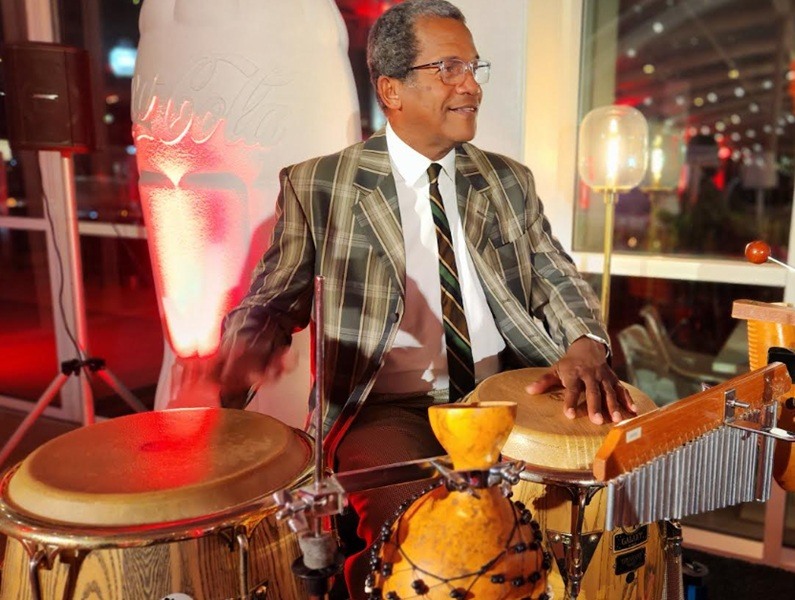
It was as a result of his father’s love for music that Ed began to become increasingly familiar with music from all over the planet. Returning to the fact that Ed is from Panama, this country is well known for the interoceanic canal through which many people pass from all over the world, several of whom choose to stay there for a while or even for the rest of their lives. In that process, they bring their cultures with them and contribute to the cultural tapestry of Panama.
This is how many Panamanians grew up listening to all those influences, which included music from countries like Haiti and Brazil. They do not speak Patois, but they love the rhythm of the music. These genres also sparked his interest in drums from a very young age, leading him to join his school’s drum band, which could be considered the young man’s first experience with percussion.
Around that time, his sister’s boyfriend came home with a guitar and started playing and singing, which fascinated Ed and made him fall in love with the instrument. His curiosity about the guitar was so strong that he entered the National Conservatory in Panama to study it for a couple of years. Unfortunately, he was too young to appreciate what he was learning, so he did not put in the necessary effort at the time. However, that curiosity remains so active today that the guitar continues to be one of his main instruments.
Instruments Ed has learned to play
Regarding the other instruments he plays, Ed spoke to us about a friend he met during his time in the drum band. This friend was related to people in the government, and their band director was a very astute person who knew how to make connections. The director proposed to his friend that he join the band, a proposal he accepted, and in turn, invited Ed to join as well.
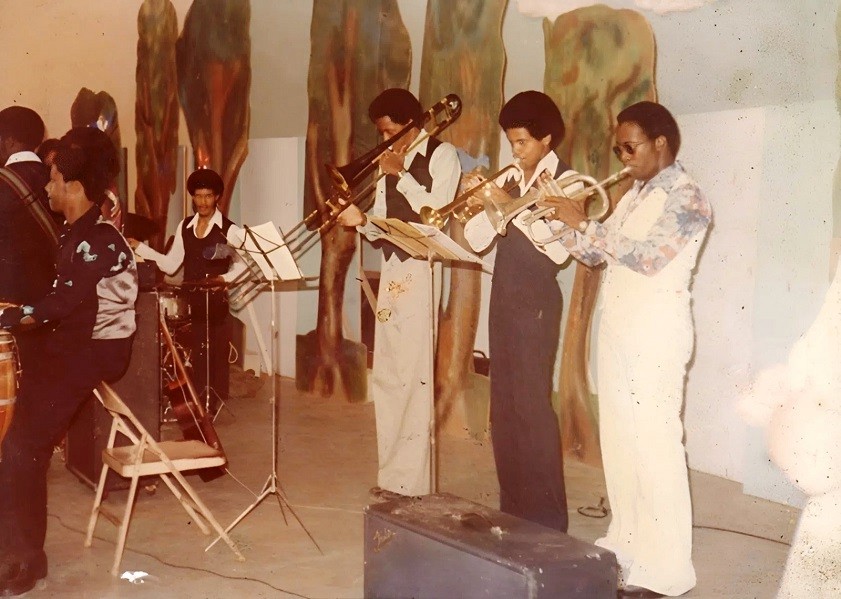
Although the director was not very interested in Ed—focusing instead on his friend—they gave him the opportunity to join playing any instrument. He then remembered that he had a trumpet at home that belonged to his uncle, and he began to study it.
He even earned a scholarship to study in the United States at the University of Northern Iowa, which hosted the oldest jazz festival in the country. Fortunately for him, the training he brought from his home country helped him greatly in adapting to this new and much more demanding environment.
Decision to stay permanently in the United States
When those responsible for deciding whether or not to award Ed the scholarship asked him: “Listen, if you are doing very well over there at the university and doing well with music, will you return to Panama or stay there?” His hesitation was very brief, as he was very clear about what he wanted to do. So, he chose to be honest and replied: “No, if things are going well, I’m staying.”
Ultimately, Ed received his scholarship, graduated with honors, and joined honor societies whose members were selected by the professors, which was extremely favorable when it came to finding employment. That was how he quickly managed to land a job as a music teacher and band director.
Along the way, his greatest influences were professor and band director Ricaurte Hayes and professor Fernando “Tito” Rodríguez, both of whom were fundamental in his development as an artist.
First professional experiences
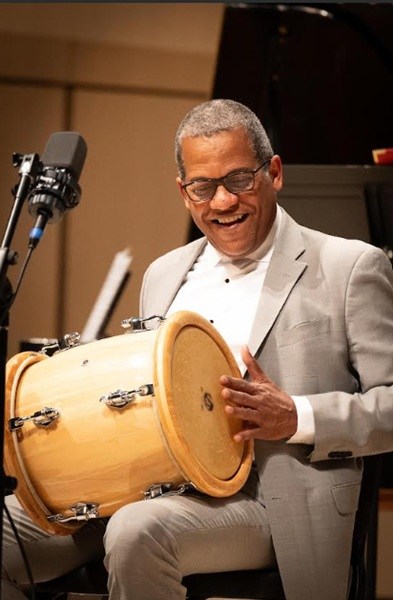
His professional network naturally began at the university, where, thanks to his talent and dedication, he managed to rise from the last band to the top band in a short time, leading him to go on tour with his very own professors. This collaboration gave birth to the Alto Maiz Jazz and Salsa Orchestra. The name Alto Maíz is a derivation of what exists in Iowa known as Tallcorn; thus, the direct translation was Alto Maíz, which became the band’s name.
Ed initially started as one of the three percussionists until he was encouraged by his bandmates to write his first vocal arrangement for the song “Cuando Te Veo” by Bobby Valentín. For this track, he took on the lead vocals alongside the backing chorus.
Many years later, Bob Washut decided to step away from the orchestra to focus on other projects, leading Ed to take on the role of director, producer, and principal arranger of the orchestra.
Ed East Latin Jazz Quorum
Alongside the Alto Maíz Orchestra, Ed also formed other groups, eventually shaping what is known today as the Ed East Latin Jazz Quorum. This is an independent project with a smaller format in which the artist explores other repertoires. The band has adapted to the point where it can perform as a duo, quartet, or quintet, depending on what the client requests.
Today, he plays alongside musicians of the caliber of bassist Danny Olin, percussionist Maurice Arteaga, and saxophonist Tejo Shorter.
Read also: Horacio Hinojosa and Bulbo Houston are here in International Salsa Magazine

- Panamanian bandleader, composer, and jazz percussionist Ed East puts Iowa to enjoy Latin music - October 23, 2026
- Russian composer, artistic director, and saxophonist Yaacov Mayman conquers New York - October 12, 2026
- Zach Phillips brings us the latest news on The NAMM Show - September 30, 2026