• Skip to primary navigation
  • Skip to main content

International Salsa Magazine

  • Home
  • Previous editions
    • 2026
      • ISM / January 2026
      • ISM / February 2026
    • 2025
      • ISM / December 2025
      • ISM / November 2025
      • ISM / October 2025
      • ISM / September 2025
      • ISM / August 2025
      • ISM / July 2025
      • ISM / June 2025
      • ISM / May2025
      • ISM / April 2025
      • ISM / March 2025
      • ISM / February 2025
      • ISM / January 2025
    • 2024
      • ISM / December 2024
      • ISM / November 2024
      • ISM / October 2024
      • ISM / September 2024
      • ISM / August 2024
      • ISM / July 2024
      • ISM / June 2024
      • ISM / May 2024
      • ISM / April 2024
      • ISM / March 2024
      • ISM / February 2024
      • ISM / January 2024
    • 2023
      • ISM / December 2023
      • ISM / November 2023
      • ISM / October 2023
      • ISM – September 2023
      • ISM – August 2023
      • ISM July 2023
      • ISM Edition June 2023
      • ISM – May 2023
      • ISM April 2023
      • ISM March 2023
      • ISM February 2023
      • ISM January 2023
    • 2022
      • ISM December 2022
      • ISM November 2022
      • ISM October 2022
      • ISM September 2022
      • ISM August 2022
      • ISM July 2022
      • ISM June 2022
      • ISM May 2022
      • ISM February 2022
      • ISM January 2022
    • 2021
      • ISM December 2021
      • ISM November 2021
      • ISM October – 2021
      • ISM September 2021
      • ISM August 2021
      • ISM July 2021
      • ISM May 2021
      • ISM April 2021
      • ISM June 2021
      • ISM March 2021
      • ISM February 2021
      • ISM January 2021
    • 2020
      • ISM December 2020
      • ISM November 2020
      • ISM October 2020
      • ISM September 2020
      • ISM August 2020
      • ISM July 2020
      • ISM June 2020
      • ISM May 2020
      • ISM April 2020
      • ISM March 2020
      • ISM February 2020
      • ISM January 2020
    • 2019
      • ISM December 2019
      • ISM November 2019
      • ISM October 2019
      • ISM Septembre 2019
      • ISM August 2019
      • ISM July 2019
      • ISM June 2019
      • ISM May 2019
      • ISM April 2019
      • ISM March 2019
      • ISM February 2019
      • ISM January 2019
    • 2018
      • ISM December 2018
      • ISM November 2018
      • ISM October 2018
      • ISM September 2018
      • ISM August 2018
      • ISM July 2018
      • ISM June 2018
      • ISM May 2018
      • ISM April 2018
      • ISM March 2018
      • ISM February 2018
      • ISM January 2018
    • 2017
      • ISM December 2017
      • ISM November 2017
      • ISM October 2017
      • ISM September 2017
      • ISM August 2017
      • ISM July 2017
      • ISM June 2017
      • ISM May 2017
      • ISM April 2017
      • ISM March 2017
      • ISM February 2017
  • Download Salsa App
    • Android
    • Apple
  • Spanish

Artists

Yolanda Rivera The Lady of Salsa and the Sonera of Ponce

By: Diana Marie

Yolanda Rivera La Sonera of Ponce

Yolanda Rivera was born in Ponce, Puerto Rico on June 30, 1951, she admits to listening to Cuban music since the age of 8.

Her hometown of Ponce saw the Cuban singer Celeste Mendoza’s event that triggered in the young Yolanda her desire to sing.

Naturally, with an exceptional voice, she says she never took singing lessons. In her family everyone sang, without making it a profession.

Yolanda Rivera had the opportunity to meet Quique Lucca-founder of the Ponceña who decided to recruit
in the 90’s she integrated for 3 years the Rubby Haddock Orchestra

She began her singing career in New York in 1969 as a member of Willie Rosario’s choir. Returning to Puerto Rico in 1975, she has joined the group Roberto y su Changó.

His real professional debut with the orchestra can be considered as the Terrífica. With this formation, in 1976 he recorded 33 tours: “sabor a pueblo” (int 908), where he sang the hit “mi corazón es para ti” and “Guaguancó No. 3” boleros “para que sufras” and “esta demás” on the same album “Pichie” Pérez is responsible for other pieces.

Unfortunately the episode was very brief due to disagreements within the group.

Naturally, with an exceptional voice, she says she never took singing lessons. In her family everyone sang, without making it a profession
Yolanda Rivera The Lady of Salsa

After a few months of unemployment, he had the opportunity to meet Quique Lucca-founder of the Ponceña who decided to recruit.

With them he recorded “Borinquen”, his favorite song. He stayed from 1977 to 1984, the time to record some albums and browse the scenes around the world, albums with this prestigious formation are:

“The Giant of the South” (Inca-1977-1054)

“Exploring” (inca-1978-1060);

“The orchestra of my land” (1978-inca-1064);

Compilation “Energized” (1979-1072-Inca)

“New heights (1980-inca-1074)

“Unchained force” (1980-inca-1077)

“Night Raider (1981-inca-1079)

“Determinación” (1982-inca-1080)

“Squeezing” (1983-inca-1089)
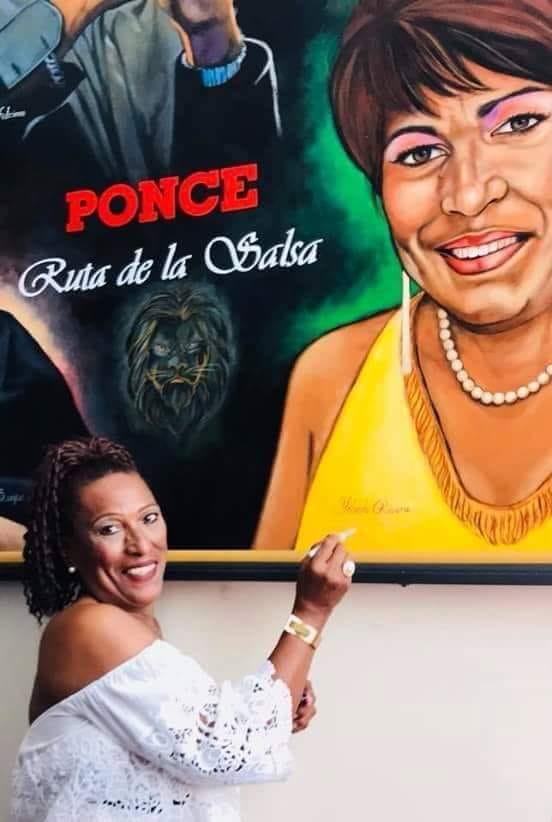
Yolanda Rivera was born in Ponce, Puerto Rico on June 30, 1951
Yolanda Rivera La Sonera of Ponce

Parallel to her career, Yolanda had to take care of her family, she will stay in Florida for five years, but not stop completely with the song, indeed it is a record with the noble strength of ensemble led by Gabino Pampini.

The return home was more difficult to revive the trade. only in the 90s she integrated for 3 years the Rubby Haddock orchestra where several records, since then she has worked regularly with Luigi Texidor .

From time to time she attended the anniversaries of the Ponceña:

Sonora Ponceña 30th anniversary golden age (inca 1992);

Sonora Ponceña 45th anniversary live: history and we continue to make, (bmg / ariola 81 167) 2000 (only appears on cd).

But she never returned because Ponceña Papo Lucca the beloved joins Luigi Texidor in his career as a soloist in the interpretation of the orchestra’s old hit.

She also participated in the album “Ray Barretto 50th Anniversary Live” where she sings “Nadie se salva de la Rumba” with Adalberto Santiago for the year 2001, a song included in the production Tremendo Trio with Celia Cruz, Ray Barretto and with Adalberto Santiago, for the year 1983 distributed by Fania Record.

"Nobody is saved from the Rumba" with Adalberto Santiago for the year 2001
“Ray Barretto 50th Anniversary Live”


In February 2009, in Puerto Rico, Yolanda received the “Salsa Awards”, in recognition of her musical career.

That same year she participated once again in another event in La Ponceña, this time in the 55th anniversary of the Ponce giants.

The most recent musical production of the Dama de Ponce is a single titled “Yo no tengo marido” recorded in 2012.

The most recent musical production of the Dama de Ponce is a single titled "Yo no tengo esposo" recorded in 2012
Congratulations to the Lady of Salsa Yolanda Rivera

Congratulations to the Lady of Salsa Yolanda Rivera


Home


Anthony Cruz Was one of the most emblematic interpreters of romantic Salsa

North America / United Stated / New Yersey

Was one of the most emblematic interpreters of romantic salsa. Anthony Cruz was born in New Jersey, United States, on January 5, 1965 to Puerto Rican parents and died the night of Friday, May 18, 2018, of a cardiac arrest, after several days in the hospital.

At an early age she demonstrated her talent as a singer by winning a contest for vocalists in New York, at the young age of five. There, she also stood out by singing with various youth salsa groups of the time and by 1992 she launched herself as a solo artist.

Before Anthony Cruz became a soloist for the Musical Productions label, he was trained by musical institutions that made him worthy of this great opportunity. He was part of the Pedro Conga International Orchestra, chorus singer in the productions of Roberto Lugo, Pedro Arroyo, Nino Segarra; and lead singer of the late Mario Ortíz.

Born in New Jersey, United States, January 5, 1965 to Puerto Rican parents
Anthony Cruz was one of the most emblematic interpreters of romantic salsa.

His first production under Musical Productions, which are the executives of J&N Records, was entitled “Algo Nuevo”, which highlighted the songs “No le temas a él”, with which he reached high levels of popularity that led him to obtain a Gold Record and successful personal presentations throughout the world. It was followed by songs like “Si Sabieras”, “Tu Traición”, “Nunca te Fallé” and “La llave de tu Apartamento”.

In his second production entitled “Para ti”, the songs “Dile a El”, “Atracción Fatal”, “A Que Saben tus Besos” and “Me Gusta”, among others, stood out.

he also stood out singing with various youth salsa groups of the time and by 1992 he launched himself
Their first production under Musical Productions, which are the executives of J&N Records, was entitled “Algo Nuevo” – Anthony Cruz


Their productions have included songs by great composers such as Alicia Baroni, Mimi Ibarra, Lolita de la Colina, Gerardo Garcia and arrangers of the stature of Ramón Sánchez and Rafael “Bodo” Torres, among others.

In addition to his success in Puerto Rico, his music has reached international countries such as Venezuela, Panama, Colombia, Peru, Costa Rica, Ecuador, the United States and the Dominican Republic.

  Death of Anthony Cruz

Anthony Cruz died on the night of Friday, May 18, 2018, from a cardiac arrest, after several days in the hospital. His sister Mary Cruz posted a message on social networks announcing the death. The message read: “It is with great sorrow in my heart that I inform you that my beloved brother Anthony Cruz resides in the arms of our Lord. We will be grateful if you keep him in your prayers”.

After his death, the singer Gilberto Santa Rosa wrote in his Facebook account: “Rest the friend and great singer Anthony Cruz! Fly high brother and may your music remain in the hearts of your colleagues, friends and admirers, rest in peace”. While Andy Montañez wrote that with the departure of the interpreter of ‘Morena linda’ “a great one left”.

The singer Mimi Barra, declared on social networks: “My God, I can’t believe it, it can’t be…. unfortunately Anthony Cruz, my friend, with whom I made a duet with a song of my authorship ‘No puede ser’ and the interpreter of several songs I wrote as ‘Morena linda’, ‘Nunca te falleda’, ‘Dile a él’, ‘A qué saben tus besos’, etc… he left. I feel very sad, a friend of mine, one of the greats, left. Rest in peace Anthony Cruz, your voice will stay with us; and today I repeat with much sadness: it cannot be”.

Anthony Cruz
Anthony Cruz and his wife Mayra Gomez
Source: https://www.buenamusica.com/


Home

José Madera Timbal de Machito and his Afro-Cubans, Tito Puente, Mambo Legends Orchestra and Fania Record Co.

The musician, arranger and composer who has yet to find the time to record and write music for some of the most influential bands in existence.

José Madera, Timbal of Machito and his Afro-Cubans, Tito Puente & Fania All-Stars
osé Madera, born on September 30th

One might think that working for Tito Puente’s famous band can keep a percussionist busy enough.

But musician, arranger and composer Jose Madera had found time to record and write music for some of the most influential bands in the world.

Before joining Tito Puente over 35 years ago, Madera played for four years with the famous Machito Orchestra and recorded with many R&B artists (including James Brown, Diana Ross, David Sanborn and Aztec Two – Step).

Jose musical director of Mambo Legends Orchestra

As an arranger for Fania Records, he participated in several commercial hits, and over the years has composed music for Fania All-Stars, Larry Harlow, Johnny Pacheco, Willie Colón and Celia Cruz.

As an arranger for Fania Records, he participated in several commercial hits, and over the years has composed music for Fania All-Stars, Larry Harlow, Johnny Pacheco, Willie Colón and Celia Cruz.
Jose musical director of Mambo Legends Orchestra

Despite having recorded some 75 albums in 20 years, as well as numerous radio jingles and movie soundtracks, Madera still had time for his other career: for 15 years he worked as a teacher and director at a privately funded performing arts high school in New York City.

Jose has written many arrangements for countless commercial Latino artists and has also recorded or worked with many of them.

Some of them include: Larry Harlow, Johnny Pacheco, Chico O’Farill, the Lincoln Center Afro-Cuban Jazz Orchestra, Celia Cruz, Tito Rodriguez, Fania All-Stars, Willie Colon, Joe Farrell, Machito, Graciela, Mario Bauzá, Willie Rosario, Earl Klughand, Eddie Palmieri, to name a few. Jose also worked and recorded with many pop, R&B and jazz artists.

Some of them include Diana Ross, James Brown, Dizzy Gillespie, Paquito D’Rivera, George Benson and Lionel Hampton, among others.

Jose has participated in over 250 recordings. He has worked on several television show soundtracks, including The Simpsons, and several film soundtracks, including The Mambo Kings Play Songs of Love, where he was the musical arranger and conductor for the Tito Puente film segment.

Jose also taught the art of playing Latin percussion instruments at BOYS HARBOR in New York City for 28 years.

Jose has done and continues to do musical clinics around the country at various schools.

He was the musical director of the Latin Giants of Jazz from 2001 to 2009.

Jose continues his musical direction with Mambo Legends Orchestra, a band composed of former members of the Tito Puente Orchestra, which is dedicated to the execution of new and creative Latin and Latin Jazz concepts, as well as some of the music of Machito, Tito Rodriguez and Tito Puente.

He was the musical director of the Latin Giants of Jazz from 2001 to 2009.
José has participated in more than 250 recordings


Jose has personally recreated and re-arranged much of the music that the bands performed during the heyday of the mambo at the Palladium Ballroom in New York City, which many critics consider to be the “Greatest and Most Innovative Era” in the history of Latin music.

Madera’s father, Jose “Pin” Madera, a saxophonist, was one of the original members of the Machito Afrocubans.

The young Jose was influenced by Machito’s drummer (“the best Latin Big Band drummer I’ve ever heard”). He was later influenced by José Mangual and Tito Puente himself.

Madera's father, Jose "Pin" Madera, saxophonist, was one of the original members of the Machito Afrocubans
José Madera was influenced by José Mangual Padre and Tito Puente himself

Home

Manny Cruz and Daniel Santacruz in Forbes magazine

Both artists are on the “most creative” list of the prestigious magazine

The Dominican Republic edition of the prestigious Forbes magazine has put Manny Cruz and Daniel Santacruz on the cover. There is an article dedicated to both of them as “the most creative in the region”.

In the article we see many compliments towards both brothers, where they highlight how much Manny’s lyrics have meant for the audiences, saying that little by little he has become “one of the main exponents of the new merengue generation”, something that is easy to say, but that has been a difficult achievement to reach. The magazine also summarizes the artistic career of the Dominican, highlighting the most important moments of his career, such as the beginning of this, as well as the most impressive goals he has achieved over the years.

On the other hand, his brother Daniel received a lot of compliments too, to get an idea, we just need to know that the article describes him as “the world ambassador of bachata”, a title that he has earned through the years. The singer has crossed all kinds of borders, becoming a highly recognized artist internationally.

In addition to these talented brothers review, we can also perceive how excited both artists are when reading their words about their new single together, which, although at the moment the exact month of the release is not known, the American has made it clear that it will come out early next year, so the followers of both are waiting for the news on this promising song.

Manny Cruz and Daniel Santacruz
Manny Cruz and Daniel Santacruz in the prestigious Forbes magazine

The 2020 of the brothers

Without a doubt, 2020 has been one of the most unpredictable years in recent times, and there is no wonder why, with a threatening pandemic that has been around since the end of 2019, the complications for all have been many, and artists are no exception. However, the inconveniences that have arisen have not been enough to stop the success of these two singers.

Manny Cruz has said in interviews that he is very happy with the commercial impact that this year has had, making it clear that the success of his songs in countries like Venezuela makes his heart overflow with joy. Regarding his success, he also said that he has always dreamed big, and pointed out the importance of setting clear goals to achieve. On the other hand, Daniel Santacruz has been genuinely happy to get the prestigious “Latin Grammy” for best merengue and / or bachata album, a goal that countless artists dream of reaching.

They come with the best vibes for this new year, also with very ambitious projects in which they are putting all their hearts.

Despite how strange the situation was in 2020, both artists have had very good moments, which makes us think that 2021 can be even better, not only because of the promising song they made together, but also because everything seems to indicate that their careers will not stop progressing in a positive way.

Tito Rojas passes away at 65 years of age

Tito Rojas, The Puerto Rican artist passed away this December 26

The bad news in 2020 does not stop coming, after a hard year full of unfortunate events, a few days before the year ends, Julio César Rojas López, better known as Tito Rojas, died this Saturday, December 26. His death was confirmed by both the authorities of Puerto Rico and the statements of his daughter Jessica Rojas.

According to the testimonies given, the relatives of the salsa singer found his lifeless body on the balcony of his residence in Tejas de Humacao, a municipality of Puerto Rico, subsequently, they called 911 to report his unfortunate death. Although everything seems to indicate that the cause of death was a heart attack, it has not yet been confirmed by the doctors in charge of carrying out the autopsy, however, it is expected that such confirmation will come in the next few days.

The news came as a surprise to everyone, especially because a few days before this horrible news, he offered a virtual show for all his fans, and he seemed to be in good health, so the unfortunate news has caused a great impact.

“El gallo de la salsa”, as he (Tito Rojas) was known internationally, lived 65 years, and his music has inspired many artists of the salsa genre, who have had him as a reference. As expected, great Latin American artists have spoken about it through social media.

Tito Rojas dies
Tito Rojas passes away on december 26.

Artists share their thoughts about the singer’s death

The salsa singer Tony Vega shared a photo of Tito Rojas and accompanied it with the following words: “A colleague, a friend, today we mourn his departure, but we will always carry him in our hearts.” On the other hand, Gilberto Santa Rosa also offered a message full of emotions through his Facebook and Twitter accounts: “I still can’t believe it… my dear Gallo. We will miss you and remember you in each song, in each saying and in each gesture of affection and companionship that you left. Rest in peace, my friend Tito”. Tito Rojas had participated in the new production of his compatriot Gilberto Santa Rosa, specifically in the song “Por la calle del medio”.

Other artists who have also expressed their condolences have been: Don Omar, Bad Bunny, Tito Nieves, Victor Manuelle, among many others; On the other hand, Tito’s have been such an important figure than even other well-known faces outside of the music industry also publicly lamented his death. Pedro Pierluisi and Wanda Vázquez, both governors of Puerto Rico, also share their sadness through their social media accounts.

Social networks continue to be filled with moving messages, as well as memories and anecdotes related to “El gallo de la salsa”, and due to the importance that Tito has had in the industry, this is certainly expected. After a long career full of successes, the interpreter of songs such as “Siempre seré”, “Señora de madrugada”, ” “Ella se hizo deseo” and many others, will be remembered as one of the greatest exponents of the salsa genre, his music to this day continues to inspire both veterans and emerging talents.


Home

  • « Go to Previous Page
  • Page 1
  • Interim pages omitted …
  • Page 101
  • Page 102
  • Page 103
  • Page 104
  • Page 105
  • Interim pages omitted …
  • Page 111
  • Go to Next Page »

International Salsa Magazine (ISM) is a monthly publication about Salsa activities around the world, that has been publishing since 2007. It is a world network of volunteers coordinated by ISM Magazine. We are working to strengthen all the events by working together.