• Skip to primary navigation
  • Skip to main content

International Salsa Magazine

  • HOME
  • Previous editions
    • 2026
      • ISM / May 2026
      • ISM / April 2026
      • ISM / March 2026
      • ISM / February 2026
      • ISM / January 2026
    • 2025
      • ISM / December 2025
      • ISM / November 2025
      • ISM / October 2025
      • ISM / September 2025
      • ISM / August 2025
      • ISM / July 2025
      • ISM / June 2025
      • ISM / May2025
      • ISM / April 2025
      • ISM / March 2025
      • ISM / February 2025
      • ISM / January 2025
    • 2024
      • ISM / December 2024
      • ISM / November 2024
      • ISM / October 2024
      • ISM / September 2024
      • ISM / August 2024
      • ISM / July 2024
      • ISM / June 2024
      • ISM / May 2024
      • ISM / April 2024
      • ISM / March 2024
      • ISM / February 2024
      • ISM / January 2024
    • 2023
      • ISM / December 2023
      • ISM / November 2023
      • ISM / October 2023
      • ISM – September 2023
      • ISM – August 2023
      • ISM July 2023
      • ISM Edition June 2023
      • ISM – May 2023
      • ISM April 2023
      • ISM March 2023
      • ISM February 2023
      • ISM January 2023
    • 2022
      • ISM December 2022
      • ISM November 2022
      • ISM October 2022
      • ISM September 2022
      • ISM August 2022
      • ISM July 2022
      • ISM June 2022
      • ISM May 2022
      • ISM February 2022
      • ISM January 2022
    • 2021
      • ISM December 2021
      • ISM November 2021
      • ISM October – 2021
      • ISM September 2021
      • ISM August 2021
      • ISM July 2021
      • ISM May 2021
      • ISM April 2021
      • ISM June 2021
      • ISM March 2021
      • ISM February 2021
      • ISM January 2021
    • 2020
      • ISM December 2020
      • ISM November 2020
      • ISM October 2020
      • ISM September 2020
      • ISM August 2020
      • ISM July 2020
      • ISM June 2020
      • ISM May 2020
      • ISM April 2020
      • ISM March 2020
      • ISM February 2020
      • ISM January 2020
    • 2019
      • ISM December 2019
      • ISM November 2019
      • ISM October 2019
      • ISM Septembre 2019
      • ISM August 2019
      • ISM July 2019
      • ISM June 2019
    • 2016
      • ISM December 2016
      • ISM November 2016
  • Spanish
  • Download Salsa App
    • Android
    • Apple

Artists

The man behind each song and his story Eduardo Herrera

There is a great variety of famous artists, singers, orchestras in different parts of the world but that does not mean that one cannot meet new artists, who have motivation and the desire to boost their musical talent; here we have as a guest Eduardo Herrera who is a salsa and ballad singer.

Eduardo is the son of Puerto Rican parents, raised in New York with a Puerto Rican flavor. From an early age he fell in love with music and with the passage of time he had many musical experiences in different genres with Latin nuances and foreign fusions, he mentions that when he was younger he participated in youth choirs on platforms and walked in the concerts of greats. artists learning the lyrics of urban music.

As time went by he obtained the perfect school that made a unique mold in his style; where it includes spiritual music, Latin rhythms and the influence of American styles without abandoning the Puerto Rican roots; He also mentions that he had the opportunity to share and collaborate with very famous artists who influenced him by their style and exceptional talent, until today.

Eduardo Herrera "El Amor"
Eduardo Herreray his “El Amor” Flyer

Eduardo Herrera tells us that his music is a set of experiences that identifies many people. It has no age or time, it has seasoning, a Caribbean rhythm and a feeling of the soul. When you listen to the melody you fall in love, when you listen to the lyrics it captivates you, when you listen to it again you turn it into what identifies you regardless of your age, race, condition, sex, it is that it simply identifies what nobody sees or knows in you or of you. In fact their songs carry stories; they tell your life, his and mine. Every story on a bus or train in New York, every event in the life of a family or an acquaintance, the stories of fans, among others.

In the course of his life he mentions that it was a transition since he went through many experiences both positive and negative, where he allowed him to obtain different meanings of the emotions he felt even if they were real or false, all these experiences served him to help others such as self-improvement.

In the “Salsa” and the “Balada” he has found his perfect space to express what he carries in his luggage. Hoping that there are many couples who to the rhythm of their music have a happy life.

Eduardo told us “To achieve that emotional catharsis that lifts you up from any tragedy you have to “LOVE YOURSELF BEFORE LOVING SOMEONE” so remember that when you listen to the music of Eduardo Herrera: “LOVE YOURSELF BEFORE LOVING SOMEONE”

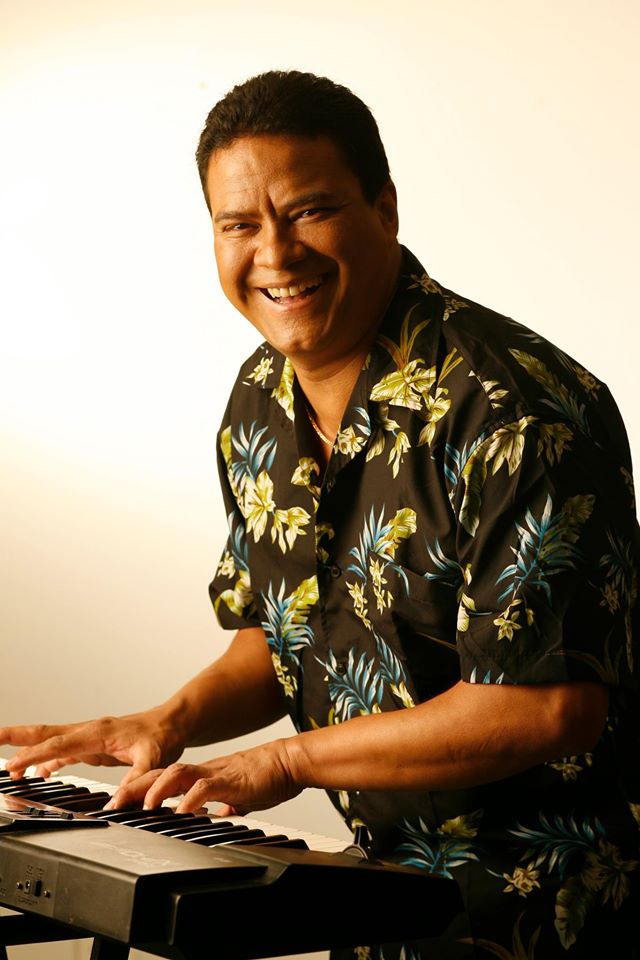
Eduardo Herrera Photo
Group photo with Eduardo Herrera

Recognizing the value of an individual, and appreciating their abilities while learning from mistakes, that is what defines each song that you will hear from Eduardo. The message will arrive, the result of it depends on you so that you are happy. Because you learn from the difficult in the process, the end result depends on the way you handle the exams to rate yourself in feelings for the life you choose to live.

If you want to know more about him,

  • Facebook: https://www.facebook.com/eduardoherrerasalsa
  • Instagram: eduardoherrerasalsa
  • Correo: [email protected]
  • Teléfono: 787 399 5064


Home

Andreyna Hernandez – The disabled Venezuelan Dancer.

Life is a succession of choices that one must live to understand certain meanings, many are easier, others more complex and others very difficult, and this time we have a Venezuelan dancer who can show us that everything is possible with having a strong fighting spirit and perseverance, her name is Andreyna Hernandez.


Andreyna was born on September 17, 1991 in Venezuela, studies accounting, practices swimming and is the mother of two little girls; She tells us that during her childhood she felt great enthusiasm for dance and physical activities, for this reason she became a dancer and managed to be a dance instructor at an academy, together with her boyfriend Robert Terán.

Robert Terán tells us that he and Andreyna were trained for 10 years at the Salsa & Ashé Academy and decided 6 years ago together with Andreyna to found their own academy called Fback Latino, where both are the directors and / or teachers, which is located in the vicinity of the Agua Salud station in La Cañada in Caracas, Venezuela, in June 2015, with the purpose of creating a new dance space where they can teach, “there is nothing more satisfactory than the person who learns to dance deposits all your confidence in you and achieve that goal by overcoming the penalty ”; There they teach Bachata, Salsa Casino, Kizomba and they also give a comprehensive course for children where they will have a teaching of various types of dances including ballet and contemporary dance, regardless of whether or not you have any knowledge of some of these types of dances; They mention that both they and their students have participated in competitions, although in Andreyna’s case it was mostly when she was at the Salsa & Ashé Academy on a national and international level, such as the competition in Cancun and Cuba.

FeedBack Latino
FeedBack Academy Logo

Photo of Andreyna Hernandez before 2016

Andreyna Hernandez and her boyfriend

Feedback Academy - Photo from a social

Photo of a Salsa Casino social at the Feedback Academy

During the course of time, Andreyna Hernández faced something that no one should face … on June 26, 2016 he had a terrible accident near his academy, where a tree fell on him, specifically on his legs giving a 360 ° turn to his life, affecting his profession and his day, he tells us… “That day that changed my life was because a tree fell on me, precisely where a few people and I were located. The tree falls right where I was sitting (on a ping pong table), and since everything happened very quickly I could not get my whole body off the table, my legs were trapped, being conscious, I thought I was going to lose both legs because of the strong impact I received … after this, many people tell me that God does not send tests to those who cannot overcome them ”

“This transition was not easy, since an accident that many think and wonder why it happened to me? … that even I ask myself at some point … be like that in the first photo, and that of the night in the morning life changes you is strong ”

“I would never say that this situation would be easy, because of course losing some part of the body is a bit difficult to assimilate. Adapt to doing things in a different way, to looking in the mirror and looking different. To the different looks of the people on the street …. ”

“But as my beautiful Super Coach @athletics_swim says to get toxic people out of the way, live life regardless of others. So … to live life, which is one. The disability is mental. There is no excuse. Because wanting is power. ”

https://www.salsagoogle.com/wp-content/uploads/2021/07/6968859114139176198.mp4

Despite all this tragic event, he thanks God for having a second chance, thanks to the support he received from various academies that contributed to his recovery and to be able to enjoy his life of course, with a new physical condition that is not an impediment to carry out her activities, although she admits that she does more things on a larger scale than before the accident, surprising all those around her both within her social and / or family circle and her followers in the different social networks she owns, as we could observe in her different TikTok videos that went viral, such as: a dance event dancing salsa casino and dancing during her pregnancy… something new and incredible for all who see it.

https://www.salsagoogle.com/wp-content/uploads/2021/07/6823538453590904070.mp4

Currently Andreyna Hernandez is not only the mother of a little girl who is her greatest motivation, but she is also a swimming athlete and who continues with her passion which is dance, the only thing that a person needs to have faith, love, perseverance, strength , positive mind.

He points out that “We all have our casualties from time to time, including myself. But the important thing about everything is not to stay down, the key is to get up and continue the path with your head held high with energy that life continues. Regardless of what they will say. Feeling comfortable with yourself as we are and with what we do is enough ”

Andreyna Hernandez
Andreyna Hernandez and her boyfriend

Right now in 2021, both are giving their dance classes complying with the security measures during the covid-19 pandemic with the use of face masks and other measures, which is a mutual benefit for both the instructors and the students to clear up of the confinement and to be able to release both the tension and the style that one has inside with the practice of the dance steps.

For more information:

  • Instagram: @andreynahf y @fbacklatino
  • TikTok: @andreynahf

Home

Flashback: Arturo “Chico” O’Farrill

The Architect Of Afro-Cuban Jazz

Arturo "Chico" O'farrill with reading glasses and sitting
In memory of the 20 years of his physical disappearance

Arturo O’Farrill, better known as “Chico” O’Farrill was born on October 28, 1921, in Havana (Cuba) at the height of Son. He had a normal childhood like any son of a Jewish family raised to continue the family profession, Law.

In the 1930s Chico was admitted to the Riverside American Military School in Gainesville, Georgia. His father, an eminent Irish lawyer recognized in the Afro-Caribbean country, decided to intern him to continue his studies.

During his stay at that institution, O’Farrill discovered the great jazz orchestras that made life in that territory. Those bands were known by the name of Big Bands. He entered that musical environment and began his process of love and passion for the industry. He listened to recordings by Benny Goodman, Artie Shaw, Glenn Miller, and Tommy Dorsey while learning to play the trumpet on his own. In almost immediate time Chico became the trumpet player for the school’s military band and large dance groups.

Years later, Arturo returned to Cuba. He studied the same profession as his father (Law) and at the same time with his studies, he developed his facet as a composer. He received composition and harmony classes from important island musical instructors such as Félix Guerrero.

His progress, determination, and development in music were unstoppable. He was a member of the Armando Romeu Bellamar Orchestra and the Isidro Pérez Orchestra at the time of Mambo and Son, rhythms that prevailed and enhanced Latin music for decades.

MUSICAL HISTORY

Arturo "Chico" O'Farrill seated and in black and white
Chico O’Farrill dabbled in rock

“The Architect of Afro-Cuban Jazz” worked for four years (1943 – 1947) in Montmartre, the Cuban cabaret with the greatest French style. In the same way, he belonged to the Bellamar Orchestra, directed by Armando Romeu with Luis and Pucho Escalante, and Mario Romeu, among many other members.

As a trumpeter, Arturo traveled to Mexico and Europe. He created Los Raqueteros del Swing band, being the director and member of the orchestra. Subsequently, he founded Los Beboppers (the first Cuban bop group) with continuous performances at the Hotel Saratoga. Here, Chico was once again at the helm as director of the band and musician with his related instrument, the trumpet.

In the 1950s he began his successes as an arranger, working briefly for various musical directors such as Gil Fuller, Noro Morales, Frank “Machito” Grillo, and Benny Goodman.

Likewise, he composed his first masterpiece, Afro-Cuban Jazz Suite in five movements: Canción, Mambo, 6/8, Jazz, and Rumba Open. This masterpiece of composition was made and recorded for the imprint of the businessman Norman Granz, with the Machito Orchestra as the rhythmic base and accompanist.

The expert comments on Afro-Cuban Jazz Suite were numerous, but here are two of the most outstanding opinions:

Luc Delannoy: “It begins and ends with a hypnotic flute and conga duo that reflects the essence of Cuban treatment; the union of musical universes: the European (the flute) and the African (the conga). These two instruments are joined by the oboe, followed by the trumpets, saxophones, and the double bass “Tumbao”… After a return to swing and bebop in the fourth movement, Chico takes us back to the origins of Latin jazz with a melody of clear Arabic accents, before immersing himself in the universe of Afro-Cuban percussions.”

And Benny Carter commented on the Afro-Cuban Jazz Suite the following: “The reason for the coherence of the rhythmic parts and their relationships with the solos that have their own life and independence, Masterpiece of a genius.”

Arturo "Chico" O'farrill dressed in black and with a red background
His last album was Heart Of A Legend

After the enormous success of this powerful piece of music, O’Farrill wrote Cuban Fantasy for Stan Kenton during his stay in New York (EE.UU). However, Kenton eventually changed the name of the piece and it was called the Cuban Episode.

In 1953 he moved from New York to the California state and founded his orchestra with renowned musicians such as Mario Bauzá, Doug Mettome, Jimmy Nottingham, Eddie Bert, Fred Zito, Lenny Hambro, Flip Phillips, and the saxophonist Eddie Wasserman. The orchestra used the Afro-Cuban rhythmic section of Machito, harp, and oboe.

Under this concept, he recorded for Norman Granz and performed in two emblematic venues of the American Jazz music scene: Birdland (New York) and Hat Ballroom located in Los Angeles, California. During this period he composed three new movements: “La Jungla”, “Contrast”, and “Rhumba Finale”, baptized as “Manteca Suite”. The latter recorded in 1954 with Jazzist Dizzy Gillespie and an orchestra with 21 talented musicians.

In 1956 he returned to Cuba in search of inspiration and immediately began to work for the best record companies such as Panart and RCA Víctor. In this record label, he made “Chico’s Cha-Cha-Cha”, adapting the Charanga rhythm to the Big band format. This album was released, once again, on compact disc by BMG during the last decade of the 20th century.

Two years later the restless O’Farrill traveled to Mexico due to the great platform that this country provided for Latin American musicians at the time. During that residency, he once again stood out with a special sound. He appears on television as music director for singer Andy Russell, and there his life takes a dizzying turn. He started the semi-retirement period but never stopped composing. By that time, he composed his next and one of his greatest works “Azteca Suite” for trumpeter Art Farmer. And he made history once again!

In the 60s and with the rise of rock, Chico returned to New York and made arrangements for such important figures as La Lupe (They Call Me La Lupe); Cal Tjader (Along with Comes Cal); Count Basie (High Voltage); Gato Barbieri (Chapter Three: Viva Emiliano Zapata); Ringo Starr (Night and Day) and dabbled in Rock music with David Bowie (I Know That It Will Happen and Looking for Lester) and finally was the director of the Venezuelan Aldemaro Romero’s Orchestra.

In this stage that lasted until the end of the 20th century and already in the 70s, the Big bands went from being an innovation to being displaced by other rhythms that were rapidly increasing in popularity. These genres used new techniques, styles, sounds, and harmonies. It led to the appearance of icons in Jazz and the disappearance of the exclusive Bing bands for ballroom dancing.

For this reason, Chico O’Farrill reinvents himself and begins to work in the lucrative field of music for audiovisual advertising.

Arturo "Chico" O'farrill in black and white
Pure Emotion album earned a Grammy Award nomination for Best Latin Jazz Performance

In the mid-nineties, American Jazz producer and director Todd Barkan contacted the “Afro-Cuban Jazz Architect” to pay tribute to his career with a compilation of his musical hits. The name of the album was Pure Emotion and it got a nomination for Best Latin Jazz Performance at the 37th Grammy Awards.

O’Farrill toured Europe with his orchestra in 1996 and recorded his latest album entitled “Heart Of A Legend” with 14 tracks.

For this album, they had an orchestra of 18 musicians and a collaboration of international artists. The arrangements and musical direction of “Heart Of A Legend” were in charge of his son Arturo O’Farrill Jr. and who continues with his legacy.

On June 29, 2001, at 80 years old in New York City, Arturo “Chico” O’Farrill passed away.

Undoubtedly, Chico O’Farrill was always a visionary, and he was at the forefront for more than half a century of the musical genre today recognized worldwide as Latin Jazz.

In memory of the 20 years of his physical disappearance

Arturo “Chico” O’Farrill Forever!

SalsaGoogle.com is International Salsa Magazine

Home

Mozart & Mambo

The Instrumental Music Album With The Major Projection Of 2021

Sarah Willis playing the French Horn with Yuniet Lombida playing the saxophone
Mozart & Mambo was recorded in Havana (Cuba) in January 2020

After six years of Horn Discovery, Sarah Willis brings us in her third album the discovery of two worlds through a completely harmonic and natural fusion. Her album Mozart & Mambo combines solo pieces for Horn of classical music originating in Western Europe with the traditional rhythms of Cuba Island.

Sarah had this magnificent and unusual idea due to her multiple trips to Havana city to teach how to play this brass instrument.

“As a Horn player, I always wanted to record Mozart’s horn concerts … And when I met the Havana Lyceum Orchestra and its conductor José Antonio Méndez Padrón I had the idea of ​​recording with them. I love the way they play Mozart. I love the way Pepe works with them… So, what better way than to mix some pieces of Mozart and Mambo? Then, we have pure Mozart. We also have some purely Cuban songs, but we also have a wonderful fusion of Mozart and Mambo. And, It is the title.

… The main concert on the album is the third concert for Mozart Horn, which is one of my favorites… It’s a catchy tune… I have an arranger in Australia called Joshua Davis, and I said, listen! I have this crazy idea.

– I want to turn this piece into a Mambo.                                                                         

– He said, sure, no problem.

But he didn’t know much about Cuban percussion. So, I said:

– I have the ideal person to help us.

And I turned to a wonderful musician from Cuba, Yuniet Lombida, who plays the saxophone on the album and is one of the best saxophonists in Cuba”. Willis commented on a digital medium.

The splendid trio between the first woman in the brass section of the Berliner Philharmoniker, the Havana Lyceum Orchestra under the baton of José Antonio Méndez Padrón (Pepe), and the consecrated saxophonist from Havana, Yuniet Lombida managed to create an exceptional experience among the Concerts for Mozart Horn and Caribbean intercalated rhythms: Mambo, Son, Salsa, and Bolero.

Harold Madrigal, Yuniet Lombida, Sarah Willis, Pepe Méndez, and Jorge Aragón

The album consists of 10 Tracks, which stand out: Rondo Alla Mambo and the two great Cuban classics Dos Gardenias and El Manisero with arrangements by Joshua Davis and Yuniet Lombida. Likewise, Rondo K. 371 and the first movement of Eine Kleine Nachtmusik (titled Sarahnade Mambo) demonstrate the subtlety of classical music with the interventions of the Cuban tradition, extolled by the Havana Lyceum Orchestra. In the other hand, the trumpeter Harold Madrigal Frías displays his virtuosity in the album with the pieces: El Manisero, Dos Gardenias, and Qué Rico El Mambo.

For this month, you will be able to witness this extraordinary musical fusion live at the Rheingau, Kultursommer Nordhessen, Young Euro Classic festivals in Berlin City, and Elbphilharmonie in the town of Hamburg in Germany.

Much of the proceeds from the purchase of the Mozart & Mambo album are for the benefit of the Havana Lyceum Orchestra to provide them with modern and new musical instruments.

Who is Sarah Willis?

Based on the biography written by Sarah

Sarah Willis in black dress with French horn on her legs
Sarah Willis was included on Queen Elizabeth’s Birthday Honor Roll, which indicates that she has been granted the title of Member of the British Empire

“People often ask me for more details about my life and my career. No dates or names, but about the how and why. So, I share a little more of the most influential and inspiring events of my life playing the Horn.

… It is true that I decided to play the Horn in my first Trumpet lesson. Actually, my first teacher was the Trombone and I adored it and the Trumpet, so I practiced as much as I could… I was used to practicing. My parents were quite strict about it, something for which I am very grateful.

… School became quite a lonely place as my classmates didn’t understand my passion truly.

… I must say that being a member of various youth orchestras was one of the most important and enjoyable parts of my musical training. Here, I met other young people who did not find it strange to spend a lot of time just practicing and listening to classical music.

After 3 years at the London music school, I “discovered” Berlin. The city was incredibly vibrant and exciting, and the first time I heard the local Philharmonic live, I decided that I had to be as close to this orchestra as possible, so I moved there. My first job was with the State Opera under the direction of Daniel Barenboim in 1991, just after the fall of the Wall that ran through the capital, so it was a very exciting time to be in the city at that time.

In 2001, I won the position at the Berliner Philharmoniker, something I had dreamed of since I first heard them play.

I started playing an Alexander horn when I was 16 years old. It was very unusual in England! I fell in love with the sound of this speaker and would not play anything else.

… My day job takes up most of my time and mental space, but since I started doing interviews with soloists and conductors for the Digital Concert Hall of the Berlin Philharmonic Orchestra (BPh) and I became involved as a mentor and presenter of the BPh on YouTube since 2011, I have become very passionate about online music communication.

I started Horn Hangouts (musician talk show) in 2013 and have been presenting the Sarah’s Music TV show (conversations format with conductors, students, musicians, and dancers) for Deutsche Welle TV since 2014.

I love doing both with passion and I enjoy connecting with musicians from all over the world, reaching out to people who may not have easy access to live concerts or teachers”.

SalsaGoogle is International Salsa Magazine

Home

Cherry Navarro, ever present despite the time elapsed

Short but successful music career and life trajectory

Alexis Enrique Navarro Velásquez, artistically known as Cherry Navarro, was a singer and musician from Venezuela, whose talent quickly became evident in a variety of rhythms such as pop, ballads, and others. He was born on 9 July 1944 in Caripito, Monagas State, from the union of Manuel Rafael Navarro and María de Jesús Velásquez de Navarro. 

Young Alexis was only 14 years old when his mother decided to move to the country’s capital, specifically to the El Valle parish, where he began his formal education. Around this time, he met another future Venezuelan music legend, José Luis Rodríguez El Puma. The boys not only became good friends, but also they formed their first musical group known as Canaima, which took its first steps at parties and small gatherings.   

José Luis Rodríguez next to Cherry Navarro
José Luis Rodríguez “El Puma” next to Cherry Navarro in their youth

When the artist decided that he wanted to devote his life to the music world, he started training in a variety of instruments such as the trombone and piano. It might not be long before his efforts paid off and he managed to perform on the TV show Club del Twist, representing a great start in the public and musical life of this young promise. 

After having earned considerable fame, he began to be part of the Chelique Sarabia Y Su Conjunto, with which he had intense television activities,  making presentations in the most popular variety shows of that moment. One of them was that of the unforgotten presenter Renny Ottolina. 

Cherry Navarro next to Renny Otto
Cherry Navarro performing on The Renny Show

In the early 60s, he met his first wife and mother of his only son, Belkis Montero, but the relationship would not last for long due to the travel and continued musical commitments of the artist. The success that he was accomplishing caused the end of his marriage, but this, far from discouraging the singer, further boosted his career and provided him with the necessary push to start out as a soloist. 

After seeing one of his performances in the programme hosted by Chelique Sarabia Cada Minuto Una Estrella, businessman Renato Capriles proposed him to join Los Melódicos, with whom he recorded a few singles, but then he quit the orchestra and ventured to experience a solo career. 

Cherry Navarro and Chelique Sarabia
Cherry Navarro next to Renato Capriles

Thanks to the support and contacts provided by his new partner María De Las Casas, Navarro managed to sign an important contract with the record label Polydor, with which he recorded his first solo album. That was how the artist finally established himself as a solo artist with a short, but very successful musical career. Something that characterized the musician is that he ever wanted to stand out from other artists, so he always found a way to give a unique touch to his outfits and musical arrangements. 

After a very intense artistic career and life trajectory, he fell ill as a result of medullary aplasia which took away his life on 28 September 1967 at the age of 23, ending his life, but giving rise to a music legend. 

The burial of Cherry Navarro in 1967
A vast crowd took part in the burial of Cherry Navarro in 1967

The origin of the name Cherry Navarro  

Many could see that Cherry Navarro was the singer’s artistic name and perhaps others are wondering where this invention that would immortalize the artist for generations came from. Well, we have recently spoken with a dear childhood friend of Cherry Navarro, who has some interesting things to mention and we quote his words verbatim:   

«Good morning, good afternoon, good evening. This is Luis Guillermo Rangel. I am a person one of those who grew up in Coche, in the urbanization Delgado Chalbaud, since I was nine or ten. During the 1950-60s, I had the honor of growing up with the respected and beloved Navarro family. Cherry’s mother, Mrs. María Jesús, and his brothers Manuel, René, Carlitos, Cherry, Leslie, and another older sister whose name escapes me at the moment.  

After we met for some time in the urbanization, we even formed a Venezuelan music group and entered a music contest that was on Channel 2, Radio Caracas Televisión. It was a program broadcast at 6:00 p.m. and was called “El Programa de José Bhor”. He was an Argentinian man who came to Venezuela to do television and spaces, including this original tv show.  

Through music, we as restless young people formed a group bwith friends who lived in the same parish between El Valle, Coche, and the urbanization Delgado Chalbaud. Its director and founder was our friend Frank Acevedo, who was a renowed harpist. In the meantime, I was the cuatro player and let’s say I was an alternate member because I was not fixed there. However, I had my group with Cherry Navarro until we integrated to the CONJUNTO  ALMA JUVEIL DE CHELIQUE SARABIA. At the José Bhor’s show, we participated, performed, sang, and won first place in that contest. As I said then, that was on Radio Caracas Televisión.   

But ahead, Cherry, or let’s call him Enrique, moved to Los Chaguaramos and I to La Campiña. If memory serves me, he lived in the Naiguatá building. In front of the Luis Caballero Mejías Industrial Technical School (ETI fpr its initials in Spanish) and the Central University of Venezuela (UCV for its initials in Spanish). Cherry moved to that building and we stayed friends.

He did not yet use the nickname “Cherry Navarro” at that time and it was there in Los Chaguaramos where that name was born. I remember there was a candy store where all the boys at ETI AND UCV used to go.

I started to study at ETI, Cherry was very close to me and we took walks in the area with Chelique Sarabía, who studied oil at ETI back then. And we were out there most of the time.  

Cherry had a things for certain sweets, was highly selective and quite a character. In those days, a new chocolate product came out to the consumer market. It was a new product made from chocolate and cookie that would compete with another brand in the market that was well-known. That brand that he liked so much was called “Cherry” and every time we went to the candy store to buy something, he wanted some sweet and us to provide him with his favorite Cherry. Of so much saying “Cherry”, he stayed with that name. that nickname is vivid in our mind, even until today that we affectionaly refer to him as CHERRY NAVARRO, who will remain engraved in the hearts of all his followers.

So much so that when he came here, we said “here comes Cherry” because he was always eating chocolates and candies. It was one of his preferred candies because he was a sweet tooth. So much so that his nickname, as I said earlier, came from that Cherry cookie and so remained.   

In the family of Cherry in Coche, there were many anecdotes for him. He had a yellow strand of hair on one side and my dad thought he dyed his hair, but he did not. In those days none of that was used. He had a mole there and, of course, we, who had a baseball team there in Coche, made fun of him and someone came up with the name “tongolele”. She was a trendy Mexican actress and when someone called him “tongolele” he got angry because he did not like to be called in this way. Cherry was very friendly and pleasant, but I remember that he was always in fashion, so the nickname “tongolele” went very well. For that reason, “tongolele” stayed in Coche for quite some time.   

We organized many get-togethers with friends that ended in fights because Cherry also liked to throw punches, but he did not like to be called in this way. 

I remember once on Radio Caracas Televisión, when we entered the programme Club Musical with Chelique Sarabia Y Su Conjunto, someone from the audience approached Cherry and called him ‘tongolele. He just looked at him in the studio and said “Look, if you call me ‘tongolele’ again, you don’t know what’s waiting for you”. I do not forget that, either. That is the story of our great Cherry Navarro and may the good Lord rest his soul because he was a great friend and brother. We grew up from the age of 10 or 11 and spent so much time together. He died at 23 on 26 September because he was born on July 1943. I was older than him by three or four years.   

Thanks a lot for the interview and we are to order.

God bless you and thank you». 

Words from the friend and teammate of Cherry Navarro from the Conjunto de Chelique Sarabia, Luis Guillermo Rangel 

Luis Guillermo Rangel and his guitar
Luis Guillermo Rangel holding his guitar


Luis Guillermo Rangel’s Facebook page: Luis Guillermo Rangel


Home

  • « Go to Previous Page
  • Page 1
  • Interim pages omitted …
  • Page 99
  • Page 100
  • Page 101
  • Page 102
  • Page 103
  • Interim pages omitted …
  • Page 118
  • Go to Next Page »

International Salsa Magazine (ISM) is a monthly publication about Salsa activities around the world, that has been publishing since 2007. It is a world network of volunteers coordinated by ISM Magazine. We are working to strengthen all the events by working together.