• Skip to primary navigation
  • Skip to main content

International Salsa Magazine

  • HOME
  • Previous editions
    • 2026
      • ISM / May 2026
      • ISM / April 2026
      • ISM / March 2026
      • ISM / February 2026
      • ISM / January 2026
    • 2025
      • ISM / December 2025
      • ISM / November 2025
      • ISM / October 2025
      • ISM / September 2025
      • ISM / August 2025
      • ISM / July 2025
      • ISM / June 2025
      • ISM / May2025
      • ISM / April 2025
      • ISM / March 2025
      • ISM / February 2025
      • ISM / January 2025
    • 2024
      • ISM / December 2024
      • ISM / November 2024
      • ISM / October 2024
      • ISM / September 2024
      • ISM / August 2024
      • ISM / July 2024
      • ISM / June 2024
      • ISM / May 2024
      • ISM / April 2024
      • ISM / March 2024
      • ISM / February 2024
      • ISM / January 2024
    • 2023
      • ISM / December 2023
      • ISM / November 2023
      • ISM / October 2023
      • ISM – September 2023
      • ISM – August 2023
      • ISM July 2023
      • ISM Edition June 2023
      • ISM – May 2023
      • ISM April 2023
      • ISM March 2023
      • ISM February 2023
      • ISM January 2023
    • 2022
      • ISM December 2022
      • ISM November 2022
      • ISM October 2022
      • ISM September 2022
      • ISM August 2022
      • ISM July 2022
      • ISM June 2022
      • ISM May 2022
      • ISM February 2022
      • ISM January 2022
    • 2021
      • ISM December 2021
      • ISM November 2021
      • ISM October – 2021
      • ISM September 2021
      • ISM August 2021
      • ISM July 2021
      • ISM May 2021
      • ISM April 2021
      • ISM June 2021
      • ISM March 2021
      • ISM February 2021
      • ISM January 2021
    • 2020
      • ISM December 2020
      • ISM November 2020
      • ISM October 2020
      • ISM September 2020
      • ISM August 2020
      • ISM July 2020
      • ISM June 2020
      • ISM May 2020
      • ISM April 2020
      • ISM March 2020
      • ISM February 2020
      • ISM January 2020
    • 2019
      • ISM December 2019
      • ISM November 2019
      • ISM October 2019
      • ISM Septembre 2019
      • ISM August 2019
      • ISM July 2019
      • ISM June 2019
    • 2016
      • ISM December 2016
      • ISM November 2016
  • Spanish
  • Download Salsa App
    • Android
    • Apple

Artists

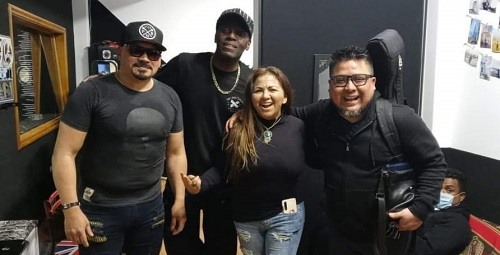
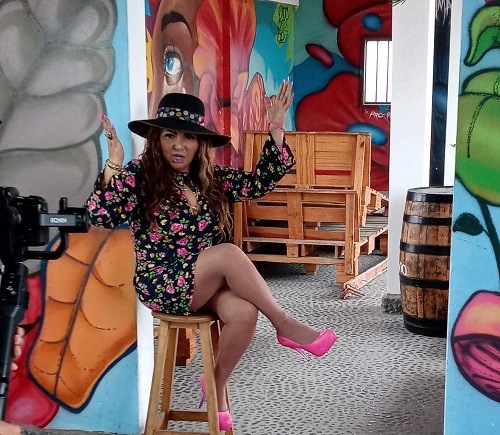
From Aruba and for the World Anoushca Jeandor Noush and Robert Jeandor

It is for me more than a pleasure and great honor to make this release of this song “Me Muero” taken to the rhythm of Merengue. Originally from the 5th Station.

Noush was born in Aruba as Anoushca Jeandor.

Being daughter of the International singer musician Robert Jeandor, she was raised in a musical environment, during her early years she started singing in a choir until beyond her teenage years, after that she was given the opportunity to perform in a local casino as a singer.

She became more popular when she won one of the biggest Carnival Music Contest, which made her the first female overall winner. She has also performed in the Netherlands and Miami.

What started as a hobby, turned into a passion, and is nowadays her living, singing different genres as R&B, Reggae, House and Latin.

From Aruba Anoushca Jeandor Noush

I thank Jaime Querol, producer/arranger for his excellent musical work. Thanks to you from SalsaGoogle.com (ISM) for this opportunity.

And there will be many more.

I am a singer since my childhood. I come from a musical family. My dad’s name is Robert Jeandor.

My father worked with great musicians, he was invited by Johnny Ventura to go to the Dominican Republic to live, where he worked daily with hundreds of renowned musicians such as Juan Luis Guerra, Wilfrido Vargaz, Alex Bueno, Manuel Tejada, Jaime Querol, Ramon Orlando and many more.

I am a singer by profession, I have several productions of my own in different genres.

Today I launch myself with a musical theme that thanks to Mr. Jaime Querol for his invitation to make an international production withmy father.

Noush was born in Aruba as Anoushca Jeandor

This beautiful song in merengue version is for you and I hope that this to your liking Thank you very much and God bless you all.

Follow me:

https://linktr.ee/noushmusicaruba

Robert Jeandor and his Solo Banda Show

A live music band from Aruba founded by the famous Aruban musician Robert Jeandor. Known for playing different genres of music, but mostly Latin music.

Without a doubt, maestro Robert Jeand’or is the most Dominican Aruban we have ever known.

Since he settled in the Dominican Republic, where he arrived thanks to the efforts of a giant of merengue, Johnny Ventura, this singer, musician, arranger, composer, music producer and orchestra leader only made contributions to the rhythm commanded by the güira and the tambora and the one that best identifies the idiosyncrasy of the Dominicans.

Without a doubt, maestro Robert Jeand'or is the most Dominican Aruban we have ever known. Since he settled in the Dominican Republic, where he arrived thanks to the efforts of a giant of merengue, Johnny Ventura, this singer, musician, arranger, composer, music producer and orchestra leader only made contributions to the rhythm commanded by the güira and the tambora and the one that best identifies the idiosyncrasy of the Dominicans
Robert Jeandor and his Solo Band Show

Always gentle, humble and with a soul devoid of pettiness, this gentlemanly artist put his talent at the service of merengue and, therefore, of all the gear that drives it.

Robert Hubert JeanD’or Bermudez was born on May 10, 1954, in Aruba, a territory that until 1986 was part of the Netherlands Antilles and today is part of the Kingdom of the Netherlands. He was the son of Francisco Reinier JeanD’or from Curazaleño and Cecilia Bermudez from Aruba, who worked in the Aruban aqueduct and hospital, respectively. Don Francisco died in 1972 and Doña Cecilia in 2005.

Notice that I have written JeanD’or and not Jeand’or, because the first is the correct surname of this family, but for artistic management purposes Robert was given Jeand’or. And lucky he was that they did not remove the apostrophe and left it only as Jeandor!

His inclination for music came from his father, who guided him when Robert took his first steps in musical studies.

“My dad was my first music teacher: he wrote down for me all the chords in a notebook and there, when I was barely six years old, I started learning to play the Venezuelan cuatro and, after some time, the guitar,” he recalled.

But it was not only in Robert’s veins that musical talent ran, but also in his siblings Francisco (Frank), who played guitar and mandolin, Marlene and Percey were equally talented guitarists, Robertina and John sang, Ismael was a trumpet player and Michael was a percussionist. Several of Robert’s siblings are now deceased: Ismael and Sofia (2010), Frank (2013) and John (2014).

In the neighborhood where he was born, called Madiki, he could very often see his brothers playing almost every night, together, as a family, with his dad leading, and so he was caught by the desire to join the family clan as a musician and that led him soon after to play the guitar.

“One night my brother Frank came home and told me that there was an aguinaldo group that needed a cuatrista to reinforce. The group was called Las Blancas Palomitas and was led by Severiano Luidens, with his relatives Evelien and Jossy Luidens also standing out,” recounted Robert Jeand’or, who was only eight years old at the time and, bursting into laughter, added that the only negrito was him.

He told that his relationship with the bass happened in a fortuitous way, because during a presentation of the group the bass player did not show up, due to lack of transportation, and then Robert, being a child of about nine or ten years old, assumed to play the powerful string instrument and solved the problem generated by the absence of the titular instrumentalist.

“I grabbed the bass, without ever having played it before and as the strings are tuned in the same order as the guitar, I said I was going to play it and so I played that night and that’s how I started to play it and to this day it is my greatest pleasure,” he recalled.

The lanky artist said that he entered a music academy to study bass and singing, being instructed in both subjects by the now extinct Aruban professor Rufo Odor and in harmony with the also deceased Argentinean professor Eddy Bennet.

In his youth and as a cuatro player and singer, he briefly played with pianist Albert Dieffenthaler, with whom he performed in several television programs, hotels and bars.

In the early 70’s, he joined Los Juveniles, which was the first orchestra where he participated as bassist, singer, composer and arranger. With this group, with which he became famous in his native land, he won in three consecutive years (from 1976 to 1978) the Tumba award, an annual celebration that is part of the carnivals of Aruba. Incidentally, Jeand’or would later win this award again two years in a row (1990 and 1991).

In 1978 Robert Jeand’or was crowned King of Tumba, after performing the song “Bolombonchi”, authored by Vicente Kelly, Victor Oduber and Jeand’or himself, which was later recorded by popular Colombian artist Joe Arroyo, who died in 2016. That impactful performance was seen by Johnny Ventura, who also performed there with his orchestra and El Caballo Mayor approached the Aruban singer to see if he would be interested in trying his luck abroad.

While that experience unfolded, Jeand’or did not stop his desire to add to his musical knowledge and expand the knowledge he already possessed in harmony and composition.

His inclination for music came from his father, who guided him when Robert took his first steps in musical studies.
Without a doubt, maestro Robert Jeand’or is the most Dominican Aruban we have ever known.

In the first five years of the 70’s, he released his first recording, composed and arranged by the artist himself: “Ta di nos e ta”, a phrase that translated into Spanish means “It’s ours”.

During 1979 he released with his orchestra La Nueva Fuerza the musical production entitled Rey Di Tumba 1976-77-78, recorded in his native island and with the support of Aruba Recording Studio, where he experimented with Latin, folk and country genres, giving us songs such as “Ban bonse”, “Ata mi cos”, “Manera un wiei”, “Slip’e”, “Bolombonchi”, “Pusha bai aden”, “M’y yega”, and “Canta cu mi awor”.

Many people don’t know that Robert Jeand’or was just a few minutes away from joining the Gran Combo de Puerto Rico, after the departure of Andy Montañez. Jeand’or took the stage with La Universidad de la Salsa, during a presentation at the Caiquetio club, and performed “El barbero loco”, “Las hojas blancas”, “Pin pin pin” and other songs that Montañez vocalized. His voice impressed Don Rafael Ithier and the staff of the famous group. After Montañez moved on to La Dimensión Latina, Ventura called maestro Ithier and recommended Jeand’or to fill the position of El Niño de Tras Talleres, to which Ithier replied that yes, he knew him, but he had already recruited Jerry Rivas. It is said that there was also a delay with the American visa.

It was not long before Jeand’or became part of La Dimensión Latina, because both when Oscar de León left this orchestra and when Andy Montañez also left, the name of the Arubeño was mentioned to join this Venezuelan group. In fact, they went to look for him where he worked, but he was already in Santo Domingo with Los Hijos del Rey.

Likewise, during a visit of Larry Harlow to the island of Aruba, El Judío Maravilloso saw Jeand’or singing and told Vicente Kelly, recently deceased this year (2020) and compadre of the popular singer, bassist and arranger, that he would take the Aruban singer to New York, because he needed someone to fill the void left in his orchestra by Junior González (who died on May 10, 2012) and Kelly responded positively, but that promise was never fulfilled.

In the midst of all that, the Aruban artist opted to join the Los Hijos del Rey orchestra in 1979 and settle in Santo Domingo.

Robert Hubert JeanD'or Bermudez was born on May 10, 1954.
Robert Hubert JeanD’or Bermudez was born on May 10, 1954.

“It was Johnny Ventura who talked to me so that I could travel to the Dominican Republic as a musician, and getting there was a great experience. Once in the Dominican capital, the first recording I made was for a commercial and the person who called me for that job was a very respected musician, his name is Jorge Taveras,” he said.

With Los Hijos del Rey, an orchestra then led by maestro Dioni Fernández, he recorded merengues such as the emblematic “Yo me dominicanizo”, by the prolific Puerto Rican composer Catalino Curet Alonso, affectionately known as Tite, “La pilandera” and “La vacuna”, by Porfirio Ruiz, among others, as well as the salsas “El viento”, by Joe Nicolás, and the successful “Puchula”, by Ramoncito Díaz.

While he was performing in Puerto Rico with Los Hijos del Rey, an orchestra that was in conflict with another faction for the use of the name, Jeand’or, who in the middle of that was in a kind of limbo, received a call from composer Curet Alonso (died in 2003), who mediated for him to sing with Roberto Roena & Apollo Sound, and the artist told him that he would think about it because he had to talk first with Ventura, who has always been his advisor.

Another situation that put Jeand’or on the verge of joining a salsa orchestra: in the middle of a tour in Puerto Rico, trumpeter Nelson García, of Los Hijos del Rey, talked to maestro Bobby Valentín to include the arubeño in his orchestra and the Puerto Rican star liked the singer’s voice very much, but then he had Cano Estremera as his star sonero and everything came to nothing.

Source:

Facebook: RobertJeandor

Diario Digital Dominicano

Home

Geovanny Leonardo Sepúlveda – “El Sonero de la Calle”

Geovanny Leonardo Sepúlveda, known as “El Sonero de la Calle”

Photo of Geovanny Leonardo Sepúlveda
Photo – Geovanny Leonardo Sepúlveda

He was born in the city of Santo Domingo, Dominican Republic. He is a singer-songwriter (he composes and sings his own songs, including the lyrics and the melody), percussionist, raised on the outskirts of the Santo Domingo neighborhoods, he developed an interest in Afro-Caribbean music. This is how he obtains a clear direction towards the creation of his own style to compose and sing this genre, which involves a series of different rhythms such as: guaracha, rumba, son montuno, bolero, mambo, son, jazz, guaracha and cha cha cha, known worldwide by its trade name “Salsa”.
He tells us that from his mother Carmen Sepúlveda and his aunt Santa Julia Sepúlveda, he inherited the passion for jazz music, bolero and son, also that his mother is an artist, but he did not get to record their music, however he went to competitions of television expressing his musical talent. Geovanny mentions that he liked music from an early age seeing this great specimen in turn, he says that his talent is born and empirical which he is seeing how it progresses in these times.

Photo by Geovanny Leonardo Sepúlveda
Geovanny Leonardo Sepúlveda in Dominican Republic

During his tour he obtained his artistic nickname “El Sonero de la Calle”, which was given to him by a great Dominican musician (bassist and arranger) named Rafael Victoria, better known as maestro Cuso Cuevas (he was a popular bassist who played with the most important popular music groups and orchestras), who was in the recording of “Batato”, mentions that he advised him the following… “that he should not change his theme of making music, that it be a different sonero, a street sonero… that he could interpret the reality of the street with his lyrics and way of singing ”

He comments that he spent a large part of his life in Caracas, Venezuela (approximately 18 years), despite having been born in the Dominican Republic, considering it his second homeland since he adores and / or loves Venezuela; During this time he met Dudamel and Orlando Latuci, his song “las carabelas” is a Venezuelan.

The teacher Ubeny Loaiza and Geovanny Leonardo Sepúlveda
– Photo

He also had the opportunity to sing with the “La Realidad” Orchestra, from there he began to give his beginnings as a singer, it all began in 2003 when Roberto Ledezma was singing a bolero and the orchestra director listened to it and without Knowing that he was a musician and I invited him to go to one of the rehearsals and when to a place called Caño Amarillo Estudio, in Caracas, Venezuela, and there I was part of the team that at that time was very necessary since they lacked a vocalist, From that moment on he appeared in the bars of Caracas, in the center of the city, he told us that it was a wonderful experience.

As time passes, his fondness for this wonderful culture born in Africa is born, brought to the Antilles and then brought to New York, USA by great masters such as Johnny Pacheco, Machito, Beny More, Santiago Cerón, José Bello, El Canario, Tito Puentes, La Typica 73, among other great musicians of this genre.

Photo of Geovanny Leonardo Sepúlveda and Andi Montañez
Geovanny Leonardo Sepúlveda and Andi Montañez – Photo

His first musical album was entitled “A las malas”, from which his first single is called “Batato” and in his musical theme “Satte de los Callejones” he indicated “El Sonero de la Calle”, the following quote … “Special dedication for all the neighborhoods of my Dominican Republic and the world. My goal is to reach the heart of the town, Geovanny L. Sepúlveda, El Sonero de la Calle.

In the current Covid-19 pandemic, many activities have been closed, especially in the musical world, but with extensive communication over the internet, many have chosen to use various platforms either to promote themselves as artists or to hold events (Facebook, Instagram, Tick Tock, Youtube, among others), and despite these complicated moments he gives us the great news that Leo Aguirre and Ubeny Loaiza are in charge of the new production of Geovanny Leonardo Sepúlveda, his new single under the musical direction of Ubeny Loaiza, owner of the La Sabrosura orchestra, giving rise to the music “Salsa Pura” which is a Rumba, which you will not stop hearing

At the end of the interview, he gives us a message for the new talents … “Study and have a lot of dedication to what you like, never stop and that the rest is in the hands of God.”

Home

Legendary and Unavoidable Cheo Navarro Bravo Rumbero and his Orchestra de Moda

The first name of the great “Cheo” is José Natalio Navarro Barreto

José “Cheo” Navarro was born in San Agustín parish, Caracas, Venezuela on April 19, 1952. While still a child, his family moved to La Cañada de Jesús and later the 23 de Enero parish, the family Navarro Barreto settled in block 6 of the Monte Piedad sector where he spent his adolescence. The first name of the great “Cheo” is José Natalio Navarro Barreto.

The name and the musical activity of “Cheo Navarro” is substantial and unavoidable for salsa made in Caracas. This percussionist and bandleader has always been at the heart of Caribbean music in such a manner that we will always find a reference to him in various salsa phenomena of the country.

The name and musical activity of "Cheo Navarro" substantial and inevitable for salsa made in Caracas.
Cheo Navarro Legendary and Inevitable Bravo Rumbero and his Fashionable Orchestra

It was from the year 1971 when he got involved with the orchestra of Tito Rodriguez in such a way that he never wanted to do anything else but play like those folks (since he did it by beating every book, container and pot lid he could find at home with pencils and sticks), eventually joining other fans of music to found the group Mango (he was 21 years old at the time). He won the respect of those in the know by performing with that group, where he contended with the best in Caribbean music at that time.

In addition to founding orchestras that are already part of our musical and sentimental history (Mango, Sensación, Bailatino and now Cheo Navarro and his Orquesta Tributo), he played and composed for other leading orchestras such as the Sexteto Juventud, Federico y su Combo Latino, El Trabuco Venezolano, La Crítica de Oscar de León, the Orquesta Renovación, Coco y su Sabor Matancero, and Naty y su Orquesta; He has also collaborated with the orchestras of Orlando Castillo “Orlando Watussi””, Alfredo Naranjo Carvajal and his Guafeo, and “Pavo” Frank. As for the international soneo, he has played with Jhonny Pacheco,  Ismael Miranda Carrero, Andy Montañez, Cheo Feliciano, Héctor Lavoe, Daniel Santos, Pete “Conde” Rodríguez and a plethora that is no longer necessary and, maybe, impossible to list in full.

“Bravo Rumbero“

Is probably his most important composition and the song the salseros of lineage and also those who were not necessarily salseros remember the most, but they had their sense of hearing working just fine, during the 70s and 80s.

The music industry has not been as generous as it should have been with this gentleman. Precisely with him, who has made an effort to pay homage to the gods of his musical devotion.
Cheo Navarro in Block 6 of January 23 appreciates it with reverent generosity.

He is much loved in Block 6 of the 23 de Enero parish they appreciate him with the same reverent generosity

with which the poor towns pay tribute to their genuine icons: He is the illustrious neighbor who has made and makes them dance and, in time, he is the simple man of the people whose stature is found in the work and not in vanity.

The music industry has not been as generous as it should have been with this gentleman. With him, who has been making great efforts to pay homage to the gods of his musical devotion. The sonorities of his orchestral works are a lasting tribute to the giants of flavor.

He is the illustrious neighbor who has put them and puts them to dance and in passing, is the simple man of the people whose stature is in the work and not in vanity
Cheo Navarro Bravo Rumbero and his Orquesta de Moda

The fame that, using payola and other resources, has managed to raise up other names in this business and in history. But being face to face, musician to musician, with anyone, Cheo Navarro qualifies to be one of those fundamental icons who are worthy of being pleasantly remembered, rooted in his people and in urban culture.

Home

Learn to play the percussion with Giovanni “Meñenguito” Hidalgo

A video tutorial by musicians for musicians

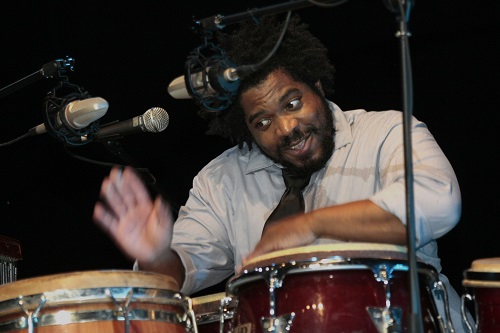
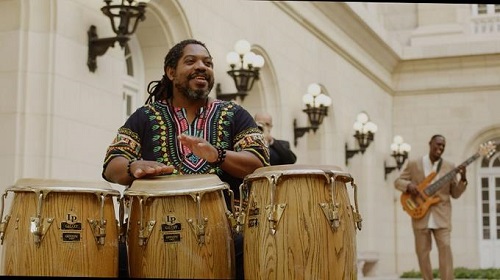
Virtuous percussionist, Giovanni “Meñenguito” Hidalgo, proves his talent in the video tutorial entitled Conga Virtuoso. In this masterclass, you will learn about rhythm, technique and improvisation to develop your percussive talents.

Throughout this video, you will observe the legendary Maestro Hidalgo accompanied by Changuito, Ignacio Berroa, Ray Romero, Eric Figueroa, John Benitez, Danilo Perez and David Sanchez issuing instructions in both languages (English and Spanish).

Also, you will be able to recognize the Tumbadora as a non-handed percussion instrument, that is to say, you will learn to play the tumbadora like a right-handed musician even as a lefty and the Maestro Hidalgo with more than three decades of experience teaches you that.

The legendary and multi-talented Puerto Rican musician, Giovanni Hidalgo, a outstanding percussionist, born in San Juan, Puerto Rico on November 22, 1963.

Today he is known as one of the best congueros of his generation in the world.

Giovanni “Meñenguito” Hidalgo
The virtuoso percussionist, Giovanni “Meñenguito” Hidalgo, demonstrates his talent in the Conga Virtuoso video tutorial.

And quite possibly one of the fastest of all known congueros. Through International Salsa Magazine, I introduce a tutorial method where Maestro Hidalgo gives a master class on rhythms, technique and improvisation; Method that, by the way, you can get in full on the YouTube channel entitled: “Conga Virtuoso”; which is bilingual in English and Spanish and is distributed by Warner Bros. Publications; it is notable that, in the tutorial, Giovanni Hidalgo is left-handed and the examples are written for people who use the right hand.

The tumbadoras as protagonists

Examples of three tumbadoras, including the position of the drums can be played the same way, even if one is right-handed.

Evolution of the tumbao: Around 1940, the bandleader Arsenio Rodriguez began to incorporate a tumbadora (conga), a bongo, a bell, two trumpets, a piano, and a tres (derived from Spanish guitar, but with three double strings and triple voices three).

In the late 1940s, Frank “Machito” Grillo also added the tumbadora to the Afro Cubanos Orchestra, thus achieving the percussion section composed of bongos, tumbadora, and timbales. At that time, the “conguero” performed with a single drum.

Different sounds were produced by dry beats, muffled beats (mute), open tones and deep tone (created with the palm of your hand).

Giovanni Hidalgo explains all these sounds in this YouTube video “Conga Virtuoso”. As Giovanni says, the traditional way of playing only with a tumbadora comes from 40s.

Although he begins almost all examples in lifting (with upbeats) on beat 4, the beginner should know that he starts on beat 1 in most musical situations, without lifting.

Another factor to remember is to use an open tone at the beginning of the first bar, as Giovanni demonstrated by Giovanni.

This initial open tone helps to “anchor” and synchronize the rhythm section in the first measure.

And quite possibly one of the fastest of all known and through International Salsa Magazine, I present, specifically, the introduction of a tutorial method, where the Maestro Hidalgo
Giovanni “Meñenguito” Hidalgo is known today as one of the best congueros of his generation.

This initial open tone helps to “anchor” and synchronize the rhythm section in the first bar.

It is eliminated by repeating the pattern and replaced by a left clap (P). Caption: O = open tone. P = with the palm of your hand, which is similar to the bass sound. B = deep sound (with the palm of your hand). S = dry. T = with the tip of your fingers. M = “muffled” note. It is accomplished by pressing the leather down with the same hand (cover). Two tumbadoras: the first step in the evolution of the tumbao was to perform with a drum.

The second phase incorporated the use of two tumbadoras. It was during this stage that the art of playing the tumbadora upgraded to a higher level.

Some of pioneers of the style with two tumbadoras are: Carlos “Patato” Valdez, Mongo Santamaría, Cándido Camero, Tata Güines, Francisco Aguabella, Armando Peraza, and Ray Romero. In the examples, Giovanni plays a “seca´´ (term to refer to a dry sound) in the later half of the third beat of the first bar.

This is a light “seca´´ as opposed to the most pronounced. By adding the bass: This is a modern approach to how you play the basic tumbao with two tumbadoras.

This pattern uses the bass sound in the fourth bar. Giovanni lifts the tumbao minimally with his legs while playing the bass sound in the fourth bat. He lifts the drum and lets the sound out of its lower part. He also adds the timbales and bongos: This section demonstrates how the tumbadoras, the timbales and the bongos work together in a section.

The pattern for the tumbadoras is the tumbao with variations combining both ancient and modern styles, as Giovanni mentioned. The rhythm of timbales is based on a shell pattern played on the cáscara (the sides of the timbales).

The bongo drum plays the basic pattern called “martillo” with improvised phrases called “chime”

Another factor to remember is that an open tone should be used at the beginning of the first bar, as Giovanni demonstrates.
The tumbadoras as protagonists

The bongo drum plays the basic pattern called “martillo” (the most important bongo pattern in Afro-Cuban music, which means “hammer” in English) with improvised phrases called “chime”.

When repeated, the first open tone is replaced by a left clap (P). Example of bongos: “Little” Ray Romero starts chiming immediately.

These phrases must also comply with the clave. The first example is the basic “martillo”, which is the basic function of the bongo drum in a section. The second example is a transcript of the chimes played by Ray Romero. Basic Martillo: T = fingertip. TH = thumb side. O = open tone on the bass drum (female).

Pattern for timbales: the changuito plays a shell pattern on paila (sides of the timbales) in a 2-3 clave.

In addition, he has a bass drum to which is added a pattern as would a drummer. The fingers from the left hand play the “Ghosts” notes while the right hand plays the bass drum. He also plays an open tone with the third finger from the left hand on the bass drum (female) in the first bar. This creates a melody line between the bass drum and the “hembra”. Also, Giovanni Hidalgo explains the rhythms from Puerto Rico, such as: jíbara, quás, plena, bomba, yubá and Dutch music. To conclude, we invite you to watch the videos “Conga Virtuoso” by Maestro Giovanni Hidalgo in full, which will be very useful for both beginners and advancing musicians.

Video: Conga Virtuoso Giovanni Hidalgo

Home

The owner of the Soneo’s solo career Cano Estremera

Cano Estremera’s career as a solo singer was characterized by ups and downs.

Maybe it was not successful or prolific in terms of recording, but he maintained a presence on the show business thanks to his talent as a clever improviser.

His first solo album El Niño de Oro (1986) follows the line of traditional salsa with songs such as “Viernes social”, “Nací y así soy” and including two boleros, among them, “Emborráchame de amor” recorded before by Héctor Lavoe.

Then he produced the album Salvaje ’88 (1988), “El Toro”, the covers of “Ámame en cámara lenta”, “Te amaré”, and a merengue version of the Brazilian song “Pleno verano”.

In the next two discographic works, Estremera dabbled in romantic or sensual salsa. Phonograms Dueño del Soneo Vol. 1 (1989) and Dueño del Soneo Vol. 2 (1990) did not have sufficient impact on the salsa community.

After the hit “El Toro”, his public expected a hardcore salsa record in line with the title used for both productions. However, the self-proclaimed “Dueño del Soneo” could not prove it in those recordings, but in his live performances.

Cano Estremera's career as a solo singer was characterized by ups and downs.
The owner of the Soneo’s solo career Cano Estremera

In 1990, Cano made the world record for consecutive soneos without repeating verses. His exploit begins in the town of Guánica with 105 soneos without repeating any rhyme. Weeks after, he improved the record to 128 in Yabucoa and finally reegistered 130 in Juana Díaz in front of five thousand spectators.

Staring in the 90’s, the musical career of Cano Estremera has stalled by several factors. After years of never recording, he resumed his career with the album Cambio de Sentido (1994).

In this production, Cano could find the balance between romantic and traditional salsa, but with an identity of its own. Novelty songs such as “Pobre diablo” and “Profesor de décimo grado” stand out, where he added some mischief in the soneos.

The record includes the salsa ballads “Por ti me casaré” (Eros Ramazzotti) and “Alguien” (Camilo Sesto). We also find songs that tell urban stories in “Con ojos de dólar” and “Compañera de trabajo”. Thanks to this production, Cano Estremera returned to the stage in force.

The best part of Carlos E. Estremera’s musical work is found in the last three productions. His voice in full maturity, a pre-defined style and a reputation of being an irreverent sonero helped him to make three masterpieces. In the album Punto y Aparte (1996), song lyrics perfectly fit his character.

The personality of the singer is portrayed in songs like “Amigo de qué”, “Se busca”, “Un loco como yo” and “Llorando me dormí”, the latter was recorded before by Ismael Rivera.

Years later, he reappeared with the recording entitled Diferente (1999) where he solidified his place as a salsa legend.

All the numbers are excellent from start to finish, especially “Agüita pura” and “La salsa está buena”.

By the first decade of the new century, Estremera produced his greatest work Ópera Ecuajey (2008) in tribute to El Sonero Mayor Ismael Rivera.

This was an unprecedented concept album in his professional career. Cano Estremera always sought to evolve and diversify as an artist.

In his personal shows, he performed classic boleros and salsa songs which were hits in other singers.

Estremera delights us with the classics “Periquito Pin Pin”, “Boranda” “La esencia del guaguancó” and many more with arrangements adapted to his tone.

Furthermore, he also reinterpreted the hits that he recorded with Bobby Valentín with new arrangements that not resemble the originals at all.

Estremera’s last recordings were the singles: Bello amanecer, Uno se Cura, Después de Todo, La Profecía with José Lugo Guasabara (2012), La Dieta, (2014), and Los Cobrones (2016).

Cano Estremera was a complete artist in the improvisation on stage

A pulmonary fibrosis inherent to his albino condition took its toll on the health of the renowned salsa singer.
Cano Estremera was a complete artist when it came to improvising on stage.

Pulmonary fibrosis fulfilled by the very fact of being an albino impacted on the health of the renowned salsa singer.

Carlos Enrique Estremera Colón, simply “Cano Estremera” for the Caribbean crowd who knew him and applauded him with the title of “Dueño del Soneo”, passed away in his native Puerto Rico around 2:00 p.m. on Wednesday, October 28, 2020.

He was born on September 2, 1958 in Santurce, San Juan, where he also passed away.

Source:

Saúl López García © 2020 and Augusto Felibertt © 2021

Home

  • « Go to Previous Page
  • Page 1
  • Interim pages omitted …
  • Page 100
  • Page 101
  • Page 102
  • Page 103
  • Page 104
  • Interim pages omitted …
  • Page 118
  • Go to Next Page »

International Salsa Magazine (ISM) is a monthly publication about Salsa activities around the world, that has been publishing since 2007. It is a world network of volunteers coordinated by ISM Magazine. We are working to strengthen all the events by working together.