• Skip to primary navigation
  • Skip to main content

International Salsa Magazine

  • HOME
  • Previous editions
    • 2026
      • ISM / August 2026
      • ISM / July 2026
      • ISM / June 2026
      • ISM / May 2026
      • ISM / April 2026
      • ISM / March 2026
      • ISM / February 2026
      • ISM / January 2026
    • 2025
      • ISM / December 2025
      • ISM / November 2025
      • ISM / October 2025
      • ISM / September 2025
      • ISM / August 2025
      • ISM / July 2025
      • ISM / June 2025
      • ISM / May2025
      • ISM / April 2025
      • ISM / March 2025
      • ISM / February 2025
      • ISM / January 2025
    • 2024
      • ISM / December 2024
      • ISM / November 2024
      • ISM / October 2024
      • ISM / September 2024
      • ISM / August 2024
      • ISM / July 2024
      • ISM / June 2024
      • ISM / May 2024
      • ISM / April 2024
      • ISM / March 2024
      • ISM / February 2024
      • ISM / January 2024
    • 2023
      • ISM / December 2023
      • ISM / November 2023
      • ISM / October 2023
      • ISM – September 2023
      • ISM – August 2023
      • ISM July 2023
      • ISM Edition June 2023
      • ISM – May 2023
      • ISM April 2023
      • ISM March 2023
      • ISM February 2023
      • ISM January 2023
    • 2022
      • ISM December 2022
      • ISM November 2022
      • ISM October 2022
      • ISM September 2022
      • ISM August 2022
      • ISM July 2022
      • ISM June 2022
      • ISM May 2022
      • ISM February 2022
      • ISM January 2022
    • 2021
      • ISM December 2021
      • ISM November 2021
      • ISM October – 2021
      • ISM September 2021
      • ISM August 2021
      • ISM July 2021
      • ISM May 2021
      • ISM April 2021
      • ISM June 2021
      • ISM March 2021
      • ISM February 2021
      • ISM January 2021
    • 2020
      • ISM December 2020
      • ISM November 2020
      • ISM October 2020
      • ISM September 2020
      • ISM August 2020
      • ISM July 2020
      • ISM June 2020
      • ISM May 2020
      • ISM April 2020
      • ISM March 2020
      • ISM February 2020
      • ISM January 2020
    • 2019
      • ISM December 2019
      • ISM November 2019
      • ISM October 2019
      • ISM Septembre 2019
      • ISM August 2019
      • ISM July 2019
      • ISM June 2019
      • ISM May 2019
      • ISM April 2019
      • ISM March 2019
      • ISM February 2019
      • ISM January 2019
    • 2018
      • ISM December 2018
      • ISM November 2018
      • ISM October 2018
      • ISM September 2018
      • ISM August 2018
      • ISM July 2018
      • ISM June 2018
      • ISM May 2018
      • ISM April 2018
      • ISM March 2018
      • ISM February 2018
      • ISM January 2018
    • 2017
      • ISM December 2017
      • ISM November 2017
      • ISM October 2017
      • ISM September 2017
      • ISM August 2017
      • ISM July 2017
      • ISM June 2017
      • ISM May 2017
      • ISM April 2017
      • ISM March 2017
      • ISM February 2017
      • ISM January 2017
    • 2016
      • ISM December 2016
      • ISM November 2016
      • ISM October 2016
      • ISM September 2016
  • Spanish
  • Download Salsa App
    • Android
    • Apple

Artists

Bobby Escoto

North America / USA / California

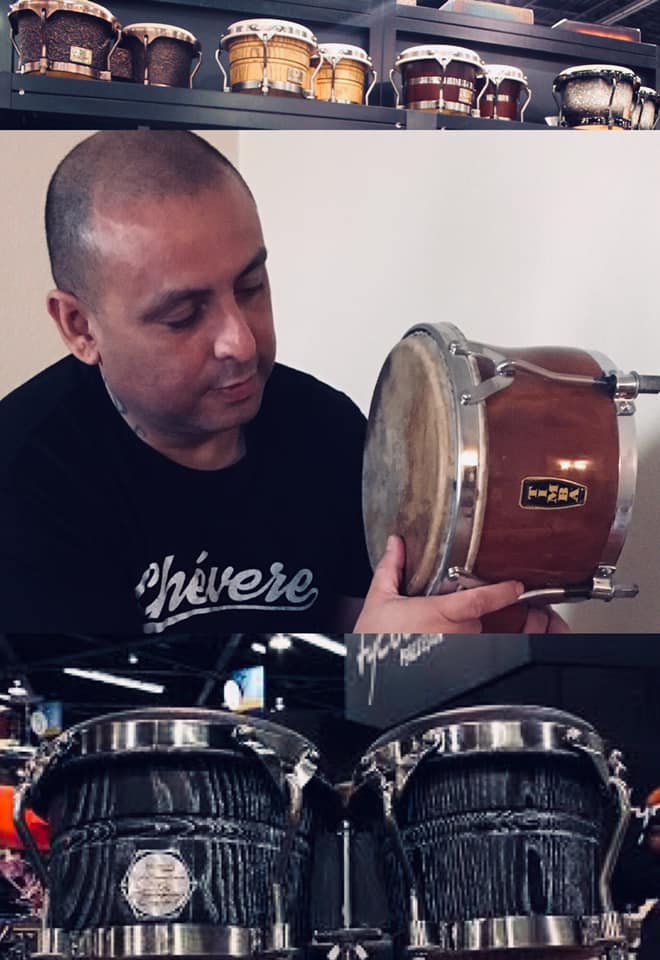
Bobby Escoto, a percussionist, was born in East Los Angeles, from Mexican & Puerto Rican descent. Bobby Escoto III is the nephew to the great vocalist Bobby Escoto, who performed and recorded, with the great percussionist, Tito Puente.  Bobby Escoto III has been playing music, since the age of eight. Today, Bobby is considered one of the most prominent percussionists in the salsa genre, here in his hometown of Los Angeles.

Bobby Escoto has performed with many salsa icons in Los Angeles, New York, Europe, and Asia.  Such as Celia Cruz, La India, Jose Alberto “El Canario,”Lalo Rodriguez, Domingo Quinonez, Menique, Camilo Azuquita, Yolanda Rivera, “Fania All Star” violinist Pupi Legarreta, trombonist Jimmy Bosh, and legendary vocalist Tito Allen who performed and recorded, with the legendary ‘conguero’, Ray Barretto.  Bobby also takes pride in performing and directing his band to back up Frankie Vasquez, Herman Olivera, Pupy Cantor, Jorge Maldonado, and  Hector Tempo Alomar, vocalists to his favorite band, from NYC, Conjunto Libre.
Bobby Escoto
Bobby Escoto

Bobby Escoto is the band leader, director and bongo player to his band, Conjunto Afro Son. They have performed at prominent salsa venues, as a back-up band, to salsa icons, due to their extensive educational background, training, and authenticity.  Bobby is also the band director and bongo player to The Granada All-Star Orchestra and The Salsa Divas (an all-female Orchestra) in the city of Alhambra, CA

Bobby’s goal is to increase awareness of the new generation, about the Afro Cuban and Puerto Rican music. Every Saturday you will find Bobby teaching percussion to underprivileged children in East Los Angeles. Bobby states: “it hasn’t been easy growing up in the streets of East Los Angeles, but my vision as a kid was to perform with great salsa icons.” Bobby Escoto believes that dreams do come true if you put your heart and effort into your talent.  No doubt, Bobby’s talent, passion for his art, leadership, and vision have no barriers.
Phil Robinson Sonero, composer and performer bandleader

North America / USA / New York

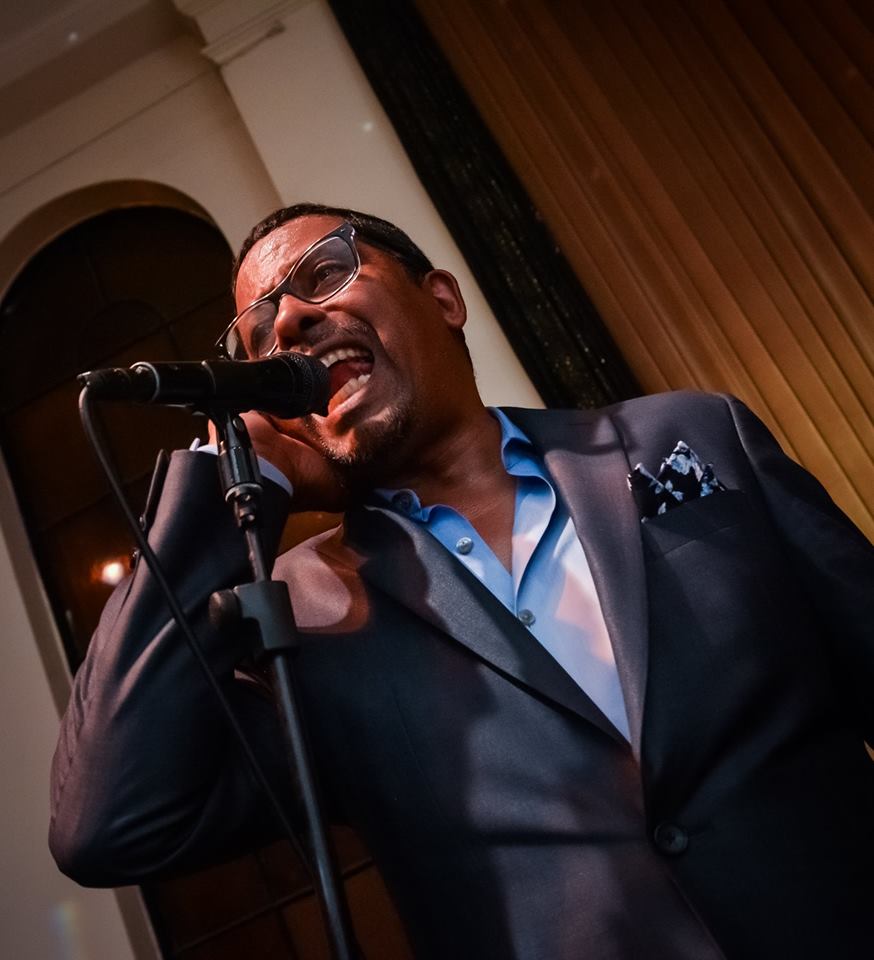
Phil Robinson born in S. Bronx, New York, of Dominican and Puerto Rican parents, lived his early years up-bringing in the Dominican Republic, surrounded by music and close family members that sang, recited poetry and performed.

At the age of five, Phil Robinson already sang songs from well known Spaniel child, singer, ‘Joselito’ and was singing and reciting poetry in school recitals and shows, literately, showing his natural talent as a singer and performer.

Phil Robinson
Phil Robinson

Phil Robinson began his professional career in 1973, when he began his musical journey as a lead singer for Orquesta Yare, in Vineland New Jersey.

Phil Robinson relocated to Los Angeles where he was noticed for his charisma, voice range and singing style often compared with Puerto Rican salsa singer Tito Allen, as he evolved, he became lead for Henry Mora and the LA Salsa All Star Salsa Orquestra, he collaborated with many of the local groups, from there on he became lead vocals  for Eric Matos and Orquesta La Caliente, Papo Rodriguez and La Sorpresa, recording two original songs composed by Nelson Montalvo title Fantasia and Mi Regalo, included in his 2005 CD, ‘Oye Salsa Sabor y Clave’.

During the time Phil Robinson was with Papo Rodriguez, Panamanian singer Camilo Azuquita, strolled into town and La Sorpresa became ‘Azuquita y su Melao’, Phil became Azuquita’s back up lead for a number of years, performing in many well-known venues such as Hollywood Palladium and with many renowned artists such as the late Celia Cruz.

Phil Robinson
Phil Robinson

In 1993 he joined Orlando Lopez Mazacote recording his first published cd project under the Fonovisa Record label Salsa Para El Mundo Entero, as the band lead vocals he performed many corporate events, concerts as LA Cinco De Mayo Festival, traveling to Ensenada Mexico, sharing stage with Willie Chirino and Andy Montañez to name a few. He also recorded it additional songs under OLM records Salsa Bravisima.

Phil Robinson paused his career for a bit and continue to collaborate with different local bands and returned to the stage with his band performing well-known places such as San Manuel Indian Bingo and Casino, Oxnard Festival, Fiesta Alegre Festival, private events and LA salsa venues, Conga Room, Rumba Room, Mama Juana, El Floridita, Santa Monica Monsoons and many other popular LA Salsa Venues

Phil Robinson has shared the stage with Adalberto Santiago, Tony Vega, Herman Olivera, Yolanda Rivera, Menique, Luigi Texidor, Wichy Camacho, Cuban singer Franco, Willie Chirino, Celia Cruz, and the list goes on.

After seven years Phil Robinson completed and published his new musical project, produced by Arturo Solar “Between Two Worlds ” a project that encompasses classical compositions from Armando Manzanero, Ted Koehler / Harold Arlen, Virgilio and Homero Exposito, Enrique Benitez, Vicente Garrido Calderon, Jesus Alejandro and originals composed by Phil.

Throughout 2017 Phil Robinson has continued to perform frequently in San Manuel Casino, Granda LA, the new Rumba Room, Granada LA, Cafe Sevilla, Granada LA, Oxnard Festival and Fiestalegre Fundraiser for Puerto Rico Huracane Maria.

Phil Robinson
Phil Robinson

2018 continues to be a year of success as we see it for Phil, many surprises will arise, follow the man with a unique stage presence, charisma y mucho sabor.

Phil Robinson thank you for your continued support and may God bless you all.

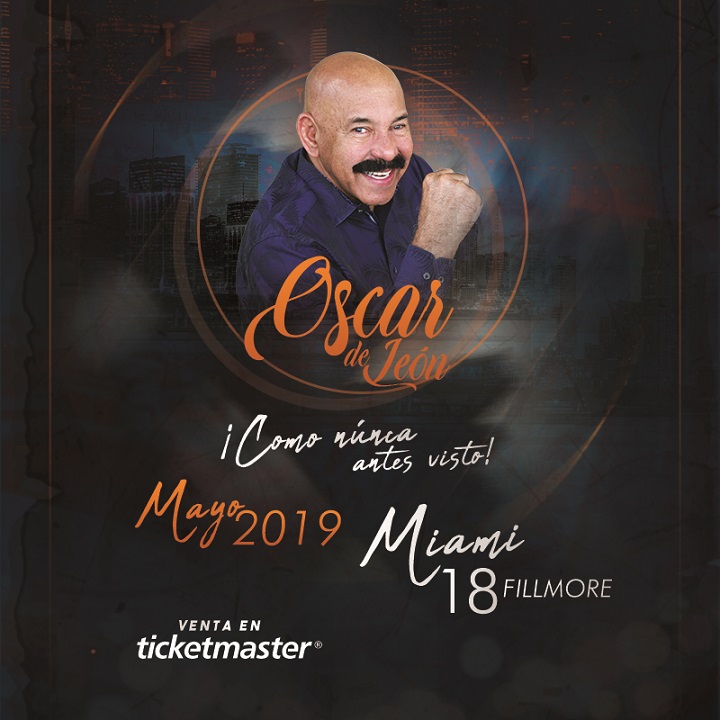
Oscar D’ León, A Universal Latin Artist

North America / USA / New York

Oscar Emilio León Simoza, better known as Oscar D’ León “El Sonero del Mundo”, is undoubtedly a man who throughout his career has made a name like a few others in the music world. An exceptional Venezuelan born in the west of the Capital, who from an early age, began to be interested in Caribbean music.

His innate talent was growing and nowadays is the biggest Venezuelan exponent of the Tropical rhythm and other musical genres, where he has proven to be a global artist.

He started his career at 28 years old in 1972, when he created La Dimensión Latina with Cesar Monje- Elio Pacheco- José Rodriguez- Rojitas and Chuito. A year after, they together recorded their first full-length record, obtaining their first hit: “Pensando en ti”, so they were hired to participate in the Maracaibo’s carnival celebrations … The success was immediate! The group ranks an important place in the musical spectrum of Latin music since then.

Oscar D' León
Oscar D’ León

In 1977, Oscar broke up with La Dimensión Latina and began the most successful part of his large trajectory, now as a soloist and with his own orchestra: “La Salsa Mayor”. HITS after HITS: : “Mi bajo y yo”, “El baile del suavecito”, “Bravo de verdad”, “Llorarás”, “La Vela”, “Divina Niña”, “Taboga”, “Juancito Trucupey”, “El frutero”, “Parampampam”, and “Dolor Cobarde”,are only part of his most famous songs at the time, today turned into Classics.

Oscar D’ León made a stop in his illustrious career to say “present” at one of the most important festivals on the American continent, the International Festival of Viña del Mar in Chile (2015), where El Sonero del Mundo served as Jury and closed the festival with a majestic show. Obtaining Silver and Gold Seagull for his great musical quality and public preference in this Latin Festival marked a milestone in the history of this event.

Separate chapter deserves his CD “Antológico”, already turned into a musical jewel with universal preference and in all honesty, “Oscar D’ León Clásicos de Big Band” was a mega production recorded between Nashville (cradle of Anglo music) and Miami. These two CDs were recorded in Spanish and English languages with emblematic world themes.

“Clásicos de Big Band” is a musical project with quality and sounds from that ancient era. 36 live musicians all gathered in a single recording studio, recreating the best of this musical genre that gave success to figures, such as:

Frank Sinatra, Tony Bennett, Dean Martin, Nat King Cole, among many others. For this project, its producer, Rodolfo Castillo, traveled to the city of Nashville- Tennessee (The musical city)

Where with a group of professionals, colleagues and talented musicians, arrangers and engineers of this great city, such as: Chris McDonald and Dan Rudin, decided to produce and develop a tribute to this musical genre for which he would need a voice, the voice of an artist, with the ability to interpret  in English and Spanish, a classic repertoire, such as:

“My Way, New York New York, Fly Me To The Moon, Sway, I’ve got you under my skin, Volare, I did it my way, Perhaps, Cachito Mio, Copacabana, Starngers in the night, among many others.

In addition, the image of Oscar D ‘León is a living example of perseverance, work and discipline, Not in vain has he been a motivational coach. He has given talks on proactivity and motivation in universities and private companies. Coincidentally, in 2015 he received the Doctorate Honoris Causa awarded by the Universidad Pedagógica Experimental Libertador (UPEL), belonging to the Caracas’ Pedagogical Institute.

Oscar D' León
Oscar D’ León

Oscar D’ León is a true global artist, multifaceted and a Venezuelan with a universal heart, a Latin per excellence who has undoubtedly been converted by his talent, actions and examples into a Latin ambassador in the world, the most charismatic and with the greatest penetration in the different music markets of the world.


NEXT SHOWS:

FRIDAY, MAY 31ST  

SHOW: 10:00PM – 4:00AM

PRICE: $38 – $70

VENUE: La Boom. 56-15 Northern BlvdWoodside, NY 11377

AGES: 21+


FRIDAY, MAY 17TH 

SHOW: 7:00PM

PRICE: $72 – $104+

VENUE: House of Blues Orlando, Orlando, Florida


SATURDAY, MAY 18TH 

SHOW: 9:00PM

PRICE: $40 – $84+

VENUE: The Fillmore Miami Beach at Jackie Gleason Theater, Miami Beach, Florida.


For more details and tickets:
http://www.OSCARDLEON.net/

Argentine-American composer and guitarrist Alejandro Meola kindly talked to us

There is a country we do not usually talk much about in this edition, but we have found the best moment to do so, and it is the land of tango and mate, Argentina. It turns out that, on this occasion, we talked with composer, singer and guitarist Alejandro Meola, who has honored us by accepting our invitation to this very special exclusive interview we had. 

Alejandro Meola is an artist who was born in the city of Miami, but his parents moved to Argentina when he was very young, so he spent his childhood and adolescence in the aforementioned country. In his accent, we can see how influential his upbringing in Buenos Aires was.   

Next, we will touch some of the most important issues related to his career and his life in general.  

This is Alejandro Meola
This is Alejandro Meola, a very talented Argentine-American guitarist

Alejandro’s beginnings in music 

As is typical, Alejandro began to feel a great attachment to music and it all started with the guitar that was in the house he grew up, with which he played at an amateur level and began practicing slowly and improving his skills over time. He says he always knew that his vocation was music, even without being old enough to decide on these issues. 

Given that the guitar was the instrument with which he started in music, this will always be the most important element in his artistic life above any other. However, he is also capable of playing other instruments such as piano, drums and bass, which can transport him to places within his mind where the guitar does not always take him.   

With regard to composition, Alejandro started to develop in this area through the need to express those emotions he had on the inside and communicate what his feelings in an original way with the help of music and the melodies that compose it. ‘‘I like to communicate things that resonate in other people’s minds and that’s where my taste for composition came from. Besides, I think that practice and time improve your ability to communicate emotions and transmit messages to anyone who listens to you. That evolves with oneself” said the artist.  

Alejandro’s musical education 

Alejandro told us that he studied at a music school in Argentina where he specialized more on guitar and composition, but what he calls ”street training” also helped him a lot to polish his act as an artist. The experience gained out the academies is so important to Alejandro that he even defines it as ”a parallel university”, which is as important as formal academic training, if not more. 

”It’s the street that gives you the tools, the experience and the journey to be a more complete artist. Practice on real stages is critical to specialize in music as it should be” Alejandro said on the subject.  

street training is important for Alejandro
According to Alejandro, ”street training” is very important for any artist

Argentine and American roots in Alejandro’s work 

Hearing Alejandro play evidences that he is heavily influenced by legendary and world-famous Argentine rock and the artist confirms this stating that he listened a lot to Fito Paez, Soda Stereo, Charlie Garcia, Gustavo Cerati, Luis Albert Spinetta, Andres Calamaro, among others. Undoubtedly, all of these music luminaries played a very important role on how this young man would perceive music, adding to all the American rock and blues he would listen to upon arrival in the United States. 

However, he noted that being in the United States also allowed him to listen to a number of Latin artists and rhythms which he never planned on experimenting with, but he did. His song ”La Inmigración” is a good example of this. In that regard, living in New York has expanded his horizons and led him to discover salsa, Cuban and Puerto Rican music. He also says that he took inspiration from Héctor Lavoe, Cheo Feliciano and La Fania when doing one or two songs. 

”At the end of the day, my music is a mixture of who I am and the places I’ve lived. A little from there, a little from here and a little from nowhere (laughs). A little from everywhere and a little from nowhere” he said.  

Alejandro also said that he is always on the lookout for other rhythms and ideas that come his way, but always using rock and guitar as a starting point.   

Alejandro at The Bowery Electric
Alejandro Meola playing live at The Bowery Electric

Why Alejandro chose New York as his permanent residence 

Since he was very young, Alejandro had always wanted to experience the dream of living and working in his art in New York. In addition to that, he wanted to know other cities in the country where he was born because while it is true that he spent most of his life in Argentina, he was also very clear that his country of birth was the United States, so he was curious to know it better. 

Once in New York, I met all kinds of people and artists with a very high musical level, so I was able to learn a lot from all of them. I feel like the bar is rising here and that led me to want to improve further every day. In that sense, I feel that New York gives you thick skin, since there are many obstacles to overcome to be truly recognized in music” said Alejandro about the city.   

The artist has been living in New York for 10 years now and is at ease in the place in which he currently is. In addition, he has managed to find a niche singing in Spanish, which has made him very happy and satisfied with his career.    

How Alejandro deals with languages in his music 

Something very common that many well-known artists do is to record songs in both English and Spanish so that the audience they reach is bigger, but Alejandro does not believe in it. He thinks that each song must have its own language and feeling, so he prefers to do one version of each song in one language. 

When he arrived in New York, he experimented a lot with English and has several albums in this language, but noting that he could work with Spanish without problems, he began to focus his music in that direction. In fact, today, almost all of his concerts are in Spanish.   

Each language has its advantages and disadvantages in terms of sound, so I must always pay attention to that,” said Alejandro on the subject. 

It has been a great pleasure for us to count on the talented Argentinean singer Alejandro Meola for this edition and we wish him the greatest success in his career from now on. 

Read also: El Tresero Moderno San Miguel Perez 

Gabriel from the band Changüí Majadero talks about traditional Cuban Music

Latin America is the birthplace of so many different musical genres that a lot of us could never even know them all. Although salsa is our main focus, there are many Latin genres that also deserve our full attention and, in this writing, we are going to talk about one of them: the changüí. That is why we interviewed one of its main exponents: Gabriel García, leader and founder of the band Changüí Majadero. 

Gabriel García from Changüí Majadero playing
Gabriel García playing his Cuban tres

Gabriel’s beginnings in music 

Gabriel started relating a little of his history with music. Something interesting to say about this artist is that his beginnings in music did not take place as a child like many others, but when he was about 19 years old.   

Before being a musician, Gabriel was an amateur boxer since he was a child and, thanks to his dedication, he went on to win Gold Gloves and was part of sport organizations in his native Mexico. The sport was the center of his life until a school friend of his lent him a guitar and taught him how to play along some chords. This was the beginning of his interest in music. 

Apart from this, he learned that his grandmother was an opera singer in her youth, which increased his desire to start experimenting with music and focused entirely on it, to the point that he applied the same discipline as with boxing at the time.   

Gabriel then decided it was time to be academically trained in what would become his new passion, so he took a degree in jazz and a subsequent master’s degree in Afro-Latin music. This is interesting because he did not grow up with these genres and had not heard them before, so studying them was something new for the artist. And of course, he did not know changüí either.  

Gabriel García from Changüí Majadero smoking
Gabriel García smoking a Cuban cigar

The Cuban Tres 

Let us remember that Gabriel was a guitarist and jazz player and his initial training was based on this, but that changed as he got to know Cuban rhythms and salsa itself. Something that caught his attention is that salsa hardly ever uses the guitar, until one day he heard a son montuno record with something very similar to a guitar, but it was not one. It was a Cuban tres.   

When he realized that the tres was the root of all this type of music, he set himself to learning to play it and bought one. To help himself, he began listening to artists and groups such as Buena Vista Social Club and the famous tres player Pancho Amat, who was the one Gabriel became interested in the Cuban tres for. 

Then, a friend told him that, if he wanted to know the roots of this instrument, he had to study changüí. The problem was that, at that time, there was very little information about this genre, so it became much more difficult for him to learn about it. The only thing he had was a record by the most famous changüí group, whose name was Changüí Majadero. 

There was so little Gabriel could know about changüí that he met Cubans born and raised outside Guantánamo who did not know it, since it came from very rural areas. For the same reason, changüí was unable to reach the big cities like Havana, where most foreign tourists went.   

Given that there was only little information available on changüí, Gabriel chose to do part of his master’s degree in Guantánamo and that is when he finally got to know this genre for real. He also had the opportunity to make friends with changüí teachers, who helped him a lot to understand it, including the founder of the group Changüí Guantánamo.   

Gabriel García from Changüí Majadero playing live
Gabriel Garcia and Changüí Majadero performing live

Changüí Majadero 

After returning to Los Angeles with all the information he collected in Guantánamo, he began recording videos for YouTube playing the original changüí and its typical instruments. Alfredo Ortiz, a very popular salsa percussionist in Los Angeles and member of the orchestra Son Mayor, saw these videos and immediately contacted Gabriel to invite him to play with his group. Subsequently, they all decided to form a new group based on this not so well known genre. 

Gabriel explains that he and the other members decided to call the group ChangüÍ Majadero because it was relegated to being heard only by poor farmers in Cuba, so the wealthy people from the big cities referred to ChangüÍ in a derogatory sense as ”música majadera” (music for uneducated and poor people). 

The guantanameros who played changüÍ started using the word ”majadero” in their lyrics, but to refer to how proud they were about their roots and this genre. This fact made Gabriel and the other musicians choose to use ”changüí majadero” as the name for their group. 

Fortunately, this situation has changed over time thanks to those who have been interested in making changüí known to the rest of Cuba and the world. After many years of work, it has become much more popular and well respected compared to other times, but it is still not enough. In the words of Gabriel, it is necessary to pursue efforts to make this traditional and folkloric genre more relevant every day. 

Read also: Berklee Online: The Best Option for Learning Music Online 

  • « Go to Previous Page
  • Page 1
  • Interim pages omitted …
  • Page 70
  • Page 71
  • Page 72
  • Page 73
  • Page 74
  • Interim pages omitted …
  • Page 124
  • Go to Next Page »

International Salsa Magazine (ISM) is a monthly publication covering salsa activities around the world and has been publishing since 2007. It is a worldwide network of volunteers coordinated by ISM Magazine. Together, we work to strengthen salsa events around the world.