• Skip to primary navigation
  • Skip to main content

International Salsa Magazine

  • Home
  • Previous editions
    • 2025
      • ISM / November 2025
      • ISM / October 2025
      • ISM / September 2025
      • ISM / August 2025
      • ISM / July 2025
      • ISM / June 2025
      • ISM / May2025
      • ISM / April 2025
      • ISM / March 2025
      • ISM / February 2025
      • ISM / January 2025
    • 2024
      • ISM / December 2024
      • ISM / November 2024
      • ISM / October 2024
      • ISM / September 2024
      • ISM / August 2024
      • ISM / July 2024
      • ISM / June 2024
      • ISM / May 2024
      • ISM / April 2024
      • ISM / March 2024
      • ISM / February 2024
      • ISM / January 2024
    • 2023
      • ISM / December 2023
      • ISM / November 2023
      • ISM / October 2023
      • ISM – September 2023
      • ISM – August 2023
      • ISM July 2023
      • ISM Edition June 2023
      • ISM – May 2023
      • ISM April 2023
      • ISM March 2023
      • ISM February 2023
      • ISM January 2023
    • 2022
      • ISM December 2022
      • ISM November 2022
      • ISM October 2022
      • ISM September 2022
      • ISM August 2022
      • ISM July 2022
      • ISM June 2022
      • ISM May 2022
      • ISM February 2022
      • ISM January 2022
    • 2021
      • ISM December 2021
      • ISM November 2021
      • ISM October – 2021
      • ISM September 2021
      • ISM August 2021
      • ISM July 2021
      • ISM May 2021
      • ISM April 2021
      • ISM June 2021
      • ISM March 2021
      • ISM February 2021
      • ISM January 2021
    • 2020
      • ISM December 2020
      • ISM November 2020
      • ISM October 2020
      • ISM September 2020
      • ISM August 2020
      • ISM July 2020
      • ISM June 2020
      • ISM May 2020
      • ISM April 2020
      • ISM March 2020
      • ISM February 2020
      • ISM January 2020
    • 2019
      • ISM December 2019
      • ISM November 2019
      • ISM October 2019
      • ISM Septembre 2019
      • ISM August 2019
      • ISM July 2019
      • ISM June 2019
      • ISM May 2019
      • ISM April 2019
      • ISM March 2019
      • ISM February 2019
      • ISM January 2019
    • 2018
      • ISM December 2018
      • ISM November 2018
      • ISM October 2018
      • ISM September 2018
      • ISM August 2018
      • ISM July 2018
      • ISM June 2018
      • ISM May 2018
      • ISM April 2018
      • ISM March 2018
      • ISM February 2018
      • ISM January 2018
    • 2017
      • ISM December 2017
      • ISM November 2017
      • ISM October 2017
      • ISM September 2017
      • ISM August 2017
      • ISM July 2017
      • ISM June 2017
      • ISM May 2017
      • ISM April 2017
  • Download Salsa App
    • Android
    • Apple
  • Spanish

Europe

Tromboranga, the Latin soul in Europe.

Europe

A band formed in Spain to share rhythm, music and soul around the world. As a part of the new generation of independent Latin orchestras around the world, Tromboranga is the pure essence of “Salsa Dura”. Tromboranga´s spicy ingredients are the trombones sound, solid and strong percussion, and they recover the essence of “soneos” (voice improvisation among the chorus). With influences from the salsa music from the 60s and 70s, maintaining a raw, strong and a very danceable sound.

Their original songs like “Humildad”, “Palo pa la campana”, “Ah Caraj”, “Mi China Colombiana”, talks about stories that can describe the life of any of us, and they have become number one in Latin radios and dance floors worldwide.

Tromboranga is made up of musicians from the Caribbean and Europe, all residents of Barcelona, Spain.

Its members are:

Joaquín Arteaga, Band leader, Timbal and composer from Venezuela, known for his long career as a percussionist and also as band leader of the orchestra “Bloque 53”.

Diego Coppinger, traditional “Sonero”, with an extensive carrer that includes “Tropicana” in Cuba, gives color and Cuban flavor, with great force and experience in his amazing soneos.

Freddy Ramos, young singer from Venezuela, also arranger with a wide impresive musical career.

Rafael “Madagascar” Arciniegas adds Colombian flavor with his piano and arrangements.

Lorenzo “El diablo” Barriendos, Venezuelan musician on bass, with tastefull tumbaos, known for his interventions with orchestras such as Trabuco Venezolano, Mango group Guaco among others.

The strong and colorful trombone section, which offers a distinctive mark on the band: Vladimir Peña (Venezuela), Josep Blanes (Spain) and Albert Costa (Catalunya), all supported by the taste and the conga afinque Oriol Martinez and the spicy bongo of Climent Campa.

Tromboranga
Tromboranga

Their first EP “Agua que va caer” hits the market in November 2011 in anticipation for the first official cd “Salsa Dura” (April 2012), considered by Latin music lovers, DJs, dancers and specialize salsa bloggers among the 10 best CDs of 2012. Also recorded a CD together with Bloque 53 “Tumba Puchunga” where the song “Me alborotas” and also “Tumba Puchunga” reached number one in many Latin radios listings.


In April 2013 the new cd “Al mal tiempo buena salsa”, take them to do their first world tour in Spain, France, Belgium, Switzerland, Netherlands, Tunisia, Germany and Colombia.

In November 2013 they release a L.P. Vinyl Special Limited Edition (only 300 copies) called “Solo para coleccionistas Vol. 1”. They are invited to do 4 concerts at one of the biggest salsa festivals in the world “La Feria de Cali” and Pereira, Colombia. The 4 concerts were filled in its entirety. Since then the followers and fans of the band call themselves “Salseros Tromborangueros”.


In 2014 visit Mexico on a tour of four dates, all concerts were sold out and the public had the opportunity to hear some songs from the 4th Album called “Salsa pa’ rato”, with 10 new original tracks.

From “Salsa pa´rato” album the track “Palo pa la campana” is already a hit among salsa dancers, been between top 10 salsa dancing songs of 2014. Also “Sentimiento Caleño”, a song dedicated to the city of Cali. Songs with social messages like “Esclavo de tu apariencia”, “No tengo pa pagar” and “Como la marea” also known for their catchy tune.


2015 arrives with new album “Golpe con Melodía” , with 8 new hard and raw salsa tunes, and great swing for dancers, with songs like “Golpe con Melodía”, son montuno “Carretera” and a cover of “La mafia”. And a extensive tour in Colombia, Ecuador and in USA for the first time in cities like New York, Miami, Los Angeles, Las Vegas and many more.


In 2016 the songs “Ah Caraj, aquí que pasó”, “Cambumbo”, “El rey sin corona”, “No me vuelvo a enamorar”and “Mi China Colombiana” from new album “Sangre Sudor y Salsa” are already on every salsa Dj set. Also they release amazing new videos from this songs. In 2016 they have long tour from Japan to Russia, from USA to United Kingdom and all Europe.


Other songs like “Agua que va caer”, “Humildad”, “Te provoca”, “Adios que te vaya bien”, “Mama Calunga”, “amigo el raton”, “Boogaloo Marilu”, “Rompe colchon” are danced currently on the dance floor of salsotecas, dance schools, salsa parties and salsa festivals worldwide.

Tromboranga CD cover

THE 2018 TOUR

JANUARY

  1. • 19 Lille, FRANCE..

FEBRUARY

  1. • 14 @The Gov Hindmarsh, Adelaide, AUSTRALIA.
  2. • 16 @The Track, Toorak, Melbourne AUSTRALIA.
  3. • 17 @Cloudland, Fortitude Valley, Brisbane, AUSTRALIA.
  4. •18 @The Studio venue, Auckland NEW ZEALAND.
  5. • 24 @Big Top, Luna Park, Sydney AUSTRALIA.
  6. • ALL TICKETS FOR AUSTRALIA at:

APRIL

  1. • 7 Afrolatin Festival, Madrid SPAIN.


MAY

  1. • 11 Bern, SWITZERLAND.
  2. • 13 Barceloneta, Barcelona, SPAIN.


JUNE

  1. • 8 Bangkok THAILAND.
  2. • 9 Bangkok THAILAND.
  3. • 23 Ourense SPAIN.
  4. • 30 Saint Tropez, FRANCE.


AUGUST

  1. • 25 Pirineos salsa Festival, Huesca, SPAIN.


OCTOBER

  1. • 11 Aventura Dance Cruise Los Angeles U.S.A.
Tromboranga cover
Tromboranga cover

Discography:

-Tromboranga EP “Agua que va caer” (2011)

-Bloque 53 & Tromboranga “Tumba Puchunga” (2012)

-Tromboranga “Salsa dura” (2012)

-Tromboranga “Al mal tiempo buena salsa” (2013)

-Tromboranga “Solo para coleccionistas” (2013)

-Tromboranga “Salsa Pa´Rato” (2014)

-Tromboranga “Golpe con Melodía” (2015)

-Tromboranga “Sangre Sudor y Salsa” (2016)


Web & Social Network:

www.tromboranga.com

www.facebook.com/tromboranga

www.youtube.com/tromboranga

www.twitter.com/tromboranga

www.instagram.com/tromboranga


Music available at:

@cdbaby: http://www.cdbaby.com/Artist/Tromboranga

@iTunes:  https://itunes.apple.com/es/artist/tromboranga/id484381251

Production and Bandleader: Joaquin Arteaga

Musicians:

Joaquin Arteaga: Director and Timbal.

Diego Coppinger : Voice

Freddy Ramos: Voice

Oriol Martinez: Congas

Climent Campa: Bongo

Lorenzo Barriendos: Bass

Rafa Madagascar : Piano

Vladimir Peña: Trombone

Josep Blanes: Trombone

Albert Costa: Trombone

Grazy Tango Festival 2018

Europe / Austria / Graz

Grazy Tango Festival 2018 – 08 Mar 2018   –   11 Mar 2018

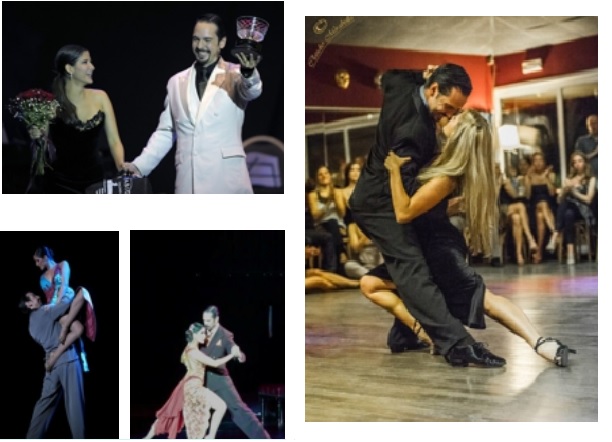
The elegance of Argentinian Tango is here to conquer the heart of Europe with the March edition of Crazy Tango Festival 2018! This is the third edition of this amazing Tango Festival in the beautiful city of Graz/Austria and each time attracts more national and international dancers. Participants will love the friendly atmosphere, the high quality workshops in air-conditioned rooms with wooden floors and the wonderful Milongas with superb music!

Grazy Tango Festival 2018

Maestros 2018:

  • Maja & Marko (Croatia)
  • Germán & Eva (Argentina & Denmark)
  • Boris & Chris (Argentina & England)

Tango DJs 2018:

  • DJ Pablo
  • DJ Germán
  • DJ Veronika
  • DJ Vlado
  • DJ Đurđina

Maja Petrović & Marko Miljević started dancing Tango in Zagreb, Croatia in 2002 in a small group of enthusiasts curious about this “new” dance. Only five years later they began giving regular lessons at the Tango Argentino Zagreb Dance School. Their first and most influential teachers were Pablo Rodríguez and Noelia Hurtado. Later they continued to study with Noelia and Carlitos Espinoza.

Maja and Marko - Grazy Tango Festival 2018
Maja and Marko – Grazy Tango Festival 2018

In 2014 they started to work with Tango professionally, holding workshops and performing all over Europe. In 2015 they had their debut in North America at Bailongo Tango Festival in Montréal, Canada.

Germán Cuestas started dancing when he was a teenager, and since then dedicated his life to music and Tango. He has a degree as a music school teacher and now uses this knowledge in his work as a Tango dancer.

He also has been a Tango DJ for many years and is the organizer of El Motivo Tango (a Milonga in Villa Malcolm’s club, Buenos Aires) and has taught in various Milongas and schools in Buenos Aires.Now he is based in Denmark, teaches and performs with Eva Lehrmann, around Europe, Russia and Argentina.

Eva and German dancing tango - Grazy Tango Festival 2018
Eva and German dancing tango – Grazy Tango Festival 2018

Eva Lehrman has been dancing different styles of dances most of her life, however it wasn’t until she met the Argentine Tango that she dedicated herself to dancing professionally. She travelled to Buenos Aires, where she soon started working in El Esquinazo, a newly opened Tango school, where she taught Tango and Yoga and there she also met Germàn. Today she mainly works in Copenhagen being an instructor, a DJ and a performer. She still spends a big part of her time in Buenos Aires, where she is part of a team who organizes Tango holidays.

Boris and Chris work to harmonize their distinct and varied backgrounds of dance training, biomechanics, and Tango to create their dance. The fundamental element of their Tango is “el abrazo”’ and the connection between two dancers. It enables them to communicate in an unspoken language that unites you to your partner, your partner’s body to yours.

They believe that even if two bodies are standing still in space, their embrace continues moving within and between them. In her experience of studying many other disciplines, Chris believes that this is what makes Tango so special, so unique and so rewarding, “alongside the technical details, the complexity of the steps and the music, in no other dance style have I experienced this sensation where dancers search for such a deep connection with their partner”.

Boris and Chris - Grazy Tango Festival 2018
Boris and Chris – Grazy Tango Festival 2018

Using knowledge and understanding of the body, their teaching method focuses on how to use the bodies to create movement and then how to transmit and receive this information through the embrace. Alongside steps and techniques, they will give you tools, foundations, and concepts that can be applied within your entire Tango world to discover different ways of moving.

Location

All the workshops will take place in the four air-conditioned halls of the dance school on approximately 450 m². You will also find a lobby with a cozy bar and comfortable chairs, as well as some cloak & changing rooms. Wooden floors are dancers’ paradise and the bar will take care for your refreshments!

Gravity does not allow very much floating, but sometimes in your life you come to a place, where the laws of gravity do not apply any more. This place will give you a pleasurable experience, which will put you at ease and which transfers you into an unforgettable experience. The place where we just can relax and let your soul get some rest.

The panorama hall presents itself with a glazing from the bottom to the top and offers an unbelievable view over the city of Graz. It is one of the most popular event locations of the “Schlossberg”, the well-known landmark of Graz. Together with the stage hall it covers 250m2 of wooden dancefloors so that dancers can experience a most memorable evening.


Am Schlossberg 7

A-8010 Graz

Tel.: +43 (0) 316 84 00 00

[email protected]

Körösistraße 81

A-8010 Graz


Further information at https://www.facebook.com/events/1666219917013457/

Tony Succar Releases “Me Enamoro Mas De Ti” Featuring Jean Rodriguez

Europe / France / Bahrain

Miami, Florida February 20, 2018: Tony Succar announces the release of “Me Enamoro Mas De Ti “ (I Fall More In Love With You) featuring Jean Rodriguez, adding another song to his ever-growing list of new flavors that are defining salsa-infused pop music.

Jean Rodriguez - Unity by Tony Succar - Concert Arenes Fes Tempo Latino
Jean Rodriguez – Unity by Tony Succar – Concert Arenes Fes Tempo Latino

The powerful combination created when these two work together has been a consistent formula for viral success. When Tony Succar and Rodriguez combine their talents, it’s a concoction of tropical goodness that has their fans loving their groove. The single is available now on iTunes, Amazon, and Spotify. And, you can view Tony’s infectious “Me Enamoro Mas De Ti“ music video here.

“Me Enamoro Mas De Ti” is part of a follow-up project to Succar’s UNITY album, The Latin Tribute to Michael Jackson that hit #1 on the Billboard Tropical Album Music Chart, iTunes’ #1 World Latin Chart, and Amazon’s #1 Latin Pop Music Chart.

It was that collaboration of Universal Classics and Universal Music Latin Entertainment that landed Succar a nationally televised primetime PBS special. Inspired by what Succar refers to as the “Unity Sound,” his production of “Me Enamoro Mas De Ti” merges the unmistakable driving elements of Salsa with Pop.

It’s a blend of multi-cultural roots that results in a characteristic, retro sound with a full horn section, Latin rhythms and inspired vocals. This is Succar’s always-fresh approach of cleverly combining pure Salsa with super hip, funky and pop musical elements.

Tony Succar escalated to the top of the charts with Unity, but now it’s clear that Unity was only the foundation of his full vision.

Tony Succar
Tony Succar

“Many people have been asking me what would come after ‘Unity,’ or ‘when is Unity 2 going to be released?’ Fans have also asked when I would release some of my original compositions. The success of Unity really took my career to another level, and from that was born a new sound that I wanted to stick with.”

“So, I decided now is the time to hit the refresh button and surprise people with brand new material. This track is just the beginning. I won’t stop writing new arrangements of the amazing songs of Michael Jackson and other legendary artists I admire, but I love to create, captivate, and innovate new music.”

With that, “Me Enamoro Mas De Ti” is just a taste of what Tony Succar has on the horizon. Make no mistake, Succar is committed to the essence of tropical music that catapulted him to how far he has come. It runs in his veins and he is devoted to creating new sounds without losing the very core of what the great Salsa artists who came before him produced.

Tony Succar’s production of “Me Enamoro Mas De Ti” was co-written with Jorge Luis Piloto. Piloto has written hits for great artists such as Gilberto Santa Rosa, Victor Manuelle, Tito Nieves, Celia Cruz, Christina Aguilera, Olga Tañon, and many others. His prolific career also includes having led Sony’s Latin division and winning ASCAP’s Latin Songwriter of the Year award.

Tony Succar has been traveling a lot and performed at the Tempo Latino Festival Scène des Arènes in Vic-Fezensac, France and was a part of the amazing lineup of featured artists at the Desert Beats Music Festival in Bahrain. Succar and Unity; The Latin Tribute To Michael Jackson, shared the stage with Kool and The Gang and UB40, among others. You can see where Succar is headed next on his calendar.

Me Enamoro más de ti - Tony Succar
Me Enamoro más de ti – Tony Succar

Tony Succar has also collaborated with Latin Percussion (LP) Music to develop a “Tony Succar Signature ‘Unity’ Peruvian Cajon,” available in stores beginning in April. Just another indication of where the Peruvian-born musical talent’s heart lives.

Download “Me Enamoro Mas De Ti” here: http://smarturl.it/MeEnamoroMasDeTi

WEBSITE: http://tonysuccar.com/

Contact: Nurby Lopez – Mixtura Productions 305-771-1014 [email protected]

Video For Single “Me Enamoro Mas De Ti” Click to watch: https://youtu.be/qQkS-1DDcJM

Star of the Month: Orlando Watussi. The Latin king in Italy!

Europe / Italy / Milan

In International Salsa Magazine, we want to create a network of people who want to inspire and share music around the world. This month we have the pleasure to present you the Venezuelan musician: Orlando Watussi!

He is a composer, musician, sonero and salsero currently living at Milan, Italy. His career started in 1969 in a band called “Los Exitantes” with Alexis Monterola. Then, in 1971, Watussi joined the group “Principe y su sexteto”. Years later he was the founder and director of the group, El Satelite, with Federico and su Combo Latino, until closed his career in Venezuela with a brief stay in the group “Salsa Mayor”.

Orlando Watussi
Orlando Watussi

The most important years in his music career were between Puerto Rico and New York where he got into Latin Jazz and Salsa. His first international music work was with Don Rafael Cortijo in 1976, work that took him to Puerto Rico in order to join the Combo de Cortijo.

In 1986 had the opportunity to start his solo career, creating a big name in the salsa movement with the hit “Las Calaveras Blancas”, with the production of Jose Mangual Jr. Through all his music career, Watussi has collaborates with artists like Johnny Sedes, Alfredo Naranjo, Cheo Navarro and many others. His is currently living and working in Milan, Italy, but also giving concerts in Germany, Spain, France and in his natal country: Venezuela.

Discography: Echando Pa ‘Lante Orlando Watussi

  • Cuidala Bien
  • Son Caleño (Aldemar Barona / Orlando Watussi)
  • La Verdad
  • Si Te Tuviera
  • Barrios
  • Malunga
Orlando Watussi - Como Nunca
Orlando Watussi – Como Nunca

Mulatu Astatke, the first African to earn a PhD from Berklee College of Music

Mulatu Astatke (or Astatqé) (Jimma, Ethiopia, December 19, 1943) is an Ethiopian musician, composer and arranger. He is considered the father of Ethio-Jazz.

His musical training took place at the Trinity Laban Conservatoire of Music and Dance in London, where he studied clarinet, piano and harmony, New York and Boston, where he was the first African student and also the first African to earn a PhD from Berklee College of Music; there he was trained in vibraphone and percussion.

Mulatu Astatke, the first African to earn a PhD from Berklee College of Music

Later he combined the influence of jazz and Latin music with traditional Ethiopian music.

My desire to start making Ethio-jazz began in London while I was studying there in the 1950s; then I knew I wanted to be different with my music. I looked for musicians from different African backgrounds and saw that they were successful and promoted the culture of their country.

However, there was very little from East Africa and Ethiopia, so I decided at that point that I would create something unique based on the rich heritage of our music and show how much we have contributed to the world of music in general.

That journey began to take shape at Berklee College in Bastan. I was the first African musician to study there and that period was very important for me.

I learned the technical aspects of many different musical forms and my teachers gave me the confidence to move in my own direction, teaching me that it was okay to be different in my music and try something completely new.

Mulatu Astatke.
Mulatu Astatke.

Ethiopian cultural music is based on four modes  tezeta, bati, anchihoy and Ambassel  and within my music, I knew that those modes could not be played.

They had to remain at the center of my music or the whole character of the sound would change and become distorted. I began to add beautiful colors with chords, voicings, bass lines and rhythm sections, writing progressions that fit together well. It’s very difficult to write 12-note music around the Ethiopian modes without destroying them.

In the mid-’60s I returned to Addis, but I kept going back and forth to the United States.

At that time, no one was fusing Ethiopian music with jazz.

In my country there was the First National Theater Orchestra, and both the police and the army had their own orchestras.

There were also bands like the Echoes and the Ras Band.

Musicians at that time based their melodies strictly on the four Ethiopian modes, using techniques like the “canon,” with melodic lines echoing each other.

With Ethiopian jazz, I consciously wanted to expand and explore the modes in different ways.

Mulatu Astatke (or Astatqé) (Jimma, Ethiopia, December 19, 1943) is an Ethiopian musician, composer and arranger. He is considered the father of Ethio-Jazz.

I formed a group called The Ethiopian Quintet in New York, made up of a mix of Ethiopian, Latino, and African-American musicians (there weren’t many Ethiopian musicians in the United States at that time).

The band included trumpeter and pianist Rudy Houston, who later played with Yambu, and Felix Torres, who played with Sonora Ponceña.

I have always felt a deep connection between Latin and African music; I traveled to Cuba to find out where the first American landed, I heard their musicians play and dance and although they sang in Spanish, the tempo, rhythm and feeling were very similar to aspects of African music.

So, with the Ethiopian Quintet, I wanted to show the African contribution to Latin music and it was my first opportunity to experiment and start developing my vision of Ethio-Jazz with this band.

With the American and Puerto Rican musicians in the group we created a different atmosphere and arrangements.

It was a great opportunity for me and they loved what I was writing and the direction I was trying to take.

We did quite a few concerts, some Spanish weddings, events upstate New York and in Manhattan.

We played at the Village Gate with Dave Pike, a great friend of mine at the time, one of the world’s greatest vibraphone players. He played a lot with Herbie Mann and I remember sitting in to watch one of his recording sessions.

I saw a lot of other great musicians in concert, from Coltrane to Bud Powell and Bill Evans. On the New York live circuit I met a producer called Gil Snapper.

His musical training was at the Trinity Laban Conservatoire of Music and Dance in London,

Gil was a very nice and interesting guy and worked with musicians of many different styles.

He picked up on my music very quickly; we got on well and he invited me to record with The Ethiopian Quintet, so our first albums with him were ‘Afro Latin Soul’ Volumes 1 and 2, both recorded during 1966.

On the first volume, I performed an adaptation of an old Ethiopian warrior song, ‘I Faram Gami I Faram’.

I would have liked to have an Ethiopian singer for the song, but it was sung in Latin and the lyrics were translated to the singer so he could sing it in Spanish.

Nevertheless, it turned out to be a nice combination. The album included other compositions that were important steps for me: ‘Mascaram Setaba’ (Summer is Coming), ‘Shagu’ and ‘Almaz’. On the second volume, Rudy Houston suggested a piece of music that we called ‘The Panther’, in reference to the animal, but also in recognition of the Black Panthers, who were very active in the civil rights struggle in the United States at that time.

On this album, one of my favorites is my composition ‘Girl From Addis Ababa’, which worked very well as a fusion of Ethiopian modes and R&R rhythms, an indicator of the more refined Ethiopian jazz sound of my later album for Worthy, ‘Mulatu Of Ethiopia’ (1972). It also included my new arrangement of the 1950s tune ‘Lover’s Mambo’.

Both albums include nice arrangements also by Oscar Garcia, Rudy Houston and Gil Snapper as well.

I feel proud of the recording when I listen to it again. It was an important moment in my career and it was a very interesting and progressive time to be in New York in the mid-60s.

I was there at the same time as Hugh Masekela, Miriam Makeba and Fela Kuti and, each in their own way, we tried to do our part to put Africa on the map of contemporary jazz.

Mulatu Astatke & His Ethiopian Quintet - Afro-Latin Soul (1966, R-2018)
Mulatu Astatke & His Ethiopian Quintet – Afro-Latin Soul (1966, R-2018)

Mulatu Astatke, April 2018

Mulatu Astatke & His Ethiopian Quintet – Afro-Latin Soul (1966, R-2018)

Tracks: Afro Latin Soul: 01. I Faram Gami I Faram (Mulatu Astatke)

02. Mascaram Setaba (Mulatu Astatke)

03. Shagu (Mulatu Astatke)

04. One For Buzayhew (Mulatu Astatke) ke)

05. Alone In The Crowd (Gil Snapper)

06. Almaz (Mulatu Astatke)

07. Mulatu’s Hideaway (Mulatu Astatke)

08. Askum (Rudy Houston)

09. A Kiss Before Dawn (Gil Snapper & Weiss)

10. Playboy Cha Cha (Oscar Garcia) Afro Latin Soul Vol. 2:

11. The Panther (Boogaloo) (Rudy Houston)

Konjit (Pretty) (Oscar Garcia)

Soul Power (Rudy Houston)

Lover’s Mambo (Traditional, Arr. Mulatu Astatke)

Love Mood For Two (Rudy Houston)

Jijiger (Rudy Houston)

Girl From Addis Ababa (Mulatu Astatke)

Karayu (Oscar Garcia)

Raina (Rudy Houston)

Musicians:

Mulatu Astatke (Vibraphone, Piano, Drums)

Rudy Houston (Piano, Trumpet)

Robert Cuadrado (Bass)

Felix Torres / John Perez (Congas / Bongos on Vol. 1)

Pete Iglesias (Congas on Vol. 2)

Tony Pearson (Timbales)

Information provided (October 5, 2024)

Also Read: Flora Purim has earned her two Grammy nominations for Best Female Jazz Performance

  • « Go to Previous Page
  • Page 1
  • Interim pages omitted …
  • Page 3
  • Page 4
  • Page 5
  • Page 6
  • Page 7
  • Interim pages omitted …
  • Page 41
  • Go to Next Page »

International Salsa Magazine (ISM) is a monthly publication about Salsa activities around the world, that has been publishing since 2007. It is a world network of volunteers coordinated by ISM Magazine. We are working to strengthen all the events by working together.