• Skip to primary navigation
  • Skip to main content

International Salsa Magazine

  • HOME
  • Previous editions
    • 2026
      • ISM / June 2026
      • ISM / May 2026
      • ISM / April 2026
      • ISM / March 2026
      • ISM / February 2026
      • ISM / January 2026
    • 2025
      • ISM / December 2025
      • ISM / November 2025
      • ISM / October 2025
      • ISM / September 2025
      • ISM / August 2025
      • ISM / July 2025
      • ISM / June 2025
      • ISM / May2025
      • ISM / April 2025
      • ISM / March 2025
      • ISM / February 2025
      • ISM / January 2025
    • 2024
      • ISM / December 2024
      • ISM / November 2024
      • ISM / October 2024
      • ISM / September 2024
      • ISM / August 2024
      • ISM / July 2024
      • ISM / June 2024
      • ISM / May 2024
      • ISM / April 2024
      • ISM / March 2024
      • ISM / February 2024
      • ISM / January 2024
    • 2023
      • ISM / December 2023
      • ISM / November 2023
      • ISM / October 2023
      • ISM – September 2023
      • ISM – August 2023
      • ISM July 2023
      • ISM Edition June 2023
      • ISM – May 2023
      • ISM April 2023
      • ISM March 2023
      • ISM February 2023
      • ISM January 2023
    • 2022
      • ISM December 2022
      • ISM November 2022
      • ISM October 2022
      • ISM September 2022
      • ISM August 2022
      • ISM July 2022
      • ISM June 2022
      • ISM May 2022
      • ISM February 2022
      • ISM January 2022
    • 2021
      • ISM December 2021
      • ISM November 2021
      • ISM October – 2021
      • ISM September 2021
      • ISM August 2021
      • ISM July 2021
      • ISM May 2021
      • ISM April 2021
      • ISM June 2021
      • ISM March 2021
      • ISM February 2021
      • ISM January 2021
    • 2020
      • ISM December 2020
      • ISM November 2020
      • ISM October 2020
      • ISM September 2020
      • ISM August 2020
      • ISM July 2020
      • ISM June 2020
      • ISM May 2020
      • ISM April 2020
      • ISM March 2020
      • ISM February 2020
      • ISM January 2020
    • 2019
      • ISM December 2019
      • ISM November 2019
      • ISM October 2019
      • ISM Septembre 2019
      • ISM August 2019
      • ISM July 2019
      • ISM June 2019
    • 2016
      • ISM December 2016
      • ISM November 2016
      • ISM October 2016
  • Spanish
  • Download Salsa App
    • Android
    • Apple

July

Patrón Latin Rhythms manager talks about the band and its plans

Patrón Latin Rhythms is one of those many bands from the San Francisco Bay Area that continue to demonstrate the taste the inhabitants of the area and its surroundings have for Latin music and other rhythms stemming from it. For this reason, we decided to talk to Vanessa Ojeda, the band manager, to know more in depth her work and everything that has to do with the group.   

Vanessa, manager of Patrón
This is Vanessa Ojeda, manager of Patrón Latin Latin Rhythms

Vanessa’s beginnings in music   

Vanessa told us that music has always been present in her life, as she remembers, from an early age in San Leandro, California. Her father was responsible for managing musical groups, so he taught his daughter all he knew about the administrative and business part.   

In fact, the young woman recalls that, since she was five years old, she already saw her father playing his trade and explaining some things about it. As she got older, she gained more responsibilities and learned more about the internal functioning of a group. She started answering e-mails, drawing up contracts, making reservations, among other things.   

When her father sadly passed away about three years ago, Vanessa had to learn to do the rest of the things on her own, so she greatly appreciates the prior learning she experienced before the time came.    

Today, she is in charge of all the band’s contacts, social networks, publicity, promotion, musician fees, hotel bookings, travel, among other tasks.   

Beginnings of Patrón Latin Rhythms   

Vanessa explained that it was her father who initially selected the musicians and talent that made up the band. He began by looking for the congueros, whom he took home to determine who was the best choice for the group. He also had some friends who were dedicated to music and he knew they would do a great role if they joined his project, so he contacted them to make the proposal. 

Later, the first musicians selected to be part of the group created their own orchestra, which led Vanessa’s father to look for new musicians and a different name to the proposal that he had in mind and search for the right talent for it. This is how Patrón Latin Rhythms was born. 

Vanessa comments that her father was a lover of the musical work by Poncho Sanchez, Tito Puente, Santana, among other artists of this style, so he was looking for musicians who could emulate those sounds and ways of playing. He also wanted the new members of the new 10-piece band to understand what he wanted at that time, which was the salsa of the time. 

As for the name of the band, Vanessa and her father wanted something attractive and playful for the audience, so after thinking about many things, they decided that ”patrón” was a memorable term and that made them think of something or someone ”strong” and ”with character”, just as they wanted the band’s music to be.   

Patrón plays Latin and American music
Patrón Latin Rhythms is capable of playing both Latin and American music without any problem

Musical background of the musicians 

Another thing Vanessa’s father was very careful with was knowing very well the background of each of the musicians he selected and, of course, ensuring that they came from reputable bands. ”My father knew many of the musicians before forming the group, so he knew they would do an excellent job if he gave them the chance. In fact, some of them are still with me despite my father’s death and the time elapsed,” said Vanessa.   

The permanence of most of the old team is considered by Vanessa as a sign that Patrón Latin Rhythms is much more than just a job for its members. It is also like a family that they take care of and strive to make it better every day.    

This was achieved thanks to the training provided by her father, who always made sure that Vanessa knew all the details related to the band’s operation so that she would be able to take care of it and its members after his passing. One of the most important things he taught her is that she should always treat others as she would like to be treated, which she has very much in mind to this day.   

Genres played by Patrón Latin Rhythms   

Regarding the genres played by the group, Vanessa said that they have tried to incorporate a lot of salsa into their repertoire recently. Her father was a big fan of Latin rock, which occupied a privileged place in the band’s work, but when Vanessa took the reins of the project, she began incorporating a little more salsa and diversify the rhythms played by Patrón Latin Rhythms. To this we must add that she likes R&B a lot, so it was also taken into account to be part of the group’s repertoire.    

It is precisely this blend of genres that the group always seeks to achieve is what guarantees them a mixed audience in which all nationalities and tastes converge. Something that stands out from the group’s musicians is that many of them have their own salsa repertoire due to the experience they bring from other orchestras, which helps them attract audiences of different generations.   

In addition to that, Latin and American public tend to enjoy Patrón Latin Rhythms’ music depending on the genre being played at any given time.   

 Patrón playing live
Patrón Latin Rhythms playing live

How Patrón Latin Rhythms handles arrangements on the covers 

At the time of creating a cover of a well-known song, the musicians of the group take into account the characteristics of the audience they are going to entertain that day, and one of them is the crowd size. If the audience is big, they know they should play faster songs, but if the group of attendees is smaller, then they start with something softer and calmer.   

However, in all their performances, they try to vary all genres so that their shows do not become monotonous and the audience does not get bored. In fact, their repertoire has included from songs by Marc Anthony or Santana to others by Bruno Mars or the group Chicago, which shows how diverse a Patrón Latin Rhythms concert can be.    

On this subject, we can say that each musician is a fundamental part of the orchestra, as each one plays a role in each song they are going to play because not everyone can play everything. In fact, Vanessa tells an anecdote in which one of the musicians quit and it was difficult for the rest of the them to play the chords and the percussion part of certain songs he played. For the same reason, each member and instrument is of vital importance in the band and it is not always easy to cover some of them. 

Read also: Eric Maldonado from La Paris All-Stars’ work behind the scenes 
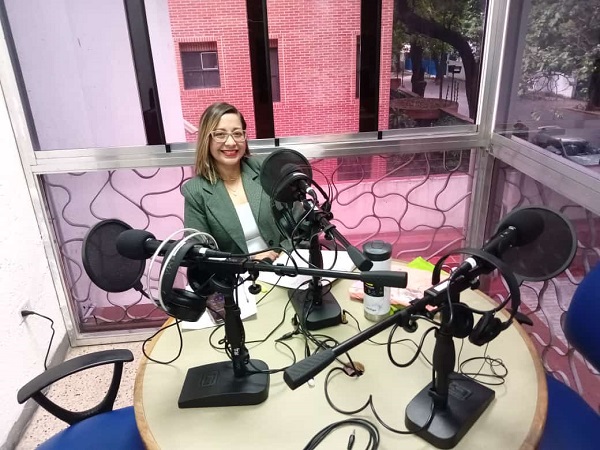
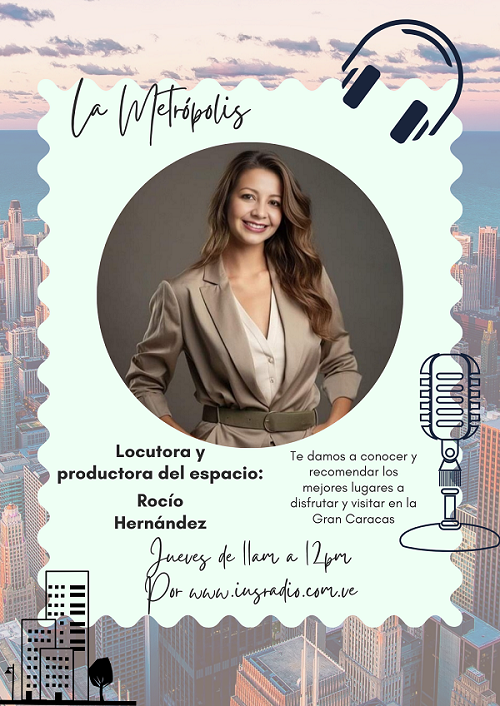
Rocío Hernández is the Announcer and General Producer of “La Metrópolis”, an entertainment radio program broadcast every Thursday in Caracas

Rocio Del Valle Hernandez Diaz, better known as Rocio Hernandez, Venezuelan born in the current state of La Guaira, in its capital La Guaira where all the people from Guaira or Vargas were born, at that time it was Vargas, until its current change of name of the entity.

I was born on July 20, 1986, here in my beautiful country Venezuela, I come from a working class family with strong Spanish ancestry and a little bit of Venezuelan indigenous race, which I am very proud of my roots, all Venezuelans have a mixture of European, indigenous and African, we carry it in our blood.

Rocío Hernández is the announcer and general producer of "La Metrópolis", an entertainment program broadcast every Thursday in Caracas
Rocío Hernández is the announcer and general producer of “La Metrópolis”, an entertainment program broadcast every Thursday in Caracas

I am 37 years old and I am the mother of a beautiful, intelligent and magical 10 year old girl, who came into my life in 2014.

The eldest of 3 sisters, all of whom are professionals in this country, and Aunt of 1 niece and 1 nephew.

My family is a fundamental support for the development of my entire career, which I will now tell you, thanks to them my parents and sisters always move forward with work, honesty, respect, responsibility and education, values instilled in our home always.

Current resident in the state of La Guaira, specifically in the Carayaca Parish.

Administrator in Customs and International Trade graduated from the Universidad Simon Bolivar USB and Universidad Marítima del Caribe UMC, professionally my main base as a career.

It has been almost 20 years of career in this area of administration and international trade. I am a University Teacher specifically in the area of English Language in its teaching as a foreign language for 2 universities in this country currently I have worked for other institutions teaching Arancel de Aduanas, economic integration, foreign trade , also advertising and marketing, budgeting, marketing for careers such as graphic design, interior design and advertising and marketing ,additionally I got certified in Radio Voiceover in 2018 I started those studies from 2017 to 2018 in the Latin American Institute of voiceover in the Chacao municipality in the city of Caracas.

This study I did in parallel to my work in the administrative area of finance during that time, at that time. Which I started and finished satisfactorily.

The radio broadcasting certification gave us, radio production, radio technical equipment management, diction, public speaking, brand positioning and networking for that time, a very complete course, which allowed us to develop all our skills and abilities to speak into a radio microphone and the general public, this certification required us to design a real radio program, with 1 month test airing with real production, real guests, real recording and airing in a real way, on the web platform (www.radiosinprecedentes.com. ve) of the institute once a week for 1 month, at that time with my study group we designed this format The Metropolis with the help of the teacher of the subject of production is how this group of 5 people 4 women and 1 man designed the format of the program “The Metropolis”, which helped us to pass the subject, practice and experience a radio program which remained as a sketch there, to use in the future if we wanted so, at present each one went different ways inside and outside the country, and have developed different types of programs in the area where they work or simply do not practice radio broadcasting.

In my case I always dreamed of having my own radio space after getting certified because for a natural and authentic reason, from the bottom of my heart I wanted to take the course to get certified and practice radio broadcasting, even if it was for 15 minutes something short or long.

“La Metrópolis”
“La Metrópolis”

But it was not until the year 2023 that opened the door to have my radio space, after knocking on about 2 to 3 doors, through a lifelong friend who knew I was looking for the opportunity, I was offered this opportunity by the board of IUS radio an innovative radio, and offered me the schedule accepting the proposal and these coincidences and without chronicities of life and destiny, has allowed me to develop The Metropolis every week on Thursdays from 11am to 12pm. Radio space which I am going to comment below:

La Metrópolis an entertainment program transmitted every Thursday from 11am to 12pm by the platform or website www.iusradio.com.ve, in which I am the announcer and main producer of the space, this radio space is a place where we announce and recommend the best places to enjoy and visit in Greater Caracas hence its name La Metrópolis we inform about what is there, what is happening, what is happening, what is new in the most important area of our country, La Guaira, Caracas and Miranda.

This includes all the human beings that live here and their daily activities of importance and impact, human, social, musical, productive, scientific, educational, artistic, cultural, business, commercial, among others, everything that makes life here.

That is why we started in this first year with 3 original sections that I am going to talk about:

Section 1 La Tienda: Varied national and international news. Guide of places to visit and activities in the great caraca.

Section 2 El Café: Space for interviewing our guests (people who contact us or contact me or the production of the station).

Section 3 El Coctel: Space for interaction with our public, contests, gifts, with our fans, collaborators and society.

And that contact with whatsapp networks, Facebook, Instagram, X, fixed or cell phone.

Already after this year, on our own initiative and together with the production of ius radio, an innovative radio station, La Metrópolis has released 2 new sections of our own creation, which I will name below:

Section 4. Cinema City: Space of anecdotes, historical and current curiosities of the 7th art, Cinema.

Section 5 La Pasarela: Space for current trends in national and international fashion.

These sections have these original names to associate them to the city since they are allusive to the activities that we live in a City.

The musicalization is under my selection and musical taste. The musical cut is Pop and Rock in Spanish and English, Ballads in English and Spanish, Bossa Nova, Jazz, Ryth and blues, Venezuelan music, music of national talent, classics of always, Latin music only Salsa, Merengue and finally Rap and Reggaetón, keeping a close eye on the content of messages and lyrics that are not offensive and out of order for our esteemed, valued and exclusive radio audience of my program and the station. I am and we are careful in that out of respect for our listening audience and the national communication laws.

At this time the Metropolis has an approximate or regular audience of 100 to 200 people estimated, with low and high peaks.

This is how in the section in the coffee everyone’s favorite we always have our guests here we have had the opportunity to have in the booth, interviewing from film directors, actresses, singers, dancers, musicians, educators, doctors, lawyers, artisans, music DJ, motivational Coach, holistic healers, therapists, publicists, musical groups, dance groups, music academies, journalists, writers of books and stories, who make life inside and outside the country, but have a common denominator, they have a dream and make this country a better country to live, they are useful to them, their families and society.

A space to project them, and allow them to express and show what they do and their impact, this is how La Metropolis is ready to support any activity that allows human development in its maximum expression. Trusting that we will reach more public with more frontiers promoting everything positive for people for the coming years of professional work.

Rocio Hernandez is a Broadcaster and General Producer of "La Metropolis".
Rocio Hernandez is a Broadcaster and General Producer of “La Metropolis”.

So after all written about me, which I do in parallel with my work as a mother, daughter, sister, and administrative and teaching professional at present, I want to tell you that the satisfaction is great to achieve all these activities in a professional manner within the radio broadcasting, which is a magical, recreational space within a work of continuous learning, it is more than a dream, It is a hobby, it is a passion, it is a love to do radio, and I feel very proud and happy to do this activity for me and for all the people of the medium and for the public and Venezuelan people who need it so much, thanks to my producer and the entire team of the station and its directors who support us in making quality content for our country, with the greatest and deepest love and respect for this activity. With gratitude always.

Thank you for this opportunity to show and express myself.

Rocío is a Broadcaster and General Producer of "La Metrópolis".
Rocío is a Broadcaster and General Producer of “La Metrópolis”.

Facebook: Rocio Hernandez

Also Read: If you want to listen to Tasty Salsa tune in to Ritmo Sabor y Salsa with Nesmary J. Gómez

Marimba is the name given in Spanish to a very old musical instrument that, over time, has gained visibility and importance in many countries.

The marimba is a musical percussion instrument with a rich history that spans continents and cultures.

Although its exact origin is debated, it is believed that the marimba has its roots in Africa and was developed by different African cultures such as the Bantu and the Marimberos.

The term “marimba” comes from the Bantu “marimba” or “malimba”, meaning “single bar xylophone”.

In America, historical records indicate that diatonic xylophones, precursors of the modern marimba, were introduced in Central America between the XVI and XVII centuries.

The first known marimba in America dates from 1545 in the Santa Lucia hacienda, in the municipality of Jiquipilas, Chiapas, Mexico. In Guatemala, historian Domingo Juarros documented in 1680 the use of marimbas with gourd resonators by Mayan musicians.

Musical Duo of a Guitarist and a Marimba player in Guanacaste in Costa Rica dates back to 1888

Throughout the 17th to 19th centuries, the marimba spread throughout most of the Americas and became a typical element of Mayan and Ladino ensembles.

Today, the marimba is considered a patriotic symbol of Guatemala and Costa Rica, and its music, along with the traditional songs and dances of Colombia’s South Pacific region and Ecuador’s Esmeraldas province, was inscribed in 2010 on UNESCO’s Representative List of the Intangible Cultural Heritage of Humanity.

The modern marimba, like the one seen in the image provided, consists of a series of wooden slats of different sizes, arranged from largest to smallest, each with a different sound pitch.

They are struck with mallets to produce musical notes, and each key has its own soundboard.

The development of the modern chromatic marimba was established in Chiapas, Mexico, around 1890.

This instrument has been integrated into a variety of musical genres, from traditional Latin American music to academic concerts, jazz and martial bands.

The marimba remains a vital instrument that celebrates the cultural heritage and musical creativity of the regions where it is loved and played.

Image of a musical duet between a guitarist and a marimba player dated Guanacaste, 1888.

Learning about the materials and components of the marimba, being aware of the playing techniques and learning about the existing varieties helps to broaden cultural knowledge and to discover a wonderful universe of particular sounds.

Marimba Moderna
Marimba Moderna

It is enriching to know, among other things, that a series of woods of multiple sizes arranged from longest to shortest are essential to assemble the keyboard. For the soundboard, on the other hand, it is necessary to work on the tuning so that each wood of this structure is in tune with each key.

As for playing procedures, the four-stick technique and the art of glissando appear as alternatives to keep in mind. Of course, the most advisable thing to do is to attend a marimba workshop in order to master the techniques correctly.

Nor should we forget that, since ancient times, many types of marimbas have been made and used and have contributed their characteristic sounds to multiple musical genres and styles.

Thanks to those who dare to experiment with instruments and musical compositions without being conditioned by prejudices, for example, the folk marimba and the midi marimba can coexist in harmony, to cite two specific cases.

Marimba Antonko-AMC12

Saurce: Recuperando la historia en Guanacaste

Also Read: Son Cubano is one of the most popular musical styles in Cuba and Kiki Valera is one of its leading exponents

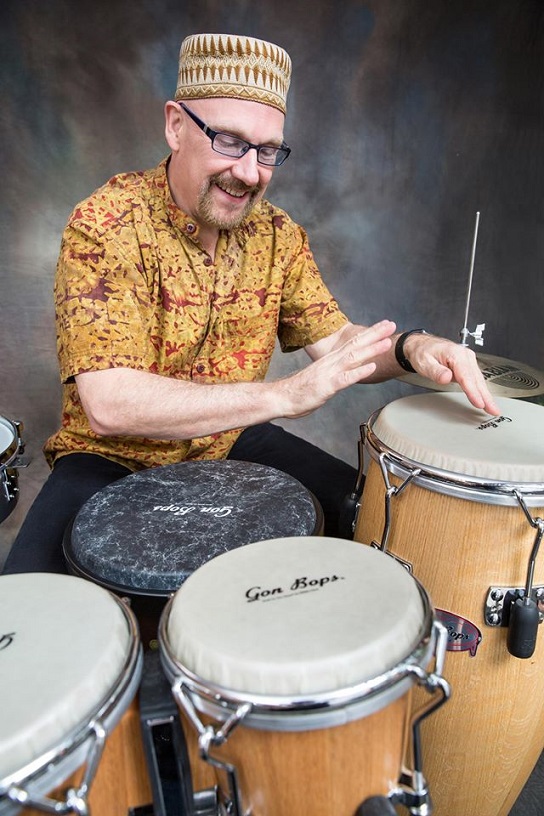
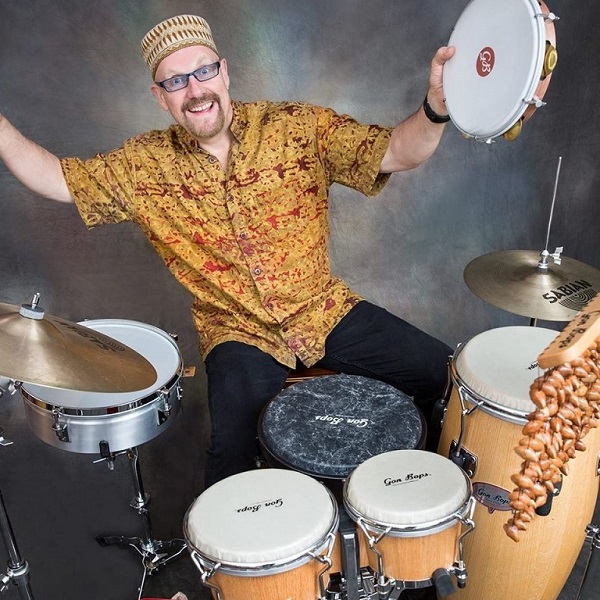
Tom Teasley, described in the Washington Post as “a multi-instrumental genius”

Tom Teasley, described in the Washington Post as “a multi-instrumental genius,” maintains a unique career as a solo percussionist, composer and collaborator. Tom is a 2010 and 2011 Helen Hayes Theater Award recipient for outstanding sound design (nominations in 2012 and 2014).

Tom Teasley playing the drums

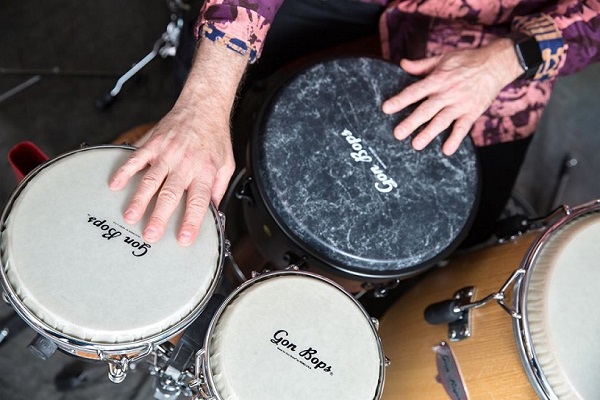
Tom tours frequently throughout the world performing and presenting clinics for the instrument companies he endorses including Yamaha, Vic Firth, Sabian, Remo, Gon Bops and others.

He is the 2012, 2013 and 2014 WAMA (Washington Area Music Award) World Music Instrumentalist of the year. A four-time recipient of a Fulbright-Hayes grant for performances in the Middle East, Tom collaborated with indigenous musicians and gave historic performances in Saudi Arabia, the West Bank and Jerusalem.

Tom Teasley in concert

He has been an artist-in-residence at the John F. Kennedy Center for the Performing Arts and has collaborated with the National Symphony as both a soloist and composer.

As an international collaborator he has performed by invitation in Europe, South America, New Zealand and Samoa. Tom earned the Artist-of-the-year award from Young Audiences of Virginia for his creative and educational presentations.

Tom Teasley
Tom Teasley


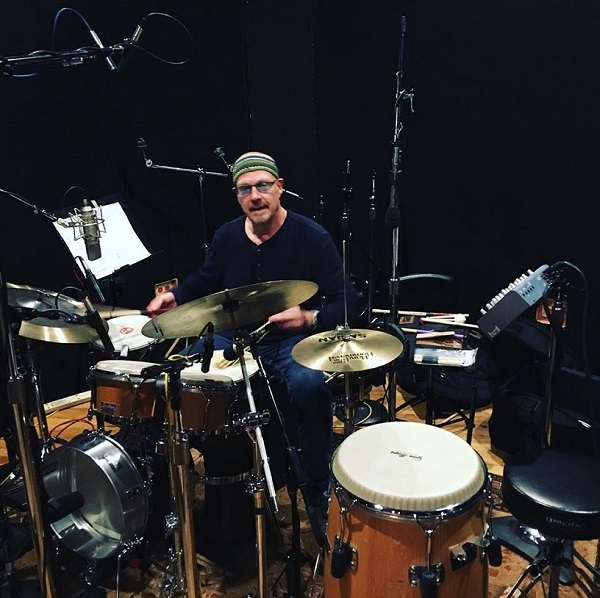
Tom Teasley's Drums
Tom Teasley’s Drums

His seven CDs have been greeted with international airplay and acclaim.

He has been the subject of feature articles in both “Modern Drummer” and “Drum!” magazines.

Please visit: www.tomteasley.com and for more information.

Tom Teasley
Tom Teasley

https://www.facebook.com/TomTeasleyMusic/

https://www.facebook.com/tomteasley

Son del Monte

North America / United Stated / New York

Son del Monte, Something more than a “Charanga”

It was one of those nights of meeting with friends, those friends with whom you share the same musical preferences among other things, you know, of those gatherings where only you and your friends can spend hours discussing the best songs of Héctor Lavoe or remembering the best hits of the Fania, and in which there is no other way to end the evening than with the deities that brings the good Salsa music from a live band to close the night with a flourish.

Son del Monte
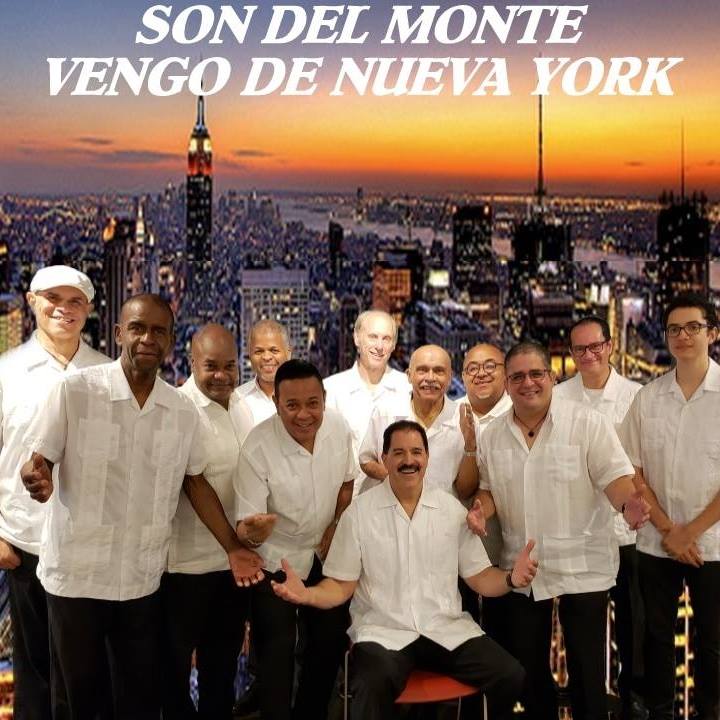
Son del Monte from New York

And so that was, when with the hours passed we came across one of these charming Latin clubs that fill the streets  and every day prevail more in the city of New York, where, of course, they offered Live Salsa. Eureka! If you allow me to say it … It was the perfect place to “Echarnos un Pie” (colloquial term that we usually give in some Latin countries when we refer to dance).

Upon entering, the characteristic sound of the band wrapped up the entire venue, no doubt, captivated us. It was the harmony of an orchestra that played the typical Cuban music: “La Charanga“, which had its maximum exposure in the 20th century. We were all enthralled or if you want to say “delighted”, it was the mixture of wind instruments with percussion instruments but especially with the string instrument that most caught our attention, the Violin.

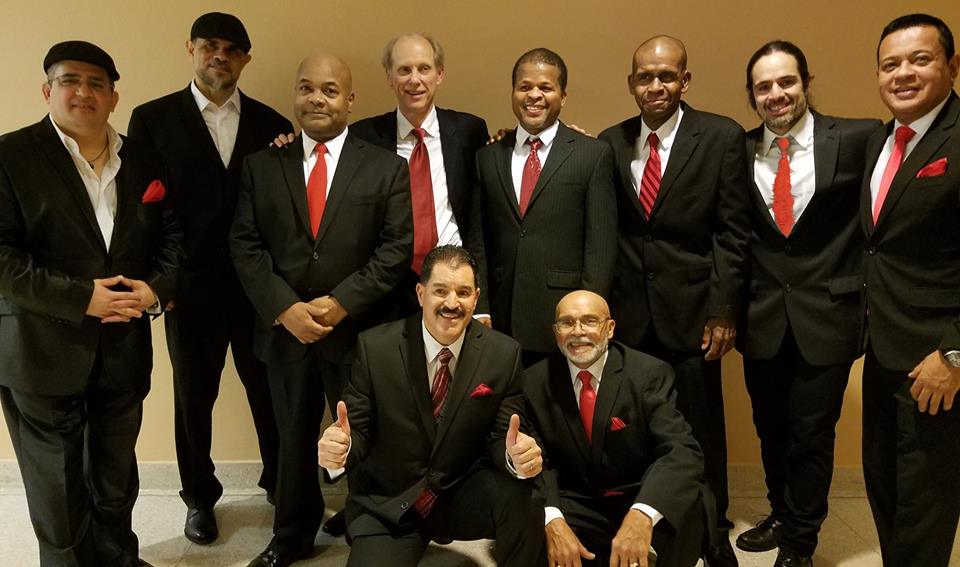
When we asked for the name of the orchestra, they told us: “Son del Monte”. It’s the ideal name for an orchestra of 12 Latin musicians who project their virtuosity before an audience eager for Caribbean Music that bathes the senses and awakens the joy of living.

Son del Monte
Son del Monte

Son Del Monte is a band based in New York City that presents unique tunes from various artists. This orchestra was born from the musical director and timbalero, Manny Rivera whose aspiration was to create a Charanga band with a hard New York sound that paid homage to the orchestras of the 60s, 70s and 80s. “Our music is captivating for the listeners and dancers. Fans from all over the world have come to love Son Del Monte: Una Charanga Con Algo Más and our incredible musical swing”, said Manny Rivera.

This band that combines the typical sound of Cuba with the mixture of flute, violins and trombones with three singers that create a distinctive harmony of three parts, have performed in so popular Salsa venues, such as: Maryland Live Casino, the Baltimore´s Latino Festival, the boardwalk of Coney Island, SOB’s, Empire City Casino in Yonkers, Gonzalez y Gonzalez, La Marqueta, the Latina Hats Society, Industry City, Harlem Mist, among other recognized Salsa venues.

The members of this Charanga orchestra with “Sabor” and electrifying sound are: Mauricio Smith Jr. (Flute), Eric Roberto Salazar and David Rimelis (Violins), Michael Pallas, Juanga Lakunza and Charlie Garcia (Trombones), Eli Rivera (Piano), Bert Castro (Bass), Joe Gonzalez (Conga), Manuel Rivera (Timbales / Musical Director / Leader) and Luis Ayala, Armando Jiménez Sonji and Luis Soto (Singers).

Since the beginning of this year (2019), Son del Monte has been working on their record proposal for the Latin market with unpublished themes, rhythmic and unique sound – contemporary. To date they already have two singles: “Rumba Omelenko” and “Vengo de Nueva York” availables in: CD Baby, Deezer, iTunes, Apple Music, and Spotify. Likewise, the song “Herman” is in the process of recording. So, get ready because this Charanga orchestra promises their CD ended with great compositions for the public later this year.

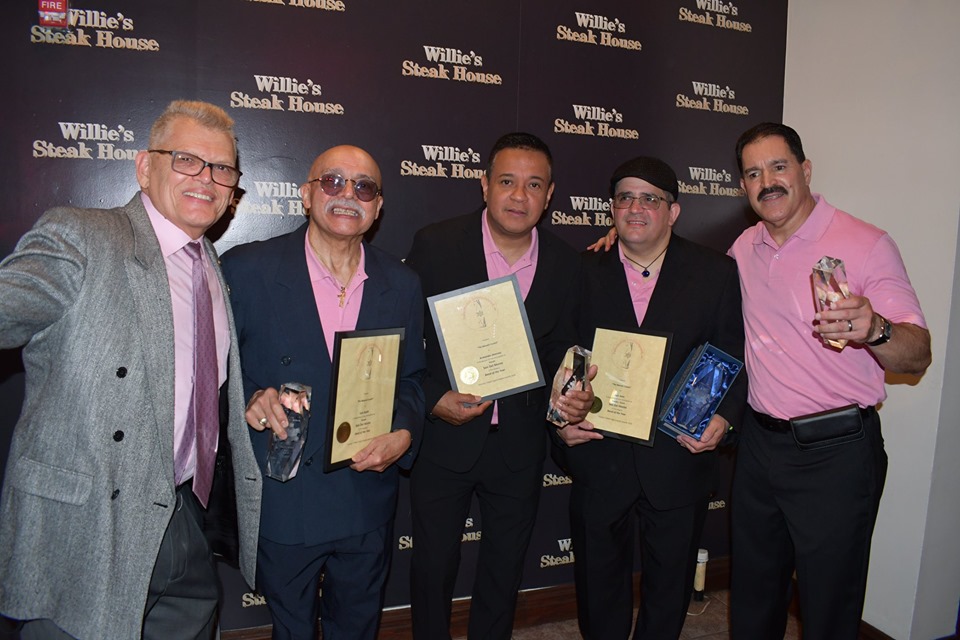
Undeniable, the acceptance of Son del Monte has been so extensive on the part of New Yorkers and all who are Salsa lovers that they were recently awarded with the TANAE Digital Media Award for Band of the Year 2018, giving recognition to an arduous musical performance, but above all of great cultural value that keeps alive our Latin idiosyncrasy.

Son del monte - Premios Tanae
Son del monte – Premios Tanae

Manuel Rivera (Musical Director / Manager/  Timbales):

Manuel Rivera, have been a professional musician for more than 40 years and now Son Del Monte’s Leader/ Musical Director.  His musical career started playing Bongo in a Latin Workshop band which eventually became Orchestra Yambu.  Yambu was known for its Latin Jazz style and Disco Hit “Sunny”, his first recording.  Subsequently, I joined the original Charanga Orchestra Sublime of New York City, doubling up on Bongo and Timbales. He recorded on Sublime’s first two albums in 1977 and 1979.

In 2001, he rejoined Orchestra Sublime now known as “Sonsublime”. Manuel recorded on Sonsublime’s Gran Reserva and Bailando Con Sonsublime, their latest CDs. He studied various folkloric rhythms, Bata drums and sight reading at the Harbor’s Conservatory of Music in El Barrio in New York City under the guidance of the Master Louie Bauzo.

Manuel Rivera has performed with the Bassist: William Millan, of the original Conjunto Saoco, singers: Henry Fiol, Ray Ramos, and Luis Ayala.  Also, he performed with Yerason and the MTG All Stars Orchestra under the direction of Hector Leguillow, Joe Quijano at Lincoln Center and other various artists throughout his musical career.


Next Shows:

Monday, Jult 15TH   

Venue: Cunanele Restaurant and Lounge. 1 Route 46 W, Totowa, NJ 07512

Saturday, August 17TH   

Venue: La Placita de la Marqueta.  North trains between 111th and 112th Streets in East Harlem, “El Barrio” and uptown Manhattan, NY.


For more information, please visit:

https://www.SONDELMONTE.com

Or Follow them for their Social Channel:

https://www.facebook.com/MRSONDELMONTE/

  • « Go to Previous Page
  • Page 1
  • Interim pages omitted …
  • Page 6
  • Page 7
  • Page 8
  • Page 9
  • Page 10
  • Interim pages omitted …
  • Page 14
  • Go to Next Page »

International Salsa Magazine (ISM) is a monthly publication covering salsa activities around the world and has been publishing since 2007. It is a worldwide network of volunteers coordinated by ISM Magazine. Together, we work to strengthen salsa events around the world.