• Skip to primary navigation
  • Skip to main content

International Salsa Magazine

  • HOME
  • Previous editions
    • 2026
      • ISM / March 2026
      • ISM / February 2026
      • ISM / January 2026
    • 2025
      • ISM / December 2025
      • ISM / November 2025
      • ISM / October 2025
      • ISM / September 2025
      • ISM / August 2025
      • ISM / July 2025
      • ISM / June 2025
      • ISM / May2025
      • ISM / April 2025
      • ISM / March 2025
      • ISM / February 2025
      • ISM / January 2025
    • 2024
      • ISM / December 2024
      • ISM / November 2024
      • ISM / October 2024
      • ISM / September 2024
      • ISM / August 2024
      • ISM / July 2024
      • ISM / June 2024
      • ISM / May 2024
      • ISM / April 2024
      • ISM / March 2024
      • ISM / February 2024
      • ISM / January 2024
    • 2023
      • ISM / December 2023
      • ISM / November 2023
      • ISM / October 2023
      • ISM – September 2023
      • ISM – August 2023
      • ISM July 2023
      • ISM Edition June 2023
      • ISM – May 2023
      • ISM April 2023
      • ISM March 2023
      • ISM February 2023
      • ISM January 2023
    • 2022
      • ISM December 2022
      • ISM November 2022
      • ISM October 2022
      • ISM September 2022
      • ISM August 2022
      • ISM July 2022
      • ISM June 2022
      • ISM May 2022
      • ISM February 2022
      • ISM January 2022
    • 2021
      • ISM December 2021
      • ISM November 2021
      • ISM October – 2021
      • ISM September 2021
      • ISM August 2021
      • ISM July 2021
      • ISM May 2021
      • ISM April 2021
      • ISM June 2021
      • ISM March 2021
      • ISM February 2021
      • ISM January 2021
    • 2020
      • ISM December 2020
      • ISM November 2020
      • ISM October 2020
      • ISM September 2020
      • ISM August 2020
      • ISM July 2020
      • ISM June 2020
      • ISM May 2020
      • ISM April 2020
      • ISM March 2020
      • ISM February 2020
      • ISM January 2020
    • 2019
      • ISM December 2019
      • ISM November 2019
      • ISM October 2019
      • ISM Septembre 2019
      • ISM August 2019
      • ISM July 2019
      • ISM June 2019
  • Spanish
  • Download Salsa App
    • Android
    • Apple

Latin America

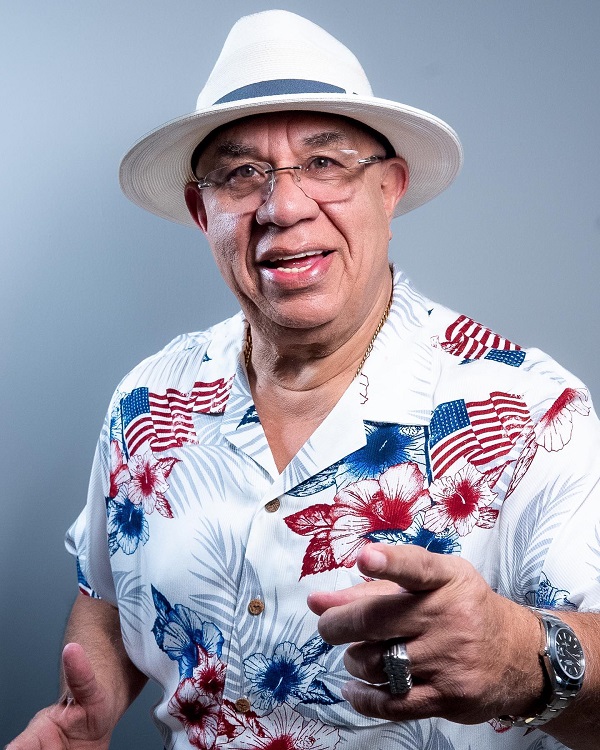
Antonio Cartagena is an acclaimed artist, leaving the name of Peru on high all over the world

Antonio Cartagena is one of our best bastions who was born artistically in 1990 from a humble family with Afro-Peruvian roots.

Born in the Constitutional province of Callao (Bellavista) and having studied higher education in the National Police of Peru and half of career in the course of Psychology at the University San Martin.

Being able more the art is consecrated presenting his first success “Sin Ti” belonging in that instant to the Orchestra Peru Salsa All Star at the same time is invited to record songs like Niña and Tengo Todo Execto a Ti by the Orchestra of the Prestigious Oscar “Pitín” Sanchez La Sensual 990 achieving a greater acceptance the demands of work.

Antonio Cartagena
Antonio Cartagena is an acclaimed artist, leaving the name of Peru on high all over the world.

They were not made to wait in all the Peruvian literal for such reason is that Antonio Cartagena is traced important goals as the conquest of other countries reason others so that in 1991 produces his first album as a soloist with 10 songs where they highlighted songs like; Sedúceme and Necesito un Amor.

Becoming known in countries such as Colombia, Venezuela and part of the United States.

In 1992 he launches to the market a fresh and romantic Salsa where he highlights songs like Y que Tiene el and M Dueña; from there he reaffirms the internationalization being hired for a tour in the United States with all his group visiting places like New York, Los Angeles, Atlanta, Virginia, Dallas, Texas, San Diego, among others.

Then in 1993 he is hired by the prestigious international record company RMM of Mr. Ralph Mercado, one of the biggest salsa producers in the world; recording his first international album entitled Dime Que Si, where the most outstanding songs are Apaga La Luz and Perdone Querida.

Antonio Cartagena
Antonio Cartagena, is one of our best bastions.

To perform in dream stages such as Carnegie Hall, Madison Square Garden and Miami Arenas, alternating with many stars such as Oscar Leon, Van Lester, India, Marc Anthony, Tito Puente, Cheo Feliciano, Ismael Miranda, Celia Cruz, Domingo Quiñonez, Ray de la Paz, Tony Vega, Ray Sepulveda, Johnny Rivera, Tito Nieves, Jose Alberto el Canario, Luis “Perico” Ortiz, Giovanni Hidalgo, and an innumerable list of the greats of the firmament of the salsa market. The tour continued to include Canada, Panama, Venezuela, Colombia, Santo Domingo, Puerto Rico and Argentina.

These were events that marked a milestone in the vertiginous career of the artist; who arrives in his country after three years of coming and going; with a production titled Punto de Vista (1996), where he consecrates himself with the songs Si Tu No Estas and Pídele Perdón, successfully placing himself at the threshold of his career in his own country.

Already in 1997 he wants to impose the criollismo converting famous and traditional waltzes of our country in salsa; Disc that made him known all over the world even in Europe, presenting himself in stages of Germany, France, Holland, Italy, Switzerland, Spain among others.

In the year 2000 and without stopping touring nationally and internationally, Antonio Cartagena produced a new album which highlights the theme Nadie Quien te Quiera como Yo.

Then in 2001 he travels to New York to produce an album titled Volveré, with songs such as Ni Siquiera, giving much to talk about in that country and in Latin America, visiting countries such as the United States, Colombia, Venezuela, Ecuador, etc.

Antonio Cartegega
Cartagena y Baloa

In 2005 he presents a renewed and updated product imposing themes such as Salsa Regaee, titled No Me Digas Que No, placing himself in the first places of our musical environment.

Antonio Cartagena, is one of our best internationally recognized bastions, who is going through his best moment, considered in salsa as the best exponent of music in his genre and winner for this year of a number of awards such as: Nominated for Best Interpreter of the year in the salsa music genre.

Cartagena is an acclaimed artist, leaving the name of Peru on high all over the world.

Antonio Cartagena

Read Also: Fanny Almenara better known in the salsa environment as “La Sonera del Callao”

“Djane Shina” a passion turned into reality

Since I can remember my passion is music expressed in all its forms, I was always surrounded by family and friends musicians, who contributed to increase my love for it, said Djane Shina.

My surnames Rojas Salazar, both symbolize flavor; rumba; happiness; love; humility and dedication, with my families I learned everything I know about the rhythms especially Salsa, my parents Jaime and Ligia, my 5 brothers, my uncles and cousins are a part of what I am today …. “Djane Shina, the queen of Salsa.

Djane Shina a Passion Turned into Reality

Shinaury Thais, the queen, because that’s what my mother called me (R.I.P), the queen of the house, the little monkey among her monkeys.

I was born on October 28th, caraqueña and caraquista, I am from the most beautiful parish “23 de Enero” in the Mirador sector, and even though I only lived there for 2 years I always kept its essence, in February of 73 we moved to my beloved town ‘La Victoria’ in Aragua State, to the urbanization Las Mercedes, in the most salsa area that exists “Madera 15”, named after the Madera Group of San Agustin.

I grew up surrounded by neighbors all music lovers and parties, almost all organized by my brothers at home, Vinyl parties, which scratched so much to put them and to leave them out of their cover, a girl surrounded by people with different orchestral tastes but all of Salsa, there I learned to dance, sing and play instruments, were unique moments, to see those gatherings and end up picking up and cleaning everything so my parents would not be upset.

As soon as I grew up and became a teenager I took charge of the parties as Djane Shina inviting my people and their friends, who became my brothers in life and now my fans.The sound systems were several, one better than the other as the years passed, and manipulated by me, I began to share my tastes and my ability to put people to enjoy a whole night, the “Pioneer” equipment was everyone’s, I took it to every house I could, along with my LPs and cassettes, and at the time the CD case.

Djane Shina the Salsa Queen

A very nice experience as a Djane because people knew that when I was one of the guests at their meetings I took control of the music, always as a contribution to the celebration, there was never any charge, as I said at the beginning this is my passion and I do it from my heart.

When I was a child I practiced the cuatro, I was in the show band of my school “Unidad Educativa Colegio Brito” directed by the teacher Carlos Gonzalez, I started with the cymbal, followed by the grenadier, then the redoblante to finish with the trombone.I

Received lessons with my teacher Williams Puchi (R.I.P), it should be noted that my greatest inspiration to play this instrument was my brother Oscar Bauter Salazar, military musician, and for me, the best trombonist in Venezuela.

Djane Shina de La Victoria para el Mundo

When I was 18 years old, apart from sports (athletics, cycling, aerobics and power), I practiced percussion with my friends and teachers Humberto Rodriguez and Boris Pedra, playing the congas, bongo, timbal, and minor percussion clave, maracas, güiro, among others, here my inspiration was my beautiful uncle Oscarcito Rojas, for me the best conguero in the country.

Throughout my life I saw the formation of different orchestras and salsa groups by my brothers and neighboring friends, in them I participated in rehearsals and learned a lot to sing, over the years I could participate and organize groups of Christmas music and bagpipe as a soloist and with the minor percussion in the companies where I worked.

My life has always revolved around music and art and in the midst of that, wanting to be a professional musician I became a graduate in Business Administration, I had two beautiful daughters Yaima and Victoria, which are my greatest pride and motivation to move forward bringing happiness to the world with my talent.

Currently Shinaury Thais Rojas Salaza Lcda. in Business Administration works as a Publicist in the digital newspaper “Salsa Escrita”.

Currently Shinaury Thais Rojas Salaza Lcda. in Business Administration works as a Publicist in the digital newspaper "Salsa Escrita".
Currently Shinaury Thais Rojas Salazar Lcda. in Business Administration works as a Publicist in the digital newspaper “Salsa Escrita”.

Shinaury Rojas

Contact: +058 4244009655

Shinaury Rojas (shina

Read also: Salsa and its detractors “Caiga quien Caiga”

Get to know the “ La Malamaña ” Orchestra

On this occasion we have the opportunity to meet the “La Malamaña” Orchestra

La Malamaña, a salsa orchestra that was born in 2008 as a band that paid tributes to the greats of salsa such as: Rubén Blades, Héctor Lavoe, stars of La Fania and the Cuban music and timba. They have a neighborhood band spirit, heirs to the sound of the New York neighborhood orchestras of the 70s and 80s, fused with elements of the timba sound and concepts of street music.

La Malamaña Orchestra playing
La Malamaña Orchestra Live

The name of the band was baptized by the former member – founder of the band, “Mauricio Ochoa” who founded and is leader of the orchestra “La Sonora Libre de Barcelona”. The name alludes to the Rubén Blades theme “they are looking for you” and that in addition to that also reflects our way of interpreting, writing and arranging the master genre: Salsa.

The Orchestras are based in Quito-Ecuador, with members from different latitudes, they build a proposal of Quito sauce, also called “high altitude Salsa”, for the 2800 meters above sea level where the city of Quito is located.

His main concerts were:

·   Emerald Carnival ·   Foro Mundial de la Bicicleta MINGAMOS
·   Music Festival in Quito and Cuenca ·   Festival – Engine of Change (Ambato 2019)
·   Festival in Defense of the Yasuní National Park ·   LATIN GROOVE EC (Independent Salsa Festival 2019)
·   Libertarian Days ·   CUMANDA Parque Urbano (Agenda Cultural – 2019)
·   Festival Cota 70, FIL Q (sharing stage with La 33) ·  Quito Fest-Fiestas (sharing stage with Rubén Blades)
·   Canoe Fest ·   Festival del Chocó Andino, Pacto 2019


Photo of the keyboardist of the La Malamaña Orchestra
Member of the La Malamaña Orchestra

But internationally, among the most important are:

  • 2012: Presentations in Beijing and Tianjin, in the People’s Republic of China.
  • 2015: First Tour in Europe (Genoa, Barcelona, ​​Madrid, Lyon, Paris and Tours).
  • 2018: Second Tour in Europe:
    • Festival des musiques métisses in the city of Colmar
    • FIMU de Belfort Festival “3 presentations”
    • Festival La Javelle-Guinguette “1 presentation”


During their time in the world of music they created several albums with a very characteristic sound of them. His first album was called “manual of urbanity and good customs” released in December 2011, which was followed by his single “El Kikuyo” in 2014, a song that was included in the international independent salsa compilation “Salsa de Hoy ”; In 2017 they released their song “Ya Llegó”. As of 2018 they released their latest album released which they baptized “SALSA DE ALTURA”; the members of the orchestra named it that way since Quito is 2800 meters above sea level. This new album has 6 songs by the band, among which are live versions and new material.

Photo of La Malamaña Orchestra
La Malamaña Orchestra at Club Lavoe

Did you know that there is a wide variety of topics that your audience likes, for example, the population of Cali, Colombia likes “What counts the braids” and “How to say” a lot; and in their homeland (Ecuador) they he quite liked his songs: “El kikuyo” and “Para armar”.

The members of the orchestra:

·       Grecia Albán – Voices

·       Edgar Granda – Voices

·       Javier Toro – Piano

·       Jamshid Gordón – Electric bass

·       Fidel Minda – Drums and timpani

·       Diego Minda – Conga Drums

·       Sebastián Segovia – Saxo Tenor

·       Carlos Quilumba – Saxo Alto

·       Yony Muñoz – Trombone

·       Francisco Rangél – Trombone


All the members like the strength that “salsa” has, as a music of resistance in the sense of maintaining African and mountain roots in Latin America. They have a lot of new songs and not so new ones that haven’t been recorded yet, we’re in a moment of creation. Soon they will record their new material for the enjoyment of our public.

Soon they will have an event in the month of January 2020 in the city of Quito, Ecuador for the anniversary of a hotel located in the Historic Center

They mentioned to us that their goal is: “We are interested in expanding the musical panorama of Quito salsa towards an alternative platform and generating more audiences at a local, national and international level”

They also sent a message to all their fans and new talents “To our fans we want to say that thank you for enjoying our music and our “sui generis” proposal of salsa and to the new talents simply that they believe in what they say and sing… .this is not about doing something to stick….but rather about being consistent with what is thought and with what we want to contribute in this world that so much lacks good art”

La Malamaña Orchestra photo
La Malamaña Orchestra finishing its presentation at the Club

For more information:

  • Facebook: https://www.facebook.com/lamala.mana/
  • Phone: +593 99 801 9775
  • Email: [email protected] / Edgar Granda/ Manager: [email protected] /     Press contact: Diego Minda, [email protected]

Sony Music’s new talent, Luis Figueroa, is unstoppable…And, he is a salsa singer

The singer and songwriter of Puerto Rican descent, Luis Figueroa, is one of Sony Music’s most recent acquisitions. Most recently… La Luz is now available on all digital platforms. Listen to it HERE.

Imparable el nuevo talento de Sony Music, Luis Figueroa

He is not new to the music scene. He brings experience from other sounds and has been nominated twice for a Latin Grammy. For Luis Figueroa, the recently signed Sony Music talent, success in the salsa sound is already assured.

Proof of this is that he has already performed on the most important salsa stage in the world, during the 39th edition of the National Salsa Day at the Hiram Bithorn Stadium in San Juan, Puerto Rico.  The salsa public is betting on him, and Sony Music seems to know it.

He says he has not come to the salsa scene to change anything. He claims “to have come to make a new chapter in what salsa is and to leave my essence within what inspired me and motivated me to be a salsa artist…Learning from the pioneers, who also had resistance in their time. In spite of that, salsa erotica and salsa romántica came to stay.”

He started early on and decided to combine his academic and artistic work. From his academic application, he approached music as a business, which is very encouraging for the tropical genres.

El cantante y compositor de ascendencia boricua, Luis Figueroa

Luis confesses that it was always clear to him that he “was not going to be just another one of the horrendous stories that have been heard about the contractual environment”.

For the singer and composer it was “extremely important to know the business side of the music business, to know the contractual aspect and to protect my copyrights”.

Luis is an artist with his sights set high and his feet on the ground.  He is a humanistic and transparent person, allowing the positive in every story to prevail. He has been very judicious in applying the advice that more experienced artists offer him in good faith.

He recalls that when he was barely eight or nine years old, Gilberto Santa Rosa told him, “you have to keep studying because we are tired of brute singers, you know?” Luis took that statement almost as an instruction.  Eventually, he managed to get accepted into Berklee College of Music, from where he graduated with a concentration in Song Writing and Music Business.

As soon as he finished college, the invitations and requests from different producers began.

He came to Sony Music through Magnus with Marc Anthony’s endorsement, but he was polishing his songwriting skills with the band Magic. He says he was not fluent in Spanish at the time. However, his mother always instilled in him the obligation he owed to himself to keep his mother tongue, Spanish, alive.

Although he learned the structure and mechanics of songwriting in Los Angeles trying to keep the focus on both languages, he didn’t feel the confidence with Spanish that he had with English.

Nevertheless, his development as a songwriter flowed. Before signing with Sony Music, in 2018, he had the opportunity to position a single with Sebastian Yatra, spreading nothing more and nothing less than the urban pop hit, Por perro, which is from his audit.

Luis Figueroa y Bella Martinez  , Sony Music Latin

Today he reflects and understands that Por perro opened doors for him as a composer in both the American and Latin markets. Por perro has accumulated over 654 million views on YouTube and reached #16 on Billboard’s Latin Pop Songs chart. In addition, RIAA® certified it 4X-Platinum. And, the video went on to be nominated for Video of the Year at the 2019 HTV Heat Awards. Luis presented this single during Romeo Santos’ Golden Tour in stadiums throughout Latin America to sold-out crowds.

Says the artist, “We came to Sony at a time when we were not signed as a salsa artist. We were still finding our style, we wanted to go more on the urban pop side. We did songs for Janis and Sebastián Yatra and Manuel Turizo. I think from sharing with different songwriters on the Latin side I was able to develop more with my ideas and now I have the ability to be able to compose songs completely my own. It took me about four or five years to be able to generate that confidence to compose and to have the audacity to expose my inspiration.”

For Luis it was surprising that his interpretation of Hasta el sol de hoy was so well received.  For a moment he thought he was going to hear something like: “you’re crazy, like this is not what we want you to do”, but it was precisely that song one of the bases of the bridge that managed to unite the urban aspect to salsa.

With that hit, which is already a salsa classic, Luis Figueroa made the transition that turned him into a trend. With that song he continued to be known and received massive support. With that song he gained more confidence, not only in the compositions he was creating, but also strengthened his career within the salsa sound. Luis has nourished himself from other genres, refreshing and enriching salsa.

Luis Figueroa y Bella Martinez DNZ 2023

Salsa fans have long been calling for new injections of talent and suggesting new nuances. Luis seems to have picked up on those ideas, sharing new energy gained from his time in bachata, urban, romantic and pop.

I also find it fascinating that this recent salsa convert has made the long-awaited crossover from Spanish to English in reverse; that is, the innovative route from English to Spanish.  That reverse crossover gave Luis a clear understanding of the artistic route he is passionate about and which seems to be one in a continual evolutionary process.

Maybe that is the key, what made him one of the fastest growing exponents of salsa, of the so-called new generation.  He attributes this growth to the audacity to continue creating, which in turn has strengthened his roots in what he does: music. He reflects and affirms that: “seeing my friends take songs of mine, seeing them grow and seeing them be so successful gave me confidence in my pencil, as a composer on the Latin side, although it took me a while. Initially, I took the easy route; doing covers and interpretations of different songs, but I set out to focus on composing and I succeeded.

Before salsa it was bachata. The Caribbean rhythm was all around it.  When he was working with Romeo Santos, his life was all bachata. “I was living, sleeping, singing and speaking in the language of bachata music that inspired me a lot. That’s where my compositions began to stand out, while I was doing backing vocals for Romeo Santos and Juan Luis Guerra on certain songs. It was in that environment that he came into contact with my interpretation.”

However, his greatest inspiration is Jerry Rivera and he considers himself fortunate to have many mentors and several godfathers in salsa, including Johnny Rivera, whom he thanks for lending him a hand and his collaboration in various projects.

Artists such as Tito Allen, Marc Anthony’s musical director Angel Fernandez, Johnny Rivera and Ray Sepulveda have all been supportive. Songs like the one catapulted by the eternal daddy of salsa, Frankie Ruiz, Esta cobardía, and Borinquen -from the pen of Johnny Ortiz- in voice of Yolanda Rivera managed to tattoo themselves in his musical formation.

Two of the aforementioned referents, Tito Allen and Yolanda Rivera were performing on the same stage of the 39th edition of the National Zalsa Day, which was given by Luis Figueroa. For his part, the famous Borinquen composer, Johnny Ortiz, witnessed the great concert accompanied by his most loyal fans in the front row.

Other composers who have influenced Luis are: “The composer of Hasta el sol de hoy – Gustavo Márquez – and Omar Alfano, with whom I had the opportunity to share the stage in Panama when I went to share the stage with great musicians, opening a Marc Anthony concert”.

Luis says he doesn’t mind having the same blueprint of all the others who came before him, and adds: “if you see all my songs, they have to be four or five pregones. The songs from the times before were six minutes, five interludes, they were eight minutes long.” He says he has taken the basic structure to merge it with the modern one on the urban side of salsa. He assures to have adapted because the times require agility in the processes. Having refreshed the salsa scene is one of his great achievements, and by leaps and bounds, hand in hand with Sony Music Luis Figueroa reached the National Salsa Day, the most important salsa stage in the world.

Luis made it to the finish line. Of course, he can’t afford to relax his spirits in this competitive environment.  Nor can he afford to listen to criticism from detractors. His innovative spirit and the freshness of his pen make this salsa singer one of infinite possibilities and a forceful pace. From my corner, I will be supporting him, not only because of the clarity of what he is doing.

The public that follows salsa will support it because we all need salsa to do well. The coalition that we call salsa is now one of action and not complaints, because there is no Musical Productions, because there is no Fania, because everything has been changing, and now that the record companies have reduced their footprint, I affirm as a researcher, that there is nothing more true than the saying: “Nobody knows what he has until he loses it”.

I know that Luis is prepared for what is coming, and more. I know that he will continue to move forward like the snowball that continues to grow and as it moves, it becomes unstoppable. He has already reached the stage of the National Zalsa Day.  He is no longer an emerging artist, nor a new artist.  He arrived at the plaza by way of triumph.  Luis Figueroa is a fully-fledged salsa artist. What remains is for him to continue.

What’s next… For those who continue his unstoppable rise, the question is: What’s next? Luis Figueroa arrives with the album, Voy a ti, which includes the single, Bandido. We’ll keep an eye out for the release of what is sure to be another hit.

Chronology of an evolving salsero:

Awarded at the 2016 Premios Juventud for his version of Flor Pálida, performing with Marc Anthony.

In mid-2017, after being discovered through several videos uploaded on his YouTube page, Luis signed with Magnus Media, Marc Anthony’s entertainment company. His performance of Flor Pálida won him a Premio Juventud for Best Video Cover.

Combining his musical and acting abilities, Luis had a featured role in Telemundo’s acclaimed television series Guerra de idols. Along with Pedro Capó and Christian Pagan, he performed the series’ theme song, Tequila pa’la razón, presenting it live at the Billboard Latin Music Awards, 2017.

In 2018, he accompanied Romeo Santos as a vocalist on three of his international tours, including the world tour, Golden.

In 2019, he released his first single for Sony Music Latin, La Especialista, which reached #27 on the Billboard Latin Pop Airplay chart, remaining for 8 weeks, and the pre-release single from his debut album, Te Deseo, reached #24 on the Latin Pop Airplay chart, remaining 11 weeks on Billboard. La Especialista, boldly combines acoustic guitars and melodies that complement her voice.

Pandora named Luis to its Latin Artists to Watch 2020 music discovery playlist. That same year, Luis made Billboard’s list that consolidated 17 male Latin artists to be discovered during the forties. He was also named one of Billboard’s fastest rising Latin artists.

In July 2021 Luis scored his first #1 on Billboard with Hasta El Sol De Hoy, a track that also reached the top of the Mediabase and LATIN monitor charts. His follow-up single Si Tú Me Dices Ven became his second Top 10 hit, while Billboard chose Luis as part of its Latin Artist on the Rise series. Also in 2021, he was nominated for Best Pop Artist at the HTV Heat Latin Music Awards.

In 2022, Luis released his first salsa album. The production generated three consecutive Top 10 hits on the Billboard Tropical Airplay chart and earned him his first Latin GRAMMY Award nominations for “Best Salsa Album” and “Best Tropical Song”.

The album – self-titled Luis Figueroa – solidified his status as one of the salsa genre’s leading voices and rising stars. Luis was nominated for his first Premios Lo Nuestro in 2022 for Tropical Artist of the Year and Tropical Song of the Year for Hasta El Sol De Hoy.

Luis Figueroa has had a good year in 2023. In January he topped the Media Base – Tropical chart with his Latin GRAMMY® nominated song Fiesta Contigo, and was also nominated for three Premios Lo Nuestro Awards in the Tropical – Artist of the Year, Tropical – Song of the Year and Tropical – Album of the Year categories.

Bella Martinez  Sony Music Latin

By: Bella Martinez

bellamartínezescribe.com

Bella Martínez Writer, Researcher in Afro-Caribbean music.


Bella Martínez
Writer, Researcher in Afro-Caribbean music.


Read Also:  «Mambo Night in Miami Beach» celebra el centenario del natalicio de «El Inolvidable», nuestro Tito Rodríguez.

Francisco Aguabella “El Tamborero de Cuba” Bravo and Virtuoso Percussionist of Afro-Cuban Ritual Music

Aguabella was born on October 10, 1925 and grew up in the drumming tradition of Matanzas in Cuba.

On May 8, 2010, Francisco Aguabella “El Tamborero de Cuba” passed away in Los Angeles, United States. Bravo and virtuoso percussionist of Afro-Cuban ritual music, Latin/jazz and jazz.

Of remembered links to Tito Puente’s band, Mongo Santamaría, Cachao López, Eddie Palmieri, Dizzy Gillespie, Frank Sinatra, Jorge Santana’s group “Malo” and his own “Latin Jazz Emsemble”.

Aguabella nació el 10 de octubre de 1925 y se crio en la tradición de los tambores de Matanzas en Cuba

In 1953 he emigrated to the United States and settled in California as an olu batá (bata drummer).

Batá drumming is a ceremonial musical style that plays an integral role in the African-derived Santeria religion practiced in Cuba, Puerto Rico and since the 1950s in the United States.

No other music of the Americas bears a more striking similarity to West African music than the batá. Its set of three double cone drums reproduces the Nigerian Yoruba drum set of the same name.

Francisco Aguabella “El Tamborero de Cuba” Bravo y Virtuoso Percusionista de la música ritual afrocubana

Many of the rhythms closely resemble their African prototypes, and the Afro-Cuban language of Lucumí, in which Aguabella sings, is clearly a derivation of Yoruba.

Prior to 1980, Aguabella and Julito Collazo were the only olu batá in the United States who had been initiated into a secret society of drummers designated to perform a very sacred type of batá known as batá fundamento .

The batá fundamento is an integral part of Santeria ceremonies in which an individual’s initiation into the religion cannot be consecrated unless he or she has been presented before this sacred ensemble.

Each year Aguabella builds a shrine for his patron saint, Santa Barbara (Changó), and plays music at a birthday party held in her honor.

Francisco Aguabella “El Tamborero de Cuba”

It’s an all-day celebration for invited friends who are primarily but, not exclusively members of the Santeria sect “Santa Barbara knows it’s her birthday,” Aguabella said, “I know how she feels.

She feels happy if I honor her, I feel bad if I don’t so on St. Barbara’s day every December 4 whatever work I am doing today I don’t do for anyone, I love this saint very much and I promised her I was going to have a party every year.

Se recuerda sus vinculaciones a la Banda de Tito Puente, Mongo Santamaría, Cachao López, Eddie Palmieri, Dizzy Gillespie, Frank Sinatra, el grupo Malo

Although Aguabella is widely respected for his sacred drumming he is also known for his virtuosity in the secular forms of Afro-Cuban music.

Choreographer Katherine Dunham was so impressed with Aguabella’s drumming that she invited him to join her company for tours of South America and Europe.

The most influential of Aguabella’s secular styles is rumba, a complex of several musical genres that evolved in Cuba in the early 20th century.

Rumba was the basis for much of the Cuban dance hall music that in turn helped shape American popular music through dance bands based throughout the United States.

However Afro-Cuban rumba bears little resemblance to the ballroom dance rumba that inspired Francisco. Rumba as Aguabella said is part of daily life for many Afro-Cubans, it doesn’t have to be a special day to play rumba, we could start a rumba here without a drum.

You could play it here or there on the wall, in Cuba rumba is 24 hours a day, we gather in a corner and have a glass of rum…. And someone says: Why don’t we play a little rumba?  Some people touch the wall and someone else plays a bottle and maybe takes a cap off the bottle and ‘ca ca ca ca ca ca ca ca ca’ and the Rumba.”

Aguabella’s goal has long been to maintain the integrity of the tradition he so respects, while incorporating it into “crossover” music aimed at a wider audience.

It was his superior musical ability and commitment to tradition that led musicians such as Mongo Santamaria, Malo and Carlos Santana to bring him into their groups.

Cubacan Francisco Aguabella Año 2002

Aguabella lived in Los Angeles; where he continued to performand exert a great influence on Latin American music.

Afrontilas Music

Read Also:  Tata Güines known as Manos de Oro, Cuban rumbero and percussionist

  • « Go to Previous Page
  • Page 1
  • Interim pages omitted …
  • Page 55
  • Page 56
  • Page 57
  • Page 58
  • Page 59
  • Interim pages omitted …
  • Page 90
  • Go to Next Page »

International Salsa Magazine (ISM) is a monthly publication about Salsa activities around the world, that has been publishing since 2007. It is a world network of volunteers coordinated by ISM Magazine. We are working to strengthen all the events by working together.