• Skip to primary navigation
  • Skip to main content

International Salsa Magazine

  • Home
  • Previous editions
    • 2025
      • ISM / November 2025
      • ISM / October 2025
      • ISM / September 2025
      • ISM / August 2025
      • ISM / July 2025
      • ISM / June 2025
      • ISM / May2025
      • ISM / April 2025
      • ISM / March 2025
      • ISM / February 2025
      • ISM / January 2025
    • 2024
      • ISM / December 2024
      • ISM / November 2024
      • ISM / October 2024
      • ISM / September 2024
      • ISM / August 2024
      • ISM / July 2024
      • ISM / June 2024
      • ISM / May 2024
      • ISM / April 2024
      • ISM / March 2024
      • ISM / February 2024
      • ISM / January 2024
    • 2023
      • ISM / December 2023
      • ISM / November 2023
      • ISM / October 2023
      • ISM – September 2023
      • ISM – August 2023
      • ISM July 2023
      • ISM Edition June 2023
      • ISM – May 2023
      • ISM April 2023
      • ISM March 2023
      • ISM February 2023
      • ISM January 2023
    • 2022
      • ISM December 2022
      • ISM November 2022
      • ISM October 2022
      • ISM September 2022
      • ISM August 2022
      • ISM July 2022
      • ISM June 2022
      • ISM May 2022
      • ISM February 2022
      • ISM January 2022
    • 2021
      • ISM December 2021
      • ISM November 2021
      • ISM October – 2021
      • ISM September 2021
      • ISM August 2021
      • ISM July 2021
      • ISM May 2021
      • ISM April 2021
      • ISM June 2021
      • ISM March 2021
      • ISM February 2021
      • ISM January 2021
    • 2020
      • ISM December 2020
      • ISM November 2020
      • ISM October 2020
      • ISM September 2020
      • ISM August 2020
      • ISM July 2020
      • ISM June 2020
      • ISM May 2020
      • ISM April 2020
      • ISM March 2020
      • ISM February 2020
      • ISM January 2020
    • 2019
      • ISM December 2019
      • ISM November 2019
      • ISM October 2019
      • ISM Septembre 2019
      • ISM August 2019
      • ISM July 2019
      • ISM June 2019
      • ISM May 2019
      • ISM April 2019
      • ISM March 2019
      • ISM February 2019
      • ISM January 2019
    • 2018
      • ISM December 2018
      • ISM November 2018
      • ISM October 2018
      • ISM September 2018
      • ISM August 2018
      • ISM July 2018
      • ISM June 2018
      • ISM May 2018
      • ISM April 2018
      • ISM March 2018
      • ISM February 2018
      • ISM January 2018
    • 2017
      • ISM December 2017
      • ISM November 2017
      • ISM October 2017
      • ISM September 2017
      • ISM August 2017
      • ISM July 2017
      • ISM June 2017
      • ISM May 2017
      • ISM April 2017
  • Download Salsa App
    • Android
    • Apple
  • Spanish

Latin Music

The 9th Annual Melbourne Latin Festival

Australia / 

The 9th Annual Melbourne Latin Festival

A Celebration of Latin Dance 7, 8 & 9 April, 2017

Venue: Jason Coleman´s Ministry

The 9th Annual Melbourne Latin Festival 2017 - Flyers
The 9th Annual Melbourne Latin Festival 2017 – Flyers

Melbourne Latin Festival 2017 bringing you an even more exciting and entertainment weekend filled with: 3 Evenings of Latin Dance Shows & Parties, Over 150 Latin Dancers, 12 Latin DJ’s, 40 Dance Workshops Over 3 Days/Nights of fun!

The workshops are intended both for the complete novice as to the professional including Salsa, Bachata, Zouk, Samba, Cha Cha Cha, Argentine Tango, Kizomba, Lindy Hop and more…

The 9th Melbourne Latin Festival wil feature international sensation Frankie Martinez from USA back by popular demand, Frankie will again be divulging and sharing he’s talent and knowledge of Latin Dance.

We look forward to having this amazing inspirational artist amongst us again, as well as other interstate and local Latin artists. Saturday evening will have The Great Gatsby theme so dress in your best Gatsby costume and Lindy Hop and West Coast Swing genre’s will join in party to give it that extra Gatsby feel.

The 9th Annual Melbourne Latin Festival 2017 - Flyers 2
The 9th Annual Melbourne Latin Festival 2017 – Flyers 2

Schedule

Friday 4:00pm: Frankie Martinez Pachanga Masterclass 5:00pm: Performer Tech Rehearsal 8:00pm: Doors Open (Homeless Not Heartless Night) 8:30pm: Performance Shows 10:00pm: Social Dancing (West Cost Swing/Swing Room, Salsa Room, Bachata/Zouk Room)

Saturday 10:00am – 5:00pm: Workshops 2:00pm: Bachata Immersion Course 5:00pm: Tech Performance Rehearsal 8:00pm: Doors Open (The Great Gatsby Theme) 8:30pm: Performance Shows 10:00pm: Social Rooms (Salsa, Bachata/Zouk)

Sunday 10:00am – 5:00pm: Workshops 2:00pm: Samba Immersion Course 5:00pm: Tech Performance Rehearsal 8:00pm: Doors Open (Brazilian Theme – Wear White) 8:30pm: Performance Shows 10:00pm: Social Rooms (Salsa, Bachata/Zouk)

Featured guest

International Artist Frankie Martinez – USA

Frankie Martinez is widely regarded as one of the most innovative and renowned Latin contemporary dancers of his generation. To date, Frankie Martinez and ABAKUÁ Afro-Latin Dance Company have performed and taught in over 50 cities and over 20 countries worldwide.

They have performed at prestigious venues including Madison Square Garden, Roseland Ballroom, Lincoln Center, Aaron Davis Hall, Jacob’s Pillow and NY Summerstage amongst many others.

The 9th Annual Melbourne Latin Festival 2017 - Flyers 3
The 9th Annual Melbourne Latin Festival 2017 – Flyers 3

Master Class with Frankie Martinez

Afro and Body Movement and Isolation. Only 20 spots available Level: Intermediate/Advanced. Date: 7 April, 2017. Time: 4pm

Artists & Instructors

  • Alex Bryan – Flavoured Rhythm – VIC
  • Artia Zandian – NSW
  • Carlos & Elli – QLD
  • Debby Smits – QLD
  • Elka Eidelman – Loco Mojo – VIC
  • Izzy Washington – VIC
  • Jaime Jesus – NSW
  • Jose & May – QLD/Spain
  • Juan Carlos Ospina Sanchez – Colombia/VIC
  • Kadu Pires & Krin Bajough – NSW
  • Maxine & Akshar – Acontra – VIC
  • Mitch Billc & Ellicia McDonald – NSW
  • Nathan & Brocke – Melbourne
  • Paula Di Pietro (Hooked on Dance) – VIC
  • Pedro Gonzalez & Elysia Manger – VIC
  • Sasha Mazzeu – QLD
  • Sharon Pakir – Spin City Dance – VIC
  • Sherylanne – Salsa Republic – NSW
  • Silvi Milans – SA/Brasil
  • Sophie Contreras – VIC
  • Tomas Melgarejo – VIC

DJ’s

Salsa Main Room Dj Debilious (Qld) Dj Nathan Dj Carlos Galliano Dj Juan Carlos Ospina Dj Carlos Lopez

Zouk & Kizomba Room Dj Allan Dj Kadu Dj Mutati

Bachata Rooms Dj Kendrix – Bachata Beats Dj Alberto – Timberlero

SUPPORTING HOMELESS IN MELBOURNE

Each year Melbourne Latin Festival also support a great cause. In the past we have supported The Good Friday Appeal, Cancer Foundation, Leukemia Foundation and White Ribbon Foundation – violence against women.

In 2017 they have selected a local Melbourne base foundation Fare Share foundation.

The 9th Annual Melbourne Latin Festival 2017

To see more information: https://melbournelatinfestival.com.au/ FACEBOOK: MelbourneLatinFestival

To Book Online: https://melbournelatinfestival.com.au/buy-tickets/

Palladium Voyage 2017 International Salsa Festival Bremen

Europe  / Germany / Bremen

Palladium Voyage 2017 International Salsa Festival Bremen – Germany April 7th – 9th

Palladium Voyage 2017 International Salsa Festival Bremen

We invite you to be part of 2 nights of dancing, incredible performers & high quality workshops that will make you more comfortable on the dance floor at Bremen’s longest running Salsa Festival, The 8. Annual Palladium Voyage International Salsa Festival.

The City Hall and St. Petri Cathedral in the Market Square in Bremen Photo: https://www.hotel-hanseatic-bremen.de/en/index.html

The City Hall and St. Petri Cathedral in the Market Square in Bremen

Don’t miss it, because “quality never goes out of style”! This experience is truly one of a kind!

  • International & World Champions performers and teachers!
  • Home of the European Latin Dance Grand Prix!
  • Last year more than 50 confirmed performers/teachers & DJs representing over 17 countries, be excited for this year’s final line up!
  • 27 years of Salsa expertise from his founder & Artistic Director: Gallo Suarez. Him & his team have invited quality performers from around the Globe for great performances, history & dance instruction.
  • 2 very special nights of parties, dancing, learning, drinking, eating & making new friends!
  • Location in the heart of Bremen Friday, Saturday & Sunday: Schaulust Beim Handelsmuseum 9, Güterbahnhof Tor 48, 28195 Bremen.
  • The world’s very first Festival event honoring & celebrating Mambo & Salsa dancing origins… The Palladium Ballroom established in 1948!
  • Bremen Germany’s oldest & world wide recognized Annual Salsa Festival!
  • It is still an intimate event: meet, dance & learn from world champions & world class Salsa talent!
  • A showcase of Germany’s very best Salsa dance schools!
  • Our airport & main train station is only minutes away from our venues.

If you would like to participate at the European Latin Dance Grand Prix, please find all details here: http://eldgp.com

More Information:

  • http://www.palladium-voyage.com/
  • https://www.facebook.com/events/183058339179542/
  • https://www.facebook.com/lasandunguerabremensalsa/l


Dominican bandleader and singer Papo Ross is triumphing in Montreal

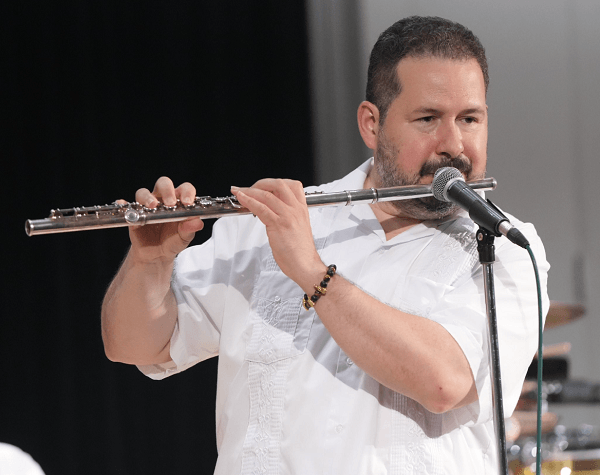
Canada continues to give us something to talk about when it comes to Latin music, and our daring guest is firm proof of this. Dominican bandleader and singer Jorge “Papo” Ross has given us the great honor of talking about his interesting career both in his native country and Montreal, where he currently resides and moves forward with his musical projects.

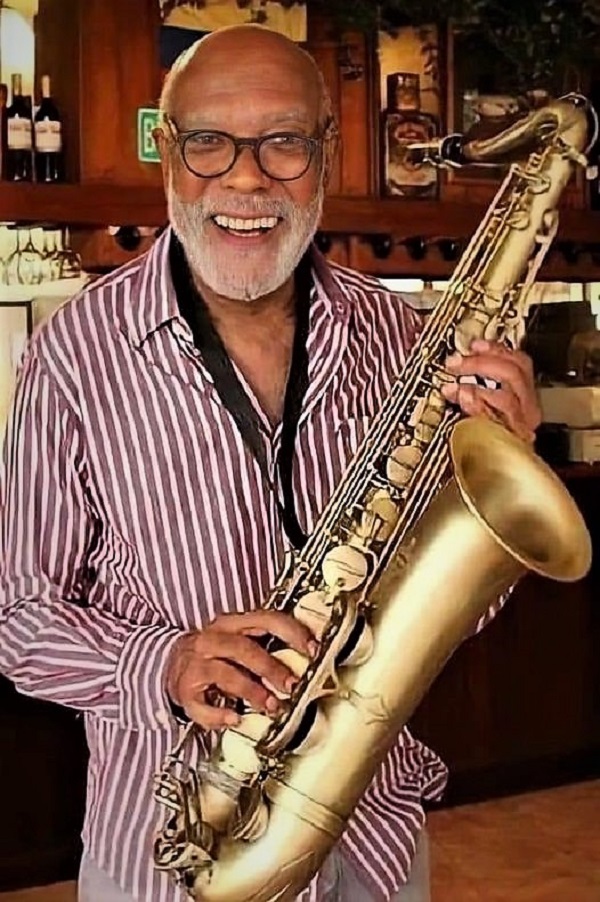
Papo Ross with his saxophone
Dominican bandleader, singer, and musician Papo Ross posing with his saxophone

Papo’s beginnings in the Dominican Republic

Papo’s musical beginnings were in his hometown of San Pedro de Macorís by playing instruments made of tin or wicker that he and his friends themselves created so they could play, which led him to learn to play percussion, albeit in a very crude manner. Among the first instruments he played were the guiro, the tambora, and the conga.

Seeing his interest in music, his late brother, who was a saxophonist and led a band at the time, took him along to play with him so he could learn the trade through practice. However, the young man did not want to stop there and also began creating his own bands, such as Grupo Enriquillo, in which he and the rest of the members used homemade instruments and a marimba, which doubled as the bass. 

He also played with La Moderna de San Pedro, with which he served as the musical director during rehearsals and earned two percent of the orchestra’s contracts. In addition, he founded the group Sui Generis, played with the late merengue musician July Mateo “Rasputín,” and, before leaving the country, played with the recently deceased Rubby Pérez in the 1990s.

Academic training prior to his trip to Canada

After having played with several orchestras, Papo realized that, while it is true that he had gained some experience and knowledge, it was not enough and he needed to train more. That is why he was admitted to study at the Escuela de Música Patria Logroño at the elementary level and the Conservatorio Nacional de Música in Santo Domingo.

Papo Ross & Pambiche
Papo Ross & Orquesta Pambiche as a whole

At the academy, he learned spoken and sung solfeggio and took some saxophone lessons there in the same place. As for the conservatory, he studied percussion, but did not finish his training in this area, as he was also studying law at the Universidad Central del Este in San Pedro de Macorís. Then when the time came for him to choose one or the other, he obviously opted against university, although he did not get to exercise this career either because he missed a few semesters to complete it.

Moving to Canada

Before arriving in Canada, Papo had already traveled to other places such as Puerto Rico and New York as part of his work and had the opportunity to live there for a few seasons, but the Orquesta Tambora invited him to go to Canada to lead the group, which the artist accepted.

Although it was the best decision, it certainly was not easy, as he had to deal with language barriers and the process of adapting to a music scene completely different from that of his native country. 

The latter and the fact that he belonged to a minority like the Latino community, limited him a lot at first, but he says he keeps no regrets about his decisions and does not complaint about what he has already accomplished.

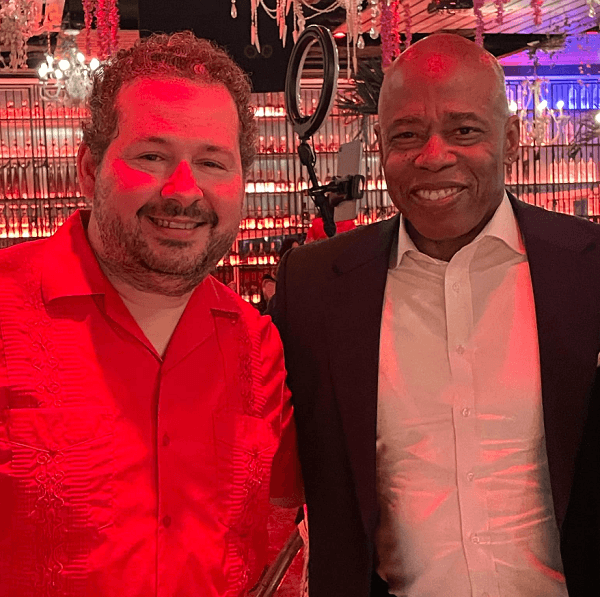
Rafael Ithier and Papo Ross
Rafael Ithier from El Gran Combo de Puerto Rico and Papo Ross

Papo Ross & Orquesta Pambiche

In 1992, he finally decided to break through his own and create his own orchestra, Papo Ross & Orquesta Pambiche, thanks to all the skills he had developed so far. After having learned to lead an orchestra, compose, arrange, and sing, he felt more than ready to carry out his own project consisting of 13 members, including two trumpeters, a trombonist, two saxophonists, a percussionist, and three singers, among others. None of the original group remain, and Papo practically does not use the big band, but a slightly smaller format called Papo Ross Meren Latin Jazz Approach. 

This band offers its services for private parties and drinks receptions, where Papo sometimes sings with a minus-one and even includes dancers in his shows.

Together with his orchestra, he has played at the Montreal International Jazz Festival on a few occasions, but they have also played in several other cities like Toronto, Regina, Saskatchewan, Victoria, Saint Pierre, Saint John, and many more. He has also collaborated with several other groups and musicians such as Pablo Ramos and the group Calipso.

Outside of Canada, they have played in various places in the United States such as Detroit, Wellington, and Vermont.

Eduardo, Papo, and Dave
Trumpeter Eduardo Sanchez, Papo Ross, and Trombonist Dave Grott

Read also: Colombian dancer and instructor Camila Cepeda takes salsa caleña to Canada

Spain is reborn in new Cuban music by Yalil Guerra

The immense Hispanic legacy is usually relegated to the background, while being a key part of our sound identity.

Reference Image about Spain
Reference Image
Yalil talking about Spain
Composer, bandleader, and Latin GRAMMY winner Yalil Guerra.
Image courtesy of RYCY Productions

By YALIL GUERRA

The birth of the Cuban nation, after gaining its independence from its former colonizer, Spain, marked a break that transcended political concerns and entered strongly in the cultural aspect. Cubans were “denaturalized” after the Treaty of Paris in 1898, leading to a profound metamorphosis of identity that was inevitably reflected in our music. Out of that process a fresh and powerful sound expression emerged: a vibrant fusion between European, African, and North American influences, something that had already begun in the 19th century but was driven by a growth music industry and the cultural magnet of its northern neighbor, the United States.

For years I have listened to, studied, and enjoyed Cuban popular music — both the old and contemporary— and what I notice is that most productions tend to highlight the folklore—especially the Afro-descendant roots and the imprint of jazz — while the immense Hispanic legacy is usually relegated to the background, while being a key part of our musical identity.

In Cuban music today, both on and off the island, the record business is committed to a modern and bold sound. Compositions explore contemporary harmonies, bitonality, and extended chords — resources that come from both classical music and jazz — entwined with surprising and refreshing harmonic cycles. In wind instruments, melodic lines and musical motifs reveal the virtuosity and creativity of a new generation of musicians and arrangers, who are raised in solid academic traditions but open to global influences. The percussion stands out for its polyrhythm and the number of sophisticated tutti that require a unique expertise, but the Spanish influence is quite absent or just present in the language.

In contrast, What caught my attention was the newest music of singer, composer, and multi-instrumentalist Alain Pérez on his new album Bingo, where Spain resonates powerfully and recognizably. I find this gesture very special, as it vindicates a Spanish legacy in Cuban music that is often forgotten or minimized. I also highlight the case of pianist and composer José (Pepe) Rivero and his new album Estampas y Raíces where he pays tribute to classical Spanish composers, mixing their works with his unique interpretive style, bringing it closer to the language of Cuban jazz that is so familiar to him.

What about the large mass of Cuban artists and musicians who do not pay homage to the mother country? It is that we lost our historical memory or has it been erased? Is the omission of certain elements of our Spanish traditions a symptom of what some call the “Spanish Black Legend,” a myth that has seeped into our musical history and present?

I remember when Juan Perón said:

“And through the figure and work of Cervantes, Argentina pays tribute to the mother country, fruitful, civilizing, eternal, and to all peoples who have emerged from its maternal womb.” “And through the figure and work of Cervantes, Argentina pays tribute to the mother country, fruitful, civilizing, eternal, and to all peoples who have emerged from her maternal womb.”

Cuba is no exception.

Over the years, in response to the previously exposed, I have tried to make Spain present in my work: incorporating harmonious colors, Andalusian cadences, and the Phrygian mode—so tied to the Iberian sound—creating compositions devoted specifically to Spanish culture, especially my new string quartet entitled “Noches de España”, following the line of our great composer Ernesto Lecuona, who knew how to bring to life both African and Spanish things. As for me, I seek to keep alive that heritage and project it onto 21st-century Cuban music, without forgetting our important African legacy.

Today, rescuing the Spanish heritage in Cuban music is not just an act of memory: it is also an opportunity to rediscover the richness of crossbreeding that continues to define who we are and how our history sounds. Contemporary Cuban music not only looks to the future: it sings to its African roots, but it also needs to reconnect with that other essential part of our identity. After all, we think, love, and communicate in Spanish. Every note, every guitar or lute that sounds, will evoke that heritage and bring us near to the fullness of what we are.

It does not matter the color our skin is, or whether our grandfather was from Asturias or the Congo: cultural fusion is what forged our identity and will remain the essence of Hispanic America. Mexican writer, philosopher, and politician José Vasconcelos said: “I am Hispanic, and nothing about Hispanic is alien to me.”

At this crucial time, Cuban music has the challenge—and the opportunity—to sing its entirety. And in doing so, it shows us that, beyond styles or labels, what unites us is the sound of a common history.

DMA Yalil Guerra

Read also: Yalil Guerra and the musical roots of his talent

The Williamsburg Salsa Orchestra: electrifying fusion and salsa flavored with indie rock

The Williamsburg Salsa Orchestra is an 11-member musical group that, as the name suggests, uses salsa as its foundation but also mixes it with other genres such as funk and indie rock to make its music distinct. This combination of beats has led the orchestra to be internationally recognized for its explosive arrangements, modern touches, and repertoire inspired by Anglo-Saxon artists.

Today we are here with arranger and percussionist Gianni Mano (founder) and Argentine singer Solange Prat (vocalist) to find out about their beginnings, the current situation of the orchestra, their roles in the project, and much more. 

Solange Prat and Gianni Mano
Argentine singer Solange Prat and American bandleader Gianni Mano

Gianni and Solange’s musical awakening

Gianni began his first address by sharing that his family had some musicians back several generations, but his own interest in music aroused in his childhood. It was then that his parents enrolled him in piano lessons, but his taste for Afro-Cuban and Afro-Caribbean music settled in when he was a teenager, recently moved to Miami to attend college.

In the late 1980s, he got a job at a nightclub, where he discovered hits from great artists who would inspire him in the future, such as Cuban musician and percussionist Carlos “Patato” Valdés. When he listened to the artist, Gianni could hardly credit how wonderful and different it was what captivated his ears.

By the time, the young man was studying percussion focused mainly on classical music, but the impact of those rhythms he had heard was such that he wanted to know much more about them. This led him to move to New York and hire private teachers to know more about salsa, Afro-Cuban, and Nuyorican music, because when heard them, he discovered that this was what he wanted to dedicate himself on an artistic level. He assured us that it is always best to learn music directly from those who play it, so it was the best decision he could take.

The musician assured us that, at that moment, he could not believe the world he was missing, but when he found it, he did not let it slide.

At this point, Solange joined us and said her interest in music began in her native Argentina, where her parents always listened to Gloria Estefan, Juan Luis Guerra, and other artists of this type. On her mother’s side of the family, some relatives played the guitar and a lot of Argentine folk music such as sambas and chacareras, so she had a lot of contact with that music and eventually started singing at a very young age.

Gianni playing live
Gianni Mano playing live at Brooklyn Bowl

Since the girl used to sing all the time, her mother enrolled her in singing lessons until she got her first opportunity in a band at the age of 15. Added to that she spent about six months on a cruise in the Caribbean, and when she came back, she wanted to continue training on an artistic level, but with a focus on the music she had been listening to during her trip. 

Sometime later, she went to visit a friend in New York, and it was there that she met Gianni, who asked her to join The Williamsburg Salsa Orchestra, which was already founded. It was something very new for her, as she had never sung salsa before, but she accepted the challenge anyway, and Gianni served as a mentor for her at all times.

Gianni as an arranger

As for his role as an arranger, Gianni told us that, when he left his previous job to devote himself entirely to music, he spent oceans of time transcribing arrangements of other artists’ songs to see how they worked. He remembers that the first song with which he tried this was one by Tito Puente, but then he did the same thing with hundreds more.

For a long time, he listened to all these pieces hundreds of times to understand the form of a salsa-based song and how it needs to be structured for the enjoyment of the dancer on the dance floor. That is how he began to write his own arrangements, although acknowledging that they were not all that good at first, so he had to practice a lot.

His coexistence with groups of different genres and practice with various types of instruments helped him greatly to master this area in all styles.

Solange Prat singing
Solange Prat singing at the Sofar Sounds New York

The Williamsburg Salsa Orchestra

In 2009, Gianni was making some demos and garnered rave reviews, so he felt ready to start his own musical project, but obviously he could not do everything alone. He began to place ads in online newspapers to recruit artists to join his band, although there was a subject which worried him: language. He told us that he was looking for musicians who mastered both English and Spanish, and in that sense, Solange pleasantly surprised him with her singing ability in both languages. 

The orchestra’s first show was in 2010, which let it to gaining some popularity in the public of the city.

From Solange’s point of view, she describes her arrival in the orchestra as an unexpected event for her career, since in Argentina she had experienced a lot with soul, R&B, and funk. However, this would change with her move to New York, which is when she met Gianni and discovered a whole new world for her until then, but she loved it a lot.

So, she did his best to learn everything she could about this new music and keep up with required level. Gianni played a big role in this, as he taught her how to play certain instruments and gave him CDs from some of the great salsa legends to take them as a guide. 

She closed the subject by saying that moving to New York, meeting these musicians, and becoming part of this new music scene was great and inspiring.

Gianni, Solange, and the rest of the orchestra
From left to right: Angela Ortiz (piano), Rafael Gomez (bass), Jhohan Hernandez (congas), Felipe Fornier (bongo). Solange Prat (voice), Gianni Mano (Percussion), Alex Asher (trombone), John Challoner (trumpet), Jason Prover (trumpet), and Dimitri Modebacher (baritone sax)

How to maintain an 11-piece orchestra alive

Currently, the Williamsburg Salsa Orchestra has 11 members in total. At a time when bands and musical groups are getting smaller and smaller, we wanted to know what Gianni and his artists do to stay together in an environment that pushes them in the opposite direction. 

The percussionist says that one of his greatest dreams was to have a large salsa orchestra, and he has succeeded, but he admits that things were simpler before COVID-19. After that, far fewer people attended salsa dances or were willing to pay for such an event. Still, they have done everything humanly possible to keep the group together, since in the words of Gianni, an orchestra composed of six or seven people does not sound as good or as complete as one with nine or more musicians.

However, he does not deny that they have had some issues with certain venues due to the orchestra’s size, such as small stages or low ability to pay everyone, but in general, club owners and promoters just want a good show and for people to enjoy it. For this reason, they make an effort to hire bands like the Williamsburg Salsa Orchestra because they know what they have to offer.

Read also: Ania Bartelmus from La Candela Flamenco talks about her performance at the Hispanic Heritage Celebration

  • « Go to Previous Page
  • Page 1
  • Page 2
  • Page 3
  • Page 4
  • Page 5
  • Page 6
  • Interim pages omitted …
  • Page 74
  • Go to Next Page »

International Salsa Magazine (ISM) is a monthly publication about Salsa activities around the world, that has been publishing since 2007. It is a world network of volunteers coordinated by ISM Magazine. We are working to strengthen all the events by working together.