• Skip to primary navigation
  • Skip to main content

International Salsa Magazine

  • HOME
  • Previous editions
    • 2026
      • ISM / March 2026
      • ISM / February 2026
      • ISM / January 2026
    • 2025
      • ISM / December 2025
      • ISM / November 2025
      • ISM / October 2025
      • ISM / September 2025
      • ISM / August 2025
      • ISM / July 2025
      • ISM / June 2025
      • ISM / May2025
      • ISM / April 2025
      • ISM / March 2025
      • ISM / February 2025
      • ISM / January 2025
    • 2024
      • ISM / December 2024
      • ISM / November 2024
      • ISM / October 2024
      • ISM / September 2024
      • ISM / August 2024
      • ISM / July 2024
      • ISM / June 2024
      • ISM / May 2024
      • ISM / April 2024
      • ISM / March 2024
      • ISM / February 2024
      • ISM / January 2024
    • 2023
      • ISM / December 2023
      • ISM / November 2023
      • ISM / October 2023
      • ISM – September 2023
      • ISM – August 2023
      • ISM July 2023
      • ISM Edition June 2023
      • ISM – May 2023
      • ISM April 2023
      • ISM March 2023
      • ISM February 2023
      • ISM January 2023
    • 2022
      • ISM December 2022
      • ISM November 2022
      • ISM October 2022
      • ISM September 2022
      • ISM August 2022
      • ISM July 2022
      • ISM June 2022
      • ISM May 2022
      • ISM February 2022
      • ISM January 2022
    • 2021
      • ISM December 2021
      • ISM November 2021
      • ISM October – 2021
      • ISM September 2021
      • ISM August 2021
      • ISM July 2021
      • ISM May 2021
      • ISM April 2021
      • ISM June 2021
      • ISM March 2021
      • ISM February 2021
      • ISM January 2021
    • 2020
      • ISM December 2020
      • ISM November 2020
      • ISM October 2020
      • ISM September 2020
      • ISM August 2020
      • ISM July 2020
      • ISM June 2020
      • ISM May 2020
      • ISM April 2020
      • ISM March 2020
      • ISM February 2020
      • ISM January 2020
    • 2019
      • ISM December 2019
      • ISM November 2019
      • ISM October 2019
      • ISM Septembre 2019
      • ISM August 2019
      • ISM July 2019
      • ISM June 2019
  • Spanish
  • Download Salsa App
    • Android
    • Apple

Latin Music

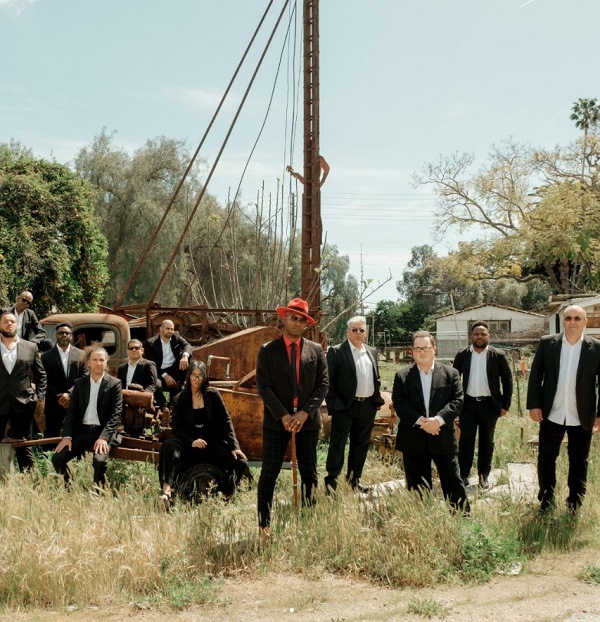
Uruguayan composer and multiinstrumentalist Sebastián Natal and his band Grupo Sensación

After having contact for days and overcoming some pitfalls, we could finally get to talking with producer, composer, and multi-instrumentalist Sebastián Natal, who kindly attended and revealed his views on the path he has followed to become the great artist he is today. 

Sebastián Natal posing
Sebastián Natal posing for the camera with his instruments

Sebastián Natal’s beginnings

First, Sebastián appreciated our interest in learning a little more about him and began to describe his native country’s musical and cultural context at the time. First of all, the artist was born in Montevideo, Uruguay, where a tropical music movement was established by then, considering many genres from the tropics and the Caribbean, such as salsa, bachata, merengue, cumbia, guaguancó, and many more.

Obviously, these genres did not originate in Uruguay, as bomba is Puerto Rican, salsa is Cuban, and bachata is Dominican. However, there were quite a few groups and musicians who used these tropical roots to create their own identity. Outside of Montevideo, other provinces listened much more to cumbia and charanga.

The orchestras that played these rhythms were dedicated to developing covers of salsa songs, but by bringing them into other genres that were emerging at the time, such as plena, plena danza, and bomba, among others. Sebastián grew up with this sonority in his country, so the whole musical environment he was exposed to abroad became very familiar to him and easy to assimilate. From the early ‘nineties, as a young boy, he began to absorb all the influence from the dawn of romantic salsa and iconic songs such as “Aquel Viejo Motel,” “Cinco Rosas,” “Sin Sentimiento,” “Amores Como El Nuestro,” and many others of its kind. 

It is worth adding that Sebastián comes from a family of musicians, starting with his own father, Yeneca Natal, who was the musical director and pianist for Grupo Sensación. Music always surrounded him, so it can be said that he was meant to follow this path. 

Sebastián and Yeneca Natal
Sebastián Natal next to his father Yeneca Natal

When and why Sebastián left Uruguay and moved to New York

In 2005, at just 21 years old, Sebastián joined the Sonora Borinquen, which was the most popular orchestra at the time. Thanks to them, he had the opportunity to tour the United States and Canada, where he could see environments and ways of working that were completely different from what he was used to. Two years later, he toured the United States again, but by then he already saw the country as a new destination to advance his career.

Unfortunately, Uruguay was becoming too small for the plans he had for his development in salsa, which sparked his curiosity about the Big Apple and all it had to offer him musically speaking.  

By 2008, he decided to move to New York for a few months, but so many doors opened for him that he never left and continues to live there to this very day. 

Sebastián, the multi-instrumentalist

The first instrument Sebastián came in contact with was the piano, which he started playing it at age four and from which he graduated at age 11. Since he had not attended high school yet, he could not study a master’s degree to continue his musical education. In addition, he was a child who wanted to play football and do the usual things for his age, so a few years later, his father made him join an Afro-Uruguayan music group. In that orchestra Sebastián played piano and bass, which allowed him to further develop his skills with those instruments. 

Sebastián in Panama
Sebastián Natal in Panama City

After that, he began to create his own tropical music band, inspired by the Venezuelan orchestra Los Adolescentes. All the members were minors, and, as well as in the previous group, Sebastián also played piano and bass.

Sebastián as a producer and composer

Regarding his role as a producer and composer, Sebastián confessed that he has no idea how he came to learn these areas of music. He did emphasize that he always lets his music and his feelings flow to deliver the message he wants to convey in each of his pieces. After that, he defines the ideas and adds the music.

He says he greatly admires professional lyricists and composers. He admits he is neither the best nor the worst composer, but he always tries to reach his own heart to convey what he feels. 

Sebastián Natal Y Grupo Sensación

The idea of Grupo Sensación started with the orchestra of the same name where his father worked in 1982, but unfortunately the group did not have much impact due to how closed that environment was at the time. There were a number of orchestras that got the best contracts, and it was very difficult for the rest to achieve. Over time, Yeneca left Grupo Sensación and managed to join several of these more established orchestras to gain more reputation.

Soon after, when Sebastián moved to the United States, he almost immediately noted that the Uruguayan community needed a tropical orchestra, but he did not know what name give it. With the passing of his father on October 19, 2010, he chose to use the name “Grupo Sensación” as a way to continue the legacy of his father and the tropical movement born in his country so many years ago. 

Sebastián and Pedrito
Pedrito Martínez and Sebastián Natal on stage

Artists he has collaborated with

Sebastián has had the opportunity to collaborate with artists of the stature of Nino Cegarra, Oscar D’León, José Alberto “El Canario,” Domingo Quiñones, Tony Vega, Roberto Blades, Cheo Feliciano, Tito Nieves, Viti Ruiz, and many more. However, few were the ones with whom he has truly been able to have a conversation or a close connection beyond purely profesional relationships.

“You can only say you played with someone if you’ve had a connection with that person. I’ve been able to play with great artists, but many times they don’t even know who I am. That’s why I don’t include them on my resume. Now if they call you back, then you can say you did things very well and that there’s someone really interested in you,” said Sebastián on this interesting subject.

The cases of Bill Murray and Camila Cabello were completely different, as he managed to record songs with them through his friend and fellow musician, Pedrito Martínez, whom he describes as “the best percussionist in the world”. It was also Martínez who connected him with the world-famous composer and guitarist Eric Clapton, with whom he performed at the American Airlines Center in Dallas—one of the most beautiful experiences he has had in his career and his life in general.

Read also: Bandleader and conga player Tony Rosa tells us how he built his career

Azucar Club Cubano

Latin America / Brazil / São Paulo
Azucar Club Cubano
Azucar Club Cubano

The “Azucar Club Cubano” opened in August 2000. The idea stemmed from Latin inspiration, with its vibrant and magnificent Caribbean music, leading to the opening of the first Latin club in São Paulo. To this day, it is recognized for its lively atmosphere and excellent service, where it enjoyed great success and continues to welcome all those who love Latin rhythms.

Among the rhythms played at “Azucar” are Merengue, Salsa, and Cumbia. It’s worth noting that Reggaeton and Bachata were added due to their popularity. All of these genres are provided by top Latin DJs, including Azucar Nelson Noce, Will Rosbon, Daniel Venezuela, and Julio Moracén. Both Brazilians and tourists visit “Azúcar,” so they specify a schedule of Latin rhythms to be played, as customers have different tastes. This way, you can enjoy the musical genre you want to dance to or listen to at the club that day. However, on Fridays and Saturdays, there’s a mix of Latin rhythms since those are the busiest days, marking the start of the weekend.

Photo 1: Azucar Club Cubano

Photo 2: Azucar Club Cubano

Photo 3: Azucar Club Cubano

Photo 4: Azucar Club Cubano

They also have a bar where the most popular drinks are rum and tequila, and their cocktails include the Margarita, the Tequila Margarita, and the Mojito, the latter known as the best in all of São Paulo. They also have a varied menu.

Azucar Club Cubano collash

The club is open to the public from Tuesday to Friday from 7:00 pm and on Saturdays from 8:00 pm, and you can pay with any credit or debit card. For more information:

  • Website: http://www.azucar.com.br/
  • Phone: +55 (11) 3074.3737
  • Facebook: https://www.facebook.com/azucarclubcubano/
  • Instagram: instagram.com/azucarclubcubano

Rey Ruíz visits the Salsa Museum and talks about his prolific career

The Salsa Museum is celebrating the tremendous and valuable support of Cuban singer-songwriter Reinerio Ruíz Santiago, known to the world as Rey Ruíz, whom I had the pleasure to interview along with El Rubio Boris on our show Salsamania.

The artist was not only in our facilities to tell us important details about his career and share some of his time with us, but he also granted us the honor of gifting us one of the suits he used to wear for several of his most important shows. We are very grateful for the distinction he has made with us, and now let us mention some of the most important topics we discussed with the salsa singer.

Rey posing for the camera
Cuban singer-songwriter Rey Ruiz posing for the camera

Rey’s life in Cuba

Rey sang since his childhood to the point that his parents said he sang songs without words and started imitating the sounds his father taught him. He began to study music in sixth grade in his native Cuba, but his interest went far beyond simple childlike curiosity, so his parents enrolled him at the music conservatory in Havana so that he could have a more formal training. 

Soon after, he appeared on Cuban television and sang for the orchestras “La Riverside” and “Los Dadas” at the then Habana Hilton.

Rey’s beginnings in music

Among many interesting things, Rey told us that he left his country at the age of 24, turned 25 in Miami, and arrived in Puerto Rico at 26. Shortly after arriving in Miami, he took a salsa demo to a record label, since Puerto Rican salsa was experiencing a long boom at the time, so they advised him to choose that genre. 

Then, he got down to work with his producer Toby Villarini, recently deceased, to create the album.

Mi Media Mitad
Cover of the album ”Mi Media Mitad’’

Following the success obtained, the record label asked him to move to Puerto Rico, where they got him an apartment for about six months so he could make a life there and focus on his music. He then began working with musical director Guillermo Calderón’s orchestra, until Rey felt confident enough to say that the orchestra was his about a year later.

In 1994, he released his second album ”Mi Media Mitad” and the cover includes a very young Rey on a mountain of salt posing for the camera in a beige outfit and with a big smile on his face. The arrangements were made by Ernesto Sánchez, who also passed away recently at a very young age.

What Ray Ruiz is doing now

When El Rubio and I wanted to know what Rey is doing now, the singer confessed that he had chosen a career in which work never ends and that always makes him seek progress. “You’re always looking for ways to produce something new and show people what you’re doing at the recording and show production level.” In fact, the day after the interview, on February 14, he had a concert to celebrate Valentine’s Day at the Lehman Center for the Performing Arts in New York City. 

Johnny and Rey
Johnny Cruz and Rey Ruiz at the Salsa Museum

He told us that it was the first time he performed as a solo artist at this venue, something he wanted to do for many years and finally got it. Never before has he performed in New York without the company of another artist or orchestra, so he was very happy and excited about living that new experience in his career.

Opinions about the Salsa Museum

Rey Ruiz had to leave soon to make final arrangements for the next day’s show, but we could not let him go without asking for his honest opinion about the Salsa Museum. When we asked him, he told us that he loved the place and that seeing what the museum exhibits was like seeing history. The history of salsa and all the artists who have been part of that genre. He also said that being here was like going to school because, even he who has been in this business for so many years, he has learned a lot from what he has seen.

He concluded by saying goodbye and thanking us for the opportunity to share with us and be on our platform.

Johnny Cruz ISM


Read also: Caoba Y Bambú, Tito Rivera’s first discographic production

“Sonido Bestial Sinfónico” solidifies classical sound in salsa

The February 27, 2026, performance of Sonido Bestial Sinfónico, which reunited “The Kings of Salsa,” Richie Ray and Bobby Cruz, at Puerto Rico’s Coca-Cola Music Hall, served as a farewell for Bobby Cruz. With a sold-out crowd thanks to Alexandra Fuentes’ production and a promotional alliance with the radio station Salsoul the legendary salsa vocalist said goodbye to the stage, insisting that while death had come looking for him, it had taken Willie Colón instead.

"Sonido Bestial Sinfónico" solidifies classical sound in salsa
“Sonido Bestial Sinfónico” solidifies classical sound in salsa

During Sonido Bestial Sinfónico, the audience also celebrated the 81st birthday of virtuoso pianist Richie Ray (born February 15) and the 88th birthday of singer Bobby Cruz, who celebrated his birthday the day before the event. Midway through the performance, the duo took a moment to blow out the candles on a cake brought onto the CCMH stage.

The concert was conducted by maestro Cucco Peña, featuring the voice of Yanira Torres and the Philharmonic Orchestra of Puerto Rico. From the local salsa scene, standout musicians included timbalero maestro Edwin Clemente, Emanuel Navarro on congas, and Richie Carrasco on bongo and cowbell, alongside the essential bass swing provided by Edwin Morales, director of the Orquesta Mulenze. Richie Ray’s wife, Angie Maldonado, and Jerry Medina were featured on backing vocals.

This symphonic concert, which celebrates more than six decades of “The Kings of Salsa” in music, had been postponed from its original date of October 25, 2025.

The repertoire included major hits popularized by the duo that have become classics of tropical music. Following a symphonic medley opening, the setlist included “Sonido Bestial,” “Agúzate,” “Richie’s Jala Jala,” “La Lluvia,” “Míster Trumpetman,” “El Diferente,” “Mi Amigo Juan,” “Yo Sé Que Te Amo,” “La Zafra,” “Juan en la Ciudad,” “A Mi Manera,” and a reprise of “Sonido Bestial,” among others.

The performance on Friday, February 27, 2026 of the Symphonic Bestial Sound concert that reunited "The Kings of Salsa", Richie Ray and Bobby Cruz
The performance on Friday, February 27, 2026 of the Symphonic Bestial Sound concert that reunited “The Kings of Salsa”, Richie Ray and Bobby Cruz

The show’s pinnacle featured Cucco Peña singing “Idilio” alongside Norberto Vélez in a heartfelt tribute to the late Willie Colón. The conductor acknowledged that figures like Willie Colón have made it possible for Puerto Rico to hold an important place on the global stage, affirming that “music is the face of Puerto Rico to the world.”

Richie Ray interjected a segment in which he shared his testimony of conversion to Christianity, extending an invitation to anyone who wished to join the ministry he now leads as a pastor. During this segment, the song “Hombres de Valor” was performed.

Another significant moment occurred when Bobby Cruz sang “La Novia,” clarifying that he is “free, but not available.” In addition to the hits achieved during the duo’s monumental and historic musical career, Richie Ray led several classical music pieces adapted for salsa.

The Coca-Cola Music Hall in Puerto Rico served as Bobby Cruz's farewell concert. It was a sold-out show.
The Coca-Cola Music Hall in Puerto Rico served as Bobby Cruz’s farewell concert. It was a sold-out show.

The patriotic finale featured the performance of “Mi Bandera,” which served as a farewell from both Richie and Bobby to the island, as both artists reside within the Puerto Rican diaspora in the continental United States. Events of this magnitude are what give deep meaning to maestro Cucco Peña’s statement: “Music is the face of Puerto Rico to the world” within the universal musical scene.

Bella Martinez Puerto Rico


Also Read: Don Perignon and La Puertorriqueña Release Classique et Savoureux


“El Caballero de la Salsa” Kicks Off “Íntimo” in Puerto Rico

With performances on February 14 and 15, 2026, at the Coliseo de Puerto Rico, Gilberto Santa Rosa started the year “at home” with two sold-out shows and the successful launch of his “Íntimo” tour. That is always the goal. On the island, the audience is as demanding as they are generous and the singer knows it. Following the concerts, “El Caballero” posted on social media: “Puerto Rico, thank you for giving us two nights full of love, dancing, and so much music at home! What a thrill it is to sing at home!”

“El Caballero de la Salsa” Kicks Off "Íntimo" in Puerto Rico
“El Caballero de la Salsa” Kicks Off “Íntimo” in Puerto Rico

On January 30 of this year, the album that shares the tour’s title was released. In Puerto Rico, two shows were scheduled for Valentine’s Day weekend. The first coincided with Valentine’s Saturday; the second was added for the following day due to how quickly the first round of tickets sold out.

At exactly 6:46 PM on Sunday, February 15, 2026, the stage of the Coliseo de Puerto Rico welcomed Gilberto Santa Rosa’s orchestra to begin the second concert, marking the salsa singer’s long-awaited reunion with the Puerto Rican public. According to a press release from Edumil Ruiz’s agency: “These performances are part of a series of special concerts celebrating the month of love (…) and represent the long-awaited reunion of ‘El Caballero de la Salsa’ with his Puerto Rican audience after two years since his last performance on the island.”

A Night of Rhythms and Ovations

The performance began with high energy and impact from the very first track. The opening bars were seasoned with the sounds of the Puerto Rican cuatro, played by Fabiola Muñoz. “Déjate querer” featured a timbal solo by Pete Perignon, while “Cartas sobre la mesa” highlighted Saviel Cartagena’s saxophone. These were followed by “Ahora o nunca,” “Tú,” “Amor para la historia,” “Quiéreme,” and “Almas gemelas,” which featured Juan Carlos Vega on an aerophone solo; followed by “Yo no te pido” and “Conciencia,” for which the audience gave the artist a thunderous standing ovation.

Between songs, Santa Rosa took a moment to address the crowd: “I was born, raised, and live here. And it moves me to know that here in Puerto Rico, I am still dearly loved.” He added that he is a fan of singing to the brokenhearted with “scorned” lyrics set to savory, danceable arrangements. Addressing the contradiction of that combination, he stated, “We Puerto Ricans are capable of crying and dancing at the same time,” capping the explanation with: “That’s just how passionate we are.”

152 With the performances on February 14 and 15, 2026 at the Coliseo de Puerto Rico, Gilberto Santa Rosa began the year in "his home" with two sold-out shows.

152
With the performances on February 14 and 15, 2026 at the Coliseo de Puerto Rico, Gilberto Santa Rosa began the year in “his home” with two sold-out shows.

After his remarks, “Gilbertito” explained he would welcome a beloved artist to sing “Misterio,” an urban salsa track with lyrics “about a relationship where you don’t know if it’s coming or going, starting or ending.” Gerardo Rivas took the lead in his solo role, which required Pete Perignon to fill in on the congas while Pedro Marcano took over the timbales.

Tributes and Special Guests

Later, Gilberto Santa Rosa dedicated a segment of the concert to a legend Puerto Rico bid farewell to last December. He stated that Rafael Ithier was a musical genius whom he considered a mentor and a father in music, dedicating the iconic “Las hojas blancas” to him. Notably, the production featured a team of sign language interpreters who translated the entire concert in real time.

The repertoire also included “Vino tinto,” “Cosas nuevas” highlighting Pedro Marcano on the flugelhorn and “No me dejes solo,” which kicked off with a mozambique rhythm and rumba clave on the drums, courtesy of Gerardo Rivas and Tito Echevarría. The most anticipated moment arrived when Santa Rosa asked the crowd to join him in a chorus that allowed “El Caballero” to pay his respects to special guests. The “Choliseo” vibrated as the crowd chanted: “Mira quien llegó / Quién está ahí / Qué bueno que te vino a ver” (Look who arrived / Who is there / How good they came to see you). The tenacious sonero greeted the following guests in perfect rhyme and with his trademark elegance: Don Perignon, Luisito Ayala, Luis Vázquez, Juan José Hernández, Elwood Cruz, Marilin Pupo, Cucco Peña, Lissette Álvarez, Willie Chirino, his wife Alexandra Malagón (whom he called “The owner of my heart”), and Ismael Miranda, among others.

The evening continued with “No pensé enamorarme otra vez” and “Para vivir,” for which he was joined by Yeika Álvarez and “a representation of the Arturo Somohano Philharmonic Orchestra of Puerto Rico.”

Gerardo Rivas (Hijo de Jerry Rivas el reemplaso de Jimmie Morales), Gilberto Santa Rosa y Pete Pergnon

A Monument to Nostalgia

“Tengo una muñeca,” followed by a fusion that progressed from boogaloo to cha-cha-cha and finally to salsa with Gilberto showcasing his skill on the maracas led us into a monument of nostalgia. The memory of the conga player Santa Rosa had worked with since their days in Willie Rosario’s orchestra until his passing in 2021 was honored with “Impaciencia.” The song showcased the Jimmie Morales Signature Series drums by Remo Percussion©, which sponsored “El Rey del Seco” (The King of the Dry Hit) from 2005 to 2016.

During this segment, “El Caballero” displayed his own skills as a talented conguero while singing, accompanied by Gerardo Rivas (the orchestra’s conga player) and Pete Perignon (the timbalero) on either side. While the audience was spellbound by the sight of the three musicians at their drums, this writer wondered if Gilberto was reminiscing about the days when he used to imagine he was a singer, using an upside-down trash can as a drum in the group led by Don Perignon.

The “Army of One”

This intervention was followed by “La agarro bajando,” which preceded the introduction of the band members, “musically directed by the master of the trombone,” Georgie Torres. The lineup included:

  • Backing vocals: Yeika Alvarez and Gino Ramírez.
  • Puerto Rican Cuatro: Fabiola “The one who holds her own” Muñoz.
  • Trumpet: Rebecca Zambrana (with the orchestra for 29 years) and Pedro Marcano.
  • Trombone: Anthony Rosado (also a ballroom dance champion).
  • Saxophone/Flute: Francisco “Paquito” Cruz and Saviel Cartagena.
  • Piano: Luis Marín.
  • Congas: Gerardo Rivas.
  • Timbales: Pete Perignon Morales.
  • Bongos: Rafael “Tito” Echevarría.
  • Bass: The legend Johnny Torres.
  • Keyboard/Aerophone: Dr. Juan Carlos Vega.
  • Vocals: Michael Pérez.

Santa Rosa also praised the technical and audiovisual teams, producer Rafo Muñiz, and Edumil Ruiz, noting that “all these people make this work.”

After identifying his team who gave a masterclass in what the military calls an “Army of One” the hits “Conteo regresivo,” “Perdóname,” “Que alguien me diga,” and “Que manera de quererte” rang out. Gilberto Santa Rosa celebrated Valentine’s weekend by once again proving why he holds the loyalty and preference of his Puerto Rican fanbase.

From the start, the energy never wavered. The crowd sang and danced along with the artist, the musicians, and the dancers on stage. The vast repertoire serves as a reminder of the countless hits “El Caballero de la Salsa” has collected throughout his prolific career.

Bella Martinez Puerto Rico


Also Read: Bandleader and conga player Tony Rosa tells us how he built his career

  • « Go to Previous Page
  • Page 1
  • Page 2
  • Page 3
  • Page 4
  • Page 5
  • Page 6
  • Interim pages omitted …
  • Page 82
  • Go to Next Page »

International Salsa Magazine (ISM) is a monthly publication about Salsa activities around the world, that has been publishing since 2007. It is a world network of volunteers coordinated by ISM Magazine. We are working to strengthen all the events by working together.