• Skip to primary navigation
  • Skip to main content

International Salsa Magazine

  • HOME
  • Previous editions
    • 2026
      • ISM / September 2026
      • ISM / August 2026
      • ISM / July 2026
      • ISM / June 2026
      • ISM / May 2026
      • ISM / April 2026
      • ISM / March 2026
      • ISM / February 2026
      • ISM / January 2026
    • 2025
      • ISM / December 2025
      • ISM / November 2025
      • ISM / October 2025
      • ISM / September 2025
      • ISM / August 2025
      • ISM / July 2025
      • ISM / June 2025
      • ISM / May2025
      • ISM / April 2025
      • ISM / March 2025
      • ISM / February 2025
      • ISM / January 2025
    • 2024
      • ISM / December 2024
      • ISM / November 2024
      • ISM / October 2024
      • ISM / September 2024
      • ISM / August 2024
      • ISM / July 2024
      • ISM / June 2024
      • ISM / May 2024
      • ISM / April 2024
      • ISM / March 2024
      • ISM / February 2024
      • ISM / January 2024
    • 2023
      • ISM / December 2023
      • ISM / November 2023
      • ISM / October 2023
      • ISM – September 2023
      • ISM – August 2023
      • ISM July 2023
      • ISM Edition June 2023
      • ISM – May 2023
      • ISM April 2023
      • ISM March 2023
      • ISM February 2023
      • ISM January 2023
    • 2022
      • ISM December 2022
      • ISM November 2022
      • ISM October 2022
      • ISM September 2022
      • ISM August 2022
      • ISM July 2022
      • ISM June 2022
      • ISM May 2022
      • ISM February 2022
      • ISM January 2022
    • 2021
      • ISM December 2021
      • ISM November 2021
      • ISM October – 2021
      • ISM September 2021
      • ISM August 2021
      • ISM July 2021
      • ISM May 2021
      • ISM April 2021
      • ISM June 2021
      • ISM March 2021
      • ISM February 2021
      • ISM January 2021
    • 2020
      • ISM December 2020
      • ISM November 2020
      • ISM October 2020
      • ISM September 2020
      • ISM August 2020
      • ISM July 2020
      • ISM June 2020
      • ISM May 2020
      • ISM April 2020
      • ISM March 2020
      • ISM February 2020
      • ISM January 2020
    • 2019
      • ISM December 2019
      • ISM November 2019
      • ISM October 2019
      • ISM Septembre 2019
      • ISM August 2019
      • ISM July 2019
      • ISM June 2019
      • ISM May 2019
      • ISM April 2019
      • ISM March 2019
      • ISM February 2019
      • ISM January 2019
    • 2018
      • ISM December 2018
      • ISM November 2018
      • ISM October 2018
      • ISM September 2018
      • ISM August 2018
      • ISM July 2018
      • ISM June 2018
      • ISM May 2018
      • ISM April 2018
      • ISM March 2018
      • ISM February 2018
      • ISM January 2018
    • 2017
      • ISM December 2017
      • ISM November 2017
      • ISM October 2017
      • ISM September 2017
      • ISM August 2017
      • ISM July 2017
      • ISM June 2017
      • ISM May 2017
      • ISM April 2017
      • ISM March 2017
      • ISM February 2017
      • ISM January 2017
    • 2016
      • ISM December 2016
      • ISM November 2016
      • ISM October 2016
      • ISM September 2016
      • ISM August 2016
  • Spanish
  • Download Salsa App
    • Android
    • Apple

News

Ronald Borjas is a Venezuelan singer, musician and composer

Ronald Borjas is currently considered one of the greatest exponents of salsa in Venezuela with an international projection that grows every year.

He is a Venezuelan singer, musician and composer, born in Maracaibo, the capital of the state of Zulia, on November 19, 1981.

Ronald Borjas is a Venezuelan singer, musician and composer

At the age of 10, his love for the timbal was born, a few years later, at the age of 14, he began singing as a soloist in the Bochinche Orchestra. Throughout his adolescence he stood out as a soloist in bands such as: Caribe, Asterisco, VHG and Bacanos.

He completed higher education at the Cecilio Acosta University (UNICA) where he obtained the degree of Bachelor of Music – Musical Education in 2002. In the same year he went on stage with the Venezuelan Super Band GUACO, where he debuted as a soloist and composer with the song “Te vas” from the album “El Sonido de Venezuela”.

Not only did he develop as a composer, Ronald also plays other percussion instruments such as the bass, the guitar and also the trumpet.

After 11 years as one of the main voices of Guaco, in 2014, Ronald decided to take another path and that is when the great project of his life began, developing his career as a soloist in genres such as Salsa, Bachata and Pop.

Ronald debuted as a soloist with the song “Te Doy Mi Voz” dedicated to his fans, with which he received the nomination for the Latin Grammy for “Best Tropical Song”. That same year, his musical godfather, Salsa legend Oscar D´ León invited him to his show at Madison Square Garden in New York, where he introduced him to thousands of people and baptized him as his “godson”.

That same year, he released “Te Encuentraré” a song that reached #1 on the Venezuelan radio charts Record Report and its video clip, filmed in New York, managed to enter the ranking of the most viewed videos on the HTV channel.

In 2015 he began his musical expansion to other borders, achieving success in countries such as Ecuador and Colombia where his third single titled “Dame Tu Amor” was positioned in the first places of the radio stations as well as in his native Venezuela, while in Peru, it was named the “tropical song of the summer”.

Ronald Borjas is currently considered one of the greatest exponents of salsa in Venezuela with an international projection.

At the end of that year he officially released his first album “Da Capo” with an event that brought together in Caracas, Venezuela a hundred figures of the national show, as well as the press, radio and TV of the country in an unprecedented event. This release in its first weeks, managed to accumulate more than 10,000 digital downloads on his official website www.ronaldborjas.com.

“Da Capo” had valuable collaborations and a first featuring with his godfather Oscar D´León, with whom he recorded “La Quiero Para Mi”. In addition, this album has songs by Amaury Gutierrez, Robert Vilera and his uncle Neguito Borjas, among others.

In 2016 he began releasing his song “Cántalo” which quickly became an anthem of joy and managed to position itself in the first place on Venezuelan radio. That year he won several national awards of great importance such as “Mara de Oro Internacional”, “Cacique De Oro”, Explosión Creativa and Supremacy, all of which recognized him as the “Salsa Singer of the Year”.

That same year he signed a contract with Sony Music as an artist from the Andean Region and embarked on his first international concert tour entitled “Da Capo tour” with which he visited Aruba, Panama and several cities in the United States.

In 2018, he released “Loco por Volverte a Ver” a song he wrote with Nacho Mendoza, Cáceres and Sharo Torres. He also made his second featuring with the “Caballero de la Salsa” Gilberto Santarosa with whom he released “Ellas te van lleva” the first collaboration with an international artist that also managed to position itself as number one on the radio charts.

Ronald Borjas is currently considered one of the greatest exponents of salsa in Venezuela

Shortly after, in 2019, he received a double nomination for “Album of the Year” with the song “Lo que pase aquí” as one of the songs on Tonny Succar’s album titled “Más de Mi” and “Salsa of the Year” with the song “No Queda Nada”. In addition to the collaboration he did with “Quintero´s Salsa Proyect” which was nominated for “Salsa Album of the Year”.

Also in 2019 he released his second album entitled “Bailamos Otra Vez” where he recorded songs of his own, as well as those of Servando Primera, Oscarcito and Amaury Gutiérrez. From this album come hits such as “Amor Demente” “Estoy Dispuesto” “Tu y Yo Tenemos” “Te Quiero para Mi” among others.

Shortly after he announced his collaboration with another former Guaco partner, Nelson Arrieta with whom he released the song “Sobran Los Momentos” which also gives name to the tour they would do together where they traveled through countries such as Argentina, Chile, Ecuador, Mexico, Colombia, Spain, Peru, Panama and the United States achieving great acceptance by the public.

He started the year 2020 with several collaborative releases. “Para Ustedes” from the album origenes where he participated as a guest and achieved #1 on the radio in Venezuela, then he released the song “Juegos Eróticos” with Victor Muñoz and promoted it in his country with great acceptance.

The “pandemic” stage begins and confinement did not stop him. In March he releases the version of the song “María Antonia” by the Venezuelan singer Gualberto Ibarreto, in April he releases “Aunque Parezca Extraño” with Manuel Petit who invites him to this collaboration. In May, together with his uncle Neguito Borjas, Jorge Luis Chacín and Nelson Arrieta they join in a project entitled “Los Mágicos”. In June “Ahora Me Llama” comes out, a song he had recorded for Rumberos del Callejón.

As if that were not enough, in July he records an intimate concert where he invites Victor Muñoz, his uncle Neguito Borjas and Nelson Arrieta to release it as a gift to his fans through his YouTube channel.

He closes the last months of 2020 with the song “Mía” written by Ronald and Salvador Solano that became the anthem of the ´Zumba´ reaching several places in the world. After this, he released one of his songs, “Ya Lo Decidí,” with which he again achieved first place on the radio and was accepted by the entire public.

He started 2021 as a special guest at Gilberto Santarosa’s concert at the Filmore Theater in Miami, where they performed the song “Ellas Te Van Llevando” together. Months later, he released the song he recorded as a duet with José Alberto “El Canario” entitled “A Mi Me Gusta” which quickly managed to position itself on the main playlists of digital platforms in the world. He closed that year with the song “Dime Cómo Hago” which he recorded with Nelson Arrieta and Oscarcito, a salsa that took over the public’s taste and today is one of the most chanted in his concerts.

2022 started with another important collaboration with Motiff, a song titled “Me Descontrola” which quickly entered the top spots on radio billboards and digital platform listings, and was also the song chosen by the renowned company Zumba to use as the official song at its world events.

In 2022, he also launched a very ambitious musical project that he carried out with his friends and fellow countrymen Adelmo Gauna and Nando De La Gente called “Los Pikis” with which they released a series of videos where they compiled erotic salsa hits from the 80s and 90s. Such was the success that in just two months they achieved more than a million views on YouTube.

In May 2022, the live concert titled “Sobran Los Momentos” premieres where Nelson Arrieta and Ronald Borjas invite the founder and lead voice of Guaco, Gustavo Aguado, and together perform several of the hits of the Venezuelan super band, such as “Vivo” “Pídeme” “Eres Más” and “Lo Eres Todo”. Oscarcito was also there performing his hit “Si Tu Me Besas” and the one he has with Arrieta and Borjas “Dime Cómo Hago”. All this incredible material can be enjoyed on the official YouTube channel of Ronald Borjas and Nelson Arrieta.

To close the year, he released the song “Se prende el Parampampan” with his musical friend, Acosta, a fun salsa that unites their musical styles, which together with a video recorded in Puerto Rico, managed to enter the public’s taste, turning this song into an anthem for Venezuelan parties. For his part, Ronald Borjas released a solo single titled “Los Vecinos” which is accompanied by a humorous video directed by Alex Galán.

2023 began for Ronald Borjas with his third featuring with an international artist, this time with the Puerto Rican legend, Tito Nieves. A romantic salsa titled “Te Busqué” that was accompanied by a video where the two singers can be seen in a performance and story. The video currently has more than half a million views on Ronald’s official YouTube channel.

Ronald Borjas
Ronald Borjas

Months later, Ronald reunited with his cousin Luis Fernando Borjas and recorded the song “Cuestión de Tiempo”, which was widely accepted by the public, surpassing two and a half million views of the video and positioned itself as one of the most listened to songs by “Lo Borjas” on digital platforms. This name gave rise to a joint tour with which they have traveled to the main cities of Venezuela, achieving sold out in each one of them.

He closed the year with a great concert “Live in Miami” where he reunited several of his musical colleagues and friends, such as Oscarcito, Victor Muñoz, Motiff, Los Pikis and for the first time since their separation, Toto and Beet from the group Caibo joined together with Ronald, performing the hits “La Despedida” and “La Promesa”. This great reunion of artists can be found on Borjas’ YouTube channel and has also surpassed more than 600,000 views in less than a year.

2024 began with his fourth song in a duet with an international artist, this time with the Nicaraguan, “the prince of salsa” Luis Enrique with whom he recorded “Y Si Mañana”. A great launch was made through the media in Venezuela and it has been a song that quickly became the favorite of the public of both singers and in a few weeks it was positioned in the main salsa lists on Spotify.

After this success, Ronald begins his “Tour LATAM 2024” through Colombia, Chile, Argentina, Peru, Panama and Uruguay, countries where he managed to sell out all his performances and reunite with his public after several years. The success of this tour will soon take him to Europe where he will be performing several shows in Spain and other countries that have not yet been announced.

Also Read: Tribute to Johnny “Dandy” Rodríguez Jr. His first recording was professionally with Tito Puente in 1964 and was titled “Exciting Rhythm of Tito Puente”

Juan Sebastian Bar “The Temple of Jazz and Salsa in Caracas”

In the heart of the city, there is a refuge of sophistication and art: Juan Sebastián Bar.

Delight your palate with our cocktails, each a fusion of classic flavors and contemporary notes, while live jazz and salsa create the most special melodies.

In the heart of the city, lies a refuge of sophistication and art, Juan Sebastián Bar.

Aldemaro Romero, Alfredo Sadel, Billo Frómeta, Dámaso Pérez Prado, Tito Puente, Bobby Capó, Pedro Vargas, Leo Marini, Libertad Lamarque, Ray Barreto, Lucho Gatica, Olga Guillot, Marco Antonio Muñiz, Julio Gutiérrez, Vicky Carr, Armando Manzanero, Sergio Mendes.

They all passed through Juan Sebastián Bar, the so-called temple of jazz, but which is actually a brotherhood of music lovers. For 43 years it has been a reference in Caracas’ nightlife, even with its ups and downs. Every night, from Tuesday to Saturday, it offers a space for disconnection.

That brick cave, with its cork walls and the bar illuminated with bottle bottoms, has its anecdotes, the first one sinceevery night the famous saxophonist Victor Cuica threatened them and the second one. It stars the maestro Aldemaro Romero in a taxi heading to the place, one of his usual places to eat and drink.

The taxi driver who is already approaching the place located in El Rosal, comments: “poor those people who could not complete the facade and left it in bricks.” The scene speaks of that ostentatious and cosmopolitan Caracas of the seventies and eighties. The truth is that over the years the area was transformed into a financial district of large glass towers and the two-story brick house became the after office on Venezuela Avenue.

The name of the establishment, founded by Eleazar López Contreras -yes, the grandson of the former president of Venezuela- is a play on words with the name of the composer Juan Sebastián Bach, who holding a pair of cutlery serves as the logo for the business, under the design of Jorge Blanco, the famous illustrator who created the character of the Castaway.

In choosing the place, they considered other equally humorous options such as Bar Thoven.

The musical repertoire ranges from jazz to salsa. In the place you can listen to virtuosos of these genres such as Frank Sinatra, Ella Fitzgerald, Tonny Bennet, Héctor Lavoe and Willie Colón, among others.

Alfredo Naranjo, a percussion virtuoso who has left his mark on the international music scene, will delight us once again with his incomparable talent.

Alfredo Naranjo, a percussion virtuoso who has left his mark on the international music scene, will delight us once again with his incomparable talent

He recently participated in the Chicago International Festival and has received a Latin Grammy nomination for his unparalleled percussion performance on the album: Soy Puro Teatro: Tributo a La Lupe by Mariaca Semprún and with her, he also recorded a version of the gaita María la bollera.

Considered one of the greatest exponents of salsa and Latin jazz, Alfredo Naranjo has a long career that began at an early age at the Conservatory of Music of the National Youth Orchestra.

In 1986 he joined the Gran Mariscal de Ayacucho Orchestra, and then continued his training at the University of Long Island, New York.

He has played with artists such as Dave Samuels, Tito Puente, Ray Charles, Alex Acuña and Carlos “Nené” Quintero, and groups such as Guaco and Ensamble Gurrufío. Cheo Feliciano referred to him as “the best vibraphonist in salsa.”

He has been the leader of El Guajeo, a fundamental piece of contemporary Caracas. He has recorded albums such as Cosechando (1993), A través del tiempo (1997), Vibraciones de mi tierra (1999), Alfredo Naranjo y El Guajeo I y II (2001 y 2006), México Music Fest (2011), Lado A Lado B (2015) and Be Jazz Sessions (2018), an album that was awarded at thePepsi Music Awards in the Jazz Album category.

Enjoy a unique evening in a sophisticated atmosphere, where the passion for music is breathed in every corner.
Let yourself be seduced by the enveloping rhythms of Latin music in a sophisticated atmosphere.

Every Wednesday, Dj. Augusto Felibertt transports us through a unique musical journey.

Every Wednesday, DJ Augusto Felibertt takes us on a unique musical journey.

We look forward to seeing you at @Juansebastianbar to enjoy an unforgettable evening!

Wednesday to Saturday from 5:00pm on Venezuela Avenue and Mohedano Street, El Rosal.
Reservations at 0414-3080587

Also Read: Gato Barbieri was an excellent and virtuoso Argentine saxophonist par excellence

José Ernesto Parra is ready to embark on his solo journey in Salsa

Throughout his career, José Ernesto Parra has consolidated his place in the history of salsa. Each project in which he has participated reflects his great talent.

José Ernesto Parra was born in Santurce and grew up in Bayamón, Puerto Rico. From a very early age, he was an admirer of the music of La Sonora Ponceña and El Gran Combo de Puerto Rico. Later, Héctor Lavoe, Frankie Ruiz and Luisito Carrión became his references.

José Ernesto Parra to embark on his solo journey in salsa Photos Miguel Mitchel..

Before deciding on singing, he was captivated by percussion, focusing on the conga and drums.

Eventually, he began to explore his vocal ability, with the help of composer and music teacher Rafy Monclova. This training led him to become a singer, while helping him develop his distinctive interpretive style.

In 1989, José Ernesto Parra joined the orchestra of singer Viti Ruiz, just at the time when the latter was beginning to enjoy success with the hit ‘Caricias Prohibidas’. For two years, José Ernesto was part of Viti’s orchestra, which allowed him to perform his first shows outside of Puerto Rico, marking the beginning of his career in the international music scene.

Having been part of Viti Ruiz’s orchestra, later opened doors for him with Pupy Santiago’s orchestra and with Anthony Cruz’s orchestra, where he remained for four years. José Ernesto considers his time in Anthony Cruz’s orchestra as a key phase in which he consolidated his artistic training.

José Ernesto Parra Fotos Miguel Mitchel

Later, the renowned musician and producer Julio “Gunda” Merced identified José Ernesto Parra’s talent, selecting him as a backing vocalist for a series of recordings of artists belonging to the Musical Production M.P. label. During that period, José Ernesto’s voice was recorded in important projects for artists such as Anthony Cruz, Giro, Los Hijos de los Célebres, Luisito Carrión, Pedro Conga, Tito Gómez and Tito Rojas, among others. Thus, he was able to hone his skills as a vocalist while collaborating with the production team in the creative process behind some of the greatest salsa hits.

In addition, José Ernesto Parra stood out as the lead singer in the short-lived but innovative group Salsa 2000, expanding his experience in the salsa field, demonstrating his versatility and interpretive abilities. He also played an important part in the album Con el golpe de siempre, with which Pedro Conga’s La Internacional orchestra celebrated its 35th anniversary. For the latter, José Ernesto sang the songs ‘Contigo estaré’, ‘Si me vuelvo loco’, ‘No quiero, no puedo’, ‘El ritmo que pica’ and ‘Parece’.

In 2001, José Ernesto Parra joined Luisito Carrión’s orchestra as a chorister. In 2002, he participated in the First Soneros Festival in Orlando, Florida, USA, sharing the stage with veteran vocalists such as Chamaco Rivera, Héctor Tricoche, Junior González, Luigi Texidor, Yolanda Rivera and Tito Allen, among others.

That stage laid the groundwork for the creation of his record production Así es la vida, published under the M.P. label. The album included songs by renowned composers such as Harry Suárez, Mimi Ibarra, Pedro Jesús and Rando Tamasta. In addition, it featured arrangements by the talented Julio “Gunda” Merced, Ramón Sánchez and Rafael “Bodo” Torres. Among the songs on the album are ‘Morir por amar’, ‘Solo por ti’, ‘Un amor así’ and ‘Cosas bonitas’.

Throughout his career, José Ernesto Parra has consolidated his place in the history of salsa. Each project he has participated in reflects his great talent. Photos Miguel Mitchel.

Later, and for a brief but significant period, José Ernesto further expanded his professional horizon by collaborating with the Don Perignon orchestra and with Tommy Olivencia’s La Primerísima. These interventions offered him the possibility of interacting with different musical styles and approaches, strengthening his versatility within salsa.

Since 2011 and for twelve years, José Ernesto Parra stood out as a singer in the orchestra of “Míster Afinque”, Willie Rosario. His presence in the music industry was reinforced through the recording of his voice in the song ‘Ya no eres nada’, which is part of the production Evidencia (2016).

Social Networks

José Ernesto Parra (Singer)

jose.ernesto.parra

To book José Ernesto Parra you can contact him at (787) 309-2958 or write to the email: [email protected]

Bella Martinez Puerto Rico

Also Read: Robert Tellez is undoubtedly “El más que sabe de salsa” (The one who knows the most about Salsa)

Tribute to Johnny “Dandy” Rodríguez Jr. His first recording was professionally with Tito Puente in 1964 and was titled “Exciting Rhythm of Tito Puente”

Johnny “Dandy” Rodriguez, (September 11, 1945, United States August 17, 2024) son of Johnny Rodriguez Sr. who was nicknamed “La Vaca”, remembered percussionist who was part of the orchestras of Tito Puente and Tito Rodriguez, among others; as we can deduce, music for Johnny Rodriguez is something clearly hereditary given that as a child he attended his father’s rehearsals and his mother was a dancer.

Johnny Dandy Rodriguez Foto By Miguel Martillo

To get an idea of ​​the musical family, let’s say that Johnny Rodriguez Sr. also took part in performances and recordings with musicians and singers of the stature of: Alfredito Levy, Joe Quijano, Jose Curbelo, Lou Perez Louie Ramirez, Machito, Miguelito Valdes, Noro Morales, Orlando Marin, Pete Terrace, Pupi Campo and Xavier Cugat.

The father’s enormous musical background was emulated in a great way with ample merits by the son.

Dandy Rodriguez grew up in Spanish Harlem in Manhattan, his home was very musical and when he was in high school he learned the details of percussion represented by the bongos, congas, timbales and drums. Influenced by his father he became interested in music and so in 1962 he joined the band of maestro Tito Puente.

His first professional recording was with Tito Puente and was titled Excitante Ritmo De Tito Puente; after this first album with Puente, “Dandy” Rodriguez began to deepen his musical studies listening and learning from leading musicians such as: José Mangual Senior bongosero from Machito, Rogelio “Yeyito” Iglesias bongosero from Cachao and Vitin Palacio bongosero from Johnny Segui.

He worked with the King of Timbales for more than three decades, initially in the sixties, more specifically from 1962 to 1972, then he rejoined Tito Puente’s band at the end of the seventies and was part of it practically until the death of the famous King of Timbales.

In the extensive career of our Johnny Rodriguez in music we must mention his internship with Joe Cuba’s orchestra, with whom “Dandy” Rodriguez himself says he participated in seven or eight albums since the mid-sixties; the first of them titled Joe Cuba Sextette – Comin’ At Yous; without forgetting to mention that in those albums the name of Johnny Rodriguez Jr. does not appear in the credits due to issues related to contracts with record companies.

His stay with Puente was not a limitation for him to be part of other musical groups, so he also worked for several years with another great of Latin music, the remembered Tito Rodríguez. He was also part of the band of the famous conguero Ray Barreto, replacing Tony Fuentes, and was one of the founders of the famous Típica 73 in 1972 and even took part in a couple of albums with Machito.

In the seventies, during the Salsa Boom, “Dandy” Rodriguez left his mark on recordings with: Jose “Cheo” Feliciano, Charlie Palmieri, Roberto Torres, Willie Rosario, Ismael Quintana, Celia Cruz & Johnny Pacheco, Louie Ramirez, Richie Ray & Bobby Cruz, Fania All Stars, Alfredo De La Fe, Conjunto Clásico, Henry Fiol and Tito Allen.

As we mentioned before, John Rodriguez returned to the band of maestro Tito Puente in 1978 and was part of the band until Ernesto Antonio Puente’s death in 2000 at the age of 77; he participated in this cycle in at least twenty musical works apart from a large number of concerts and performances on tours in different countries around the world.

During those two decades with Tito Puente he also worked with other musicians, singers and groups such as: Miguel Quintana, Roberto Torres, Charlie Rodriguez, Tito Allen, Alfredo De La Fe, Azuquita Y Su Melao, Charlie Palmieri, Celia Cruz & Johnny Pacheco, Paquito D’ Rivera, Raulin, The Bronx Horns and Angelo Vaillant.

Luisito Quintero, Johnny Rodriguez y George Delgado

During the first two decades of the new century, the musical work of maestro Johnny Rodriguez continued and his musical mark has remained in other publications with The Latin-Jazz Coalition, Frankie Morales, Eddie Palmieri, Gilberto Santa Rosa, George Delgado, Victor Manuelle, Rick Arroyo, Orestes Vilato, Mitch Frohman, Cita Rodriguez, Doug Beaver, Adalberto Santiago and Jeremy Bosch.

Also, special mention must be made of the participation of maestro Johnny Rodriguez with a group called The Latin Giants Of Jazz, in the best style of the classic Big Bands made up of great teachers, including some of the former members of maestro Tito Puente’s band; with this group they have published four albums; this project gave rise to another band called The Mambo Legends, who recorded the album entitled: Watch Out! Be careful!

John Rodriguez is without a doubt one of the most prolific percussionists in the world of Latin music called Salsa. The nickname “Dandy” dates back to his childhood when the car he was driven in was bought at a store or shop called “Dandy” and people said look how cute “Dandy” is and from there he stuck with that nickname. In music he is better known as Johnny instead of John.

In (the year 2022) the experienced Johnny Rodriguez had three or four groups with which he is playing, including Dandy Rodriguez and his Dream Team, while teaching percussion classes online.

He is one of the true legends of Latin music, not to mention that his talent has also been reflected in recordings for other musical genres such as: Electronic, Folk Rock, Folk, World & Country, Funk / Soul, Heavy Metal, Jazz, Stage & Screen, Jazz-Funk, Merengue and Pop.

Johnny Rodriguez y George Delgado

In his very extensive artistic career, maestro Johnny Rodríguez was part of historic and iconic recordings of our musical culture, some of these albums have been worthy of awards such as the Grammy Award, among which are:

Tribute to Beny Moré – Year 1978

On Broadway – Year 1983

El Rey: Tito Puente & His Latin Ensemble – Year 1984

Mambo Diablo – Year 1985

Goza Mi Timbal – Year 1990

Mambo Birdland – Year 1999

Masterpiece / Obra Maestra Tito Puente & Eddie Palmieri – Year 2000.

“In 2008, Johny entrusted LP’s Research and Development Department with the design of the John “Dandy” Rodriguez Jr. Legends Series bongos. John is proud that these drums, which bear his name, feature such outstanding sound and visual characteristics.”

Johnny Rodriguez’ “Dream Team”

Also Read: Jerry Ferrao says in salsa key: “My life is a drum”

Collaboration: Marino de Jesus (1588) from Salsa History from the Dominican Republic

Spanish Harlem Salsa Gallery & Johnny Cruz: ¡Que viva la Salsa!

North America / USA / California

Spanish Harlem Salsa Gallery & Johnny Cruz: ¡Que viva la Salsa!

A private collection that was built over four decades has opened its doors to the public in El Barrio, New York, becoming the only permanent exhibition dedicated to salsa and its heritage

Johnny Cruz Photo
Johnny Cruz Photo

By Carmen Mercedes Aular

With the magic and passion of Johnny Cruz as host, Spanish Harlem Salsa Gallery opened its doors to the New York community and the world a year ago, after 5 years of starting as a private gallery for an exclusive audience.

Spanish Harlem Salsa Gallery

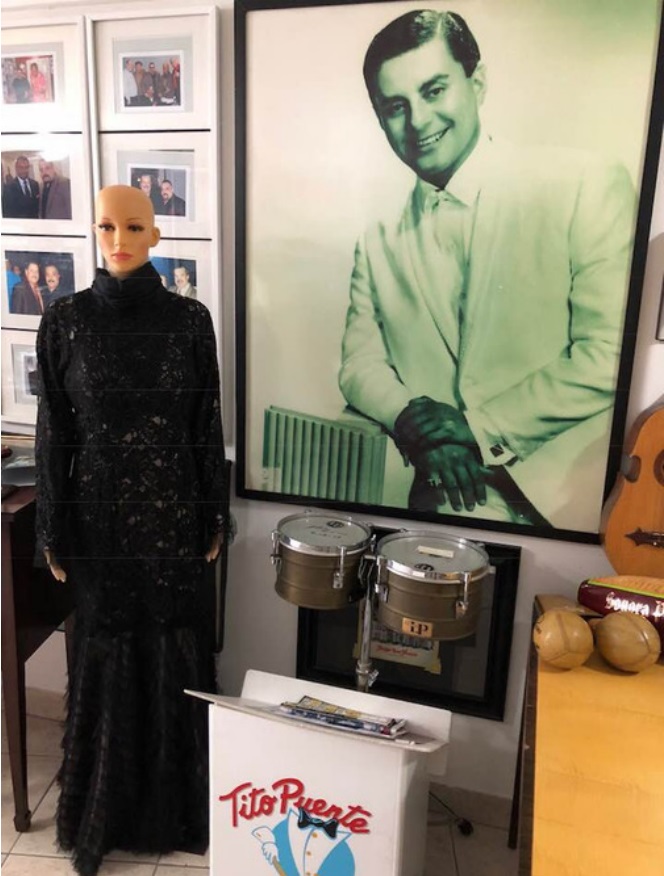
In this extraordinary place are exhibited 40 years of music, experiences and memories that now everyone can relive and consequently know the history behind each instrument, behind each object that rests in this immaculate space and carefully organized by Cruz. The collection includes instruments, pictures, newspapers, clothing and several gadgets donated by great musicians of Latin music.

Must share the good things

The initiative to bring the VIP experience to more people was conceived by Johnny Cruz to realize the positive impact that the gallery would have on the community of El Barrio and the way in which, through it, he could get more involved with schools from the neighborhood. The goal is to continue teaching children and adults the history of Latin music and show them how music is part of history and culture, and how it’s also part of El Barrio.

Spanish Harlem Salsa Gallery Photo

Cruz hopes to tell the story of each element of the gallery to anyone who wants to listen, and continue to increase the collection with donations from the stars of Latin music. Anyone interested in the history of music can learn something new and continue to share this information with other people so that the successes of these artists are never forgotten and kept alive in the collective memory.


In the near future, they hope to carry the information from the gallery to schools and universities in New York. In addition, they are working to collect resources to expand the collection and preserve exposure in the best and safest way possible, and become a source of employment for the community.


What awaits you at SpaHa Salsa Gallery?

At 1708 Lexington Ave NYC, you can find a wide variety of instruments, costumes, and other items from top artists of Latin music. One of the pieces of more recent data is the costume used by Sophy from Puerto Rico, in the tribute concert to Rafael Hernández at the Center for Fine Arts of Puerto Rico.

Photo by Spanish Harlem Salsa Gallery

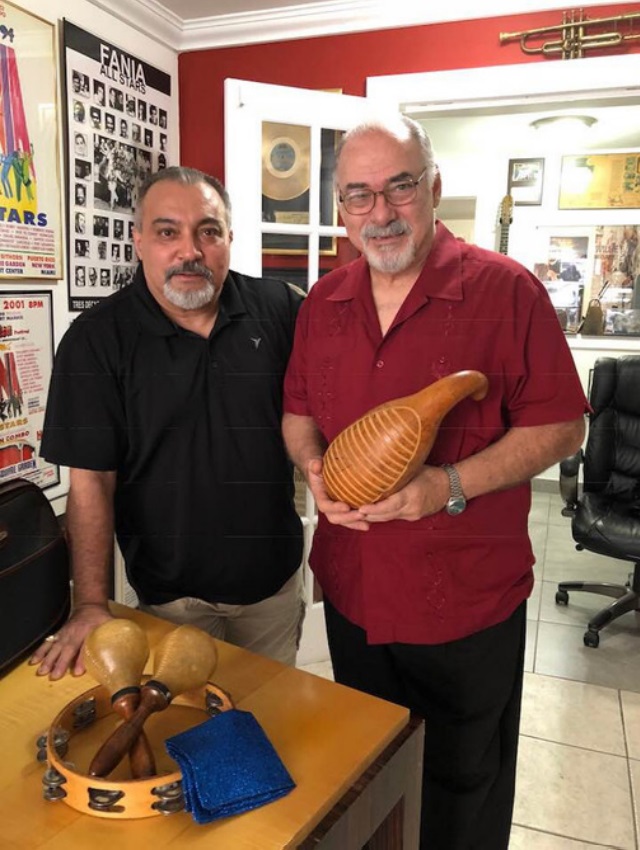
The great Eric Vélez supported the gallery by donating the congas that are in the permanent exhibition. You can also appreciate the tuxedo that Adalberto Santiago used in his 55th anniversary concert and a Bobby Cruz costume. A piece that you definitely have to watch is the colorful and vibrant Celia Cruz’s dress. Mike Rodriguez donated his güiro, maracas and tamboril. Willie Álvarez’s trombone also rests in this exposition.

Spanish Harlem Salsa Gallery photo 4

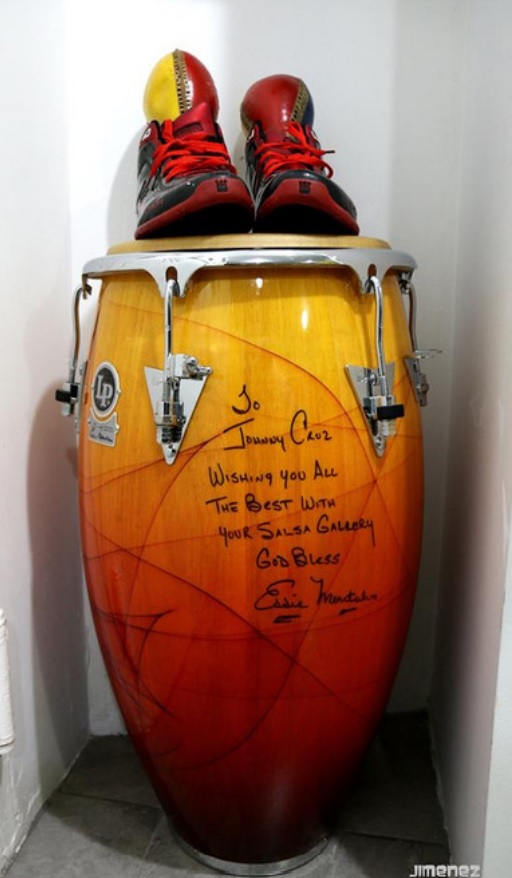
Tourists and locals can learn about the history of objects belonging to musicians of La Fania All Stars or La Sonora Ponceña, the shoes of Héctor Casanova perched on the congas of Eddie Montalvo and numerous pieces full of anecdotes that will always, very gladly, share their host. The commitment of the gallery, and Johnny Cruz, is reaffirmed every day with donations of great glories that have a single purpose: to keep the music alive.

Eduardo Guilarte and Johnny Cruz

Soon, you will have access to the membership of the SpaHa Salsa Gallery, with which you will get information about the events before the general public and discounts in a wide network of restaurants in town, among other benefits, as a way to promote the gallery and obtain funds for its expansion and maintenance.

Within the gallery’s events programming for this month is Pablito Rosario and Cachete Maldonado’s visit, a celebration for Governor Andrew Cuomo for his triumph in the primaries vote in the state of New York, and another for Assemblyman Roberto Rodríguez, who has the support of the Latino community in the area where SpaHa Salsa Gallery lives. Moreover, Nicky Marrero, musician of the Fania All Stars, will donate the timbales he used recently in a tribute to Celia Cruz, so you can meet him in the gallery; on that day, he will be signing the instrument to formally deliver it to the collection.

Spanish Harlem Salsa Gallery photo 3
Drum - Photo
Drum – Photo

The gallery is open to the public from Wednesday to Friday from 4:00 pm to 7:00 pm, and Saturdays from 1:00 pm to 8:00 pm at 1708 Lexington Ave. NY 10029 (El Barrio).

You can get more information about events, membership and donations by calling 917-747-8505.


About the precursor of the initiative

Johnny Cruz has a history of 40 years in the world of Latin music, during which he has been collecting musical instruments. In the last 5 years he created Spaha Salsa Gallery in El Barrio in New York City and a year ago he shares it with friends, contacts, tourists and the community.

Adalberto Santiago flyer

He has been a percussionist for the last 40 years and is passionate about music, singing it, producing it, composing it, telling it, living it today and keeping it alive forever. He has worked closely with some of the most outstanding Latin musicians in the business throughout his career and has been honored with a variety of awards over the years.

Photo by Johnny Cruz with more music instruments

At this time, he produces a public access television program for mnn.org called The Windows of Latin America. The program has been on the air weekly for 20 years, and it is the only TV space in New York where salsa is broadcast.

Jhonny Cruz and Adalberto Santiago

In a few days he will be premiering a collaborative production with Adalberto Santiago, with songs that recap his musical career of more than six decades and have the admiration and gratitude of Cruz. Within the framework of this launch, there will be an event in which great Latin music personalities will meet again at the Spanish Harlem Salsa Gallery to share a fun time with fans and friends.


Since the beginning of this trip, his desire has been to create a space for the community. Sharing these artifacts is their way of giving back to a community that they have had the pleasure of being part of for many years, a bit of their culture and their heritage for the world.

Johnny Cruz
Johnny Cruz
  • « Go to Previous Page
  • Page 1
  • Interim pages omitted …
  • Page 10
  • Page 11
  • Page 12
  • Page 13
  • Page 14
  • Interim pages omitted …
  • Page 28
  • Go to Next Page »

International Salsa Magazine (ISM) is a monthly publication covering salsa activities around the world and has been publishing since 2007. It is a worldwide network of volunteers coordinated by ISM Magazine. Together, we work to strengthen salsa events around the world.