• Skip to primary navigation
  • Skip to main content

International Salsa Magazine

  • HOME
  • Previous editions
    • 2026
      • ISM / March 2026
      • ISM / February 2026
      • ISM / January 2026
    • 2025
      • ISM / December 2025
      • ISM / November 2025
      • ISM / October 2025
      • ISM / September 2025
      • ISM / August 2025
      • ISM / July 2025
      • ISM / June 2025
      • ISM / May2025
      • ISM / April 2025
      • ISM / March 2025
      • ISM / February 2025
      • ISM / January 2025
    • 2024
      • ISM / December 2024
      • ISM / November 2024
      • ISM / October 2024
      • ISM / September 2024
      • ISM / August 2024
      • ISM / July 2024
      • ISM / June 2024
      • ISM / May 2024
      • ISM / April 2024
      • ISM / March 2024
      • ISM / February 2024
      • ISM / January 2024
    • 2023
      • ISM / December 2023
      • ISM / November 2023
      • ISM / October 2023
      • ISM – September 2023
      • ISM – August 2023
      • ISM July 2023
      • ISM Edition June 2023
      • ISM – May 2023
      • ISM April 2023
      • ISM March 2023
      • ISM February 2023
      • ISM January 2023
    • 2022
      • ISM December 2022
      • ISM November 2022
      • ISM October 2022
      • ISM September 2022
      • ISM August 2022
      • ISM July 2022
      • ISM June 2022
      • ISM May 2022
      • ISM February 2022
      • ISM January 2022
    • 2021
      • ISM December 2021
      • ISM November 2021
      • ISM October – 2021
      • ISM September 2021
      • ISM August 2021
      • ISM July 2021
      • ISM May 2021
      • ISM April 2021
      • ISM June 2021
      • ISM March 2021
      • ISM February 2021
      • ISM January 2021
    • 2020
      • ISM December 2020
      • ISM November 2020
      • ISM October 2020
      • ISM September 2020
      • ISM August 2020
      • ISM July 2020
      • ISM June 2020
      • ISM May 2020
      • ISM April 2020
      • ISM March 2020
      • ISM February 2020
      • ISM January 2020
    • 2019
      • ISM December 2019
      • ISM November 2019
      • ISM October 2019
      • ISM Septembre 2019
      • ISM August 2019
      • ISM July 2019
      • ISM June 2019
  • Download Salsa App
    • Android
    • Apple
  • Spanish

North America

Orestes Vilato

North America / USA / New York

Orestes Vilato. Cuban Multi-Percussionist.

Cuban multi-percussionist, Orestes Vilato, is undoubtedly one of the greatest figures in the history of the Cuban drums known as timbales.

Orestes Vilato
Orestes Vilato

During the fifties, the Vilato family moved to New York, salsa capital of the world, where young Orestes would rise to fame as an innovator of his beloved traditional instrument, “Los Timbales”.  While living in New York for 25 years, Orestes was intimately involved with many musical organizations that played seminal roles in shaping the course of Latin Music around the world.

Among the many groups were: Fania All Starts (founding member), Ray Barretto, Tipica 73 (founding member), Los Kimbos (founder-director), Tito Puente, Johnny Pacheco, Cheo Feliciano, Ismael Rivera, Joe Cuba, Eddie Palmieri, Ruben Blades, La Lupe, Celia Cruz, Rolando La Serie, Chico O’Farril, Lionel Hampton, Los Chavales de Espana, Cal Tjader.

Other artists with whom he has recorded or worked include: Winton and Bradford Marsalis, Paco De Lucia, Whitney Houston, Linda Ronstadt, Aretha Franklin, Willie Nelson, Herbie Hancock, McCoy Tyner, Cachao, Andy Garcia, Emilio Estefan, Gloria Estefan, Paquito de Rivera, Dave Valentin, Mongo Santamaria, Armando Peraza, John Santos, Rebeca Mauleon, Giovanni Hidalgo and Raul Rekow.

Orestes Vilato - Photo
Orestes Vilato – Photo

In 1981, Mr. Vilato moved to the San Francisco Bay area, where he still resides with his family.   From 1980 to 1989 he recorded and toured with the renowned Carlos Santana Band.

Orestes was nominated for a Grammy in 1995 (Latin Jazz category) for his CD, Ritmo Y Candela With Patato and Changuito. In 2009 his solo CD Its About Time was nominated for a Latin Grammy.

Orestes has recorded several movie sound tracks that include:  Our Latin Thing, Mambo Kings, Carlito’s Way, Steal Big Steal Little, The Bird Cage, Dance With Me, Just A Ticket, Things To Do In Denver and The Lost City.

He has been a special guest artist in multiple Jazz Festivals around the country and Puerto Rico including the San Jose Jazz Festival.   He has performed and taught at numerous music conservatories including The Berkeley School of Music, UCLA, Fresno University, Standford University as well as many conservatories overseas.

Orestes was given tribute at Yerba Buena Garden, Monterey and San Francisco Jazz Festivals.

Photo of Orestes Vilato

Orestes’ style is one of the most imitated and emulated among recording-performing artists.

Cuban pianist Daniel Amat achieves his dream abroad

Historically, Cuba has been a tremendous source of talent and keeps on proving it to this very day. Through our great friend, Cuban tres player Ivan Camblor, we have been able to make contact with talented pianist Daniel Amat, who has revealed some of the most interesting facts about his life and career both in his native country and worldwide.

Cuban pianist Daniel
Cuban pianist Daniel Amat, who kindly talked to us for International Salsa Magazine

How Daniel got into music

Daniel was fortunate to have been born into a musical family, starting with his father, who was known as ”El Pancho Amat” and had a great talent with the Cuban tres. On his mother’s side, there were also several musicians, so as a child Daniel always had contact with this fascinating world, to which he would belong a few years later.

By learning to play, he started with percussion, but little by little, he experimented with the trumpet and ended up playing the piano at the age of 13, since he saw it as a mixture between the sound world of the trumpet and the rhythmic world of percussion. This is the instrument that would finally hook him and for which he would later become known. 

Havana National School of Music

Daniel was a native of a small village in the country, where music could be studied at a basic level. However, anyone who wanted to attain an average level had to go to Havana if or if, but first those interested had to take some entrance exams in order to study in the aforementioned city.

After passing those tests, you went to the National School of Art (ENA), which was especially for the people from the Cuban provinces. In the case of Havanans, there was a music school exclusive for them. At the ENA, I met people from all over the country who played all kinds of genres, which helped me a lot. I studied with Ulises Hernández, who was an excellent teacher and one of the best concert pianists in Cuba” said Daniel on the issue.

Daniel playing
Daniel Amat playing his piano live

He also told us that the school prepared him for many things, although he assures us that teaching is never complete, since a professional in any field must always look for a complement to add to that knowledge, which is given by practical professional experiences. The same happens with music and he is a great example of this.

In the same way, he pointed out that what he learned in the conservatory could not be learned on the street and what he learned on the street could not be learned in the conservatory, so the study and practice complement each other and are not mutually exclusive.

Daniel’s professional start in Cuba

In addition to his studies at the conservatory in Cuba, he also began to pursue music in a much more professional way by playing charanga and danzones at the national hotel. He assures that this experience was very enriching, since he had the opportunity to learn what he could from older musicians with an immense trajectory.

Of that time, Daniel highlights his enormous will to know everything, so he always paid close attention to the anecdotes and stories that his colleagues told each other. Additionally, he was given a lot of advice on how to play or not, so he learned a lot during those years. 

He also played with some Cuban popular music and danzón orchestras until he found his own style and released his first album ”El Piano Que Llevo Dentro” in 2003, which is when he formally started his solo career. It is since then that the piano started to be a fundamental part of his repertoire, although he never abandoned danzón, son and changüi. He also adds a bit of Latin jazz to his songs, which was always to his liking and he relied on what Chucho Valdez was doing with Iraquere to find the style he wanted to follow.

the album by Daniel
Cover of the album ”El Piano Que Llevo Dentro” by Daniel Amat

Moving out of Cuba

When Daniel turned 24 years old, he decided to leave Cuba and look for opportunities in other latitudes after marrying his current wife. It is there where his career obviously takes a new direction and many more growth opportunities for the young artist seemed to be surfacing.

While very far away from his homeland, he began collaborating with big bands and symphonic orchestras, but always playing and experimenting with the Cuban genres with which he started his career in the first place.

Since he had already traveled with his father to other countries in previous years due to his work, he developed many friendships and contacts with many people outside of Cuba, so he was able to get to work on his own stuff quickly and without delay. This led him to be called to perform at festivals and events in the United States, Spain and other parts of Europe.

Thanks to the above, Daniel has been fortunate to be able to work in the music branch without the need to look for other jobs as is the case of many other musicians when they emigrate from their respective countries. This has allowed him to focus one hundred percent on his musical projects and to start teaching jazz, Latin jazz, phrasing and many other areas.

Daniel’s current projects

The pianist is very happy because he will soon release a compilation of his first two albums called ”Una Parte de Mi” in vinyl format. For the same, he had the collaboration of his father ”Pancho” Amat, musician Orlando Valle ”Maraca”, maestro Chucho Valdéz, Sixto Llorente ”El Indio”, his piano teacher Ulises Hernández, percussionist Changuito and many more.

Read also: Edgardo ‘‘El Bambino’’ and his extensive and interesting musical career

Dominican trumpeter Wilson Portuondo talks about La Sonora Nuyorkina

As shown in the most traditional media and digital platforms, Dominican artists belonging to diverse musical genres have been working hard for many years to finally be recognized in the world. That is the case of talented bandleader and trumpeter Wilson Portuondo, with whom we managed to contact to know much more about his life and career.

Trumpeter Wilson Portuondo
This is Dominican trumpeter Wilson Portuondo from La Sonora Nuyorkina

How Wilson became interested in music

Wilson, our protagonist in this story, became interested in the musical world shortly after his 15th birthday in his native Dominican Republic, which was already well known for various types of merengue at the time. The young man frequently attended concerts performed in parks on weekends, which were free of charge, allowing him to enjoy the bands from his town without representing excessive expenditure for his family.

This was awakening in the boy a great desire to imitate the musicians he saw on stage and be as great as them someday, so he wanted to start studying music and see what he could achieve with that knowledge.

Professional beginnings

Wilson’s first experience as a professional musician came from the hand of the town’s municipal band in the city of Santiago. He also got to play in the municipal band of the firemen and the municipal band of the Dominican National Police, which had a headquarters in the aforementioned city. 

Thanks to these groups and others, he specialized in playing classical music and merengue, but things changed greatly when he decided to move to New York as a young adult who was about to celebrate his 20th birthday.

Wilson playing
Wilson Portuondo playing the trumpet live

Wilson as a trumpeter

The instrument for which Wilson is best is the trumpet, which he confesses he began playing almost by accident. His fascination with the trumpet started when he was studying at the Culture and Art Institute while still in Santiago, as it was the first instrument he came in contact with that caught his attention at the institution.

At that time, he would never have imagined that he would play it, but he ended up feeling an enormous love for it and now considers it his favorite instrument among all others. However, he does not limit himself to this, as he can play the piano and is learning to play percussion, which includes the conga, bongo, Dominican tambora, güira and many more. 

Once he arrived in New York, he continued committed to learn as much as he could about music and studied at various institutes such as the Harlen School of the Art and later at the State University of New York (SUNY), where he studied classical trumpet for four years until he graduated.

He has learned to play the rest of the instruments through practice and lessons with other musician friends.

Arrival in the United States

When he arrived in New York, Wilson had to take an extra year in high school and, thanks to his studies, he was able to make friends with music students who invited him to enroll in the Harlem School of Art, a place where he had contact with many other people linked to the environment who began to call him to play with them as a freelancer.

Wilson at an event
Wilson Portuondo at the social dance event ”Salsita Social Pa’l Pueblo”

In parallel to this, he was taking dance classes in New York style, which allowed him to attend many social dances and such live music events. Something that the artist noticed at that time was that the groups he saw always played the same songs like ”El Cuarto de Tula”, ”Soy Pilongo”, ”No le pegue a la Negra”, ”Rebelión”, among others. In addition to notice that they did not meet to rehearse, but played together the same as always.

To some extent, he feels that these mistakes on the part of so many orchestras inspired him to create his own project which he would baptize as La Sonora Neoyorkina, since he wanted to offer the public a fresh and new repertoire that did not include the same old thing. However, he always makes sure that he and his musicians rehearse as much as possible so as not to make the same mistakes as other groups.

Among the musicians who are currently in the group, we can mention Anthony Almonte, Osay Calvo, Nestor Villar, Carlos Mena, Carly Maldonado, among others. Venezuelan percussionist Robert Quintero, Luisito Quintero’s cousin, has also played in the band.

However, although they usually do covers of various classic songs, they have also strived to create their own original music, so they already have original songs such as ”Sonora Llegó” and ”Summertime”. Also, the group is making preparations to complete their first studio album next year.

Read also: Juan Karlos Jiménez talks about his orchestra Salsa Nueva Band and freelance career

Great Christmas salsa songs and their stories

Christmas is a time of joy where one of the most important elements is music, so we believe this is the best opportunity to feature some of the best Christmas salsa songs that we can remember. Here are the most cheerful songs in Latin music to listen to during the most beautiful time of the year.

Aires de Navidad by Héctor Lavoe and Willie Colón

”Aires de Navidad” is a great song which is part of the Christmas album ”Asalto Navideño Vol. I” from 1971. In the same year, Lavoe and Colón were already making preparations to record an album entirely dedicated to the festivities, indeed, they already had some songs recorded, but they knew that there were still details to finish. 

Then, Héctor asked musician Roberto García to join the project that was underway, as they needed a guitarist to accompany them. Garcia accepted the proposal almost immediately and got excited about the project that he even proposed Yomo Toro to join them, to which Hector and Willie agreed with no problems.

The day they agreed to record the material, Toro came in first and began playing a Puerto Rican cuatro when he was scheduled to play the electric guitar. However, Johnny Pacheco, upon hearing the sounds, liked the arrangement and approved it without question. 

That is how the four artists set out and recorded what would soon become one of the greatest Christmas hymns in recent times, and it will surely be in thousands of homes around the world this month.

Aires de Navidad
One of the photos taken during the recording of ”Aires de Navidad”

La Fiesta de Pilito by El Gran Combo de Puerto Rico

”La Fiesta de Pilito” is included in the album ”Nuestra Música” by El Gran Combo de Puerto Rico, which was recorded in 1985 as a tribute to the most beautiful and endearing of the Island of Enchantment during the Christmas holidays. Back then, any musical work created by El Gran Combo always became a resounding success once it was released and its members were sure that this would be no exception.  

It is then when the composer of one of the main songs of ”Nuestra Música” came on the scene, and we are talking about Luis ”Pilito” Cruz, who would become part of the internationally acclaimed salsa group that same year.

What is known in the first instance about the song is that it did not have a specific name, so it was baptized as ”La Fiesta de Pilito” honoring the composer of its first two verses. Subsequently, the piece was completed with pregones and soneos created by the rest of the orchestra members.

Additionally, they received the support and collaboration from ‘‘El Caballero de La Salsa” Gilberto Santa Rosa, who served as a guest artist for the legendary recording.

Nuestra música at Christmas
Cover of the Christmas album ”Nuestra Música”

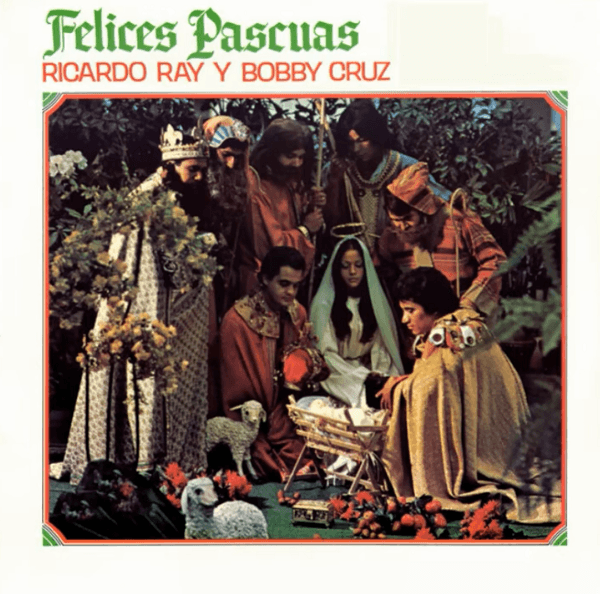
Bembé en Casa de Pinki by Richie Ray and Bobby Cruz

”Bembé En Casa de Pinki” is a Christmas song written by the famous duo Richie Ray and Bobby Cruz, which was released in 1971 and is the first single from the Christmas album ”Felices Pascuas”.

The song’s title comes from someone who would be very important in the career of the two aforementioned artists and that was the Panamanian-born diplomat named José Rogelio ”Pinki” Arias. The gentleman was a close friend of Richie and Bobby and, at the same time, director of the Panamanian Institute of Tourism. He used his friendship with the vocalists to invite them to various events in his country, knowing that they would be a complete success with the presence of the duo.

Such was the affection both exponents had for ”Pinki” that they dedicated to him two songs from their extensive repertoire, which were ”Bembé en Casa de Pinki” and one belonging to the album ”El Diferente”. 

Among other songs, ”Felices Pascuas” also includes tracks such as ”Bomba en Navidad”, ”Mi Niñez”, ”San José”, and ”Aguinaldo Navideño”.

Felices fiestas at Christmas
Cover of the Christmas album ”Felices Fiestas”

Estelita by La Sonora Ponceña

Another group that never misses a chance to offer their talent to please their fans and make them enter the Christmas atmosphere during the holiday season, leaving great classics that can not be missing every year in our homes and one of them is ”Estelita”.

Something that can never be missed in a Christmas album is that colorful character who always brings playfulness and good humor to the atmosphere. In this case, it is Estelita, who is a party neighbor who always sneaks into the Christmas parrandas in her neighborhood, something that many people will surely feel identified with in various parts of Latin America.

The song was written by the late maestro Joe Torres and was part of the album ”Otra Navidad Criolla!” along with ”Opera Gandinga”, ”Vamonos Pa’l Campo”, ”La Vengo Siguiendo”. 

Read also: Luis Guillermo Rangel the great friend of everyone

The Granada LA

North America / USA / Los Angeles

The Granada LA is the home to a Ballroom, Latin, Salsa & Bachata dance studio with Los Angeles hottest dance instruction with classes a week and private lessons available by appointment. Offering several nights with live entertainment and dancing to show off all you have learned.

Salsa & Bachata Taco Tuesday - The Granada
Salsa & Bachata Taco Tuesday – The Granada

Tuesday is Salsa & bachata Nights, Thursday is Bachata Tropical Nights with 3rd floor Hip Hop/Reggaeton, Friday and Saturday Nights the main dance floor becomes Los Angeles Best Live Salsa Club! Enjoy an extra room on Saturday for bachata and Hip Hop/Top on patio.

Bachata Thursday at the Granada LA

Also the first and third Sunday of the month, live music for the Ballroom Dinner Dance with Two’s Company with all your favorites. Also, offering other special nights once a month on different nights.

Con Mayor Live Salsa Bachata - The Granada LA
Con Mayor Live Salsa Bachata – The Granada LA

Group Classes & Private Dance Lessons go on throughout the building, but it is important to remember that the Granada LA has other activities and groups sharing the space day and night.

Conjunto Oye Live Salsa Saturday - The Granada LA
Conjunto Oye Live Salsa Saturday – The Granada LA

The restaurant is open Thursday thru Sunday for dinner, in addition to being the caterer for rentals. Just as most clubs in Hollywood, enjoy different theme nights, so will the Granada LA.

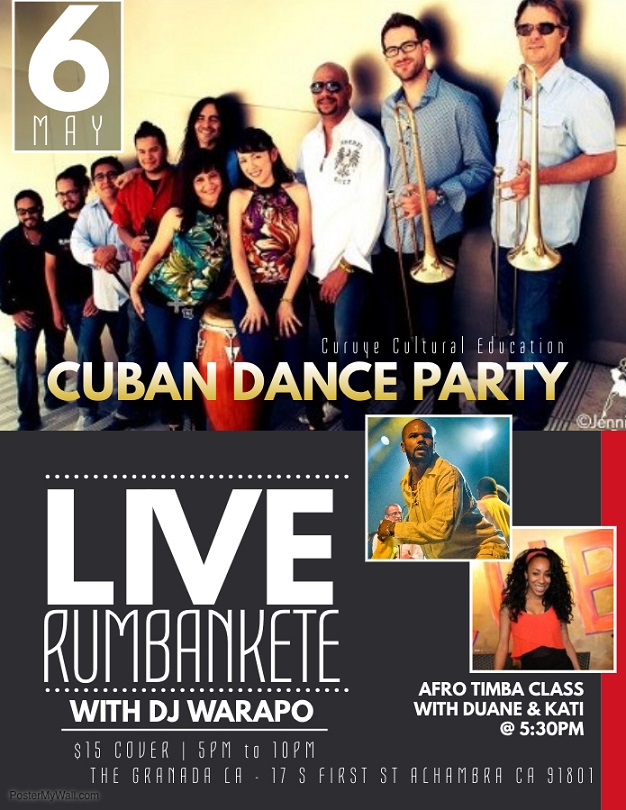
Friday and Saturday night Salsa dance club, Ballroom Dinner Dance, Thursday night Bachata dance club, Cuban Timba party 2nd sunday of the month, Chicago stepping platinum club 4th sunday of the month, Special Dance performances, Concert nights & special events throughout the week and on weekends.

Bachata Concert Dani J - The Granada LA
Bachata Concert Dani J – The Granada LA

Teaching and choreographing for shows, events, parties, celebrations and your first dance. The Ballroom Dance Studio is located in Los angeles and specializes in Ballroom, Latin, Swing, Salsa & Tango dance classes and instruction both privately and in groups.

Cuban Dance Party - The Granada LA
Cuban Dance Party – The Granada LA

Offering an elegant beautiful Banquet Facility in Los Angeles for your upcoming Wedding Reception, Quinceanera, Birthday Party, Anniversary or a Special Occasion in Alhambra.


  • « Go to Previous Page
  • Page 1
  • Interim pages omitted …
  • Page 37
  • Page 38
  • Page 39
  • Page 40
  • Page 41
  • Interim pages omitted …
  • Page 129
  • Go to Next Page »

International Salsa Magazine (ISM) is a monthly publication about Salsa activities around the world, that has been publishing since 2007. It is a world network of volunteers coordinated by ISM Magazine. We are working to strengthen all the events by working together.