• Skip to primary navigation
  • Skip to main content

International Salsa Magazine

  • HOME
  • Previous editions
    • 2026
      • ISM / March 2026
      • ISM / February 2026
      • ISM / January 2026
    • 2025
      • ISM / December 2025
      • ISM / November 2025
      • ISM / October 2025
      • ISM / September 2025
      • ISM / August 2025
      • ISM / July 2025
      • ISM / June 2025
      • ISM / May2025
      • ISM / April 2025
      • ISM / March 2025
      • ISM / February 2025
      • ISM / January 2025
    • 2024
      • ISM / December 2024
      • ISM / November 2024
      • ISM / October 2024
      • ISM / September 2024
      • ISM / August 2024
      • ISM / July 2024
      • ISM / June 2024
      • ISM / May 2024
      • ISM / April 2024
      • ISM / March 2024
      • ISM / February 2024
      • ISM / January 2024
    • 2023
      • ISM / December 2023
      • ISM / November 2023
      • ISM / October 2023
      • ISM – September 2023
      • ISM – August 2023
      • ISM July 2023
      • ISM Edition June 2023
      • ISM – May 2023
      • ISM April 2023
      • ISM March 2023
      • ISM February 2023
      • ISM January 2023
    • 2022
      • ISM December 2022
      • ISM November 2022
      • ISM October 2022
      • ISM September 2022
      • ISM August 2022
      • ISM July 2022
      • ISM June 2022
      • ISM May 2022
      • ISM February 2022
      • ISM January 2022
    • 2021
      • ISM December 2021
      • ISM November 2021
      • ISM October – 2021
      • ISM September 2021
      • ISM August 2021
      • ISM July 2021
      • ISM May 2021
      • ISM April 2021
      • ISM June 2021
      • ISM March 2021
      • ISM February 2021
      • ISM January 2021
    • 2020
      • ISM December 2020
      • ISM November 2020
      • ISM October 2020
      • ISM September 2020
      • ISM August 2020
      • ISM July 2020
      • ISM June 2020
      • ISM May 2020
      • ISM April 2020
      • ISM March 2020
      • ISM February 2020
      • ISM January 2020
    • 2019
      • ISM December 2019
      • ISM November 2019
      • ISM October 2019
      • ISM Septembre 2019
      • ISM August 2019
      • ISM July 2019
      • ISM June 2019
  • Download Salsa App
    • Android
    • Apple
  • Spanish

North America

Louie Ramírez. The Hidden Talent of Salsa Ahead of its time

North America / USA / New York

Louie Ramírez.

Music often requires characters who are always behind the scenes and support the work of singers and performers with their talent, who are ultimately the ones who “put on their face” and become popular. Sometimes, however, these anonymous characters rise to fame in order to perform their own work and even become more popular than any popular singer.

In the case of Pop, this character is called Quincy Jones, of whom it is enough to say that he has been an arranger for Frank Sinatra and a producer for Michael Jackson. A nobody”. In the case of Salsa, these characters have been symbolized by Jones’ emulator, a guy named Louie Ramírez who has done everything with everyone.
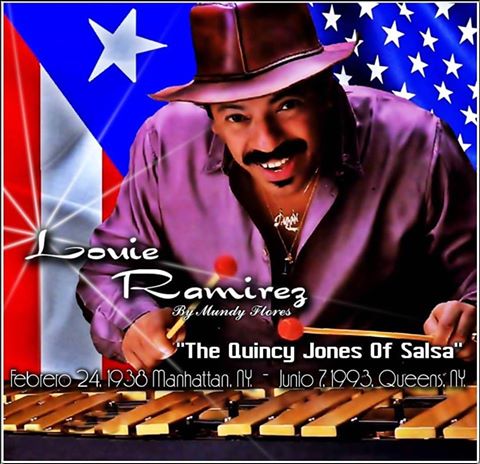
Louie Ramírez
Louie Ramírez

One afternoon in 1994, Ramírez was driving his car down the highway that would take him to Variety Studios in New York. It was going to be a quick session since he only needed one song to complete his 20th album as conductor. Perhaps that was why he was nervous and that filled him with anxiety. Minutes later he couldn’t resist the feeling and had to pull over to the side of the car. He had not finished doing it when a cardiac arrest ended his life.

Louie Ramírez
Louie Ramírez

Louie Ramirez was a genius. The classic man to whom everyone turns for advice and solutions to their problems. It didn’t matter if they were young or old musicians. The fact was, Louie had the answer, and visiting him was like rubbing Aladdin’s lamp. That was a characteristic that always accompanied him, from that first recording “Conozca a Louie Ramírez” in 1963.

He was 20 years old at the time and had already stood out for composing some pachangas and arranging for Pete and Tito Rodríguez’s orchestras. The commentator Dick Sugar then presented it like this: Ramírez breaks the image of the director of a group that uses the talent of other composers and becomes a follower of a rhythm. No, Louie Ramírez is a creator in his genre.

Louie Ramírez Photo
Louie Ramírez Photo

That talent did not go unnoticed by the new Czar of Latin music in New York, Jerry Masucci, who hired him as a star for Fania Records and at the same time, as an arranger for the orchestras and ensembles that belonged to the record company. Ramírez was soon involved in work and was only able to record two albums during the sixties, “Good news” and “Alí Babá”.

On that last album appeared the hit that allowed him to be a famous artist, El Títere, a true Salsa classic. The theme was sung by Rudy Calzado, the third of the soneros that Louie had used without finding the ideal. That was a burden that accompanied him as a director during the seventies, when he used singers of the stature of Pete Bonet, Tito Allen, Jimmy Sabater, “Azuquita” Rodríguez, Adalberto Santiago, and even Rubén Blades.
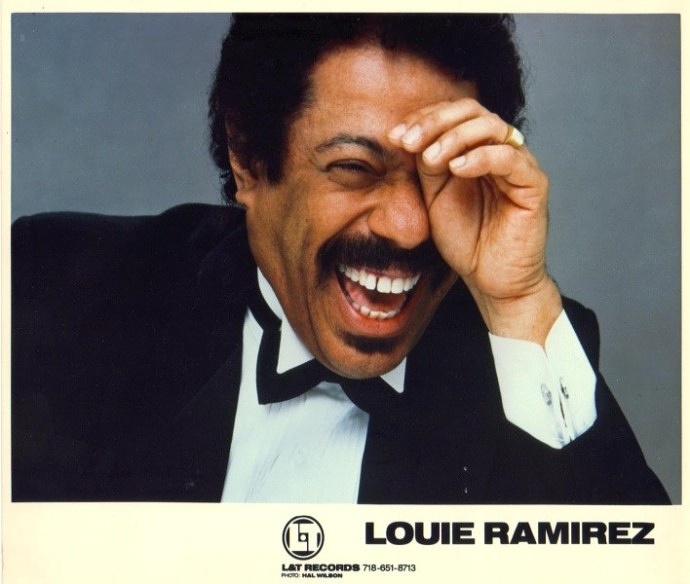
Louie Ramírez
Louie Ramírez

It was with Blades, precisely, that he made an anthological album, “Louie Ramírez and his friends”, in which the song Paula C was included, with an arrangement of those that deserve -hats off-. By then, Ramírez was considered in New York as the most progressive arranger that Salsa had, thanks to the brilliant work done for the Fania All Stars. An excellent job had been the instrumental arrangement of Juan Pachanga, to be sung by Blades, of Canta Canta for a performance by Cheo Feliciano, and of the entire album “Algo nuevo” that Tito Rodríguez sang with Louie’s orchestra.

But the high point of Ramírez’s career came in 1980 when Joni Figueras, representative of the K-Tel International label, hired him to arrange the ballads Todo se derrumbó and Estar Enamorado de Manuel Alejandro. The album, which included these and other tracks, was released two years later under the title “Hot Night” and was recorded by Louie’s own orchestra.

Louie Ramírez - Salsa Progresiva
Louie Ramírez – Salsa Progresiva

This is how the Salsa-ballad or Salsa-romántica was born in a job that Ramírez continued until his death, making attempts at Latin Jazz from time to time, which he loved. That is why he recorded an album in tribute to Cal Tjader, where Louie was director, producer, composer and arranger, in addition to playing the timpani and his favorite instrument: the vibraphone.

Louie Ramírez was a genius in arranging, in a career where those of Guantanamera and Isadora stand out for Celia Cruz, El Guiro de Macorina for Johnny Pacheco and El Caminante for Roberto Torres. Apart from this, there are his works for the Alegre and the Cesta All Stars. Regarding this profile of Ramírez, the critic Eleazar López defined it very well:

Louie Ramírez - salsero
Louie Ramírez – salsero

It is not easy to arrange for a dance band, especially when it comes to a group that cultivates the hot tropical genre. Many musicians feel influenced by Jazz and the result of their orchestrations leaves a void in the dancer. Others arrange simple, but so simple that they repeat and copy themselves, and the result is tiresome music, without any degree of creativity: music that says nothing, that leaves nothing. Louie Ramírez has found the perfect balance… that’s why he always stays current.

Louie Ramírez flyers

Andrea Brachfeld

North America / USA / New York

Andrea Brachfeld (Flutist), Graduated from the High School of Music and Art and Manhattan School of Music. During the last 20 years he has recorded more than a dozen CDs with many artists, including Africando, Noel Pointer, and Timbalaye. Her big break as the flutist for the popular Latin band Charanga 76 catapulted her into Salsa history and fame as the first female flutist to play this music in the United States.

Andrea Brachfeld
Andrea Brachfeld

While in high school he received the “Louis Armstrong Award for Outstanding Alumnus” for Jazz Interactions. Study with Hubert Laws, Jimmy Heath, and Mike Longo helped him develop his own style. Downbeat magazine referring to Andrea as “one of the best jazz flautists around”.

Photo by Andrea Brachfeld

She has twice been the winner of the Latino Award in New York, as a flutist. He has performed with Dave Valentín, Néstor Torres, and Ray Barretto, among others. While in Venezuela, he had the honor of opening for Chick Corea and Paco de Lucía. She recently received the Chico O’Farrill Lifetime Achievement Award from Latin Jazz USA. Her first Latin jazz CD, “Remembered Dreams” combines Latin originals with contemporary jazz cuts. His second CD, “Back With Sweet Passion,” is a dynamic salsa recording featuring Grammy winner Oscar Hernández on piano, and Alfredo De La Fey on violin.

Andrea Brachfeld with her big smile

Her third CD “Beyond Standards” is a collaborative effort with Chembo Corniel, featuring jazz greats Hilton Ruiz on piano and Steve Turre on trombone.

She has appeared with the Winnepeg Jazz Orchestra as a soloist performing her own compositions as well as those of Mike Longo, Dizzy Gillespie’s longtime musical director. He is currently performing with his own group, including Phoenix Rising, with a new CD out, “Into The World: A Musical Offering” with guest artists Mike Longo, West Paul and Brian Lynch.

Red Profile Andrea Brachfeld

Eddie at 80: Eddie Palmieri and his Latin Jazz Septet

North America / USA / Miami

Eddie at 80: Eddie Palmieri and his Latin Jazz Septet. Sábado, 2 de junio de 20:00 a 22:30

Eddie Palmieri
Eddie Palmieri

Entradas: https://tickets.olympiatheater.org/eventperformances.asp?evt=186

NEA Jazz Master Eddie Palmieri is celebrating his 80th birthday this year with a gorgeous album Sabiduría, and a tour of select cities that brings him to the beautiful Olympia Theater in downtown Miami. Tix are available through the theater box office: http://olympiatheater.org/, $37, $47 and $57 + fees.

Born in Spanish Harlem to Puerto Rican parents and raised in the Bronx, Eddie Palmieri learned to play the piano at an early age, and at 13, he joined his uncle’s orchestra, playing timbales. He joined popular New York bands during the 1950s before forming his own band La Perfecta in 1960. Eddie Palmieri’s landmark 1970 release Harlem River Drive was a first to merge what were categorized as “Black” and “Latin” music into a free-form fusion of salsa, funk, soul and jazz. In 1975, he won the first-ever Grammy for Best Latin Recording for The Sun of Latin Music (he’s won ten Grammys altogether to date, including two with Tito Puente).

In addition to the Grammys, Eddie Palmieri has received numerous honors: Eubie Blake Award (1991); BBC (2002); Yale University’s Chubb Fellowship, usually reserved for international heads of state, but given to Palmieri in recognition of his work building communities through music (2002); Harlem Renaissance Award (2005); and more. In 2009, the Library of Congress added Palmieri’s composition Azucar Pa’ Ti to the National Recording Registry, which at the time only included 300 compositions documenting the history of all of recorded music history in the U.S.

In 2013, Eddie Palmieri was awarded the coveted Jazz Master award – the highest honor for a jazz artist – by the National Endowment of the Arts (NEA). That year he was also awarded a Lifetime Achievement Award by the Latin Academy of Recording Arts & Sciences. This June 2nd, MasterEddie Palmieri is celebrating his 80th birthday this year with a gorgeousalbum Sabiduría, and a tour of select cities that brings him to the beautiful Olympia Theater in downtown Miami. Tix are available through the theater box office: http://olympiatheater.org/

Welcome back to Miami, maestro!

Shine the Movie is coming to all US Theaters on August 24th

North America / USA / New York 

Hang out on August with the best Latin thematic movie on August 24th in all US Theater. Shine is a Latin American musical film that is framed in the drama genre with a very current content that will immerse you in the life of two young brothers, SALSA dancers with broad and recognized trajectories that after the death of their father years later, return to meet, each in a different city and in opposite poles of the gentifricación.

Shine - The Movie
Shine – The Movie

This musical with sound track based in the Golden Age of the Salsa Sound Bands and the Hottest Latin Urban Scene of the Moment has a leading cast mostly made up of famous dancers from Latin Music and Pop.

This movie that also narrates the cultural and political moment that we are currently crossing was shot in the Puerto Rican area of ​​New York, has its own musical themes due to an alliance with Fania Records and the Latin titans of Sony Music, Marc Anthony and Romeo Santos, “El Sabor” of New York hip-hop of the Puerto Rican rapper and winner of the Grammy Award Big Pun, and the rap duo The Beat Nuts.

Shine has been the Latin thematic film with the highest collection on Kickstarter and with this Latin musical its director Anthony Nardolillo sought to remind viewers of the power that exists when members of Latino communities in the US join.

Anthony Nardolillo
Anthony Nardolillo

“Its marketability on various platforms is the direct result of a team of passionate creators with a unifying message on a cultural level, and we are very proud to bring this film to the public”. Geno Taylor of GVN Releasing.

“Shine is a passionate, vibrant film with a current theme. It’s the perfect film for the launch of Forgiven Films, where we want to share unique voices and stories and bring quality entertainment to the less represented audience”. Steven Belmont, president of Forgiven Films.

In September 2017, the film won the Audience Award for “Best Film” at the Urbanworld Film Festival, sponsored by HBO and supported by Ava DuVernay. Tickets for this projection were sold out 48 hours in advanced setting a new record in the history of this festival.

“In 2017 Latin music and dance globally dominated record sales, streams and headlines in unprecedented numbers. There is no better time than now for a film like this”, said Brian O’Shea of The Exchange.

Director:

Anthony Nardolillo, director and also actor has produced several national and international projects related to Latin dance, such as the short film “Mano” acclaimed by the specialized critics.

Starring:

David Zayas

He was born on August 15th, 1962 in Ponce, Puerto Rico. He joined the United States Air Force, where he was able to acquire the experience to become a New York police officer, which served him for roles later. He is an actor of Cinema, Theater and Television recognized for his work on Skyline (2010), The Expendables (2010) and Dexter (2006) and the series “Gotham” by Warner Bros playing the mobster Salvatore Maroni.

David Zayas
David Zayas

Alysia Reiner

She is best known for her role as Natalie “Fig” Figueroa on the Netflix hit series Orange Is the New Black (2013), for which she won a Screen Actors Guild award as part of the ensemble cast. She also worked in the FX show Better Things (2016). Additionally she played District Attorney Wendy Parks on ABC’s How to Get Away with Murder (2014), Lilian Izikoff on Rosewood (2015) and Fiona in the TNT series Search Party (2016).

Reiner starred with Anna Gunn in Equity (2016) about the first female-driven Wall Street film, which she also produced. Other recent films include “School Spirits” and Whitney Cummings’ “The Female Brain”. She was recognized as an Intelligent Optimist in Ode Magazine and profiled by New York Women in Film and Television as a woman to watch.

Alysia Reiner
Alysia Reiner

Kimberli Flores

She is an actress, known for her work in important films, such as: 30 Beats (2012), Actors Anonymous (2017) and Bad Twin (2016).

Kimberly Flores
Kimberly Flores

Gilbert Saldivar

He is an actor and professional Mexican-American dancer, known worldwide for his works in blockbuster movies like: Dexter (2006), From Justin to Kelly (2003) and Magic Hour and for being the choreographer of great celebrities such as: Jennifer Lopez, Christina Aguilera, and Madonna.

Jorge Burgos

Better known as Jorge “Ataca” Burgos is an acclaimed bachata instructor who debuts as an actor in Shine.

Jorge Burgos
Jorge Burgos

Music by Eduardo Reyes Napoles.

Premier: August 24th.

 “Los bailes latinos continúan creciendo en popularidad cada año y los vemos en algunos de los mejores programas televisivos. El mensaje sobre el orgullo que debemos sentir por nuestra comunidad y herencia no podía resultar más urgente y de actualidad. SHINE fusiona estos elementos con un set ardiente y excitante, con una banda sonora interpretada por estrellas musicales latinas, todo ello entrelazado con una poderosa narrativa. Esta película está narrada con nuestra propia voz, por un reparto donde los intérpretes poseen talentos brutos muy diversos que no han tenido cabida en las películas de Hollywood – hasta ahora”. Anthony Nardolillo.

Shine The Movie scene 1

For more information about SHINE the Movie, please visit

www.shinethemovie.nyc or like them on Facebook: www.facebook.com/shinefilm

Vídeo (Trailer): https://youtu.be/9EUs0eh_js8

Shine The Movie scene 2

Juan Karlos Jiménez talks about his orchestra Salsa Nueva Band and freelance career

Los Angeles is an inexhaustible source of Latin talent and this is proven every day with a large number of singers, musicians and groups that give all for all in each of their performances, with which they manage to earn a privileged place in the city and California’s music scene.    

On this occasion, we talked with the great Mexican percussionist Juan Karlos Jimenez, with whom we had the privilege of making contact to learn more about his career and contributions to Latin music in US territory.   

percussionist Juan Karlos
This is gifted Mexican percussionist Juan Karlos Jiménez, with whom we talked in this occasion

Juan Karlos’ beginnings in music   

Juan Karlos was born in Veracruz, place he describes as ”one of the most salsa-loving cities in Mexico”. The first musical influence in the artist’s life has been his own father, who played a lot of Cuban music of the time when Juan Karlos was still a child, and among his favorite groups and artists were La Orquesta Aragón and Tito Puente. 

Of his four brothers, he was the only one who devoted himself to music professionally and wanted to take salsa as a foundation, being something exceedingly rare for a Mexican, since most of the population does not usually see this genre as part of the typical music of the country. However, Juan Karlos also points out that, since Veracruz is located in the tropical part of the country, the city has a lot of Caribbean musical influence. This was one of the reasons that led the artist to become so passionate about salsa. 

In addition to music, he also studied a degree in communication and graphic design at the Universidad del Valle de Atemajac, Guadalajara. As for the communication part, being a 13-year-old boy, he began working at a radio station, which would be the beginning of interest he would have in the not too distant future for locution in a much more formal way. This led him to work in very prestigious places in Mexico such as Televisa Radio, giving him the necessary experience to know how to handle himself as a musician in relation to the media when he would promote his orchestra years later.   

While I was university studying, I worked in a music store and one day I had to serve to the Cuban Afro-jazz singer Rosalía de Cuba, who invited me to attend Cuban nights of which she was part of in restaurants and clubs in Guadalajara. One night, I was encouraged to go and started playing with one of the trios that performed that day and the leader of the group was so fascinated with my skills as a percussionist that he hired me permanently in exchange for 150 Mexican pesos per performance” said Juan Karlos about his time as a student.   

He also pointed out that in order to reach such a good level, he took a few classes with the late Cuban arranger, composer and bongocero Adalberto Alvarez, leader of the group Son 14, thanks to whom he was able to play percussion so efficiently.   

Today, he exercises his skills as a graphic designer with his orchestra Sangre Nueva Band, since he is the one who creates the album covers, flyers and artwork in general related to his musical project.  

Juan Karlos posing
Juan Karlos Jiménez posing for camera

Moving to the United States   

When Juan Karlos was just going to form his first band in Guadalajara, he met Maika Miller, who played for the Mexico’s Philharmonic orchestra and would be his partner for several years. Some time after they married, Milka was offered a master’s degree in Los Angeles and asked her husband to go with her, to which he gladly accepted because of the new opportunities he would have in his new home.   

A few years later, he retried creating his group in her new city of residence after 15 years of hard work. And while Juan Karlos and Milka are no longer a couple, they continue to be part of the same musical project, which they have baptized Sangre Nueva Band.   

However, in order to reach that point, he had to gain a lot of experience playing and perfecting his technique, but fortunately, many groups gave him the opportunity to make a living and be better every day at what he did, such as Conjunto Son 14, Carache, Santiago de Cuba, Rosalía de Cuba, Johnny Blas Y Afro Libre Orquesta, La Orquesta de Yari Moré, Tabaco y Ron, among others. 

His first attempt at creating an orchestra was Jazz Son, which he founded with Maika in Mexico with the idea that his music would be based on the fusion of jazz and son, but his plans were postponed with their sudden move to the United States. Finally, in 2009, he managed to found the orchestra he has today, which he called Sangre Nueva Band. 

Even so, he never stopped playing independently for other artists such as Gilberto Santa Rosa, Victor Manuelle, Ruben Blades, Cheo Feliciano and many more.  

Juan Karlos playing
Juan Karlos Jiménez playing and recording in a studio

Salsa Nueva Band   

One of the things that led Juan Karlos to create his own orchestra in Los Angeles was his desire to be the leader of his own project. He says he feels fortunate and grateful to be able to play with other orchestras, but in his own words ”it is better to be the head of mouse than the tail of a lion”. For the same reason, the idea of working in his own business without having to rely on other orchestras or singers was always in his head. 

When he decided it was time, he had a chance encounter with an Armenian musician who, from the street, saw his congas in the back of his car, asked him if he was a musician and invited him to play at a nightclub next Saturday. By that time, he had managed to gather six musicians playing three congas, a trumpet and a bongo. On the same day, a music entrepreneur asked him to play at another venue, so he ventured to enlarge the group and was asked to name the band, which he called ”Sangre Nueva”.  

Today, Juan Karlos is very happy with all the musicians who accompany him on this adventure and hopes that they will stay with him for a long time. 

Read also: Raúl Vargas and his flamenco rumba duo Dos Bandoleros 

  • « Go to Previous Page
  • Page 1
  • Interim pages omitted …
  • Page 40
  • Page 41
  • Page 42
  • Page 43
  • Page 44
  • Interim pages omitted …
  • Page 129
  • Go to Next Page »

International Salsa Magazine (ISM) is a monthly publication about Salsa activities around the world, that has been publishing since 2007. It is a world network of volunteers coordinated by ISM Magazine. We are working to strengthen all the events by working together.