• Skip to primary navigation
  • Skip to main content

International Salsa Magazine

  • HOME
  • Previous editions
    • 2026
      • ISM / March 2026
      • ISM / February 2026
      • ISM / January 2026
    • 2025
      • ISM / December 2025
      • ISM / November 2025
      • ISM / October 2025
      • ISM / September 2025
      • ISM / August 2025
      • ISM / July 2025
      • ISM / June 2025
      • ISM / May2025
      • ISM / April 2025
      • ISM / March 2025
      • ISM / February 2025
      • ISM / January 2025
    • 2024
      • ISM / December 2024
      • ISM / November 2024
      • ISM / October 2024
      • ISM / September 2024
      • ISM / August 2024
      • ISM / July 2024
      • ISM / June 2024
      • ISM / May 2024
      • ISM / April 2024
      • ISM / March 2024
      • ISM / February 2024
      • ISM / January 2024
    • 2023
      • ISM / December 2023
      • ISM / November 2023
      • ISM / October 2023
      • ISM – September 2023
      • ISM – August 2023
      • ISM July 2023
      • ISM Edition June 2023
      • ISM – May 2023
      • ISM April 2023
      • ISM March 2023
      • ISM February 2023
      • ISM January 2023
    • 2022
      • ISM December 2022
      • ISM November 2022
      • ISM October 2022
      • ISM September 2022
      • ISM August 2022
      • ISM July 2022
      • ISM June 2022
      • ISM May 2022
      • ISM February 2022
      • ISM January 2022
    • 2021
      • ISM December 2021
      • ISM November 2021
      • ISM October – 2021
      • ISM September 2021
      • ISM August 2021
      • ISM July 2021
      • ISM May 2021
      • ISM April 2021
      • ISM June 2021
      • ISM March 2021
      • ISM February 2021
      • ISM January 2021
    • 2020
      • ISM December 2020
      • ISM November 2020
      • ISM October 2020
      • ISM September 2020
      • ISM August 2020
      • ISM July 2020
      • ISM June 2020
      • ISM May 2020
      • ISM April 2020
      • ISM March 2020
      • ISM February 2020
      • ISM January 2020
    • 2019
      • ISM December 2019
      • ISM November 2019
      • ISM October 2019
      • ISM Septembre 2019
      • ISM August 2019
      • ISM July 2019
      • ISM June 2019
  • Download Salsa App
    • Android
    • Apple
  • Spanish

North America

Sizzling Summer Nights at the Autry Museum Of The American West

Salsa shows at the Autry Museum

The vibrant salsa nights in Los Angeles offer countless events that make the most unsociable leave home and put the most serious to dance, but there are always some that stand out among the rest for the quality of the groups and shows offered to the public. The case in question is about the series of concerts performed by the Autry Museum, which has been baptized as Sizzling Summer Nights.  

After a break due to the pandemic and without the possibility of enjoying good live music, there is still an anxiety to making up for lost time and dancing to the sound of the best hits of the bands preferred by the public from the area. 

In the year 2023, the Sizzling Summer Nights are back thanks to some of the best orchestras in California and have proven to be a real success, even more than in previous years.   

Join us to see the details of this weekly night of Latin music at the Autry Museum of The American West and the great success it has been since its first day on August 3.   

Chino Espinoza on The Sizzling Summer Nights 
Chino Espinoza y Los Dueños Del Son on The Sizzling Summer Nights

Chino Espinoza Y Los Dueños Del Son on Sizzling Summer Nights 

The first group to play in the series of performances offered by the Autry Museum was Chino Espinoza Y Los Dueños Del Son, which had already been there in previous years before the pandemic. This means that its members already know perfectly well how things have been handled at the museum with respect to this type of event. 

In the previous days, it could be seen how Chino Espinoza, the central figure in the orchestra, was inviting the public to join the event across the institution’s social media platforms while he was wearing a white shirt with black pants and an enthusiastic smile on his lips. 

In any orchestra’s performance, it can be seen that Chino and the rest of his musicians always give the best of them, so we knew that August 3 was not going to be an exception. Hopefully, it will be repeated for other opportunities.  

Son Y Clave Orchestra on Sizzling Summer Nights 

The second date of this series of shows hired a friend from house: Carlos Navarro and his Son Y Clave Orchestra. The artist and the rest of the accompanying musicians have been in charge of sprucing up the night of August 10 this year with their great flavor. 

In talks with Carlos, we have learned that the sound quality offered by the venue was simply extraordinary, which made the experience even better for them and those attending the show. The crowd was delighted and wanting more for the coming weeks.  


Carlos Navarro en las Sizzling Summer Nights
Carlos Navarro from Son Y Clave performing on stage

Colombian Latin Sould Band on Sizzling Summer Nights 

For August 17, Colombian Latin Soul Band was chosen to liven things up and keep the audience engaged at the Autry Museum every week throughout the month.   

In the social networks of the group, you can see some photos of the band members while performing on the stage assembled by the Autry Museum for the show they were about to give surrounding themselves with dancing fans eager to see them play on a beautiful, sunny summer afternoon.   

Leading up to the show, they also shared a bit of their rehearsals to make sure everything was in place for the special occasion.  
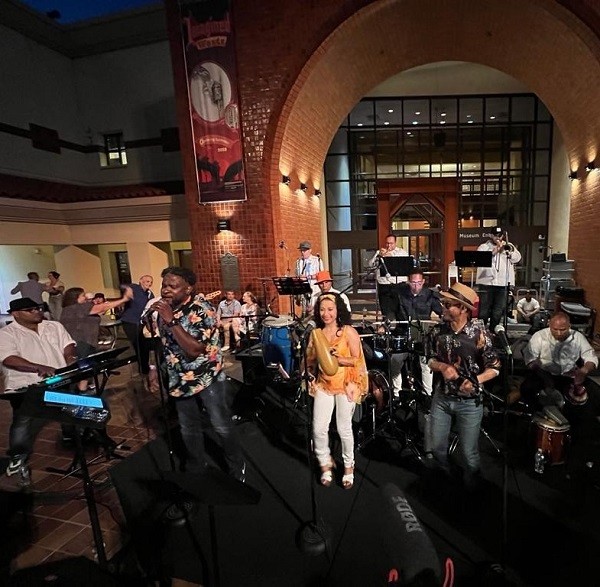
Colombian Latin Soul on The Sizzling Summer Nights
Colombian Latin Soul Band performing at the Autry Museum of The American West

Vibroso ”Salsa With Vibes” on Sizzling Summer Nights  

Vibroso ”Salsa With Vibes” is the orchestra that will be performing on the afternoon of August 24 to delight all those present with their talent. As of writing this article, the show had not yet taken place, so we cannot give further details. However, we have no doubts that it will be as successful as the other three salsa afternoons at the museum. 

The schedule is expected to be exactly the same under the same protocol. 

Ricardo Lemvo & Makina Loca on Sizzling Summer Nights 

As was the case of the previous group, this orchestra has not yet performed, which will happen on August 31 at the same time as the previous ones. However, we can highlight that Makina Loca is a group founded in 1990 by Congolese musician Ricardo Lemvo, who came to the United States a few decades ago to pursue a college career and ended up working on Latin music.   

Lemvo has said that he seeks to celebrate life and make people forget their worries with his music, so we do not doubt that his show at the Autry Museum will be what many need to relieve themselves of their troubles and daily stress.   

Ricardo Lemvo on The Sizzling Summer Nights
Ricardo Lemvo, leader and founder of Makina Loca

Details of Sizzling Summer Nights 

As regards details on all these events, they were taking place every Thursday in August from 6 pm to 9 pm at the Autry Museum of The American West. These performances were accompanied by dance classes with the professional instructor April Connella who taught her best moves to the attendees during these days. 

In addition, the cost of each general ticket is $25, but members have the opportunity to pay only $5. On this point, it is important to stress that no cash is not accepted at the door, so the best option is to buy directly from the museum’s official website and, thus, avoid bad times when attending any of the concerts.  

Finally, attendees are allowed to access the museum galleries and there is a special dance floor, especially for children, so there is entertainment for everyone.   

From International Salsa Magazine, we invite the entire Los Angeles community to continue supporting all these Latin music activities so that the Autry Museum and other such institutions can continue to offer activities like these in the future. 

Read also: The void left by Felix ”Pupi” Legarreta 

Remembering Domingo ”Tito” Gutiérrez’s career

Domingo ”Tito” Gutiérrez  

Domingo ”Tito” Gutiérrez is one of those names that can never be missing when talking about Latin music in the United States, since the contribution made by this musician has been invaluable. That is why we found this to be a good opportunity to look back on the trajectory of this great artist, who has demonstrated again and again that the language of music is universal and crosses borders.  

Domingo with bongos
Domingo ”Tito” Gutiérrez posing with his bongos

Childhood and musical beginnings 

Tito Gutiérrez was born in Guánica southwest of the ”island of Enchantment”, Puerto Rico on August 16, 1957 into the heart of a culturally Latin family, especially in the case of music. However, he moved with his parents to New York City when he was about 11 years old. 

Given that little Domingo had to start making friends again after the move, he took every opportunity to interact with other children of the same age, which led him to meet a group of kids enthusiastically playing instruments in a park.  

The boy had never played an instrument before in his life, so he felt a little intimidated at first, but that did not stop him from approaching them and saying he wanted to play with them. When asked him what instrument he played, he replied that he played the bongo, since he noticed that the improvised band did not have one.   

This is how Domingo joined them, started playing the bongo and continued playing it until he became a professional of this instrument.   

Domingo on stage
Domingo ”Tito” Gutiérrez performing on stage

Professional life in music 

In 1972, he finally ventured into music at a professional level with the same instrument with which he began in this world during his childhood and it was the group El Son De Hoy that gave him his first job opportunity. 

Not much time would pass before he became a musical director and founder of an orchestra when he created his own group called Orquesta Borinqueya. At the same time, he was also working with the Orquesta Alianza Boricua, with which he was recording a studio album.   

For a period of approximately five or six years, the artist has been recording with countless local orchestras with which he has continued to make a career and expand his musical curriculum, such as Orquesta La Crítica, Orquesta Nelson Feliciano, Orquesta Crisis, Orquesta Guainía, among others.  

In 1978, he went to live in New York and did his thing with the bongo along with some groups such as Grupo Melao, Conjunto Avicú and Peter Brown Jazz Cuartet.   

Domingo with a cowbell
Domingo ”Tito” Gutiérrez playing a Puerto Rican cowbell designed by his own line of instruments

In the late 90’s, his fame had grown so much that he has had the opportunity to work in orchestras of international stature such as Orquesta La Terrífica, Orquesta Costa Brava, Orquesta de Simón Pérez, Orquesta de Roberto Ortiz and more. He has also shared the stage with Ismael Miranda, José Alberto ”El Canario”, Andy Montañez, Cano Estremera, among others. 

Today, he plays for La Sonora Ponceña of Puerto Rico, ”45 Aniversario” being the first project he recorded with the group and has participated in a number of albums with this great team. 

While on tour with the different orchestras to which he has belonged, he was able to visit a large number of countries such as Venezuela, Ecuador, Mexico, Colombia, Costa Rica, Peru, Panama, Spain, France, Italy, among others. 

Parallel to all this, Domingo has his own line of bongos which he named ”Tito Gutierrez Bongo Series”. This line is part of an initiative of the Reyes Family, who are a group of Colombian artisans who are dedicated to designing bongos of different colors and sizes. 

Read also: Jerry Rivas, career, and support for the Spaha Salsa Gallery Museum 


Johnny Cruz Correspondent for ISM in New York City

“Trayectoria de Clásicos” – Johnny Cruz and Adalberto Santiago

North America / United State / New York

Johnny Cruz releases his new Salsa album “Trayectoria de Clásicos” with Adalberto Santiago to the musical arena

The famous Timbalero and musical producer presents a CD tribute to all the Puerto Rico and the world’s Soneros, along with one of the most privileged voices of Latin music and Fania All-Stars’ vocal ex-leader: Adalberto Santiago.

"Trayectoria de Clásicos" - Johnny Cruz and Adalberto Santiago
“Trayectoria de Clásicos” – Johnny Cruz and Adalberto Santiago

Johnny Cruz “El Señor del Timbal” launches his second historical compilation “Trayectoria de Clásicos” directed to all the Salseros lovers of the whole world, which can relive in a single album ten great classics of this tropical genre in the interpretation of the vocal versatility most famous of six decades, Adalberto Santiago.

This four-years recording album involved more than 20 Latin music personalities, including: Jason Villamar, Louis Perieda and the special guest: Richi Ray (Piano), Rubén Rodríguez and Freddy Rivera (Bass), Johnny Rodríguez, Pedro Segundo and Luisito Rodríguez (Bongos), Eddie Montalvo and Erick Vélez (Congas), Jerry Rivas and Luisito Rodríguez (Three), Nelson Jaime Gazu (Trumpet), Johnny Cruz (Timbales), Moisés Noguera (Trombones), Freddy Miranda (Baritone), Jerry Rivas, Adalberto Santiago and Frankie Vásquez in the choirs and Adalberto Santiago as Leader Vocal.

Each track of this Salsa flagship CD was chosen with special attention for being emblems of the salsa movement of the 60s, 70s, and 80s popularized by great artists and orchestras, such as: Fania All-Stars, El Gran Combo de Puerto Rico, Cheo Feliciano, Tommy Olivencia, Adalberto Santiago, and Justo Betancourt.

Johnny Cruz and Adalberto Santiago

“Trayectoria de Clásicos” comes with the differentiating touch of musical arrangements of extreme sonority concerning their original compositions. “Anacaona” (1971) by Cheo Feliciano with the Fania All-Stars, “El Swing” (1965) and “Un Verano en New York” (1975) by El Gran Combo de Puerto Rico and “Hipocresía”, the work of the Cuban master: Adalberto Álvarez are interpreted by the legendary vocalist Adalberto, who at 82 years of age keeps his voice intact and dominates a wide range of tones. This former member of the Chuíto Vélez orchestra, Ray Barretto, Típica 73 and Los Kimbos has one of the most prominent careers in the music industry, which has allowed him to share stage and recording with almost all the world-famous Salseros.

In this Salsa compilation, the New Yorker Cruz, also included the six singles: “Planté Bandera” (1975) whose original composition is Tommy Olivencia, “No hago más Na” (1973) belonging to El Gran Combo de Puerto Rico, “Pa’ Bravo Yo” (1972) by Justo Betancourt, and “Imposible ha de Ser” (1977), “Más Sabroso” (1985) and “Mañoño” (1973) with Típica 73 by Adalberto Santiago.

Undeniably, it’s an album that was worth every year of waiting. “Trayectoria de Clásicos” is of incomparable quality and a super Salsera production highly recommended.

Waiting for the big concert in the city of New York for all lovers of the genre this year!

Release: 2019

Label: Cruz Music Inc.

“Salsa music means everything to me. It’s a passion that goes hand in hand with my culture and roots… I have been playing it for 40 years as a musician and love it dearly”. Johnny Cruz

Johnny  Cruz “El señor del Timbal”

The New Yorker musician, CEO, businessman, audio engineer, producer and broadcaster of radio and television, Johnny Cruz since 20 years ago has had one of the most important programs of the five counties of the city of New York dedicated to Salsa, “The Johnny Cruz Show”. This program seeks to enhance the genre, raise awareness and make a difference to what has already been established with interviews with Salsa Mainstays and emerging artists. “The Johnny Cruz Show” ​​is already part of the New York Latino culture and you can enjoy it on public access television every Saturday from 3:30 PM to 4:30 PM and also through www.mnn.org  and https://www.youtube.com/channel/UCNT-nQee0t_uiDvUGlyh5dA

Johnny Cruz
Johnny Cruz

Likewise, Cruz is also the host of the digital radio program “Galería de la Salsa” dedicated entirely to this tropical rhythm, concentrating on the biggest hits of all times and salsa styles, as well as presenting outstanding live interviews. “Galería de la Salsa” is broadcasted all over the world online at www.miradio.fm.us

This humble, sincere, and successful multifaceted artist told us that among his plans are to make great concerts in his hometown and the rest of the world.

“My legacy rests on what I have created like the SPAHA Salsa Gallery, my radio show, my TV show and all of my musical productions. I hope future generations look at my work here and are inspired to continue the Salsa tradition”. Johnny Cruz

Johnny Cruz Timbal: https://www.facebook.com/profile.php?id=100028301633677

Adalberto Santiago:

https://www.facebook.com/adalberto.santiago.1401

Balazo Destacado:

Johnny Cruz releases his new Salsa album “Trayectoria de Clásicos” with Adalberto Santiago

Puerto Rican singer and talented sonero Charlie Maldonado

Interview with Charlie Maldonado 

José Charlie Maldonado Rodríguez, artistically known only as Charlie Maldonado, is a Puerto Rican singer who has a great talent as a backup singer and sonero, which he has been developing throughout a prominent and very successful career in the world of music.    

After having read his biography and being interested in the journey he has been on in salsa, we decided to contact him and arrange a conversation in which we could learn more about him and everything he has done to get here. Next, is a little bit of Charlie’s beginnings and, later on, everything he told us.   

Charlie talked to us
Talented Puerto Rican singer Charlie Maldonado, who kindly accepted to talk to us

Beginnings                                                                                          

Charlie was born on October 4, 1964 in the city of San Juan, Puerto Rico. At a very young age, he was always exposed to boleros and salsa music, as his father belonged to a musical trio that was very popular at the time.    

For those years, he listened to Ismael Rivera, Cheo Feliciano, Gilberto Monroig, Danny Rivera, Marco Antonio Muñiz, among others. Charlie said that, with such references at that time, it was impossible not to be enchanted by the music, so his interest in this branch of the arts grew and grew over time.  

His interest got to the point where he wanted to learn to play percussion instruments such as the tambourines, the maracas, the drums and, most especially, the bongo (it was the first instrument Charlie learned to play).    

Although he does not consider himself as the best bongo player of the world, he is believed to be very capable of playing it efficiently and delighting the listening audience. Most interestingly, he did not achieve this level through formal academic training at an institute, but through constant practice at ”rumbones de esquina” (congregation of people who play music, dance and drink alcohol on a street corner), school activities, family gatherings and Christmas parties. 

These informal activities in which he was able to participate gave him the opportunity to develop as an artist from a very young age. In addition, his father and other musicians in the family helped him a lot in this process. The magic you feel when you play music, the family warmth and interaction with the public are not learned in any academy,” said Charlie.   

Charlie at rumbones
Charlie Maldonado practiced his skills at ”rumbones de esquina”, school activities, family gatherings and Christmas parties

 The Saljaztet 

The first opportunity for Charlie to play in a professional group came with The Saljaztet in 1990 thanks to its founder Bobby Concepción, who saw him singing in one of those street parties and believed in his talent and what could be done with it. 

Bobby is an industry veteran who has worked with many orchestras such as Orquesta Panamericana and La Orquesta del Maestro Willie Rosario. Being around him taught him a lot and he gained a lot of experience by seeing him in action on stage.    

He even taught him some vocal and instrumental techniques to apply in his performances.   

Charlie keeps the best memories of this group, its director and his colleagues. He is extremely grateful for everything he learned from them and continues to apply many of these things today.   

Osvaldo Núñez, Sammy Marrero, La Selecta and more   

”Every human being who comes into our lives has a lot to contribute and teach us. Lord made is different, so all the musicians I’ve worked with have taught me different things” said the artist. 

Osvaldo ”Cuchón” Núñez is a brilliant musician who was very dynamic on stage. He was able to play the trumpet, do chorus and lead at the same time. He performed all of these functions excellently, which is why Charlie paid too much attention to what he was doing and copied him.   

Raphy Levitt from La Selecta de Puerto Rico was an extremely regimented person who ran the orchestra very well and was excellent for business. He had an almost military discipline and was extremely picky about his musicians and vocalists, to the point that he made them rehearse separately depending on their roles on stage.    

Levitt, Marreno, ,Núñez, and Charlie
Levitt, Marrero, and Núñez were very important in his career

In the case of Sammy Marrero, he was always at the height of Levitt’s demands and sometimes exceeded them. In addition to being extremely disciplined, he always lived up to what was required of him on each project and even a little more. He even worked with him when he had his own orchestra, a period in which Charlie learned even more from him.   

On this subject, the singer concludes that ”The personalities mentioned have taught me three fundamental things: discipline, perseverance and respect for the public”.   

Solo career 

The idea of becoming a soloist was always on his mind, but it was not until 2016 that he was able to carry it forward. The previous year, in 2015, the maestro Raphy Levitt unfortunately passed away, at which time Charlie had some songs recorded.   

He was already thinking about becoming independent and creating his own musical project, but had not decided to leave the orchestra until the death of Levitt. That is when he got hands on work and finished the record production he had already started. 

In 2016, he launched his first solo project entitled ”Dueño de Nada”, whose songs are mostly written by Charlie Ramos. The only cover in the album is precisely ”Dueño de Nada”, which was written by Manuel Alejandro and masterfully played by José Luis Rodríguez ”El Puma” in the 1980’s. 

His most recent album is entitled ”Vida Artificial”, which was released in September last year and addresses very interesting and current issues. The single that gives its name to the whole album, ”Vida Artificial”, ”is perfect for today. Phones, tablets and computers are damaging everyone’s mind. There are families who sit at the table, but don’t even talk to each other focus their attention to electronic devices. Technology is important, but we can’t be connected to it all the time. That was the message we wanted to bring with Artificial Life” said Charlie.  

Charlie on stage
Charlie Maldonado singing on stage

Future projects 

Charlie is about to release a song titled ”Señora Rumba” written by Eduardo Saya. The material has already been recorded and Charlie and his team are working on the video clip, which has a few shots filmed. It is expected to be released this August. 

Likewise, he is working on his concerts and private presentations in Puerto Rico, but some opportunities are opening up in Colombia in the future. 

También lee: We spoke with Andrea Chaparro from Lulada Club 

Founder and owner of Guapacha Productions Gil Tower

Talk with Gil Tower 

From this platform, we have had to interview many famous Latinos who have left their countries and Latin culture in general on high, but today is the turn of a very special one. We are talking about the talented Venezuelan musical director and multi-instrumentalist Gilberto Torres, better known as Gil Tower in the artistic environment.    

Thanks to a mutual friend, we have managed to make contact with Gil Tower, who from the beginning has been very accessible and willing to share everything related to his work in the music industry and his contribution to the Latin cultural scene, so we are very grateful to him for giving us the opportunity to hear his great story.   

Below, we share the topics covered in a conversation that was as enjoyable as it was enlightening.   

Gil talked with us
Talented musical director and multi-instrumentalist Gil Tower kindly talked with us

Musical beginnings in his home country   

Gil Tower always knew that he wanted to devote himself to the world of music. When he was about five years old, he began watching television programs related to classical music and zarzuela. Several of his aunts were zarzuela teachers and took him to see zarzuela orchestras, which was great for him. In fact, several of those musicians he got to see play on these occasions ended up teaching him when he began preparing to become an artist. 

One of the most important institutions in the training of Gil is the National System of Youth and Children’s Orchestras and Choirs of Venezuela (El Sistema), where he was trained directly by maestro José Antonio Abreu, a fundamental part in the path which this young musician would take later in his career.   

He joined the children’s orchestra, advanced all the way to the youth orchestra and finally reached a more professional level in the national orchestra. At about this time, Gil recalls that ”maestro Abreu always said that we were rich because we had an instrument in hand and could change the world through music. As a child, I didn’t understand what he was getting at. Now I do understand and I think he was absolutely right.   

”Abreu was a unique influence on me because he transformed me as a person and musician. He also made me become a leader, as he had always wanted me to be,” he continued.   

Learning from the groups he was in 

As to the learning acquired in the many groups he worked with, Gil singled out Carlos Rojas, who was a musician and jazz lover. Carlos took the initiative to give a workshop in La Pastora (a very important area of the city of Caracas, Venezuela). 

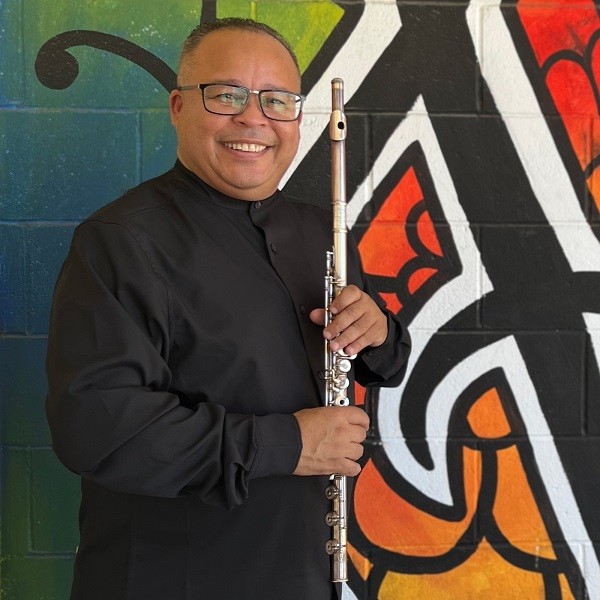
Gil with his flute
Gil Tower with his flute

As a teenager, Gil used to go to La Pastora to learn to improvise with Carlos in salsa, as he liked this genre so much ever since. This is how he started learning about harmonies and taking his first steps as a composer. 

When given the chance to play with the group Los Morrillos, he learned a lot about gaitas and other Venezuelan rhythms from the western region of the country. In the case of the group Madera, he learned (and keeps learning) a lot about Afro-Venezuelan music in general.   

After that, he met Jesús ”Chucho” García, who is an intellectual, activist and author of several books on Afro-Venezuelanity. Together they formed a group called Cimarrón, with which they represented Venezuela at the International Jazz Plaza Festival in 1989. To date, they are still very good friends and continue to learn about this great musical branch from one another. 

Why move to Germany? 

His initial plan was to move to the United States to continue his studies in Berkeley, but he was unable to obtain the required visa at the time. However, that would not be the end of his dream.   

It turns out that some friends of his from the group Madera went on a Germany tour and stayed to live there. Then, one of them, Felipe ”Mandingo” Rengifo offered him to join them to work in that country and try to be admitted in one of their conservatories. At the time, Gil only had a saving of $1,000, with which he took a gamble.    

Although he had to play in the streets and wash bathrooms at the beginning, he achieved his goal of entering a conservatory, an institution that gave him the opportunity to fix his papers to have a legal status in Germany. Having solved this inconvenience, he was able to focus his attention on his musical project Guapacha (name in honor of a great Cuban drummer who lived in the parish of San Agustin del Sur, Caracas).   

All this experience was preparing him for when he could finally achieve his goal of going to the United States.   


Gil and Guapacha
His project Guapacha was named after a great Cuban drummer who lives in Caracas

Arrival in the United States   

While still in Germany, Gil was invited to participate in a jazz festival in the United States, specifically in Montana. He did so well that he amazed many musicians with whom he shared the stage that day and exchanged contact information for future events.   

Later, he managed to play in San Diego and Boston, where he had the opportunity to share the stage with the Boston Power Orchestra and meet Danilo Pérez, Dizzy Gillespie’s pianist. The latter, in turn, recommended him to maestro Tito Puente, whom he met shortly thereafter. 

This was how the artist managed to build a very respectable reputation in the industry through his talent. This is how he ended up playing with ”half the world” and building a great prestige as a musician and composer.   

In addition to singing and playing multiple instruments, Gil has also taught low-income youth in order to spread the knowledge he has gained throughout his career. He even created an orchestra composed of children whose parents have no resources or documents in order to help them learn music and provide them with better work-study opportunities in the future. Some have even got into college and obtained scholarships thanks to this knowledge.    

Parallel to these activities, he began composing and making arrangements for other artists who began to require his services.    

Guapacha Productions   

On the subject of Guapacha Productions, Gil says that the idea came when he began researching on the music industry, licensing, distribution and other things. 

The musician saw an opportunity to achieve his dreams during the pandemic, which is when he noticed that many artists had no idea how to register a composition and how other necessary licenses to collect their royalties from their music works.   

Gil, Guapacha, and major labels
Guapacha was created for the purpose of becoming independent from major labels


Noticing the ignorance of many young talents about the industry, he created the company Guapacha Productions, which is responsible for the musical production and arrangements for artists signed to this label.    

When asked how the economic issue was handled for artists who do not have the resources to launch their career as it should be, he explained that there are three types of music distributors: major labels, labels created by the artists themselves and independent companies like Guapacha Productions. We are a group of independent artists who created our own label and we are trying to have our own distribution, so we would not be obliged to negotiate with any big distribution company” explained Gil. 

Along with that, it is Guapacha Productions that will make agreements with Spotify, iTunes and other digital platforms to distribute the music of its artists without intermediaries. 

The company has been so successful in these efforts that its name will soon be part of the Latin Grammys, which means that the talents signed to the label will have the chance to stand out and be finalists in the various categories.   

Cheo Valenzuela’s ”Salsa Buena” Tour   

With respect to the important issue of Cheo Valenzuela’s ”Salsa Buena” tour (artist signed to Guapacha Productions) in Europe, there are negotiations with some event producers in France, Spain and England so that Cheo Valenzuela can perform at various venues in those countries. There are also talks of taking the artist to Central America and the United States, specifically to San Francisco, where Gil lives.   

In addition to that, Valenzuela is working on an EP with five songs by other artists and another one with five compositions created by himself. Being already a singer with a long-standing career, this last work would also become him a consacrated composer before the world. Once all this material has been released, his name is going to be considered for a Grammy nomination, which Gil has a lot of faith that he will win due to his great talent.   

At the time of doing this interview, Valenzuela is taking a few days off due to the death of his mother, so we send our condolences and solidarity to him and his family at such a difficult time. 

Read also: Musical director of VibraSÓN Jake Jacobs is here 

  • « Go to Previous Page
  • Page 1
  • Interim pages omitted …
  • Page 70
  • Page 71
  • Page 72
  • Page 73
  • Page 74
  • Interim pages omitted …
  • Page 129
  • Go to Next Page »

International Salsa Magazine (ISM) is a monthly publication about Salsa activities around the world, that has been publishing since 2007. It is a world network of volunteers coordinated by ISM Magazine. We are working to strengthen all the events by working together.