• Skip to primary navigation
  • Skip to main content

International Salsa Magazine

  • HOME
  • Previous editions
    • 2026
      • ISM / March 2026
      • ISM / February 2026
      • ISM / January 2026
    • 2025
      • ISM / December 2025
      • ISM / November 2025
      • ISM / October 2025
      • ISM / September 2025
      • ISM / August 2025
      • ISM / July 2025
      • ISM / June 2025
      • ISM / May2025
      • ISM / April 2025
      • ISM / March 2025
      • ISM / February 2025
      • ISM / January 2025
    • 2024
      • ISM / December 2024
      • ISM / November 2024
      • ISM / October 2024
      • ISM / September 2024
      • ISM / August 2024
      • ISM / July 2024
      • ISM / June 2024
      • ISM / May 2024
      • ISM / April 2024
      • ISM / March 2024
      • ISM / February 2024
      • ISM / January 2024
    • 2023
      • ISM / December 2023
      • ISM / November 2023
      • ISM / October 2023
      • ISM – September 2023
      • ISM – August 2023
      • ISM July 2023
      • ISM Edition June 2023
      • ISM – May 2023
      • ISM April 2023
      • ISM March 2023
      • ISM February 2023
      • ISM January 2023
    • 2022
      • ISM December 2022
      • ISM November 2022
      • ISM October 2022
      • ISM September 2022
      • ISM August 2022
      • ISM July 2022
      • ISM June 2022
      • ISM May 2022
      • ISM February 2022
      • ISM January 2022
    • 2021
      • ISM December 2021
      • ISM November 2021
      • ISM October – 2021
      • ISM September 2021
      • ISM August 2021
      • ISM July 2021
      • ISM May 2021
      • ISM April 2021
      • ISM June 2021
      • ISM March 2021
      • ISM February 2021
      • ISM January 2021
    • 2020
      • ISM December 2020
      • ISM November 2020
      • ISM October 2020
      • ISM September 2020
      • ISM August 2020
      • ISM July 2020
      • ISM June 2020
      • ISM May 2020
      • ISM April 2020
      • ISM March 2020
      • ISM February 2020
      • ISM January 2020
    • 2019
      • ISM December 2019
      • ISM November 2019
      • ISM October 2019
      • ISM Septembre 2019
      • ISM August 2019
      • ISM July 2019
      • ISM June 2019
  • Download Salsa App
    • Android
    • Apple
  • Spanish

North America

The void left by Felix ”Pupi” Legarreta

Pupi’s life  

Cuba has given the world a large number of artists who have left the name of the country very high, so it is always a good moment to talk about them. Such is the case of arranger, composer, singer and musician Felix ”Pupi” Legarreta, who sadly left this world last month.   

Given that this great exponent of Cuban music and the charanga genre is no longer with us, we think it is a great opportunity to remember a little of his career and all the way to becoming the great artist he was.    
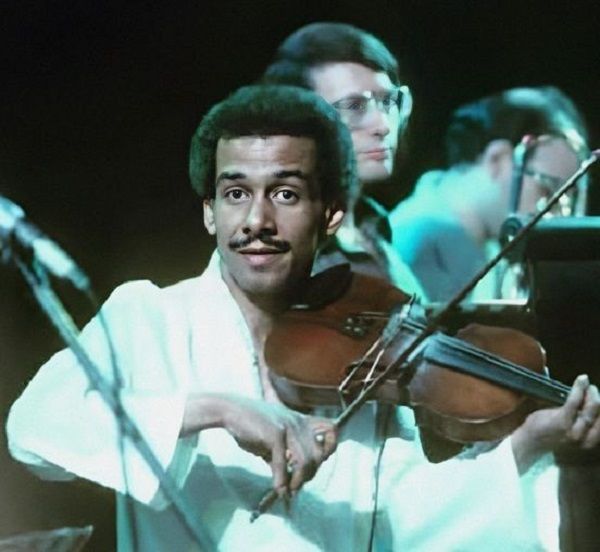
Pupi playing the violin
Pupi Legarreta playing the violin on stage

Pupi’s childhood   

Felix Legarreta was born in 1940 in the city of Cienfuegos, Cuba, and from the very early age, his father nicknamed him ”pupi”, as he would be called for the rest of his artistic life. ‘’Puppy in Spanish means ”cachorro” (a very young dog), so this pronunciation was very interesting to Americans.   

Around this same time, Pupi was not really interested in music as a profession, as his thing was carpentry at the time. However, he began being affected by severe asthma attacks due to the dust used in his daily work, so it was recommended to his father to take him away and make him dedicate himself to something else that would not damage his health. 

This is how the young boy decided to become a barber and met a friend with whom he started taking music lessons, which could be considered as the first contact he would have with music. 

The first instrument Pupi played was the violin. He admits it was not easy to learn how to play it, but with effort and dedication, he managed to become really good at music. However, he was faced with another challenge that would complicate the realization of his new dream: lack of money.    

Like the majority of families in Cuba at that time, Pupi’s was also going through a complex economic situation, so buying everything he needed for his musical training was very difficult. However, it did not stop his father from getting down to work and raising the money necessary to buy his son his first violin. 

In a 2010 interview, Pupi revealed that it took his father more than two years to raise 60 pesos to buy a used violin at a pawn shop, as it was the only way he could afford the instrument for the young boy.    

Pupi playing a flute
Pupi Legarreta playing a flute in a studio

Formal beginnings in music 

When he decided to travel to Havana, he was given the opportunity to play Orquesta Sensación, with which he earned about eight pesos a month to cover some of his basic expenses. It was very difficult for him to live with that little, but music helped him to support himself.     

However, little by little he worked his way up and earned the respect of his fellow musicians, who consider him for their own projects.    

In 1959, music also allowed him to travel to the United States, specifically to the state of California, but it would not be too long before he decided to try his luck in New York. Once there, he collaborated with artists such as Mongo Santamaría, Charlie Palmieri, Johnny Pacheco, Machito, Tito Puente and many more.    

Fania All Stars   

In 1964, he started collaborating with the Fania All Stars, which had more than 24 instruments, including trumpets, pianos, basses, singers and more. Pupi was so shocked that he could not refuse to work with the world-famous orchestra, as this number of musicians was something he had never seen before. 

In total, he recorded between five to seven albums with La Fania on which Pupi was taken into account when issuing opinions about his work. If the artist considered something was not quite right and wanted to change it, the orchestra did whatever was necessary to satisfy him with the results of the recordings. 

The only criticism that the Cuban issued towards the orchestra is regarding the excessive focus on the Puerto Rican market, in fact, the vast majority of musicians were Puerto Rican. This caused them to neglect other markets that may be useful for Fania. However, this does not exclude all the positive things that came for those involved during the time this union lasted. 

When his time in the orchestra ended, he was working for an electricity company in New Jersey, but his family was in Philadelphia, so he decided to move permanently to this city, where he remained till the day he died.   
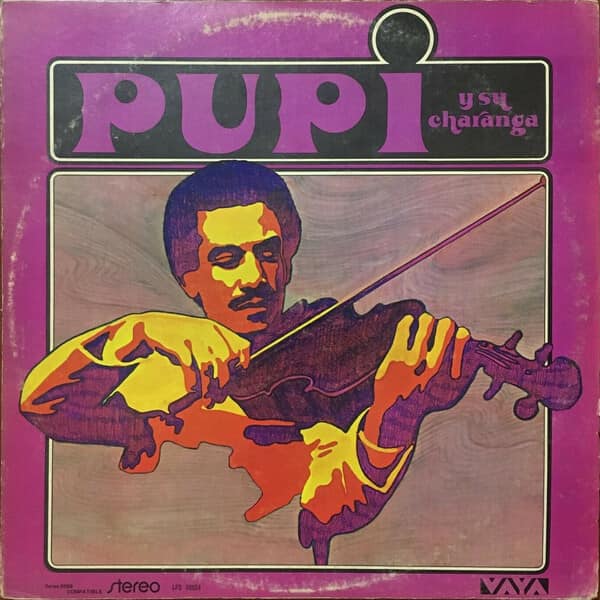
Album cover for Pupi
Album cover for ”Pupi Legarreta Y Su Charanga”

Death 

In the afternoon of July 3, 2023, Félix ”Pupi” Legarreta’s relatives issued a statement giving the deplorable news of the artist’s death the day before at the age of 83.    

His daughter Frances Legarreta posted the following on her social networks on the already mentioned day: “I announce with great sadness the death of my father, Pupi Legarreta, on July 2, 2023, in Philadelphia, Pennsylvania. He is survived by his wife Frances, his son Michael, his grandchildren, great-grandchildren and his daughter Otie in Puerto Rico”.   

In addition to the above, he revealed that his father expressed his desire to be cremated and not to be veiled in a memorial service. She also asked that her entire family’s privacy to be respected in view of the pain that its members were going through. 

Read also: Carlos Medrano from Sabor De Mi Cuba tells us about his long musical history 

Jimmy Rodríguez ”El Salsero Mexicano” talked to ISM about his career

El Salsero Mexicano 

Jimmy Rodríguez ”El Salsero Mexicano” is a talented singer born in Mexico City, but spent a lot of his childhood in the city of San Luis Potosí, where he took his first steps as an artist. 

Thanks to his brother and manager, Daniel Rodriguez, we had the opportunity to talk to him and learn more about the interesting career he has had in the world of entertainment. Meet Jimmy Rodriguez and the kind answers he gave to our questions.   


Jimmy on stage
Jimmy Rodríguez singing on stage

Beginnings of Jimmy Rodriguez in music   

By the time he got to high school, his talent for singing and charismatic personality made him the ideal candidate to participate in a talent contest, in which he would come in second place the first year in which he participated.    

Jimmy told us that he entered the contest to live a new experience, but he did not expect to achieve such a high place, so he felt very excited and motivated because of what he could achieve thereafter.    

The following year, he managed to get the first place in the same contest because he had spent a whole year studying and getting ready for that important moment. The previous time, he had only rehearsed the days prior, so he decided to take much more time on this occasion and the effort invested paid off.   

As a result of this achievement, the Group Alfa Omega saw the potential in this young man, so they contacted him and offered him to join them. This would be his first paid job in music, which began to teach him how this business worked. 

He began to play with Alfa Omega in events like weddings, and baptisms, which taught him how to entertain and charm an audience, and he is very grateful for this opportunity he had. Unfortunately, it didn’t last long.   

In the end, Jimmy had to leave the group due to his move to Mexico City to continue his studies.   

During his learning process, he developed their skills in playing the guitar and dancing in order to perform better on stage, keeping inmind that singing was his thing and that was not going to change.   

When Jimmy arrived in the United States, he began taking singing lessons for more than nine years to improve his voice. Today, he continues with his vocal learning, as there is always something new to learn in this field.   

Jimmy and Tito
Jimmy Rodríguez and Tito Nieves

Musical genres   

It is not common to find a Mexican who sings salsa professionally, and more if we take into account that many of the most famous Mexicans sing ranchera, norteño music and corridos tumbados. So, we wanted to know why he chose salsa as the genre he wanted to pursue.   

Jimmy explained to us that the first time he sang with a salsa orchestra on stage, half the musicians were Colombian and the other half were Mexican. At that moment, I felt like I had found my soulmate and I knew that’s what I wanted to do. Besides, dancing is very important in salsa and I have always loved to dance,” Jimmy said.   

He finished by saying ”salsa combines my three most important talents, which are singing, dancing and charisma”.   

When asked whether he would enter more typical genres of his country, he pointed out that he loves ballads and would have no problem in performing fusions and collaborations, but his north is still salsa for the moment.   

The Voice and proceeds from the show 

Being in The Voice has always been one of Jimmy’s biggest dreams, which he finally achieved a few years ago and whose judges were Luis Fonsi, Carlos Vives, Alejandra Guzman and Wisin. The best of all is that he made it to the final and he says that his secret to achieving this feat is to always be focused, to give the best of himself, to have a good relationship with show’s production and his colleagues and, above all, to choose a genre that was not typical for a Mexican.    

This particularity made people call him ”El Salsero Mexicano”, a nickname he has continued using to this day with pride in what has been achieved so far.    

Jimmy and Carlos
Jimmy Rodríguez and Carlos Vives

While he was still participating in the contest, Adolescent’S Orquesta contacted him to have him in the group, which Jimmy accepted and became the first Mexican to be part of this Venezuelan orchestra. In addition to that, Jimmy kept releasing new music in order to stay alive in the public spotlight, as the singer understood that the fame that came La Voz was momentary and he had to take advantage of it.    

Today, he continues touring with Adolescent’s Orquesta, working on an album with Marc Anthony‘s producer and taking singing lessons to further improve his vocal technique.   

And speaking of Marc Anthony, this Puerto Rican artist has been one of the greatest inspirations for the Mexican, who wishes to one day reach that level of talent and fame, although he knows it will not be an easy way. 

In addition to the already mentioned salsero, Jimmy has also been inspired and influenced by the styles of Rubén Blades and El Grupo Niche.   

He has also had the opportunity to share the stage with Tito Nieves, Willie Colón, Jerry Rivera and many others.    

Salsa and comparisons with other genres   

When we wanted to know what Jimmy feels with the current situation of salsa, he says that he is well aware that this musical genre is not going through a good moment due to the popularity of trap, reggaeton and, more recently, corridos tumbados.   

However, he ensures that he does not see this fact as something negative, but as a challenge of bringing salsa back to the place it occupied for years in past decades, so he gives his best every day to offer a fresh sound that appeals to new generations, and not only to fans aged 30 and older. 

Jimmy and Gilberto
Jimmy Rodríguez and Gilberto Santa Rosa


It is what has led the artist to make modifications in regard to the technical aspects, arrangements, lyrics and other details. In the specific case of lyrics, he has opted for simpler words and phrases that can be understood by anyone who listens to them. He continues to maintain the quality and heart that salsa should have, while taking into consideration what new generations are looking for. 

Jimmy understands that everything happens very quickly nowadays due to social media, so he has had to adapt his style to what young people are looking for on digital platforms. That is why when he shows his music on his social networks, he always tries to communicate what he wants from the first second so as not to lose the public’s attention.   

End 

The conversation concludes with a thank-you to all the people who still support the salsa genre and a recommendation to new talents to never give up on their dreams and to work continuously to achieve all what they want. 

Jimmy used his case as an example, remembering that he started singing on buses to help his family and now he assists international awards and reach the level that he has today, so he ensures that dreams come true and we must not lose heart until we achieved them. 

Read also: Life, Career, and death of Juan Carlos Formell 

Steven Brezet. The Dutch influenced by African percussion

Europe / Holland / Róterdam

Steven Brezet. The Dutch influenced by African percussion

Through his mother’s interest in African dance, Steven Brezet grew up hearing African percussion. At the age of six he attended a gig at Podium Grounds in Rotterdam, where he watched Senegalese percussionist Aly Ndiaye Rose play a duo show together with Lucas Merwijk. Ndiaye Rose played on five drums at once, fascinating to such a little boy, and so began a lifelong love of percussion.

Steven Brezet
Steven Brezet

Right then and there, he asked his mother for lessons and they set up classes with Aly Ndiaye Rose.

Steven took djembe lessons with Ndiaye Rose and soon began expanding to other percussive instruments, including sabar, congas, bongos, timbales, timbal and others.

He worked on his skills as a musician not only by taking many different classes, but also by traveling to countries with different musical styles, including Senegal, Guinea, Curacao, Maroc and Brazil.

This broadened Steven’s musical passion from African percussion to include Brazilian and Latin music.

At home in the Netherlands, Steven played with people of many nationalities, of learning by playing in the streets.

Steven Brezet
Steven Brezet in a concert

Venezuelan percussionists Roberto Quintero and Orlando Poleo inspired him in this genre and taught him the importance of practice and structure.

Combining this methodological approach to percussion with practical, street-wise learning makes Steven’s technique remarkable and the broad range of instrumental knowledge adds impressive depth.

Currently, Steven is recording and touring with the band KOFFIE, but for the past two years he has also performed with bands like Banda Magda (USA), The Re:Freshed Orchestra (NL),  The Bill Laurance Group (UK) and Grammy Award winning band Snarky Puppy (USA).

Steven can be heard on the Snarky Puppy album We like it here for which he recorded as a guest musician in Kytemans studio.

This work with Snarky Puppy led to broad recognition, while the KOFFIE album Huntu gave way to performances at many music festivals, bringing Steven’s percussion sounds to a wider audience. Jazzism described Huntu as outstanding album.

These projects and collaborations made Steven into the versatile percussionist he is today. Steven values innovation and tries to mix different styles and rhythms throughout all his musical endeavors.

Steven Brezet
Steven Brezet playing drumms

At the moment Steven is recording his own music. A salsa album will be upcoming in the end of 2017.

And finally Steven will release his first album which was recorded in Kytopia Utrecht. It is a mix of Afrobeat and Funk.

Francisca’s

North America/ United State / California

Francisca’s. An Italian-Venezuelan Restaurant with Trendy Style

For several years Francisca’s has been in the heart of the Mission district in the San Francisco city. Its peculiar style and the combination of European and South American foods make it one of the trendiest restaurants nowadays.

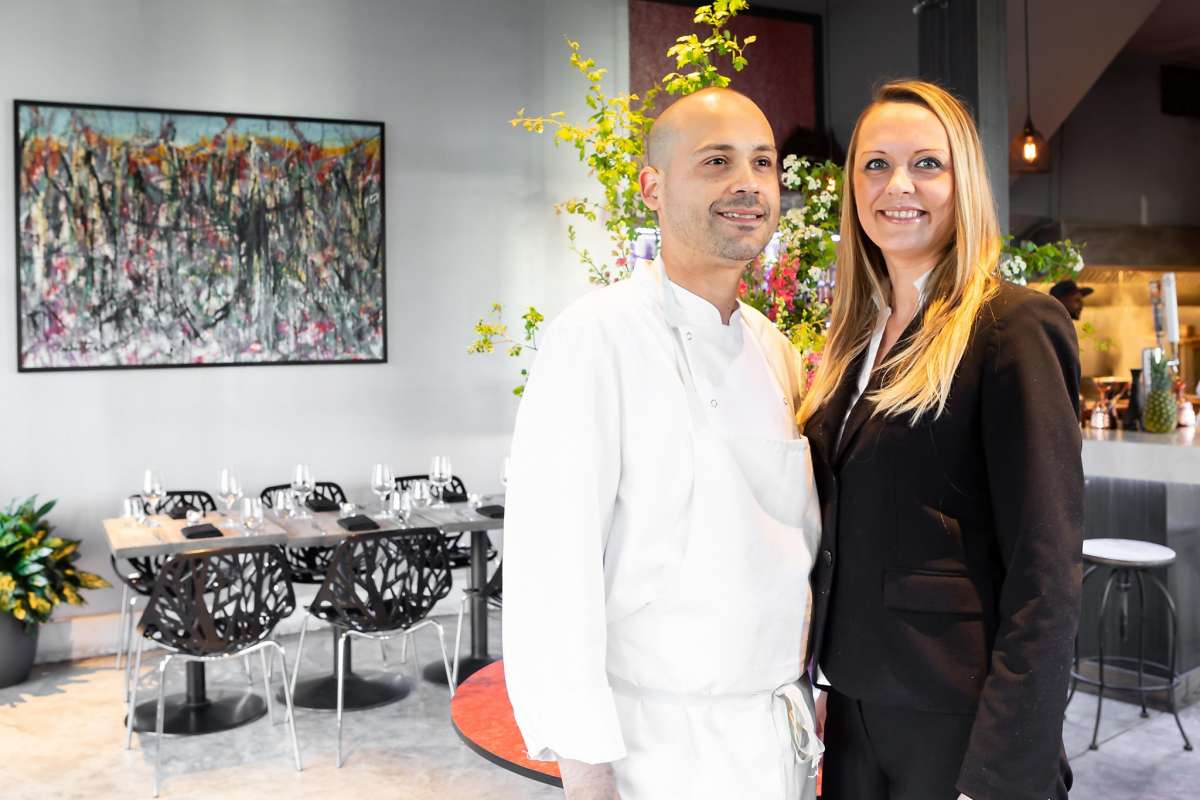
Francisca's Restaurant - Manny and Katherine
Francisca’s Restaurant – Manny and Katherine

The owners: Manny and Katherine, whose partnership between them is revealing and innovative, it creates an atmosphere of hospitality with personalized attention that projects the value and story of each of the dishes that stand out in its menu.

Manny, a tireless Venezuelan chef with wide experience prepares each different dish daily in his tasting menu that you can try for $39 and if the whole table participates you pay $65. This menu is based on four-courses that this culinary art enthusiast prepares, undeniable, with a lot of dedication, imagination, and skill that have allowed Francisca’s to be positioned as one of the sure destinations to visit in San Francisco when delighting the most demanding palates is the point.

Although his first and powerfully popular restaurant was Mr. Pollo in 2010, it’s Francisca’s that has managed to surface this new trend of mixing Italian foods with traditional Venezuelan ingredients. It’s for that we can find in this restaurant seductive and hypnotic dishes such as Plantain Lasagna (Dish of greater receptivity) and Yuca Gnocchi. While the traditional Venezuelan breakfast “Arepas” is always present in the recommendations of Manny and Katherine for their visitors.

Francisca’s is attended by around 30 people daily to taste an affordable price the visual show of artistic decoration to make things more beautiful and then eat them. In addition to not being able to resist their cocktails duly identified with the origin country.

This restaurant with the inspiration of high cuisine, unique concept and mixture of sounds typical of a famous place for the quality of its food with fresh ingredients purchased directly at the San Francisco’s farmers market (Ferry Building) keeps alive the spirit of Latin American cuisine within of the trends recipes of European cuisine.

“Being a chef for me is everything.” Manny Torres

History

The ingenious idea of ​​putting a woman’s name on the restaurant was Manny. Francisca is the name of his grandmother and his main influence to dedicate to the fascinating world of culinary art. She taught him the true value of obtaining fresh ingredients in the farmers market, as well as making him aware of the true importance and passion for hospitality.

But, let’s go a few years back. Before Francisca’s, Manny had four restaurants, one of them was “The Palace”, which had a considerable number of loyal visitors, however, a raging fire destroyed the venue in 2015. Nonetheless, Manny reopened this space after a complete remodeling and having undergone the corresponding inspections, and we know it as Francisca’s now.

For some time, Manny and Katherine were traveling on two continents. They visited countries such as Aruba, France, Spain, and Italy. And Eureka! From there derived his inspiration for the creation of his exotic and exquisite dishes. After him seeing a different perspective of the kitchen and its formulas for the preparation of the recipes, Manny obtained the main ingredient for the preparation of his Menu in Francisca’s; he had the creativity to make the perfect and successful combination in all his meals.

“In the United States, European food is cooked with so many rules. There are rules for everything. In Europe, there aren’t rules. No one follows the rules and it’s more relaxed”, Manny told an American digital media.

Venue: 3047 Mission Street, San Francisco, CA 94110

Contact: 415.374.5747

Francisca´s opens:

Tuesday – Saturday Dinner: 5:30pm-10:00pm

Saturday Vegetarian Brunch: 10:30am -3:30pm

Sunday Regular Brunch: 10:30am-3:30pm

Manny’s Curiosities:

  • He studied at the Engineering School in Columbus, Ohio.
  • He arrived in the U.S. in 2001.
  • The names of Manny’s four restaurants are: Mr. Pollo, Roxy’s Cafe, The Palace, and Coco Frio.
  • He loves washing

4-course Tasting Menu:

First course: Soup or Salad

Second course: Appetizer or Pasta

Third course: Entree Protein-based, Vegetarian or Pescetarian dish

Fourth course: Dessert

Francisca´s Offers:

  • Capacity: Max seated: 29 people/ Max standing: 75 people
  • Noise Level: Moderately High
  • Accessibility: gender-neutral bathrooms
  • What to ask for: Arepas, Yuca Crispy, Tasting menu (without everyone at the table needing to participate), Plantain Lasagna and Yuca Gnocchi
  • Vegetarian Options: Three appetizers and tacos of vegetables available
  • Drinks: a full bar with wines available to buy
  • Reservations can be made

For more information, please visit: https://www.FRANCISCASSF.com/

SOCIAL CHANNEL:  https://www.facebook.com/FRANCISCASSF/

1 New artist Wito Rodriguez “I am distinct and different”

Norte America / Estados Unidos / Florida

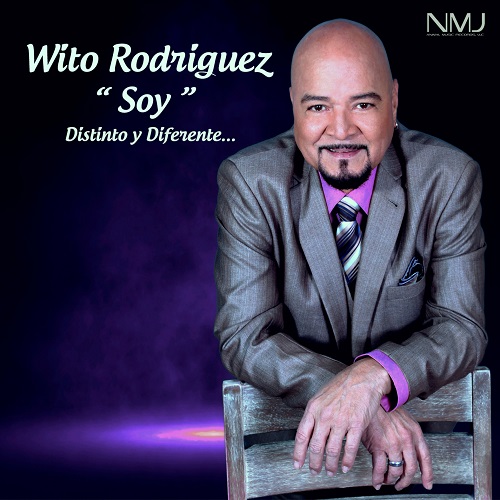
Wito Rodriguez. “I am distinct and different”

Irwin “Wito” Rodríguez was born in Chicago to Puerto Rican parents and got his start in the musical field as a singer and musician. During his teenage years, he performed with a Rock and Roll band as a guitarist.

In 1968 Wito Rodriguez decided to move to “La Isla Del Encanto”, Puerto Rico, in order to search for his musical roots and experience the spicy sounds of his beloved Latin Ritmo.

His first encounter in the Salsa genre was with a Puerto Rican percussionist from the 60’s called “Chacón y su Orquesta”, where Wito learned all the Latin rhythms such as Guaguancó, Boogaloo, Mozambique, etc.

Chacón was his coach in Latin percussion instruments and Wito also fell in love with maracas.

Wito Rodriguez returned to Chicago in 1971 to join “Orquesta La Justicia” a local band that opened shows for artists such as: Ismael Rivera, Ray Barreto, Willie Colón, El Gran Combo and the legendary “Fania All Stars”.

Like many young men of that time, in 1973 Wito Rodriguez decided to join the United States Army and was sent to Europe.

During his stay in Germany, Wito Rodriguez took singing lessons with the Opera singer Barbra Sutton, and at the same time he created two bands with the names of “El Conjunto Sabor” and “La Sonora Antillana”.

These orchestras accompanied artists of the Salsa genre such as: Adalberto Santiago, Ismael Miranda, Tito Allen, Santitos Colón, Pete “El Conde” Rodríguez and the queen of Salsa, Celia Cruz.

After his retirement from the army, Wito joined forces with German band leader Rudi Fuesers and created the European Salsa Orchestra “Conexion Latina”.

With Conexion Latina, Wito Rodriguez recorded two albums; “Calorcito” and “Un Poco Loco”.

He also had the great experience of recording two songs with the band of Director and Arranger Peter Herbolzheimer.

During the 80’s, Wito wanted to broaden his horizons by forming his own groups called “Wito Rodriguez y Orchestra” and “Wito Con Cache”.

Missing his family and friends, Wito “crossed the pond” to return to the United States to finish his Army career.

He never gave up his passion for music, a new big band sound was on his mind, and he returns to the spotlight with the Wito Rodriguez Salsa Jazz Orchestra under the musical direction of trumpeter and arranger, Gino Picart.

“What a wonderful world” or “What a Wonderful World” is his third album released in January 2015.

Although busy in 2016 with live performances, a new album had also been produced and recorded between South America Venezuela and Orlando, Florida.

The most recent production called “Como el Viento” will be released in 2017. This album contains a compilation of songs recorded over the years in Europe than ever for the Western Hemisphere. I hope you enjoy your first solo release… What a wonderful world!

In 2018 Wito released another CD called “The Best of Wito” which has a mix of all the songs that fans thought were the best and respected their preferences.

Wito also has four new singles that he has released from his new album, which will be available from February 2019.

Through the internet platforms you can find these releases.

Always and Forever, Soy Caribe, Yo No Te Echo La Culpa and Now and Forever are the ones that have been released so far.

“As a bilingual singer, I am blessed to contribute to the music industry in my songs, singing them in English and Spanish, unity through my music in a mix of salsa and R&B, etc.” Wito Rodriguez

In the year of 2018. Wito Rodriguez was blessed to be nominated at the Hollywood Music Media Awards (HMMA) in Los Angeles, CA in November 2018.

You can also see his certificate as an honoree at the Fox Music Awards USA, Miami in November 2018, who was nominated and honored for being the Army Veteran Salsero Singer.

The Chicago Salsa Congress was one of its great events in 2018.

In March 2019 his new bilingual production Soy Distinto Y Diferente came out with the song Soy Caribe already nominated at the Hollywood Media Music Awards on November 20, 2019 in Hollywood California.

NMJ Animal Music Records LLC. [email protected]

PQ Promotions/Management Jenny Morales [email protected]

(682-554-4851 or (813-785-3086))

  • « Go to Previous Page
  • Page 1
  • Interim pages omitted …
  • Page 71
  • Page 72
  • Page 73
  • Page 74
  • Page 75
  • Interim pages omitted …
  • Page 129
  • Go to Next Page »

International Salsa Magazine (ISM) is a monthly publication about Salsa activities around the world, that has been publishing since 2007. It is a world network of volunteers coordinated by ISM Magazine. We are working to strengthen all the events by working together.