• Skip to primary navigation
  • Skip to main content

International Salsa Magazine

  • HOME
  • Previous editions
    • 2026
      • ISM / May 2026
      • ISM / April 2026
      • ISM / March 2026
      • ISM / February 2026
      • ISM / January 2026
    • 2025
      • ISM / December 2025
      • ISM / November 2025
      • ISM / October 2025
      • ISM / September 2025
      • ISM / August 2025
      • ISM / July 2025
      • ISM / June 2025
      • ISM / May2025
      • ISM / April 2025
      • ISM / March 2025
      • ISM / February 2025
      • ISM / January 2025
    • 2024
      • ISM / December 2024
      • ISM / November 2024
      • ISM / October 2024
      • ISM / September 2024
      • ISM / August 2024
      • ISM / July 2024
      • ISM / June 2024
      • ISM / May 2024
      • ISM / April 2024
      • ISM / March 2024
      • ISM / February 2024
      • ISM / January 2024
    • 2023
      • ISM / December 2023
      • ISM / November 2023
      • ISM / October 2023
      • ISM – September 2023
      • ISM – August 2023
      • ISM July 2023
      • ISM Edition June 2023
      • ISM – May 2023
      • ISM April 2023
      • ISM March 2023
      • ISM February 2023
      • ISM January 2023
    • 2022
      • ISM December 2022
      • ISM November 2022
      • ISM October 2022
      • ISM September 2022
      • ISM August 2022
      • ISM July 2022
      • ISM June 2022
      • ISM May 2022
      • ISM February 2022
      • ISM January 2022
    • 2021
      • ISM December 2021
      • ISM November 2021
      • ISM October – 2021
      • ISM September 2021
      • ISM August 2021
      • ISM July 2021
      • ISM May 2021
      • ISM April 2021
      • ISM June 2021
      • ISM March 2021
      • ISM February 2021
      • ISM January 2021
    • 2020
      • ISM December 2020
      • ISM November 2020
      • ISM October 2020
      • ISM September 2020
      • ISM August 2020
      • ISM July 2020
      • ISM June 2020
      • ISM May 2020
      • ISM April 2020
      • ISM March 2020
      • ISM February 2020
      • ISM January 2020
    • 2019
      • ISM December 2019
      • ISM November 2019
      • ISM October 2019
      • ISM Septembre 2019
      • ISM August 2019
      • ISM July 2019
      • ISM June 2019
    • 2016
      • ISM December 2016
      • ISM November 2016
  • Spanish
  • Download Salsa App
    • Android
    • Apple

November

Know the connections of tropical dances

Latin America / Venezuela /Caracas

Tropical Dances:

Did you know that people have several ways of communicating?

Oral communication is what we normally use to communicate in such a way to establish and maintain personal relationships, and to show not only words and express emotions and/or feelings, body communication is used, which can be said in a few words that it is a form creatively expressing through gestures, eye contact, poses, and arm and leg movements; turning this form of communication into something more intimate and accurate without the need for the use of words.

Salsa dancers

In social activities, one of the most popular is dancing, where body communication is very important since the couple or group needs to know certain signs that indicate “when” or “how”, in order to perform the steps and how. As a result, the success of said interpretation will test the quality, maturity and growth of the dancers in the rhythms they dance.
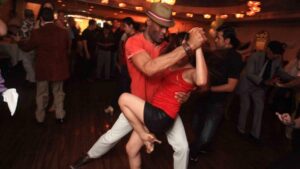
dancers dancing in a club tropical

Of course, it should be noted that each musical genre has its own rules, especially in the counting of steps in music, which gives grace, stability and rhythm to the dancers in the song played either in a musical event and is of vital importance not only for a casual event but for a competition. For this reason, it is important to know the steps and turns to perform and have excellent body communication (especially if it is as a couple) to know what they are going to do.
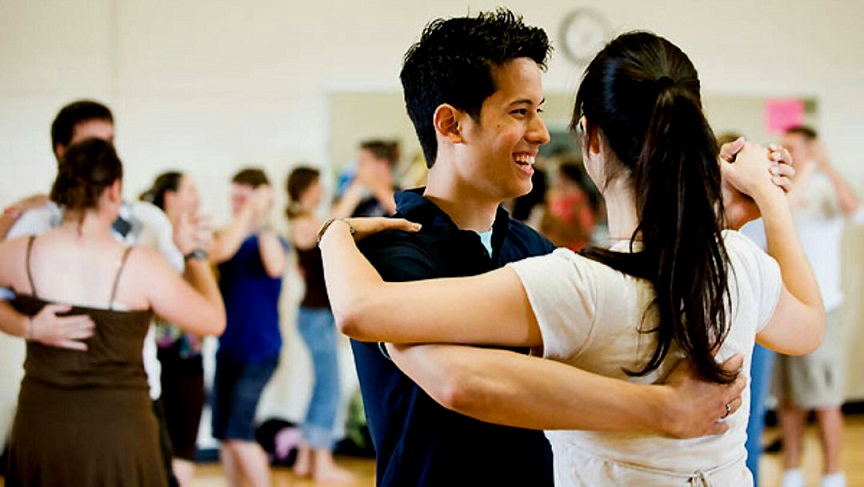
dancers dancing salsa, bachata and other tropical dances

In Latin rhythms, this type of communication is really important, otherwise the grace of the dance is lost. Among the most important Latin rhythms that are essential and/or significant are:

  • Salsa: a Latin tropical rhythm that, although it was born in Cuba due to the mixture of “Guaracha”, “Son”, “Mambo”, “Cha Cha Chá” with a unique style, through time several types emerged ( Salsa Cubana, Salsa en Linea, Salsa Casino, Salsa New York or Mambo style, Salsa Cali style, Salsa Puerto Rican and Venezuelan sauce). In this dance it is very important to pay attention to the look, the hands and arms (the latter in the case of the man since with him he dominates and/or controls the woman in the dance and she must interpret what the next movement is) to thus being able to perform either a simple step or a few laps, of which there is a great variety of them.
  • Bachata: is a danceable musical genre originating in the Dominican Republic, within what is called urban folklore. It is considered a derivative of the rhythmic bolero, with influences from other styles such as the Cuban son and merengue. This dance has great sensuality like the rest of the Caribbean rhythms, where it requires an unbeatable appearance on the part of the dancers when performing it, where that connection with the couple is important so that it can impress the public.
  • Merengue: is a dance music genre originated in the Dominican Republic at the end of the 19th century. It is very popular throughout the American continent, where it is considered, along with salsa, as one of the great dance musical genres that distinguish the Latin American genre.
  • Kizomba: a very sensual rhythm that emerged in Angola, which resulted from the mixture of 3 cultures (Angolan colony, Portuguese colony and part of Cape Verde “Brazil” as well as the French Caribbean of Martinique and Guadeloupe.). In this rhythm, the connection of the couple, especially the woman, is of vital importance, since the movement of the hips is slow and sensual, as are their steps. Did you know that many people have the prejudice that it is a very sensual dance, however, it is as sensual as you want to project it, in the same way it happens with Bachata and Merengue, they can be as sensual as you want to project them or as normal how you want to do it.”

So, if you want to give life, grace, elegance and popularity to your dance, keep in mind, keep in mind these characteristics and how you manage to synchronize with your partner and show your spectators either in a personal party, competition, event and/or or congress, whether national or international, which is a true dance.
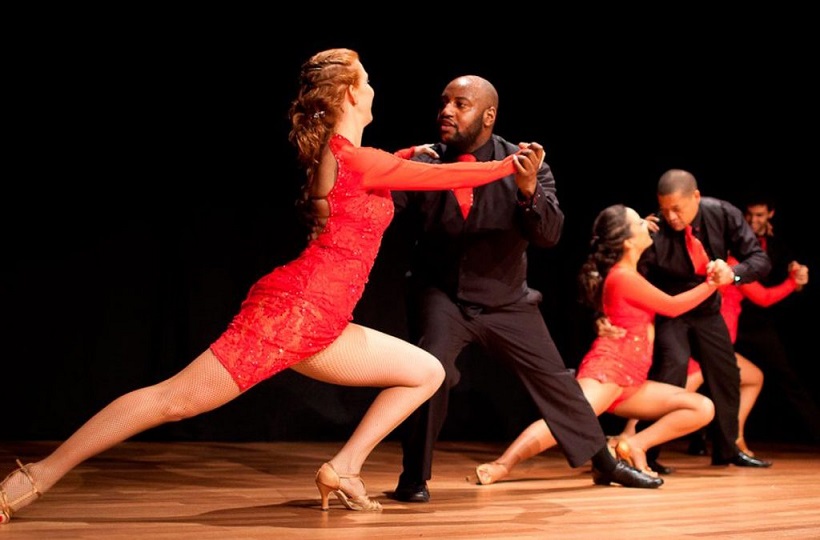
dancers pre-performing tropical dances

Irawo Orchestra

Latin America/ México / México City

Irawo means “Star” in the Yoruba language of African origin.

Irawo is an Afro-Caribbean Rhythms (Salsa) orchestra that arises with the purpose of rescuing the original sound of La Salsa Dura from the 70s`s created in the city of New York and Puerto Rico, to bring this concept to the style of Irawo to the new generations.

Irawo Orchestra
Irawo Orchestra logo

Understood and interpreted from the vision of the Mexican musician, since its music and arrangements are original, which makes it an orchestra that plays salsa 100% made in Mexico with a modern, dynamic, energetic and unique sound.

Irawo Orchestra is made up of musicians who have a career in which they have participated with great international figures of Salsa, as well as other genres such as: rock, pop, Mexican music, jazz, which is projected with a high level of execution.

Irawo Orchestra is for the Mexican and international salsa public, knowledgeable and demanding, and for anyone passionate about dancing and enjoyment.

Jorge Bautista

Latin America/ Mexico / Mexico City

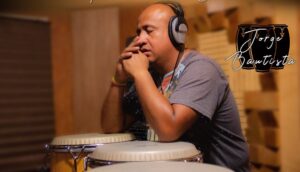
Jorge Bautista, Musical director and percussionist of the Irawo Orchestra

Jorge Bautista is a musician from Mexico City, he began his percussion studies at the age of 5 due to family tradition.

Jorge Bautista
Jorge Bautista and his Congas

The timbal, conga and bongo are the first percussion instruments that he studies empirically until at the age of 15 he studies at the autonomous music school for 5 years and then diversifies his knowledge in percussion from various places in Latin America such as : Colombia, Dominican Republic, Cuba, Peru and Brazil among others as well as in Africa.

Accompaniments Sauce

The experienced percussionist musician Jorge Bautista has performed important musical accompaniments with great exponents of our Afro-Caribbean music such as: Jerry Rivera, Maelo Ruiz, Tito Nieves, Willie González, Alfredito de La Fe, Oscar D`León, Larry Harlow, Ismael Miranda. , Ritchie Ray, Bobby Cruz, Roberto Roena, Oscar Hernández, Alberto Barros, Arturo Ortiz, Arturo Ortiz, Jimmy Bosch, Tito Allen, Viti Ruiz, Ray Sepúlveda, Herman Olivera and among others.

Jorge Bautista
Jorge Bautista

Latin Jazz Accompaniments

Among the stars of Latin Jazz, percussionist Jorge Bautista has performed accompaniments, among them we have: Arturo Sandoval, Ed Calle, Waney Bergeròn, Hector Infanzòn, Ola Onabule, Tlaxcatecalt Latin Jazz, Papo Sánchez, Ofunan, Daniel López, Latin Jazz On, Latin Hot Band, Density 6 and among others.

Other accompaniments

The Mexican multi-instrumentalist has also accompanied great music performers such as: Armando, Manzanero, Susana Zabaleta, Emmanuel, Kalimba, Samo, Víctor García, Carlos Cuevas, Alexander Acha, María León, Lisset, Aleks Syntek, Maria del Sol and Raul D’blasio.

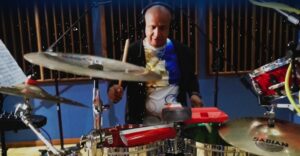
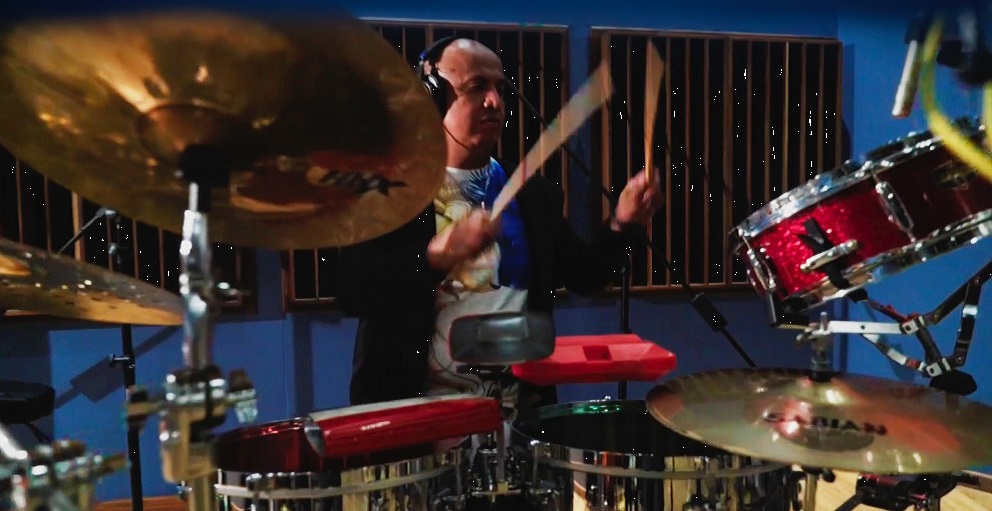
Jorge Bautista and his musical instruments

Due to his great versatility, he has been invited to give clinics in different cities of the Mexican Republic as well as in several countries in the United States, Honduras, Colombia and Guatemala.

Currently the musician is sponsored by several major instrument brands worldwide: Gon Bops, Tama, Sabían, Promark, Remo, Rockears, GR, NND Percusión, and Veerkamp.

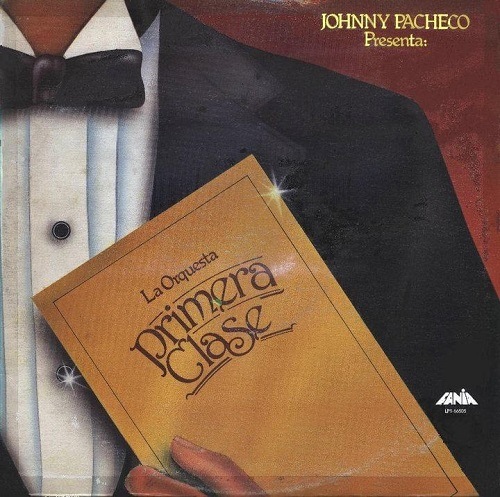
Johnny Pacheco, presents “Orquesta Primera Clase” from Maracay-Venezuela

The title of this album speaks for itself; the hand of the transcendental Dominican musician is introduced in this album.

El Zorro de Plata Pacheco appears as executive producer of the album, although we do not discard that he also participated in part of the musical production, due to the way the orchestra was structured and the style in which the arrangements were given; it is something that we can hardly notice when listening to the album, it is evident the great similarity to “Pacheco y su Tumbao”; four excellent trumpets with sonorous arrangements.

Johnny Pacheco, presents "Orquesta Primera Clase" of Maracay-Venezuela
Johnny Pacheco, presents “Orquesta Primera Clase” of Maracay-Venezuela

The predominance of Teo Hernandez (R.I.P)’s vocal style and register in the nasal coros, fits perfectly with the “Tumbao Añejo” that we have always been accustomed to from maestro Johnny Pacheco (R.I.P).

Although the album was backed by the Fania label and is loaded with a cheerful and swinging flavor, we think that it went somewhat unnoticed by the music-loving public.

The reasons could be several, we must remember that in those times in the 80’s the merengue rhythm was beginning to penetrate with a lot of strength.

Johnny Pacheco, presenta la Orquesta Primera Clase

Although we could also add the little interest that the public of the capital (Caracas) had for the groups of the regions or interior of the country, and although it seems ironic to say it.
Another possible reason could be linked to the inclusion of only unpublished songs (it is well known that in those times, they supported copies more than creativity); these are only conjectures of this server, however, they do not escape the reality of that time.

Teo Hernández (R.I.P)

As for the musical themes, we have already pointed out that all of them are original and very well compensated with their arrangement; In particular there are two songs that I like very much, one of them is “Negro Nací”, written and sung by Orlando Sanoja, is a very happy song dedicated to our black race of the danceable in his music, “Si negro nací nací nací, blanco no puedo ser”, The other song of my predilection is “El Sabio”, composition and lyrics by Jorge Compres and vocalized by Teo Hernández, with great diction, good phrasing and those tasty choruses that accompany him.

Orlando Sanoja
Orlando Sanoja

It is worth mentioning that the excellent La Orquesta Primera Clase is still in force with a musical staff of the new generation maintaining its original sound with its lead vocalist Orlando Sanoja.

It is another good Venezuelan album that you should have in your personal CD library.
Johnny Pacheco presents “La Orquesta Primera Clase” (1982) Fania LPS-66506

SIDE A

1.- NEGRO NACÍ (Orlado Sanoja) Sings: Orlando Sanoja/ Arrangements: Nicomedes López
2.- ME SIENTO MUY FELIZ (Al mMaro Ríos) Sings: Orlando Sanoja/Arrangements: Bolívar Javier
EL ANIMAL (Jorge Compres) Sings: Teo Hernández/Arrangements: Jorge Compres
4.- TODO TIENE SU FINAL (Bolívar Javier) Sings: Teo Hernández/Arrangements: Bolívar Javier
5.- LLEVAME CONTIGO (Almaro Ríos) Sings: Teo Hernández/Arrangements: Bolívar Javier

SIDE B

1.- EL SABIO (Jorge Compres) Sings: Teo Hernández/Arrangements: Jorge Compres
2.- A MARACAY (Orlando Sanoja) Sings: Orlando Sanoja/Arrangements: Jorge Compres
3.- EXTRANJERA (Phorto Jacquez) Sings: Teo Hernández/Arrangements: Jorge Compres
4.- VIVA MI GUAGUANCO (Jorge Compres) Sings: Teo Hernández/Arrangements: Gilberto Riera
AY QUE HUMANIDAD (Orlando Sanoja) Sings: Orlando Sanoja/Arrangements: Jorge Compres

Personnel:

Pastor Rodríguez (1st Trumpet)
Henry Kamba (2nd Trumpet)
Gustavo Nieves (3rd Trumpet)
William Fermín (4th Trumpet)
Armin Kail (Piano)
Carlos Fagúndez (Bass)
Harold Josef (Congas)
Edgar Aponte (Timbal)
Félix Benítez (Bongo)
Teo Hernández/Orlando Sanoja (Singers)
Bolívar Javier/ Nicomedes López/ Jorge Compres/ Gilberto Riera (Arrangements)
Teo Hernández/Orlando Sanoja/Edgar Aponte (Chorus)
Johnny Pacheco (Executive Producer)
Carlos Guerrero (Recording Technician)
Luis Arismendi (General Recording Supervision)
Recorded at Fidelis Studios
Alejandro Pérez (Art and Design)

Salsa in Israel

Europe / Israel / Tel AvivSalsa in Israel

Salsa in Israel. This ancient land is as exciting as the many stories it tells. It is the land of Abraham father to Isaac and his half brother Ishmael the patriarchs of the Arabs and the Jewish people. Patriarchs born of Sarah and Hagar. It is the land of Jesus and his many stories. It is the land where all three groups claim Jerusalem as holy.

For the Jewish it is because of King David, King Salomon, the two temples, the tomb of King David and the Western Wall. The Muslims regard it as the place from where the prophet Mohammed ascended to heaven in the birthplace of Christ, the via dolorosa and the cruciction. Each group has a “gate”. Why even the hamburger chain McDonalds seems to have gotten their “golden arcs” from one of the gates.

At 71 years of age, Israel is one of the youngest countries in the world. Needless to say the country is deeply divided, with serious challenges facing its leaders. A majority is required to govern effectively. While 80 % is said to be secular (non-religious ethnic) and 16% ultra-orthodox, the ultra-orthodox control the swing vote. To be Jewish you must be born of a Jewish mother, or converting. Around 500,000 Latinos are Jewish citizens.

This is around 5% in a country of 8.5 million people. The population is very diverse. Listening to people talk, at times I felt that I was in Russia. The migration from the former USSR comprised for over a million immigrants. The Roman Empire could not afford rebellion in Judea as it was the crossroads between Europe, Africa, Asia and the Middle East. Massada is the conformation of the determination to be a free people.

Ultra orthodox 16%

As a new nation the argument that tradition, culture and religion had to be nurtured and recaptured was presented by the ultra-orthodox. As its fi­rst Prime Minister it is said that David Ben-Gurion gave some 50 persons a waiver from obligatory military service. Much to the displeasure of many seculars, the ultra-orthodox have since grown in numbers and receive government assistance so that they are free to do nothing else than to study. However with the control of their swing vote, the ultra-orthodox continue to be exempt from obligations. After fi­nishing mandatory school, all citizens must render military service, two years for the women and three years for the men.

ISRAEL ARCHITECT

Although the official capital is Jerusalem, the modern city is TelAviv, followed by its Port City of Haifa. The Tel Aviv nightlife goes way beyond 2 a.m. The city is very modern, and everything seems to work right on schedule.

The architecture speaks of free growing ideas

ISRAEL FOOD


Diverse migration is accompanied with the cuisine of the immigrants. As a result, Tel Aviv boasts of a wonderful variety of cuisine.

The women walk the streets in the wee hours of the night without a care, which speaks of the public safety. Tel Aviv was voted “friendliest gay city in the world.” It is said that the annual gay pride parade was attended by more than 250,000.

250,000 people attend the LGBT community friendly parade

When visiting Bethlehem, the church of the Nativity, West Wall, and tomb of King David, you have to enter into Palestinian controlled territory. Our Israeli tour guide explained that they had entered into an agreement of cooperation with the Palestinian tour guides

Palestinian tour guides

An Israeli bus took us to the border and we then transferred to a Palestinian tour bus. The Palestinian tour guide took over and gave us our tour, a visit to their gift shop and then returned us to the border where the Israeli bus and guide were awaiting for us.

Man dressed in black dancing with woman in white top

For those of you who are always looking for a place to go dance Salsa, our recommendations are two places only, Salsa Carlos and Havana Club.

Havana Club caters to those new salsa dancers with a large main fl­oor and three or four side rooms for specialties like Bachata, Cumbia, etc. For those of you looking to find a more Latino place, then “El Propio” is Salsa Carlos.

What got you going in Salsa? Carlos says that he grew up hearing Salsa in Cali. It runs in his blood and his heroes were El Gran Combo, Los Hermanos Lebron and Beny More. Even the bell in grammar school to signal recess, played in Salsa. In Israel some Colombian friends asked him to organize a Salsa event and it was successful. To his knowledge, he is the first person to introduce Salsa in Israel. Since then Carlos has been organizing events in Tel Aviv at places like the “Old Port”. Apart from special events, he holds every Friday night at 11:30 pm, Salsa Carlos at Carlbach 3, Tel Aviv. He is accompanied by DJ Manuel.

  • « Go to Previous Page
  • Page 1
  • Interim pages omitted …
  • Page 11
  • Page 12
  • Page 13
  • Page 14
  • Page 15
  • Interim pages omitted …
  • Page 18
  • Go to Next Page »

International Salsa Magazine (ISM) is a monthly publication about Salsa activities around the world, that has been publishing since 2007. It is a world network of volunteers coordinated by ISM Magazine. We are working to strengthen all the events by working together.