• Skip to primary navigation
  • Skip to main content

International Salsa Magazine

  • HOME
  • Previous editions
    • 2026
      • ISM / August 2026
      • ISM / July 2026
      • ISM / June 2026
      • ISM / May 2026
      • ISM / April 2026
      • ISM / March 2026
      • ISM / February 2026
      • ISM / January 2026
    • 2025
      • ISM / December 2025
      • ISM / November 2025
      • ISM / October 2025
      • ISM / September 2025
      • ISM / August 2025
      • ISM / July 2025
      • ISM / June 2025
      • ISM / May2025
      • ISM / April 2025
      • ISM / March 2025
      • ISM / February 2025
      • ISM / January 2025
    • 2024
      • ISM / December 2024
      • ISM / November 2024
      • ISM / October 2024
      • ISM / September 2024
      • ISM / August 2024
      • ISM / July 2024
      • ISM / June 2024
      • ISM / May 2024
      • ISM / April 2024
      • ISM / March 2024
      • ISM / February 2024
      • ISM / January 2024
    • 2023
      • ISM / December 2023
      • ISM / November 2023
      • ISM / October 2023
      • ISM – September 2023
      • ISM – August 2023
      • ISM July 2023
      • ISM Edition June 2023
      • ISM – May 2023
      • ISM April 2023
      • ISM March 2023
      • ISM February 2023
      • ISM January 2023
    • 2022
      • ISM December 2022
      • ISM November 2022
      • ISM October 2022
      • ISM September 2022
      • ISM August 2022
      • ISM July 2022
      • ISM June 2022
      • ISM May 2022
      • ISM February 2022
      • ISM January 2022
    • 2021
      • ISM December 2021
      • ISM November 2021
      • ISM October – 2021
      • ISM September 2021
      • ISM August 2021
      • ISM July 2021
      • ISM May 2021
      • ISM April 2021
      • ISM June 2021
      • ISM March 2021
      • ISM February 2021
      • ISM January 2021
    • 2020
      • ISM December 2020
      • ISM November 2020
      • ISM October 2020
      • ISM September 2020
      • ISM August 2020
      • ISM July 2020
      • ISM June 2020
      • ISM May 2020
      • ISM April 2020
      • ISM March 2020
      • ISM February 2020
      • ISM January 2020
    • 2019
      • ISM December 2019
      • ISM November 2019
      • ISM October 2019
      • ISM Septembre 2019
      • ISM August 2019
      • ISM July 2019
      • ISM June 2019
      • ISM May 2019
      • ISM April 2019
      • ISM March 2019
      • ISM February 2019
      • ISM January 2019
    • 2018
      • ISM December 2018
      • ISM November 2018
      • ISM October 2018
      • ISM September 2018
      • ISM August 2018
      • ISM July 2018
      • ISM June 2018
      • ISM May 2018
      • ISM April 2018
      • ISM March 2018
      • ISM February 2018
      • ISM January 2018
    • 2017
      • ISM December 2017
      • ISM November 2017
      • ISM October 2017
      • ISM September 2017
      • ISM August 2017
      • ISM July 2017
      • ISM June 2017
      • ISM May 2017
      • ISM April 2017
      • ISM March 2017
      • ISM February 2017
      • ISM January 2017
    • 2016
      • ISM December 2016
      • ISM November 2016
      • ISM October 2016
      • ISM September 2016
  • Spanish
  • Download Salsa App
    • Android
    • Apple

September

Francisca’s

North America/ United State / California

Francisca’s. An Italian-Venezuelan Restaurant with Trendy Style

For several years Francisca’s has been in the heart of the Mission district in the San Francisco city. Its peculiar style and the combination of European and South American foods make it one of the trendiest restaurants nowadays.
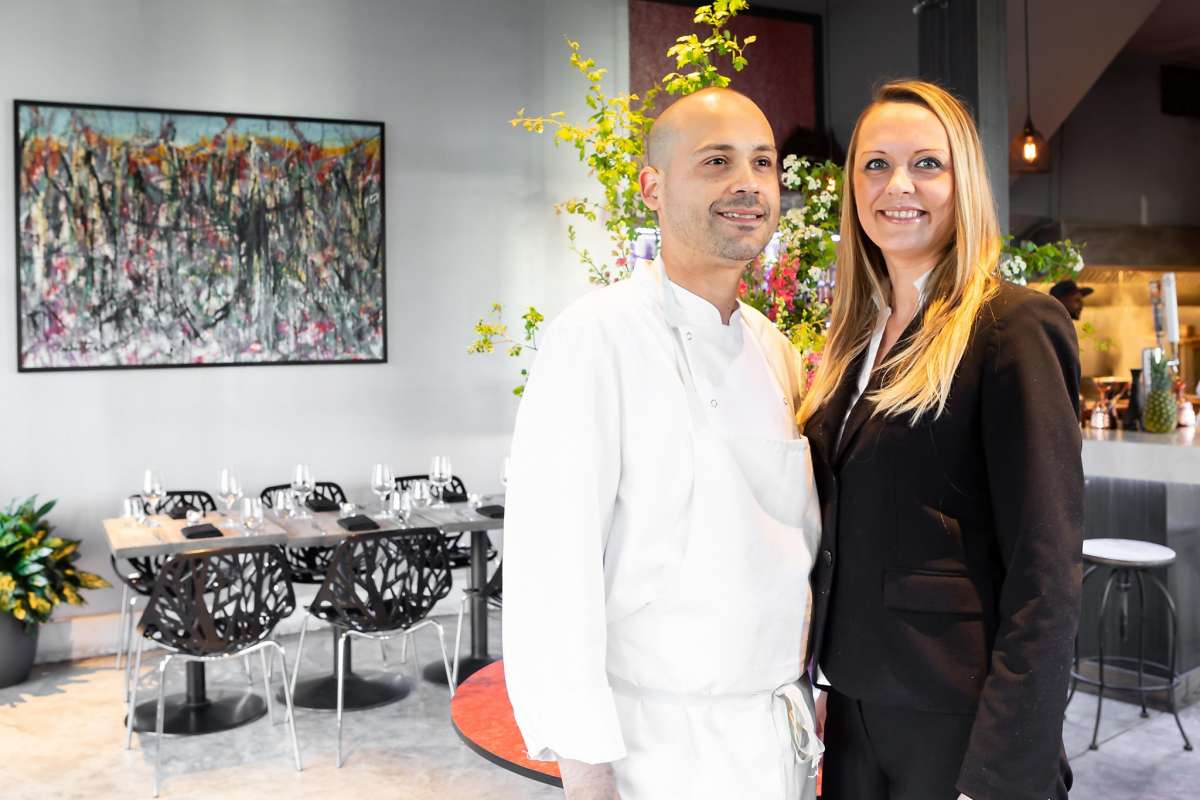
Francisca's Restaurant - Manny and Katherine
Francisca’s Restaurant – Manny and Katherine

The owners: Manny and Katherine, whose partnership between them is revealing and innovative, it creates an atmosphere of hospitality with personalized attention that projects the value and story of each of the dishes that stand out in its menu.

Manny, a tireless Venezuelan chef with wide experience prepares each different dish daily in his tasting menu that you can try for $39 and if the whole table participates you pay $65. This menu is based on four-courses that this culinary art enthusiast prepares, undeniable, with a lot of dedication, imagination, and skill that have allowed Francisca’s to be positioned as one of the sure destinations to visit in San Francisco when delighting the most demanding palates is the point.

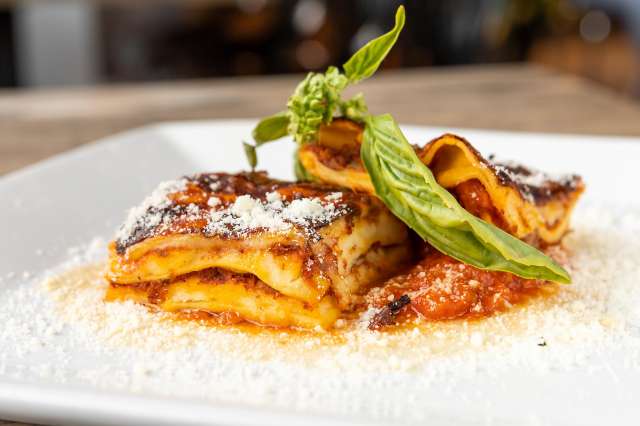
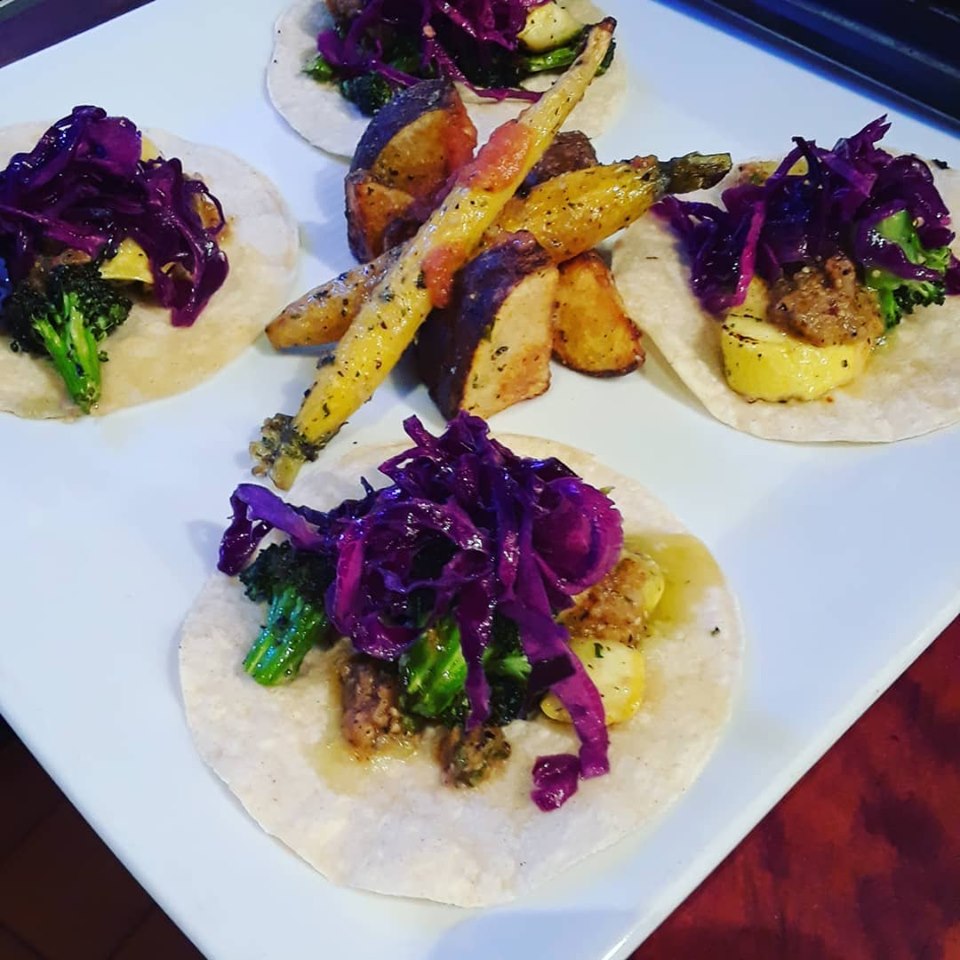
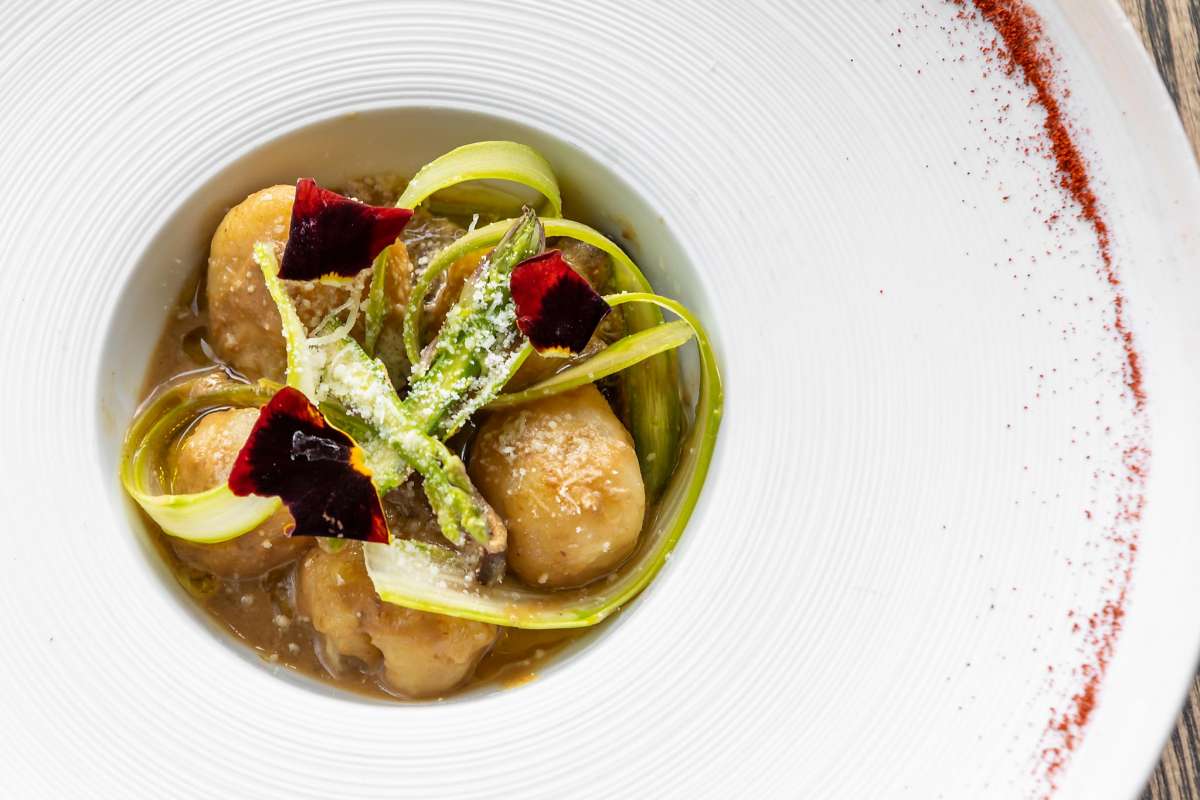
Although his first and powerfully popular restaurant was Mr. Pollo in 2010, it’s Francisca’s that has managed to surface this new trend of mixing Italian foods with traditional Venezuelan ingredients. It’s for that we can find in this restaurant seductive and hypnotic dishes such as Plantain Lasagna (Dish of greater receptivity) and Yuca Gnocchi. While the traditional Venezuelan breakfast “Arepas” is always present in the recommendations of Manny and Katherine for their visitors.

Francisca’s is attended by around 30 people daily to taste an affordable price the visual show of artistic decoration to make things more beautiful and then eat them. In addition to not being able to resist their cocktails duly identified with the origin country.

This restaurant with the inspiration of high cuisine, unique concept and mixture of sounds typical of a famous place for the quality of its food with fresh ingredients purchased directly at the San Francisco’s farmers market (Ferry Building) keeps alive the spirit of Latin American cuisine within of the trends recipes of European cuisine.

“Being a chef for me is everything.” Manny Torres

History

The ingenious idea of ​​putting a woman’s name on the restaurant was Manny. Francisca is the name of his grandmother and his main influence to dedicate to the fascinating world of culinary art. She taught him the true value of obtaining fresh ingredients in the farmers market, as well as making him aware of the true importance and passion for hospitality.

But, let’s go a few years back. Before Francisca’s, Manny had four restaurants, one of them was “The Palace”, which had a considerable number of loyal visitors, however, a raging fire destroyed the venue in 2015. Nonetheless, Manny reopened this space after a complete remodeling and having undergone the corresponding inspections, and we know it as Francisca’s now.

For some time, Manny and Katherine were traveling on two continents. They visited countries such as Aruba, France, Spain, and Italy. And Eureka! From there derived his inspiration for the creation of his exotic and exquisite dishes. After him seeing a different perspective of the kitchen and its formulas for the preparation of the recipes, Manny obtained the main ingredient for the preparation of his Menu in Francisca’s; he had the creativity to make the perfect and successful combination in all his meals.

“In the United States, European food is cooked with so many rules. There are rules for everything. In Europe, there aren’t rules. No one follows the rules and it’s more relaxed”, Manny told an American digital media.
Venue: 3047 Mission Street, San Francisco, CA 94110

Contact: 415.374.5747

Francisca´s opens:

Tuesday – Saturday Dinner: 5:30pm-10:00pm

Saturday Vegetarian Brunch: 10:30am -3:30pm

Sunday Regular Brunch: 10:30am-3:30pm

Manny’s Curiosities:

  • He studied at the Engineering School in Columbus, Ohio.
  • He arrived in the U.S. in 2001.
  • The names of Manny’s four restaurants are: Mr. Pollo, Roxy’s Cafe, The Palace, and Coco Frio.
  • He loves washing

4-course Tasting Menu:

First course: Soup or Salad

Second course: Appetizer or Pasta

Third course: Entree Protein-based, Vegetarian or Pescetarian dish

Fourth course: Dessert

Francisca´s Offers:

  • Capacity: Max seated: 29 people/ Max standing: 75 people
  • Noise Level: Moderately High
  • Accessibility: gender-neutral bathrooms
  • What to ask for: Arepas, Yuca Crispy, Tasting menu (without everyone at the table needing to participate), Plantain Lasagna and Yuca Gnocchi
  • Vegetarian Options: Three appetizers and tacos of vegetables available
  • Drinks: a full bar with wines available to buy
  • Reservations can be made

For more information, please visit: https://www.FRANCISCASSF.com/

SOCIAL CHANNEL:  https://www.facebook.com/FRANCISCASSF/
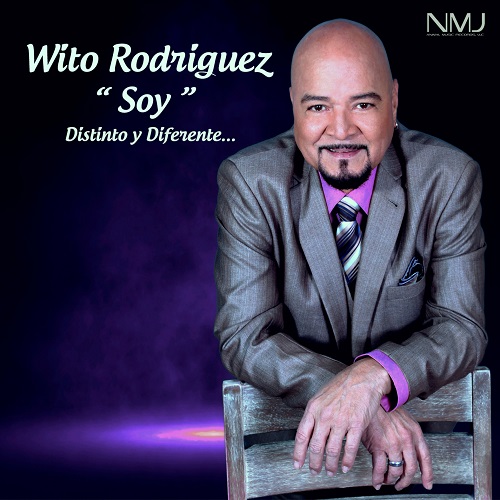
1 New artist Wito Rodriguez “I am distinct and different”

Norte America / Estados Unidos / Florida

Wito Rodriguez. “I am distinct and different”

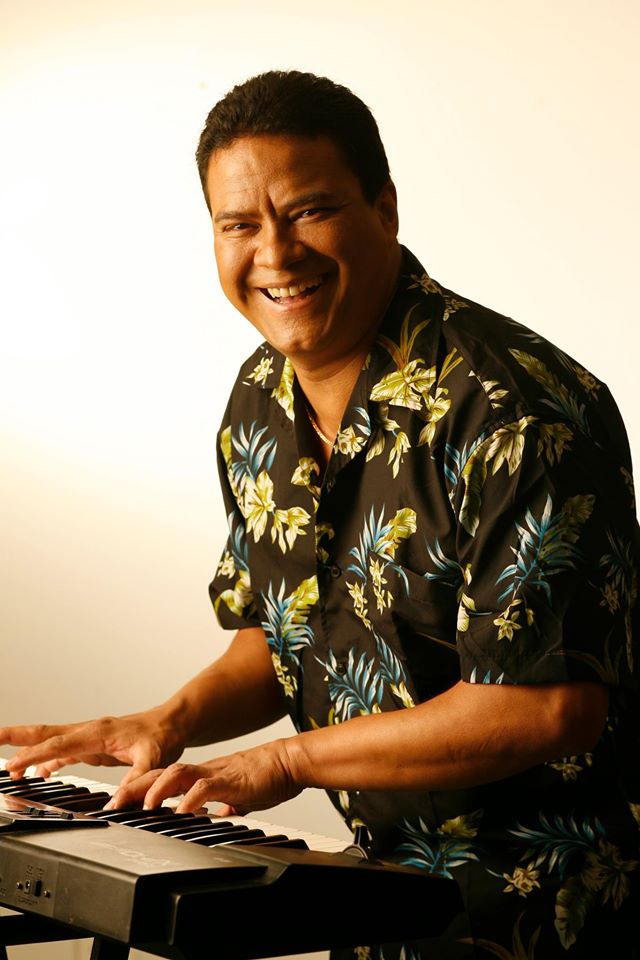
Irwin “Wito” Rodríguez was born in Chicago to Puerto Rican parents and got his start in the musical field as a singer and musician. During his teenage years, he performed with a Rock and Roll band as a guitarist.

In 1968 Wito Rodriguez decided to move to “La Isla Del Encanto”, Puerto Rico, in order to search for his musical roots and experience the spicy sounds of his beloved Latin Ritmo.

His first encounter in the Salsa genre was with a Puerto Rican percussionist from the 60’s called “Chacón y su Orquesta”, where Wito learned all the Latin rhythms such as Guaguancó, Boogaloo, Mozambique, etc.

Chacón was his coach in Latin percussion instruments and Wito also fell in love with maracas.

Wito Rodriguez returned to Chicago in 1971 to join “Orquesta La Justicia” a local band that opened shows for artists such as: Ismael Rivera, Ray Barreto, Willie Colón, El Gran Combo and the legendary “Fania All Stars”.

Like many young men of that time, in 1973 Wito Rodriguez decided to join the United States Army and was sent to Europe.

During his stay in Germany, Wito Rodriguez took singing lessons with the Opera singer Barbra Sutton, and at the same time he created two bands with the names of “El Conjunto Sabor” and “La Sonora Antillana”.

These orchestras accompanied artists of the Salsa genre such as: Adalberto Santiago, Ismael Miranda, Tito Allen, Santitos Colón, Pete “El Conde” Rodríguez and the queen of Salsa, Celia Cruz.

After his retirement from the army, Wito joined forces with German band leader Rudi Fuesers and created the European Salsa Orchestra “Conexion Latina”.

With Conexion Latina, Wito Rodriguez recorded two albums; “Calorcito” and “Un Poco Loco”.

He also had the great experience of recording two songs with the band of Director and Arranger Peter Herbolzheimer.

During the 80’s, Wito wanted to broaden his horizons by forming his own groups called “Wito Rodriguez y Orchestra” and “Wito Con Cache”.

Missing his family and friends, Wito “crossed the pond” to return to the United States to finish his Army career.

He never gave up his passion for music, a new big band sound was on his mind, and he returns to the spotlight with the Wito Rodriguez Salsa Jazz Orchestra under the musical direction of trumpeter and arranger, Gino Picart.

“What a wonderful world” or “What a Wonderful World” is his third album released in January 2015.

Although busy in 2016 with live performances, a new album had also been produced and recorded between South America Venezuela and Orlando, Florida.

The most recent production called “Como el Viento” will be released in 2017. This album contains a compilation of songs recorded over the years in Europe than ever for the Western Hemisphere. I hope you enjoy your first solo release… What a wonderful world!

In 2018 Wito released another CD called “The Best of Wito” which has a mix of all the songs that fans thought were the best and respected their preferences.

Wito also has four new singles that he has released from his new album, which will be available from February 2019.

Through the internet platforms you can find these releases.

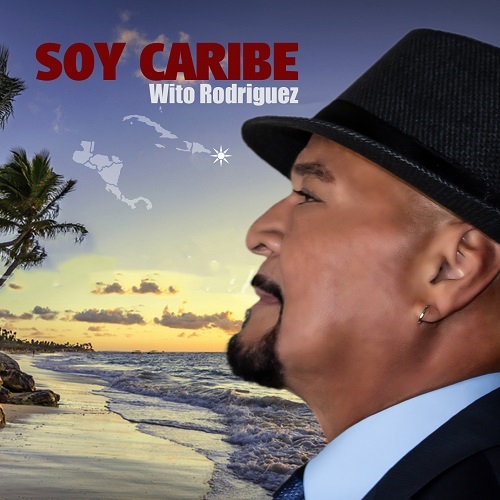
Always and Forever, Soy Caribe, Yo No Te Echo La Culpa and Now and Forever are the ones that have been released so far.

“As a bilingual singer, I am blessed to contribute to the music industry in my songs, singing them in English and Spanish, unity through my music in a mix of salsa and R&B, etc.” Wito Rodriguez

In the year of 2018. Wito Rodriguez was blessed to be nominated at the Hollywood Music Media Awards (HMMA) in Los Angeles, CA in November 2018.

You can also see his certificate as an honoree at the Fox Music Awards USA, Miami in November 2018, who was nominated and honored for being the Army Veteran Salsero Singer.

The Chicago Salsa Congress was one of its great events in 2018.

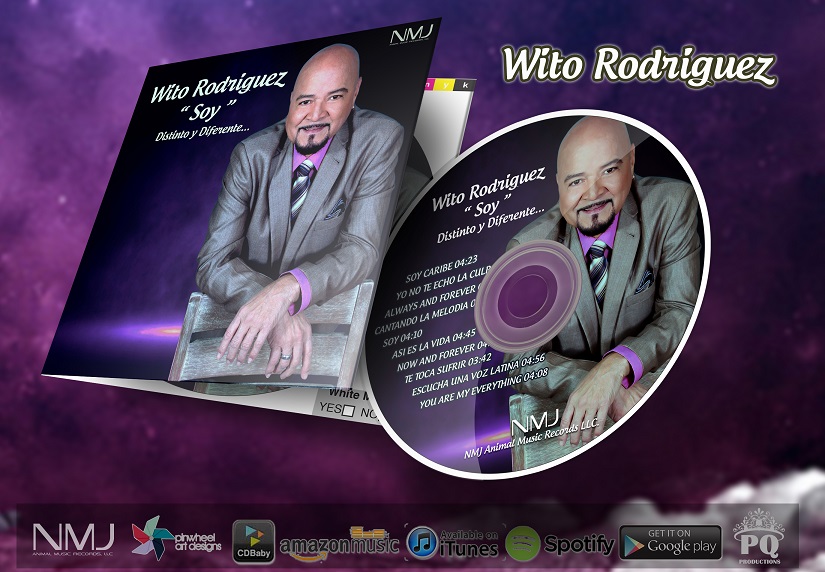
In March 2019 his new bilingual production Soy Distinto Y Diferente came out with the song Soy Caribe already nominated at the Hollywood Media Music Awards on November 20, 2019 in Hollywood California.

NMJ Animal Music Records LLC. [email protected]

PQ Promotions/Management Jenny Morales [email protected]

(682-554-4851 or (813-785-3086))

Anderson Quintero

North America / United State / California

Anderson Quintero. The Multi Percussionist of relief generation in the Quintero Dynasty

Anderson Quintero began his musical career at the age of seven, when he joined Salserin, the only children’s Salsa orchestra visiting more than 10 countries.

Anderson Quintero
Anderson Quintero

Throughout his journey in this group, the young Anderson Quintero demonstrated the talent inherited from his father and the rest of his paternal family, who have been recognized as the greatest percussionists in Venezuela.

While in Salserin, Anderson Quintero became the official timbale player of the group, however he continued his developed on other percussion instruments.

This experience led him to visit about 20 countries, and record 5 musical productions.

Nevertheless, the talent that flowed through Quintero’s veins grew stronger with his studies in the Conservatory José Angel Lamas, along with lessons through which he discovered an interest for drumset.

Well-known musicians such as Vinnie Colaiuta, Tony Williams, Elvin Jones, Paul Wertico, Brian Blade, Robby Ameen, Jack Dejohnettee, and others, have influenced his musical career.

His talent on the drums eventually led him to join several rock bands in the city of Caracas, Venezuela.

During 2004 and 2005, Anderson Quintero was part of the band that accompanied Venezuelan singer/songwriter/Grammy Award Winner Franco de Vita on his tour “Mil y una Historias”, visiting more than 10 countries and garnering 2 Grammy nominations in 2006. That same year Quintero met up with two ex-band members of Salserin, Servando and Florentino, and joined their band “Enamorame”, playing drums and the timbales.

In mid-2006, Anderson Quintero moved to New York City, where he began to gain international recognition. Since then, he has performed with Jerry Rivera, Obie Bermudez, Louie Vega, Don Omar, Servando Y Florentino, Chino Y Nacho, Luisito Quintero Percussion Madness, Paloma San Basilio, Huascar Barradas , Aditus, Vanessa May, Kevin Jones, Tenth worlds, Sheila Charles (Ray Charles’ daughter), Emilly King, Taxi Amarillo, and Willie Colon’s bands, with whom he has traveled internationally.

Anderson worked on a musical about the life of the “Guarachera de América” Celia Cruz, in an Off-Broadway show.

He is a first-call session drummer in Venezuela and has recorded with the most important artist in that country in many different styles of music: pop, rock, folk, ethnic, latin, and jazz.

He’s also on tour with Venezuelan Trombon Ensamble, the best known trombone players in Venezuela. He recently joined the band of Spanish singer Paloma San Basilio, playing drums for their American tour.

In 2011 Quintero won a Grammy for Chino y Nacho’s album “mi nina bonita”.

He recently recorded drums on the album “punto ciego” by Venezuela’s progressive rock band LEXESTET and on “third element” by Luisito Quintero.

Anderson began 2014 touring with Frank Quintero and then joined the salsa orquestra “Los Adolescentes” for a tour around Mexico.

Currently he finds himself in the city of Los Angeles, California where he continues his musical career.


Rosa Maria Peña Collado, Rome and its Sauce Online TV program Music and Entertainment

Latin America / Peru

Rosa María Peña Collado: “ROMA Y SU SALSA” is an On Line TV Program with a MAGAZINNE format of MUSIC and ENTERTAINMENT that has as its main objective to promote the permanent diffusion of the Peruvian national talent and international guests that work in the different musical and artistic genres.

The Program “ROMA Y SU SALSA” begins its transmission in March 2015 through the web address http://www.radiomiraflores.com and later in other media such as

Rosa María Peña Collado - Roma y su Salsa
Rosa María Peña Collado – Roma y su Salsa

Roma y su Salsa

http://www.radioondadigital.com/tv

http://www.eccoradio.pe

http://www.caracolrecord.pe

where it has been executed in a sustained way (with two periods) until now.

In the itinerary of interviews and presentations, Peruvian members and talents of   ORCHESTRAS have paraded such as

Zaperoko La Resistencia Salsera del Callao

K’llao Salsa, N’Samble,

Creole Sax, Perkutao

Sabrosura

La Chola Caderona

Salome

Beto Chira and Orchestra

Las Estelares de la Rumba

The Wizards of Sauce

Sauce Suggestions

Son Canelas

Rock Band Stirrup

SINGERS AND COMPOSERS

Antonio Cartagena

Edilberto Cuestas CANTES Willy Rivera

Johnny Rojas

Kike Peña

Pablo Villanueva “Melcochita”

Victor Zanelli

Manolo Rodriguez

Carlo Supo

Shanney Hurtado

David Roman

Marcelo Villar

Martin Lopez

Anne Kolher

Laura Mau

Fanny Almenara

Sandra Cardenas

Rosa María Peña Collado

SINGERS AND IMITATORS

Paquito Português “Frankie Ruiz”

Isabel Castro “La India”

MUSICIANS AND COMPOSERS

Carlos Orozco

Isaac Sanchez

Juan Rebaza

Juan Arana

Juan Medrano “Cotito”

Manuel Leon

Daniel Venegas

MUSICIANS

Cesar Vivanco

Urban Collac

Maximum Chest

Mita Barreto

Lucho Cueto

John Canevello

Aldo de Dios

Omar Basallo

Percy Chinchilla

Carlos Nieves

Guillermo Arias

Jesús Zavala (visually impaired percussionist)

WRITERS

Mario Aragon

DANCERS AND CHOREOGRAPHERS

Charles Anton

Julio Zegarra

Joel Pictures

Daniel Vivanco

COLLECTORS

Walter Renteria

Beto Onetto

Albert Cologne

ANIMATORS AND PRESENTERS

Jorge Eduardo Bancayan

Dante Corrales

Oscar Godos

INTERVIEWS PERUVIANS LIVING ABROAD

Cesar Correa

Daniel “The Cat” Arboleda

Hector “Jereto” Ferreyra,

Rosa María Peña Collado

SINGERS AND COMPOSERS

Renzo Padilla “El Borincaico”

Mirko Radovic

Mike Ortiz, Luchito Muñoz

MUSICIANS AND COMPOSERS

Ahmed La Torre

Kiki Sanchez

Rafaelo Parejas

DANCER AND CHOREOGRAPHER

Cecilia Villalobos

DJ’s SALSA

Armando Carrasco

August Felibertt

(Caracas – Venezuela)

INTERNATIONAL ARTISTS

Pedro Brull

Roberto Blades

Pichie Perez, Jose Lugo (RIP)

Alberto Martinez

Alex D’Castro

Vitti Ruiz

Jose Fajardo Jr.

Nolberto Velez

Gerardo Rivas NG2

Patty Padilla

TELEPHONE LINK

Herman Olivera

Papote Jimenez

Ramonita Parra

Raffi Torres

DANCER

Allien Ramirez (Tri World Salsa Champion)

PRODUCER

Albert Torres (RIP)

Finally, it has been planned to resume the interviews via zoom in order to continue the permanent work of diffusion of the art and talent of the great SALSA FAMILY, complemented by the online radio that is under construction.

Rosa María Peña Collado

Peru: Roma y su Salsa

Rosa María Peña Collado

Driver

“ROME AND ITS SAUCE”

Fidel Antillano “The greatest satisfaction of a musician is to finish a quality product and see the acceptance of the public” 

Latin America/ Venezuela / Caracas

Salsa is an expression of life within the caraqueño and Latin American neighborhoods. This fusion of rhythms has known how to slip in and no one escapes its magic and enchantment. Such is the case of pianist, composer and arranger Fidel Gregorio Antillano, born in the city of Caracas on June 10, 1962 and raised in one of the city’s sound districts, Los Frailes de Catia, where he lived surrounded by salsa groups, street performers, carnival and Christmas parties, enjoying the golden age of the salsa boom.

Fidel Antillano - Photo
Fidel Antillano – Photo

This genre influenced his destiny and allowed him to make it his way of life. Salsa is a cultural condiment with the flavor of many countries, which has managed to transcend borders.

Almost always at home the musical vein is lit. Was this your case? 

“There was influence from my relatives, in my house there was always music, it was like a big jukebox, La Billos, Los Antaños del Stadium, la Sonora Matancera, Barbarito Diez, Casino de la Playa, among others, my grandmother lived in El Retiro, in La Pastora, she had a piano, when I went to visit her with my dad, I sat at the piano and I liked what I felt, music was part of my family, my dad was a great music lover, he bought all kinds of records, classical music, Creole music, tango”.

Did your grandmother or your father play the piano?

“No, my grandmother Gregoria “Tata” -we called her that because of our affection-, she was an amateur but she did not play it, she had it as a reference, she played cuatro, my uncle also played cuatro and guitar, my father did not play anything, he bought many Lps, given the house we had -the piano was a kind of furniture that embellished and gave cache to the house-“.

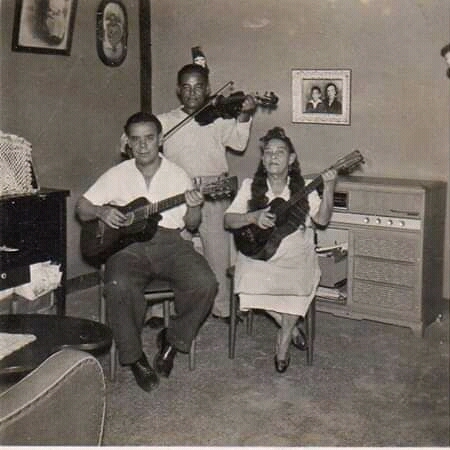
Family photo of Fidel Antillano's uncles Isaías, Pablo and his grandmother Tata
Family photo of Fidel Antillano’s uncles Isaías, Pablo and his grandmother Tata

“My older brother -on my father’s side- he did have some knowledge, he was the most educated, in that house there were harps, cuatro, maracas, records, my family on my father’s side were very fond of music, from our musical family tree we have four musicians -Julito Antillano, Denis Antillano, José “Kikin” Fernández and me”.

What anecdotes or memories do you have of the piano?

“At the time of the construction of La Cota Mil, my grandmother’s piano was taken to my father’s house, at that time I began to kill a fever, I was about 10 years old, it was the time of the gazebos to choose the queens of the neighborhoods, the Sexteto Juventud was in fashion with its theme Caramel and Chocolate; at Christmas and Carnival we did not peel a rehearsal of the groups that lived in Catia”.

That would be the first impulse to awaken the gift within 

“Yes, that was my first impulse, I inherited that musical vein from my grandmother and my father, they were close to salsa and folk musicians, besides, my father and my uncle bought a lot of Long Play (elepé), I started working with my

brother in a shoe store and started buying records.

Fidel, I understand that you are a self-taught musician. How was that learning process and deciding that the piano would be the instrument to play?

“Yes, I am a self-taught musician, back in the 70s we used to hear Nico Monterola’s Orquesta Renovación, La Banda y Su Salsa Joven on the radio. To my surprise, we used to meet with those musicians and we used to go and hang around their rehearsals, this had a big impact on me, there were many shows, it was a coming and going of groups of the moment”.

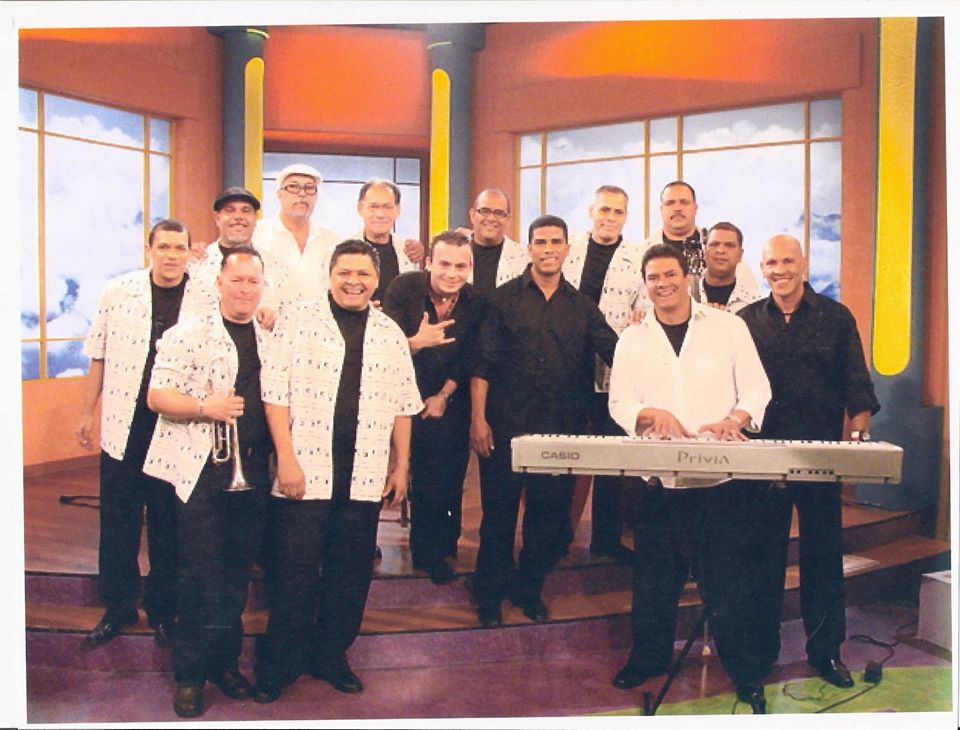
Orquesta Renovacion
Orquesta Renovacion

When I was 18 or 19 years old, seeing Salsa Mayor, Pacheco, Carlos “El Grande”, all those great musicians, I made the decision to learn to play an instrument, I looked for a teacher or someone who would teach me to play the piano -Salsa was underestimated and that’s why they thought it shouldn’t be studied”.

He got a teacher

“No, because of what I’ve told you, salsa was seen with bad eyes, the scholars did not see it as music would be, look, at that time I was exchanging the Lp with my friends, in one of those exchanges a friend lent me the album “Musical Conquest” by Sonora Ponceña, when I heard the song ‘Ñañara’ I fell and the entrance of the piano played by Papo Luca, that simple montuno, I was hooked – I said; this will be my thing!

That was the leap you’re hoping for 

“Yes, that was the big jump, I went uphill because I didn’t know what a chord was, I didn’t know anything, I mounted 4 songs with simple chords, taking the first steps I fell in love, then I joined people with more knowledge”.

“As there was no one to teach me, I saw books, I had chords of the songs and I was guided by a music theory book, I learned to decipher the codes, music is a code, I read the Swing Latino magazine -from my friend Angel Mendez-, without stepping on a school, I was fed up; one must know about harmony, contra punto, I bought the Berklee harmony book and many more, -I rubbed shoulders with other musicians -some records came as a clinic, all this was feeding me”.

He was his own teacher and a very disciplined student

“I was my own teacher and I took on a discipline because that’s what I wanted, if you went to an institution where they gave music lessons and you said you wanted to play salsa, the musician was fined or thrown out, they were treated in a derogatory way”.

It was worth the effort, from being an empirical musician to playing with the best orchestras.

“I started with Grupo Fósforo, back in 81, we only wanted to play, it was a sextet, Mr. Manuel Ibarra passed me the notes and I didn’t know much about playing, then Jesús “Mandinga” Torres, took me to see different groups, That’s when I decided to introduce brass into the sextet and it became an orchestra, -all the arrangements were done by me-, I had any number of records and many songs from those Lp were not played or played by other orchestras -Gran Combo, Sonora Ponceña, among others-“.

He is a collector

“Not a collector as such, but I do like it, not with the eagerness that any collector has to obtain all the production, as La Sonora Ponceña says, but I have my Lp”.

What happened with the group Fósforo?

“It dissolved because they each started playing for different orchestras.”

And then the Grupo Fósforo   

“Mandinga tells me that Carlos “Tabaco” Quintana needs a pianist, I clarify to him that I do not know how to read the scores, that he gives me the papers that I have the album, I began to listen to the album and I saw the papers, with that I completed the study, and I was increasing the experience, I recorded in the production of Tabaco and his Group Futuro”.

“Then with Dimas and his Orchestra Alegria, it was the first album I recorded professionally in the year 85, through those works I was doing with Dimas, I know Mauricio Silva, I felt afraid because Mauricio already had experience, he was the producer of Dimas’ album, but everything flowed, on the way I know many other professionals”.

“In the year 87 Roberto Blades came to Venezuela to the famous events Consul, Alberto Vergara recommended me Manuel Guerra and we made several tours by some regions of the country, then Julito – my nephew – told me that Naty Martinez needed a pianist”.

Fidel Antillano
Fidel Antillano

How was your time with Naty’s orchestra and your separation?

“Thanks to the album I made with Dimas, many doors opened for me, he believed in me and I will always be grateful for that. Through this album, Naty hired me, he already had references from me, and I recorded 4 of his productions with him -Naty, El Legendario, returned, In Dos tiempos and Proyecto Maelo-, with Naty I made my debut at the Poliedro de Caracas, I met Ray Barreto and the pianist Ricky González -he passed me some tricks-, we also went to Colombia and alternated with Grupo Niche and Joe Arroyo, a great growth and learning”.

“I left the Orchestra with a good relationship with Naty, so much so that he called me later to record in the productions, En dos Tiempos and Proyecto Maelo”.

It was a very fast growth 

“Yes, I’ve even recorded jingles, I was with the Orquesta Café de Caricuao, I was with Erick Franchesky in the production where he pays tribute to Billos”.

From Salsa orchestras to working with one of the greatest exponents of Caribbean popular music, maestro Porfi Jimenez 

“At the time that erotic salsa was introduced, I started to play with Porfi, merengue and snail soup were in fashion, all that music was in great demand, it was a boom, weekly there were 3 or 4 dances, this dragged a great group of followers, with it I go to Tenerife to some carnivals, I have great respect and admiration for the master”.

His time with the group of Porfi opened the doors to work with the group “Los Roques” of Tenerife

“Of course, however, I had left my resume there and one day they called me and told me that they were going to send me the ticket, I was with them for about 7 months, I played in the carnivals of Tenerife, it was something apotheosis, dances and dances did not let me come – laughs – they played merengue, I was blessed to visit Africa”.

All this accumulation of experience allows him to decide to create his own orchestra

“When Porfi was in the merengue boom, however, most of us musicians were salsa musicians, and because of that need to play our rhythm I decided to create my orchestra, but before doing the Combo Antillano we had an orchestra called La Gran Fuga, the singer was Edgar dolor, we killed fever with that orchestra and eventually I played with Naty and Porfi, because of so much activity I played with my orchestra on the days I had free, it was a good time for the groups”.

What happened with La Gran Fuga?

“We made it to occupy the days we had free with Porfi’s orchestra, at that time it had suffered a drop in the number of performances, but when it came back up, we didn’t have time or space to play, – well – it didn’t really dissolve, in fact they always give us caps to reassemble”.

From being the musician of the Orchestra Dé, to being the owner of El Combo Antillano and taking responsibility for a team

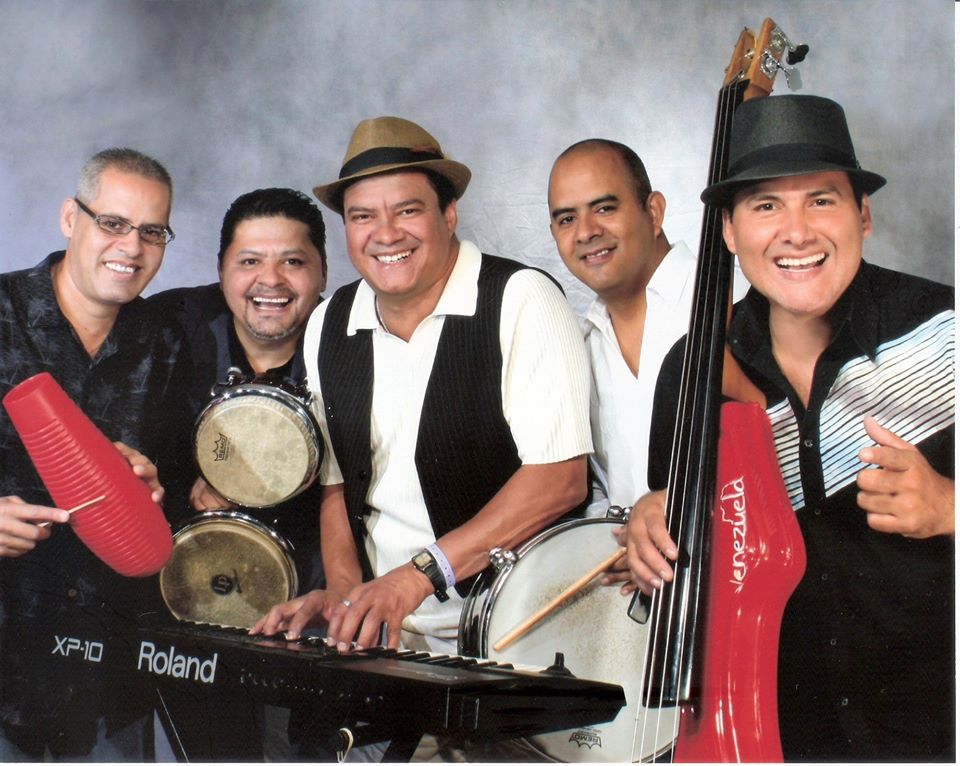
Combo Antillano
Combo Antillano

“A great responsibility and commitment, but it was time to do the same, we opened the compas playing music from the Gran Combo of Puerto Rico, that was the end, we played the greatest hits of the moment, no other band did, on Tuesdays that was full of people in the different places where we worked, this served as a bridge and accompanied other artists, Andy Montañez and other groups, this made me think about making original songs to record.

What was your first composition?

“The “Afro-Caribbean Music Festival” took place at the New Circus in Caracas, with 30 orchestras participating. Lil Rodríguez asked the orchestras to play original songs, and my first composition was a tribute to Caracas”.

At that moment they take a prize as the most applauded group of the night 

“Yes, that was impressive, with Leah’s song, a Mongo Santamaría song, it was something new for the moment, an instrumental discharge”.

Tell us about your record productions

“My first production is called Háblame de Melao (2010), in most of the songs I do the lyrics and arrangements, was something new, the black Mendoza puts me to record and tells me to do theme by theme, we made 21 track, but in the album only put 19, this production was made to recognize the singers, Dimas Pedroza, Teo Hernandez, Angel Flores, Larry Tovar, Luis del Valle “Don Wicho”, Rodrigo Mendoza, Eloy Rios, a tribute to them and highlight our people.

“The second, Fidel and the descarga de los Frailes (2013), here we handle the Salsa, Latin Jazz, Danzón, has a lot of instrumental music before starting the rumba, I had the desire to work and create with a sense of belonging, I made an innovation in the melody with the electric guitar and flute, I did not want to continue recording on wet”.

“and, Caracas en su Salsa (2018), is a tribute to the Salsa of Caracas, in this production we have 14 songs”.

Through this production you made a documentary with the same name, which begins with a beautiful phrase of Cabrujas “Caracas Suena. The city was made to be heard, not to be seen”. How would your interpretation of this hidden city be?

“There is a city that cannot be seen, but it is there, and although the media does not show it to us, we can notice it, through, for example, the musical groups that exist in our neighborhoods and that become visible when there are events, like the one organized by Héctor Castillo (+) in 1983, where we could realize that there was a whole cultural movement hidden in each of our neighborhoods”.

“So I urge this type of inter-neighborhood events, which allow the visibility of the hidden Caracas.

Another of his passions is composition. At what point does the muse come to him?

“At first sight I fell in love -laughs-, -Bella Cubana-, to compose you must have a little bit of each thing, love, dislike, joy, sadness, they are not always experiences of the composer, sometimes if, in the variety is the taste, in my case I work with the rhythmic part and I put lyrics, and more than muse is a mixture”.

He makes songs with meaning that captivate the audience

“You like your audience to identify with your songs, the lyrics are thought-provoking.”

Does the song I don’t want to live in the dark have to do with any experience?

“That one was written by Carlos Navarro and I arranged it for him, it was a personal experience of his. I was in a treatment centre and he talked to me about it, I decided to do the arrangement”.

In the music industry we have many issues of strip and shrinkage, is the case of Domina tu lengua

“Sometimes people think that a song can be a strip and shrink, because of the content of the lyrics, in this case it is not, this was written by the Cuban producer Luis Llamo”.

What gives you the most pleasure as a musician?

“Finishing the product with quality and seeing the acceptance of the public, when you are in the studio and you realize that it looks better, then it sounds on the radio, seeing that the public sings it, dances it, that’s priceless, that’s the greatest satisfaction”.

Which of your productions has given you the most satisfaction?

“Tell me about Melao.”

Why?

“There is a great variety of rhythms in it, I had the opportunity and the satisfaction of exchanging with a large number of people from outside, in it is the theme Pa’ Barlovento, in it exported what is ours, our native rhythm, Venezuelan Sangueo, the Culo e’ Puya, the San Millán”.

What have been your musical influences?

“I wouldn’t be a musician if it wasn’t for Papo Lucas, trying to emulate what he did, as a musician, arranger and person, I admire him a lot, from here comes my influence, -in what time he learned everything he knows-, that makes him incredible, apart from the master Tony Monserrat, an independence with his left hand, he was a virtuoso”.

Many begin by imitating a style, versioning lyrics from other groups. What do you think of the copies, has creativity been lost?

“It’s a resource that is used, at a certain moment, it’s a hook, I barely had the opportunity to do my work, one must have the ability to discern where to play each song, maybe many are afraid of not liking it, or not being accepted”.

What do you think this fear is about? 

“Perhaps not to be broadcast on the radio stations.”

He believes that more support is needed from the various media

“Yes, the lack of support sometimes makes one fear, it’s worrying to touch on a subject and the track gets empty.”

That’s when the artist turns to the hated payola

“I don’t agree with the payola, but it is a necessary evil, all the work that an orchestra owner does generates expenses, and after making an investment you need a retribution; previously live performances were a springboard, they projected a lot to the groups, that has declined a lot”.

What has happened to the Bolero in productions, you don’t listen to them anymore?

“The record companies are more determined to sell, that’s why I think they stopped recording, the new generation should identify with that rhythm, there are many beautiful boleros and if they stop recording they might be forgotten”.

Fidel, what new projects are on the way?

“Right now I’m recording with Angel Flores -record pocket- the song is called Callejon 107, is dedicated to the experiences of Latin American neighborhoods, is a son montuno very tasty, lyrics by Flores and with arrangements by this server”.

At this time when humanity is going through a hard test for its survival, what message would you leave behind?

“There is advice to live a life attached to good habits, one must live under these guidelines, the book of proverbs is wisdom… The man who walks in integrity walks confidently”.

By Eling Blanco, ISM Jounalist Correspondents, Caracas, Venezuela

  • « Go to Previous Page
  • Page 1
  • Interim pages omitted …
  • Page 15
  • Page 16
  • Page 17
  • Page 18
  • Page 19
  • Page 20
  • Go to Next Page »

International Salsa Magazine (ISM) is a monthly publication covering salsa activities around the world and has been publishing since 2007. It is a worldwide network of volunteers coordinated by ISM Magazine. Together, we work to strengthen salsa events around the world.