• Skip to primary navigation
  • Skip to main content

International Salsa Magazine

  • HOME
  • Previous editions
    • 2026
      • ISM / March 2026
      • ISM / February 2026
      • ISM / January 2026
    • 2025
      • ISM / December 2025
      • ISM / November 2025
      • ISM / October 2025
      • ISM / September 2025
      • ISM / August 2025
      • ISM / July 2025
      • ISM / June 2025
      • ISM / May2025
      • ISM / April 2025
      • ISM / March 2025
      • ISM / February 2025
      • ISM / January 2025
    • 2024
      • ISM / December 2024
      • ISM / November 2024
      • ISM / October 2024
      • ISM / September 2024
      • ISM / August 2024
      • ISM / July 2024
      • ISM / June 2024
      • ISM / May 2024
      • ISM / April 2024
      • ISM / March 2024
      • ISM / February 2024
      • ISM / January 2024
    • 2023
      • ISM / December 2023
      • ISM / November 2023
      • ISM / October 2023
      • ISM – September 2023
      • ISM – August 2023
      • ISM July 2023
      • ISM Edition June 2023
      • ISM – May 2023
      • ISM April 2023
      • ISM March 2023
      • ISM February 2023
      • ISM January 2023
    • 2022
      • ISM December 2022
      • ISM November 2022
      • ISM October 2022
      • ISM September 2022
      • ISM August 2022
      • ISM July 2022
      • ISM June 2022
      • ISM May 2022
      • ISM February 2022
      • ISM January 2022
    • 2021
      • ISM December 2021
      • ISM November 2021
      • ISM October – 2021
      • ISM September 2021
      • ISM August 2021
      • ISM July 2021
      • ISM May 2021
      • ISM April 2021
      • ISM June 2021
      • ISM March 2021
      • ISM February 2021
      • ISM January 2021
    • 2020
      • ISM December 2020
      • ISM November 2020
      • ISM October 2020
      • ISM September 2020
      • ISM August 2020
      • ISM July 2020
      • ISM June 2020
      • ISM May 2020
      • ISM April 2020
      • ISM March 2020
      • ISM February 2020
      • ISM January 2020
    • 2019
      • ISM December 2019
      • ISM November 2019
      • ISM October 2019
      • ISM Septembre 2019
      • ISM August 2019
      • ISM July 2019
      • ISM June 2019
  • Spanish
  • Download Salsa App
    • Android
    • Apple

Uncategorized

Producer and saxophonist Martin Franco talks about his passion for music

Martin Franco is a talented New York’s producer, sound engineer, composer, vocalist, percussionist and saxophonist who has had a big trajectory in music, which he shared with us in a half-hour conversation we had.   

The artist of Colombian parents has been kind enough to reveal some of the most important details of his artistic career and the process by which he has managed to become the professional in the music field he is today, so we hope the information revealed here will be liked by those who usually follow our publications.  

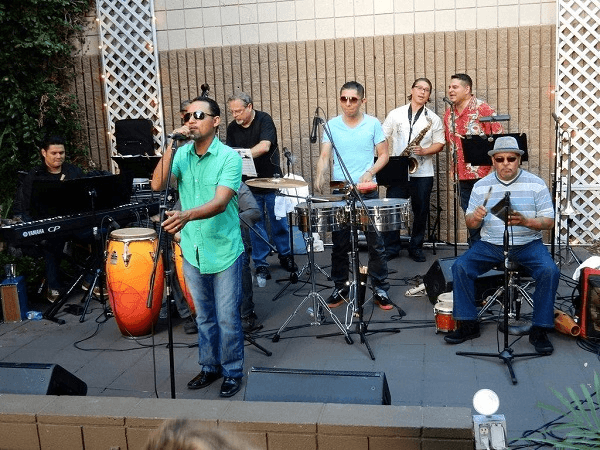
Martin, founder of Mambo Soul Band
This is Martin Franco, saxophonist and founder of Mambo Soul Band

Martin’s interest in music while still a child 

Something important we did not know about Martín is that, although both his parents are Colombian, they moved to Mexico when he was little and he spent the first eight years of his childhood in that country, before moving to Laredo, Texas.   

At his new school in the US, he and his classmates were allowed to choose the instrument they liked most to learn to play it and the boy chose the saxophone, as he thought it was ”the most beautiful” at the time.   

When Martin began his training, he discovered that he had a real taste for music and began to see it as a pleasant pastime and not an obligation, which led his mother to buy him his own saxophone and tell him to ”throw forward to music” if that was what he liked. 

When he turned 12, the family moved back to New York, where Martin started to take music more seriously and meet people related to the industry. That was when percussion and tropical music also caught his attention, as Texas was packed with Mexican cumbia and other such rhythms.   

On the other hand, New York had an immense Puerto Rican community and even his own aunts had married Puerto Ricans. Since this was the dominant community in the city in those years, Martin began hearing the conga, the keyboard, the trombone, the timbales and all the music made by the Fania. It was then when his musical tastes and plans began to change.   

Martin and the rest of the group
Martin Franco and the rest of his orchestra Mambo Soul Band

Martín’s beginnings in music in New York City 

When he arrived in New York, Martin was not old enough to start a professional career, so he was engaged to play with friends in the streets, houses, apartments and private parties. However, this time helped him a lot to gain experience and his family was a great support in all this.   

Martín, his family and some of his friends used to go to see live Latin artists and orchestras such as Celia Cruz, Héctor Lavoe, Tito Puente, Eddie Palmieri, Ray Barretto, Mongo Santamaría, among others. This also represented part of his motivation to do salsa in the future, although he also liked American jazz, which features the saxophone, his favorite instrument.   

The mix of Latin and American genres resulted in the music that became popular in those years, and the music Martin makes today has much of what he learned back then. It was a mix of Caribbean tropical rhythms, jazz and American funk.   

The musician considers that American and Latin rhythms have complimented each other over the years and he always tries to unite them in his performances, just like English and Spanish.  

Mambo Soul Band 

The name ”Mambo Soul Band” is a mixture of ”mambo”, which means ”to greet someone” or ”to communicate” in some African dialects, and ”soul” in English. This resulted in something like ”to communicate from the soul”, a concept that fascinated Martin. At the same time, both are the names for well-known musical genres, the one Latino and the other American. 

He selected these genres as the name of his band because they contain what influenced him musically speaking. Latin jazz, soul and funk were the genres on which Martin based his songwriting for the band he was creating and he hired musicians who had experience with these rhythms. And in case they do not master any of them, he teaches them.   

According to Martín, guitarists and bassists are the ones who usually have more problems when playing or learning to play these genres, while a percussionist usually has a greater dominion over these areas. 

Another variant of the same project also led by Martín is Mambo Soul Jazz, which offers music and songs much more inclined to the American way. Mambo Soul Jazz is more aimed at quiet events where people do not usually dance much and just want background music to enjoy the evening. 

The choose of one or the another will vary depending on the public of the day, although the basis of everything is always Latin music.  

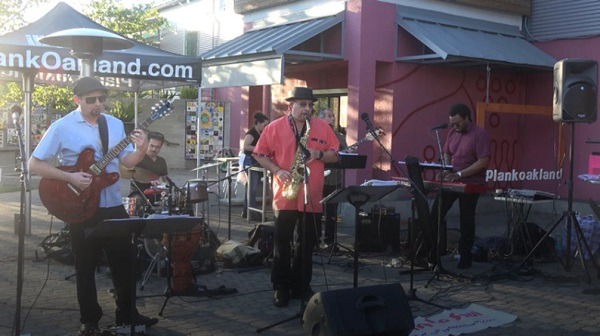
Martin performing live
Martin Franco and Mambo Soul Band performing live

The most challenging aspects of the Latin music scene 

In the view of Martin based on his experience, one of the most challenging things for him and his musicians is the economic issue. At the level where they are, they do not make big profits from their work, which contrasts to the high cost of living in California.  

This situation has led many of the musicians to have parallel jobs that allow them subsistence since it is very difficult to make a living from music. The only alternative is to constantly tour with famous groups, but not everyone is willing to do that, so they prefer to work on other things. 

In his particular case, he can afford to live only from music because he is the leader of the orchestra and the one who is in charge of getting contracts and shows for the group.  

What we took from the conversation 

From the beginning, we have noticed that Martin is a man absolutely passionate about his Latin roots and all that comes with them, especially the musical part. He always stressed that everything he does is for his love of music.   

It is our pleasure to have the opportunity to talk with this great exponent of Latin and Afro-Caribbean music and we offer him our best wishes for success from now on. 

Read also: Lengaïa Salsa Brava is killing it in Montréal 

We bring trombonist Félix O. Rodriguez from Santurce to ISM

The beautiful island of enchantment Puerto Rico has always given birth to many of the best salsa exponents of all time and the source of talent that has come out of that place has been inexhaustible. It is always a pleasure to be able to talk with a boricua of those who continue to leave their Latin heritage on high and, this time, it was the turn of the arranger, composer, sound engineer and trombonist Félix O. Rodríguez from Santurce. 

It was very kind of the artist to give us a few minutes of his time to answer some questions for International Salsa Magazine and then we will be elaborating a bit on the topics we discussed with the salsa exponent.   

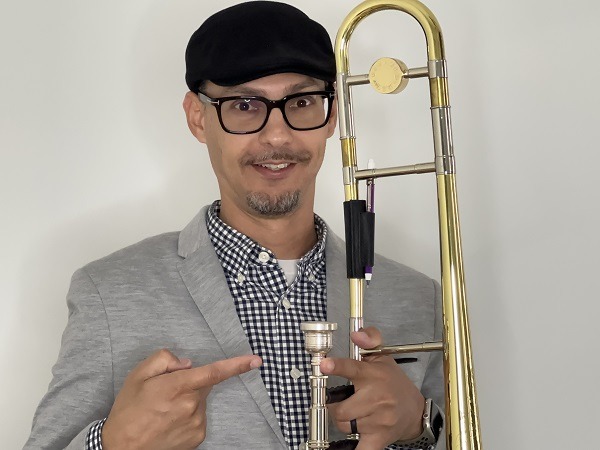
Félix from Santurce
Trombonist and sound enginer Félix O. Rodríguez from Santurce

Félix’s beginnings in the music world 

Félix’s first contact with music was at home, as his parents listened a lot to salsa, merengue, bachata and Latin music in general. While listening to this music, one of the things that attracted him the most was the sound of the trombone, especially in artists such as Willie Colón, Oscar D’ León, Gilberto Santa Rosa and many others. 

Once he reached the seventh grade in school, he decided to take music lessons and chose that instrument to start his training due to his fascination with it, something that today he does not complain about because he assures that he has done very well.   

In this learning process, noticing Félix’s interest in the trombone, his father, who was a professional orchestra musician, invited him to rehearsals so that he could soak up this whole atmosphere from an early age. It just so happened that the trombonist of this orchestra could not attend a rehearsal, so they gave the opportunity to the young boy to take his place for that night.   

After two or three shows, Félix was selected as house trombonist when he was only thirteen years old. Although he was not old enough to enter nightclubs, he was allowed to be present because he was part of the orchestra that would play there.  

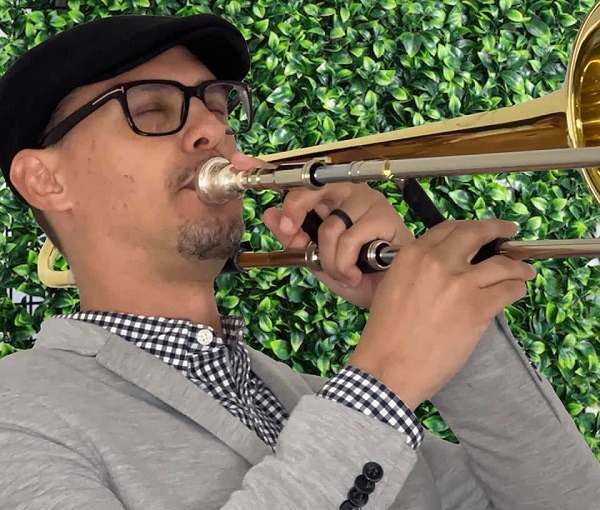
Félix playing
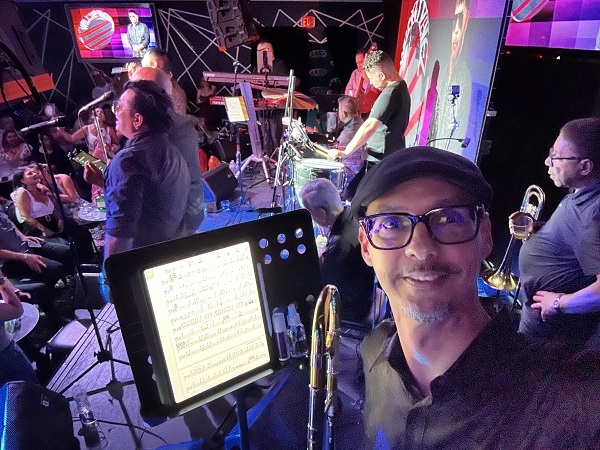
Félix playing the trombone

Orquesta Innovación and musical arrangements 

When he entered high school, Félix began to study a bit about music theory and related topics such as chords, writing for a specific instrument, percussion and other subjects. 

The young man worked so hard to train that, at only 15 years old, he was already perfectly capable of making musical arrangements, starting with transcriptions of music existing so far and copying notes from those songs. After several years on it, he finally started writing his own original music.  

In fact, he went on to record a couple of songs with Orquesta Innovación (the second orchestra he was in), a couple of original songs that unfortunately were never released, but served as experience for what would follow.   

University of South Carolina 

Félix acknowledged with laughter that this was the only university he applied to, so it was almost an obligation for him to be admitted. Fortunately for him, it was. 

He had to perform some tests with instruments and show examples of material of his own authorship to prove his musical skills. Everything he had learned so far was mostly based on salsa.   

Thanks to his effort and dedication in previous years, he was admitted to the University of South Carolina, where he studied music theory and trombone for five years. While there, the musician learned everything necessary about the historical aspects of all variants of classical music, jazz, marching band, orchestral symphony and many more. 

The formation obtained in his studies is still useful to Félix in the arrangements he makes today. However, he made it clear that his passion was and still is salsa and Latin music in general.   

Félix during a performance
Félix during a live performance

Military life and musical activities during those years 

Upon graduating from the university, Félix was commissioned as an officer in the U.S. Army, following his father’s example, who was perfectly capable of meeting his obligations in the military and continuing to exercise his passion for music without having to give up either.   

As fate would have it, the artist met up with a former colleague from Orquesta Innovación, which led them to revive their passion for music and to create Orquesta Ideal, with which he spent eight years at Fort Bragg (U.S. military installation), North Carolina, his first stop as an officer.   

Over the years, he was assigned to units in Spain, Germany and Korea. It didn’t matter where he went because there were always Puerto Ricans and Latinos eager to get together to make music, which Felix took advantage of to be in touch with music, whether as a trombonist or a DJ. 

When asked if these events in which he was involved in were open to the public, he said yes in most cases, as military bases allowed entry to anyone, but unfortunately that changed with the Twin Tower Bombings on 9/11.  

Berklee College of Music 

During the last years of his military career, Felix studied production, mixing and remastering at Berklee College of Music in order to go preparing for his return to music once his retirement was official.   

In addition to playing the trombone and arranging, the musician also loved production, editing, mixing and mastering, so he wanted to learn much more about all of these areas and thus have more control over his own work.   

Given that the Covid-19 pandemic was starting at that time, his hours at the military base where he worked were significantly reduced, which he took full advantage of to dedicate more time to school and continue growing as a professional musician.  

Félix recording
Félix in a recording studio

‘‘Con La Música Por Dentro’’ 

In the year 2021, Felix released his first EP titled ”Con La Música Por Dentro”. In a world still hit by the pandemic, the artist found it very difficult to record and promote his first solo musical work. 

He wanted to record with live musicians, but because of this same situation, it was not possible, so there were endless backing vocals he had to do and instruments he had to play himself in order to make the EP happen, so his name is the one that predominates in almost all the credits of the material.   

Fortunately, he succeeded to establish a recording studio at home and was supported his friend and singer João José, who recorded voices, piano and bass for the three tracks that make up the EP.   

Atlanta 

When we wanted to know why he chose Atlanta as his final destination to settle permanently, he told us that he did it to support his wife, who has got a good job in that city. He remembered the time when he started in the army and his wife and daughter always followed him wherever he traveled for his military duties, so he considered that it is time to return everything his partner has done for him and decided to follow her this time. 

He had to look a little to meet musicians and re-weave those connections in the industry and the Latino community in Atlanta, so he had to start from scratch in that sense. The good thing is that everything worked out for him and, as soon as he arrived in Atlanta, he was contacted to play with Willie Gonzalez. The bandleader liked his skills as a musician and offered him to continue playing with them, and so it has been to this day. 

Read also: Four nationalities united in Ladama 

Christmas salsa albums to listen to this December

Christmas albums 

Christmas is one of the best times to celebrate with family and friends and a very important element of any celebration is music, especially in Latin countries and communities.   

Because we are in December, we thought it would be a great occasion to relive some of the most iconic salsa albums of all time with which our dear readers can enjoy this wonderful month at the rhythm of the most joyful Latin music from some of the best exponents of the genre.  

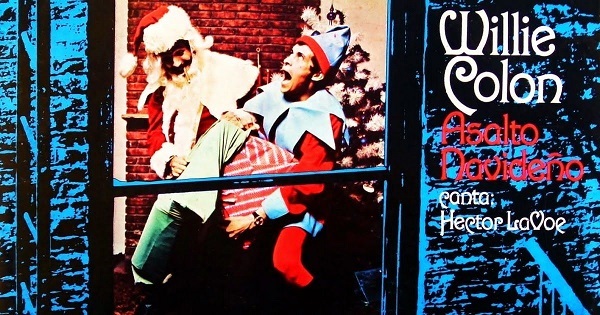
Asalto Navideño Vol. 1 

This album should never miss in a list of this type and it could not be in another way, since it is part of the incredible path traveled by the New York orchestra Willie Colón & Héctor Lavoe. The material is the group’s sixth studio album and was recorded during the first week of December 1970.  

Prior to this, the boom that was taking the orchestra in those years made Jerry Masucci and Johnny Pacheco suggest to the artists that they take advantage of the fame they had harvested so far to create an album dedicated to Christmas, which they both gladly accepted.  

It is then when they got hands on and invited the talented musician Yomo Toro to participate in the album. The artist was not well known by the fans, but he ended up occupying a very important place in the final result. 

Although at first, the material was focused on honoring Puerto Rico, but ended up embracing the Latin community living in the U.S., which had been the main responsible for the strengthening of salsa in the liking of the people and the profit received the Fania Records label. 

The album was recorded in the studios of Fania Records in New York and had a total of 12 songs dedicated to the most beautiful time of the year. Aires de Navidad” and ”La Murga” are among the most successful tracks of the album and the most listened to so far. 

album Asalto Navideño
Cover of the album ”Asalto Navideño Vol. 1”

Nuestra Música 

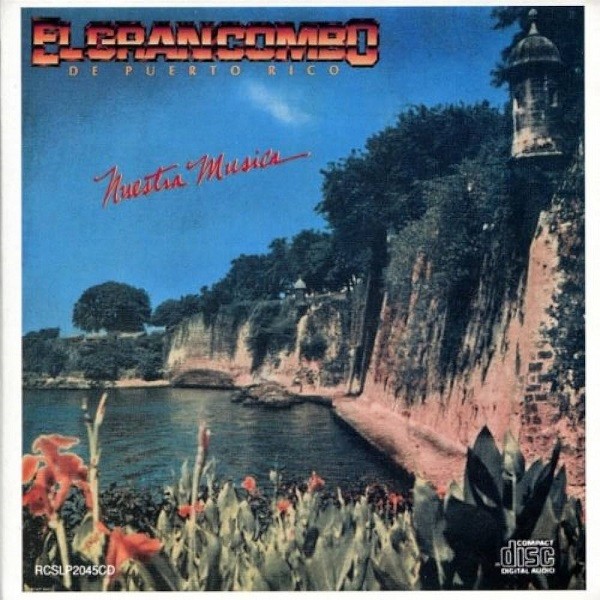
El Gran Combo de Puerto Rico never disappoints and certainly did not do it with its Christmas production ”Nuestra Música”, with which it seeks to pay tribute to this wonderful time and put everyone on dance in their homes during the Christmas holidays.   

The album was released in 1985, the year in which salsa was going through a very challenging time, since merengue was gaining a lot of momentum, displacing the aforementioned genre to some extent. However, this was no impediment for the orchestra to demonstrate, contrary to what many believed, that salsa was more alive than ever.   

The album’s release was surprising as well as exciting for the fans of El Gran Combo de Puerto Rico, which managed to rescue much of the holiday spirit that was lost and gave life to hits such as ”La Fiesta de Pilito”, ”Desenfunda”, ”Arbolito” and ”No Hay Cama Pa’ Tanta Gente”. 

album Nuestra Música
Cover of the album ”Nuestra Música”

Navidad Criolla 

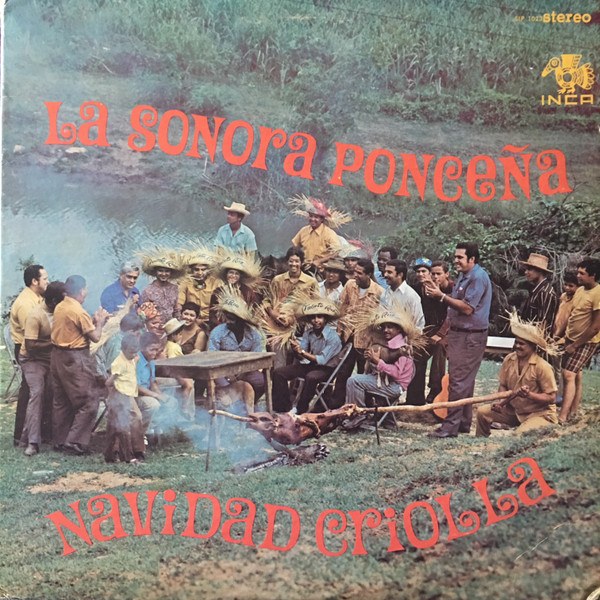
Another great recor production that could not miss in this list is ‘‘Navidad Criolla’’ by La Sonora Ponceña. A very particular and different thing about this Christmas album is that, instead of using the typical Christmas aguinaldos, salsa dura is the predominant genre. However, the vocalists and musicians do their best to maintain the essence of Christmas at all times. 

The album was released in 1978 and includes the unmistakable voices of Luigi Texidor and Tito Gómez, who add an exciting and cheerful touch to the music with the power of their vocal cords. In addition to that, Adalberto Santiago and Yayo El Indio participated on backing vocals along with the talented musicians of the group.   

The album includes songs such as ”Aguinaldo Antillano”, ”De Noche Buena”, ”Canción de Navidad”, ”Vamonos Pa’l Campo”, among others.  

album Navidad Criolla
Cover of the album ”Navidad Criolla”

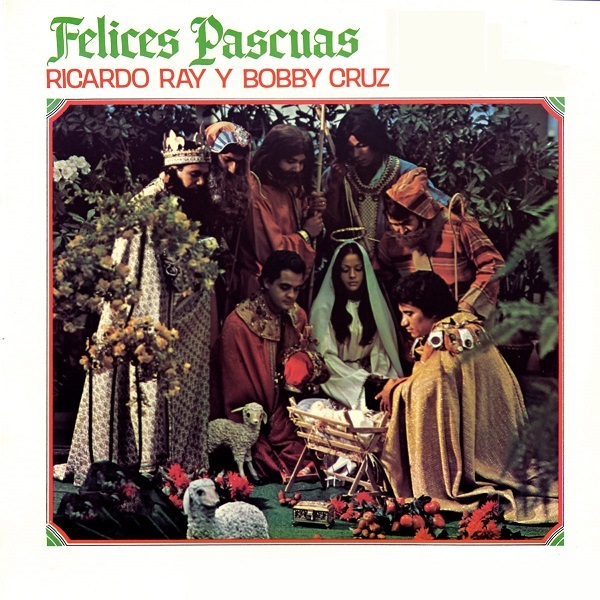
Felices Pascuas 

Ricardo Ray and Bobby Cruz delighted the public during the December holidays in 1971 with this extraordinary musical work with which they conquered the public one of those countless times they did it.  

Ricardo delighted the duo’s fans from the piano and musical arrangements, while Bobby was on voice and backing vocals. Both artists were accompanied by Miki Vimari on voice and backing vocals, Ismael Cocolia Rodríguez and Ismael Rivera on trumpet, Manolito Gonzales on bongos, José Hidalgo on conga, Charlie Cotto on timbales and Plito Huertas on bass.   

Among some of the best-known tracks of the album, we can mention ”Bomba en Navidad”, ”Mi Niñez”, ”Aguinaldo Navideño”, ”Kyrie Eleison”, ”Sinfonia To Cantata No, 29”, and so on. 

album Felices Pascuas
Cover of the album ”Felices Pascuas”

Read also: Legacy of the Cepeda family after eight generations 

Lengaïa Salsa Brava is killing it in Montréal

Latin talent can be found where you might least expect it and, this time we found it in the city of Montreal, Canada, a place that is cultivating an increasingly large and vigorous Latin music scene. On this occasion, we were thrilled to be able to talk to Giany-Frantz Huyghues-Despointes, who is the leader and founder of the orchestra Lengaïa Salsa Brava.

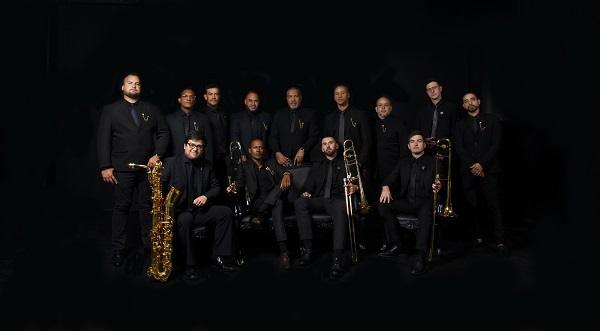
Lengaïa Salsa Brava is a 12-member salsa orchestra that was created in 2012 by Giany, who was also a trombonist and had some experience in the world of music before daring to create his own group. 

The effort of all its members has enabled them to collaborate with great performers of the genre and win important awards such as the Canada Latin Awards in the category of ”Salsa Group of the Year” in a row in 2017 and 2018 respectively. 

Lengaïa Salsa Brava has also performed approximately 30 concerts a year since its foundation and has participated in important festivals such as Toronto Salsa Festival, Festival Nuit Blanche de Montreal, Nuits d’Afrique, among others. The group was greatly helped by the fact that its members come from different countries such as French Guyana, Cuba, Colombia, Peru, Quebec, Spain and Venezuela. 

This interesting journey shows us how hard this group has worked to achieve a place within the industry and all the potential they have to achieve much more than what was obtained. Today, Giany, its founder, shares a little more about himself and his orchestra Lengaïa Salsa Brava.

Giany, founder of Lengaïa Salsa Brava
Giany Huyghues Despointes, director and founder of Lengaïa Salsa Brava

Giany’s beginnings as a musician

Although the trombone is the instrument for which Giany is known, he started playing the trumpet from 10 years of age, which is when he began his interest in this branch of the art.

An important point is that in French Guyana, the country where Giany was born, salsa is not a predominant genre, since the most played by the French Guyanese is the mazurka, which is very similar to the Haitian compas. In the case of Giany’s family, they listened to a bit of everything, including salsa.

A turning point for the artist was watching Celia Cruz singing on tv one day. The musician had never heard the Cuban singer before and it was an incredible experience for him, as her deep voice, colorful outfit and wig caught his attention at the time. 

Because of her deep voice, he thought she was a man, but his mother explained to him who Celia was and, months later, took him to a concert to see her live. That performance of ”La Guarachera de Cuba” marked him so much that he would begin to lean towards music in the future. Today, he says that Celia is a spiritual mother to him, as she was his great inspiration. 

Along with being a fan of the Cuban singer, he wanted to learn to play instruments and initially opted for the piano and the guitar, but that changed when his Spanish teacher at school gave him a trumpet and he discovered that he really liked to play it.

Some time later, he graduated from the national school of music in his country and, by the time he turned 18, Giany noticed that his musical skills excelled more with the trombone than the trumpet. This is how he decided to choose the trombone as his main instrument and so it has been to the present time.

He started playing classical music with that instrument but soon discovered that he wanted to return to the genre that captivated him when he was just a child, so he dared to create a group in France, where he studied aviation. The thing is that he went to live in Canada six months later and had to abandon the plans he had at that time.

Lengaïa Salsa Brava
The whole orchestra Lengaïa Salsa Brava

Founding of Lengaïa Salsa Brava

Giany arrived in Canada with the vision to create another group in his new country of residence, but he did not know any musicians yet, so he moved into action and started placing ads on social networks and other virtual means to communicate with artists who were interested in joining his project. 

The results were amazing and there were many musicians who contacted Giany because of their interest in the concept proposed by him. With this group, he started assembling the orchestra in order to give form to what Lengaïa Salsa Brava is today. The orchestra has six years with the same staff and format it presents to the public today.

Huge number of nationalities in Lengaïa Salsa Brava 

As for the large number of nationalities living in the orchestra, Giany has said that all ”are part of a big family” hinting that national origins have not been a problem for the smooth development of the group. In addition to that, the salsa brava is a genre widely known worldwide, so the members of the orchestra knew in advance what they were getting into.

To what we must add that these guys work or have worked in other salsa brava orchestras, so they were pretty much steeped in everything related to this beautiful music. 

Giany says it is very easy to work with his musicians because they always know how to perfectly interpret what he wants.

Lengaïa at one of its concerts
Lengaïa Salsa Brava at one of its concerts

Origin of the name Lengaïa Salsa Brava

When Giany was looking for a name for the group, he wanted something different and not very Latin sounding. He also wanted people to ask what the name meant, so we have fallen into the trap. 

The musician explained that he wanted something that refers to how explosive, energetic and aggressive his music is, so he chose the name inspired by a Tanzanian volcano called Ol Doinyo Lengaï that spews black lava. ”When you see a volcano exploding, you imagine something explosive and aggressive at the time. That’s what we want to reflect with our music”. Also, the fact that its lava is black is something different from other volcanoes, as is the group’s orchestration and technique,

Activities outside Lengaïa Salsa Brava

Giany wanted to emphasize that all the members of Lengaïa Salsa Brava have other jobs and work activities outside the orchestra. In his particular case, he works as a commercial pilot, but in his spare time, he devotes himself as much as he can to his great passion which is music. 

So far, Giany and the other members of the orchestra are unable to live solely on music, but they do their best to keep the group together and are there to fulfill Lengaïa Salsa Brava whenever necessary.

Although the orchestra has been a second employment option, it is undeniable that this is their great vocation and the engine that moves his life, so there will always be space for it.

Read also: John Narváez and Elizabeth Rojas from Salsamania

Canada Festival – October 2023

Canada Salsa and Bachata Congress
Oct 05 / 09 2023
Canada Fairmont Royal York Hotel100 Front St. W., Toronto, ON, Canada, M5J 1E3
  • « Go to Previous Page
  • Page 1
  • Interim pages omitted …
  • Page 9
  • Page 10
  • Page 11
  • Page 12
  • Page 13
  • Page 14
  • Go to Next Page »

International Salsa Magazine (ISM) is a monthly publication about Salsa activities around the world, that has been publishing since 2007. It is a world network of volunteers coordinated by ISM Magazine. We are working to strengthen all the events by working together.