• Skip to primary navigation
  • Skip to main content

International Salsa Magazine

  • HOME
  • Previous editions
    • 2026
      • ISM / March 2026
      • ISM / February 2026
      • ISM / January 2026
    • 2025
      • ISM / December 2025
      • ISM / November 2025
      • ISM / October 2025
      • ISM / September 2025
      • ISM / August 2025
      • ISM / July 2025
      • ISM / June 2025
      • ISM / May2025
      • ISM / April 2025
      • ISM / March 2025
      • ISM / February 2025
      • ISM / January 2025
    • 2024
      • ISM / December 2024
      • ISM / November 2024
      • ISM / October 2024
      • ISM / September 2024
      • ISM / August 2024
      • ISM / July 2024
      • ISM / June 2024
      • ISM / May 2024
      • ISM / April 2024
      • ISM / March 2024
      • ISM / February 2024
      • ISM / January 2024
    • 2023
      • ISM / December 2023
      • ISM / November 2023
      • ISM / October 2023
      • ISM – September 2023
      • ISM – August 2023
      • ISM July 2023
      • ISM Edition June 2023
      • ISM – May 2023
      • ISM April 2023
      • ISM March 2023
      • ISM February 2023
      • ISM January 2023
    • 2022
      • ISM December 2022
      • ISM November 2022
      • ISM October 2022
      • ISM September 2022
      • ISM August 2022
      • ISM July 2022
      • ISM June 2022
      • ISM May 2022
      • ISM February 2022
      • ISM January 2022
    • 2021
      • ISM December 2021
      • ISM November 2021
      • ISM October – 2021
      • ISM September 2021
      • ISM August 2021
      • ISM July 2021
      • ISM May 2021
      • ISM April 2021
      • ISM June 2021
      • ISM March 2021
      • ISM February 2021
      • ISM January 2021
    • 2020
      • ISM December 2020
      • ISM November 2020
      • ISM October 2020
      • ISM September 2020
      • ISM August 2020
      • ISM July 2020
      • ISM June 2020
      • ISM May 2020
      • ISM April 2020
      • ISM March 2020
      • ISM February 2020
      • ISM January 2020
    • 2019
      • ISM December 2019
      • ISM November 2019
      • ISM October 2019
      • ISM Septembre 2019
      • ISM August 2019
      • ISM July 2019
      • ISM June 2019
  • Spanish
  • Download Salsa App
    • Android
    • Apple

Uncategorized

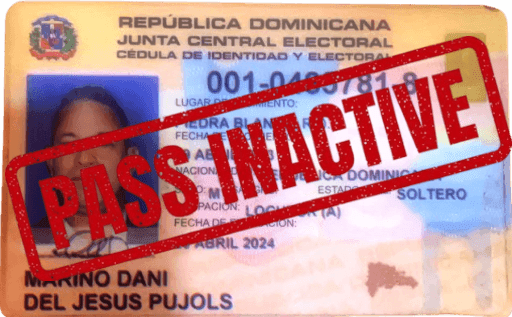
DOMINICAN REPUBLIC CORRESPONDENT I.D. 001-0485781-8


The Secretary of International Salsa Magazine hereby requests all whom it may concern to extend all journalistic courtesies and permits to the journalist of ISM named herein

Marino Pujols

Emmited on OCTOBER 2024

Chick Corea Pianist, composer, arranger, producer, teacher. Acoustic and Electric

Surrounded by music since childhood, Armando Anthony Corea walked a path in which he shone like few others, accompanied by musicians who make up an encyclopedia of jazz.

Pianist, composer, arranger, producer, teacher. Acoustic and electric. Chick Corea was one of the most influential musicians in the vast universe that is jazz and surely one of the most important figures in global music of this time. In addition to being artistically prolific, he was commercially successful. For this reason, it would also be impossible to explain the music of this time without the example of Chick Corea.

Chick Corea Pianist, composer, arranger, producer, teacher. Acoustic and Electric

Armando Anthony “Chick” Corea was born in Chelsea, Massachusetts, on June 12, 1941, to a family of Calabrian origin. At the age of four, he began to play the piano, encouraged by his father, a jazz trumpeter who led a Dixieland band in Boston in the 1930s and 1940s.

Surrounded by music, young Armando was soon introduced to the heroes of bebop. The music of Dizzy Gillespie, Charlie Parker, Bud Powell, Horace Silver, and Lester Young would leave a notable mark on his education. At the age of eight, he began studying classical piano with Salvatore Sullo, an Italian-born concert pianist who, in addition to his love of Mozart, opened up the world of composition to him.

Always tied to a confusing timeline, the first released recording of the original configuration of Return to Forever was actually its second session.

An initial ECM studio date made in February 1972 was not released until after the band had changed in 1975.

The Polydor/Verve recording from October 1972 is actually this 1973 release, which features the same band with Chick Corea, Stanley Clarke, Airto Moreira, Joe Farrell, and Flora Purim. There is no need to make distinctions, as both are five-star albums, showcasing many of the keyboardist’s enduring, instantly recognizable and highly melodic compositions.

Farrell’s joyous flute, Purim’s wordless vocals, Airto’s electrifying percussion and Clarke’s deft electric bass lines are wrapped up in a stew of Brazilian samba and Corea’s Fender Rhodes electric piano, and certainly set the tone and the highest bar for the music of the groups that will come after. “Captain Marvel,” the seed of the Farrell- and Purim-less band that expanded into a full concept album with Stan Getz, is here as a vaporous fusion samba with Corea dancing on the keys.

Chick Corea y Gary Borto

By now, the beautiful “500 Miles High” has become Purim’s signature song with Neville Potter lyrics and Corea’s stabbing chords, and unfortunately became a hippie anti-drug anthem.

Perhaps Corea’s definitive song of all time, and covered ad infinitum by professional and school bands, “Spain” retains the quirky melody, clapping interlude, up-and-down dynamics, exciting improvisational section and variation in time, tempo and colourations that always spark interest despite a length of close to ten minutes.

“You’re Everything” is a romantic classic that has surely been heard at many a wedding, with another Potter lyric sung to heaven by Purim, while the title track is Purim’s lyrics in a looser musical framework, with Clarke’s graphic merging with Corea and Farrell’s piercing flute work.

Chick Corea - John Patitucci - Dave Weckl
Chick Corea – John Patitucci – Dave Weckl

As much as the others have become icons, Farrell’s extraordinary sound on this date should never be trivialised or underestimated.

The final track, “Children’s Song,” was a springboard for several of Corea’s full-length album projects, and is heard here for the first time in trio format with a slow, Christmas motif.

The expanded version of this recording includes many alternate takes of four of these selections, but also includes “Matrix,” which was not on any RTF album, and there are four versions of “What Game Shall We Play Today?”, which was only available on the ECM release.

From a historical perspective, this is the most important work of Corea’s career, very different from his earlier progressive or improvisational efforts, and the pivotal beginning of his career as the most popular contemporary jazz keyboardist in history. Michael G. Nasto.

Chick Corea And Return To Forever – Light As A Feather (1973)

Tracks:

  1. You’re Everything
  2. Light As A Feather
  3. Captain Marvel
  4. 500 Miles High
  5. Children’s Song
  6. Spain

Musicians:

Chick Corea (Fender Rhodes, electric piano)

Stanley Clarke (Double bass)

Joe Farrell (Tenor sax, soprano sax, flute)

Flora Purim (Voice, percussion)

Airto Moreira (Drums)

Chick Corea And Return To Forever - Light As A Feather (1973)
Chick Corea And Return To Forever – Light As A Feather (1973)

Information provided (February 21, 2009)

Sources:

L’Òstia Latin Jazz

Santiago Giordano: He is a musician, teacher and music critic

Also Read: Yilian Cañizares, an excellent Cuban musician, studied in her hometown in the strictest tradition of the Russian school of violin

Nanette Hernández promotes the bomba and plena in New Jersey

We know that the most of our Latin countries have historically become known for genres such as salsa, merengue, bachata and more recently reggaeton and trap. However, the popularity of the aforementioned genres made us leave aside other more local rhythms that also deserve exposure.    

On this occasion, we wanted to talk about the bomba and plena, so we resolved to interview Nanette Hernandez, who is one of its main proponents here in the United States, more specifically in New Jersey.   

This is Nanette
This is Nanette Hernández, who is a great promoter of the bomba and plena


How Nanette became interested in the bomba and the plena 

Nanette began by telling us that her interest in music was born thanks to her parents, who are Puerto Rican and moved to the United States, Pennsylvania, during the 1950s to continue their life in this new country. However, his home was built based on Puerto Rican culture and, of course, that included language and music. Her father had an ensemble that played jibaro music and Nanette grew up watching this, so this musical environment was always very familiar to her.   

As she grew up, Nanette also became very interested in dancing and discovered that she really liked salsa when she was just a teenager. She remembers listening to Celia Cruz, Johnny Pacheco, El Combo de Puerto Rico and many of the most popular groups and musicians of the time, who also inspired her to keep dancing. She felt that she was encouraged just by dancing, so she continued to do so over the years, but not professionally.   

After marrying Juan Cartagena and seeing that she and her husband shared a taste for Latin music, they began to frequent places where Puerto Rican music groups performed. That is how they were in a show of the dance and drum ensemble ”Los Pleneros de la 21”. They were so fascinated by what they saw and heard that both Nanette and Juan began to study the plena and bomba because they wanted to know everything about these rhythms. Their interest was such that they were even in contact and consistently et with the Cepeda family, which is a cultural institution with many years of experience in everything to do with the bomba and plena.   

She also mentions that Roberto Cepeda, part of the aforementioned family, was very important in her decision to devote herself to promoting the bomba and plena and feels that he saw something in her that even herself was not able to see, so she decided to search for expert teachers in these genres to become more professional in the dancing and instrumental part in order to be able to teach them to others.   

Nanette dancing
Nanette dancing bomba and plena

Differences between the bomba and plena  

When we asked Nanette about the differences between the bomba and plena, she made it very clear that people often think that they are almost the same, but they are not. They are extremely different and have many differences from each other.   

In the case of the bomba, it has re than 400 years of existence and originated in Africa. The genre arrived in America along with the slaves who were brought to the New Continent and the new inhabitants of these lands brought their improvised instruments with them such as the so-called ”barrels”, which have a great resemblance to drums. They are often accompanied by maracas.    

In the case of the plena, this rhythm uses the pandero, the güiro and other smaller hand instruments with which they make a completely different sound from the bomba. To complement what Nanette told us, we can also say that the plena is believed to originate in Ponce, Puerto Rico, and its lyrics are very focused on comedy, activism and denunciation. In addition, it is also seen as a very peculiar mix between African and European music. 

Another difference between the bomba and plena is that, in the bomba, it is the dancer who leads and guides the musicians, while in plena the opposite happens. These genres are very different from each other, but that does not change the fact that both complement each other perfectly well in any show or class.   

Nanette next to her husband Juan Cartagena, Segunda Quimbamba's founder 
Nanette next to her husband Juan Cartagena, Segunda Quimbamba’s founder

How Segunda Quimbamba came about    

Segunda Quimbamba is a project initiated in 1989 by Juan Cartagena, Nanette’s husband, which was born as a result of the couple’s interest in promoting two of the most important ancestral rhythms from Puerto Rico and preserving the most important musical traditions on the Island of Enchantent, such as the ”parrandas”. A few years later, they began introducing the bomba and plena until they became the center of the project. 

In 1997, Nanette and Juan founded the Segunda Quimbamba Folkloric Center, which is a non-profit arts organization that seeks to promote the bomba and plena in New Jersey and the rest of the United States so that those interested can learn more about Puerto Rican music and culture in general. The organization also seeks to offer music and dance workshops at solidarity prices and even for free at times.   

Nanette and Juan have been invited to participate in numerous events and have been recognized for the role they have played in promoting Latin music, especially that of Puerto Rico. For example, in 2023, The New Jersey State Council of The Arts recognized the couple with the New Jersey Heritage Fellowship Award in honor of what they have accomplished with this wonderful and ambitious musical project. 

Read also: Edwin Ortiz y La Mafía del Guaguancó is present in ISM 

VENEZUELA CORRESPONDENT I.D. V6317848


The Secretary of International Salsa Magazine hereby requests all whom it may concern to extend all journalistic courtesies and permits to the journalist of ISM named herein

Augusto Felibert cedula

Emmited on June 2024

COLOMBIA CORRESPONDENT I.D. 2185083


The Secretary of International Salsa Magazine hereby requests all whom it may concern to extend all journalistic courtesies and permits to the journalist of ISM named herein

I.D CorinaEmmited on May 2024

  • « Go to Previous Page
  • Page 1
  • Page 2
  • Page 3
  • Page 4
  • Page 5
  • Interim pages omitted …
  • Page 14
  • Go to Next Page »

International Salsa Magazine (ISM) is a monthly publication about Salsa activities around the world, that has been publishing since 2007. It is a world network of volunteers coordinated by ISM Magazine. We are working to strengthen all the events by working together.