• Skip to primary navigation
  • Skip to main content

International Salsa Magazine

  • HOME
  • Previous editions
    • 2026
      • ISM / April 2026
      • ISM / March 2026
      • ISM / February 2026
      • ISM / January 2026
    • 2025
      • ISM / December 2025
      • ISM / November 2025
      • ISM / October 2025
      • ISM / September 2025
      • ISM / August 2025
      • ISM / July 2025
      • ISM / June 2025
      • ISM / May2025
      • ISM / April 2025
      • ISM / March 2025
      • ISM / February 2025
      • ISM / January 2025
    • 2024
      • ISM / December 2024
      • ISM / November 2024
      • ISM / October 2024
      • ISM / September 2024
      • ISM / August 2024
      • ISM / July 2024
      • ISM / June 2024
      • ISM / May 2024
      • ISM / April 2024
      • ISM / March 2024
      • ISM / February 2024
      • ISM / January 2024
    • 2023
      • ISM / December 2023
      • ISM / November 2023
      • ISM / October 2023
      • ISM – September 2023
      • ISM – August 2023
      • ISM July 2023
      • ISM Edition June 2023
      • ISM – May 2023
      • ISM April 2023
      • ISM March 2023
      • ISM February 2023
      • ISM January 2023
    • 2022
      • ISM December 2022
      • ISM November 2022
      • ISM October 2022
      • ISM September 2022
      • ISM August 2022
      • ISM July 2022
      • ISM June 2022
      • ISM May 2022
      • ISM February 2022
      • ISM January 2022
    • 2021
      • ISM December 2021
      • ISM November 2021
      • ISM October – 2021
      • ISM September 2021
      • ISM August 2021
      • ISM July 2021
      • ISM May 2021
      • ISM April 2021
      • ISM June 2021
      • ISM March 2021
      • ISM February 2021
      • ISM January 2021
    • 2020
      • ISM December 2020
      • ISM November 2020
      • ISM October 2020
      • ISM September 2020
      • ISM August 2020
      • ISM July 2020
      • ISM June 2020
      • ISM May 2020
      • ISM April 2020
      • ISM March 2020
      • ISM February 2020
      • ISM January 2020
    • 2019
      • ISM December 2019
      • ISM November 2019
      • ISM October 2019
      • ISM Septembre 2019
      • ISM August 2019
      • ISM July 2019
      • ISM June 2019
  • Spanish
  • Download Salsa App
    • Android
    • Apple

Search Results for: Academy

Joseíto Mateo “They call me the Negrito del Batey, because work for me is an enemy”

Joseito was a consecrated Dominican merenguero who began his career in the 1930’s, better known as “El rey del merengue, El diablo Mateo”.

As a child he learned to sing and dance. He sang at the “Fiestas de la cruz” and at wakes, since at that time the deceased were prayed to with songs.

Mateo began his career as a singer during the 30’s, a period in which he was gaining the public’s favor.

Some time later he was requested by the record label “SEECO” to join the cast that in Havana would record with the Sonora Matancera.

Those were the years of the Trujillo Era in which Dominicans required an exit permit to travel abroad.

At first, this document was denied to Joseito.

As a consequence, in Havana, once the record was contracted and the pieces that would be part of it had been selected, including “El negrito del batey”, Joseito’s place was taken by the Dominican singer Alberto Beltrán, who was known since then by the Cuban public as “El negrito del batey”, instead of his true inspirer.

He was born on April 6, 1920 in Santo Domingo (Dominican Republic).

In one of his later trips, he decided to stay in Cuba to sing in CMQ, together with Celia Cruz and La Sonora Matancera, a very popular group at that time.

After the assassination of Rafael Trujillo on May 30, 1961 and the end of his dictatorship, Joseito decided to try his luck in Puerto Rico.

In 1962, Joseíto participated as vocalist in the first tour of the “Gran Combo” to Panama, to promote the album ‘El Gran Combo con Joseíto Mateo’.

There he met the young singers Pellín Rodríguez and Andy Montañez, who ended up replacing him in the Puerto Rican group.

“El Gran Combo was very good to me, I adapted to sing plena, bomba, guaracha, boleros, but then I had to return to Santo Domingo to clear my name.

They were falling behind all those who were with Trujillo, and in the Republic they said I was a spy and was on the run”.


Mateo’s professional work has spanned more than 70 years and constitutes an important reference of the Dominican musical culture.

He was nourished by the roots of merengue and became a singular exponent of it. His innovative style was characterized by a stage participation enriched by his particular way of dancing and singing.

Some of his best known songs are Madame Chuchí, Dame la visa, La cotorra de Rosa and La patrulla, among others. Joseito is known as “El Rey del Merengue” (The King of Merengue).

On November 11, 2010, Mateo was recognized at the 11th Latin Grammy Awards with the Latin Recording Academy’s Musical Excellence Award for his contributions to Latin music.

He retired in 2001, close to his 82nd birthday and after recording 50 “elepes”.

Joseíto Mateo passed away on June 1, 2018 at the age of 98, due to leukemia. He spent his last days in the Hospital de las Fuerzas Armadas.

Source:

https://www.buscabiografias.com/biografia/verDetalle/8662/Joseito%20Mateo

Where To Go Dancing Salsa In Madrid?

We will tell you about five Salsa clubs to enjoy this summer in the Spanish capital

Discover the essence of nightlife in Madrid city with five incredible clubs to dance Salsa until dawn. We suggest that you plan your next dance date so that you can practice your Salsa skills and enjoy this social trend that is invading this summer.

Azúcar Salsa Disco

Azúcar is open on Fridays, Saturdays, and the eve of holidays from 11 PM to 6 AM

This Salsa and Bachata room is one of the most recognized and popular in Madrid. This place offers from Thursday to Saturday the most current Salsa hard on the American continent. Its doors open from 11 PM and in the first hour, the entrance for the ladies is free. Ticket prices range from €12 to €16, and parking is free for the first two hours. Classes run over these three days from 10 PM to 11 PM cost €9 and include a drink and entry to the social session. On Fridays and Saturdays, they close at 6 AM, while on Thursdays they close at 5:30 AM. Azúcar Salsa Disco https://azucarsalsadisco.com/ is located at Calle Atocha 107, 28012, Madrid, Spain.

The Host Club

The Host Club has an excellent lights set

It is one of the leading clubs on the Latin scene in the city of Madrid. It has excellent light and sound equipment, and has a capacity for 550 people. During the week they bring varied proposals with attractive sessions in the various Latin musical styles of the moment: Salsa, Bachata, Salsa Hip-Hop, Merengue, Kizomba, Afro-rumba, Tango, or Street Dance. So, get ready to dance with a wide Afro-Caribbean musical repertoire at The Host Club http://www.thehostclub.es/ .They are open from Tuesday to Saturday, and you can find it at Calle Ferraz nº 38, 28008, Madrid, Spain.

Sala Templo

Sala Templo has close and familiar attention

It is a space that offers joy, culture, and close attention. In each dance sesión, they have teachers and dancers who liven up the room and also help new clients to enter the world of Salsa, Bachata, Merengue, Cha Cha Cha, and Kizomba. Its Bailamos training program for students and teachers is directed by Fredy Bedoya and has dance professionals in constant updating, mirrors, and teaching material. Salsa (9 PM) and Bachata (8 PM) classes are one hour long, and the established days are Monday and Tuesday. Salsa Templo https://www.salatemplo.com/ is located at Bravo Murillo 52, 28003, Madrid, Spain.

Pincel

In Pincel you can also learn Ballroom Dance

It’s a club to dance Salsa and Bachata on Fridays and Saturdays. On Fridays, it is Bachata Night with an irresistible workshop with Ruth and Pablo (Dancers) at 11 PM and is followed by the social Bachata with Dj Chino in the booth. On Saturdays, it gets involved in a Salsa atmosphere from 11 PM with the Salsa class taught by Ivan and Sheila, then the social with DJ Pituelve in the booth. Pincel http://www.discotecapincel.es/ is located at Calle Doctor Raso, nº 1 (Húmera), 28223, Pozuelo de Alarcón, Spain.

Zeus

Zeus holds contests and travel raffles for the best salseros of the season

It is one of the most recommended rooms in the south of Madrid to go out and dance Cuban Salsa, Bachata, and Kizomba. Here, you can find authentic professional dancers of these Caribbean rhythms on 200 meters of the dance floor. Zeus has its dance school, and together with the MDD academy, they teach Salsa and Bachata classes from Monday to Thursday for all levels, and you can try the first class for free. The Zeus room https://www.facebook.com/zeusmostoles is located at Calle Bécquer, nº3, Móstoles, 28932.

Oscar D’ León Will Celebrate his 50th Anniversary In Europe

50th Anniversary Europa Tour 2022 will start on July 10th in Bulgaria

In 1997, the album Sonero del Mundo, in collaboration with Willy Chirino, was nominated for a Grammy.

Salsa legend Oscar D’ León “El Sonero del Mundo” will celebrate his half-century of a uninterrupted artistic career with a tour of six European countries, and tickets don’t exceed € 70, so hurry up because there are few left.

The 50th Anniversary Europe Tour 2022 will start on July 10th in Bulgaria (Latin Beach Boom Festival), and he will continue in Germany (Frankfurt – July 12th, Munich – July 13th, and Berlin – July 16th). After, he will visit the city of Milan in Italy on July 14th, then land in Spain for a concert in Barcelona on June 15th, Tenerife (June 23rd), and Madrid (June 27th – The last live of the tour). Oscar D’ León will continue his Tour through Paris (France) on July 17th and Amsterdam (Netherlands) on July 22nd at Kwaku Festival.

“Who will share this tour of Europe loaded with hits and #Saborrr?” The Sonero de la Salsa wrote on his Facebook page on June 7th.

The king of Salsa, Oscar D’ León http://oscardleon.net/ was born on July 11th, 1943. His youth grew up in the popular area of ​​western Caracas (Antímano). This singer and self-taught bassist, since his debut in Latin music, has become one of the most representative artists of the Afro-Caribbean genre. He has been praised for his participation in orchestras such as La Dimensión Latina and his work as a soloist.

His first jobs were as a driver of a school bus and a taxi during the day, along with his apprenticeship in the execution of the string instrument, double bass, and his numerous night performances in different clubs in the Venezuelan capital. His success came in 1972 with the orchestra La Dimensión Latina and since then, D’ León has remained at the top of popularity as one of the most respected and admired Salsa artists of his time, with more than four decades of experience in unsurpassed live performances and more than 50 albums of their own and collaborations.

Oscar D’ León sang “Mundo Perfecto”. Song in Spanish from the animated movie The Emperor’s New Groove (Disney – 2003)

He paved the way for musicians of his genre by being one of the pioneers to tour the Asian continent (Japan) and the first Latino to sign a record deal with the British Broadcasting Corporation in the United Kingdom.

Between the 1980s and 1990s, Oscar recorded the hit “Ariel” with the Billo’s Caracas Boys orchestra as a tribute to Billo Frometa and Benny Moré. He launched the version “Qué bueno baila usted” with the Venezuelan orchestra Los Blanco. He was a special and permanent guest at important Salsa and Latin Jazz festivals, in addition to sharing the stage and recordings with famous artists such as Celia Cruz, Eddie Palmieri, and Tito Puente. Starting in 1998, every March 15th is celebrated in New York City as “Oscar D’ León Day”, and for seven years (May 14th, 2015) it has been “Oscar D’ León Day” but this once in the California state (USA).

In 2013 he received the Award for Musical Excellence awarded by the Latin Recording Academy and two years later he dazzled with his presentation in Viña del Mar (Chile) taking the Gold and Silver Gaviotas (Seagulls).

This year the master Oscar D’ León celebrates 50 years of trajectory and will celebrate it with you in Europe. So don’t miss this opportunity to sing his greatest hits such as El Frutero (1976), Llorarás (1986), Detalles (1986), Mi bajo y yo (1990), Frenesí (2001), and La Mazucamba (2002).

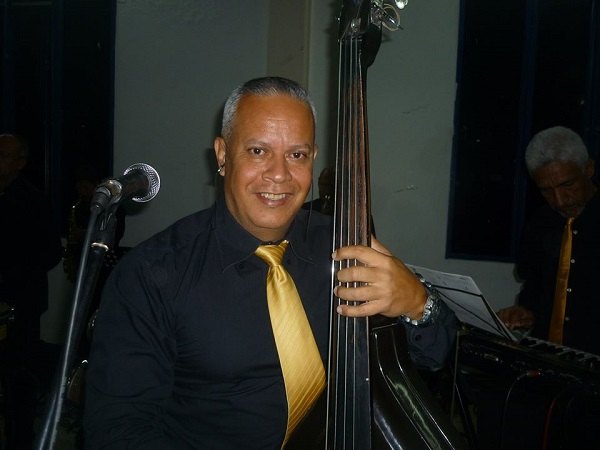
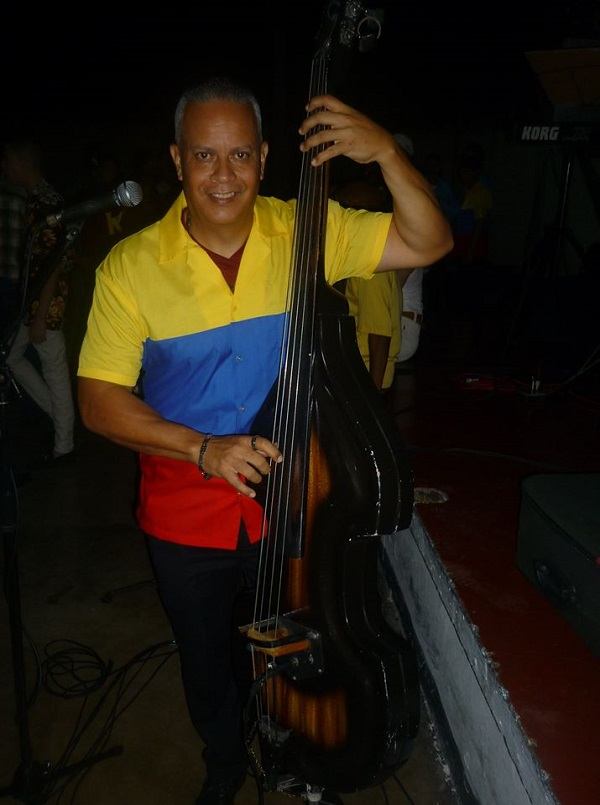
José Mosquera from Barquisimeto for the World “The bodybuilder and elegant”


Barquisimeto, is well known as the musical capital of Venezuela and in this opportunity we will make special mention to the musician José Jesús Mosquera Cañizales, born in our city in the Antonio María Pineda Hospital, on May 23, 1969, son of Rafael Mosquera and Juana Cañizales, married to Yolanda García and from this union were born their children Yolanda José and Luis José.

Mosquera was always inclined to music since he was a child, participating in the musical activities of his school “Ciudad Bolivar”, located on Carrera 13 and 48th Street, in Barquisimeto, singing and playing the cuatro in a self-taught way and with the help of his father who taught him to improve his playing.

At the age of 8 he studied at Pablo Canela’s academy, at the age of 10 he learned to play guitar, also with the support of his father and his cousin Carlos Romero.

At the age of 11 he participates in the musical groups of the Christian church, standing out as a guitarist, drummer and timbalero. When he turned 15, he became interested in playing the bass guitar and during his high school studies at the Ezequiel Bujanda Combined Cycle, he met Jesús Rincón, also a musician, and joined the ranks of the “Obeligaitas” bagpipe group, where he began his career as a bass player.

When he turned 18 years old, he was part of the staff of the group “Tecnogaitas” of the Tecnológico Antonio José de Sucre and simultaneously he was bassist of the band “La Salle”. Afterwards, he is recommended to Alí Rojas and auditions to be the bassist of the “Sonora de Alí”, where he remains for 3 years.

Alí Rojas gave him the responsibility of being the bassist of the dance orchestra “Sensación”, where he remained for 15 years. In 1992, he began working as a music instructor for the Fundación del Niño until 1996.

Mosquera, besides being an excellent bass player, plays string instruments such as the cuatro, guitar and requinto

In 1993, Mosquera turned to romantic music and created the duet “Génesis” with his friend and compadre Carlos Enrique Prince, performing in nightclubs and private parties. In 1997, he joined the Poliboys Orchestra of the General Command of the Lara State Police as a bass player, where he currently works. In 2004 he began his musical studies at the Vicente Emilio Sojo Conservatory and graduated as an academic musician in 2009 with excellent grades. José has performed on regional television stations demonstrating his qualities in various prestigious programs and in 2016, he won 3rd place in the Police Voice Festival.

Mosquera, at what date do you become interested in salsa as a musical genre?, Professor Carlos in 2007 I start playing the baby bass and in 2011 I join the K’dencia Latina Orchestra of Carlos Sanchez and also had the privilege of accompanying Benjamin Rausseo “El Conde del Guácharo”, performing with his band and with K’dencia Latina, accompanied the late Willy Rodriguez, and vocalists of national and international renown: Hildemaro, Pibo Márquez, Charlie Guzmán, Alejandro Mayora, Mariana “La Sonera de Venezuela” and the official doubles in Venezuela of Rubén Blades (Jhony Heredia) and Celia Cruz (Ibrahíma Rondón).

Mosquera finally told us that musical excellence is achieved through perseverance and dedication.

Finally we wish the best of success on behalf of International Salsa Magazine, to the excellent musician José Mosquera “The bodybuilder and elegant bass”.

See you next time and let’s keep on salsaing!

José Mosquera “The bodybuilder and elegant”.


By Carlos Colmenares, ISM Correspondents, Barquisimeto, Venezuela

La Banda surprises with their first work full of tropical sounds


La Banda is a group with a lot of experience in the musical field and on stage. They have become known in the movement of private events held in the Dominican Republic, but it is not until this year that they decide to release their first production entitled “Es La Banda” whose promotional song is called “La Casita”. Get to know all the details and the career of these incredible artists in the following lines.

“Es La Banda” is the first production that presents this duo


La Banda finally presents its first musical production with modern and refreshing merengue rhythms in preparation for the summer months. In addition to several other tropical rhythms such as salsa. The quality of “Es La Banda” is 1A, something that is expected thanks to all the recognition that this duo has achieved in the private entertainment industry in the Dominican Republic.

“La Casita” is the promotional song with which they want to engage listeners so that they get into the other tracks that accompany this work. The song was composed by Marcos López, vocalist and leader of La Banda, with production by the experienced Patricio Bonilla, trombonist of maestro Juan Luis Guerra and Grupo 440, who is the other side of this interesting project.

In Marcos’ own words: “It’s our first unreleased single and we’re super excited. It was part of the plans at the beginning of 2020 that had to be delayed and it’s coming out right now in the company of our musical production.” Something more than understandable, since the entertainment world put everything on pause due to the pandemic that affected all the countries in the globe.

To talk more about “Es La Banda” Patricio comments: “The musical production contains 5 merengues that represent us as a group and with what we are capable of doing on stage, but we also wanted to include 2 salsas that give it a touch of versatility”. One of those salsa songs is “Bethania”, a classic that was released 20 years ago. In fact, they had the participation of their creator Pavel Núñez, to give this beloved song a new and modern touch.

Get to know La Banda


This group is made up of two compadres who decided to unite their individual talents to form an excellent duo, with the rest of the musicians, and thus offer the public all the best of their careers. In this way, Patricio Bonilla and Marcos López bring La Banda to the front.

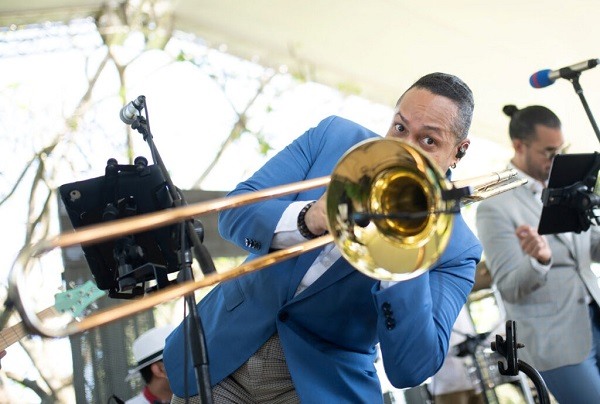
First is the maestro and director Patricio Bonilla, with more than 20 years as trombonist for the Dominican icon Juan Luis Guerra and his Grupo 440, puts the academy and rigor that guide the perfect execution of one of the most complete and constantly reinvented repertoires. Then we have Marcos López (popularly known as El Hijo De Nelo or Nelito), who always gives his best with great energy to raise the level of each performance, as well as connecting with the audience to make them part of the show.

Despite knowing each other for many years and beginning to work together in 2011, it was not until mid-2016 that they decided to define the project and seek a musical identity for their group. In this way they have managed to captivate the Dominican public, especially in private events throughout the Caribbean country.

“Our passion is music… our job is to entertain” are Marcos’ words when asked the meaning of La Banda. In addition, the great talent of these musicians who now want to show their own identity, after years of paying tribute to the greatest of the tropical genres, as is normally done in all the events that take place in the Caribbean. All that remains is to wait a lot more from this great duet, and see how this synergy continues to develop.

  • « Go to Previous Page
  • Page 1
  • Interim pages omitted …
  • Page 16
  • Page 17
  • Page 18
  • Page 19
  • Page 20
  • Interim pages omitted …
  • Page 28
  • Go to Next Page »

International Salsa Magazine (ISM) is a monthly publication about Salsa activities around the world, that has been publishing since 2007. It is a world network of volunteers coordinated by ISM Magazine. We are working to strengthen all the events by working together.