• Skip to primary navigation
  • Skip to main content

International Salsa Magazine

  • HOME
  • Previous editions
    • 2026
      • ISM / April 2026
      • ISM / March 2026
      • ISM / February 2026
      • ISM / January 2026
    • 2025
      • ISM / December 2025
      • ISM / November 2025
      • ISM / October 2025
      • ISM / September 2025
      • ISM / August 2025
      • ISM / July 2025
      • ISM / June 2025
      • ISM / May2025
      • ISM / April 2025
      • ISM / March 2025
      • ISM / February 2025
      • ISM / January 2025
    • 2024
      • ISM / December 2024
      • ISM / November 2024
      • ISM / October 2024
      • ISM / September 2024
      • ISM / August 2024
      • ISM / July 2024
      • ISM / June 2024
      • ISM / May 2024
      • ISM / April 2024
      • ISM / March 2024
      • ISM / February 2024
      • ISM / January 2024
    • 2023
      • ISM / December 2023
      • ISM / November 2023
      • ISM / October 2023
      • ISM – September 2023
      • ISM – August 2023
      • ISM July 2023
      • ISM Edition June 2023
      • ISM – May 2023
      • ISM April 2023
      • ISM March 2023
      • ISM February 2023
      • ISM January 2023
    • 2022
      • ISM December 2022
      • ISM November 2022
      • ISM October 2022
      • ISM September 2022
      • ISM August 2022
      • ISM July 2022
      • ISM June 2022
      • ISM May 2022
      • ISM February 2022
      • ISM January 2022
    • 2021
      • ISM December 2021
      • ISM November 2021
      • ISM October – 2021
      • ISM September 2021
      • ISM August 2021
      • ISM July 2021
      • ISM May 2021
      • ISM April 2021
      • ISM June 2021
      • ISM March 2021
      • ISM February 2021
      • ISM January 2021
    • 2020
      • ISM December 2020
      • ISM November 2020
      • ISM October 2020
      • ISM September 2020
      • ISM August 2020
      • ISM July 2020
      • ISM June 2020
      • ISM May 2020
      • ISM April 2020
      • ISM March 2020
      • ISM February 2020
      • ISM January 2020
    • 2019
      • ISM December 2019
      • ISM November 2019
      • ISM October 2019
      • ISM Septembre 2019
      • ISM August 2019
      • ISM July 2019
      • ISM June 2019
  • Spanish
  • Download Salsa App
    • Android
    • Apple

Search Results for: Academy

A new salsa talent with Latin parents and born in Boston

Why romantic salsa?

So here we have Sebastian Medina or better known as SBM. He is a promising young talent born and based in the city of Boston. How are you, Sebastián? It’s ice to meet you.

Thank you very much for the opportunity, Karina. I’m super happy and pleased to be here with you.
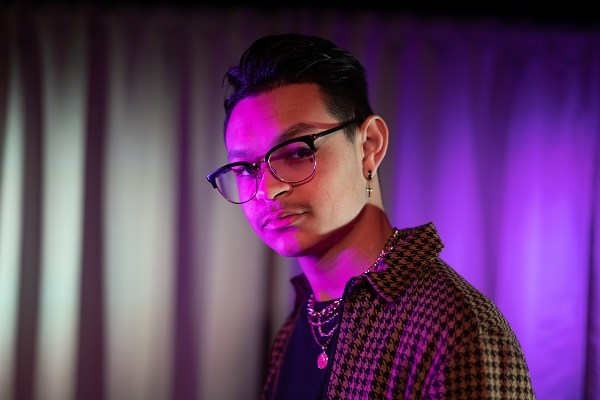
Salsa singer Sebastian Medina, better known as SBM

Why use the acronym SBM as your stage name?

SBM refers to my full name, which is Sebastián Medina. In the genre, there are few artists who use a short, cool and different name. So, I wanted a short and quick name by which people could identify me.

In passing, I wanted to differentiate myself from other artists with an unusual name.

Many young people like you choose urban genres to start their artistic careers. Why did you choose romantic salsa as your main genre?

As a musician I really identify with salsa because of its instruments, its harmony and everything to do with them. Although I really like romantic salsa, I also like hard dura. I like all types of salsa. I have this impulse to play the piano, get into the genre and enjoy it.

As a singer, the situation is different because I have always wanted to be on stage like the greatest artists. Being also a composer, when someone sings my music, I feel very grateful and supported by those who do it. I want to bring that music to all the young people of the world.

Reading a bit about your history, it is clear that you have always liked this genre.

Yes, I am a romantic. I always have been.

Sebastian Medina performing on stage

How was Sebastian selected for his scholarship?

You were selected for a scholarship at the Berkeley College of Music. How was the selection process and the audition? What was your reaction to being selected?

I was a little nervous during the audition. I sang a song in Spanish and very few people sing Latin music here in Boston. So, I went in and sang a beautiful song by Marc Anthony to compete for that scholarship.

Here in the city there is a program called City Music Boston, whose directors saw my talent and followed my progress in high school. I got a message from them, took some classes they had offered me about music, theory and other things and, meet the people in there. When December came, I received an email congratulating me and informing that I had been accepted to the Berkeley College of Music. That’s when I started to wonder how I was going to pay for college, but I was called from the City Music Boston program to inform me that they would offer me the scholarship that would cover my studies.

What do you think are the selection criteria of the Berkeley College of Music for choosing young talents like you? What do you think made you stand out from the rest?

I studied at the Boston Arts Academy, which is the only arts school here in Boston. I am always very dedicated to my music, my learning and what teachers do. I like to learn a lot and absorb all the energy that the music scene has. I think that the judges saw that in me. They saw my hunger and passion for music and composition.

Now that I’m at the Berkeley College of Music, I’m studying to be an arranger because I want to devote myself to arranging my own music and that of others, but always focusing on salsa.
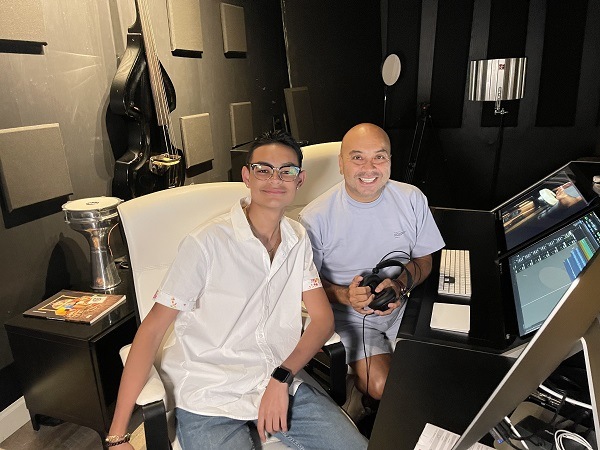
Sebastian Medina with Colombian record producer Diego Galé

I read that you like Marc Anthony and Los Adolescentes, but you also like urban artists such as Nacho and Nicky Jam. How do you reconcile these very different tastes?

As you know, young people don’t identify strongly with salsa today. For that reason, I’m trying to combine salsa with the urban genre to create new sounds. I’m aware that people really like trap and reggaeton, so I want to use those genres to combine them with my music. My goal is to appeal to the very young.

It may happen that I ask a friend of mine if he likes salsa and he replied that his parents and grandparents were the ones who listen to it. It makes me wonder why he can’t enjoy that music too. That has led me to use other sounds and melodies that young people can identify with.

Would you dive into urban genres?

If a recognized artist gives me the opportunity to do so, I would like to try, but now I want to focus on salsa because that is my priority.

What are the age ranges of the people who listen to your music?

According to Spotify, most of the people who listen to my music are between 18 to 30 years old.
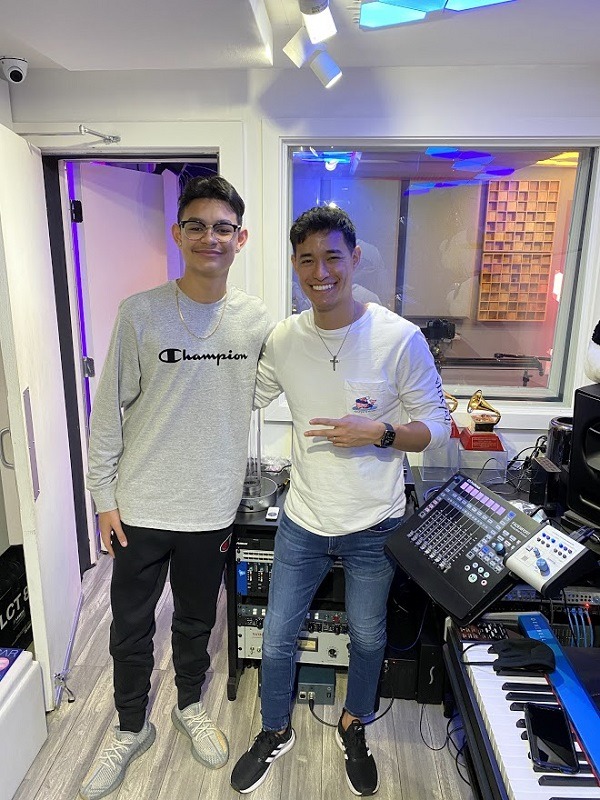
Sebastian Medina with Peruvian-American bandleader, and producer Tony Succar

Do you feel there is little unity in salsa?

I think great artists have a legacy built and now it’s up to young artists to create theirs because that’s how music should be. There are not many collaborations at the moment and that must change.

In the case of the urban genre, artists release collaborations almost every week and I don’t understand why salsa singers can’t do the same. I think that a salsa song can have a different arrangement so that it becomes a remix, but unfortunately that is not being done. There is also a part of the public that is a bit narrow-minded, which is why they don’t support new salsa talents, but rather those who already have a consolidated career.

Do you think that this union is what differentiates salsa from urban music?

I think so because there are cases such as Bad Bunny, who when he does a collaboration with a lesser known artist, the latter will automatically get all those streams, views, followers, among other things. That means that he is indirectly lending his support to that artist and his followers are going to support him as well.

You compose and play the piano. What other areas are you developing?

Right now, I’m in my third year of college and I’m learning as much as I can. At this point in my career, I’m taking a lot of music arranging classes. I’m learning how to arrange my music, how to keep two tunes going at the same time and other things. I’m also taking production classes and all kinds of programs that help me shape my ideas.

Sebastian is in his third year of college at present

Read also: Puerto Rican salsa singer Jai Ramos spoke to us of his life and projects

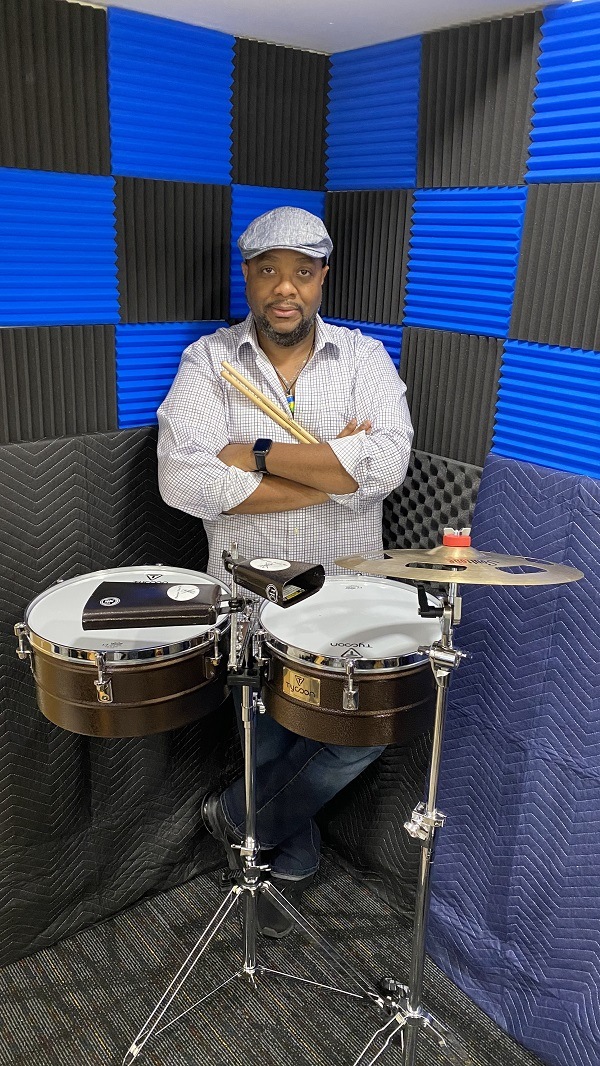
The interesting story of French percussionist Dominique Patrick Noel

How his career started

All right, so we are here with French percussionist, composer and musician Dominique Patrick Noel. How are you doing, Mr. Noel? A pleasure to have you here.

Well, thank you. First of all, I want to thank you for taking the time to interview me and to greet all those who is going to read it. Thank goodness, I am in good health and it is all good.

Dominique Patrick Noel tells us about his story and beginnings

You are a self-taught musician who started playing by age seven. Did you learn everything by yourself or did you receive some kind of training?

Since I come from a family of musicians such as my father and my two grandfathers, I can say that music has always been a part of my life. I started playing the drums by listening to a lot of jazz and fell in love with this genre. That’s how I started to develop the movements and patterns of jazz and the drums.

In school, I started playing and learned solfège, percussion, drumming, among other things. When I turned 15 years old, I started playing music at a pro level because I have always had the pleasure of learning by watching musicians, who had much more experience. Thank goodness, I had my mind fresh to grasp and remember what I had seen, which helped me a lot to continue developing in percussion, different instruments, rhythms, among other things.

When I started playing Latin music, my first instrument was the bongo. I had a mentor named Alfredo Mujica Jr.,m who knew my dad and learned by playing with him. When it was my turn, he was giving the task of helping me understand the patterns and other things. He told me that the best instrument I could choose to start with was the bongo because it would help me understand a little more about how salsa works and that helped me a lot. He showed me the basic pattern and how to imitate the sounds I heard until they were similar.

After that, I also learned to play the conga, the Dominican tambora, the güira, the batá, the cajon and the timbales.

His career started at the age of 15 and his first instrument was the bongo

When you played the bongo for the first time, did you know you wanted to dedicate yourself to the Latin genres permanently?

When I was nine years old, I moved to Martinique and lived there for about four years. There I was fortunate to learn its folklore, its rhythms, its typical instruments and its dances. I also learned to perform all those genres with the drums and tried to absorb all I saw. Concurrently, the zouk era was beginning and I fell in love with the genre since I heard it for the first time.

Sometime later, my dad and I went to the United States to be with my dad, who was living in Washington at the time. It was there where I started to accompany him in several of his activities and shows with his orchestras. Then, I began listening more to salsa, cumbia and merengue, something I liked very much. Then, I told him that I would like to learn what he knew and play with him, to which he replied that it looked good, but that it was a profession that I had to take very seriously. Therefore, he advised me to listen to everything, even if it wasn’t Latin music because all genres nurture the musician in one way or another.

With whom he has worked?

You have worked with Tito Puente Jr, Tito Rojas, Izis La Enfermera de La Salsa, Frankie Vasquez, Lalo Rodriguez, among others. What have you learned from them?

I have had the opportunity to play with maestro Tito Rojas and his musical director, Celso Clemente, gave me some advice. When rehearsing, I approached him to thank him for allowing me to play the bongo with them and ask him for advice for my career, to which he replied that he liked my work very much and that I was very good for someone who was not born in this Latin music environment.

He also advised me that I had to move forward, never play down my goals, accept constructive criticism and always stay humble. I will never forget his words.

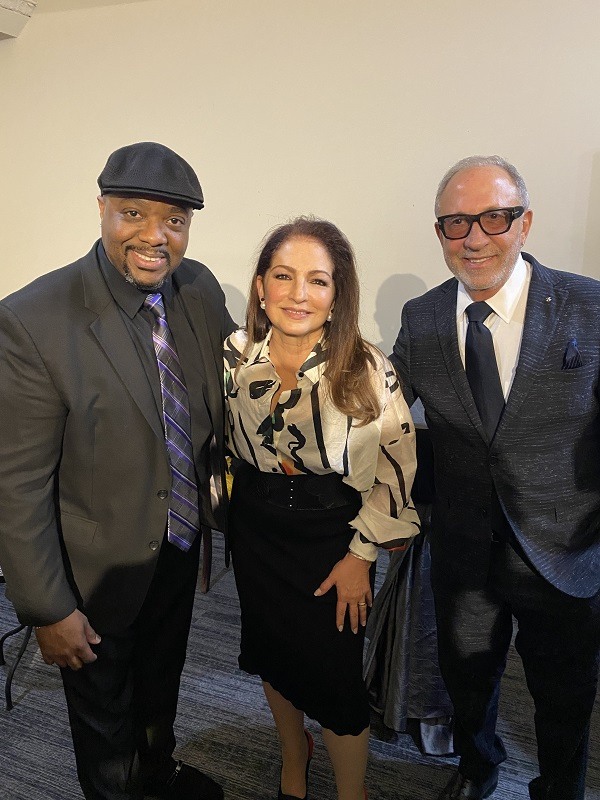
Dominique Patrick Noel next to Gloria Estefan and Emilio Estefan

We know that you are a voting member of the National Academy of Recording Arts and Sciences, which is well known for giving the Grammy Awards. What do you base to vote for a nominated candidate for an award?

There are several processes for artists to be nominated. For us the voters, it is a long process because we have the task of listening to much music and analyzing many details such as recording quality, lyrics, musicality and much more. There are many important elements to consider when choosing the person. I want to get to the point of saying that someone really deserves my vote for this or that category.

Voting takes time. It’s not something that you do in an hour or two, it takes a long time. The day of the awards ceremony, we already know who will the winners. At that point, we can say that all of them have managed to win via an arduous selection process.

Tell us about your song Mi Secreto with D’ William.

The skeleton of the song was my idea and I got together D’ William, to whom I offered to join the song. He wanted to collaborate with me in a merengue song for some time and I sent him the skeleton, which he liked and told me that something could be done with it. When he asked me if I already had the lyrics, I said no, but I wanted to base the song on an experience of mine, so I told him what it was about and the lyrics were written about that fact. Later, we made some additional arrangements and that’s how Mi Secreto was born.

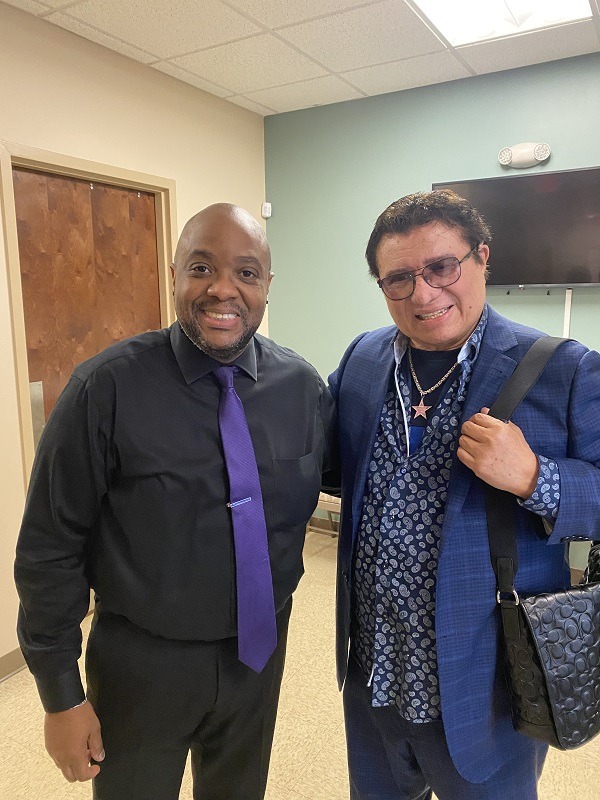
Dominique Patrick Noel next to Bobby Cruz

Read also: Earl Miranda and Ric Feliciano talk about the Latin Rhythm Boys and its history

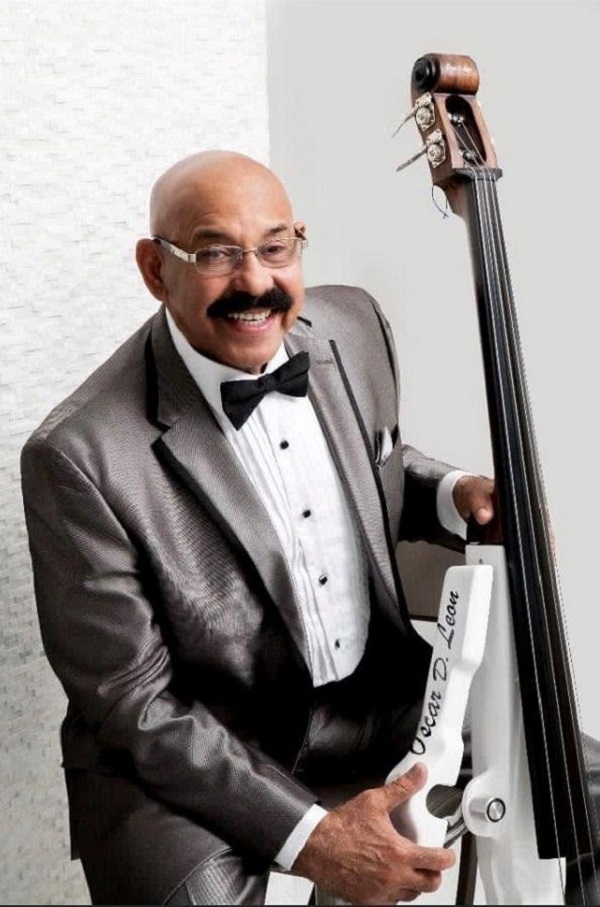
Oscar D’León celebrates 50 years of career in Caracas “International Salsa Magazine says present”

In September, the greatest exponent of Venezuelan salsa in the world will celebrate five decades of brilliant artistic career with an international tour that will have as its main event, an impressive and awaited symphonic gala at the Teresa Carreño Theater. And for september 22 at the Forum in Valencia.

Miami, May 19, 2022. Undisputed legend of Caribbean music, Oscar D’León, the Sonero of the World, celebrates 50 years of successful artistic career with an international tour that will take him to different locations in the Americas and Europe this summer.

This tour, which will begin on June 20 in Mexico City, will continue in July with the “50th Anniversary Europa Tour 2022”, culminating in a spectacular symphonic gala at the iconic Teresa Carreño Theater, which, during two performances on September 16 and 17, will give his audience the opportunity to sing and dance to the music that has made him the most recognized and admired Venezuelan artist in the world over the course of five decades.

Acapulco, Arequipa, Santiago de Chile, Miami, Frankfurt, Munich, Berlin, Paris, Amsterdam, Madrid, Tenerife, London, Istanbul are some of the cities that will live the energizing experience of seeing him on stage, a real party for music lovers.

Deserving of hundreds of awards and recognitions, including five Latin Grammys, D’León has been nominated nine times for the U.S. Grammy, being the first Venezuelan to obtain such a statuette. He did it in 2001 thanks to the song “Cielito Lindo, La Negra Mariachi Medley” Featuring-Oscar D’Leon, included in a collection album: “Masterpiece/Obra Maestra de Tito Puente y Eddie Palmieri”.

In 2013, he received the Award for Musical Excellence, a special recognition granted by vote of the Board of Trustees of the Latin Recording Academy to artists who have made creative contributions of exceptional artistic importance in the field of recording during their careers.

A true prophet in his own land, this global artist who began writing his formidable musical history in 1972, at the age of 28, when he formed the Dimensión Latina Orchestra, promises to celebrate his half-century of career with an unforgettable show at the Teresa Carreño Theater, the most important in Caracas, organized by the Venezuelan companies Imagen Producciones and Oz Show, in alliance with the National Orchestra System of that country.

Important Notes

Venezuelan musician who is among the most outstanding authors and performers of salsa and Caribbean music in general. Oscar D’León’s professional career began late: legend has it that one night, while visiting a nightclub in 1973, he heard that the band playing there had been fired. Oscar seized the opportunity and offered his own band to replace the one that had left.

The owner accepted and hired him to start playing a few days later. There was only one problem: the band at that time consisted only of D’León himself. He quickly got in touch with trombonist César Monge, told him what had happened and both got down to work to put together a line-up.

The band was finally formed by Oscar (vocals and bass, an instrument he had taught himself to play), César Monge (trombone), José Rodríguez (percussion), Enrique Iriarte (piano) and José Antonio Rojas (trombone).

Thus was formed La Dimensión Latina, Oscar D’León’s first orchestra. “Pensando en ti” was the first of the orchestra’s long list of hits. Four years later, Óscar left the band and was replaced by Puerto Rican Andy Montáñez, a vocalist who sang with the Gran Combo de Puerto Rico. Óscar returned with his own orchestra, La Salsa Mayor, with which he recorded his first album, titled after the group’s name: La Salsa Mayor (1977). The work was a great success in his country, and little by little his name began to be heard on an international scale. The following year he recorded the album El Más Grande, which contained the songs “El baile del suavecito” and “Mi bajo y yo”, and shortly afterwards he made his first visit to New York to offer live performances.

Aside from being a great sonero, Oscar D’León is also an extraordinary showman. Almost always accompanied by his bass, with which he plays and dances as if they were a couple, Óscar moves around the stage with great skill. In Venezuela, Óscar D’León is an idol, not only as a singer and musician, but also as a model of a self-made man who, from a very humble position, achieves fame and success on an international scale.

He is considered one of the best interpreters of Afro-Latin music of all times and is undoubtedly among the Venezuelan artists with more projection abroad.

Despite having gone through several stages in the development of Latin music, Oscar D’León’s style, always unmistakable, has maintained some constants that have allowed him to ensure the loyalty of his wide audience. D’León has recorded with the most outstanding salsa stars; among his collaborations, which can be traced in more than fifty albums, stands out his participation in The Mambo King, the hundredth full-length album by the legendary Tito Puente.

Corresponsal: Lida. María Fernanda León

www.Sanjuanproducciones24.blogspot.com

Salsa Invades Belgium In September

We tell you about 5 Salsa events that you cannot miss

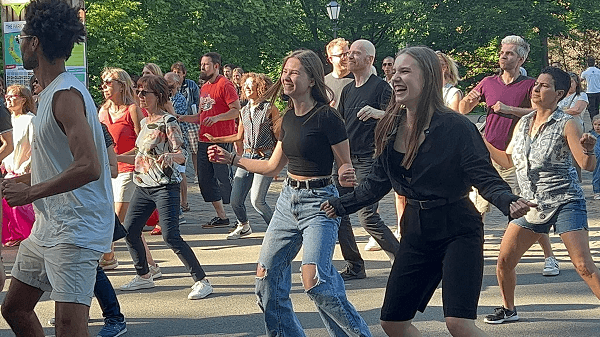
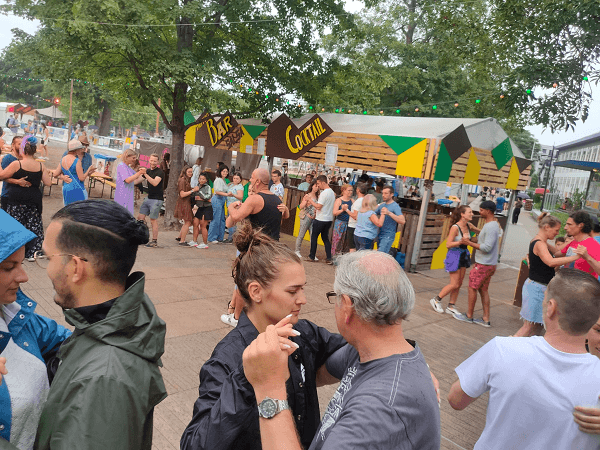
Salsa Park

Caption: Food & Latin Music at Josaphat Park in Belgium

We started with the dance school specializing in Cuban Salsa, Cuban Style, and Rueda de Casino in the capital of Belgium (Brussels), Danza Mania. This academy with more than a decade of experience teaches Salsa classes for all levels with an emphasis on mastering combinations, movements, and figures in a fun and relaxed environment.

The Danza Mania’s motto https://danzamania.be/ is Dancing with Feeling, which is the motive to offer the last free workshop for all Salsa lovers on Friday, September 2nd.

At 7 PM the lessons will begin for those salseros who want to start in Cuban Salsa but don’t worry, they will also teach classes for intermediate and advanced levels. An hour after Salsa Party will begin with DJ Felito, and at 8:45 PM, there will be entertainment with the Danza Mania team. The workshop will end with the last Salsa Party with DJ Felito from 9 PM until dawn. Where? At La Laiterie in the heart of Josaphat Park, 1030, Schaerbeek, Belgium. Dare to participate and have a pleasant recreation at no cost in a warm and welcoming environment.

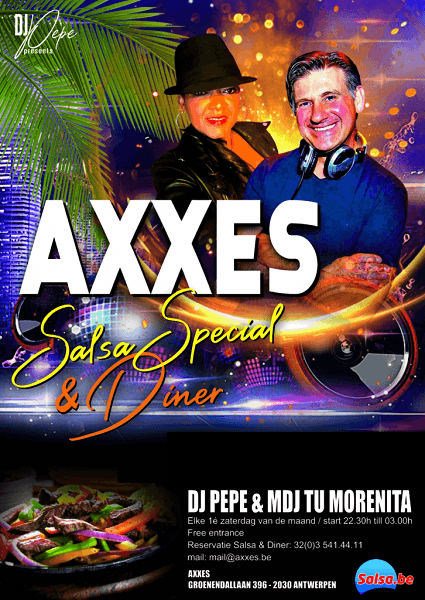
Axxes Café

Caption: A pleasant evening with dinner and lots of Salsa

We continue with the second recommendation in this edition and it is Axxes Café https://www.axxes.be/. In this venue, you can taste delicious Mexican dishes and tasty cocktails.  Additionally you can dance to Latin rhythms such as Southern Salsa, Bachata, Merengue, and Kizomba every first Saturday of the month from 11:30 PM to 3 AM. Admission is free.

DJ Pepe is in charge of making this Salsa night a reality since last Saturday, July 22nd (2022). This resident DJ of Latin night in Belgium for almost two decades traveled for the first time to Old Havana (Cuba) in 1997, where he fell in love with this musical genre. Since then, he has been a faithful lover of Salsa, and is currently the organizer of the Salsa evening at the Salsa Axxes restaurant and café in the Kinepolis complex. Address: Groenendaallaan 396, 2030 Merksem. Enjoy the most southern atmosphere in Belgium!

Mambo Surge Weekend 

Caption: Daily workshops from 1 PM to 6 PM

The second weekend of this month Mambo Surge Weekend www.mambosurge.com event will be held in its first edition with workshops (7 PM – 8 PM), shows (11 PM), and social events in three different rooms of the Theater of Dramatic Art OC Djoelen, Steenweg op Mol 3/Bus 2, Oud-Turnhout, Belgium from 9 PM.

Mambo Surge Weekend is a cooperation of experienced Salsa event organizers whose goal is to create quality events that spread love and passion for this Afro-Caribbean rhythm.

Mambo Surge Weekend is from September 9th to 10th and will feature the following local DJs team: DJ CyCy, DJ Asmadi, DJ Cisko, DJ Louis, and DJ Lukas “El Taz” mixing the best Caribbean music. The cost to attend this event is €80.

10 Dance Delirium Salsa Festival Gante

Caption: Tickets for the daily Salsa parties range from 10 EUR to 15 EUR

This seventh edition of the festival will take place from Friday, September 2nd to Sunday, September 4th and will be packed with three days and three nights of parties in two areas (Salsa/ Bachata), around 20 hours of varied workshops, shows from at 11:30 PM, meet & greet with national and international artists, and three DJs: DJ Willy VIP, DJ Cisko and DJ Alfons doing their best mixes.

The location for this edition of the 10 Dance Delirium Salsa Festival Ghent www.10dancefestival.be will be the modern dance complex, Doxtudio, located at Dok-Noord 7/107, Gent. The cost of the Full Pass is 85 EUR, and street parking will be free from 11 PM to 9 AM each day.

But, if you want to continue the fun with the team of the young and dynamic dance school in Ghent, Lékip Dance, Dox Summer Sundays 2022 will take place on Sunday, September 11th, with two hours of lessons. From 8 PM to 9 PM the Afro Body Movement class will be held, and an hour later, you will be able to do the Rueda Cuban Style lesson by the pair of instructors Osbanis & Anneta from Poland.


Michiel Braam: The Virtuous Pianist from Nijmegen

Two years after the creation of the Latin Jazz album XYZ with Son Bent Braam

Michiel Braam presented XYZ at the Music Meeting Festival. “The festival takes place in Nijmegen, where I was born (1964), grew up, and still live”. Foto: Marjan Smeijsters

Virtuous pianist, masterful producer, and surprising composer. Winner of the Podium award (1998) and Boy Edgar (1996/1997). Musician trained by conviction and at the ArtEZ Music Academy in Arnhem. His lifestyle is synchrony between freedom, creativity, teaching, and love. It is how he presents us his life and his works in Nijmegen, Michiel Braam.

This friendly artist with a protective childhood where love prevailed always had the support and freedom to develop and create everything he considered necessary to him. Michiel is the only one in his family who turned to music professionally, but the rhythm of melodies runs through his veins. His parents played the piano self-taught. His mother wrote notes while his father just improvised.

During high school, he participated in a band for which he wrote and arranged all the music. He studied at the conservatory and founded his more minor quartet Bentje Braam (“Little Band Braam”) in 1985. In the same year, he traveled with his band to Sweden to be the first Dutch group to open the EBU Jazz Festival and wrote his first composition for the Dutch radio “Cows and Beasts”. A year later, he created the band Bik Bent Braam.

“Music is, as long as I know, everything to me. I feel better with music. I dance when I’m happy, and music comforts me when I’m not doing so well… It seemed like a logical step to pursue what I enjoyed most.” Michiel Braam https://www.michielbraam.com/

By 1988 Braam had had no contact with Latin music until percussionist André Groen asked him to be the pianist for his Orquesta Europea de Danzón. In this regard, this wonderful pianist told us: “He wanted a pianist who had a wild free Jazz attitude and who didn’t only play the well-known Latin patterns because he thought that fitted better with the authentic Cuban music. That music immediately appealed to me, especially because of its rhythmic impact, but also because as a pianist, you have a lot of freedom to go in all directions during improvisations. I have touched on those Latin patterns to some extent and in the course of the 10 years that I played in that orchestra I managed to master them better, but it was mainly the combination of freedom and rhythm. That orchestra lasted ten years and we celebrated the thirtieth anniversary in 2018 with a couple of concerts. Great to do that again and I felt again exactly why I found it so appealing back then”.

In 1988 Michiel won the Podium Prize, an encouragement prize for Dutch Jazz music and in 1996/1997 he won the Boy Edgar, the highest prize for Dutch Jazz.

This pianist, the architect of great projects, built a party based on the Latin alphabet of Western culture on the album XYZ released in 2020, creating a danceable mix that includes Mambo, Rumba, Son, Danzón, Boogaloo, Calypso, Rumba, Bembé, Mozambique, Samba, Afro, Bolero, Cha-cha, Merengue, Bembé, and Samba. Michiel is also the Director of the Jazz and Pop department of the ArtEZ conservatory and founded a Danzón orchestra. Now, I leave you with the rest of this wonderful interview that I had the opportunity to do with the great Maestro Michiel Braam. Enjoy!

They have played on the ZomerJazzFiets tour, North Sea Jazz, and Bimhuis. Likewise, some of the members of the orchestra are fluent in Spanish.

– How did the idea of the Latin jazz album XYZ come about?

In 1995 I wrote “The XYZ of Bik Bent Braam” for my big orchestra at the time, Bik Bent Braam (phonetic Dutch for “Big Band Braam”). I thought it would be fun to make a festive version of it to celebrate the 25th anniversary. The XYZ was (and is) a 26-part suite, with a piece for each letter of the alphabet, starting with Aardedonker (English title Atramentous, Spanish Apagado, both not exact translations…) and ending with Zwoerdspek (Zaftig, Zafio). I revisited all the pieces in 2020 and paired various styles with the original material. In the 1995 original, they were mostly jazz-like styles (bebop, free improv, swing, jazz ballad, etc), but Chachachtig was a rumba even then. It is the only piece that has not changed its mood substantially.

– What happened to the previous members and how did the new members take hold?

The original orchestra Bik Bent Braam was composed of top musicians from the Dutch improvised music scene. The orchestra existed from 1986 to 2013 and had a number of lineup changes. In the final version of Bik Bent Braam there were only a few members left from the very beginning. That the musicians of Bik Bent Braam could read well was not really a requirement, the core was affinity with swing and great improvisational skills. For this new version, it was important not only that the musicians were excellent improvisers, but also that they had to have a feel for Latin music and also that they were outstanding readers, because I did not foresee that there would be very much rehearsal time and the notes are quite challenging. Bik Bent Braam was subsidized with government funding and I could then easily occupy a longer period with many rehearsals. Son Bent Braam, the current line-up, does not have its own subsidy, so we have to look at each concert and hope that everyone can make it. There have been quite a few subs, and they too have to be able to improvise and read well.

– Tell us about your Danzón orchestra.

André (André Groen – Percussionist) wanted to immerse himself in traditional Cuban music. There is so much richness in the danzón with its fixed forms that pass by in each piece with the most beautiful melodies and the wildest spaces for improvising on highly danceable rhythms. We found the instrumentation with violins, cello, flute, percussion, double bass, and piano attractive. After ten years I got too busy with my jazz ensembles, by then I was touring all over the world with Bik Bent Braam and other groups and especially with my Trio BraamDeJoodeVatcher. I could hardly combine it anymore with the Danzón Orchestra and the great pianist Peter van Marle took my place, which made me feel very humble. The European Danzón Orchestra then existed for another year or so. I honestly don’t know why it stopped then. In 2018 we did a couple of reunion concerts, great fun to do.

– How many years have you been in charge of the Jazz and Pop department of the ArtEZ conservatory and what do you teach the new generations based on your experience?

I have been head of the program since 1992. It is part of a broad arts university and is located in a building that also houses dance, theater, fine art, applied art, fashion, and creative writing. As a head, I don’t teach very much… only when students very specifically ask for it a few hours of individual lessons per year and a few group lessons, and I also regularly give master students some lessons. My message is usually quite short and clear: there are millions of people who play an instrument excellently, and you can probably teach an orangutan to play Keith Jarrett better than Keith does himself, but – apart from the fact that that would be a fun YouTube hit – there is no point; in our music, it is almost all about an authentic voice, including all the shortcomings that are in everyone, which also make you a unique musician. Obviously, you must have many skills as a musician, but my life motto is that one’s deficiencies are far more important for one’s personality than one’s skills, and that attitude underlies my whole vision of art education.

“With Nos Otrobanda have started to concentrate on the music of Noro Morales and have his composition Maria Cervantes (single) firmly in our program. His music will probably be the subject of our new album”. Foto: Marjan Smeijsters

– What are your next projects?

Everything is starting up again post-covid. I want to record a solo album on my grand piano, a so-called “Alurip”. That’s an aluminum grand piano made in the fifties with a specific sound. And the album of our trio Nos Otrobanda, which specializes in Antillean music, is almost sold out. That doesn’t matter obviously, if there are no more physical copies then you can always hear the music through iTunes, Spotify, etc, but it’s a great opportunity to make new recordings again and the intention is to go to Curacao and record music in the Fortkerk in Willemstad, the place where we did a couple of concerts in 2018. That was a great experience, what a nice place and sweet audience!

– How was the process to make a living from music?

I stuck pretty firmly to the rule that you have to do what you like and not let yourself be distracted too much from that. And I look for what it takes to make it happen. From 1996 to 2012 I received an annual government subsidy to realize my projects. I am also a real musician in the sense that I have a mixed professional practice (playing, writing, teaching, producing, almost every musician has roughly that mix) which means that it is always possible to make a living out of it and we never had to worry about bread and a place to live.

Michiel Braam & Son Bent Braam Orchestra.  Foto: Marjan Smeijsters

I make music mainly because I can’t do otherwise. Music is a way to communicate; it makes you a little better… Leitmotiv in everything is that in music, I am free to do anything I want. For example, I did play Purcell’s Dido and Aeneas with the exquisite reed quintet Calefax, also improvising on the various songs from that opera.” Michiel Braam

Home

  • « Go to Previous Page
  • Page 1
  • Interim pages omitted …
  • Page 15
  • Page 16
  • Page 17
  • Page 18
  • Page 19
  • Interim pages omitted …
  • Page 28
  • Go to Next Page »

International Salsa Magazine (ISM) is a monthly publication about Salsa activities around the world, that has been publishing since 2007. It is a world network of volunteers coordinated by ISM Magazine. We are working to strengthen all the events by working together.