• Skip to primary navigation
  • Skip to main content

International Salsa Magazine

  • HOME
  • Previous editions
    • 2026
      • ISM / May 2026
      • ISM / April 2026
      • ISM / March 2026
      • ISM / February 2026
      • ISM / January 2026
    • 2025
      • ISM / December 2025
      • ISM / November 2025
      • ISM / October 2025
      • ISM / September 2025
      • ISM / August 2025
      • ISM / July 2025
      • ISM / June 2025
      • ISM / May2025
      • ISM / April 2025
      • ISM / March 2025
      • ISM / February 2025
      • ISM / January 2025
    • 2024
      • ISM / December 2024
      • ISM / November 2024
      • ISM / October 2024
      • ISM / September 2024
      • ISM / August 2024
      • ISM / July 2024
      • ISM / June 2024
      • ISM / May 2024
      • ISM / April 2024
      • ISM / March 2024
      • ISM / February 2024
      • ISM / January 2024
    • 2023
      • ISM / December 2023
      • ISM / November 2023
      • ISM / October 2023
      • ISM – September 2023
      • ISM – August 2023
      • ISM July 2023
      • ISM Edition June 2023
      • ISM – May 2023
      • ISM April 2023
      • ISM March 2023
      • ISM February 2023
      • ISM January 2023
    • 2022
      • ISM December 2022
      • ISM November 2022
      • ISM October 2022
      • ISM September 2022
      • ISM August 2022
      • ISM July 2022
      • ISM June 2022
      • ISM May 2022
      • ISM February 2022
      • ISM January 2022
    • 2021
      • ISM December 2021
      • ISM November 2021
      • ISM October – 2021
      • ISM September 2021
      • ISM August 2021
      • ISM July 2021
      • ISM May 2021
      • ISM April 2021
      • ISM June 2021
      • ISM March 2021
      • ISM February 2021
      • ISM January 2021
    • 2020
      • ISM December 2020
      • ISM November 2020
      • ISM October 2020
      • ISM September 2020
      • ISM August 2020
      • ISM July 2020
      • ISM June 2020
      • ISM May 2020
      • ISM April 2020
      • ISM March 2020
      • ISM February 2020
      • ISM January 2020
    • 2019
      • ISM December 2019
      • ISM November 2019
      • ISM October 2019
      • ISM Septembre 2019
      • ISM August 2019
      • ISM July 2019
      • ISM June 2019
    • 2016
      • ISM December 2016
  • Spanish
  • Download Salsa App
    • Android
    • Apple

Search Results for: Afro Latin Jazz

Mulatu Astatke, the first African to earn a PhD from Berklee College of Music

Mulatu Astatke (or Astatqé) (Jimma, Ethiopia, December 19, 1943) is an Ethiopian musician, composer and arranger. He is considered the father of Ethio-Jazz.

His musical training took place at the Trinity Laban Conservatoire of Music and Dance in London, where he studied clarinet, piano and harmony, New York and Boston, where he was the first African student and also the first African to earn a PhD from Berklee College of Music; there he was trained in vibraphone and percussion.

Mulatu Astatke, the first African to earn a PhD from Berklee College of Music

Later he combined the influence of jazz and Latin music with traditional Ethiopian music.

My desire to start making Ethio-jazz began in London while I was studying there in the 1950s; then I knew I wanted to be different with my music. I looked for musicians from different African backgrounds and saw that they were successful and promoted the culture of their country.

However, there was very little from East Africa and Ethiopia, so I decided at that point that I would create something unique based on the rich heritage of our music and show how much we have contributed to the world of music in general.

That journey began to take shape at Berklee College in Bastan. I was the first African musician to study there and that period was very important for me.

I learned the technical aspects of many different musical forms and my teachers gave me the confidence to move in my own direction, teaching me that it was okay to be different in my music and try something completely new.

Mulatu Astatke.
Mulatu Astatke.

Ethiopian cultural music is based on four modes  tezeta, bati, anchihoy and Ambassel  and within my music, I knew that those modes could not be played.

They had to remain at the center of my music or the whole character of the sound would change and become distorted. I began to add beautiful colors with chords, voicings, bass lines and rhythm sections, writing progressions that fit together well. It’s very difficult to write 12-note music around the Ethiopian modes without destroying them.

In the mid-’60s I returned to Addis, but I kept going back and forth to the United States.

At that time, no one was fusing Ethiopian music with jazz.

In my country there was the First National Theater Orchestra, and both the police and the army had their own orchestras.

There were also bands like the Echoes and the Ras Band.

Musicians at that time based their melodies strictly on the four Ethiopian modes, using techniques like the “canon,” with melodic lines echoing each other.

With Ethiopian jazz, I consciously wanted to expand and explore the modes in different ways.

Mulatu Astatke (or Astatqé) (Jimma, Ethiopia, December 19, 1943) is an Ethiopian musician, composer and arranger. He is considered the father of Ethio-Jazz.

I formed a group called The Ethiopian Quintet in New York, made up of a mix of Ethiopian, Latino, and African-American musicians (there weren’t many Ethiopian musicians in the United States at that time).

The band included trumpeter and pianist Rudy Houston, who later played with Yambu, and Felix Torres, who played with Sonora Ponceña.

I have always felt a deep connection between Latin and African music; I traveled to Cuba to find out where the first American landed, I heard their musicians play and dance and although they sang in Spanish, the tempo, rhythm and feeling were very similar to aspects of African music.

So, with the Ethiopian Quintet, I wanted to show the African contribution to Latin music and it was my first opportunity to experiment and start developing my vision of Ethio-Jazz with this band.

With the American and Puerto Rican musicians in the group we created a different atmosphere and arrangements.

It was a great opportunity for me and they loved what I was writing and the direction I was trying to take.

We did quite a few concerts, some Spanish weddings, events upstate New York and in Manhattan.

We played at the Village Gate with Dave Pike, a great friend of mine at the time, one of the world’s greatest vibraphone players. He played a lot with Herbie Mann and I remember sitting in to watch one of his recording sessions.

I saw a lot of other great musicians in concert, from Coltrane to Bud Powell and Bill Evans. On the New York live circuit I met a producer called Gil Snapper.

His musical training was at the Trinity Laban Conservatoire of Music and Dance in London,

Gil was a very nice and interesting guy and worked with musicians of many different styles.

He picked up on my music very quickly; we got on well and he invited me to record with The Ethiopian Quintet, so our first albums with him were ‘Afro Latin Soul’ Volumes 1 and 2, both recorded during 1966.

On the first volume, I performed an adaptation of an old Ethiopian warrior song, ‘I Faram Gami I Faram’.

I would have liked to have an Ethiopian singer for the song, but it was sung in Latin and the lyrics were translated to the singer so he could sing it in Spanish.

Nevertheless, it turned out to be a nice combination. The album included other compositions that were important steps for me: ‘Mascaram Setaba’ (Summer is Coming), ‘Shagu’ and ‘Almaz’. On the second volume, Rudy Houston suggested a piece of music that we called ‘The Panther’, in reference to the animal, but also in recognition of the Black Panthers, who were very active in the civil rights struggle in the United States at that time.

On this album, one of my favorites is my composition ‘Girl From Addis Ababa’, which worked very well as a fusion of Ethiopian modes and R&R rhythms, an indicator of the more refined Ethiopian jazz sound of my later album for Worthy, ‘Mulatu Of Ethiopia’ (1972). It also included my new arrangement of the 1950s tune ‘Lover’s Mambo’.

Both albums include nice arrangements also by Oscar Garcia, Rudy Houston and Gil Snapper as well.

I feel proud of the recording when I listen to it again. It was an important moment in my career and it was a very interesting and progressive time to be in New York in the mid-60s.

I was there at the same time as Hugh Masekela, Miriam Makeba and Fela Kuti and, each in their own way, we tried to do our part to put Africa on the map of contemporary jazz.

Mulatu Astatke & His Ethiopian Quintet - Afro-Latin Soul (1966, R-2018)
Mulatu Astatke & His Ethiopian Quintet – Afro-Latin Soul (1966, R-2018)

Mulatu Astatke, April 2018

Mulatu Astatke & His Ethiopian Quintet – Afro-Latin Soul (1966, R-2018)

Tracks: Afro Latin Soul: 01. I Faram Gami I Faram (Mulatu Astatke)

02. Mascaram Setaba (Mulatu Astatke)

03. Shagu (Mulatu Astatke)

04. One For Buzayhew (Mulatu Astatke) ke)

05. Alone In The Crowd (Gil Snapper)

06. Almaz (Mulatu Astatke)

07. Mulatu’s Hideaway (Mulatu Astatke)

08. Askum (Rudy Houston)

09. A Kiss Before Dawn (Gil Snapper & Weiss)

10. Playboy Cha Cha (Oscar Garcia) Afro Latin Soul Vol. 2:

11. The Panther (Boogaloo) (Rudy Houston)

Konjit (Pretty) (Oscar Garcia)

Soul Power (Rudy Houston)

Lover’s Mambo (Traditional, Arr. Mulatu Astatke)

Love Mood For Two (Rudy Houston)

Jijiger (Rudy Houston)

Girl From Addis Ababa (Mulatu Astatke)

Karayu (Oscar Garcia)

Raina (Rudy Houston)

Musicians:

Mulatu Astatke (Vibraphone, Piano, Drums)

Rudy Houston (Piano, Trumpet)

Robert Cuadrado (Bass)

Felix Torres / John Perez (Congas / Bongos on Vol. 1)

Pete Iglesias (Congas on Vol. 2)

Tony Pearson (Timbales)

Information provided (October 5, 2024)

Also Read: Flora Purim has earned her two Grammy nominations for Best Female Jazz Performance

Juan Karlos Jiménez talks about his orchestra Salsa Nueva Band and freelance career

Los Angeles is an inexhaustible source of Latin talent and this is proven every day with a large number of singers, musicians and groups that give all for all in each of their performances, with which they manage to earn a privileged place in the city and California’s music scene.    

On this occasion, we talked with the great Mexican percussionist Juan Karlos Jimenez, with whom we had the privilege of making contact to learn more about his career and contributions to Latin music in US territory.   

percussionist Juan Karlos
This is gifted Mexican percussionist Juan Karlos Jiménez, with whom we talked in this occasion

Juan Karlos’ beginnings in music   

Juan Karlos was born in Veracruz, place he describes as ”one of the most salsa-loving cities in Mexico”. The first musical influence in the artist’s life has been his own father, who played a lot of Cuban music of the time when Juan Karlos was still a child, and among his favorite groups and artists were La Orquesta Aragón and Tito Puente. 

Of his four brothers, he was the only one who devoted himself to music professionally and wanted to take salsa as a foundation, being something exceedingly rare for a Mexican, since most of the population does not usually see this genre as part of the typical music of the country. However, Juan Karlos also points out that, since Veracruz is located in the tropical part of the country, the city has a lot of Caribbean musical influence. This was one of the reasons that led the artist to become so passionate about salsa. 

In addition to music, he also studied a degree in communication and graphic design at the Universidad del Valle de Atemajac, Guadalajara. As for the communication part, being a 13-year-old boy, he began working at a radio station, which would be the beginning of interest he would have in the not too distant future for locution in a much more formal way. This led him to work in very prestigious places in Mexico such as Televisa Radio, giving him the necessary experience to know how to handle himself as a musician in relation to the media when he would promote his orchestra years later.   

While I was university studying, I worked in a music store and one day I had to serve to the Cuban Afro-jazz singer Rosalía de Cuba, who invited me to attend Cuban nights of which she was part of in restaurants and clubs in Guadalajara. One night, I was encouraged to go and started playing with one of the trios that performed that day and the leader of the group was so fascinated with my skills as a percussionist that he hired me permanently in exchange for 150 Mexican pesos per performance” said Juan Karlos about his time as a student.   

He also pointed out that in order to reach such a good level, he took a few classes with the late Cuban arranger, composer and bongocero Adalberto Alvarez, leader of the group Son 14, thanks to whom he was able to play percussion so efficiently.   

Today, he exercises his skills as a graphic designer with his orchestra Sangre Nueva Band, since he is the one who creates the album covers, flyers and artwork in general related to his musical project.  

Juan Karlos posing
Juan Karlos Jiménez posing for camera

Moving to the United States   

When Juan Karlos was just going to form his first band in Guadalajara, he met Maika Miller, who played for the Mexico’s Philharmonic orchestra and would be his partner for several years. Some time after they married, Milka was offered a master’s degree in Los Angeles and asked her husband to go with her, to which he gladly accepted because of the new opportunities he would have in his new home.   

A few years later, he retried creating his group in her new city of residence after 15 years of hard work. And while Juan Karlos and Milka are no longer a couple, they continue to be part of the same musical project, which they have baptized Sangre Nueva Band.   

However, in order to reach that point, he had to gain a lot of experience playing and perfecting his technique, but fortunately, many groups gave him the opportunity to make a living and be better every day at what he did, such as Conjunto Son 14, Carache, Santiago de Cuba, Rosalía de Cuba, Johnny Blas Y Afro Libre Orquesta, La Orquesta de Yari Moré, Tabaco y Ron, among others. 

His first attempt at creating an orchestra was Jazz Son, which he founded with Maika in Mexico with the idea that his music would be based on the fusion of jazz and son, but his plans were postponed with their sudden move to the United States. Finally, in 2009, he managed to found the orchestra he has today, which he called Sangre Nueva Band. 

Even so, he never stopped playing independently for other artists such as Gilberto Santa Rosa, Victor Manuelle, Ruben Blades, Cheo Feliciano and many more.  

Juan Karlos playing
Juan Karlos Jiménez playing and recording in a studio

Salsa Nueva Band   

One of the things that led Juan Karlos to create his own orchestra in Los Angeles was his desire to be the leader of his own project. He says he feels fortunate and grateful to be able to play with other orchestras, but in his own words ”it is better to be the head of mouse than the tail of a lion”. For the same reason, the idea of working in his own business without having to rely on other orchestras or singers was always in his head. 

When he decided it was time, he had a chance encounter with an Armenian musician who, from the street, saw his congas in the back of his car, asked him if he was a musician and invited him to play at a nightclub next Saturday. By that time, he had managed to gather six musicians playing three congas, a trumpet and a bongo. On the same day, a music entrepreneur asked him to play at another venue, so he ventured to enlarge the group and was asked to name the band, which he called ”Sangre Nueva”.  

Today, Juan Karlos is very happy with all the musicians who accompany him on this adventure and hopes that they will stay with him for a long time. 

Read also: Raúl Vargas and his flamenco rumba duo Dos Bandoleros 

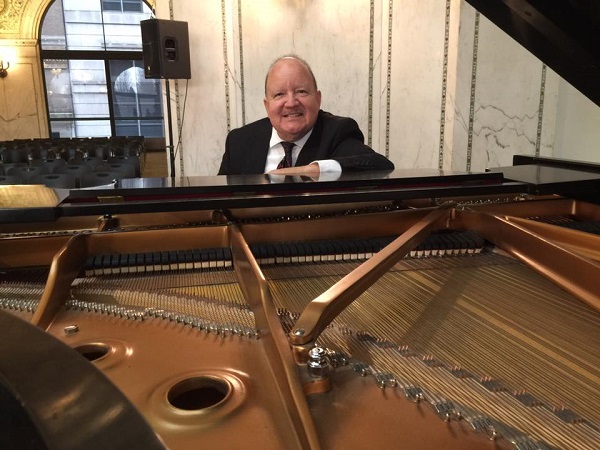
Samuel del Real was an excellent pianist, orchestra conductor, arranger and educator

Born on August 22, 1953 in Barranquilla, Colombia, he was a well-known pianist, orchestra conductor, arranger and educator.

Samuel del Real was an excellent pianist, conductor, arranger and educator.Samuel del Real was an excellent pianist, conductor, arranger and educator.
Samuel del Real was an excellent pianist, conductor, arranger and educator.

He was part of renowned orchestras such as Pacho Galán, La Dimensión Latina and El Trabuco Venezolano and participated in a series of record productions in Caracas, Venezuela.

In 1983 he recorded his first album with his own band. His first hit “Ella No Baila Sola” became the theme song in every night club in Colombia, Venezuela, Peru, Panama, USA among other countries.

In 1985, Samuel moved to Chicago, USA, where he quickly formed his orchestra with members of different nationalities resulting in a mixed sound for his music.

Since then Samuel del Real and his orchestra participated in many festivals, concerts, private events in cities such as Chicago, London, New York, Minneapolis, St. Paul, Detroit, Indianapolis, Miami and more. “Piano Caliente”, ‘Piano Jamboree’ and ‘Piano Navideño’ are the most recent albums that include selections from his extensive Latin jazz repertoire, as well as new interpretations of Afro-Cuban classics from his album entitled Piano Caliente.

Samuel In 1985, Samuel moved to Chicago, U.S.A.

Samuel has ventured not only into the salsa genre, but also into Latin jazz that surprises even those who don’t know him.

It doesn’t take much to realize that Samuel was “El Maestro del Buen Ritmo” and that his music is here to stay.

Samuel del Real: the artist from Barranquilla who triumphed in the United States.

He trained musically and academically, open to the idea of expanding his artistic horizons.

“I began my musical studies in Fine Arts, among my teachers I remember Günther Renz.

In Venezuela I attended the Juan José Landaeta Conservatory and the Caracas Philharmonic Conservatory with the pianist Paul Rosenbloo.

I studied harmony and counterpoint. With maestro Antonio Lauro, composer and guitarist, I completed my academic training”.

At the age of 15 he began his professional career as a pianist in the Pacho Galán Orchestra. There he learned the tricks of popular dance music of the Colombian Caribbean, and the possibilities of sharing with national musicians opened up for him.

DiegoDel Real, my first piano teacher, my advisor, my partner in producing, arranging and recording music.

With him I learned the routine of Caribbean music, he had a very positive attitude towards me. He would summon me before rehearsals to teach me how to play, he would take the score and sit with me at the piano: ‘Play like this’, he would tell me, and ‘play the acor-des this way, this is the tumbao, this is the phrasing’, all with a lot of patience”, he recounted.

“There was Pi¬chirilo on bass, Jorge Pérez on timbales and drums; and Joaquín Pérez on congas. Chicho Sarmiento, Clí¬maco Sarmiento’s son, played the alto saxophone; Pacho Aragón played the tenor saxophone. On trumpets Armando Galán, Raúl Lastra and Chino Acosta.

Rosendo on trombone. Maestro Pacho Galán would arrive to conduct the first set and then he would leave, Armando would be in charge of the orchestra. That’s when my interest in Caribbean folklore began.

I did not record with Pacho’s orchestra because he did not record in that period, but I played a lot of his music and I still play it in Latin jazz.

“For me it was a great school,” he said.

Although he has lived outside the country for many years, when he returns to Barranquilla it is as if he had never left.

It shows in his confidence to walk the streets, to visit places, to call friends, to exchange anecdotes with people he barely knows.

He is a man who lives for music, to which he has dedicated a contagious enthusiasm. That is why when he comes, it is a pleasure to review his career.

“I come to take a little hot temperature and to bring my latest albums for the local public to get to know them,” he said.

In 1975 he formed an orchestra in Venezuela with which he worked at the Hotel Tamana¬co Internacional, while at the same time he was a pianist, administrator and producer of various musical projects in the recording industry of that country.

In 1979 he joined Dimensión Latina, an aggregation with which he recorded Di¬mensión desconocida (1979), el número uno con la núme¬ro uno (1980), Para siempre (1980), Combinación latina Nº 4 (1980), and Cuerda para rato (1981).

“In Dimensión Latina I spent three years with Andy Montañez, Argenis Carruyo and Gustavo Carmona, then I started the orchestra project with my name.

I also recorded with Andy Montañez as a soloist, and made arrangements in recordings for Velvet de Venezuela”.

Samuel also participated in the extraordinary Trabuco Venezolano, led by drummer Alberto Naranjo.

“With Trabuco Venezolano I participated in many concerts in Venezuela.

With them I recorded Irakere and Trabuco, in a live performance at the Poliedro de Caracas. I also recorded Imágenes Latinas.

The Flor y Nata, themes: No me engañes, Rosa de la Noche, Brujería, Almas Blues, Desilusión, (there I do a piano solo that has been highly praised), a pesar de Usted, Orquesta de moda, No quiero Confusión. Retrospectiva del Trabuco Venezolano Vol. 2 (1977- 1984)”.

El Trabuco Venezolano – La Flor y Nata 1984

In 1983 he recorded his first album with his orchestra, the hit was the song Ella no baila sola, which became his letter of introduction.

In 1984 he recorded his second album, repeating his success with the song Cara de Domingo, by the niuyorrican flautist Lou Perez.

The third album with his orchestra was produced in 1987, when he was already living in Chicago.

“When I left Dimensión Latina, Gustavo Cardona, Oscar D’León’s bass player, encouraged me to start my own orchestra.

One of the numbers was Ella no baila so¬la, and when it was played, people stopped to dance. That is why we decided to record that song.

I brought Frankie Paz, a boy from Maracaibo who had auditioned with Dimensión Latina as a replacement for Argenis Carruyo, but César Monje didn’t like it.

I told the boy, I’m going to have my orchestra soon and I’m going to bring you with me”.

Referring to his piano influences, Samuel recalls Noro Morales, Eddie and Charlie Palmieri, Richie Ray and Lino Frias.

Others such as Bud Powell, Thelonious Monk and Oscar Peterson, shaped his vision.

“I liked Noro Morales a lot, I had only one record of his, ‘Maria Cervantes’, which caught my attention since I was a child. One day I decided to arrange it a little differently. I still play it in my Latin concerts.

Del Real took up residence in Chicago in 1985. There he has continued his work moving between Latin dance music and Latin jazz.

I’ve been living there for 32 years, I have my orchestra, I give Latin jazz concerts, and I’ve also worked for other organizations in other cities like Minneapolis and Cleveland.

We do salsa and different Latin American rhythms. The music business has changed, it’s a big investment to make a record, and you have to project it to the singer, limiting the possibility of moving.

That’s why I decided to make Caribbean Latin jazz instrumentals; with that I expose my music without the need to write ten arrangements for a singer with whom you run the risk of him leaving”.

His recent recordings include the Pianos del Caribe series, which includes the discs Piano caliente, Piano jamboree and Piano navideño.

“The first disc of the series, Piano Caliente, brings songs from the 50’s such as Mata Siguaraya, El que siembre su maíz, Besitos de coco…. I made the themes a little more progressive with jazz, but preserving their essence.

I subtly changed the harmonic structures, without distorting them. There the singer is the piano.

Then came Pia¬no Jamboree, with some of my own themes. I do more complex things, trying to penetrate Latin jazz, looking for a space for my musical identity.

It is an interesting work that I would like music lovers from Barranquilla to listen to.

The third album also in the same series is entitled Piano Navideño,

“The first album in the series, Piano Caliente, brings songs from the 50’s like Mata Siguaraya, El que siembre su maíz, Besitos de coco…. I made the themes a little more progressive with jazz, but preserving their essence.

I subtly changed the harmonic structures, without distorting them. There the singer is the piano.

Then came Pia¬no Jamboree, with some of my own themes. I do more complex things, trying to penetrate Latin jazz, looking for a space for my musical identity.

It is an interesting work that I would like music lovers from Barranquilla to listen to.

The third album also in the same series is entitled Piano Navideño, I took as a reference the themes of Christmas. Christmas is very important to me. I am a lover of that celebration.

I took several themes from the international Christmas repertoire and put them in Latin jazz”.

No one doubts that Barranqui jazz or the International Carnival of the Arts would be the perfect setting for his work. Plus, it would be a homecoming in style.

“I think it would be a great opportunity to showcase my music in my city. I am glad that in Barranquilla they are creating spaces like the Carnival of the Arts and the Caribbean Cultural Park, so that people have access to that part of the culture that is music”.

He passed away at the age of 67 on December 10, 2020.

Samuel del Real, who suffered from diabetes, died in Chicago, United States, where he had settled 35 years ago.

Also Read: Thank you Rafael for all you have done for Salsa. Without you many of us would not be salseros

Source and Collaboration By: Marino de Jesus (15889 of Historia Salsera
Republica Dominicana

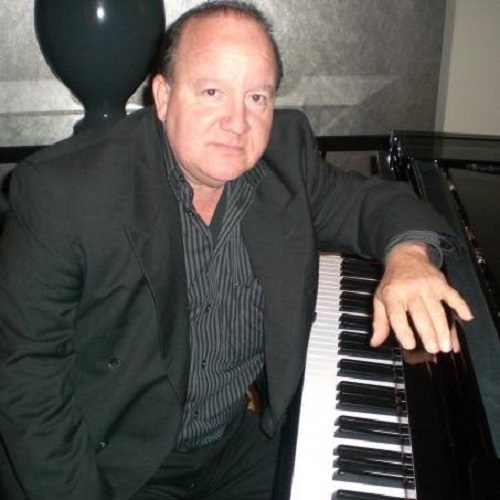
Papo Lucca. The Giant of the South

Latin America / Puerto Rico

Papo Lucca born in Ponce, Puerto Rico on April 2, 1946, Enrique ‘Papo’ Lucca began playing the piano at age 11 with his father’s orchestra. Initially, La Ponceña played versions of tropical hits of the moment by bands like Cortijo y su Combo and La Sonora Matancera.

Papo Lucca. The Giant of the South

In the late 1960s, Papo became the orchestra’s musical director, beginning a profound transformation that would eventually establish la Ponceña as one of the most progressive groups in the history of Afro-Caribbean music. Papo’s orchestrations were bold, experimenting with elements of jazz, rock, and Brazilian music. Representing the authentic spirit of Puerto Rican salsa, his piano solos were velvety, displaying elegance, restraint, and infinite swing.

During the mid-’70s, La Ponceña began to enjoy unprecedented success with critics and the public. The band recorded for the Inca label, which eventually became part of the Fania empire. Papo was invited to arrange and play on sessions for the company’s biggest artists, including Johnny Pacheco, Celia Cruz and Cheo Feliciano. He also recorded and toured with the Fania All Stars.

This compilation pays tribute to the art of Papo Lucca through 14 classic songs recorded between 1967 and 1981. Although Lucca has recorded as a solo artist and also collaborated with a multitude of salsa stars, it is his work with La Ponceña that best expresses the clarity of his vision.

The music we make has to make people happy, as well as make them dance. That’s what it’s all about, says Lucca from her home in Puerto Rico. When the public can dance, no matter how complicated the music is. The first theme that this genre had was to divulge the things that happened in the different communities, as if it were a newspaper.

Our journey begins with two fiery songs from the beginnings of La Ponceña: “Hachero Pa’Un Palo” and “Fuego En El 23” are versions of songs by Cuban Arsenio Rodríguez. La Ponceña always had a soft spot for Puerto Rican folklore, but she also found inspiration in the golden age of Cuban music.

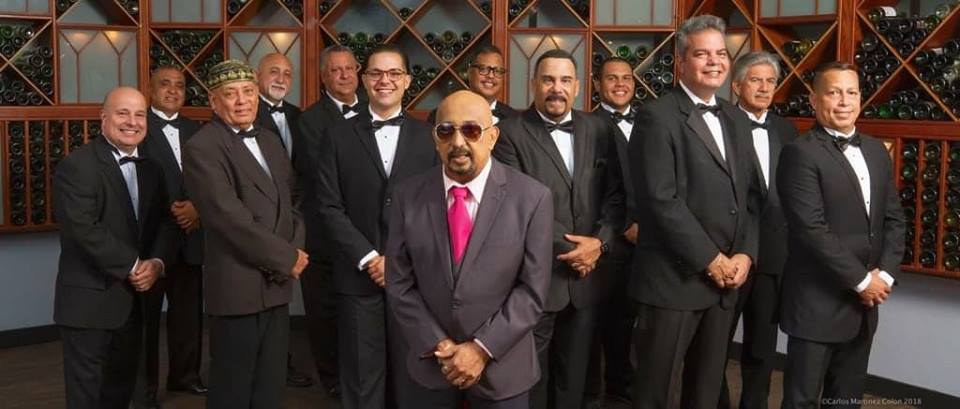
La Sonora Ponceña
La Sonora Ponceña

The precise moment in which La Ponceña becomes a mature orchestra in total control of its aesthetics can be found in the six songs from the Musical Conquest/Conquista Musical and El Gigante Del Sur albums. Launched on the market in 1976 and 1977 respectively, they represent the pinnacle of the salsa movement.

These songs combine a musical skill that approaches virtuosity with deep lyrics and a generous sense of humor. “Ñáñara Caí” is a hilarious narrative of pure magical realism, describing a world where everything is turned upside down (my favorite phrase: I saw a cow/Hit with Pacheco). Also included in Musical Conquest, “El Pío Pío” achieves the perfect cross between Afro-Cuban rhythm and contagious pop. This hit is a mandatory part of all La Ponceña concerts.

The opening theme of the El Gigante Del Sur album, “Boranda” seems to offer a salsa version of progressive rock. Its lyrics contain an important sociopolitical message, and the sophistication of its arrangement is a slap in the face for all those who believe that this music is only for dancing. “Soy Tan Feliz” combines bolero climates with an electric piano solo that recalls the psychedelic sound of jazz-rock from the ’70s. “Noche Como Boca ‘E Lobo” creates a tasty collision between salsa fever and Brazilian rhythms.

Lucca was not alone in his mission to reinvent the rules of Puerto Rican dance music. It was also benefited by the prowess of some of the best instrumentalists on the island. Furthermore, his instinct for choosing singers was always irreproachable.

Some of the vocalists of la Ponceña that appear here are Tito Gómez, who would later find fame with the Grupo Niche de Colombia; the inimitable Luigi Texidor, who gave a sense of placidity to all the songs he performed; and Yolanda Rivera, who added variety to the band’s sound with her unique timbre.

One of Rivera’s happiest moments is included here: Coming from 1980’s Unchained Force, Johnny Ortiz’s “Borinquen” is a soulful anthem to Puerto Rico, blessed with a sinuous melody and subtle instrumental arrangement–one of Rivera’s happiest moments. transcendental within the Ponceña canon.

The golden days of salsa are a distant memory in the new millennium, but Papo Lucca hasn’t stopped shining. Perhaps precisely because he continues to record new music, he refuses to idealize the past when I ask him what his favorite album with “La Ponceña.”

The last one, the most recent, he explained in his characteristically introverted tone. All the albums are very important in the career of the orchestra. They all fulfilled their mission at the time, which was to reaffirm the previous one. That’s the way to maintain a pool after 50 years.

Papo Lucca
Papo Lucca

The teacher was a little more direct when I asked him about his favorite concert of all time.

It was my first concert with the Fania All Stars at Madison Square Garden, back in 1974, he said. All the stars of the Fania were still alive. A few years later we played in front of 47,000 people in Cali. My knees always shake before I go on stage, but this time they shook a little more.

The King of Bass Mr. Bobby Valentin

North America / USA / Nueva York

One step away from the Latin Grammy. The King of Bass Mr. Bobby Valentin

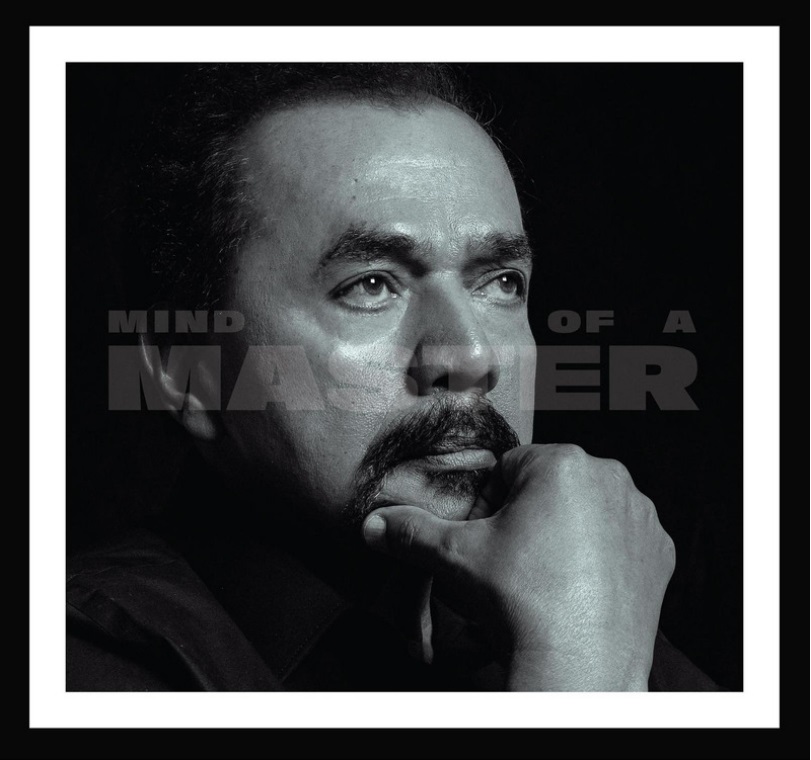
The Latin Grammy nomination of the experienced Bobby Valentin in the category of Latin jazz with the production “Mind of a Master” is another recognition of honor for his half-century musical career as an arranger and conductor.

“Mind of a Master” is the production with which Bobby Valentín enters the competition on the nineteenth day of the Latin Grammy. (Archive National Foundation for Popular Culture). Bobby, nominated last year in the category of salsa with “My rhythm is good”, is one of the five contenders for the Latin Grammy in the “Best Latin Jazz Album” section.

The other finalists are also Puerto Rican Néstor Torres (“Jazz Flute Traditions”), Adrian Laies (“The house of a jazz pianist”), Dafnis Prieto (“Back To The Sunset”) and Hermeto Pascoal (“Universal Nature”). . In a conversation with this medium, Bobby said that he will immediately capitalize on the nomination to promote the album at international festivals.

“We have sent to several festivals in the United States a report of what the album is and my career. We are waiting for answers. Right now I have a presentation at the Interamericana on Wednesday, October 17, which celebrates the 20th anniversary of the Music Department and there is a person interested in going to Costa Rica. It’s slow, but I have a lot of faith that little things will continue to appear. Latin jazz is another audience, although I know that many people who like salsa like it”.

Bobby Valentin
Bobby Valentin

The King of the Bass added that he feels as if he has won the precious golden phonograph. “The nomination of what is a salsa album is another style. This is another corner. What I’m saying is that after one is competing, even if you don’t win, the competition is good, as is being nominated among so many productions. For me the competition in Latin jazz is stronger than in salsa”. Bobby presents “Mind Of A Master” alongside The Latin Jazzists, who are mostly the musicians from his salsa orchestra, like Angie Machado and Eliud Cintrón. Bobby isn’t worried about purists arguing that they’re not jazz soloists.

“The musicians are happy. It is a genre that they like. Here they have been more concerned with projecting their styles and expressions”, Bobby reacts. A salsa musician can play jazz. This is how history supports it. Mongo, Puente, Machito, Mario Bauzá, Mario Rivera, Eddie Palmieri, Hilton Ruiz and Jerry González, among others, began in mambo and Afro-Caribbean dance music, prior to their foray into jazz.

“Like Ray Barretto, who was also linked to jazz. Finally, we all look for that corner. The same Néstor Torres, who started with Batacumbele. After one has done so many things in the tropical genre, one seeks satisfaction as a musician by looking for another corner”.

Jazz, however, is not new to Bobby Valentín. “Latín Gravy”, “Codazos”, “Shinny Stockins” and “Maiden Voyage” are several of the works recorded on his salsa albums. “It always caught my attention. When I was in New York, Latin jazz was mambo jazz. Later the name changed, but before it was done for the dancer, although there were solos. It’s no longer for the dancer. Now people sit down to listen to him. It was a good change.”

Bobby has not decided if he will travel to Las Vegas to be present at the awards ceremony, to be held in November. “I still don’t think so. It’s not because I’m going to win or not. To be competing even if I don’t win is reason for joy. I feel very happy. I have no plans yet”.

Next Wednesday the 17th he will perform with The Latin Jazzists at the INTER Metro Jazz Festival. That night he will perform the “Mind Of A Master” sequence. “I feel very happy. This record is like a baby to me. Although we have played tropical music, this is a new baby and that it is nominated for a Latin Grammy makes me feel very happy”.

  • « Go to Previous Page
  • Page 1
  • Interim pages omitted …
  • Page 15
  • Page 16
  • Page 17
  • Page 18
  • Page 19
  • Interim pages omitted …
  • Page 37
  • Go to Next Page »

International Salsa Magazine (ISM) is a monthly publication about Salsa activities around the world, that has been publishing since 2007. It is a world network of volunteers coordinated by ISM Magazine. We are working to strengthen all the events by working together.