• Skip to primary navigation
  • Skip to main content

International Salsa Magazine

  • HOME
  • Previous editions
    • 2026
      • ISM / May 2026
      • ISM / April 2026
      • ISM / March 2026
      • ISM / February 2026
      • ISM / January 2026
    • 2025
      • ISM / December 2025
      • ISM / November 2025
      • ISM / October 2025
      • ISM / September 2025
      • ISM / August 2025
      • ISM / July 2025
      • ISM / June 2025
      • ISM / May2025
      • ISM / April 2025
      • ISM / March 2025
      • ISM / February 2025
      • ISM / January 2025
    • 2024
      • ISM / December 2024
      • ISM / November 2024
      • ISM / October 2024
      • ISM / September 2024
      • ISM / August 2024
      • ISM / July 2024
      • ISM / June 2024
      • ISM / May 2024
      • ISM / April 2024
      • ISM / March 2024
      • ISM / February 2024
      • ISM / January 2024
    • 2023
      • ISM / December 2023
      • ISM / November 2023
      • ISM / October 2023
      • ISM – September 2023
      • ISM – August 2023
      • ISM July 2023
      • ISM Edition June 2023
      • ISM – May 2023
      • ISM April 2023
      • ISM March 2023
      • ISM February 2023
      • ISM January 2023
    • 2022
      • ISM December 2022
      • ISM November 2022
      • ISM October 2022
      • ISM September 2022
      • ISM August 2022
      • ISM July 2022
      • ISM June 2022
      • ISM May 2022
      • ISM February 2022
      • ISM January 2022
    • 2021
      • ISM December 2021
      • ISM November 2021
      • ISM October – 2021
      • ISM September 2021
      • ISM August 2021
      • ISM July 2021
      • ISM May 2021
      • ISM April 2021
      • ISM June 2021
      • ISM March 2021
      • ISM February 2021
      • ISM January 2021
    • 2020
      • ISM December 2020
      • ISM November 2020
      • ISM October 2020
      • ISM September 2020
      • ISM August 2020
      • ISM July 2020
      • ISM June 2020
      • ISM May 2020
      • ISM April 2020
      • ISM March 2020
      • ISM February 2020
      • ISM January 2020
    • 2019
      • ISM December 2019
      • ISM November 2019
      • ISM October 2019
      • ISM Septembre 2019
      • ISM August 2019
      • ISM July 2019
      • ISM June 2019
    • 2016
      • ISM December 2016
  • Spanish
  • Download Salsa App
    • Android
    • Apple

Search Results for: Afro Latin Jazz

Roberto “Bobby” Rodríguez was a master of the Baby Bass and was instrumental in its popularization within Latin music

Roberto “Bobby” Rodríguez “Big Daddy” (1927-2002) was a renowned bassist and a key figure in Latin jazz and salsa. He was known for playing both the upright bass and electric bass.
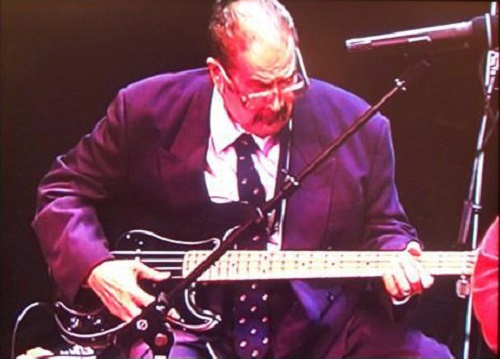
Roberto Bobby Rodriguez was a master of Baby Bass and played a decisive role in its popularization within Latin music

He worked with legendary artists and bands such as Charlie Parker, Dizzy Gillespie, Machito, Tito Puente, and The Alegre All Stars. Born in Tampa, Florida, to Cuban parents, he is often associated with the Baby Bass, a type of electric upright bass.

The Baby Bass is a specific type of electric upright bass developed by the Ampeg company. It has a distinctive sound and is very popular in Latin music, especially salsa.

Many famous bassists in the genre, including Roberto “Bobby” Rodríguez “Big Daddy,” are known for playing this instrument. With its deep, percussive tone, the Baby Bass helped define the sound of salsa music.

In summary, the connection between Roberto “Bobby” Rodríguez and the Baby Bass is that the famous bassist, Roberto “Bobby” Rodríguez “Big Daddy,” was a master of the instrument and was instrumental in its popularization within Latin music.

“Big Daddy’s” Career and Legacy.

The son of Cuban and Puerto Rican parents, Roberto “Bobby” Rodríguez “Big Daddy” was born in Tampa, Florida, on May 2, 1927. His talent left a lasting mark on the performance of both the upright bass and the electric bass.

He began his career in New York at the age of 17 with Machito and His Afro-Cubans, where he replaced Julio Andino. He participated in recordings with Chico O’Farrill, Dizzy Gillespie, Cal Tjader, Eddie Palmieri, Willie Bobo, Mongo Santamaría, Joe Cuba, Eric Dolphy, the Alegre All Stars, and Tito Rodríguez. His most important and enduring collaboration, however, was with Tito Puente.

Rodríguez’s involvement with Puente’s band resulted in a catalog of countless tumbao basslines. He occasionally had the opportunity to lead the band with a solo, loaded with highly creative melodic improvisations.

On the 1990 album, Goza mi Timbal, the track “Ode to Cachao” features a large number of Bobby Rodríguez’s solos. In addition to being a tribute to Israel López, this track is a showcase of “Big Daddy’s” immense virtues and is considered one of the most unforgettable solos in Latin jazz. This partnership remained active from the 1950s to the 1990s.
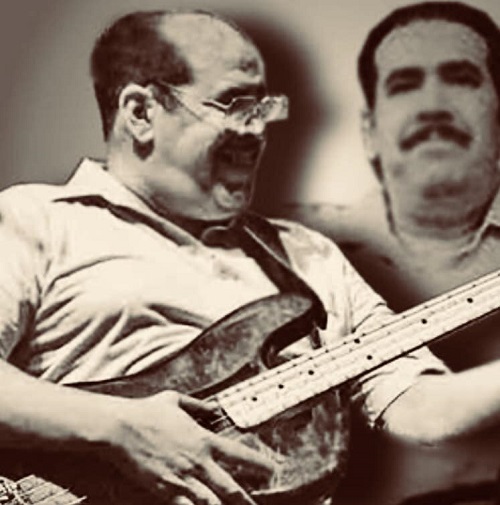
Roberto Bobby Rodriguez Big Daddy was born in Tampa, Florida, on May 2, 1927

The nickname “Dedo Gordo” (Fat Finger) was given to him for his way of playing the electric bass, with a thick sound—something that in American musical circles is called a “groove.” According to experts, his technique was meant to emulate the sound of the Ampeg Baby Bass.

One characteristic he was always recognized for was his unique ability to play the clave rhythm with his foot while performing on the bass. His musical experience always made him seem like a contributor with a jazzy style.

On July 29, 2002, after a life full of resounding successes and an impressive legacy, Bobby Rodríguez passed away in New York.

Ambiguities with the Name Roberto “Bobby” Rodríguez.

The name “Bobby Rodríguez” has been used by several artists within the universe of Caribbean music.

One common source of confusion is the flutist, clarinetist, and saxophonist from Manhattan, Robert “Bobby” Rodríguez, who founded the group “La Compañía.” His date of birth has not been confirmed.

Another point of confusion is the common misconception that “Big Daddy” began his career with the Marcano Quartet. The truth is that the quartet featured Félix Manuel Rodríguez, who, in the early stages of his career at age 17, also went by the name “Bobby Rodríguez.” He would later adopt his famous stage name, Bobby Capó.

A third artistic namesake is Dr. Bobby Rodríguez, a trumpet player born in Los Angeles, California, who is also a teacher and author of the book, ABC’s of Brass Warm-Up. He has been nominated for a Grammy and has received awards as an educator.
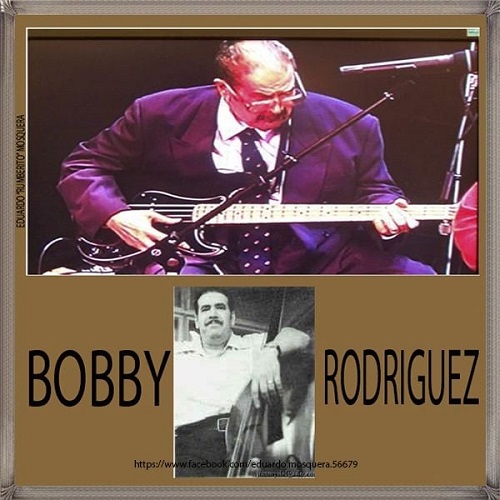
Roberto Bobby Rodríguez Big Daddy (1927-2002)

The list of names similar to Roberto “Bobby” Rodríguez becomes much longer if you search for homonyms of his given name. For example, there is Roberto (Reimundo) Rodríguez, a trumpet player from Cienfuegos, Cuba. He co-founded the orchestra Los Jóvenes Estrellas de Cuba and became a member of the Fania All Stars. He also appears in the documentary Nuestra Cosa Latina. In 1982, he founded the group Los Rodríguez with his sons, Roberto Jr. and Willie.

His son, Roberto Rodríguez Jr., is another homonym we encounter in these musical paths.

Continuing with more homonyms, there’s the Cuban trumpet player Roberto Luis Rodríguez, who is the father of the currently famous trumpet player Roberto Juan Rodríguez, also Cuban, but who moved with his Jewish family to Miami at the age of nine. He has played with top artists such as Joe Jackson, Julio Iglesias, and Paul Simon.

 By: Diego Aranda (Audiokat)

Dj. Augusto Felibertt

Los Mejores Salseros del Mundo

Also Read: Bobby Valentín, the King of the Bass in the Fania All-Stars Machine – The Mind of a Master
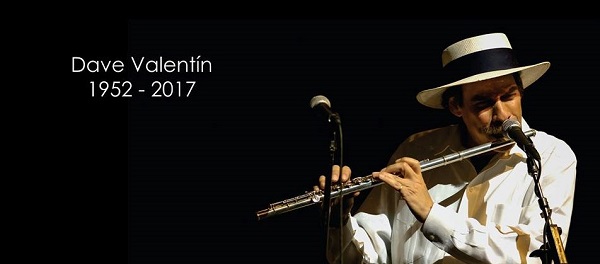
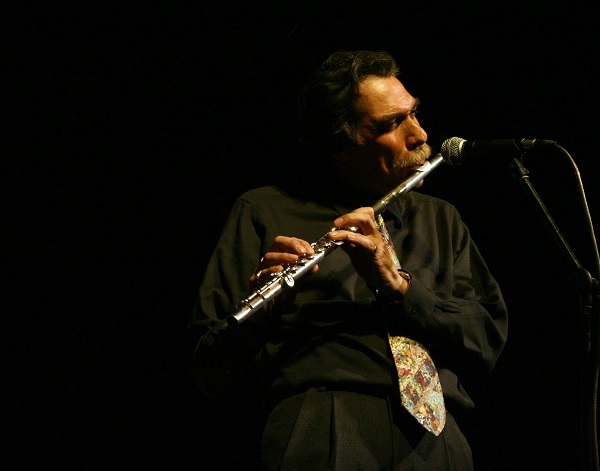
Dave Valentín is considered one of the most important Latin jazz flautists in history, thanks to his technique and rhythm

Valentín: The Master of the Flute in Latin Jazz.

Dave Valentín is considered one of the most important flutists in the history of Latin jazz, thanks to his technique, rhythm, and vast musical knowledge.

Dave Valentín is considered one of the most important Latin jazz flutists in history, thanks to his technique and rhythm

Born in the Bronx, New York, on April 29, 1952, to Puerto Rican parents from Mayagüez, Valentín grew up in a home filled with music. From the sounds of Tito Rodríguez and Tito Puente to Machito, the musical culture that surrounded him as a child was a major influence. Although he loved the bongos and congas, he joined a Latin group as a timbalero during his teenage years. He played in the “cuchifrito” circuit and in working-class dance halls in New York.

Dave Valentín’s life largely reflects the story of the children of Puerto Rican immigrants in New York who forged their own destiny through hard work, dedication, talent, and family support. In fact, the musician, composer, and arranger himself liked to say that “each person creates their own reality.”

A Legacy-Filled Career

  • GRP Records Pioneer: Valentín was the first artist to sign with the influential GRP record label, which allowed him to consolidate his career and spread jazz fusion and Latin jazz to a wider audience. He recorded 16 albums with the label, including titles like Legends, The Hawk, Land of the Third Eye, Pied Piper, In Love’s Time, Flute Juice, Kalahari, and Red Sun, among others. These works combine the intensity of Latin cadences with influences from pop, R&B, Brazilian music, and smooth jazz. For the musician, being signed by this multinational company represented “the opportunity of a lifetime.”
  • Notable Collaborations: Throughout his career, he worked with major figures in jazz and Latin music such as Tito Puente, Manny Oquendo, Cano Estremera, Eddie Palmieri, Ricardo Marrero, Dave Grusin, and Patti Austin.
  • Awards and Recognitions:
    • He earned a Grammy nomination in 1985.
    • He won a Grammy Award in 2003 for his work on the album Caribbean Jazz Project, alongside vibraphonist Dave Samuels.
    • He was chosen as the top jazz flutist by readers of Jazziz magazine for seven consecutive years.

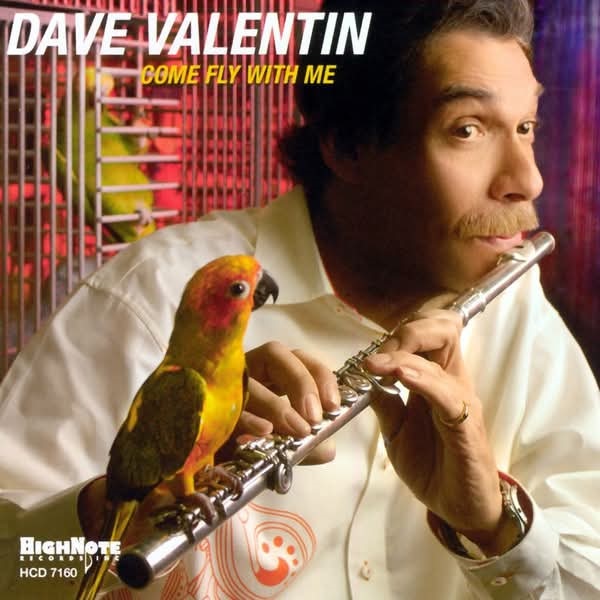
Come Fly with Me (2006)

Dave Valentin - Come Fly With Me
Dave Valentin – Come Fly With Me

Dave Valentín always moved in the realm of fusion. His incorporation of smooth jazz elements, Latin influences, and the sensitivity of modern jazz made him a difficult artist to pigeonhole. Come Fly with Me is one of his most notable albums, as it focuses on a direct approach to Latin jazz. The majority of the songs are Afro-Cuban with a New York flair, without including funk or samba rhythms.

Driven by a formidable rhythm section that includes Robert Ameen on drums, Milton Cardona and Richie Flores on percussion, Luques Curtis on bass, and his friend Bill O’Connell on piano, the album overflows with power and elegance. Trombonist and arranger Papo Vázquez also participates on several tracks. The group’s rhythm is profound and the solos are filled with inspiration. Despite some less successful moments, Valentín’s innate sense of taste and melody shines brightly.

Album Credits

Musicians:

  • Dave Valentín (Flute)
  • Bill O’Connell (Piano)
  • Luques Curtis (Acoustic Bass)
  • Papo Vázquez (Trombone)
  • Chris Barretto (Tenor Sax #1)
  • Robert Ameen (Drums)
  • Milton Cardona (Percussion)
  • Richie Flores (Percussion)

Tracks:

  • Come Fly with Me
  • Twinkle Toes
  • Enciendido
  • Mind Games
  • If You Could See Me Now
  • Easy Street
  • Tu Pañuelo
  • House of the Sun
  • Song for My Brothers

Sadly, Dave Valentín suffered a stroke in 2012 that forced him to step away from music. He passed away in 2017. Despite his passing, his musical legacy remains a fundamental reference for flutists and lovers of Latin jazz.

Valentín El maestro de la flauta en el jazz latino

By:

L’Òstia Latin Jazz

Rafael Vega Curry for the National Foundation for Popular Culture

Dj. Augusto Felibertt

Also Read: Pamir Guánchez, brilliant Venezuelan singer, flutist, saxophonist and arranger.

Creator of Afro-Rican Jazz William Cepeda talks about this subgenre

When we talk about the best characteristics of Puerto Rican artists, innovation is definitely one of them, and our guest is an excellent example of this. Grammy nominee and composer William Cepeda was born and raised in Loiza, known as the heart of “Little Africa” in Puerto Rico, so we can sense that this had much to do with his later artistic inclinations. We will talk about this and other things in the next paragraphs of this gripping story. 

Musician William Cepeda
This is Puerto Rican Grammy nominee, composer, and musician William Cepeda

What got William interested in music

The environment in which William grew up had everything to do with his interest in music as a serious profession. In Loiza, Puerto Rican bomba was one of the most listened genres by the community, and cultural events based on it were passed down through generations. It was there that a very young William began attending the colloquially known as “bombazos” and connecting with this music from an early age.

Practically the whole town was involved in these traditions, including his family, so he could not escape all these activities carried out year after year. In fact, his grandparents and some of his uncles and cousins were musicians, so it was common for the young boy to see them play their instruments and know what that was about.

When he turned 14, he finally began seriously studying music, especially the theory part. Although one of his options to study was accounting, this career would never overcome his enormous taste for music, so he never materialized this interest.

How William got started professionally in music 

While still an inexperienced teenage musician, William started playing percussion with some local groups, one of them being La Orquesta Zodiac, composed of a group of salsa veterans with more than 50 years of professional experience. Although these gigs were already paid, the young man still saw music as a side hobby. 

However, long time later, he would completely change his mind after noticing that his skills and opportunities could take him further than he thought possible.

William Cepeda at the festival
William Cepeda at the Luminato Festival in Toronto

Afro-Rican Jazz

Having already a more or less consolidated career, William was part of the invention of Afro-Rican Jazz, which can be defined as a concept that celebrates Puerto Rico’s heritage and its African roots while offering a new version of the jazz that everyone knew, giving it a touch of modern flavor that was absolutely innovative for the time. 

Growing up in an environment where traditional Puerto Rican music was so present and having experience only with local groups, he still had a long way to go as an artist. His outlook started to broaden by going to study at Berklee in Boston and then to do a master’s degree in New York, which in turn led him to play with American groups and musicians such as Dizzy Gillespie, James Brown, Miriam Makeba, and many other famous jazz musicians.

Gillespie became one of his biggest mentors when playing with him and his group The United Nations Orchestra, which included Cuban, Colombian, Dominican, Panamanian, and Brazilian musicians. It was precisely because of this great diversity of nationalities and influences that the orchestra received this name. However, there were no Puerto Rican musicians or music, so Gillespie gave William the opportunity to become the youngest member and create a subgenre product of a mixture of jazz and some styles from his place of origin. 

William told us that many Boricuan musicians used to play Latin jazz based on Cuban music, but none of them had ever ventured to create a subgenre of jazz with a Puerto Rican base. That was when the artist realized that something had to be done about it, so he chose to fuse jazz with Puerto Rican music and later named his group Afro-Rican Jazz.

He also continued to experiment with genres until he found something he called “Plena jazz,” the name he used for one of his albums and the result of mixing plena, another traditional genre born in the neighborhoods of Puerto Rico, and jazz. He also made a symphonic rumba album at the time. 

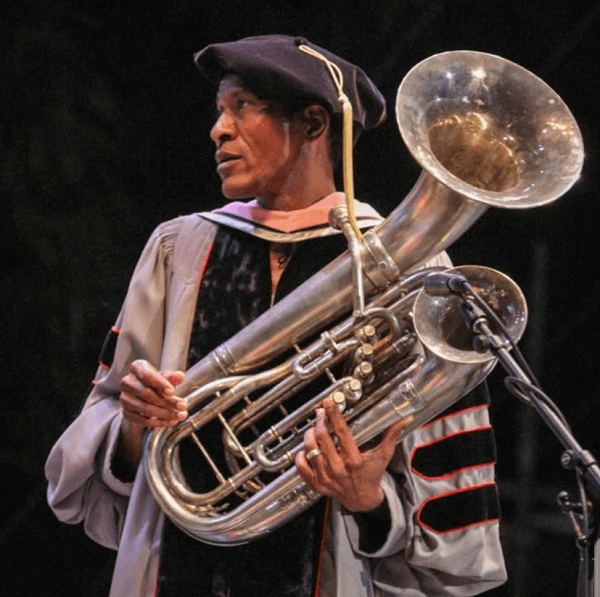
William Cepeda and his doctorate
William Cepeda receiving his honorary doctorate from Berklee College of Music

Dizzy Gillespie’s protégé

Although William was influenced by a number of artists, when we check out his story his history, there is no denying that the South Carolinian trumpeter was the greatest influence and role model for the young man. 

With respect to this stage of his life, William recalls with affection that Dizzy was always very attentive to his development within the group, to the point that he came to see him as an artistic father. As we said before, he knew nothing about jazz or American music when he left Puerto Rico, but Dizzy and his musicians were “a second university” where he learned what no educational institution could teach him, something he thanks to them.

“Dizzy saw talent in me, so he always pushed me to be better every day. He encouraged me, protected me, and guided me in my development as a musician,” he said of his teacher.

Artists he has collaborated with

William has collaborated with countless great Latin artists such as Celia Cruz, Rubén Blades, Eddie Palmieri, Tito Puente, Marc Anthony, Oscar D’León, and many others. Most of these contacts came about thanks to references of acquaintances, combined with the percussionist becoming known to the public for some time, which generated many recommendations. 

All the above artists also influenced him to a certain extent, but he also says that he liked and still likes other genres such as classical music, jazz, the folklore of other countries, and many others.

Read also: Argentine tango bassist and Latin Grammy winner Pedro Giraudo returned to his roots

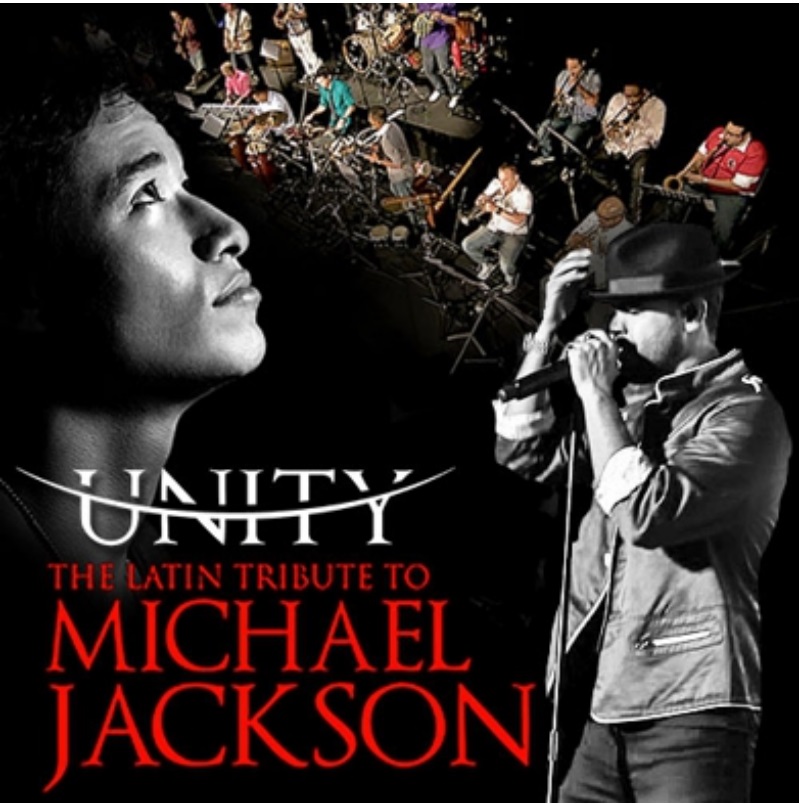
Unity, The Latin Tribute to Michael Jackson

North America / USA /

Unity, The Latin Tribute to Michael Jackson is a testament to the power of music and one man’s indomitable spirit. The passion project of Peruvian-born, Miami-raised producer / multi-instrumentalist / arranger Tony Succar, Unity features more than 100 musicians, such Latin superstars as Tito Nieves, Jon Secada and Obie Bermudez and the mixing magic of Jackson’s  legendary engineer Bruce Swedien in the first ever Latin album salute to The King of Pop.

Unity, The Latin Tribute to Michael Jackson

Fueled by his relentless commitment, quiet determination and passionate faith in the loving message behind much of Jackson’s music, Succar has spent the last four years carefully creating Unity: The Latin Tribute to Michael Jackson. He overcame seemingly insurmountable obstacles, turning each roadblock into a stepping stone to take the project to new heights. In the process, he married Jackson’s timeless pop and R&B tunes, such as “Thriller”, “Bilie Jean”, and “I Want You Back” to his glorious salsa and tropical rhythms, creating innovative, vibrant arrangements that snap to life with exhilarating energy.

“American funk, soul, jazz – all those styles that were influencing Michael – were inspired from African music”, Succar says. “Same with Afro – Peruvian music, Cuban music. These songs were meant to be. Their original flavor lends itself to these Latin rhythms”.

Succar, 28 grew up listening to his parents play Jackson’s music, and by 13 had begun his own music career. He started on piano and segued to percussion, graduating with a degree in jazz performance at Florida International University in 2008. But it wasn’t until after the superstar’s untimely passing in 2009 that Succar, who earned his Master’s in Jazz performance from FIU in 2010, took a deep dive into the music and the man.

Unity, The Latin Tribute to Michael Jackson - Flyers
Unity, The Latin Tribute to Michael Jackson – Flyers

“That’s when I became a fanatic, memorizing all his lyrics” he says. “He was an amazing singer. I started analyzing every single detail”.

As Succar pored through Jackson’s material, revisiting songs like “Man In the Mirror”, “Earth Song” and “They Don’t Care About Us” – all of which are reimagined on Unity – he came to a realization: “Michael wasn’t only a musician, he was a spiritual person. He was speaking to people’s hearts through his music. He was a true role model and leader, not only in the music industry, but life in general”, he says.

Concurrent with his discovery, Succar arranged a salsa-infused version of “Thriller” for a Halloween party at Miami’s legendary, now closed Van Dyke Café. The reaction was so immediate and overwhelmingly positive to the performance of this new arrangement, that Succar recorded a version in his bedroom with his band, posted in online and gave away copies. Djs started playing the track and Succar began getting requests from around the world for a full album of Latin – flavored Jackson songs. “That sparked it”, Succar says. “I was such a fan. I felt like I had to do something”.

Photo 1: Tony Succar

He launched a Kickstarter campaign and raided more than $10,000, which allowed him to record basic tracks and the idea and harmonious ideal of Unity was born. “The one thing that stood out in Michael’s usic was love. The reality was unity,” He says. “I also wanted the title to stand for something: a real marriage between Latin roots and American pop culture and to help keep Michael’s legacy alive”.

Part of keeping Jackson’s legacy alive meant incorporating elements of the original production in each of his fresh renditions for Unity. “Even the horn lines, I would transcribe them from Quincy Jones’ produtions and then apply them to the arrangement in a different way,” Succar says. “The essence of every song was respected. I gave it my best to create this very thin line between what Michael did with his production and what I brought to the project”.

As Succar proceeded, an astounding number of coincidences buoyed the project. Succar’s initial plan was to record the album with one vocalist, soulful Broadway veteran Kevin Ceballo, but as Succar finalized the arrangements, the idea of a compilation album cae to him. The first artist he reached out to was legendary salsa singer Nieves. He heard nothing back for months . Then, one day in the studio someone suggested Nieves fo “I Want You Back”. Succar explained he’d had no success contacting Nieves.

Photo 2: Tony Succar

It’s turned out a studio visitor knew Nieves, called his manager, sent Nieves an MP3, and within 10 minutes, Nieves was on the phone asking when he should come in to record his vocals.

Nieves became the project’s godfather, bringing in other Latin stars, such as India and Jean Rodriguez. “If it weren’t for Tito, I would never have been able to develop this into what it is, “Succar say. “He really opened the doors for me”. Nieves even brought in his son, Tito Nieves Jr. to duet on the album closer, an emotional take on “You are Not Alone”.

As the project progressed, Succar sought out Secada, but once again, was running into walls. He had switched to a different studio and the recording engineer just happened to have worked wih Secada and upon hearing Succar’s story, gave Succar the singer’s direct email. Secada immediately replied that he wanted to record “Human Nature,” his favorite Jackson track.

But there was more to come. Succar contacted Swedien about mixing some tracks, but failed to get a yes after more than a year’s effort. He met his engineer Nick Valentin through a mutual friend, who piped up that he’d been Swedien some music and next thing Succar knew, he’s sitting beside his hero at Swedien’s ranch as Swedien mixed “Earth Song” and “Smooth Criminal. “He was the cherry on top,” Succar says. “When we were mixing, he would put up the original Michael songs and put on our remixes to compare and contrast. He mixed the tracks on the same Harrison 32C model console he mixed ‘Thriller’ on”.

The groundbreaking album, a joint project between Universal Music Classics, Universal Music Latin Entertainment and Universal Music Mexico, embodies Jackson’s spirit of harmony and bringing diverse cultures together through music.

Members of Unity, The Latin Tribute to Michael Jackson

Where there once was nothing but a dream, Succar now sees unlimited possibilities. Not only will there be a tour to support Unity: The Latin Tribute to Michael Jackson, but he is considering future Unity projects that could salute the music of other timeless artist, such as the Beatles or the Bee Gees, filtered through a Latin musical lens. “Unity is going to become a movement,” he says. And given how far Succar’s come already, who could possibly doubt him?

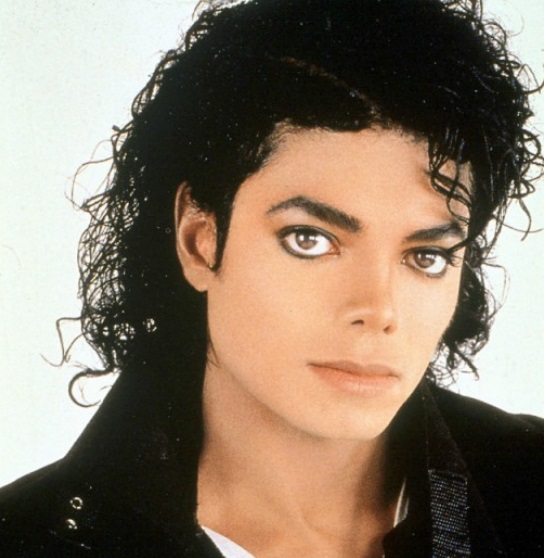
Michael Jackson
Michael Jackson

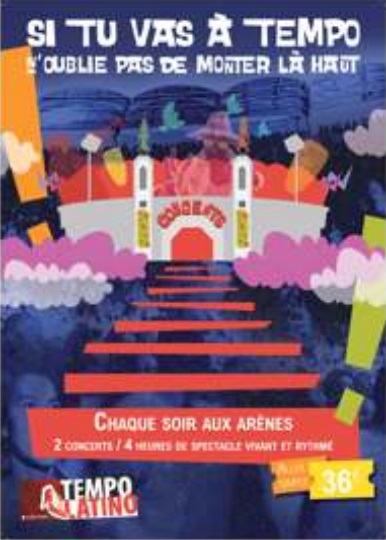
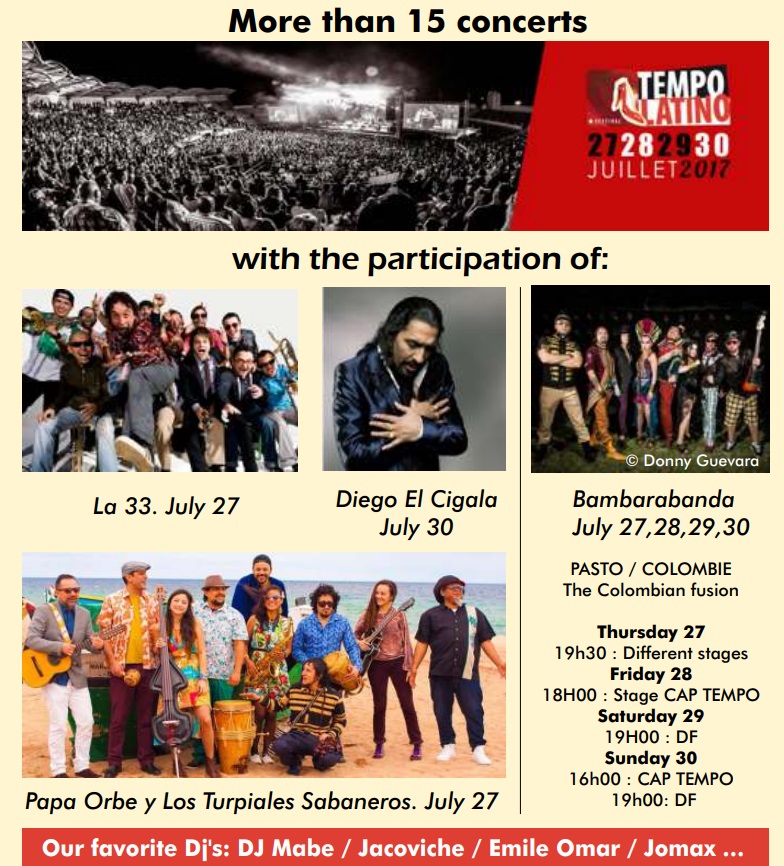
Tempo Latino

Europe / France / Vic-Fezensac

Tempo Latino: The biggest party for every Latin Music lover in Europe!

Tempo Latino
Tempo Latino

In Vic-Fezensac, in the heart of Gers in Gascony, Tempo Latino is the biggest European festival of Latin music and Afro-Cuban, salsa, Latin jazz and hip-hop. This is a reference to music and Latin music. This year they are bigger than ever with the participation of dancers, musicians, orchestras and amazing dj’s around the world.

Tempo Latino presents each year for 4 days and 4 nights, a varied concerts and internship program with artists and professors of international level including from Cuba, Puerto Rico, Colombia, Venezuela, Panama, Africa, US, Europe and Japan.

Thursday, July 27

The party starts on July 27 with the Colombian group Puerto Candelaria. This amazing group was formed in 2000 in Medellín, Colombia, the result of the fateful meeting of six talented musicians, united and guided by talented composer Juancho Valencia to create a totally new and original musical show.

Colombian group Puerto Candelaria
Colombian group Puerto Candelaria.

The imaginary land of Puerto Candelaria is a sonorous place and the spiritual home to the members of the group and to all who enjoy taking a musical journey with the sound of the Candelarios. The group’s founders never imagined that a decade later their idea would come to be hailed the most daring, controversial and innovative Colombian musical project of recent times.

Puerto Candelaria bases its sound in popular Colombian rhythms, full of imagination and magical spirit that provoke the senses and awaken heightened emotions in audiences around the world.

Their creation of contradictory rhythms like Cumbia Underground or Jazz “a lo Colombiano” is responsible for creating a special place for their country in the global markets of jazz, experimental, and world music. On Thursday and thanks to the France-Colombia’s year celebration, this day will be a reunion between these two cultures.

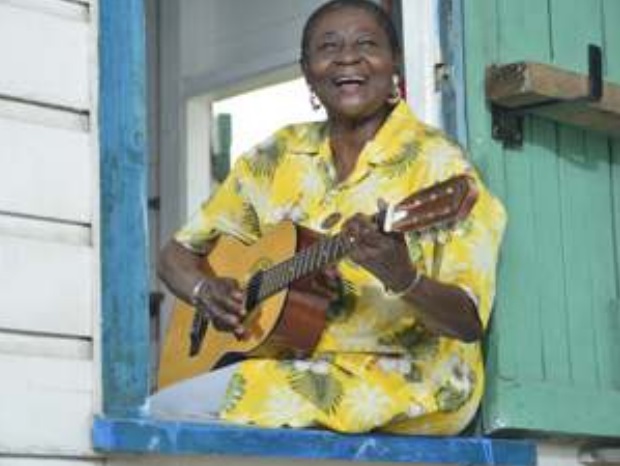
Friday, July 28 Calypso Rose

Then, on July 28 you will have the pleasure to see the performance of Calypso Rose. This iconic singer is a calypsonian. She began writing songs at the age of 15, turned professional in 1964 and has written more than 800 songs and recorded more than 20 albums.

Calypso Rose
Calypso Rose

Saturday, July 29 Unity. Michael Jackson Latin Tribute

Friday 29 will be time to present the Michael Jackson Latin Tribute with the amazing show of the talent of Tony Succar and Unity. Unity is a testament to the power of music and one man’s indomitable spirit.

Michael Jackson Latin Tribute

The passion project of Peruvian-born, Miami-raised producer/multi-instrumentalist/arranger Tony Succar, Unity features more than 100 musicians, such Latin superstars as Tito Nieves, Jon Secada and Obie Bermúdez, and the mixing magic of Jackson’s legendary engineer Bruce Swedien in the first ever Latin album salute to The King of Pop.

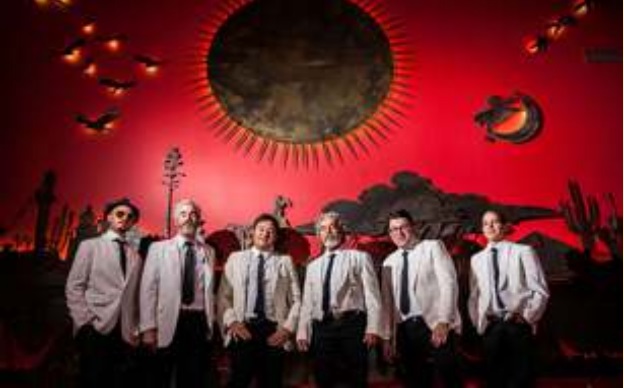
Sunday, July 30 Orkesta Mendoza

And finally, the event will end with the concert of Orkesta Mendoza. Orkesta Mendoza is a Latin music band from Tucson, Arizona. It was founded by singer and guitarist Sergio Mendoza in 2009. Through the use of Latin percussion, accordion, brass, and steel guitars, the band’s style, dubbed “indie mambo”, is a combination of ranchera, cumbia, psychedelic and indie rock.

Orkesta Mendoza
Orkesta Mendoza
  • Sergio Mendoza – vocals, piano, guitar
  • James Peters – drums
  • Joe Novelli – lap steel guitar
  • Marco Rosano – saxophone, clarinet, accordion, keyboard
  • Salvador Duran – vocals, cajón, maracas
  • Sean Rogers – double bass

With all the concerts, dance and parties, you can’t miss the summer event that brings all the Latin talent to Europe.

You go to Latin tempo

Tickets: Pre-sale prices

  • One night 30€ – 36€
  • 4 days pass: 100 – 120
  • Free entrance for kids under 12 years old

Transportation and accommodation

Transport: http://tempo-latino.com/CommentVenirTempo

Accommodation: http://tempo-latino.com/Hebergement

Our favorite Dj’s: DJ Mabe / Jacoviche / Emile Omar / Jomax …

Tempo Latino - Information
Tempo Latino – Information

For further information and tickets:

  • http://tempo-latino.com/accueil
  • Tourism office in Vic Fanzensac : 05.62.06.34.90
  • Telephone: 05.62.06.40.40.

And all the social networks

  • Facebook: @tempolatino
  • Twitter : @tempo_latino
  • Instagram: @tempolatino
  • Youtube: tempolatinofestival
  • « Go to Previous Page
  • Page 1
  • Page 2
  • Page 3
  • Page 4
  • Interim pages omitted …
  • Page 37
  • Go to Next Page »

International Salsa Magazine (ISM) is a monthly publication about Salsa activities around the world, that has been publishing since 2007. It is a world network of volunteers coordinated by ISM Magazine. We are working to strengthen all the events by working together.