• Skip to primary navigation
  • Skip to main content

International Salsa Magazine

  • HOME
  • Previous editions
    • 2026
      • ISM / May 2026
      • ISM / April 2026
      • ISM / March 2026
      • ISM / February 2026
      • ISM / January 2026
    • 2025
      • ISM / December 2025
      • ISM / November 2025
      • ISM / October 2025
      • ISM / September 2025
      • ISM / August 2025
      • ISM / July 2025
      • ISM / June 2025
      • ISM / May2025
      • ISM / April 2025
      • ISM / March 2025
      • ISM / February 2025
      • ISM / January 2025
    • 2024
      • ISM / December 2024
      • ISM / November 2024
      • ISM / October 2024
      • ISM / September 2024
      • ISM / August 2024
      • ISM / July 2024
      • ISM / June 2024
      • ISM / May 2024
      • ISM / April 2024
      • ISM / March 2024
      • ISM / February 2024
      • ISM / January 2024
    • 2023
      • ISM / December 2023
      • ISM / November 2023
      • ISM / October 2023
      • ISM – September 2023
      • ISM – August 2023
      • ISM July 2023
      • ISM Edition June 2023
      • ISM – May 2023
      • ISM April 2023
      • ISM March 2023
      • ISM February 2023
      • ISM January 2023
    • 2022
      • ISM December 2022
      • ISM November 2022
      • ISM October 2022
      • ISM September 2022
      • ISM August 2022
      • ISM July 2022
      • ISM June 2022
      • ISM May 2022
      • ISM February 2022
      • ISM January 2022
    • 2021
      • ISM December 2021
      • ISM November 2021
      • ISM October – 2021
      • ISM September 2021
      • ISM August 2021
      • ISM July 2021
      • ISM May 2021
      • ISM April 2021
      • ISM June 2021
      • ISM March 2021
      • ISM February 2021
      • ISM January 2021
    • 2020
      • ISM December 2020
      • ISM November 2020
      • ISM October 2020
      • ISM September 2020
      • ISM August 2020
      • ISM July 2020
      • ISM June 2020
      • ISM May 2020
      • ISM April 2020
      • ISM March 2020
      • ISM February 2020
      • ISM January 2020
    • 2019
      • ISM December 2019
      • ISM November 2019
      • ISM October 2019
      • ISM Septembre 2019
      • ISM August 2019
      • ISM July 2019
      • ISM June 2019
    • 2016
      • ISM December 2016
  • Spanish
  • Download Salsa App
    • Android
    • Apple

Search Results for: Afro Latin Jazz

Irawo Orchestra

Latin America/ México / México City

Irawo means “Star” in the Yoruba language of African origin.

Irawo is an Afro-Caribbean Rhythms (Salsa) orchestra that arises with the purpose of rescuing the original sound of La Salsa Dura from the 70s`s created in the city of New York and Puerto Rico, to bring this concept to the style of Irawo to the new generations.
Irawo Orchestra
Irawo Orchestra logo

Understood and interpreted from the vision of the Mexican musician, since its music and arrangements are original, which makes it an orchestra that plays salsa 100% made in Mexico with a modern, dynamic, energetic and unique sound.

Irawo Orchestra is made up of musicians who have a career in which they have participated with great international figures of Salsa, as well as other genres such as: rock, pop, Mexican music, jazz, which is projected with a high level of execution.

Irawo Orchestra is for the Mexican and international salsa public, knowledgeable and demanding, and for anyone passionate about dancing and enjoyment.


Jorge Bautista

Latin America/ Mexico / Mexico City

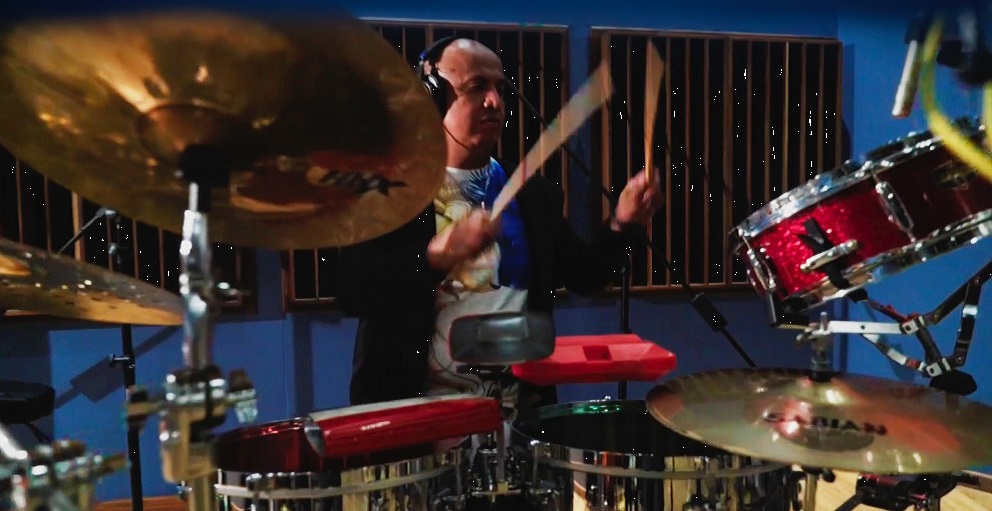
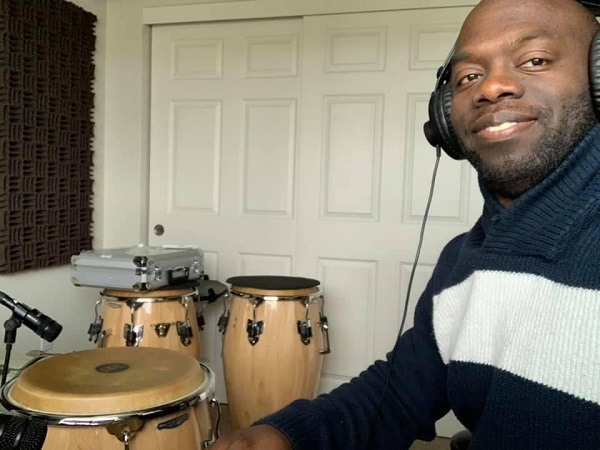
Jorge Bautista, Musical director and percussionist of the Irawo Orchestra

Jorge Bautista is a musician from Mexico City, he began his percussion studies at the age of 5 due to family tradition.

Jorge Bautista
Jorge Bautista and his Congas

The timbal, conga and bongo are the first percussion instruments that he studies empirically until at the age of 15 he studies at the autonomous music school for 5 years and then diversifies his knowledge in percussion from various places in Latin America such as : Colombia, Dominican Republic, Cuba, Peru and Brazil among others as well as in Africa.

Accompaniments Sauce

The experienced percussionist musician Jorge Bautista has performed important musical accompaniments with great exponents of our Afro-Caribbean music such as: Jerry Rivera, Maelo Ruiz, Tito Nieves, Willie González, Alfredito de La Fe, Oscar D`León, Larry Harlow, Ismael Miranda. , Ritchie Ray, Bobby Cruz, Roberto Roena, Oscar Hernández, Alberto Barros, Arturo Ortiz, Arturo Ortiz, Jimmy Bosch, Tito Allen, Viti Ruiz, Ray Sepúlveda, Herman Olivera and among others.

Jorge Bautista
Jorge Bautista

Latin Jazz Accompaniments

Among the stars of Latin Jazz, percussionist Jorge Bautista has performed accompaniments, among them we have: Arturo Sandoval, Ed Calle, Waney Bergeròn, Hector Infanzòn, Ola Onabule, Tlaxcatecalt Latin Jazz, Papo Sánchez, Ofunan, Daniel López, Latin Jazz On, Latin Hot Band, Density 6 and among others.

Other accompaniments

The Mexican multi-instrumentalist has also accompanied great music performers such as: Armando, Manzanero, Susana Zabaleta, Emmanuel, Kalimba, Samo, Víctor García, Carlos Cuevas, Alexander Acha, María León, Lisset, Aleks Syntek, Maria del Sol and Raul D’blasio.

Jorge Bautista and his musical instruments

Due to his great versatility, he has been invited to give clinics in different cities of the Mexican Republic as well as in several countries in the United States, Honduras, Colombia and Guatemala.

Currently the musician is sponsored by several major instrument brands worldwide: Gon Bops, Tama, Sabían, Promark, Remo, Rockears, GR, NND Percusión, and Veerkamp.

Carlos Medrano from Sabor De Mi Cuba tells us abut his long musical history

There is a tremendous amount of Cuban artists who have had to fight against economic adversity there is in their country, but this has not prevented them from getting ahead and fulfilling their dream of making a living from their art. One of them is the bandleader of Sabor De Mi Cuba Band, Carlos Medrano, with whom we had the pleasure to talk for this report.    

Carlos Medrano was born in the city of Havana, Cuba, and became interested in music when he was very young. The first instruments with which he began experimenting were the bongo and the conga, which had a huge importance in the training the artist would follow until he became the professional musician he is today. Here are some of the topics we cover in a long but pleasant conversation via Zoom.   

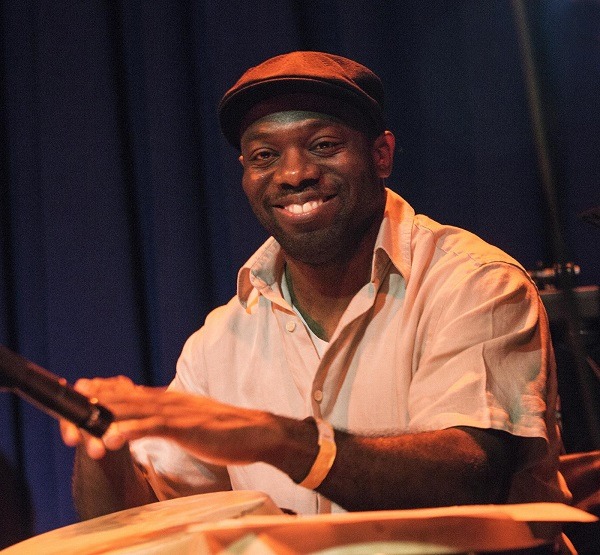
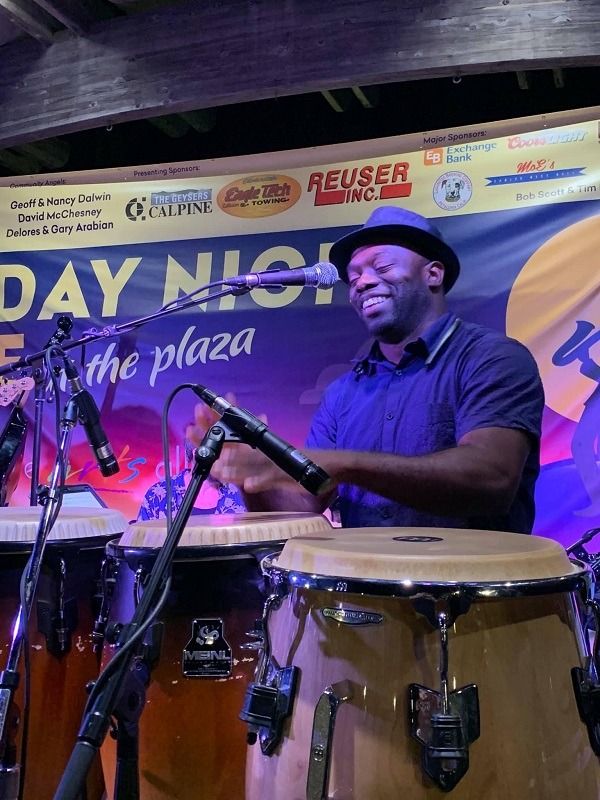
Bandleader Carlos Medrano
Carlos Medrano, bandleader of Sabor De Mi Cuba

Topics covered with Carlos Medrano 

When talking about his first experiences with music, Carlos told us he has always been surrounded by musical sounds since his childhood, which was spent in the neighborhoods of El Vedado and Old Havana.    

When he lived in El Vedado, his grandfather used to make poetry and do recitations, while he accompanied him with the drum, but he was in more direct contact with the musical world in Old Havana, a place where there were many rumberos and renowned musicians who were always playing in those parts.   

A very young Carlos always saw comparsas and street concerts from her home window and people always joined them making sounds with bells, pans or anything they had. 

During the decade of the 90’s, Cuba saw a big boom in tourism, resulting in the appearance of numerous traditional Cuban music groups and the cafes and clubs in the area were filled with sextets with professional musicians. They were looking to play in these places to get tips from tourists and have travel and employment opportunities,” said Carlos.    

I always looked at the work these artists were doing, especially tres players and bongos players. That’s how I learned to play the bongo: by watching and listening to what others were doing. I tried to imitate the sounds they made with a metal bucket or whatever I had at home to learn”, he continued.    

Carlos Medrano on stage
Carlos Medrano performing on stage with his band

Professional training of Carlos Md¡edrano and and limitations found 

After junior high school, he met a friend of his father who would be key in his training as an artist and his name is José Antonio Oviedo. Although his father saw no problem in this fascination of Carlos with music, he always told him not to drop out of school and to pursue a university career. 

When he began taking lessons with José Antonio, the level of demand was such that he felt he was in a formal school. He taught him to read music in a way that had nothing to envy to an art institute, which Medrano will always be very grateful for. 

In addition to that, near his home, there is a sector called ”Cueva De Humo” where there are excellent musicians and rumberos. It was there that Carlos got to meet Juan Ernesto Santana, Ernesto Gatel Coto from Rumberos de Cuba and many more. ”I was lucky that most people liked me and they always explained to me everything I needed to play as it should be” he added.   

With all these insights, there came a point when he decided to devote himself to the world of music and put aside other ambitions he had such as studying law, which was a shock to his family at the time. 

That is when his mentor José Antonio did the necessary procedure for him to present the Escuela de Superación Profesional de Arte “Felix Varela y Morales” admission exam, which he passed without major setbacks thanks to his training up to that point. 

Although his admission to the institution was relatively simple, it was not long before Carlos faced another equally difficult challenge: getting the necessary resources and instruments to receive a good training. 

”I didn’t have my own instruments until I started playing professionally with maestro Orlando Sánchez. I had my first bongo thanks to my father’s friends, who helped me to have my own things, but that never limited me” said the percussionist on this topic. 

In a time of so many shortages, it was clearly not easy to study, but Carlos was always looking for ways to fulfill his activities, whether it was raising money, borrowing instruments, practicing with other similar implements, sharing school instruments with his classmates, among other things.    

Carlos Medrano paying the drums
Carlos Medrano playing the drums on stage

Great inspirations and mentors   

One of his biggest inspirations was his cousin Stanley, who was a professional percussionist. He always advised Carlos to never classify himself in one instrument, but to always learn to play a little bit of everything to become a needed man, so that bands would always consider him for their tours and projects.    

Another of the great mentors he had has been Ignacio Jarabe, who has taught him many of the best ”tricks” a percussionist may need when playing one of these instruments. ”I still have solo sheet music that he wrote and some of his book manuscripts, which I don’t know if they were ever published, but they are still important reference sources for me”, said Carlos about Jarabe. 

We cannot forget to mention percussionist Eliel Lazo, with whom Carlos had amazing chemistry from the beginning. Lazo had contact with the best AfroCuban jazz musicians of the time and came to travel to many places thanks to his training in percussion instruments, which inspired Medrano to follow in his footsteps. After about one year of studying with this great musician, he was able to perform at La Fiesta Del Tambor and went on to be a finalist in several categories.   

Once he started plating professionally, the first person to call him was the maestro Orlando Sanchez, who in addition to offering him his first formal opportunity in this field, taught Carlos many other things which he had not learned so far. He has him up on a pedestal and thanks him for everything he has learned. 

Another person to whom the artist is very grateful is José Luis Quintana, better known as Changuito, who told him that ”the good conga player has to listen to the orchestra. You have to be able to hear the piano, the bass and the other instruments. You have to look for your space between the rest of the musicians”.   

Another important figure who cannot be left out is Yaroldy Abreu, a mmusician who spent hours rehearsing with Carlos at his house. They focused a lot on technical and creative resources during these classes. Medrano considers him one of the best percussionists and musicians in the world due to his extensive knowledge in every field of music.  

Carlos recording at home
Carlos Medrano recording music at home

Sabor De Mi Cuba   

It all started with a contest called ”Joyas” which specializes in promoting young Cuban talents who present their art to a qualifying jury and seek to carve a name for themselves in the industry.    

Carlos was fortunate that one of the judges told him and drummer Pablo Calzado ”you two shall go along with me”. The artist spent some time working with this person, who took him to play in other orchestras so that he could learn from the best until developing his own style.  

This happened after he moved to the United States and was still acquiring experience with other musical groups. That is when he realized he wanted to do things in a different way and get involved in other genres and rhythms that he had not tried before.    

There came a day when a bass player friend of his told him that if he wanted to come up with his original ideas, he had to embody them himself and not wait for others to do it. Carlos never saw himself creating his own band, but he decided to began composing his own music and he succeeded. 

Then, he started writing usic, contacting great arranger friends of his who helped him reassemble the idea of what he wanted to do. Once he had a repertoire, they advised him to record an album and give life to everything he had done, which gave birth to his first album ”Sabor De Mi Cuba”. 

The first song he wrote in his life was called ”La Habana” and was basically inspired by everything Carlos lived in his country and the longing he feels for not being able to be in his country, walk its streets, party with his friends, visit its special places, among other things. What he relates there is his life in the city where he was born and his desire to be able to go back there. 

His main motivation to make the album was the possibility of doing something different from anything he saw in the music scene around him at the time.   

Carlos does not think of himself as a professional composer, far from it, as he feels he still has a lot to learn in that field, but he hopes to reach the level of the artists who inspired him in his youth.   

Read also: Héctor “Rudy” Regalado and his great career 

Fausto Cuevas Y La Moderna in International Salsa Magazine

Who is Fausto Cuevas

Fausto Cuevas is a bandleader and percussionist from the state of Texas who is currently leading the orchestra Fausto Cuevas Y La Moderna, which has been playing in a large number of nightclubs located in the state of California, where Fausto currently resides.

For its part, Fausto Cuevas Y La Moderna is a salsa group whose purpose is to take the old Latin genres and provide a modern twist to them. While it is true that their main genre is and has been salsa, its members also experiment a lot with Cuban guaguancó, yambú, cumbia, son, cha cha chá, among others.

We are proud to have such an artist in our June edition and hope that this conversation will grace all our readers.

Fausto Cuevas next to a drum

Fausto’s beginnings in music

Fausto grew up in Brownsville, a village in Texas very close to the southern border with Matamoros, Tamaulipas, where his father is from. Due to this territorial proximity to Mexico, the artist was always exposed to ranchera instruments and, in particular, drums. The latter would be very important in what would become his professional future.

At the age of 11, he entered the public school system and was assigned to play a snare drum in a symphonic style. It can be said that this is when his fascination for this type of instrument began and continues till this very day.

In fact, Fausto claimed to have not been interested in guitar, piano or bass. He was always very clear that his aspirations were focused on drums, and percussion.

These first steps led him to specialize in playing American music, rock and jazz. Until then, he had not had any contact with Latin or Afro-Cuban music, but that would eventually change.

Moving from Boston to California

Fausto tells us that his biggest dream was always to go to New York, since the music scene was vibrant there at that time, but he could never do it due to some personal issues he encountered, such as the birth of his daughter. This is what made him move to Los Angeles and give up on that dream.

Fausto Cuevas performing on stage

When we asked him if he still wanted to live in ”The Big Apple”, he told us that he had already found his place in California and his career had already taken root in this part of the United States.

Fausto Cuevas Y La Moderna

Fausto Cuevas Y La Moderna was created in a very particular way. One day, Fausto received a call from the department at Berkeley that does concerts for the Boston community and was asked if he had a salsa band to play at the Tito Puente Latin Music Series. He said yes to everything, although he had nothing prepared at the time.

What he did have was a group of friends who were related to music and happened to live in Boston. They were all so well-suited and had so many plans that things worked out in an extraordinary way. That was 25 years ago and they have stayed together to this day despite the obstacles.

Relationships with other artists and genres

Fausto Cuevas Y La Moderna have performed and toured with stars such as Marc Anthony, Jose Alberto ”El Canario”, Celia Cruz, Julio Iglesias, Santana, Tito Nieves, Tito Puente Jr., Stavie Wonder Jennifer Lopez, Britney Spears, among others.

Fausto Cuevas and Tito Puente Jr.

One thing that Fausto feels he has learned from these artists is to be identifiable as a Latino in American genres. He says it is very interesting to create things, always identifying with Latin rhythms when playing soul, R&B or pop.

Having had so much contact with all these musical luminaries has helped him to rediscover himself and be much more creative when mixing Latin and American elements. In this sense, knowing the roots of the genres he plays has helped him a lot to know how to link both worlds.

It is precisely the knowledge of these roots which has made Fausto Y la Moderna stand out among other Californian groups.

Future projects

As to future projects, Fausto Y la Moderna plans to release a few singles this year and record the rest of the album in order to release the whole album in 2024.

He also pointed out that he is about to release an album with Gonzalo Grau Y La Clave Secreta, another group in which he is also involved, so he invites everyone to listen to his music through networks and digital platforms.

Read also: Great conversation with New York singer Ralphy Ray

Veruska Verdu

Latin America / Lima / Peru

Veruska Verdu “The only formula to keep the Salsero genre alive is to give support and credibility to the next generation”

Veruska Verdu
Veruska Verdu

Despite her youth, Veruska Verdu knows where she is going, without forgetting the roots where she comes from, this young woman has an interpretative strength and intensity that made her be considered by Peruvian critics as “The new Voice of Venezuela”, we do not doubt it , sings salsa and bolero very well, in addition to strolling through Afro-Venezuelan rhythms. In Venezuela, we enjoyed many of his presentations with the different orchestras with which he worked, and we witnessed how he left his soul in each one of his presentations and performances.

His greatest musical influence has been Celia Cruz and Oscar de León in terms of the salsa genre, and in the Afro-Venezuelan genre he admires Betsayda Machado and the Experimental group “Vasallos de Venezuela”. She tells us that, “in her family there are no musicians”, her grandmother and grandfather were rumberos and she believes that the musical vein comes from there, thanks to her grandparents, and to have the unconditional support of her parents and relatives, who have helped him get to where he is.

From Afro-Venezuelan music to salsa, from Barlovento to Caracas, from Venezuela to internationalization, this is how her career goes, in constant growth and evolution, nothing stops her from demonstrating her artistic quality and continuing to establish herself in this tough market.

Barlovento has a rich folk manifestation, all this mix of rhythms is in Veruska’s blood, therefore, she likes rumba, partying, music.

“What a black rock, how does she get into the rumba”

Veruska Verdu - Photo
Veruska Verdu singing in a concert

How were your musical beginnings?

“In my town of La Balsa, in the Panaquire parish, it was there that I began to sing music of the Afro-Venezuelan genre, thanks to Professor Adrián Méndez, I began to participate in the “Canta Claro” Festivals, in the cultural activities that were held, They invited me and I went, I had great support from my teacher, my school teachers, my family and the residents of the town”.

“I continued with my popular singing training at the high school, I participated in the high school voice representing my municipality Acevedo and the high school where I studied, I met my guide teacher Richard Rivero, who invited me to participate in the Afro-Venezuelan music group “Ritual Negro de Barlovento”, where I had the opportunity to travel and learn more about this beautiful genre that identifies us as Venezuelans”.

After this beginning, how was your evolution?

“I went to Caracas to work with other groups, among them are; Drum Show from Venezuela, Caña y Miel, Autochthonous from La Vega, Freddy Madera, Grupo Cosecha, Grupo la Calenda, among others”. “I received an invitation from some friends whom I love Miroslava Torres and Fernando Mozas very much, they encouraged me to join the Venezuelan Orchestra “Simón Bolívar”, I took them at their word, I auditioned and stayed, I participated for a time with the orchestra, I learned much more of our genre, stepped on stages that I had no idea I could step on”.

“Then my singing teacher Corina Peña motivated me to participate with the “Latino Caribeña Simón Bolívar” Orchestra, thank God I auditioned and I also stayed.”

Tell us about your time with the “Simón Bolívar” Latin Caribbean Orchestra?

“The teacher Alberto Vergara saw my interest in belonging to the orchestra, just that day the Venezuelan lyrical singer Iván García was arriving, who was going to sing in a musical project called “Negrísimo”, the teacher gave me the opportunity to be participated. of this great concert with García”.

“Later came more concerts with the orchestra, many learnings with maestro Vergara, for me he is number one, he is super important in my life, he helped me open my senses towards the music of the Latin Caribbean genre, love it, respect it, I give it thank you for giving me the opportunity to belong to the orchestra, for being part of the row of singers”.

“With the “Latino Caribeña” Orchestra, I stepped on incredible stages just like with the Afro-Venezuelan one, but here it was another level, another feeling, feeling the euphoria of the public that likes salsa, moving so many people, transmitting to so many people, thanks to the orchestra many people have known me and support me”.

So the “Simón Bolívar” Latin Caribbean Orchestra has been a springboard for his career.

“Of course, it has been the showcase to show the gift that God gave me, to all those who value this beautiful feeling and support me, I must thank all the teachers, all those who have been there for my musical growth, the orchestra It will never cease to be present in my career, in my present, in my future, I will always be grateful for it, thanks to it I met the teacher Alfredo Naranjo and his Guajeo, who took me into account to participate in his project”.

How did you feel working alongside Alfredo Naranjo?

“With Maestro Naranjo I got the proposal to do my first concert, which was called “Caminando”, this was in the Experimental room of the “Bod Cultural Center”, he likes things to go well, he left me a great learning to work with his side”. “The concert was super nice, I had as a guest Alfredo, my godfather Rodrigo Mendoza and my great brother musician par excellence and multi percussionist “Patatín” Guacaran, I also had the opportunity to meet Edgar “Dolor” Quijada, Soledad Bravo and Rafael “The “Chicken” Brito”.

Your career has been constantly on the rise, how has your time in the different groups been?

“I participated in a project called “Ellas son Boleros”, with Anais Torrealba, Gisela Guedez, with professor Corina Peña, I was with all those bolero ladies in Venezuela, this was under the production of David Peña “Zancudo”. “On the other hand, Carlos Padrón was there, he called me to participate in the 10th anniversary of Rumberos del Callejón, I feel very happy, because Domingo Quiñones, Maelo Ruiz, Gilberto Santa Rosa, Luis Fernando Borjas, Memo Arroyave, Gonzalo Díaz participated there. , wow!, a lot of people who have years of experience and I am like the puppy of the project, and look, however, Carlos believed in my talent and made me be part of his production”.

“I was with the Sopranos for a while, on the album that won the Pepsi Music Awards (Decade), my choirs are out there, with Sonero Clásico del Caribe, a Son institution in our country.”

How have you felt taking on these challenges?

“It has been tremendous, to have the support of some tremendous musicians who are legends, “Nene” Quintero, the pianist par excellence Pedro Pérez, very cool, in all those groups that I have been thanks to the projection I had with the Latin Caribbean Orchestra and my commitment day by day to all this”.

Veruska Verdu
Veruska Verdu

Apart from singing, do you play any instrument?

“I had a short time at the Bigott Foundation, they taught me certain things to learn to compose, I like to play the guitar, and now I am dabbling in the bass”.

From Afro-Venezuelan music to salsa, how was that transition?

“We are not very far away, remember that Afro music its main root is the drum, just like in the Caribbean genre, in salsa, the root is the percussive, the blows, the leather, the key, the swing, that taste, that sense of enjoying what you do, rather the Afro-Venezuelan genre helped me a lot because of the free way of singing.”

“I feel freedom when singing salsa, because I learned in Afro-Venezuelan music how to improvise, to have that ability, I have enjoyed it, in some shows I remember any verse from some party or ass e` puya and singing salsa I say it, it is “cheveroski” as they say around here”.

Did you ever think that being so young you would be next to many who have years of musical career and are already recognized in this medium?

“I never imagined it, it is a blessing from heaven, I am just starting out on the path of music, I still have a long way to go, God has given me the blessing and joy of being able to share the stage with El “Pollo” Brito, Edgar “Pain” Quijada, Alfredo Naranjo, Francisco Pacheco, meeting Betzayda Machado, being with Sonero Clásico, Canelita Medina, I feel happy that in my short time I have met wonderful people and been able to share the stage with them, just like here in Peru”.

What do you think of the support for national talent in Venezuela?

“It has been excellent, I feel that right now they are giving credibility to the successor generation, it is very important to give support, it is the only formula for the genre to remain alive, credibility must be given to the one who is being born and has the ability to make music”. “In Venezuela they have given the artist great support.”

You continue to be “Enchanted with life” despite the regrets…

“If everything was placed on a silver platter, there would be no achievements, the greatest satisfaction is hard work and discipline, I am living my experience that seems spectacular to me, I am enjoying my moment, I am learning things that I did not know in its entirety, I am maturing as an artist and as a person.

“All things go through a moment of difficulty, we must always highlight the good things.”

Its jump to Peru a market that is in the musical arena, the critics baptized it as “The new Voice of Venezuela”, What do you think of this?

“I am grateful that in Peru they have that appreciation of me, it feels super good, on each platform that I mount I will give my best, my tricolor goes with me upstairs.”

How has the receptivity of the Peruvian public been?

“It is not easy to arrive in a country and start from scratch, however, it is a matter of continuing to work, to continue showing what we are made of and to make good music, to do a job like a ant, things have flowed in a very good way, I have participated in productions of the master Tito Manrique, Manongo Mujica, I met the people of a group that I greatly admire Peru Negro, they play Afro-Peruvian music, I did concerts with Carlos Mosquera, a super singer, incredible, a blessing from heaven.

“The support of the Peruvian public is always present, what should Veruska do, continue working constantly, I must thank you for having been very receptive to the work that I am doing.”

In Peru they also have payola?

“In the whole world there is payola, this market is managed like this, salsa, merengue, joropo, tango, pop, jazz, reggaeton, you have a good product, but many times you have to “encourage” the person to show it.”

How do you see the salsa movement at the moment?

“It is a good time to continue highlighting our genre, we are in the here and now, ah! which is not the same as in the past, those times do not compare, for me this is a super excellent moment, many people are doing their work, Víctor Cardona, Carlitos Padrón, Pumaband, La Latino Caribeña, right here in Peru, how many new artists they have, all these people have been promoting salsa”.

Tell us about your solo career.

“It has not been easy, but I continue to give my all, thanking the people who have supported me even without knowing me, I must thank Mr. Alberto Vale who has joined this Veruska project and tells me; -black let’s go forward, everything will be fine, -let’s do this, that-”.

Your first musical production “Fusion -Venezuela – Mundo”, which musicians participate in it?

“Sabrosito Así”, is the promotional theme, we wanted to make a very cool fusion, which was reflected there, thanks to Juan Carlos Linares who gave us all the support to materialize this single and that people knew it, I had excellent musicians; Mario Pasmiño as Musical Director, in addition to Patatín Guacaran, Gisel Brito, Gray Peña, Aarón Cabrera, Ángel Peña, Jeison Ascanio and Darwin Latan”. “This experience was great, beautiful, in the Velvet studio.”

Define yourself in one sentence

“Feeling and rumba, I like the alegríadera”.

Venezuela in one sentence

“Good people, hardworking, like my people none.”

Veruska Verdu Orquesta Son Desangrado

Translated by: Thisby Ferrara


By Eiling Blanco, Correspondent for Latin American


  • « Go to Previous Page
  • Page 1
  • Interim pages omitted …
  • Page 21
  • Page 22
  • Page 23
  • Page 24
  • Page 25
  • Interim pages omitted …
  • Page 37
  • Go to Next Page »

International Salsa Magazine (ISM) is a monthly publication about Salsa activities around the world, that has been publishing since 2007. It is a world network of volunteers coordinated by ISM Magazine. We are working to strengthen all the events by working together.