• Skip to primary navigation
  • Skip to main content

International Salsa Magazine

  • Home
  • Previous editions
    • 2025
      • ISM / November 2025
      • ISM / October 2025
      • ISM / September 2025
      • ISM / August 2025
      • ISM / July 2025
      • ISM / June 2025
      • ISM / May2025
      • ISM / April 2025
      • ISM / March 2025
      • ISM / February 2025
      • ISM / January 2025
    • 2024
      • ISM / December 2024
      • ISM / November 2024
      • ISM / October 2024
      • ISM / September 2024
      • ISM / August 2024
      • ISM / July 2024
      • ISM / June 2024
      • ISM / May 2024
      • ISM / April 2024
      • ISM / March 2024
      • ISM / February 2024
      • ISM / January 2024
    • 2023
      • ISM / December 2023
      • ISM / November 2023
      • ISM / October 2023
      • ISM – September 2023
      • ISM – August 2023
      • ISM July 2023
      • ISM Edition June 2023
      • ISM – May 2023
      • ISM April 2023
      • ISM March 2023
      • ISM February 2023
      • ISM January 2023
    • 2022
      • ISM December 2022
      • ISM November 2022
      • ISM October 2022
      • ISM September 2022
      • ISM August 2022
      • ISM July 2022
      • ISM June 2022
      • ISM May 2022
      • ISM February 2022
      • ISM January 2022
    • 2021
      • ISM December 2021
      • ISM November 2021
      • ISM October – 2021
      • ISM September 2021
      • ISM August 2021
      • ISM July 2021
      • ISM May 2021
      • ISM April 2021
      • ISM June 2021
      • ISM March 2021
      • ISM February 2021
      • ISM January 2021
    • 2020
      • ISM December 2020
      • ISM November 2020
      • ISM October 2020
      • ISM September 2020
      • ISM August 2020
      • ISM July 2020
      • ISM June 2020
      • ISM May 2020
      • ISM April 2020
      • ISM March 2020
      • ISM February 2020
      • ISM January 2020
    • 2019
      • ISM December 2019
      • ISM November 2019
      • ISM October 2019
      • ISM Septembre 2019
      • ISM August 2019
      • ISM July 2019
      • ISM June 2019
      • ISM May 2019
      • ISM April 2019
      • ISM March 2019
      • ISM February 2019
      • ISM January 2019
    • 2018
      • ISM December 2018
      • ISM November 2018
      • ISM October 2018
      • ISM September 2018
      • ISM August 2018
      • ISM July 2018
      • ISM June 2018
      • ISM May 2018
      • ISM April 2018
      • ISM March 2018
      • ISM February 2018
      • ISM January 2018
    • 2017
      • ISM December 2017
      • ISM November 2017
      • ISM October 2017
      • ISM September 2017
      • ISM August 2017
      • ISM July 2017
      • ISM June 2017
      • ISM May 2017
      • ISM April 2017
  • Download Salsa App
    • Android
    • Apple
  • Spanish

Search Results for: Afro-Cuban

Tribute to Larry Harlow about a year after his departure

Tribute to my friend Larry

It is now a year since the unfortunate departure of one of the greatest icons of Latin music, who is none other than the one and only producer, composer and pianist Larry Harlow. Let’s remember that he passed away on August 20, 2021 in a health center located in the Bronx at the age of 82. His death was caused by heart failure due to a kidney condition from which he had been suffering from for some time.
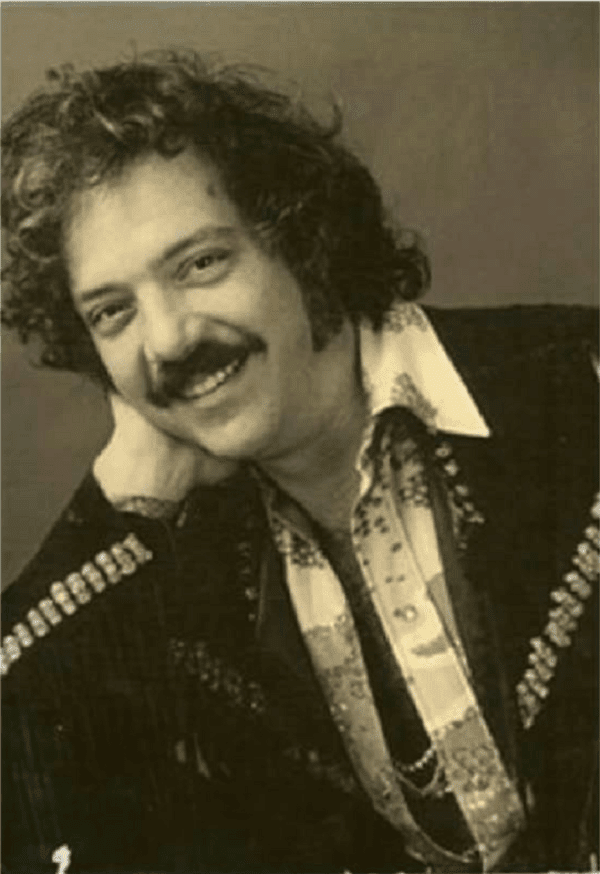
“El Judio Maravilloso” passed away on August 20, 2021

A little of his history

The also known as “El Judio Maravilloso” has a great success story behind him in the field of music, which began with the occupations of his parents. Recall that his mother was an opera singer and his father was a musician in the orchestras of Barrio Latino, which could explain his interest in the industry when he was very little. From a very young age, little Harry already handled certain instruments in a skilled way, showing what he could dedicate himself to in the future.

His great interest in Cuban music and culture led him to travel to Cuba, where he began his musical studies related to Afro-Cuban music. Unfortunately, the arrival of the Cuban Revolution prevented him from fulfilling his task and he had to leave the island prematurely due to the political crisis that started to develop.

Since then, the Harlow Orchestra became one of the first groups to be formed with the label of Fania Records. At the same time, Harlow was producing an tremendous amount of albums, both his and other musical stars’, catapulting him to becoming one of the most respected producers of that time. Reportedly, there were approximately 270 records in total, which gave us a lot of hits that continue to be heard to this day.

One of his greatest achievements was to have brought the world famous Cuban singer Celia Cruz to New York, thus becoming the first artist of Latin origin to perform at the Carnegie Hall, a famous concert hall located in Manhattan that had only had room for Anglo-Saxon artists until that time. It was “El Judio Maravilloso” who managed to bring Latin America to the Carnegie Hall for the first time from the hand of “La Guarachera de Cuba”, something unthinkable in those years.

Larry Harlow and Johnny Cruz in the 80’s

He also had an important role in the film “Our Latin Thing”, along with several transcendental figures of the Fania All Stars.

Relationship with the Spanish Harlem Salsa Gallery Museum

It is of common knwoledge that Larry and this server had a close relationship, since we knew each other for many years and lived many incredible experiences related to this wonderful genre called salsa. That is why the famous pianist sent me some of his most precious costumes to be exhibited in our gallery so that all his fans could be as close as possible to their idol.  After his departure, seeing all those things donated by him leaves a deep emptiness in those who see them, but at the same time this reaffirms our commitment to offer our public the best salsa exhibittions they have ever seen.

Larry has left an indelible mark in the hearts of all of us who got to know him during his lifetime, but our duty is to move on with our heads held high.

Harlow and Cruz in 2018


By Johnny Cruz, ISM Correspondents, New York, New York City

Meet The Dates Of Havana D’ Primera – Europe Tour 2022

Alexander Abreu & Havana D’ Primera will begin their concert tour in Serbia celebrating their 15-year artistic career

cinco personas cantando
Alexander Abreu with the Van Van at Tempo Latino 2022

Alexander Abreu & Havana D’ Primera will visit Europe in September with their 2022 tour to celebrate their 15-year career with love and music, starting on Saturday, September 3rd in Belgrade (Serbia), and two days later they will step on the Bulgarian salsa stage (Monday, September 5th).

Subsequently, they will sing their repertoire in Spain (Seville, Madrid, Bilbao, and Barcelona) on September 8th, 9th, 23rd, and 30th, and will continue in France with two concerts: on Sunday 11th, they will be on stage on the Cabaret Sauvage (Paris), while the Sunday, September 25th, they will do so in the Patio de Camargue (Árles). In the same way, their tour of Germany (Hamburg) continues on Thursday, September 15th, and the 16th of this month, they will be in Finland, specifically in the capital city Helsinki.

The 2022 Tour continues in Italy (Florence and Naples) on September 17th and 21st. The latter will be in the Sweet Life concert hall located in the Somma Vesuviana municipality of the Neapolitan city.

On Thursday the 22nd, they will do the same at the Cuban Latin Festival in the Netherlands (Amsterdam) and will end their 2022 Tour 400 miles from Europe in Tunisia in the Yasmine Hammamet neighborhood located in the north of the African continent on Saturday, October 1st.

16 personas en un escenario
Ticket prices vary between £30 and £100.

Alexander Abreu spent his childhood in the city of Cienfuegos (Cuba) where he began playing the trumpet at the age of ten and has currently become one of the most versatile and acclaimed Cuban musicians of Afro-Cuban music. “I have always seen Havana D’Primera with 15 people on stage and everyone said that it was impossible, that it would be too expensive, too difficult to move… This is how we started: 14 or 15 of us and a lot of positive energy, now we are stronger than ever.” Abreu commente.

Havana D’ Primera (HDP) is a Cuban timba band founded by Alexander Abreu in 2007 and made up of 17 of the best Cuban musicians. The orchestra is led by the main composer Abreu, who has stood out for his melodic voice and ability to fuse genres through Salsa such as Jazz, Funk, and other Afro-Cuban rhythms.

“Since its inception, the band has released five studio albums and one live album. The debut album release was Making History with EGREM in 2009 and their first release for the Páfata Productions record label. 2012’s Pasaporte received favorable reviews from the international press and was voted one of the best Latin alternative albums of that year.

Since then, they have followed the success of “Pasaporte” with four more albums, released through Páfata Productions and the last one in co-production with the Cuban Producciones Abdala.

HDP released “La Vuelta al Mundo” in 2015 and “Haciendo Historia LIVE” arrived in 2016. “Cantor del Pueblo” in early 2018, earning the band a Latin Grammy nomination for Best Salsa album. We cannot forget “A Romper el Coco” with the participation of Mayito Rivera released in 2019, and the single Quiero Verte Otra Vez (2020) which won the Special Prize at the 2020 Lucas Awards gala and was also cataloged by the French newspaper “Le Monde” as one of the favorite songs of Latin music.

Finally, in 2021 the album “Será Que Se Acabó” was released, as a tribute to Cuban popular music of the 80s and 90s. Discography extracted from the Biography of Havana D’ Primera.

You can read: Where to go dancing Salsa in Paris?

Businessman, producer and broadcaster Jimmy Castro promotes his Ritmo Caribe Promotions Radio

Jimmy Castro and his radio station Ritmo Caribe Promotions Radio

We had the pleasure of interviewing businessman, producer and broadcaster Jimmy Castro, who started his radio show “El Toque Latino” on radio station WTCY 1400 AM from 1998 to 2002 in Harrisburg, Pennsylvania. He then worked as a producer on “The Latin Jazz & Salsa Show” in Richmond, Virginia on station WCLM 1340 AM between the years 2008-2014. He eventually launched his own online Radio station Ritmo Caribe Promotions Radio in 2018 through the link www.ritmocaribepromotionsradio.com. Here, listeners can find salsa, Latin jazz and Afro-Cuban music.

Producer, promoter, and broadcaster Jimmy Castro

Here is our conversation:

You founded Ritmo Caribe Promotions in 1998. What made you found this company and why focus on setting up festivals and concerts?

I started the company as a DJ Record Pool called Caribbean Rhythms Record Pool in 1996 in Harrisburg Pennsylvania. I began meeting many of the artists that I was receiving music from, who began asking me if I would bring them to Harrisburg, Pennsylvania to perform. That’s when I changed the company name to Ritmo Caribe Promotions, and produced many concerts and festivals there featuring artists to include Larry Harlow, Tito Puente, Cano Estremera, Hector Tricoche, Van Lester, Miosotis, Edgar Joel, Yomo Toro, Eddie Palmieri, and more.

Why focus specifically on salsa, Latin jazz and Afro-Cuban music?

I used to promote more genres when I began such as Merengue, Bachata, Reggaeton, and Mexican but as the years went on it began getting more difficult because I was receiving so much music but I had a limited staff to and wouldn’t be able to focus on so many artists. I decided to limit it to the genres I had the most experience in.

Jimmy Castro while leading his old show “El Toque Latino”

I knew that Ritmo Caribe Promotions has co-produced songs by several well-known artists. Let’s talk a bit about your role as producer and record label.

Throughout the years, I have always dreamed of producing a Salsa song with my company. In 2020, I had the opportunity to co-produce my first Salsa song with JA Creations entitled “Mariana” by Colombian Salsa vocalist Jaime Andres featuring Frankie Vazquez “El Sonero del Barrio!” Since then I have co-produced 3 more Salsa tunes, “Nuestro Camino” by Leonardo Garcia featuring country vocalist Cat Beach, Max Rosado, and special guest Nestor Torres, “Mi Motivo” by Leonardo Garcia featuring Grammy nominated Miss YaYa, and “Lo Afortunado Que Soy” by William Mendoza’s Latin Heartbeat Orchestra featuring Cuban vocalist Amauri Menocal. Finally, on August 15, 2022 I will be releasing my first Salsa tune as Executive Producer entitled “Historia de Un Amor” featuring a vocalist from The Netherlands, Julie Huard.

What leads you to launch your own online radio station in 2018?

I started in radio broadcasting in 1997 with my own radio show called “El Toque Latino” on a commercial radio station, WTCY 1400 AM in Harrisburg, Pennsylvania. I was on the air for 5 years. I then moved to Richmond, Virginia where I worked as a producer on The Latin Jazz & Salsa Show on WCLM 1450 AM / WHAP 1340 AM for 8 years. I was also the entertainment producer for 10 years for the annual Latin Jazz & Salsa Festival, with The 15th Annual Latin Jazz & Salsa Festival scheduled this year on August 27th, in which I will be bringing headline artist Herman Olivera.

Finally, in 2018, I no longer was interested in working on everybody else’s radio station, and decided to launch my own 24/7 internet radio station, Ritmo Caribe Promotions Radio, where I am able to program exactly the way I want to. www.ritmocaribepromotionsradio.com.

Jimmy Castro with the “King of Timbales” Tito Puente

You have also produced theatrical plays and film productions. Give us more details about that.

The play I am most proud of was produced by my company Ritmo Caribe Promotions and Yamile Music (Los Angeles) entitled “Melena: A Cultural & Musical Journey into my Afro-Cuban Roots” which was the true story of Afro-Cuban latina percussionist Melena, and her journey from Cuba and becoming one of the best female percussionist in the world. You could check out the play in 3 parts on YouTube by searching for “Melena: A Cultural & Musical Journey into my Afro-Cuban Roots (Part 1, 2, and 3).”

You also receive music in mp3 format from the audience to place on the station. What basis do you have for choosing between the tracks you receive?

I accept music from artists from around the world, again Salsa, Latin Jazz, and Afro-Cuban music, and I listen to all the music I receive and focus on the quality of the production, ensuring I receive mp3/wave along with the album cover image, and last but not least the music has to be GOOD! I also send it to many Salsa dancers who I am connected with to get their opinion on the tune.

What you can say about your show “El Toque Latino”? How has this show changed with the passage of time?

I mentioned “El Toque Latino” in a question above, however, this show is no longer on the air. Now, it is only “Ritmo Caribe Promotions Radio” 24/7 at www.ritmocaribepromotionsradio.com.

Jimmy Castro with Puerto Rican salsa singer Cano Estremera


Home

In Barrio Marianao in Havana, Cuba was born Armando Peraza was a Latin jazz percussionist

Peraza (May 30, 1924-April 14, 2014) was a Cuban Latin jazz percussionist.

Thanks to his collaborations with guitarist Carlos Santana, jazz pianist George Shearing and vibraphonist Cal Tjader between 1950 and 1990, he is internationally recognized as one of the most important figures in the field of Latin percussion.

Known primarily as a conguero and bongocero, Peraza is also a skilled dancer and composer. He has appeared on recordings by Pérez Prado, Machito, George Shearing, Charlie Parker, Tito Puente, Cal Tjader and Carlos Santana. Performances with Santana, Shearing and Tjader brought him international fame.

He was inducted into the Smithsonian Institute and had three “Armando Peraza Days” from the city of San Francisco.

One of the most important and respected figures in the world of percussion.

He is a legendary master on both congas and bongoes, whose unorthodox style and story are an inspiration to countless young musicians.

He began his artistic career in the early 1940s, played with singer Alberto Ruiz’s Kuvabana ensemble where he played the bongo and moved to San Francisco in 1949.

At the New York World’s Fair he played congas in an African pavilion with a Nigerian.

This African arrives and says to me: “Man, what part of Africa are you from? I told him, I am from Cuba. He said: “Don’t tell me” He later worked with the orchestras of Paulina Álvarez and Dámaso Pérez Prado, and the Bolero group.

In 1947 he moved to Mexico, where he joined with Mongo Santamaría the ensemble Clave de Oro, and in 1948 they both traveled to New York as percussionists accompanying the dance couple Pablito y Lilón.

At the end of that year, Peraza joined Slim Gaillard’s jazz combo with which he traveled throughout the United States. After arriving in New York in 1949, Armando became a sought-after musician, especially in the contemporary Bebop and Latin Jazz scenes.

Armando built a reputation for impressively fast and complex hand technique, experimental techniques and great talent for entertaining. He flourished in progressive atmospheres that combined jazz with Afro-Cuban styles and was at the center of a new expression called “Cubop”.

He has played on more than 100 albums and is the composer of more than 40 songs. Some of these works include collaborations with Mongo Santamaria, George Shearing, Cal Tjader and Carlos Santana.

Settled in San Francisco, California, in the early 1950s, Peraza began working with pianist George Shearing’s quintet, where he demonstrated his mastery as a player of the tumbadora and bongo; also in this period he recorded several albums of Cuban folk music with Mongo Santamaria.

In the 60’s he joined the quintet of vibraphonist Cal Tjader, with whom he remained for several years and with whom he popularized Chano Pozo’s Guachi guaro. In the 1970s, he joined Mongo Santamaría’s orchestra, with which he participated in the Montreaux Jazz Festival in Switzerland.

Later he worked with Carlos Santana’s rock band, in which he remained for 17 years, until his retirement from artistic life in the 90s.

He possessed a great capacity to obtain the most unusual sounds of the bongo and the tumbadora, and distinguished himself for his extraordinary solos on both instruments.

He died on April 14, 2014 in California, United States, as a result of pneumonia.


Fuente: https://kripkit.com/armando-peraza/

Bandleader Edgardo Cambón talks about the teaching of music and his strategies on stage

Here you have our interesting comversation

We are here with Uruguayan bandleader, multi-instrumentalist, and percussionist Edgardo Cambón, who currently lives in Oakland. It’s very nice to meet you, Mr. Cambón. What a pleasure to have you with us today.

Hello, Karina. It’s a pleasure to have you here too despite the distance. I also send my regards to the followers of salsagoogle.com and to salsa fans around the world because this is an international connection. Thank you for the opportunity to connect with so many people.

Uruguayan bandleader and singer Edgardo Cambón next to new MOPERC walnut, 7 & 9 inches drums

On one of your Facebook pages, one can read that the conga is your main instrument, but you also play many others. In that sense, is the conga the instrument you most enjoy playing or are there others?

That’s a very good question. I am a percussion lover in general and, being Uruguayan, I also came into Brazilian percussion. The instrument to which I always gravitated around and returned to very strongly was the tumbadora or conga (commercial name). To study that instrument and the batá (the most religious Afro-Cuban music) I went five times to Cuba from 1989 to 2006. I have a very deep connection with Cuba and with all the countries in which the tumbadora is used. This is also the instrument I play while singing, which makes me have a very special connection with it. Jokingly, I say that I feel naked if I don’t play something while singing. I always try to play a güiro, maracas or another instrument because I always have.

You also teach music and percussion. It is well known that the teacher teaches students, but also that tstudents can also teach the teacher. Could you tell us what you have learned from your students?

That’s a very important and lovely question. I could tell you many things. The first thing you learn is to be patient with yourself and your own progress because the musician never stops progressing. The human being never stops progressing. When I see a student who is very nervous and isn’t patient with himself, I always try to make him understand that performing one instrument well takes a long time.

I learn a lot about what to do and what not to do. I learn to be patient with them, to rewind the cassettetape and to get back to the basics of what I learned in Cuba when I started traveling. My students also teach me to be grateful to my own teachers and connect with the instruments. When you reach a certain level, you become overconfident and it’s harder to connect with the instruments. Classes force you to pick up an instrument without being obliged to do so, which the professional musician tends to leave out after a long career.

My students remind me of what I was doing when I was learning and force me to keep practicing despite the experience. I always learn from them.

Edgardo Cambón in front of El Floridita

You teach both in person and via Zoom. What teaching strategies do you implement at home?

The difference between one mode and the other is huge and it was hard to get used to this situation. I was receiving a lot of proposals to teach via Zoom before the pandemic. I was avoiding at all costs the use of digital platforms even though many people were interested. I have a lot of online videos with great success and positive feedback, thank goodness. This has caused many people to ask me if I can teach them on Zoom.

The pandemic forced me to build that dormant muscle, so I think I achieved a very good system for giving online classes. In person, I use some applications that allow me to play certain songs I can slow down. These apps can work like a metronome, but funnier. Some of them are Percussion Tutor, Salsa Rhythm, Amazing, Slow Downer, among others.

In the case of Zoom, I suggest my students download these apps on devices other than the one they are using to meet with me. The biggest problem with digital teaching platforms is the delay sound between the student and the teacher. Now, amazing things have been done like the fact that a symphony can play in one country, while the conductor is in another conducting them. There have been improvements.

It may also be the case that there are students with excellent quality equipment, but others who have devices with outdated operating system and low download speed. So, we have to find a way for everyone to learn as well as possible. This system consists of doing a demonstration first, getting the student to play the rhythm from his side through the metronome or the application. Many times, we can spend a whole class trying to solve technical issues, but once everything is solved, you can establish a rhythmic relationship between the student and the teacher.

There are situations in which the mismatch between the sound and image prevents errors from being corrected, so we use phone calls to counter these issues effectively. This is how I look at the video image of the student (if there are no delays) and hear the sound at the right time.

The good news is that I can have students from around the world and doors are opened me for an broad international spectrum that I never expected.

Edgardo Cambón with a Pandeiro in a studio

Strategies on stage (título 3)

Radically shifting the issue, according to your website, one of the main defining things about Edgardo & Candela is that you know how to read the crowd very well and what the audience wants at that moment. How do you do that? What techniques do you use?

That’s a very good question. That’s a technique which is a bit instinctive. I must confess that that technique does not belong to the full orchestra, but to me as the lead singer and the orchestra leader. The guys know that I ask for a set list and even send it in advance. Several of them have their iPads and the music there in digital format, but others don’t.

I have over 240 songs in the repertoire, but I don’t get them all with me. On average, you play about seven songs in each set for an hour, which means that you’re thinking of 14 to 16 songs for two hours. It also depends on how long each song lasts.

If you’re playing to an American audience, you’ll probably have to slow down, play one or two songs in English and light beats such as cha cha chá. You have to include digestible things if you’re not playing to a salsa audience.

If I’m playing for the Mexican community, I have to include cumbia and medleys of local bands and artists like Maná, which is a very important Mexican group.

I have four original score albums. The first one was called ilusiones and released on vinyl in 1989. We produced it here in the Bay Area when there were few groups making original music around here. Following a trip to Cuba the same year, I decided to go back and focus more on my melodies, my songs and my lyrics. Another thing I wanted was to keep the Uruguayan essence in salsa and add a bit of candombe, which is the Afro-Uruguayan rhythm par excellence.

Edgardo and Candela at The Seahorse

I’ve had a lot of popular songs on certain digital platforms, but I wouldn’t be honest to say that I had a big hit like Llorarás by Oscar D’ León and Yo no sé mañana by Luis Henrique. I can use these things to push my original music a bit harder in general. You can have your original music, but you also have to play music known by the public to accustom people to your style and make them learn to digest your thing a little bit.

In the 70’s in New York, the bands only played original music, but those times has disappeared. That’s why I mix original music with familiar music, but I focus on making the result digestible and danceable for people. I play at least four times a week and, if I want to maintain that rhythm of work, I need a repertoire that includes Cuban, Colombian, Venezuelan, Mexican, Dominican music, among others.

What made you get involved in Charley’s project?

No self-respecting musician can allow his career to revolve around two or three clubs because these venues can open and break.

What I liked most about Charley’s was its proposal so similar to that of the 80’s, the decade when I arrived here. They were more stable clubs that had organization and the collective participation of artists such as DJ’s, dance instructors, radio folks, among others.

Also, Charley’s is a nice place and has a size that I think appropriate. When clubs get too big, there comes a point when the vibes can get cold, something that doesn’t happen in this place due to its moderate size.

The only downside is that gas is $6.25 and it’s far away for people from San Francisco, but people from closer areas can go.

Your music reaches audiences from all over the world. Have you had the chance to play abroad?

Yes. In 1996, we were at the Benny Moré Festival in Cuba. A few years later, we were on the island of Guam on the occasion of 5 de Mayo sponsored by Budweiser.

On both occasions we were very well received by the audience.

Most recently in May this year, we just played a large concert with over 1500 people at the Fairmont Orchid Hotel in Kona, Island of Hawaii. On that occasion, everything was arranged by the Salesforce company.

This last work was impressive because of the high technical and professional level of the entire production, since in addition to our Latin music, the popular pop singer Kathy Perry closed the show…

International jobs, and simply out your city, give another angle to the career encouraging the musician to present his original music.

After playing in Cuba, Guam and Hawaii, I jokingly say that I only get booked to play on Islands (chuckles).

Traveling on my own (without the orchestra) gave the pleasure of performing in Sweden and Argentina with the support of local musicians from those countries.

Cambón at Brooklyn Basin in Oakland

  • « Go to Previous Page
  • Page 1
  • Interim pages omitted …
  • Page 13
  • Page 14
  • Page 15
  • Page 16
  • Page 17
  • Interim pages omitted …
  • Page 24
  • Go to Next Page »

International Salsa Magazine (ISM) is a monthly publication about Salsa activities around the world, that has been publishing since 2007. It is a world network of volunteers coordinated by ISM Magazine. We are working to strengthen all the events by working together.