• Skip to primary navigation
  • Skip to main content

International Salsa Magazine

  • HOME
  • Previous editions
    • 2026
      • ISM / April 2026
      • ISM / March 2026
      • ISM / February 2026
      • ISM / January 2026
    • 2025
      • ISM / December 2025
      • ISM / November 2025
      • ISM / October 2025
      • ISM / September 2025
      • ISM / August 2025
      • ISM / July 2025
      • ISM / June 2025
      • ISM / May2025
      • ISM / April 2025
      • ISM / March 2025
      • ISM / February 2025
      • ISM / January 2025
    • 2024
      • ISM / December 2024
      • ISM / November 2024
      • ISM / October 2024
      • ISM / September 2024
      • ISM / August 2024
      • ISM / July 2024
      • ISM / June 2024
      • ISM / May 2024
      • ISM / April 2024
      • ISM / March 2024
      • ISM / February 2024
      • ISM / January 2024
    • 2023
      • ISM / December 2023
      • ISM / November 2023
      • ISM / October 2023
      • ISM – September 2023
      • ISM – August 2023
      • ISM July 2023
      • ISM Edition June 2023
      • ISM – May 2023
      • ISM April 2023
      • ISM March 2023
      • ISM February 2023
      • ISM January 2023
    • 2022
      • ISM December 2022
      • ISM November 2022
      • ISM October 2022
      • ISM September 2022
      • ISM August 2022
      • ISM July 2022
      • ISM June 2022
      • ISM May 2022
      • ISM February 2022
      • ISM January 2022
    • 2021
      • ISM December 2021
      • ISM November 2021
      • ISM October – 2021
      • ISM September 2021
      • ISM August 2021
      • ISM July 2021
      • ISM May 2021
      • ISM April 2021
      • ISM June 2021
      • ISM March 2021
      • ISM February 2021
      • ISM January 2021
    • 2020
      • ISM December 2020
      • ISM November 2020
      • ISM October 2020
      • ISM September 2020
      • ISM August 2020
      • ISM July 2020
      • ISM June 2020
      • ISM May 2020
      • ISM April 2020
      • ISM March 2020
      • ISM February 2020
      • ISM January 2020
    • 2019
      • ISM December 2019
      • ISM November 2019
      • ISM October 2019
      • ISM Septembre 2019
      • ISM August 2019
      • ISM July 2019
      • ISM June 2019
  • Spanish
  • Download Salsa App
    • Android
    • Apple

Search Results for: Afro-Cuban

Five Latin – Caribbean artists who triumph in Canada

Canada is another of the countries that has been influenced by the arrival of Latin music. Its beginnings are attributed to the immigration of Latin Americans to their lands.

Canada's map
Canada’s map

By sharing borders, the United States and Canada tend to have similarities in the musical field. In the 90s, Latin music was present in Canada. However, Spanish pop singers such as Julio Iglesias and Gloria Estefan, as well as Lydia Mendoza, an interpreter of Tejano music, were already known.

Having Latin Americans started a kind of Latino roots, allowing Latin music to gain more ground on Canadian soil. Singers like Celia Cruz, Willie Colón and Rubén González made their songs sound in Canada. However, the beginnings of Latin music in the country are attributed to Ferdinand Morton, known in the artistic field as Jelly Roll Morton, an American jazz pianist.

Starting in 1999, Latin music had a greater growth, beginning to be heard on radio stations, events, festivals and national television stations. By that time singers like Ricky Martin were already being heard in other parts of the world.

Selena, Buena Vista Social Club and Jennifer López. Arriving in Canadian lands was no exception. In fact, Buena Vista Social Club’s album broke a record by becoming the highest-selling Latin album in Canada.

Surprisingly, Canadian artists were also captivated by the benefits of Hispanic countries, by the Caribbean flavor and the warmth of its people. Nelly Furtado, singer, songwriter and producer born in Canada was inspired by the island of Cuba for her album “Mi Plan”. Furtado recorded what would be his fourth album entirely in Spanish. It featured the participation of renowned Latin artists such as Juan Luis Guerra, Alejandro Fernández and the Latin American Julieta Venegas.

“I think this album has several of my first true love songs. They are not complicated. They were not over-thought and I discovered that it is liberating to be able to sing in a Latin language and express my Latin soul,” he said.

Mi Plan obtained great merits and was positioned as the album in Spanish with the highest sales numbers recorded by a Canadian singer. Undoubtedly, a suitable place for many Latino musicians of birth or descent who have wanted to try their luck outside their borders. Some have succeeded and today are among the most loved in Canada.

Some representatives of Latin music in Canada

Hilario Durán, Cuba
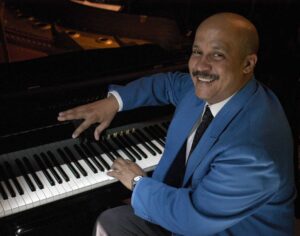
Photo by Hilario Duran

Hilario Durán

Hilario was born in Havana in 1953. He moved to Canada in the late 90’s, after touring the world with his band “Perspectiva”. He is a famous jazz pianist who fell in love with Canada and decided to live on its streets. He joined the Afro-Cuban jazz band “Spirit of Havana” belonging to Jane Bunnet, a Canadian lover of Cuban culture. In fact, Bunnet regularly travels to Havana to perform with Cuban musicians.

Hilario Durán has become known in Canada and other parts of the world thanks to his orchestra (Big Band), where together with his friend Roberto Occhipinti, a Canadian musician, they bring together Cuban and Canadian musicians. Leaving Latin jazz high. In 2007 he was nominated for a Grammy for his album “From the Heart”, along with Roberto D’Rivera. In addition, it obtained three Juno Awards and different awards in Canada.

Amanda Martínez, Mexico

Photo - Amanda Martínez in concert

Amanda Martinez in concert

Amanda Martínez was born in Toronto, Canada with Latino blood. His father is Mexican. Martínez studied biology and business administration but decided to take a course in his life and dedicate himself to what he really loved: music. The artist was not wrong in her decision. He has left his roots high by venturing into Latin jazz.

In 2007 and then in 2009 she was nominated for the Latin Jazz Artist of the Year Award at the National Jazz Awards in Canada. He has three albums to his credit and his first album “Sola” won the Best World Music award, selling around 6,000 copies.

Martínez has performed on famous stages and renowned events; she sang at the Winter Garden Theater, at the Koerner Hall in Toronto, the Festival Centro Histórico de México, at the Montreal Jazz Festival

Ogguere, Cuba

Ogguere's photo

Ogguere

Aka Edrei Riveri, is a Cuban singer and songwriter who resides in Canada. It has become famous for its musical fusions. He walks through rap, hip hop, jazz and la chacuba. A mix of cha-cha and rap. It is registered as the first mix between both styles.

Ogguere has two solo albums, “Solar” released in 2011 which earned two nominations for a Cubadisco award and “Raíces”. He moved to Toronto in 2010 and has since become an immediate reference in jazz and hip hop.

Natasha Roldán, Colombia

Photo by Natasha Roldan
Natasha Roldán

Born in Colombia and based in Toronto, Canada, Natasha Roldán breaks stereotypes in the musical field. She walks between jazz and bossa.

The artist has a fair complexion and very light eyes. From what anyone would believe, she is a native Canadian singer. However, her Colombian roots run deep in her career.

For Natasha it is important that the musical boundaries collapse. It promotes pattern-free Latin music.

“I think that above all I break many stereotypes because people in Canada whenever they think of Latin music, identify it directly with salsa or bachata. Well, and now reggaeton (laughs). And everything is linked to a super sexy image of the Latin woman, who dresses spectacularly and clearly I am not like that.

Therefore, it is very gratifying to share another type of music that people do not know such as bambuco, cumbia, Argentine zamba, Brazilian music aside from bossa nova … and whenever I talk to someone and they discover that I am always Colombian They ask me why I don’t play such music or dance this.

Suddenly I break with the stereotype but not because it is a bad stereotype but because other things have to be shown as well ”, she expressed in an interview for the Hispano Phone portal.

Her music has allowed many Canadians to have access to the Latin culture and to experience sounds with different influences.

Henry Vivel, Colombia

Photo by Henry Vivel

Henry Vivel

Henry was born in Colombia but moved to New York and later to Toronto. In New York he had the opportunity to study music with Enrique Gil, musician and composer. After his arrival in Toronto, he worked in Sky’s Banda, a group that performed at weddings and different events. He sang Latin music.

In 2009 he became the leader of the Tropicanada Orquesta. Pioneer Latin Orchestra in Toronto. They have participated in different salsa festivals and radio stations. Henry and the band have also been a part of different charities in Canada and other countries. In the same way, Henry has joined social causes for the inclusion of immigrants, he has taught them English and part of Canadian culture.

In 2013 he was nominated for the Oye Awards and 10 Most Influential Latinos in Canada. The singer is very pleased with the affection of the Canadian public.

“The chemistry is so great, especially with those who don’t understand my songs in Spanish, which makes the language barriers dissolve into enjoying themselves, dancing and having a good time. With the orchestra I have been able to witness how people enjoy the beauty of Latin music and it makes me very happy to be a Colombian who sings to Canadians and who puts up our musical roots ”, he commented

Toronto has been a city with great Latin influence. Canada has received mixtures of different cultures and they have formed a variety of styles that locals and visitors enjoy. It has been one of the countries that receive the foreign musicians as part of a great family and give them the opportunity to present their work. They have a great affection for Caribbean music.


Honor to whom honor is due – Johnny Cruz

Johnny Cruz
Johnny Cruz

This month I hope to be able to pay tribute to great figures of our Latin music, who have worked tirelessly for years to make our music very high.

I want to greet my great friend Larry Harlow and wish him a speedy recovery. Larry Harlow is an American artist and performer, composer and producer of Cuban son, Montuno, Afro-Cuban jazz, mambo, guaracha, cha-cha, and salsa, hailing from Brooklyn, New York. Harlow, who is known for his mix of Afro-Cuban jazz and piano playing styles, studied music in the 1950s in Cuba, but was unable to complete his studies before the 1959 Cuban Revolution, forcing him to leave the island.

Larry Harlow y Johnny Cruz

The Harlow Orchestra was the first to sign with Fania Records, Harlow has also produced more than 106 albums by various artists and more than 50 albums of his own authorship, in addition to those he produced for Fania. Among his most popular albums were “Abran Paso” and “Tributo a Arsenio Rodríguez” with Ismael Miranda as the vocalist. He also appeared with La Fania All-Stars, in the film, Nuestra Cosa Latina.

Harlow recorded one of his most momentous albums in just two days. Under the simple title of Salsa, it pays homage to the Cuban roots of tropical music, combining the sound of trumpets and trombones with two violins that evoke the aesthetics of the charanga of groups such as Orquesta Aragón.

With “The portfolio”, a version of a song by Arsenio Rodríguez, Harlow finds his greatest success. Thanks to the singers Adalberto Santiago and Junior González, the nickname “the wonderful Jew” arises. In 1972, salsa was in full swing. Larry Harlow, meditates on a musical concept for the Afro-Caribbean music market. Inspired by the success of the Anglo-Saxon opera, “Tommy”, Harlow was preparing for the launch of a similar concept, aimed at the salsa market.

For 1973 the opera Hommy, using the lyrics of Heny Álvarez, tells the story of a boy who, although blind and deaf, had a great talent for percussion. The outstanding musicians of the time and singers such as Justo Betancourt, Cheo Feliciano, Adalberto Santiago, Junior González, Pete “El Conde” Rodríguez and Celia Cruz joined.

The combination of musicians and voices achieved its goal with a recording that established a lecture in the history of Afro-Caribbean music with a radiant exhibition that captured the airwaves and the imagination of the salsa audience. The songs “Es un Varón”, “El Día De Navidad”, “Quirinbomboro”, “Gracia Divina”, “Cari-Caridad” and “Soy Sensacional” were undoubted radio hits that became themes of dance and discussion among all the salseros.

It was the first time that an opera, Spanish-speaking, and in the salsa guild, was directed to the populace. Salsa got dressed up and that legacy opened the doors for the Afro-Caribbean musical tradition to now visit the most prestigious venues in the world.

That is the legacy of “Hommy”, one of the best recordings of the time, which brought together the best musicians of the moment in an expression that transcended time; and, in turn, he brought Celia Cruz to the salsa market and placed her in a seat of honor which she never left. But more importantly, “Hommy” took Salsa to a new place among audiences. What a contribution from Larry Harlow!

Ralph-Irizarry
Ralph-Irizarry

I also want to send my regards and appreciation to Ralph Irizarry. Recognized as one of the timpanists with the greatest “swing”, Ralph Irizarry has a distinctive style that has allowed him to leave an indelible mark in the groups where he has played. Born in Harlem Latino New Yorker, Ralph is a self-taught musician who learned his trade by listening to his brother’s records and the music of his idols in nightclubs, where he used to sneak into when he was 16 years old.

His family moved to Puerto Rico when Ralph was in his teens; There he acquired his first professional experiences with La Terrífica, El Gran Combo, La Sonora Ponceña and many other groups. After three years on the island, Ralph returned to New York, where he began playing with local groups.

One winter night in 1978, he met the legendary Ray Barreto at Manhattan’s Corso Nightclub and began a productive working relationship that would result in five extraordinary recordings. Ralph has recorded with David Byrne, Paul Simon, Harry Belafonte, Earl Klugh, Juan Luis Guerra, Cachao, Celia Cruz and Yomo Toro, although he is widely recognized for his musical relationship with Rubén Blades and Seis Del Solar, with whom he remained. recording and performing internationally for 13 years.

His musical contributions have also been fundamental in the recording of two Latin jazz albums made by Seis del Solar for the Messidor Records label. Currently, he is one of the most sought after musicians who has kept working on commercials and film and television soundtracks.

His charisma also allowed him to develop an unexpected acting career: he acted in The Mambo Kings, playing the role of Pito Fernández. In the summer of 1996, Ralph participated along with Tito Puente in the show Master Timbaleros, presented at S.O.B.’s in New York. This historic concert was the culmination of 26 years of dedication, practice, and love of music. He founded the group Timbalaye, a septet with a strong big band sound.

The group combines contemporary Latin jazz with diverse tropical rhythms (timba and songo) and traditional Afro-Cuban rhythms (bomba, cha cha chá and son montuno). Their innovative sound has allowed the group to perform weekly at various venues in New York. Among his most recent projects is a recording at Birdland for a compilation to be released by the RCA Records label. Timbalaye is considered the force of Latin jazz. My hug and respect to you Ralph!

I am happy to express my gratitude and admiration to a powerful woman, Director of Taínos Tower and Vice President of the Museum of Salsa: María Cruz.

Johnny Cruz and Mrs. María Cruz

María Cruz was born in Carolina, Puerto Rico. In 1966 she came to New York looking for new opportunities. While studying at Manhattan Community College, she began working with the East Harlem Pilot Block Redevelopment Project. Although she may have had no idea at the time, that job was the beginning of her career as a community activist and advocate for social services. As a community worker at the East Harlem Pilot Block, she helped design and offer a tenant orientation in preparation for the occupation at Taino Towers.

Later, she became a Building Representative and worked with tenants regarding apartment issues, rent, social service issues, and Section 8. Maria Cruz has been involved in many community activities:

From 1984 to 1989; She served as president of the Tenants Association of her apartment building. She was vice president of the East Harlem Little League Baseball organization. In her spare time, she organized bus trips for neighborhood children to amusement parks and ball games. Encouraged and assisted several tenants to return to school and continue their education, so that they can be trained and empowered to return to the workforce and leave Public Assistance. Ms. Cruz earned her RAM (Registered Apartment Manager) certificate from NYU and is registered as a Certified Leasing Professional.

Currently, Ms. Cruz is the Executive Director of ARCO Management Inc. / Taino Towers. She has always been a strong activist for the community. In the summer of 1999, Ms. Cruz organized the first annual Taino Family Day. Day in which all residents and members of the East Harlem community participate and celebrate a day of unity. On Taino Family Day, residents rent “kioscos” food stalls and sell various ethnic foods, dance to the rhythm of various musical bands, and children enjoy activities such as face painting, puppet theater, and a petting zoo.

Each year, Ms. Cruz focuses on a different topic such as: education, music, tributes, and family values. As Executive Director, one of her greatest accomplishments was the renovation of the Touro College building. She is currently a board member of the East Harlem Council for Human Services and works closely with local politicians and representatives.

In 2002, Ms. Cruz along with Irving “Magic” Johnson opened the Magic Johnson Computer Learning Center. This program provides computer classes to Taino Towers and the East Harlem Community. As Executive Director, she was also able to oversee the completion of the Senior Park at Taino Towers.

In the summer of 2003, voted by the majority of the tenants, the Park for the elderly was renamed the Maria Cruz Park for the elderly. In September 2019, she was honored with the Eugenio María de Hostos Award from the Puerto Rican National Association for her commitment to the East Harlem Community. People like Mrs. Cruz are exemplary citizens of the Latino community in the United States, and in New York.

Papo Rosario and Isidro Infante

Do not stop listening to the new single: “Gracias”, and the first solo production of Papo Rosario, produced by the arranger and musician Isidro Infante. Rosario is grateful to be alive and to be able to walk after being bedridden as a result of a car accident. Papo Rosario is a world-class artist who has put the name of Puerto Rico high. Rosario, withdrew in 2019 from the group considered the “university of salsa”, El Gran combo de Puerto Rico, after having an accident and presenting health problems. Now, he affirms that he already feels ready to resume his musical career with the launch of his first solo production by producer Isidro Infante. Much success in this new stage.

I highly recommend that you follow the track of Quintero’s Salsa Project, a Venezuelan salsa group based in New York, nominated for a Latin Grammy and led by cousins ​​Luisito and Roberto Quintero, released an album in which they pay tribute to the work of La Dimensión Latina, the orchestra that represented a before and after in the history of this musical genre in Venezuela.

Quintero´s Salsa Project

The band wanted to go back to the 60s to remember that particular style with which La Dimensión Latina championed Venezuelan salsa: “Many of the world’s salsa players and Venezuelans identify with this rhythm. We, the Quintero, have always been loyal fans of these great teachers. With this album we wish to pay tribute to those who today are a world icon of salsa ”, they said through their networks. “Ya tú lo verás”, promotional single from the album composed by Oscar D’León, was arranged by the legendary trombonist and director of La Dimensión Latina, César Monges, better known as “Albóndiga”.

The album is the second released by Quintero’s Salsa Project, following their debut project, Nuestro Hogar, which was nominated for the 2019 Latin Grammy for Best Salsa Album. In that same ceremony, Luisito Quintero, one of the great Venezuelan percussionists who make a professional life in the United States, received the gramophone as a member of the Spanish Harlem Orchestra, which was recognized for his Anniversary album as Best Latin Tropical Album. Quintero is also a member of the group of the great pianist Chick Corea. Do not miss it!

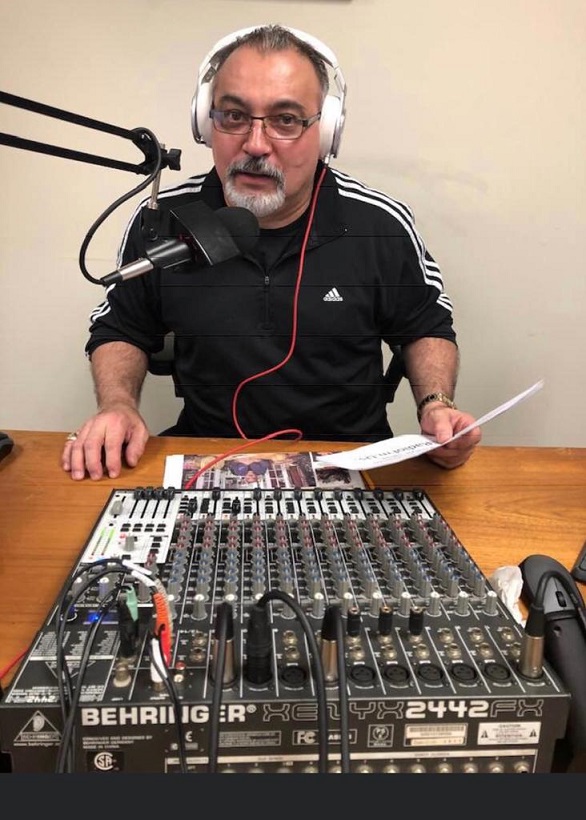
The invitation to tune in to the new Fm / Internet radio station on Live365.com continues: Salsagallery. Good music, interviews with the artists and much more.

Johnny Cruz on the Radio

At the Spanish Harlem Salsa Gallery Museum we are happy to say that we are gradually returning to our activities and we will be opening the gallery sporadically. We do not stop, we continue to work for our music and we will always keep you informed through our social networks. We hope to have more news shortly and that we can return to normal soon.

By Johnny Cruz, ISM Correspondents, New York, New York City

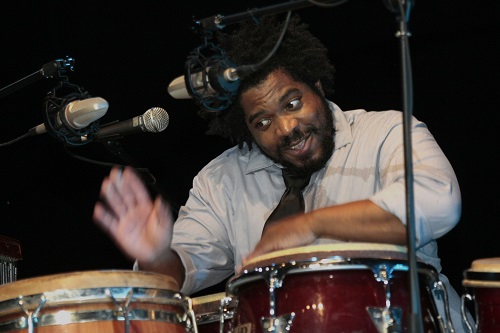
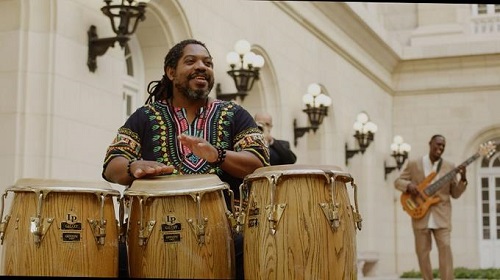
Yaroldy Abreu Robles is one of the talents of the new generation present in Cuba

Yaroldy Abreu Robles was born on February 22, 1977 in Sagua de Tánamo, Holguín, Cuba.

Excellent percussionist and arranger. Among the many talents of the new generation of Cuban experts in Cuban rhythms of French-Haitian origin and knowledge of Afro-Cuban folklore, Yaroldy is an imaginative and expressive percussionist, with great technique and virtuosity, with an original style.

Yaroldy Abreu Robles es uno de los talentos de la nueva generación presentes en Cuba

A member of a new batch of Cuban percussionists, he stands out for his genius and mastery, to hear him play is an enjoyment for the senses.
He radiates vitality and joy, his hands seem to fly and at the same time caress the drums causing a magical and contagious effect on those who listen to him. He is currently one of the members of the Maestro Chucho Valdés Quintet.

He grew up in an environment rich in traditions and with his grandmother he learned about the activities of Tumba Francesa de Bejuco.

Yaroldy Abreu Robles

This is an association of solidarity that preserves and enhances the folklore of French-African-Caribbean origin through cultural recreational meetings, and especially the celebrations organized by the slaves of Haiti.
He is not a great connoisseur of the Yoruba culture, he is not a believer, but he feels attracted by the symbolism and the music of the magic Afro-Cuban religious cults.

He began studying guitar as his first instrument at the Casa de la Cultura. Then at the age of nine he began classical percussion at the Escuela Vocacional de Arte de Holguín and in 1996 he entered the ISA (Instituto Superior de Arte) in Havana, where he graduated in 2001. Sound in the whole range of percussion of academic character and those of the Afro-Cuban tradition.

Yaroldy Abreu Robles Pintura por la Artista Inés Garridos

The first band where he played was called Son de Sagua, in which he played guitar with a mixed repertoire. His debut was with percussion, bongo in several groups and then with a wider range of instruments.

He began working with the group Piapá, doing experimental percussion, and a classical percussion quintet.

Also with dance music groups such as Pupy and Los Que Son Son and others. In 1997 he became a professional with Maraca and Otra Visión internacional, in 2000 he joined Irakere and in 2001 he joined the quartet of Chucho Valdés, the great protagonist of Cuban music in the last forty years as composer, director and discoverer of talents.
Among the young Cuban percussionists who continue to renew the grammar and pronunciation of the Afrolatino tumbadora in jazz, one of the most influential names is the thirty-one Yaroldy Abreu, whose point of reference is the work of the great immortal masters such as Chano Pozo, Tata Güines, Mongo Santamaría, Jorge “El Niño” Alfonso and Miguel “Angá” Díaz.

Discography in which he has participated
Yaroldy Abreu Robles

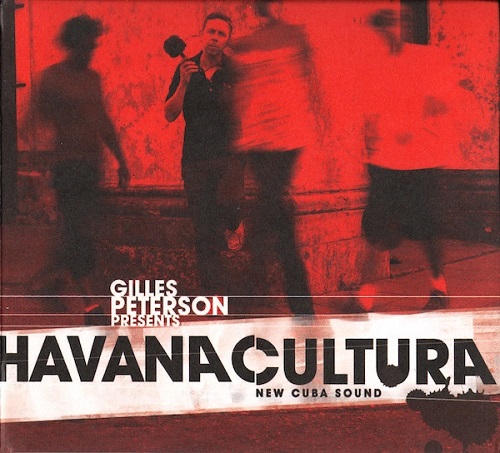
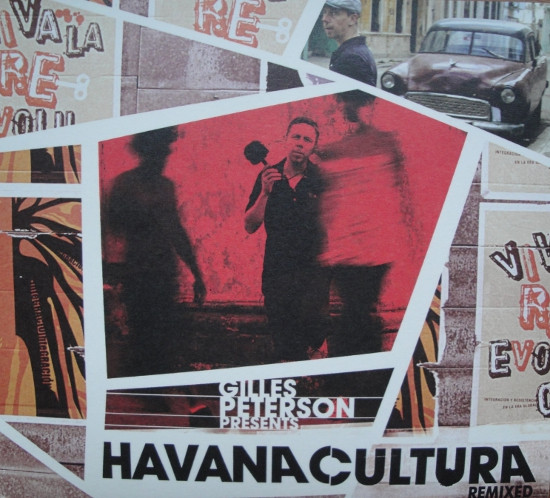
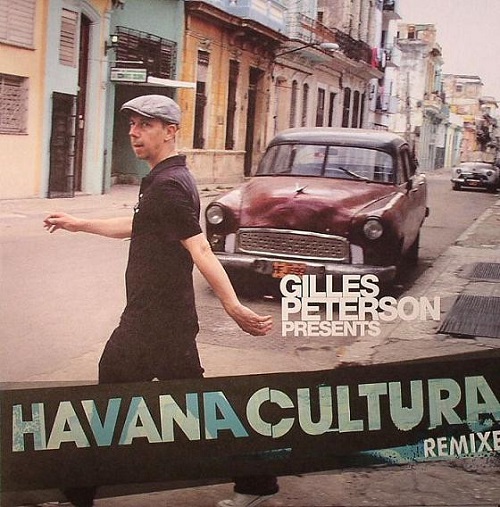
Gilles Peterson Presents Havana Cultura – New Cuba Sound Año 2009
Gilles Peterson Presents Havana Cultura 2010
Gilles Peterson Presents Havana Cultura Remixed 2010
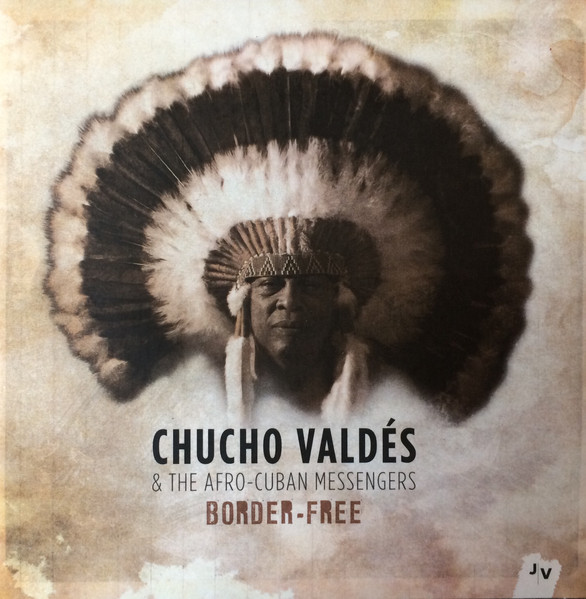
Chucho Valdés & The Afro-Cuban Messengers 2013

Tata Güines known as Manos de Oro, Cuban rumbero and percussionist

Known as Manos de Oro, he modernized the tumbadoras and played with the most important musicians of the island of Cuba.

He was born in Güines, Havana on June 30, 1930, in the bosom of a family of musicians, son of Joseíto “El tresero” and Niñita, who from a very young age used to play a boot-cleaning box in the corner of the Chapel of Santa Bárbara, in the legendary neighborhood of Leguina, where so many congas and bembés have been made and will continue to be enjoyed.

Artistic trajectory

Saying Federico Arístides Soto Alejo may not say anything to some music neophytes, but when you say Tata Güines, things change radically and everyone thinks: That is the tumbadora made soul and flavor.

Tata Güines conocido como Manos de Oro, modernizó las tumbadoras y tocó con los más relevantes músicos de la isla de Cuba

He became attached to percussion instruments, especially the tumbadora, which, as a Cuban, groaned under the effect of his prodigious hands. Under the influence of Chano Pozo, whose touches bewitched him and gave him the key to create his own style.

He was formed as a musician among the drums and the religious festivities of his neighborhood. He adopted his nickname as a child -el Tata-, and as a surname the name of the town where he grew up. Music was in his blood: his father and uncles made music with their hides.

He played double bass in the group Ases del Ritmo. He was part of the Partagás group, led by his uncle Dionisio Martínez, and later founded the Estrellas Nacientes orchestra and performed with the Swing Casino orchestra in Güines.

In 1946 he performed in his hometown with the Conjunto de Arsenio Rodríguez.

Tata Güines, rumbero y percusionista cubano

}In 1948 he moved to Havana, where he was a member of the orchestras La Nueva América, led by Pao Domini; La Habana Sport led by José Antonio Díaz, Unión, led by Orestes López, La Sensación led by Belisario López, and in 1952 he joined Fajardo y sus Estrellas, with which he traveled to New York in 1956.

He joined Los Jóvenes del Cayo, with which he appeared on the radio station La Voz del Aire; later he performed with the ensembles Camacho and Gloria Matancera.

He accompanied the trio Taicuba as a bongo player, and worked with Guillermo Portabales, Celina y Reutilio, and Ramón Veloz. He participated, along with Chano Pozo, in the comparsa Los Dandys de Belén; also, Los Mosqueteros del Rey, Los Mambises and Las Boyeras.

He recorded with Arturo O’Farrill (Chico) and with Cachao y su Ritmo Caliente, Frank Emilio, Guillermo Barreto, Gustavo Tamayo and others. He was part of the Quinteto Instrumental de Música Moderna (later Los Amigos), led by pianist Frank Emilio; Guillermo Barreto, timbal, Gustavo Tamayo, güiro, Israel López (Cachao) and Orlando Hernández (Papito), double bass.

In 1955 he travels to Caracas, Venezuela, to participate in the carnivals of that city. He traveled to New York with the Fajardo y sus Estrellas orchestra, with which he performed at the Palladium, where he coincided with Machito y sus Afro-Cubans and Benny Moré, whom he accompanied on the tumbadora; he also performed at the Waldorf Astoria Hotel, where he worked for the first time as a soloist.

Tata Güines nació en Güines, La Habana

He prepared a show and shared the stage with Josephine Baker, Frank Sinatra, Maynard Ferguson and Los Chavales de España, with whom he recorded the piece “No te puedo querer”.

In 1960 he returned to Cuba. Four years later he founded Los Tatagüinitos. He offered a concert with the National Symphony Orchestra, conducted by Manuel Duchesne Cuzán, with which he performed his work Perico no llores más. He accompanied the guitarist and composer Sergio Vitier in his work Ad Libitum, danced by Alicia Alonso and Antonio Gades.

International tours

He toured California, Chicago, Miami, Puerto Rico, Panama, Venezuela, Colombia, Mexico, Martinique, Monte Carlo, Switzerland, Bulgaria, Hungary, where he participated in the Jazz Festival; Soviet Union, Finland, Spain.

Musical Validity

Tata Güines was a master of masters of Cuban percussion. His death represents a notable loss for Cuban culture. Nobody like him in Cuba to make percussion an art.

In front of Tata Güines, the leather of the drum seemed the most delicate and expensive silk. He would place his agile hand on the tanned skin stretched by the fire, and with his fingernails he would achieve the saddest of laments as well as the most contagious smile.

Few knew him as Federico Arístides Soto Alejo, but everyone knew that he had modernized the tumbadoras, that he was a master at placing the “loose” beats in a song, as if “carelessly”, but that the piece could not survive if it lacked that imprint of someone who let himself be carried away by the rhythm of the claves, by his very fine ear and by the demands of a body accustomed, since he was almost a child, to music.

He died on February 4, 2008 in Güines, Havana.

Federico Arístides Soto Alejo Tata Güines

Awards and recognitions

National Music Award 2006

Félix Varela Order 2004

Alejo Carpentier Medal 2002

Tataguines Soto Martinez

Read also: Carlos “Patato” Valdés one of the best percussionists in the history of Latin Jazz

Javier Cabanillas and his Cabanijazz Project

It has been a privilege for International Salsa Magazine to talk to Mexican bandleader, professor and musician Javier Cabanillas, who told us in detail about his life from the day he started in music until today, when the fruits of all the hard work and great talent are seen.

Javier Cabanillas playing the conga

Interesting beginnings

Javier begins by speaking of his beginnings in the world of music on the streets of Tijuana, in his native Mexico. He tells us that he used to work in San Diego, USA, and Tijuana is a border city, so he had to cross the border every day in order to fulfill his professional commitments.

On his days off, he often went to what is known colloquially as ”sobremesas” or ”tianguis”, which are closed streets where vendors set up their stands to offer their goods to passersby. In those places, he played the conga, as he felt that this was a space where he could freely express his art in front of an audience, although his dream was to do it on stage. What he did not know was that sooner or later it would come true.

Javier did not think he could walking down a red carpet in Los Angeles, since his activity was completely informal. He was just looking to blow off some steam and drain daily stress. I felt very comfortable playing the conga as I did, but over time, I began to professionalize myself in the musical area and that is how I have gradually achieved what I have set myself out to do,” says the artist.

Although it is a long time ago, Javier remembers very fondly those years because that gentle scene and that communication with people on the street helped him to develop the warmth an artist needs to connect with the audience.

Javier Cabanillas and his Cabanijazz Project at the 62nd Monterrey Jazz Festival

How have your Latin roots affected your career in the United States?

As to how his roots have affected his career, Javier says that he had to learn most things on the go, but always ramaining respectful toward all cultures in which his music was involved. He mentions this as his origins are focused on northern Mexico where the typical thing is to listen to norteño and banda music, but he did not choose those genres for his career, but jazz and Afro-Cuban rhythms. ”I had a lot of respect for that culture because I felt that it was not completely mine, which led me to be much more responsible and respectful when experimenting with this market,” he said.

When talking about learning to play an instrument or genre that does not belong to his culture, he said that there are always some limitations because musical language will always vary. In his case, the kind of musical language comprehensible to him is that of mariachi or banda music, making easier for him to identify certain elements. When he went to live in San Francisco, he spent time with musicians from all nationalities and could realize that they were not able to do many of the things that were not proper from their countries of origin. This makes learning more complicated, but not impossible.

In that sense, Cabanillas says there are some useful techniques to learn to play instruments and rhythms we did not grow up with, so there is a revolution of percussionists and musicians who have managed to break that mold. The Internet has played an extremely important role in all this, as artists of all kinds can access content that helps them improve and develop professionally. In his particular case, YouTube and these online tools did not exist, so he could only count on his ear and imitate what he heard to learn.

Cabanillas' music is based on jazz and Afro-Cuban rhythms
Cabanillas’ music is based on jazz and Afro-Cuban rhythms

The Grammy

One of the great victories in Cabanillas’ artistic life was the Grammy he won with the Pacific Mambo Orchestra. Since the members of the group did not have the necessary funds to produce an album, they turned to other financing options supported by the community through an online fundraising campaign. The intention was that anyone could make a donation or even buy the album in advance.

30 days later, they achieved their goal and recorded the album. Javier was one of the 36 musicians who participated in the production and his role was to be in charge of percussion with his congas. The orchestra was not supported by any major label, so they did everything independently. This gave them more control over what they wanted to offer to the audience, since they were not subject to what any management wanted from them. This meant that the process of preparing the material was very organic and spontaneous.

When the album came into competition in the ”Best Tropical Album of the Year” category, it managed to be among the five best nominees along with Marc Anthony, Carlos Vives, Los Ángeles Azules, Sergio George, Oscar D’ León and many more. Three of them were working with Sony Latin Music, so they had great chance chances to win because they worked with such a big label, while Pacific Mambo did not have all that machinery behind them, not even close.

Javier Cabanillas with the Grammy he won with the Pacific Mambo Orchestra

That’s how we were invited to Los Angeles, walked down the red carpet like the rest of the artists and took a huge surprise to win the Grammy in our category. At that moment, I felt that all my effort was worthwhile” the conguero said excitedly. He confesses that he and his orchestra fellows did not expect the win because they were the least popular nominees in the category. Fortunately, the judges focused their attention on the quality of their work and not on their popularity at the time.

Cabanijazz Project

As noted, the name of the group is a play on words between the artist’s last name and the word ”jazz”. The whole idea came up in Tijuana, where he was clear that he wanted to start a project in which he would not limited to a single rhyming scheme. He did not want to use something as generic and worn-out as ”Javier Cabanillas Y Su Orquesta”, so he started to play with other elements to obtain an original name that would capture the essence he wanted to show. This is how the name ”Cabanijazz Project” was born.

The project started as a quintet that played in several festivals and events, achieving some success in a short time. Later, he added more musicians until having eight. When he started working in San Francisco, he began studying more and absorb the culture around him for a few years. Some time later, he restarted his project again with Bay Area musicians and started uploading his material to music platforms such as ITunes and Spotify.

Among the instruments used by his group, the trombone, the tenor saxophone and the baritone cannot be left out. They are the three largest wind instruments in the brass range, so they were the ones that achieved the sound Javier was looking for in his orchestra.

Another important detail is that the music they play is entirely original and they only change their repertoire a little when they play live.

San Francisco Salsa Festival 2023

One of the group’s upcoming performances will be at the annual San Francisco Salsa Festival to be held in March 2023. Cabanillas says that one day he received an email from the event organizers informing him that Cabanijazz Project was the choice to play there. They were recommended by several of Javier’s friends and colleagues who assured the organizers that the band was the best choice for its quality.

They have already played three times at the festival before the pandemic resulted in the suspension of the event, so the artist and his musicians already have a lot of experience entertaining the tough Bay Area audience. Cabanijazz Project will be the opening band for the festival and will perform along with two other local groups that will also offer their talent to the attendees.

Read also: Tribute to Eddie López for his career

  • « Go to Previous Page
  • Page 1
  • Interim pages omitted …
  • Page 13
  • Page 14
  • Page 15
  • Page 16
  • Page 17
  • Interim pages omitted …
  • Page 26
  • Go to Next Page »

International Salsa Magazine (ISM) is a monthly publication about Salsa activities around the world, that has been publishing since 2007. It is a world network of volunteers coordinated by ISM Magazine. We are working to strengthen all the events by working together.