Marlow Rosado “The Dalí of music” as he is known, closes the year talking about his latest productions and what is coming this 2021.
Marlow Rosado, is a Puerto Rican pianist who has made his way into the salsa genre. A very versatile and creative artist, he has been one of the lucky Latinos to be a Latin Grammy winner. He is an arranger, composer and conductor, his style delves into fusions of Latin jazz and Afro-Cuban traditions. However, he does not hesitate to reinvent himself after each musical production, without losing the flavor that has become his personal hallmark. He leans for the aggressive but fresh and modern rhythm. In addition, he is recognized for his quality productions.
Marlow is a Grammy winner.
“Before the issue of the pandemic, I had released an album … ‘Feminomanía’ a project where the voices are female. The musical production was at its peak, the pandemic arrived and everything came to a standstill, “said the Puerto Rican established in Miami city.
The project concentrated the diversity of different singers of the genre, among them: Carolina La O, Michelle Brava, Brenda K Starr and Aymee Nuviola. In addition, it has 13 songs and the musical participation of Marlow.
Rosado, was one of those artists who took advantage of the global pandemic to the fullest and decided not to lock themselves in apathy. During 2020, he performed two songs that marked his year. They are completely different but were made with the same love and dedication: one of salsa and another of Latin jazz.
Faced with the paralysis of activities worldwide, Marlow opted to enter the recording studio and give life to new productions.
“I went into the studio to produce another album and I started working on two at the same time. From the beginning, he had spoken with singer Frankie Negrón to do a salsa production. The album is called ‘Los colores de la salsa’ in allusion to our surnames Rosado and Negrón. Frankie recently moved to Miami, which made recording easy”, said Rosado.
The artist served as the composer of all the songs, as well as the musical arrangements.
“In the production ‘Los colores de la salsa’ there is a song called ‘Boricuas en Nueva York’ that has that Christmas air and we wanted to release it now to create an energy around those two albums that are coming in February” he added.
“Boricuas en Nueva York” with Frankie Negrón, was distributed under the JN Music Group label. The song has a Puerto Rican salsa rhythm, along with the voices of both singers who emigrated from Puerto Rico to the United States. Rosado was very pleased to work together with Negrón and to give this suitable theme for Christmas.
Marlow Rosado and Frankie Negron.
“Orun” is the following record production, made within the Latin jazz genre and very different from “Los Colores de la Salsa”. With this job he fulfilled a dream he had always had.
“I had always wanted to make a Latin jazz record. I’m a good jazz player and a fan of Edddie Palmieri. I love the career he has made linking salsa and latin jazz at the same time. I made the two albums, I presented them in JN Music Group, they liked them and they quickly told me we want to release them. Both will go on the market in February 2021 ”, said the artist.
The album featured the collaboration of Cuban-born pianist Chucho Valdés and saxophonist Ed Calle. For some, betting on new releases amid the global pandemic was a challenge. However, Rosado took it with good energy and believes that it is not impossible to give them the boost he wants.
“Who knows what happens. Sometimes you make an album at the best times and under the best circumstances and nothing happens. I am positive. I did these two projects in difficult times and look, I got them signed for me. So far I have managed to make the records and have the production company put them out… things that maybe under regular circumstances would not have achieved. We are going to think that this pandemic has come with the happiness that I have been able to make these two albums and that they are going to continue with the push they have been doing so far “, said the musician
Marlow has worked with the best of the industry. He created a song for Yolandita Monge (“Sentimiento Borinqueño”), he has participated in productions by Alejandra Guzmán, Ricky Martin, El Gran Combo, Elvis Crespo, the Puerto Rican Power orchestra, among others. He has also worked with Celia Cruz, Selena, Ricardo Montaner, Olga Tañón, and many more.
Marlow Rosado’s Biography
Marlow Rosado was born and raised in Cataño, in the central area of San Juan in Puerto Rico. Later, he moved to the state of Florida, where he trained in the musical field. He studied up to a master’s degree in jazz.
Rosado is very dear to the children who have known him. In fact, he taught in elementary schools, sharing his passion for music with new generations. His first big break came from being able to work alongside Desmond Child, an American producer and songwriter who has been associated with renowned bands like Aerosmith, Bon Jovi and Kiss. A big leap in his career!
He is the typical Latino who loves his country, and grew up surrounded by his origins. Salsa accompanied him throughout his life. Before he was 10 years old, he was given an electronic organ and it was at that moment that everything changed for him.
He has won two Grammys, an achievement that fills him with great pride.
Marlow and one of his Grammys.
“The Grammys are my before and after in my career. They have given me the right to say: Look, I am right. I have always had my mind outside of what is commercial, making the music that I want to do. The Grammys have given me the right to know that I was right… where my music is going”, he said.
In 2009, together with his orchestra La Riqueña, he recorded his first album known as “Salsalsa”. For Marlow, the team he had was of another level: “The best musicians.” Then, in 2012 came “Retro”, along with his first Grammy Award; “Salsanimal” in 2014; “Harlow Marlow, volume 1” in 2016; and “Feminomanía”.
Harlow Marlow, Vol. 1 mixed elegant style with modern elements and salsa brava. The album was a tribute to his friend Harlow.
“I have a very special respect and affection for Larry Harlow. I have known him for many years. I have worked with him many times. When he came to Miami to play, I put the orchestra together for him. I have an unforgettable memory when I played the Hommy Opera at Lincoln Center. Larry conducted and I played the piano. For me it was an honor. One of the best gifts I have ever received was from him. He gave me the piano that looks like a guitar and I keep it in my studio with great pride. The connection with him is something special ”.
“The Dalí of music” as he is known.
Salsa is its flag and it will continue to innovate within it. Marlow’s career continues to climb. A pianist who has been called “The Dalí of music” because his hands become brushes when he plays the piano, just like the painter’s canvases. Marlow leaves his mark and will continue to give something to talk about. We have no doubts about it!
With his heart in jazz, Weinstein contributed greatly to the development of the salsa trombone by playing and arranging
Flutist, composer and arranger, Mark Weinstein began his study of music at age six with piano lessons from the neighborhood teacher in Fort Green Projects in Brooklyn where he was raised.
Between then and age 14 when he started to play trombone in Erasmus Hall High School, he tried clarinet and drums. Playing his first professional gig on trombone at 15, he added string bass, a common double in NYC at that time.
Mark learned to play Latin bass from Salsa bandleader Larry Harlow. He experimented playing trombone with Harlow’s band and three years later, along with Barry Rogers, formed Eddie Palmieri’s first trombone section, changing the sound of salsa forever.
With his heart in jazz, Weinstein was a major contributor to the development of the salsa trombone playing and arranging. He extended jazz attitudes and techniques in his playing with salsa bands.
His arrangements broadened the harmonic base of salsa while introducing folkloric elements for authenticity and depth.
Mark Weinstein Flutist, composer and arranger
The only horn in a Latin jazz quintet led by Larry Harlow in the jam session band at the Schenks Paramount Hotel in the Catskills
The only horn in a Latin jazz quintet led by Larry Harlow at the jam session band at Schenks Paramount Hotel in the Catskills, soloist and arranger with Charlie Palmieri in the first trumpet and trombone salsa band in NYC, arranger and featured soloist along with the great Cuban trumpet player Alfredo Chocolate Armenteros in Orchestra Harlow, and with the Panamanian giant Victer Paz in the La Playa Sextet, and with the Alegre All Stars, Mark’s playing and arranging was a major influence on Salsa trombone and brass writing in the 60s and 70s.
Mark Weinstein continued to record with Eddie Palmieri, with Cal Tjader and with Tito Puente. He toured with Herbie Mann for years, played with Maynard Ferguson, and the big bands of Joe Henderson, Clark Terry, Jones and Lewis, Lionel Hampton, Duke Pearson and Kenny Dorham. In 1967 he wrote and recorded the Afro-Cuban jazz album, Cuban Roots for the legendary salsa producer Al Santiago.
It revolutionized Latin jazz; combining authentic folkloric drum ensembles with harmonically complex extended jazz solos and arrangements. Chick Corea was on piano and the rhythm section included the finest and most knowledgeable Latin drummers: Julito Collazo, Tommy Lopez Sr. and Papaito (timbalero with La Sonora Matancera).
El único cuerno en un quinteto de jazz latino liderado por Larry Harlow en la banda de jam session del Hotel Schenks Paramount en los Catskills, solista y arreglista con Charlie Palmieri en la primera banda de salsa de trompeta y trombón en NYC, arreglista y solista junto con el gran trompetista cubano Alfredo Chocolate Armenteros en Orchestra Harlow, y con el gigante panameño Victer Paz en el Sexteto de la Playa, y con los Alegre All Stars, el hecho de que Mark tocara y arreglara fue una gran influencia en la escritura del trombón de salsa y los metales en los años 60 y 70.
Mark Weinstein continuó grabando con Eddie Palmieri, con Cal Tjader y con Tito Puente. Hizo giras con Herbie Mann durante años, tocó con Maynard Ferguson y con las grandes bandas de Joe Henderson, Clark Terry, Jones y Lewis, Lionel Hampton, Duke Pearson y Kenny Dorham. En 1967 escribió y grabó el álbum de jazz afrocubano Cuban Roots para el legendario productor de salsa Al Santiago.
Revolucionó el jazz latino, combinando auténticos conjuntos de tambores folclóricos con solos y arreglos de jazz extendido armónicamente complejos.
Chick Corea tocaba el piano y la sección rítmica incluía a los mejores y más conocedores bateristas latinos: Julito Collazo, Tommy López Sr. y Papaito (timbalero de la Sonora Matancera).
A principios de los 70 Mark se tomó un tiempo libre de la música para obtener un doctorado en filosofía con una especialización en lógica matemática.
Se convirtió en un profesor universitario y sigue siéndolo hasta el día de hoy. Cuando regresó a la escena musical en 1978 tocando la flauta, escribió produjo y grabó las Suites de los Orishas con la cantante Olympia Alfara, el gran pianista de jazz colombiano Eddy Martínez y los percusionistas Steve Berrios, Julito Collazo, Papaito y Papiro junto con un coro afrocubano. Inédito hasta hace poco, la música de las Suites de los Orishas se convirtió en el tema del Sunday Salsa Show de Roger Dawson en WRVR.
Mark Weinstein volvió al jazz con una venganza, trabajando en conciertos y grabando más de una docena de CDs desde 1997.
Seasoning, su primer CD de flauta experimentó con diferentes escenarios para la flauta, incluyendo un cuarteto con el vibrafonista Bryan Carrott y Cecil Brooks III en la batería y un trío de flauta y dos guitarras con Vic Juris y Rob Reich.
En 1998, Mark grabó Jazz World Trios con el maestro guitarrista brasileño Romero Lubambo y el premiado percusionista Cyro Baptista.
Su exploración de temas brasileños con guitarra clásica y percusión contrastaba con un trío de freebop con Santi Debriano en el bajo y Cindy Blackman en la batería.
Jean Paul Bourelly y Milton Cardone completaron el conjunto con música basada en temas de santería.
El lanzamiento de Three Deuces en 2000, emparejó a Mark con los guitarristas Vic Juris, Ed Cherry y Paul Meyers.
With his heart in jazz, Weinstein contributed greatly to the development of the salsa trombone by playing and arranging – Mark Weinstein
Because of limited distribution and more demand that albums available, Mark rerecorded the material from the original Cuban Roots with new arrangements and the help of such giants of Cuban music as pianist Omar Sosa, percussionists Francisco Aquabella, Lazaro Galarraga, John Santos, Jose De Leon, and Nengue Hernandez. It was co-produced with his nephew, trombonist, violinist and arranger Dan Weinstein for Michael McFadin and CuBop Records.
In 2002 Mark had the incredible opportunity to go to Kiev, Ukraine, where his father was born, to record the music of the Ukrainian composer Alexey Kharchenko. Milling Time, the record that they made, stretched his playing in a number of directions, from modern classical music to smooth jazz to Ukrainian folk music.
He continued his exploration of his roots with a jazz album of Jewish music with Mike Richmond on bass, Brad Shepik on guitar and Jamey Haddad on drums and percussion.
He then turned to Brazil and the music of Hermeto Pascoal’s Calendario do Som, entitled Tudo de Bom with guitarist and vocalist Richard Boukas, Nilson Matta on bass, Paulo Braga on drums and Vanderlei Pereira on percussion.
In 2005 he began his ongoing association with Jazzheads record recording another version of Cuban Roots called Algo Más, with Jean Paul Bourelly playing electric guitar, Santi Debriano on bass, Thelonious Monk award winning percussionist and vocalist Pedrito Martinez, as well as Nani Santiago, Gene Golden and Skip Burney on congas and batá drums.
His next release on Jazzheads was O Nosso Amor with Brazilian jazz masters Romero Lubambo, Nilson Matta and Paulo Braga along with percussionists Guilherme Franco and Jorge Silva.
Mark Weinstein He became a university professor and continues to be one to this day
This was followed by Con Alma, a Latin Jazz album featuring Mark Levine on piano, Santi Debriano on bass, Pedrito Martinez playing conga and drummer Mauricio Hererra.
Next a straight-ahead album, Straight No Chaser, with guitarist Dave Stryker, bassist Ron Howard and Victor Lewis on drums. A return to Brazilian music, Lua e Sol, saw Romero Lubambo and Nilson Mata joined by award winning percussionist Cyro Baptista
Mark Weinstein took time out from Jazzheads to record an album for Otá records in Berlin with Grammy nominated pianist Omar Sosa playing vibes, marimbas and piano along with Ali Keita on balafon, Mathais Ogbukoa and Aho Luc Nicaise on African percussion, bassist Stanislou Michalou and Marque Gilmore on drums. Back to Jazzheads, Mark recorded Timbasa with the percussion team of Pedrito Martinez and Mauricio Hererra, joined by Roman Diaz with the young giants Axel Laugart on piano and bassist Panagiotis Andreou. This was followed by Jazz Brasil with NEH Jazzmaster Kenny Barron on piano along with Nilson Matta and drummer Marcello Pellitteri.
His most recent album, El Cumbanchero was recorded with a string ensemble and arranged by Cuban piano virtuoso Aruán Ortiz, along with Yunior Terry on bass and percussionists Mauricio Herrera and Yusnier Bustamante.
Next up is an album of tangos with GRAMMY and Latin GRAMMY nominee, bassist Pablo Aslan, and featuring Latin GRAMMY winner Raul Jaurena playing the bandoneon, pianist Abel Rongatoni and guitarist Francisco Navarro. And many more surprises to come.
Back at Jazzheads, Mark recorded Timbasa with the percussion team of Pedrito Martinez and Mauricio Hererra, along with Roman Diaz with young giants Axel Laugart on piano and bassist Panagiotis Andreou
The best and more emblematic Tito Puente’s records
Ernesto Antonio Puente, better known as Tito Puente, El Rey del Timbal, was a recognized percussionist in the music industry. He was born in Harlem, New York on April 20, 1923.
Those who knew him as a child considered him very active. He was always looking for objects to generate sounds and make noise. The New Yorker, of Puerto Rican parents, began his music studies too young. At an early age he learned to play percussion and piano.
He was heavily influenced by jazz artists and Gene Krupa, considered the most influential drummer of the 20th century. Puente participated in various local bands and was part of the Machito group; musician and singer of Cuban origin who contributed to the creation of Afro-Cuban jazz.
Tito Puente made history with his unique style
Their first steps
At the age of fifteen he made his debut in a Miami orchestra. He amazes everyone with his ability for Latin perc battledussions.
For seven years he studied piano and drums. He then attended the Juilliard School, a conservatory of the arts located in New York. His musical training was very solid, which led him to become a great figure of the genre.
It was part of the development of rhythms and fusions that led to the success of salsa. However, he wasn’t a big fan of that term. Although he was known as a “salsa ambassador”, when asked about it, he responded in a humorous way:
“Salsa is what I put in spaghetti. What I play is Cuban music”, he repeated over and over again, extolling the roots of Afro-Caribbean music.
In the 1940s, he decided to form his own band, the Picadilly Boys, specializing in Latin jazz. They received the support of Tico Records to make their first musical recording. His career was just beginning. At the end of the 50s, “Dance Manía”, one of the artist’s most popular albums, was released.
Puente walked among the mambo, bossa nova and Afro-Cuban jazz. In the 60s, he ventured into salsa, without leaving behind other rhythms that characterized him.
The timbalero did not hesitate to support talented young people, Sophy from Puerto Rico recorded his first productions under the recommendations of Puente. Puente was in charge of the production, arrangements and instruments. It was a pleasure for her to receive the affection that he gave her. He treated her like a daughter and learned a lot from him; Celia Cruz was another of the artists who had the honor of working with “El Maestro”.
The sound of their timpani was known worldwide. He recorded more than a hundred albums, received a star on the Hollywood Walk of Fame in 1969, as well as the key to New York City and different nominations: Grammy Award for artistic career, Grammy Hall of Fame Award, Latin Grammy Award for Best Salsa Album, Grammy Award for Best Traditional Tropical Latin Album, Latin Grammy Award for Best Traditional Tropical Album, Grammy Award for Best Salsa Album and Grammy Award for Best Latin Recording.
Throughout his career, he had the opportunity to work with several record labels including: Charly Records, BMG, RCA Victor, Fania Records, Sony Discos and Concord Picante.
Most recognized albums:
Dance Mania, 1978.
Dance Manía, 1958 was the artist’s first album. Considered the most famous percussionist. The study work, entered in 2002, in the National Recording Registry; list of recordings that are considered important and part of the culture and history of the United States. It is also found in the 1001 Albums You Must Hear Before You Die, a music reference book founded in 2005.
The history of Latin music in the United States took a cultural turn after the appearance of Dance Manía. It was recorded under the voice of the Puerto Rican Santos Colón, in Spanish. They were generally performed in the native language of the United States or only as instrumental music.
Tito Puente wanted to break down barriers and have the American public listen to the pieces in Spanish. The album is positioned as the most famous Latin album of all time, surpassing successful artists of the time like Héctor Lavoe and Celia Cruz.
Homenaje a Beny, 1978.
Tito Puente made history with this album, by obtaining his first Latin Grammy. It was the winning album for Best Latin Music Album. With the help of his orchestra, he created an unprecedented album, full of flavor; an album that highlighted Cuban origins and fusions. A heartfelt tribute to the remembered Benny Moré, Cuban singer and musician who died in 1963. “Homenaje a Beny” featured 17 pieces of music.
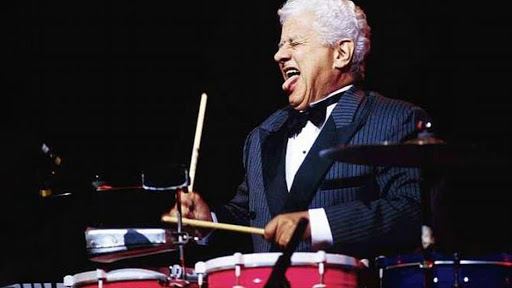
Tito Puente ‘s grimaces while performing
Cuba y Puerto Rico son…, 1966.
The career of the remembered Cuban singer Celia Cruz was on the rise. In 1966, Tito Puente decided to contact her to work together. They established a kind of association that was maintained through the years. In addition, they became very close friends, a bond that went beyond the musical realm.
Cruz appreciated him and was saddened after his death. In her autobiography “Celia, mi vida” she recalled the day she received the terrible news. She considered him an authority on Cuban music and admired his career.“Tito was always in charge of the arrangements, and he liked to work at dawn. We would go out to dinner, and when we returned, Tito would stay until four in the morning composing arrangements for what we were going to record the next day.
Although we were not very lucky with our recordings, Tito and I did very well with the tours. Together we travel to many countries. It was during those trips that we developed that great friendship that we had, ”said La Guarachera del Mundo.
In addition to “Cuba y Puerto Rico Son”, they recorded five more albums: Quimbo Quimbumbia (1969), Etc., Etc., Etc. (1970), Alma con alma (1971), En España (1971) and Algo especial para memoria (1972).
Timbalero Tropical (1998)
One of the last works of the artist and that featured fifteen songs. He worked hand in hand with the RCA label. The album stood out with works such as: El Timbal, Mi Guaguancó, Lo Dicen Todo, Mambo Macoco, Mambo and Preparen Candela. Topics that were very popular at the time and that today continue to sound at family gatherings. They are classic salseros that do not go out of style.
“Oye como va” was a song written by Puente in 1963. However, it was rock guitarist Carlos Santana who popularized it. The song went international and was positioned on the Billboard Hot 100, a list that ranks the best-selling hits in the United States. However, he was not the only one to cover it: Celia Cruz, rapper Gerardo Mejía, Bobby Hutcherson, Joe Cuba Sextette and Cheo Feliciano. When he presented the theme on stage he affectionately presented Santana as its author.
This 2020 marks the 20th anniversary of the physical disappearance of the great: Tito Puente. He passed away on May 31, 2000. His Caribbean flavor, his big smile and his white hair left a great void in the entertainment world. Puente left a great legacy. He contributed to the expansion of Latin music in the United States and served as a composer, percussionist, conductor, and performer.
His exaggerated grimaces, his style, energy, and his skill with the instrument earned him worldwide recognition. In addition to positioning him as an admirable figure among colleagues and young people who want to follow in his footsteps. Simply unforgettable!
Two years ago, an orchestra made history. For the first time in Cuban music, the greatest legends, singers, and instrumentalists were united in a single project, their songs quickly transcended the world and occupied places in the charts.
The Cuban’s Golden Club
The Golden was born from the hand of the young composer Carlos Sanabia from Santiago de Cuba. The Golden Soneros club (La Orquesta de las Estrellas) was one of the most awaited realities for all of Cuba.
The news of its 3rd record production is one of the best news in the musical world, its title will be MAESTROS DEL SABOR and it will count with the presence of several international guests, among them the living legend of Salsa Bobby Cruz, will consist of 21 themes in total divided into 3 volumes of 7 Songs Individually.
With a more modern and youthful style, the songs were specifically designed by Sanabia to capture the attention of the dancing public by inserting them in the popular taste.
The Cuban’s Golden Club
With elements of Rumba, Salsa, and Timba and Occurring and Sticky Phrases from the day to day life of the Cuban people.
With the presentation of new talents, singers, and musicians in the Orquesta de las Leyendas, Sanabia insists on the purpose of bringing the secrets of its music to the new generations and thus guarantee the new formation of future stars in the new talents that abound on the island.
They have not yet entered the studio to record and this third album by EL GOLDEN has already made the news. Thanks to Carlos Sanabia and his Soneros Dorados, “Salsa is in fashion again.
USA Tour The Cuban’s Golden Club
Several established musicians played at the club during the 1930s and 1940s, including bassist Cachao López and bandleader Arsenio Rodríguez.
According to Ry Cooder, “Cuban and Caribbean society and even New Orleans society, as far as I know, was organized around these social clubs.
There were cigarette wrappers clubs, baseball players clubs, and they played cards and sports and had their pets, like dogs.
In the case of the Buena Vista Social Club, there were musicians there, like in the clubs in the United States.
Rodriguez’s pianist, Ruben Gonzalez, who played the piano on recordings in the 1990s, described the 1940s as “an age of true musical life in Cuba, where there wasn’t much money to be made, but they played because they really wanted to.
That era saw the birth of jazz-influenced mambo, charanga, and dance forms such as pachanga and cha-cha-cha, as well as the development of traditional Afro-Cuban musical styles such as rumba and son, which was later modified by Arsenio Rodríguez’s use of additional instruments to become son montuno.2 Son, described as “the foundation of Cuban music,” has transformed much of Latin American music in the 20th century.