• Skip to primary navigation
  • Skip to main content

International Salsa Magazine

  • HOME
  • Previous editions
    • 2026
      • ISM / May 2026
      • ISM / April 2026
      • ISM / March 2026
      • ISM / February 2026
      • ISM / January 2026
    • 2025
      • ISM / December 2025
      • ISM / November 2025
      • ISM / October 2025
      • ISM / September 2025
      • ISM / August 2025
      • ISM / July 2025
      • ISM / June 2025
      • ISM / May2025
      • ISM / April 2025
      • ISM / March 2025
      • ISM / February 2025
      • ISM / January 2025
    • 2024
      • ISM / December 2024
      • ISM / November 2024
      • ISM / October 2024
      • ISM / September 2024
      • ISM / August 2024
      • ISM / July 2024
      • ISM / June 2024
      • ISM / May 2024
      • ISM / April 2024
      • ISM / March 2024
      • ISM / February 2024
      • ISM / January 2024
    • 2023
      • ISM / December 2023
      • ISM / November 2023
      • ISM / October 2023
      • ISM – September 2023
      • ISM – August 2023
      • ISM July 2023
      • ISM Edition June 2023
      • ISM – May 2023
      • ISM April 2023
      • ISM March 2023
      • ISM February 2023
      • ISM January 2023
    • 2022
      • ISM December 2022
      • ISM November 2022
      • ISM October 2022
      • ISM September 2022
      • ISM August 2022
      • ISM July 2022
      • ISM June 2022
      • ISM May 2022
      • ISM February 2022
      • ISM January 2022
    • 2021
      • ISM December 2021
      • ISM November 2021
      • ISM October – 2021
      • ISM September 2021
      • ISM August 2021
      • ISM July 2021
      • ISM May 2021
      • ISM April 2021
      • ISM June 2021
      • ISM March 2021
      • ISM February 2021
      • ISM January 2021
    • 2020
      • ISM December 2020
      • ISM November 2020
      • ISM October 2020
      • ISM September 2020
      • ISM August 2020
      • ISM July 2020
      • ISM June 2020
      • ISM May 2020
      • ISM April 2020
      • ISM March 2020
      • ISM February 2020
      • ISM January 2020
    • 2019
      • ISM December 2019
      • ISM November 2019
      • ISM October 2019
      • ISM Septembre 2019
      • ISM August 2019
      • ISM July 2019
      • ISM June 2019
    • 2016
      • ISM December 2016
  • Spanish
  • Download Salsa App
    • Android
    • Apple

Search Results for: All Stars

The Flavor of Barrio La-33 and the Urban Salsa Revolution

The Birth of Swing in Chilly Bogotá

Bogotá, a city nestled more than 8,600 feet above sea level, cold and prone to drizzle, did not seem in the early 2000s like the most obvious birthplace for one of the 21st century’s most influential salsa orchestras.

El Sabor del Barrio La-33 y la Revolución de la Salsa Urbana

However, in 2001, in the heart of the Teusaquillo neighborhood, La-33 was born. Breaking the stereotype that salsa only flourishes on warm coasts, this band proved that Caribbean flavor (sabor) also runs through the veins of the Colombian capital.

Founded by brothers Sergio and Santiago Mejía (musical director/bassist and keyboardist, respectively), the orchestra took its name from the street where they held their first rehearsals: 33rd Street (Calle 33).

From its inception, the project had a clear identity: to rescue the raw, urban, and gritty sound of 1970s salsa brava, evoking legends like Héctor Lavoe, Willie Colón, and the Fania All-Stars, while injecting it with the attitude, energy of rock, and Bogotá’s gritty street vibe. To finance their first album, the band members saved money earned from their gigs in local bars and nightclubs.

The “La Pantera Mambo” Phenomenon

La-33’s rise to international stardom was no accident, but rather the result of a brilliant recording masterstroke. In 2004, they released their self-titled debut album, La-33. The record included a track that would become their ticket to the world: “La Pantera Mambo.”

This piece a spectacular mambo-rhythm version of Henry Mancini’s cinematic classic, “The Pink Panther Theme” fused jazz, suspense, and a powerhouse horn section.

The song instantly became a radio hit and an essential anthem on dance floors from Cali to Berlin, proving that salsa was not a genre of the past, but a living language capable of reinventing Western pop culture.
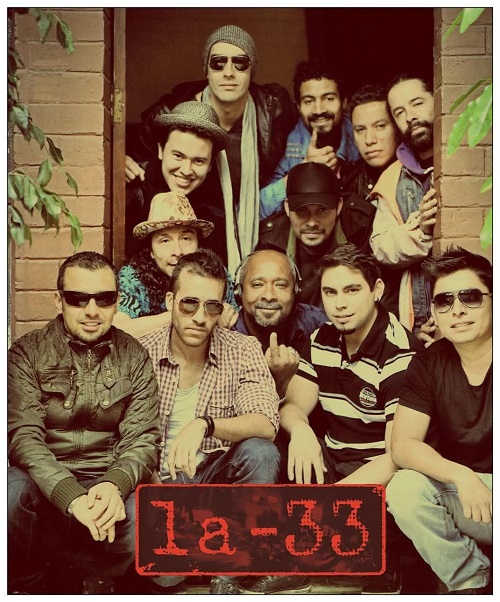
El año 2001, en el corazón del barrio Teusaquillo, nació La-33

Dynamic Evolution and Discography

Unlike the salsa romántica orchestras that dominated the commercial hit charts in the ’90s and 2000s, La-33 bet on an organic sound heavily influenced by mambo, jazz, pasodoble, and ska.Their music dispenses with excessive synthesizers, prioritizing instead the raw power of percussion, the brilliance of the horns, and lyrics that narrate daily life, urban chaos, and bohemian nightlife.

Throughout their career, they have built an impeccable musical catalog across several studio albums:

  • La-33 (2004): The debut album featuring “La Pantera Mambo” and “Qué Rico Boogaloo.”
  • Gózalo (2007): Nominated for a Latin Grammy, it solidified their success with tracks like “Bye-Bye” and “Soledad.”
  • Ten Cuidado (2009): A more mature record exploring fusions with ska and jazz.
  • Tumbando por ahí (2013): A tribute to the band’s street-smart, party-loving spirit.
  • Caliente (2016): Their fifth studio production, released to celebrate fifteen years on the scene.
  • Si tú quieres salsa (2019): A return to their roots with a powerful, mature, and refreshed sound.

Global Ambassadors of Colombian Salsa

What began as a group of friends rehearsing in a Bogotá house transformed into a global phenomenon. La-33 has toured all five continents, performing at prestigious international events such as the Sziget Festival in Budapest, the Cali Fair (Feria de Cali), and various jazz and world music festivals across Europe, Asia, Africa, and the Americas.

Their ability to get audiences who don’t even speak Spanish dancing is a testament to the universal power of their horn section and rhythmic core.
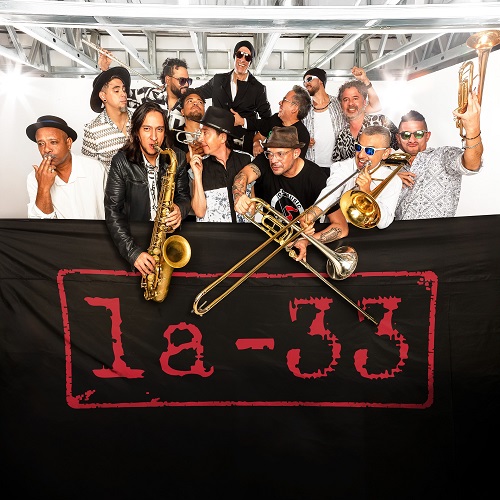
La 33 El nacimiento del swing en la fría Bogotá

Today, La-33 is not just an orchestra; it is an institution of Colombian alternative music. They proved that salsa can be played wearing leather jackets and a punk attitude while maintaining absolute respect for Afro-Latin roots making it clear that to have swing, all you really need is passion.

Band Members

  • Sergio Mejía (Bandleader and electric bass)
  • Santiago Mejía (Keyboards)
  • Guillermo Celis (Vocals)
  • David Cantillo “Malpelo” (Vocals)
  • Edison Velásquez (Vocals and flute)
  • Alejandro Pérez (Congas)
  • Juan David Fernández “Palo” (Timbales)
  • Diego Sánchez (Bongos)
  • Vladimir Romero (Trombone)
  • José Miguel Vega (Trombone)
  • Adalber Gaviria (Saxophone)
  • Roland Nieto (Trumpet)
  • Javier Galavis (Sound engineer)
  • Ray Fuquén (Field producer)

 Also Read: Colombia’s legendary Grupo Niche and its founder Jairo Varela

Gafieira Rio Miami brings the best of Brazilian music to Miami

In this space, we have interviewed artists and groups from different countries of Latin America, but there have been a few times we had the opportunity to connect with talent from Brazil and not only that. They also sing and play typical music of their country, which makes them even more interesting, so we could not fail to speak with Diogo Brown and Isabelle Duarte.

Both have been very kind and shared with us some of their most significant experiences as Brazilian musicians in the United States and how that has shaped their way of making music.

Diogo playing live
Diogo Brown from Gafieira Rio Miami playing live

How Diogo and Isabelle got into music

The first to take the floor was Isabelle, who informed us that she started singing at a church in her home country, Brazil, when she was just six years old. Over time, she also got to sing at weddings, quinceañeras, local festivals, and events of all kinds. 

About 10 years ago, she fell in love and married an American man, with whom she moved to the United States, where she met Diogo, a compatriot of hers who was born and raised in a city far from her own. However, their “Brazilianness” and love for music brought them together in the project they now share with other musicians, Gafieira Rio Miami.

In Diogo’s case, his passion for music awoke at 15, the age at which he knew he wanted to be a professional musician. His mother convinced him to enroll in a music school and an English academy, as she suspected that English would be extremely useful for his future career and this was indeed the case. His arrival to the United States was very similar to Isabelle’s, as he also met an American woman online; they eventually fell in love and moved there together. He attended a screening of a Brazilian film in which he had appeared, where he met her and finally live their relationship in person. That was over 20 years ago.

Since then, Diogo has worked with countless artists and companies such as Sony Music, Univision, and Warner. Among the stars he has collaborated with are Gloria Estefan, Ricky Martin, Lara Pausini, and many others.

Isabelle singing live
Isabelle Duarte singing at the Lincoln Cemter

How was the connection with Spanish and Latin Music

Something interesting that Diogo tells us is that, in his early years as a musician in Brazil, he spent listening to Latin music, and some of his favorite artists were Buena Vista Social Club, Cachao, Jimmy Bosch, and many others of this kind. By his own admission, this is uncommon for a Brazilian resident in Brazil, who usually only listens to music of their own country. Both he and Isabelle agree that, in Brazil, very little music in Spanish is consumed, among other factors, due to the language barrier. 

Isa tells us that her connection to Hispanic music began to form in the United States, and her husband contributed a lot to that, since he is of Hispanic origen. In addition, they settled in Miami, where there is a mix of cultures of each country, so she started to be exposed to genres like salsa, cumbia, merengue, and other rhythms that are not usually heard in Brazil. For her, Gafieira Rio Miami is a golden opportunity to demonstrate that Brazil is not separate from the rest of the Americas.

In addition, he noted that globalization and major musical phenomena in Portuguese and Spanish have managed to break that language barrier over the years.

Gafieira Rio Miami

Gafieira Rio Miami was born from a much smaller idea that began with just seven musicians. As the project grew, the group managed to have a total of 11 members, including five brass players, the rhythmic part, and a singer. There are 10 musicians and one vocalist, Isabelle. The members include Brazilians, Venezuelans, and Americans, but they are all united by the passion for Brazilian music.

Diogo and Laura
Diogo Brown and Laura Pausini

In a music scene that pushes bands and orchestras to make themselves smaller, Gafieira Rio Miami has always chosen to remain intact despite the circumstances. Diogo has been perfectly clear that if he’s offered a gig with fewer musicians, he prefers to say no. He says there are 11 members and all are needed for every performance, since otherwise, the impact of the live music would not be the same. 

Read also: Rafaelito and his career between Munich and New York

Rafaelito and his career between Munich and New York

We had a very personable and honest conversation with Rafael Pareja Ibañez, who via WhatsApp has given us a few minutes of his busy schedule to tell us a bit about his fascinating career to date and the group he currently leads, Rafaelito Y Su Tumbao. 

The artist, born in Lima, Peru, has a huge love for music and remains intact to date, so he says it is a pleasure to share the story of how he came to pursue it professionally, no matter how many times he tells it.

Rafaelito playing
Rafaelito playing the guitar live

Rafael’s beginnings in music

Rafael was first inspired by the artists his parents used to listen to at home, including La Sonora Matancera, Celia Cruz, Tito Puente, and many others. Family social gatherings always featured iconic songs by these stars, so he could not help but be interested in music at the early age of 10.

It all started when his father caught him beating some paint buckets to make it look like he was playing a drum set on the roof of their house, which led him to enroll his child in a music school to take guitar lessons. While it is true that this was the first instrument he learned to play, he also plays the baby bass in salsa and the piano together with all the percussion instruments.

At that time, what the young man played the most was rock and pop because the radio and other media left little room for Latin music. In fact, Rafael formed his first rock band at 16, as this was the genre with which young people identified the most in the 1980s.

Move to Germany

At 20 years of age, Rafael decided to move to Germany, specifically to Munich, where he lived for more than 27 years. It was there that he came into contact with people of other nationalities and had far more access to Latin music, especially Peruvian music, which surprised him greatly. He also got to listen to international stars such as Eddie Palmieri, Miguelito Cuní, and Arsenio Rodríguez.

Rafaelito and Nicky Marrero
American Latin jazz percussionist Nicky Marrero and Rafaelito at Mamajuana Cafe in the Bronx

It was also in Munich where he began to have his first professional experience together with major musical groups from there such as the Sexteto Melaza, where he played alongside musicians from different parts of the world. At a student barbecue, Rafael was hanging out with many Latinos, and they began to sing and play instruments together, leading them to form a group, which they named Melaza. During that time, he dedicated himself to play salsa, guaracha, son, bolero, and cha-cha-cha in a sextet format.

The group featured a guitarist, a bassist, a conga player, a timbalero, a bongo player, and a singer. This sums up his first musical experience in Germany, which lasted about a year and a half. It also helped him draw the attention of other musicians in the city’s music scene, who convinced him to join other projects that were being created.

Another of those projects included a trio of young musicians called Madera Limpia which was founded in 2005, when rap, reggaeton, reggae, and many other genres mixed with Latin rhythms such as changüí or kiribá were super trendy. It turns out that a Romanian couple traveled to Cuba, produced a film called “Paraíso,” and went on a concert tour through Europe and North Asia. Therefore, they needed to hire many musicians, including the members of Madera Limpia, who contacted Rafael through connections and asked him to be their bassist. The Peruvian accepted the offer and toured all those places with these musicians, an experience he talks about with great affection.

Back in Munich, he met Lou Bega, the creator of the hugely popular swing-pop cover of Pérez Prado’s “Mambo No. 5,” which stayed at number one for 36 consecutive weeks in the United States. When his producer wanted to find a band to accompany him, there were very few Latin musicians in the city and Rafael was one of them. Obviously, they called him and his colleagues to work on some demos featuring Bega’s vocals and trumpet samples. After being selected, he became the director of his live band and accompanied him on many concerts in Europe between 2007 and 2008.

El Canario and Rafaelito
José Alberto ”El Canario” and Rafaelito

Rafaelito Y Su Tumbao

Right there in Munich, Rafael finally made up his mind and formed his own musical group, Rafaelito Y Su Tumbao, which currently has branches in Munich, Lima, and New York, where the artist currently resides. Rafael arrived in this city as early as 2020, which is when he got to perform with stars such as Charlie Aponte, Andy Montañez, Jose Alberto “El Canario,” Hildemaro, and many others. When he saw how good the human material was in his new place of residence, he also founded Rafaelito Y Su Tumbao in New York with musicians from there. 

What is striking about his move to New York is that it was motivated by Rafael’s reunion with his childhood sweetheart in Peru, whom he reconnected with in 2019. It turns out that his partner was living in New York, so he jumped on this new opportunity that life offered him and made the romantic decision to cross the Atlantic again and marry her. This radically changed his life both personally and professionally, but he’s glad he did.

Members of Rafaelito Y Su Tumbao
Members of Rafaelito Y Su Tumbao in New York
Line Up :
Rafael Pareja – Baby Bass
Ray Cabrera – Piano
Andres Garces – Vocal
Karla Olivo Moreno – Vocal
Dennis Hernandez – Trumpet
Christian Gomez – Trumpet
Jimmy Bosch – Trombone
Andre Carpio – Timbal
Hector “ Jereto “ Ferreyra – Congas
Chuito Quintero – Bongo

Read also: Dominican bandleader and musical director Orlando Santana talks about La Makina and his career in general

Christmas in New York

North America / USA / New York

“The holiday season is a magical season. The cities are impregnated with the Christmas spirit illuminated with multicolored lights and Christmas decorations. In New York it may seem at times a modern version of a Dickens story. The city is dressed in this season; it is full of decorations, events and celebrations. Join with us to see the most striking traditions, majestic Christmas trees, shows and events that are to be done during these festivities in the big apple.”

Photo 1: Christmas in New York

Photo 2: Christmas in New York

Photo 3: Christmas in New York

Photo 4: Christmas in New York
Photo 5: Christmas in New York

On your feet

The Story of Gloria and Emilio Estefan

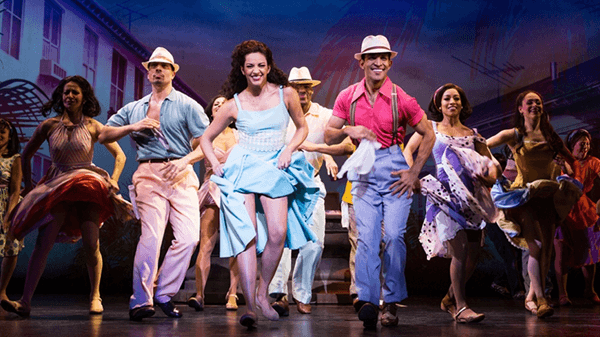
You cannot miss this whole month of December ON YOUR FEET!, the Broadway musical about two people who believed in each other, their talent, their music and later became an international sensation.

ON YOUR FEET! Has some of the most iconic songs of the past quarter century, including Rhythm is Gonna Get You, Conga, Get On Your Feet, Do Not Want To Lose You Now, 1-2-3, and Coming Out of the Dark. The Broadway musical features a magnificent creative team: two-time Tony Award winner Jerry Mitchell (Kinky Boots), who directs a cast of twenty people with choreography of four-time Drama Desk nominee, Sergio Trujillo (Jersey Boys), And original libretto of the winner of the Academy Award, Alexander Dinelaris (Birdman).

Photo 6: Christmas in New York

Tickets: from $89. They will also have presentations on 24 at 14:00 and on December 30 at 20:00.

Andrea Bocelli

This formidable tenor will be performing with his great successes at the Mandison Square Garden this Thursday, December 15 from 19:30.

Tickets: from $124

Andres Bocelli
Andres Bocelli

Mega Bash 2016

The “Mega Bash” by Mega 97.9 FM and La Música will be a concert full of euphoria that will make the fans of Latin music vibrate along with the most important Hispanic artists. The concert brings a spectacular set of scenery, lights and sound that will allow these stars, as always, to make their masterful musical display.

MegaBash
MegaBash

Mega Bash

Tickets for this coveted show are on sale at ticketmaster and prices range from $184, $154, $124, $104, $84, $64, $44, including surcharges; And at the Prudential Center box office starting at 11:00 am (EST).

Other confirmed artists include: Enrique Iglesias, Ricky Martin, Juanes, Silvestre Dangond and Jencarlos Canela.

The reggaetoners Wisin and Ozuna also were confirmed for the Mega Bash event to be held at the Prudential Center in Newark, New Jersey this Friday, December 14:00 at 20:00; MegaBash with Enrique Iglesias, Juanes, Ricky Martin, Silvestre Dangond, Wisin and others at Prudential Center, Newark, NJ.

Therefore, there are several things you can do to enjoy the Christmas atmosphere. Each year there is a giant Christmas tree at Rockefeller Center and the shop windows of Fifth Avenue stores are beautiful.

Warehouse Decorations

Warehouse Decorations 2

The department stores dedicate a whole plant to a magical Christmas town like the one called Macy’s Santaland. Everything is beautiful and even Santa Claus is present, with which you or your children can take a photo (paying). Keep in mind that the tail can be quite long.

Christmas decorations are usually unveiled in late November or early December, usually after Thanksgiving. After New Year’s Eve many shops remove the Christmas decorations.

Warehouse Decorations

The Rockefeller Center Christmas Tree Lighting Ceremony

The lighting of the Rockefeller Center Christmas tree lights is a major event in New York. During the ceremony the Rockefeller Center is bursting, everyone wants to see the tree up close. The event is televised live and is viewed by millions of Americans. There is also the possibility of seeing some famous singer live. The tree is at least 20 meters long and 7.5 meters wide, but is usually much larger (between 23 and 27 meters).

The VIP tickets for this show are

The Rockefeller Center Christmas Tree Lighting Ceremony

The VIP tickets for this show are sold out every year, so be quick if you want to get tickets. With these tickets you will have the best seats: from an elegant cafeteria you will have a great view of the Christmas tree, drinks and snacks in an unlimited way. There is also a DJ.

The Rockefeller Christmas tree is decorated with more than 30,000 LED lights and the cable measures more than 8 kilometers. The ignition is a sight worth seeing.

Without the VIP ticket you will have to wait hours to find a place. The apples that surround the area are full of people waiting in the open, which also means that walking around the area is crazy. Many New Yorkers who are not going to go to the show avoid it.

In fact, the offices surrounding Rockefeller Plaza close at noon for employees to arrive at healthy and safe homes. The Rockefeller tree disappears the first week of January and the lights are usually turned off at 21:00 that same day

The Rockefeller Center Christmas Tree Lighting Ceremony - 2
The Rockefeller Center Christmas Tree Lighting Ceremony – 2

The Rockefeller Center Christmas Tree Lighting Ceremony - 3
The Rockefeller Center Christmas Tree Lighting Ceremony – 3

Rockefeller Center VIP Pack

Ice Skating & Top of the Rock

In addition to the beautiful Christmas tree, Rockefeller Center is famous for its ice rink. Ice skating in New York at Rockefeller Center is a wonderful experience. The queues at the Rockefeller are usually long, so if you want to skate during Christmas you can opt for a VIP package.

You will have access to the chalet next to the track, where you can rest after skating and warm up with hot chocolate, cookies and coffee. All this is included in the pack. And there is more! This option gives you free access to the Top of the Rock. From the lookout on the 70th floor you will have wonderful views of New York.

The Christmas Lights Tour of Dyker Heights

The holiday lights that decorate American homes are impressive. To see the best decorated houses (you’ve seen it in many series and movies) you have to leave Manhattan and go to Dyker Heights in Brooklyn. This area was selected as “the best decorated in the USA” in 2012. Take the Brooklyn Christmas Lights Tour of Dyker Heights and discover these beautiful decorations during this 3 and a half hour visit.

The Christmas Lights Tour of Dyker Heights - 1
The Christmas Lights Tour of Dyker Heights – 1

The Christmas Lights Tour of Dyker Heights - 2
The Christmas Lights Tour of Dyker Heights – 2
The Christmas Lights Tour of Dyker Heights - 3
The Christmas Lights Tour of Dyker Heights – 3

The tour starts in Lower Manhattan and from there the guided bus heads to Brooklyn. When you get to Dyker Heights you will not believe what’s in front of you! Some of the lush decorations cost more than $10,000. To soak up the Christmas spirit, on the bus they put carols and films about Christmas.

Radio City

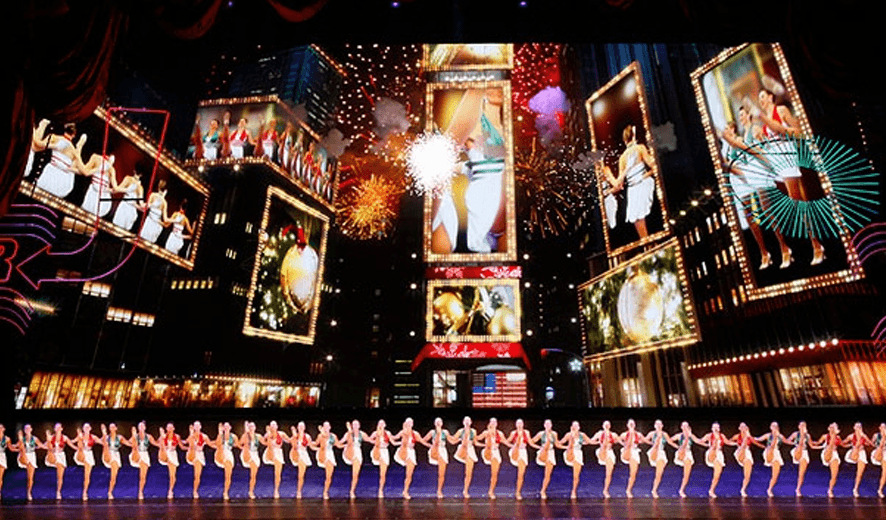
Christmas Spectacular (The Rockettes)

Radio City Christmas Spectacular, starring The Rockettes, is one of New York’s most iconic Christmas shows. In it appear Santa Claus, the Nutcracker and of course the Nativity. You have all of December to attend one of the many daily functions out there. If you have already seen it, do not hesitate to return, because it changes a little every year. It is performed at Radio City Music Hall and is the best way to soak up the true Christmas spirit.

Radico City - Christmas Spectacular (The Rockettes)
Radico City – Christmas Spectacular (The Rockettes)

New Year’s Celebration

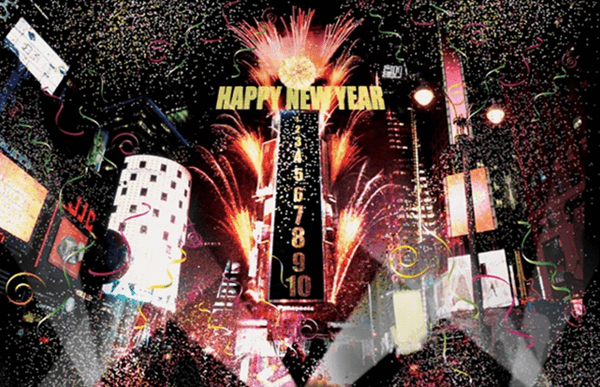
To conclude, more than a million people are going to Times Square to celebrate the beginning of the New Year: at midnight the crystal ball descends 23 meters and, when it reaches the ground, the marker lights up with the four digits of the New Year. Many even come in the morning of December 31 to be able to get a good spot before the crowd arrives.

Security is very strict: you do not accept the backpacks or bags and everything you need to fit in your pockets. It is usually quite cold, so it is best to wear clothes in “layers” to be comfortable and not suffer from hypothermia. Everyone is interested in knowing all about toilet services.

Happy New Year
Happy New Year

The closest ones are at the Port Authority Bus Terminal between 8th Avenue and 42nd Street, but the queue is going to be so long that you risk losing the drop of the ball and the beginning of the New Year. Also, take into account that it is unlikely that you can return to your original location, so you will need to go through security control once again, and the crowd is so narrow that the chances of returning to the same place are minimal.

If you decide to go to Times Square to celebrate the New Year, put snacks in your pockets, drink less liquid, wear more clothes, and have a lot of fun. Do you want to make a wish? Write it down and leave it, the day before, in the Times Square tourist center, or leave it online. Millions of cards, with New Year’s wishes, will be released as confetti on New Year’s Eve in Times Square.

Happy New Year Photo

Actress, comedian, and singer Carmen Nydia Velázquez tells us about the best of her career

Through a very kind friend of our editor Eduardo Guilarte, María del Carmen, we have been fortunate to make contact with the extremely talented Puerto Rican actress, comedian, and singer Carmen Nydia Velázquez, with whom we had the opportunity to talk with for our report on Bad Bunny’s Super Bowl halftime show.

It turns out that her career is so fascinating that we obviously had to talk to her and know much more about her artistic journey, both in her native Puerto Rico and abroad. Without further ado, these are the highlights of our conversation.

Carmen Nydia cantando
Carmen Nydia Velázquez singing live

Carmen’s education and start in acting

When it came to her academic background, theater always caught her attention, but she also loved to sing. These tastes led her to study drama at the University of Puerto Rico, where she brought out her histrionic talent and showed just how good she would be at doing comedy in the future.

Even before graduating, she already worked in theater and appeared in Francisco Arrivi’s play *Vejigantes*. At that time, she was in her last academic year, and the play was a tribute to the great Puerto Rican actress Lucy Boscana, who had died back then. For many years, Boscana played the character of Toña, and Carmen did the same when it was her turn in this new version, which had so much impact that it led to a film based about the same story.

Then, in the 1970s, she joined the musical group Moliendo Vidrio, led by Gary Núñez, and was there for about 11 years, while doing theater and television. The group took up a lot of Carmen’s time and was part of the New Song movement in those days.

Kiosko Budweiser and Susa Cruz

In 1983, Carmen first portrayed who is still considered one of her most iconic characters to this day, Susa Cruz. Channel 7, known at the time as Teleluz, first aired the comedy segment Kiosko Budweiser, featuring the beloved Susa alongside other iconic characters such as Epifanio, Johnny El Men, Humberto, and El Negrito.

Carmen Nydia and Victor
Carmen Nydia Velázquez (Susa) and Víctor Alicea (Epifanio)

When Teleluz ceased to exist, Carmen took a break from the character to continue her theatrical activities and start singing professionally. However, later, Channel 4, Guapa Televisión, called the actors back to do the segment again, which is when it became a media phenomenon and gave immense fame to the characters, especially Susa and Epifanio.

The high popularity of the show and its stars made them appear on TeleOnce, which continues to air today, and Telemundo, where they are recurrent figures during the regular programming.

People enjoyed Susa and Epifanio so much that they have even hosted a radio show, and both Carmen and Víctor Alicea (Epifanio) will soon celebrate their 38th anniversary as an artistic couple, though they have not yet decided what to do for that day. 

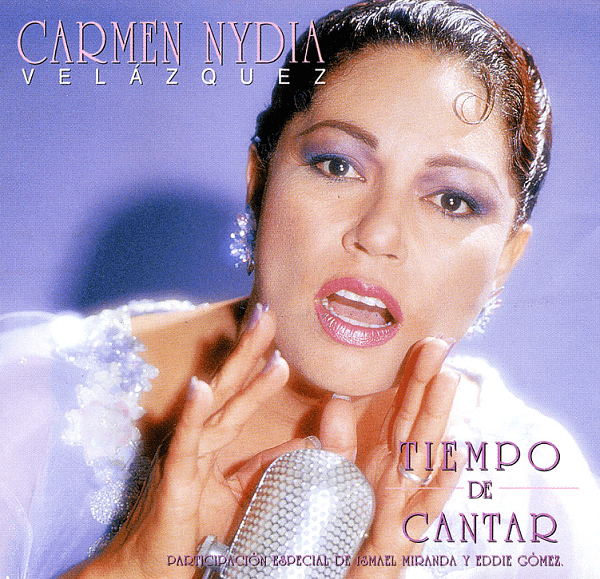
Tiempo de Cantar

By the late 1990s, she released an album of boleros titled “Tiempo de Cantar,” which was her first solo production. It all started with a show by Susa and Epifanio in the south of Puerto Rico, where they met a musician friend of hers named Cacho Montalvo. 

He has spent many years urging her to go back to singing, but she ws not entirely sure due to all the professional commitments she already had, added to the fact that she did not have very fond memories from the time in which she had to promote her own music of the New Song movement which, being so traditional, did not receive the media coverage it deserved. This killed Carmen’s enthusiasm, as she took for granted that she would never sing professionally again.

However, Montalvo and Carmen’s husband “conspired” to some extent to convince her, and they succeeded. On the album, the artist pays tribute to the songs she grew up with and used to hear on the radio as a child, achieving a result she loved. 

Carmen Nydia and Oscar
Carmen Nydia Velázquez y Oscar D’ León

Her solid background in theater gave her the ability to convey her feelings through her voice and expressions, which made her have a wide acceptance. In fact, she is now a member of the Music Hall of Fame in Puerto Rico, a venue dedicated to romantic and bohemian music that hosts live events featuring artists associated with those genres. 

Hacienda Susa

Among the many projects she was involved in, Carmen also ran a restaurant and activity center called “Hacienda Susa.” She describes this stage of her life as interesting, yet exhausting and demanding at the same time.

Due to the success she had on television, the project did very well, so she and her team were there doing shows for visitors from all over the island practically every day. The problem was that it was too much work for her at the time, and she told us that sometimes, she had to leave the hacienda to perform a show outside, return to meet her commitments there and then close the venue. 

The above, added to the fact that everyday fewer people were coming to the venue and the extremely high rent Carmen had to pay, made her ask herself if it was really worth continuing with the project in exchange for those dividends. That was when she finally got tired of it and decided to close the venue indefinitely to focus on what she was truly passionate about: acting.

Album by Carmen Nydia
Cover of the album ”Tiempo de Cantar” by Carmen Nydia Velázquez

Read also: Background and reactions to Bad Bunny’s halftime show in The Super Bowl

  • « Go to Previous Page
  • Page 1
  • Interim pages omitted …
  • Page 26
  • Page 27
  • Page 28
  • Page 29
  • Page 30
  • Interim pages omitted …
  • Page 60
  • Go to Next Page »

International Salsa Magazine (ISM) is a monthly publication about Salsa activities around the world, that has been publishing since 2007. It is a world network of volunteers coordinated by ISM Magazine. We are working to strengthen all the events by working together.