• Skip to primary navigation
  • Skip to main content

International Salsa Magazine

  • HOME
  • Previous editions
    • 2026
      • ISM / May 2026
      • ISM / April 2026
      • ISM / March 2026
      • ISM / February 2026
      • ISM / January 2026
    • 2025
      • ISM / December 2025
      • ISM / November 2025
      • ISM / October 2025
      • ISM / September 2025
      • ISM / August 2025
      • ISM / July 2025
      • ISM / June 2025
      • ISM / May2025
      • ISM / April 2025
      • ISM / March 2025
      • ISM / February 2025
      • ISM / January 2025
    • 2024
      • ISM / December 2024
      • ISM / November 2024
      • ISM / October 2024
      • ISM / September 2024
      • ISM / August 2024
      • ISM / July 2024
      • ISM / June 2024
      • ISM / May 2024
      • ISM / April 2024
      • ISM / March 2024
      • ISM / February 2024
      • ISM / January 2024
    • 2023
      • ISM / December 2023
      • ISM / November 2023
      • ISM / October 2023
      • ISM – September 2023
      • ISM – August 2023
      • ISM July 2023
      • ISM Edition June 2023
      • ISM – May 2023
      • ISM April 2023
      • ISM March 2023
      • ISM February 2023
      • ISM January 2023
    • 2022
      • ISM December 2022
      • ISM November 2022
      • ISM October 2022
      • ISM September 2022
      • ISM August 2022
      • ISM July 2022
      • ISM June 2022
      • ISM May 2022
      • ISM February 2022
      • ISM January 2022
    • 2021
      • ISM December 2021
      • ISM November 2021
      • ISM October – 2021
      • ISM September 2021
      • ISM August 2021
      • ISM July 2021
      • ISM May 2021
      • ISM April 2021
      • ISM June 2021
      • ISM March 2021
      • ISM February 2021
      • ISM January 2021
    • 2020
      • ISM December 2020
      • ISM November 2020
      • ISM October 2020
      • ISM September 2020
      • ISM August 2020
      • ISM July 2020
      • ISM June 2020
      • ISM May 2020
      • ISM April 2020
      • ISM March 2020
      • ISM February 2020
      • ISM January 2020
    • 2019
      • ISM December 2019
      • ISM November 2019
      • ISM October 2019
      • ISM Septembre 2019
      • ISM August 2019
      • ISM July 2019
      • ISM June 2019
    • 2016
      • ISM December 2016
  • Spanish
  • Download Salsa App
    • Android
    • Apple

Search Results for: All Stars

How to make money today as a recording artist with record labels and digital platforms

Israel Tenenbaum Interview: The Changing Music Industry

The music industry has evolved, and artists’ income streams are no longer limited to album sales. Today, an artist can monetize their work in multiple ways, with or without the support of a record label and digital platforms.
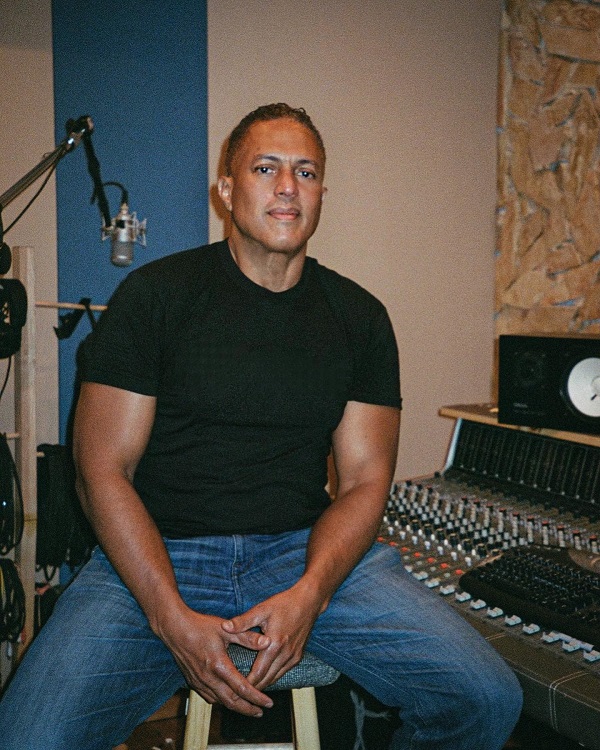
Israel Tenenbaum (Los Angeles, California) is an American pianist, arranger, and music producer with a notable career in salsa and Latin jazz. He has worked with renowned artists and has lived in several countries, including Puerto Rico and Colombia.

Israel Tenenbaum (Los Angeles, California) is a pianist, arranger, and music producer.

1) What is the current process for recording, music production, and royalty distribution for Mr. Tenenbaum?

Well, let’s see. You’re talking about the current recording process, which is essentially the same, but it’s now generally done remotely. We grew up with recording environments where we would gather everyone (the musicians) in one place and record everything there.

But with remote recording capabilities, many musicians are now very well-equipped and they record at home. You can also take advantage of this because it gives you access to other talents, beyond the local environment you’re in. They don’t compare to what a musician or band leader might have locally, or for finding other guests, and so on.

So, remote recording is definitely in operation. I’ve been working with remote production for a while. In fact, it was pure chance that about six or eight months before the pandemic hit, I had just moved to California and I started to solidify and organize my global network of musicians, recording studios, producers, and a bunch of arrangers, and so on.

And when the pandemic hit, I was ready because I had already organized everything. Everyone thought it was a 90-day vacation. After 90 days, they thought, “Well, it’ll take a little longer.” And by the time they realized it was going to be a long haul, six months had already passed. It took them almost six more months to get organized themselves.

It was advanced, pure chance. And so that served me a great deal. And currently, I have that very solidified. I work with a dozen cities in seven countries. Thank you, thank you.

How does royalty distribution work? Does that still exist?

Yes, royalties still exist. What has changed dramatically is the way royalties are generated.

Let me explain it very simply. When we lived in the era of the physical product—which was what sold the most, whether it was the LP or the CD—you might earn 7, 8 cents per song on each copy in the U.S. If you wrote all your compositions and recorded all your compositions and recorded 10 songs on your album, you would automatically get 8 cents for each song on every album sold. So if you sold, say, 10,000 copies, that’s 10 songs at 8 cents, which is 80 cents per album. Then you have about $8,000, more or less. And on top of that, you have royalties because you’re selling the album. The album has two sources of copyright: the recording itself.

The owner of the recording has one royalty, and the composer has a completely separate royalty. So, these are the royalties you earn money from through sales, usually.

So, the record label would give a piece to the artist, say, 10%. That’s a huge royalty. And has that changed today? Nowadays, that hasn’t changed. It’s still between 7 and 15%, maybe 20% if you’re a superstar, but it’s more or less the same, somewhere between 7 and 12%. The difference is that now, that’s not what’s selling.

So this hasn’t completely changed because it was one thing to earn 8 cents every time your song was sold. Those were very easy numbers. If I earned a dollar for the compositions and then I earned another dollar or two more from the album sales, that’s three dollars per album. And if it was 10,000 albums, it was thirty thousand dollars. Simple as that. Now, it’s not like that. Now you’ll be paid thirty thousand dollars at a rate of approximately a third of a cent.

2) What is the impact of digital platforms that artists use to place their music?

Of course, for Israel, the use of digital platforms is almost inevitable because that’s how music is being distributed.

So, there’s a certain “democratization” in a sense—there’s easier access to that distribution—but the thing is, thousands and thousands of songs are uploaded to platforms every day. So, you’re competing with hundreds of thousands and millions of people, artists, and songs that are being uploaded all the time. And you have to compete with that to be found among those millions of people who are all competing for the public’s attention.

So, there are some interesting impacts. For example, it forces those who are really looking to build a career to think of themselves as a business from a promotional standpoint. “What do I do to promote my music? How do I get afloat? How do I show myself? How do I stand out from the crowd to get noticed?”

So that’s one thing that happens with artists. The artist really just wants to create, so part of the impact is an additional burden that takes artists away from their creative space. They have to spend a lot of time worrying about whether they’re getting plays, whether the numbers are moving, whether they’re being heard, how they can promote, whether to invest money in promotion. I mean, there are a lot of scattered impacts. It’s a loaded question with many answers, depending on the act you’re listening to and what you’re looking at.

The impact is certainly very strong… there’s access, and as an artist, I can reach and distribute my music so that it’s accessible to a large number of people that I didn’t have access to before.

Of course, it forces me to make a much bigger effort to try to stand out in that environment, among so many others who are competing for listeners’ attention. The royalties don’t really justify all the effort; they don’t pay for the effort.

The album, the music, and the recording have always been a promotional tool for the artist itself. It has never been a major source of income, but at least before, there was a system where the possibility of a real income existed. Now it’s practically nil.

So, there are a number of things behind that loaded question.

3) How is income distributed once the product is finished? How is the distribution? You already explained it in the first question, but a little more in detail.

It depends on the arrangements, the agreements the artist has. If it’s a solo artist, they’re hiring other people to come to the studio to record their album. So, those people are working on a commission basis, and they don’t have any other benefits beyond the payment they receive for coming to do the recording.

But it could be a group, a band, and in that group, they divide what the group generates, what the recording generates, into equal parts, let’s say.

It depends if you’re with a record label or a performing rights organization. I don’t remember what it’s called in Venezuela. In Colombia, it’s called SAYCO. In the United States, it’s called ASCAP or BMI (here in Venezuela, it’s SACVEN). Correct, SACVEN.

So, how that distribution is made depends on many factors. But in general, let’s say that the distribution platforms, which are the most widely used means today for artists who are 90 to 95% independent, use these distribution platforms that are aggregators. They put your music and distribute it to Spotify, iTunes, etc., etc., all the others. They collect money and pay you normally between 80 and 100% of what it generates. That also generates other income; it generates author’s rights that are paid directly from the platform. That is, Spotify pays for author’s rights. So it pays two types of royalties: one is for the composition and the other is for the recording. So for the composition, it pays one amount of money, and for the recording, the performance, it pays another amount depending on how that platform is organized.

For the copyright, they pay for the performance of the album because it’s considered a sale.

At the moment, what’s the difference between platforms and radio? You’re listening to the radio, and you can’t choose what’s going to play. You’re at the mercy of the DJ or the programmer or the radio station and the playlist that person has made, and you’re bound to what they chose to play.

On platforms like Spotify, you can listen to a playlist, but if you want to skip a song, you skip it, and if you want to repeat it, you repeat it, or you can make your own playlist.

So, if you have control of the recording and you can arrange it, when that happens, it’s considered that they have to pay a royalty as if it were a sale. A different royalty is generated, which is different from what happened, for example, with Pandora. Pandora was basically sitting and listening, and you could give Pandora information, telling it, “I like this music more,” or you’re listening to a playlist. Perfect. Besides that, well, that’s basically it, and obviously, anything that sells physically, because it’s still selling, and vinyl and LP sales are increasing. That’s back in style and is growing.

CDs are still being made. There is still a CD market, depending on the music you make, but there is a market, for example, for Latin music, for jazz. Something moves in Japan and China, but in Japan and some European countries, the CD still moves in a real way.

4) Name some current business models. You as a producer.

Let’s say there are several possibilities of what can happen. I can work as a producer, I can work with an artist strictly on the production—a business model where the artist is completely the owner of their own work.

As the owner of the LatinBaum Records label, I have to manage and participate directly with the artist. We cover costs and make investments alongside the artist to produce and promote the music in exchange for an equitable distribution of the profits.

The big record labels, the multinationals, are working with artists on what are essentially called “360-degree contracts” in which the record label is involved and has a piece of all professional activity, including merchandise such as hats, t-shirts, mugs, pens, whatever. As a record label, I get a piece of what’s sold in souvenirs; that’s marketing. Also, the work you do physically, meaning your events and presentations.

So, they control your book, they control your schedule, they control the artist’s schedule. They earn between 20 and 50% from the artist’s presentations, depending on the artist, their popularity, etc. And they also earn from composition royalties, they earn from album royalties, they earn from every angle.

Now, that business model depends on the investment that each party is willing to make. As they say in Colombia, “you eat rarer.” In other words, it depends on the circumstances of the moment, the artist, a number of factors. There isn’t just one business model that works now. You can also consider the artist doing everything themselves.

That’s another possibility; the artist has to set up their entire production infrastructure, etc. That’s another matter. It’s more complicated because the artist has to understand that their career and their art are now part of a company’s assets. They have to think of themselves as a business and develop their own business model that works for them within their capabilities and what they’re willing to do and their knowledge, right? Above all, “How much can I do?” I’m a single person, so I can compose the songs, I can do the arrangements, I can make the sheet music, I can hire the musicians, hire the recording studio, do the promotion, design the ads, I can do the marketing, I can also sell myself as an artist for presentations. I also sweep the floor, I also make the coffee, and I also serve. Do you get me? I mean, there’s a point of being multi-talented.

Yes, but there’s a very important point where one, or the artist, feels this obligation or has the obligation to have to do so many things that they don’t do any of them well. This is where record labels still play an important role in helping to guide the artist and providing them with services at a moderate price or within the artist’s reach according to their sales, their popularity, the things they can do. And also, these independent labels play the role of guiding and helping the artist and making certain things easier for them because they have some infrastructure that makes the artists’ work a little easier. So, the record label hasn’t disappeared. What has disappeared is what never really existed, which is money. The musician is always fighting for a few bucks to be able to do things, and if they’re lucky, they find an independent label that’s willing to help and invest time, effort, and money in advancing and promoting their career.

But the matter of the dream of being “discovered,” that no longer happens. It no longer exists. The only one who discovers themselves is you, and it’s up to you to show yourself to the world and look for connections, look for opportunities, and for business.

5) What strategies do artists use to monetize their work in the digital environment?

The work that the artist has to do on platforms is definitely a matter of persistence. It’s about regularly posting and telling their story, showing their art, and sharing their art and the reason for their art with the public. We are trafficking in emotions. That’s what the artist does; that’s the currency. It’s about making those emotions known and moving them and telling your story so that people identify with your story, with your music, with your art, and become a support for your career.

The most important thing here is consistency, persistence, always being on top of it. It’s not about “I’m eating a fried egg, let me take a picture of the fried egg.” No. If that’s what moves you and that’s what moves your audience, then go for it, but that’s not what it’s about.

People sometimes confuse being regularly present with having to take selfies all the time, and pictures of their food, and a picture of the neighbor’s dog, and “I’m laughing, and I already put on some crazy pants,” and so on. It’s not that. It’s about sharing your personality with the public, and to the extent that you, as an artist, define it, you should do it regularly. That’s on one hand. On the other hand, advertising is key. You have to invest in advertising.

Someone once spent about $30,000 on a production and went to several record labels, and none of them wanted to buy it. They didn’t want to take the product. Finally, they told one record label, “I’ll give you the album for free. You don’t have to give me a dime in royalties. I’ll sign the contract, but please release it.” The obligation and the commitment here are for you to release the album. And they didn’t take the money. Why? Because a production that costs $30,000 still has a cost of $60,000 or $80,000 that needs to be put into promotion for it to be heard, for it to sell. That’s what it is; that’s what they say.

That’s why it’s so hard for the small musician or artist to compete with the big stars, because they have enormous budgets with which they can produce their work, and the small one can’t compete. That’s why consistency is important, because it’s a way to promote and advertise yourself in a way that is, shall we say, theoretically free, right? It’s at your fingertips or has a very low cost, and if you do it constantly, you gain a space.

But you definitely have to invest money in advertising and promotion. There’s nothing like running an ad and telling everyone on a massive scale, “Here I am, here’s my product, this is my music.” At the end of the day, it’s like selling a can of beans; it’s the same thing. You have to put a good label on it; you have to run an ad on television, in the newspaper, on the radio, whatever it takes to sell your brand of beans. It’s that simple.

When you’re in the recording studio, 90% of what you do is art, and 10% is profit, plotting the commercial side, the hook. The moment the product leaves the studio, that’s inverted 180 degrees. It becomes 10% art and 90% commerce, 90% business, and what you have to do is take advantage of the tools.

Bonus Track.

6) What do you think about us Latinos creating a campaign to create a platform like Spotify, on a global level, so that musicians receive their royalties and money directly without going through other hands?

What do you think? Latin music, all Latin artists.

I think it’s a good idea, but what would be the purpose of… for musicians to have all the royalties directly without having to go through all that advertising, but to do their productions directly.

“Here’s the public, they stream it, and the money goes directly to the musicians, to you.”

Well, advertising cannot be avoided. How is the public going to find out that the music is there and that your music is available?

First of all, there has to be promotion, which can’t be avoided. One or two, you’re going to have to deal with all the Latin artists. The circumstances and conditions of your platform are no different from Spotify’s, or iTunes’, or any other. Why? Because you have to deal with different conditions that already pre-exist. That is, there’s a system that already pre-exists. All the music that is created and distributed, they have to deal with those predispositions. You have to deal with the SACVENs of the world, ASCAP, SAYCO, or whatever. You have to deal with the distribution chains; you have to pay either the author or you have to pay SoundExchange. You have to go through that whole procedure anyway. It’s exactly the same.

The idea is nice, but it’s utopian because there are systems in place globally, and you have to find that other formula to try to achieve what you’re proposing behind your question.

Thanks, Augusto. Likewise, I’m at your service for whatever I can help with. Blessings and greetings to the family.

Ralph Riley (Hong Kong)

Music Producer

Ralph Riley en Rolo Estudio. Puerto Rico

1. The Recording and Production Process

When it comes to recording and production, the proper process involves capturing tracks for multitrack recording on tape or disk, followed by mixing and mastering. The technical complexity of the process is directly proportional to the number of tracks and artists involved in the production. Production costs and logistics also affect the final quality of the music produced.

Regarding copyright, it involves several key players: composers, publishers, record labels, and Performing Rights Organizations (PROs). Copyright royalties are generated from different uses of the song, such as streaming, physical sales, public performances, and synchronization in other media. It can be a complicated process that a lot can be written about and one that is constantly changing. The best advice is to do a lot of research or enlist the help of professionals who offer this consultation and/or full service for a fee.

2. The Impact of Digital Music Platforms

Digital music distribution platforms have significantly impacted how artists create, share, and monetize their music. They have democratized access to audiences around the world, providing opportunities for independent artists to bypass traditional gatekeepers and reach global listeners directly. However, this shift has also created challenges related to revenue generation and competition for visibility.

Here are some of the key challenges:

  • Revenue Inequity: Streaming royalties are often perceived as low, making it difficult for artists to generate substantial income from streaming alone.
  • Market Saturation: The ease of access to digital distribution has led to a highly saturated market, making it challenging for artists to stand out and get noticed.
  • Competition for Visibility: Artists need to actively promote their music and engage with their audience to compete with the sheer volume of content available on these platforms.
  • Dependence on Algorithms: Success isn’t solely dependent on the quality of the music, but is also influenced by the platform’s algorithmic recommendations, which can be unpredictable and require a strategic approach to navigate.

In conclusion, digital platforms have revolutionized the music industry, offering unprecedented opportunities for artists to connect with global audiences and build their careers. However, navigating the complexities of these platforms and finding sustainable income models remains a key challenge for artists in the digital age. This revolution, especially in the age of AI, continues to evolve rapidly.

3. Final Thoughts on Fairness

In summary, it seems to be always a little unfair to the vast majority of artists. It’s a complicated topic and I’d recommend a resource such as, for example, https://www.indiemusicacademy.com/blog/music-royalties-explained for better insights.

4. Popular Business Models

Some popular business models used in the music industry for record production include traditional record label deals, revenue-sharing models, and direct-to-fan approaches. Sometimes, it’s a combination of these. Streaming services and digital distribution also play a significant role in the current landscape.

For example, the direct-to-fan approach can include:

  • Direct Sales: Artists can sell their music directly to fans through their own websites, online stores (like Bandcamp), and social media platforms.
  • Crowdfunding: Platforms like Patreon allow artists to connect with fans and receive direct financial support through subscriptions or one-time donations.
  • Streaming Platforms: Artists can directly upload their music to platforms like SoundCloud, Bandcamp, and even Spotify and Apple Music.

5. How Artists Get Paid in the Digital Realm

Artists can typically monetize their music in the digital environment through streaming platforms, digital downloads, merchandise, fan subscriptions, live streaming, and licensing. Additionally, artists can explore opportunities in social media monetization, crowdfunding, and brand partnerships.

Here’s how the payment system works and the factors that influence an artist’s earnings:

The “Pro-Rata” Payment Model

Spotify doesn’t pay artists directly for each play. Instead, it uses a “pro-rata” model:

  1. The company pools all its revenue (from Premium users and advertising) into a common fund for a set period, typically a month.
  2. Spotify keeps a portion (about 30%), and the rest (around 70%) goes into a “royalty pool” for rights holders.
  3. An artist’s share of this pool is determined by their “stream share,” which is the percentage of their streams compared to the total streams on the platform during that period.

Average Per-Stream Rate

While there’s no fixed rate, many sources estimate the average payout to artists on Spotify is between $0.003 and $0.005 per stream. This means an artist would need approximately 1 million streams to earn between $3,000 and $5,000.

Factors Affecting the Payout Rate

The actual amount an artist receives can vary significantly based on these factors:

  • Listener’s Location: Subscription prices and ad revenue vary by country. A stream from a user in a country with a higher subscription fee (like the US or UK) will generate more revenue than a stream from a country with a lower fee.
  • Listener’s Subscription Type: A stream from a Premium subscriber is worth much more than a stream from a free user (with ads).
  • Artist’s Deal: Spotify pays the rights holders (record labels, distributors, publishers), not the artists directly. The artist’s contract with their label or distributor determines what percentage of the royalties they receive. Independent artists who use a distribution service typically keep a larger percentage.
  • Minimum Threshold: As of early 2024, Spotify requires a song to have at least 1,000 streams in the previous 12 months to be eligible to generate royalties.

In short, an artist’s earnings on Spotify aren’t a simple calculation. They are the result of a complex revenue-sharing system that is influenced by a global audience, different subscription types, and each artist’s specific contracts.

I also manage music production through cassiorecords.com

How to make money today as a recording artist with record labels and digital platforms

Also Read: Understanding the music business

Tempo Latino

Europe / France / Vic-Fezensac

Tempo Latino: The biggest party for every Latin Music lover in Europe!

Tempo Latino
Tempo Latino

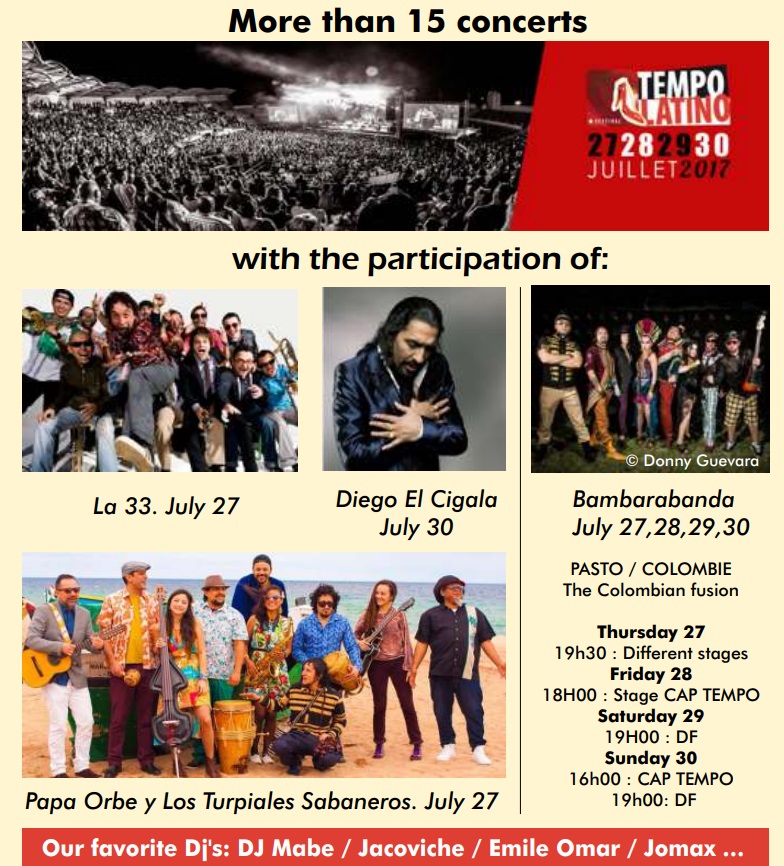
In Vic-Fezensac, in the heart of Gers in Gascony, Tempo Latino is the biggest European festival of Latin music and Afro-Cuban, salsa, Latin jazz and hip-hop. This is a reference to music and Latin music. This year they are bigger than ever with the participation of dancers, musicians, orchestras and amazing dj’s around the world.

Tempo Latino presents each year for 4 days and 4 nights, a varied concerts and internship program with artists and professors of international level including from Cuba, Puerto Rico, Colombia, Venezuela, Panama, Africa, US, Europe and Japan.

Thursday, July 27

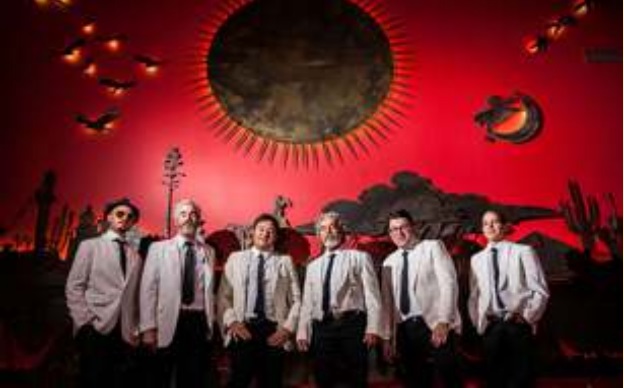
The party starts on July 27 with the Colombian group Puerto Candelaria. This amazing group was formed in 2000 in Medellín, Colombia, the result of the fateful meeting of six talented musicians, united and guided by talented composer Juancho Valencia to create a totally new and original musical show.

Colombian group Puerto Candelaria
Colombian group Puerto Candelaria.

The imaginary land of Puerto Candelaria is a sonorous place and the spiritual home to the members of the group and to all who enjoy taking a musical journey with the sound of the Candelarios. The group’s founders never imagined that a decade later their idea would come to be hailed the most daring, controversial and innovative Colombian musical project of recent times.

Puerto Candelaria bases its sound in popular Colombian rhythms, full of imagination and magical spirit that provoke the senses and awaken heightened emotions in audiences around the world.

Their creation of contradictory rhythms like Cumbia Underground or Jazz “a lo Colombiano” is responsible for creating a special place for their country in the global markets of jazz, experimental, and world music. On Thursday and thanks to the France-Colombia’s year celebration, this day will be a reunion between these two cultures.

Friday, July 28 Calypso Rose

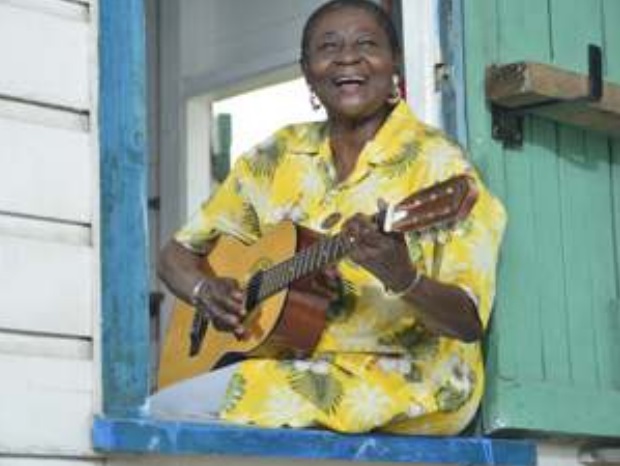
Then, on July 28 you will have the pleasure to see the performance of Calypso Rose. This iconic singer is a calypsonian. She began writing songs at the age of 15, turned professional in 1964 and has written more than 800 songs and recorded more than 20 albums.

Calypso Rose
Calypso Rose

Saturday, July 29 Unity. Michael Jackson Latin Tribute

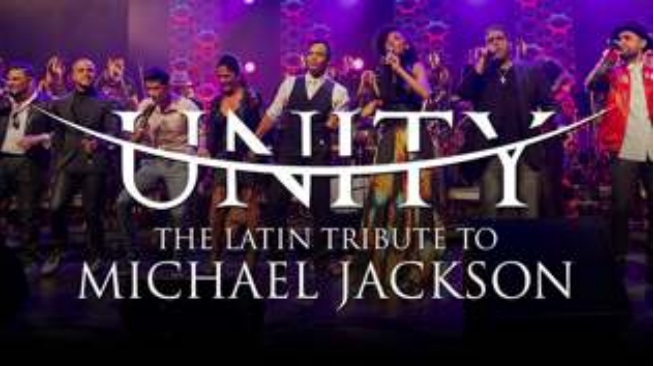
Friday 29 will be time to present the Michael Jackson Latin Tribute with the amazing show of the talent of Tony Succar and Unity. Unity is a testament to the power of music and one man’s indomitable spirit.

Michael Jackson Latin Tribute

The passion project of Peruvian-born, Miami-raised producer/multi-instrumentalist/arranger Tony Succar, Unity features more than 100 musicians, such Latin superstars as Tito Nieves, Jon Secada and Obie Bermúdez, and the mixing magic of Jackson’s legendary engineer Bruce Swedien in the first ever Latin album salute to The King of Pop.

Sunday, July 30 Orkesta Mendoza

And finally, the event will end with the concert of Orkesta Mendoza. Orkesta Mendoza is a Latin music band from Tucson, Arizona. It was founded by singer and guitarist Sergio Mendoza in 2009. Through the use of Latin percussion, accordion, brass, and steel guitars, the band’s style, dubbed “indie mambo”, is a combination of ranchera, cumbia, psychedelic and indie rock.

Orkesta Mendoza
Orkesta Mendoza
  • Sergio Mendoza – vocals, piano, guitar
  • James Peters – drums
  • Joe Novelli – lap steel guitar
  • Marco Rosano – saxophone, clarinet, accordion, keyboard
  • Salvador Duran – vocals, cajón, maracas
  • Sean Rogers – double bass

With all the concerts, dance and parties, you can’t miss the summer event that brings all the Latin talent to Europe.

You go to Latin tempo

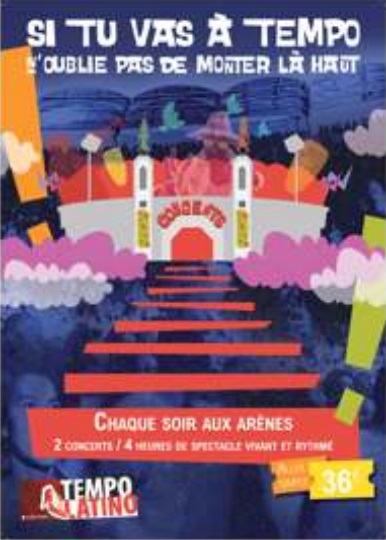
Tickets: Pre-sale prices

  • One night 30€ – 36€
  • 4 days pass: 100 – 120
  • Free entrance for kids under 12 years old

Transportation and accommodation

Transport: http://tempo-latino.com/CommentVenirTempo

Accommodation: http://tempo-latino.com/Hebergement

Our favorite Dj’s: DJ Mabe / Jacoviche / Emile Omar / Jomax …

Tempo Latino - Information
Tempo Latino – Information

For further information and tickets:

  • http://tempo-latino.com/accueil
  • Tourism office in Vic Fanzensac : 05.62.06.34.90
  • Telephone: 05.62.06.40.40.

And all the social networks

  • Facebook: @tempolatino
  • Twitter : @tempo_latino
  • Instagram: @tempolatino
  • Youtube: tempolatinofestival

Europe / September 2025

Cafe Berlin 2025Radio Gladys Palmera 2025

Karina Bernales present September 2025 FESTIVALS

Croatia circle flag
CROATIA
El Sol 2025

el Sol Tisno Dance City

Sep 17 / 22 2025

Jazine Beach
Put Jazine 318F
Tisno, Croatia 22240

From € 110

France circle flag
FRANCE
KTDC 2025

KAMBA Kizomba

Sep 25 / 28 2025

Centre Simone Signoret
Rue Simone Signoret
Ecouflant, France 49000

From € 60

Hungary circular flag
HUNGARY
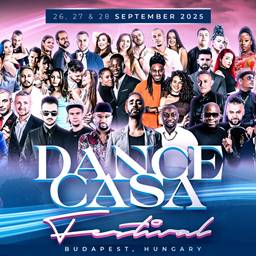
Dance Casa 2025

Dance Casa Festival

Sep 25 / 29 2025

Europa Event Center
Hárshegyi út 5-7
Budapest, Hungary 1021

From € 100

Italy circle flag
ITALY
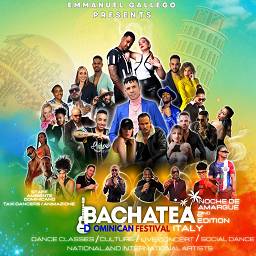
Bachatea 2025

Bachatea Dominican Fest

Sep 19 / 21 2025

Hotel Baia Flaminia
Viale Parigi 8
Pesaro, Italy 61121

Spain Flag
SPAIN
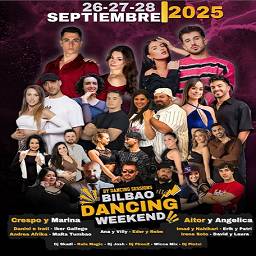
Bilbao 2025

Bilbao Dancing Weekend

Sep 26 / 29 2025

Sala Raw
Kareaga 65
Barakaldo, Spain 48903

From € 70

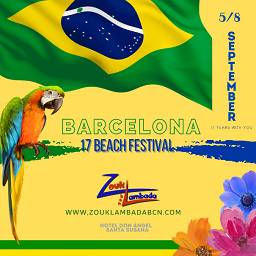
Salsa Spain 2025

Zouk Lambada Beach Festival

Sep 05 / 08 2025

Hotel Don Angel
Avenida del Mar 14
Santa Susana, Spain 08398

From € 160

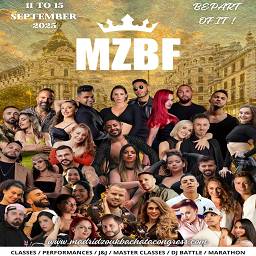
MZBF 2025

Madrid Zouk Bachata Festival

Sep 11 / 15 2025

Eurostars Madrid Foro
Ronda de Europa 1
Madrid, Spain 28760

Pass: € 110

Calibrated maracasMartinez attorney

Directory of European nightclubs

Czech Republic circular flag
CZECHIA

La Macumba 2024
La Macumba
Štefánikova 230/7 150 00
Prague, Czech Republic

fRANCE FLAG
FRANCE

Canela
Canela Club Latino Paris
77 Rue du Faubourg du temple 75010
Paris, France

Cuba Compagnie
Cuba Compagnie Café
48 BD Beaumarchais 75011
Paris, France

Cubana
Cubana Café
47 rue Vavin 75006
Paris, France

La Pachanga
La Pachanga Officiel
8, rue vandamme 75014
Paris, France

La Peña
La Peña Saint Germain
3 passage de la Petite Boucherie 75006
Paris, France

Balajo
Le Balajo
9 rue de Lappe 75011
Paris, France

Pachamama
Pachamama PARIS
46 rue du Faubourg Saint Antoine 75012
Paris, France

Selsero
Salseroparis
9 Rue du Petit Pont, 75005
Paris, France

Germany circular Flag
GERMANY

Cascadas
Cascadas
Ferdinandstr. 12
20095 Hamburg-Mitte, Germany

Havanna
Havanna Berlin
Hauptstr. 30
10827 Berlin-Schöneberg, Germany
La Macumba - The Real Latin Club in Hamburgs
La Macumba – The Real Latin Club in Hamburgs
Adenauerallee 3 20097
Hamburg, Germany

Latin Palace Changó
Latin Palace Changó
Münchener Strasse 57
60329 Frankfurt, Germany

SODA
Soda Club Berlin
Schönhauser Allee 36
10435 Berlin, Germany

Malta Circle flag
MALTA

Bario Latino Malta venue
Barrio Latino Malta
Ghar il Lembi Street SLM1562 Sliema
Central Region, Malta

Poland flag
POLAND

Teatro Cubano
Teatro Cubano Warsaw
ul. Aleksandra Fredry 6 00-097 /> Warsaw, Poland

Spain Flag
SPAIN

ACM City
ACM CitY
Carrer Can Pallarès 2, Cerdanyola del Vallès
08290 Barcelona, Spain

Antilla
Antilla Barcelona
C/ d’Aragó, 141
08015 Barcelona, Spain

Azucar
Azúcar SalsaDisco
Calle de Atocha, 107
28012 Madrid, Spain

Disco Bar Cuba Live
Cuba Live
Ramón y cajal número 2
07011 Palma de Mallorca, Spain

El Son
Discoteca El Son
C. de la Victoria, 6
28012 Madrid, Spain

Prisma Discoteca
Discoteca Prisma
C. de Alcalá, 192
28028 Madrid, Spain

Discoteca El Edén Boliviano
El Edén Boliviano
Carrer Gremi de Tintorers, 49A
07009 Palma, Illes Balears, Spain

Mojito
Mojito Club
Rosselló, 217
08008 Barcelona, Spain

Morena
Morena Barcelona
calle 11 num.29
08860 Castelldefels, Spain
Que Chimba
Qué Chimba
Av. del Vallès, 117
08223 Terrassa, Barcelona, Spain
Sala Olvido Madrid
Sala Olvido
C/ Olvido 15
28026 Madrid, Spain
Seven Dance
Seven Dance (Dio Club)
Carrer del Perill 10
08012 Barcelona, Spain

The Host Madrid
The Host
C/ Ferraz nº 38
28008 Madrid, Spain
+34 918 05 36 48

United Kingdom circular flag
UNITED KINGDOM

Salsa Soho
Bar Salsa Soho
96 Charing Cross Rd
WC2H 0JG London, UK

Salsa Temple
Bar Salsa Temple
Victoria Embankment, Temple
WC2R 2PH London, UK

Juju's
JUJU’s Bar & Stage
Ely’s Yard 15 Hanbury Street
E1 6QR London, UK

Revolucion de Cuba
Revolucion de Cuba Leeds
64-68 Call Lane
LS1 6DT Leeds, UK

LightHouse
The LightHouse Bar & Club
62 Rivington Street
EC2A 3AY London, UK


Israel “Cachao” López, a Cuban musician and composer, has been hailed as “the Inventor of Mambo”

Born in Havana on September 14, 1918, and passing away in Coral Gables, Miami, on March 22, 2008, Israel “Cachao” López, often known simply as “Cachao,” was a Cuban musician and composer.

Israel Cachao López musico y compositor cubano, ha sido definido como el Inventor del Mambo

He became a legend in Cuban music with his masterful handling of the double bass and was renowned for his performances in mambo and Latin jazz.

His talent earned him two Grammy Awards (in 1995 and 2005), a Latin Grammy in 2003, an honorary doctorate from Berklee College of Music, and a star on the Hollywood Walk of Fame.

He has been described as “the inventor of mambo” and is considered a master of descarga (live improvisations).

He began by playing various instruments until he settled on the double bass, which allowed him, as a teenager, to join the Havana Philharmonic Orchestra, where his father and older brother also played.

“Cachao” left Cuba in 1962 with a long list of successes and stated in a 2007 interview that if it weren’t for his compatriot and colleague Dámaso Pérez Prado, “mambo would not have been heard worldwide.”

Israel Cachao López nacido en La Habana, un 14 de septiembre de 1918 y falleció en Coral Gables un 22 de marzo de 2008 en Miami

His first stop was Madrid, where he stayed for a year before emigrating to the United States. In the U.S., he resided in New York City, Las Vegas, and Miami.

López also played acoustic bass with his brother, the multi-instrumentalist Orestes López. They literally composed over 3,000 songs together and were highly influential in Cuban music from the 1930s to the 1950s.

They created the “nuevo ritmo” (new rhythm) in the late 1930s, which transformed the danzón by introducing African rhythms into Cuban music, ultimately leading to mambo.

He won several Grammy Awards for both his own work and his contributions to albums by Latin music stars, including Gloria Estefan. In 1995, he won a Grammy for Master Sessions Volume 1.

In 2003, he won a Latin Grammy for Best Traditional Tropical Latin Album alongside Bebo Valdés and Patato for El Arte Del Sabor. He won another Grammy in 2005 for his work ¡Ahora Sí!

His nephew, Orlando “Cachaíto” López, became one of the pillars of the famous Buena Vista Social Club.

Cachao performed with artists such as Tito Puente, and his music has been featured in films like The Birdcage and the soundtrack of the video game Grand Theft Auto: Vice City.

The Actor Andy Garcia produced a documentary titled Cachao… “Como Su Ritmo No Hay Dos” in 1993 about his music. He also shared stages with Celia Cruz and her husband Pedro Knight, as well as with trombonist Generoso Jiménez.

Leyendas de Nuestra Musica Latina Pacheco, Puente y Cachao

His last musical collaboration was with Gloria and Emilio Estefan on the singer’s album titled 90 Millas.

López passed away on the morning of March 22, 2008, in Coral Gables, Florida, at the age of 89, due to complications following kidney failure.

Cachao y Su Ritmo Caliente – Monte Adentro (2000)

Tracks:

  1. Monte Adentro (Cógele el golpe) (A. Castillo Jr.)
  2. Goza Mi Trompeta (O. Estivill)
  3. Guajeo de Saxos (E. Peñaver)
  4. Estudio en Trompeta (I. López)
  5. Gozar Timbero (O. Estivill)
  6. Trombón Criollo (O. Portillo)
  7. Malanga Amarilla (S. Contreras)
  8. Controversia de Metales (I. López)
  9. Descarga Cubana (O. Estivill)
  10. Pamparana (A. López)
  11. Sorpresa de Flauta (O. Estivill)
  12. Oye Mi Tres Montuno (A. Echevarria)
  13. La Floresta (O. López)
  14. Avance Juvenil (B. López)
  15. Redención (O. López)
  16. Descarga Mambo (D.P.) 

Musicians:

  • Israel López “Cachao” (Double Bass)
  • Guillermo Barreto (Timbales)
  • Tata Güines (Tumbadora)
  • Rojelio “Yeyo” Iglesias (Bongos)
  • Gustavo Tamayo (Güiro)
  • Alejandro “El Negro” Vivar (Trumpet)
  • Armando Armenteros (Trumpet)
  • Generoso “El Tojo” Jiménez (Trombone)
  • Oreste López (Piano)
  • Enemelio Jiménez (Alto Sax)
  • Emilio Peñalver (Tenor Sax)
  • Virgilio Lisama (Baritone Sax)
  • Richard Egües (Flute)
  • Niño Rivera (Tres)
  • Roliyo y Reyes (Chorus)

Recorded in Havana, 1957-1958

Cachao y Su Ritmo Caliente - Monte Adentro (2000)
Cachao y Su Ritmo Caliente – Monte Adentro (2000)


The tradition of being musicians comes from grandparents and great-grandparents, all the Cachaos are musicians.

By:

Dj. Augusto Felibertt

L’Òstia Latin Jazz

Also Read: Israel “Cachao” Lopez Sobrado in fame and respect in the seventies was dedicated to maintain the tradition at the highest level

DF Dance Studio A Place To Learn To Dance In Utah

North America / USA /
Dancing with DF Dance Studio

Located in Salt Lake City, Utah, this Dance studio offers you a wild variety of dance styles with qualified instructors than make you enjoy and learn more technique, posture and movements than you think you can do it without injuries you and bring you fun. Do you know more about DF Dance Studio? Beginning…

DF Dance Studio has grown from humble to become one of the largest Ballroom, Salsa, Tango, Swing and Hip Hop dance studio in Salt Lake City. Ever since being founded in 2008, DF Dance Studio has brought cutting edge dance instruction and competitive and social dancing to Wasatch Front region. Their key to success since the beginning has been offering: a wide variety of dance styles + only employing top notch professionals in the field.

Their mission is provide comfortable social dance experience for complete beginners looking to learn a new skill and stay fit, and world class dance training for competitive students with dance career aspirations. Furthermore, their vision is connect, empower and inspire through Latin, Ballroom and Hip Hop Dance, and grow talent through cutting edge programs challenging the status quo. Df Dance Studio believe in vital physical, emotional, social, cultural and community benefits provided by dance and are dedicated to help every student regardless of previous dance experience, age or natural ability to achieve their greatest potential.

Chelsie Hightower Ballrom dancer Dancing with the Stars (Df Dance Studio Ladies Workshop)

“We believe that dance is essential to personal happiness, and we are glad to offer so many chances for people be happy”, Df Dance Studio.

For this philosophy they offer home to 13 professional dance instructors in Salsa, Ballroom, Latin, West Coast Swing, Argentine Tango, Country, Hip Hop, Ballet and Jazz for who want focused and detailed learning and get private lessons. For those who also want to learn in a group setting, they offer 24 group classes a week. In addition, for those who are dancing to meet people, they offer student mixers, studio parties, dance socials, and a great community to be in. Wow! There’s definitely something for everyone!

Private Dance Lessons

Taking a private lesson you get several benefits for your date night:

  • More intimate setting – just you, your date, and an instructor.
  • Choose exactly what you want to learn – lesson is customized to you!
  • One-on-one instruction – ask any question, the teacher is all yours.
  • Fit your personal schedule – Book morning, afternoon, or evening – Mon – Sat.

The prices are per lesson for one or two people. All lessons are 50 minutes long. Packages cannot be shared between more than two people. All appointments must be pre-paid. If you’re interested in a semi-private lesson (with 3-10 people), DF Dance Studio offers the prices follows: $100 for 3-4 people, or $150 for 5-10 people.

If you want a single private lesson and packages here below the information: SINGLE CLASS: $75 (Per Lesson for 1 or 2 people) 4 CLASS PACKAGE: $70 (Per Lesson for 1 or 2 people) 8 CLASS PACKAGE: $65 (Per Lesson for 1 or 2 people). $80 Savings + Includes 2 group class drop-ins & 2 studio parties. 16 CLASS PACKAGE: $60 (Per Lesson for 1 or 2 people) $240 savings + Includes 4 group drop-ins & 4 parties

You can Reinvent Yourself Taking the first step into exciting world of dance! Spice up your days with Salsa dancing.

Salsa Dancing Lessons

  • Salsa is one of the most popular dancing styles in Utah nowadays. There are lots of Salsa socials and clubs to dance at! Df Dance Studio offers group and private dance lessons from Utah’s top Salsa Dance professionals, plus performance-focused Salsa Dance Teams!
  • Their Salsa program consists of several different levels of group classes, private lessons and bi-weekly salsa dance socials. No partner is required. Beginner courses are 12 wks. – enroll in 1st or 2nd wk. Students are required to get instructors approval for Beginner Level 2 and Intermediate Levels.
  • Every Mon at 7pm – By the end of Ÿ 12 wks.
  • You’ll have a great Salsa foundation. No partner or experience required to join this course. $10/class for 12 wks = $120 – includes FREE extra lessons on Wednesdays at 8pm for 12 wks!
  • In Social Dance Classes complete Beginners are Welcome & No partner required. Don’t wait to start dancing.

Salsa`s Instructors

Lindsay (Salsa, Bachata, Argentine Tango):

Lindsay started out dancing Jazz at an early age, but ultimately found her passion in Latin dances. She placed 3rd in 2010 and 1st in 2011 in a statewide Salsa Competition in Utah and 3rd in 2010 in a statewide Bachata Competition. She specializes in Salsa, Bachata and Kizomba and she is available for private lessons.

Tango with DF Dance Studio

Julio (Salsa, Bachata, Kids):

Julio specializes in Salsa, Bachata and Social Ballroom. He currently competes at the highest level in Salsa and Bachata and he is the 2016 king of Bachata in Utah. In 2015 he took first place in the SDSBK (San Diego Salsa, Bachata, Kizomba) international Salsa competition. Julio also has some Ballroom background completing the Bronze Latin Ballroom medals exam and competing in Dance Sport BYU.

Bachata with DF Dance Studio

Frida (Salsa, Bachata, Hip Hop):

Frida has won 3rd place in the 2015 Las Vegas Salsa On2 Amateur couples division Competition, 1st place in the 2016 Utah Bachata competition, 1st place in the 2015 San Diego Salsa On2 couples division Competition, and she is Utah Bachata Queen 2016. She’s had extensive training in several multi-cultural styles of dance, including Tahitian, samba, and Argentine tango, and she is also certified in Zumba.

Social Dance with DF Dance Studio

Salsa Socials

DF Dance Studio every 2nd and 4th Friday of the month give you a great social with great music variety. Meet all the local salseros, dance to best local DJs, watch salsa dance shows, have real salsa dancing and gets fun dancing! 9:30pm – Beginner Salsa (2nd Fri) or Bachata (4th Fri) Class Dancing till 1:30am with DJ Corwin in the Salsa room + DJ Nexar in the Bachata room! Cost: $10/pp all night long THREE dance floors.

Salsa Socials - DF Dance Studio
Salsa Socials – DF Dance Studio

Add some fun…with dance! Do you want to enjoy your life? Perhaps meet some people? Try the intriguing Salsa, sensual Bachata, and more…

DF Dance Studio also offers Kids Dance Lessons; there is a variety of dance styles for kids, including ballroom, salsa, hip hop, performance & break dancing. They have three ways to get FUN with their kids program:

Teaching DF Dance Studio

First, CLASSES!

There is a fun and easy-tolearn atmosphere. They love to play dance games with the kids while exploring the movements their bodies can do! Expect the child to start dancing everywhere – at school, at the grocery store, at home – dancing is addictive and healthy for their growing bodies & minds. They offer a variety of styles so kids can experience different moves and rhythms: Hip Hop, Break Dancing, Salsa, Ballroom, & Technique.

Second, PARTIES!

They have monthly event parties for KIDS ONLY. Okay, so we may need an adult or two as chaperones but the event itself is for their youth.

Third, PERFORMANCES!

What kid doesn’t like showing off for their parents? It’s a great time for families and friends to come enjoy supporting the little ones as they show off all they have learned that semester. Each class will have at least one routine in the show.

Wedding Dance Lessons

This Dance Studio is specialized in making you look and feel good on the dance floor on your big day creating lifelong cherished memories as you dance as a newlywed couple for that they bring you Wedding Dance Lessons. Private lessons are the way to go for wedding couples. A professional instructor working to make your first dance exactly what you want it to be!

wedding Dance Lessons with DF Dance Studio
  1. You must start your wedding dance lessons 2-5 months before your wedding date.
  2. Your wedding is in one week. They can help you! Contact them immediately so they can get you in!
  3. They have plenty of song suggestions for different occasions and can help you pick a song that reflects your personality, style and love for each other!
  4. You can learn an easy choreography if you want it! You don’t have to memorize a routine to look fantastic on the dance floor, and they can help you learn the best lead-follow steps, besides, this dance studio guarantees your private lessons will be held at a time that’s convenient for you.

In addition to all these, DF Dance Studio does an Annual Salt Lake Salsa Fest where you get ready for exciting workshops, inspiring shows and lots of awesome salsa and bachata social dancing that will sweep you off your feet!

DF Dance Studio

Gain Confidence Perform & Compete Get Healthy Progressive Course for Beginners Anytime drop-in class Higher Level Courses – Instructor Approval Required

Address: DF Dance Studio. 2978 S State St Salt Lake City, Utah. For additional information about DF DANCE STUDIO call to (801) 466-0490 or visit their site https://www.dfdancestudio.com/

  • « Go to Previous Page
  • Page 1
  • Interim pages omitted …
  • Page 30
  • Page 31
  • Page 32
  • Page 33
  • Page 34
  • Interim pages omitted …
  • Page 59
  • Go to Next Page »

International Salsa Magazine (ISM) is a monthly publication about Salsa activities around the world, that has been publishing since 2007. It is a world network of volunteers coordinated by ISM Magazine. We are working to strengthen all the events by working together.