• Skip to primary navigation
  • Skip to main content

International Salsa Magazine

  • HOME
  • Previous editions
    • 2026
      • ISM / March 2026
      • ISM / February 2026
      • ISM / January 2026
    • 2025
      • ISM / December 2025
      • ISM / November 2025
      • ISM / October 2025
      • ISM / September 2025
      • ISM / August 2025
      • ISM / July 2025
      • ISM / June 2025
      • ISM / May2025
      • ISM / April 2025
      • ISM / March 2025
      • ISM / February 2025
      • ISM / January 2025
    • 2024
      • ISM / December 2024
      • ISM / November 2024
      • ISM / October 2024
      • ISM / September 2024
      • ISM / August 2024
      • ISM / July 2024
      • ISM / June 2024
      • ISM / May 2024
      • ISM / April 2024
      • ISM / March 2024
      • ISM / February 2024
      • ISM / January 2024
    • 2023
      • ISM / December 2023
      • ISM / November 2023
      • ISM / October 2023
      • ISM – September 2023
      • ISM – August 2023
      • ISM July 2023
      • ISM Edition June 2023
      • ISM – May 2023
      • ISM April 2023
      • ISM March 2023
      • ISM February 2023
      • ISM January 2023
    • 2022
      • ISM December 2022
      • ISM November 2022
      • ISM October 2022
      • ISM September 2022
      • ISM August 2022
      • ISM July 2022
      • ISM June 2022
      • ISM May 2022
      • ISM February 2022
      • ISM January 2022
    • 2021
      • ISM December 2021
      • ISM November 2021
      • ISM October – 2021
      • ISM September 2021
      • ISM August 2021
      • ISM July 2021
      • ISM May 2021
      • ISM April 2021
      • ISM June 2021
      • ISM March 2021
      • ISM February 2021
      • ISM January 2021
    • 2020
      • ISM December 2020
      • ISM November 2020
      • ISM October 2020
      • ISM September 2020
      • ISM August 2020
      • ISM July 2020
      • ISM June 2020
      • ISM May 2020
      • ISM April 2020
      • ISM March 2020
      • ISM February 2020
      • ISM January 2020
    • 2019
      • ISM December 2019
      • ISM November 2019
      • ISM October 2019
      • ISM Septembre 2019
      • ISM August 2019
      • ISM July 2019
      • ISM June 2019
  • Download Salsa App
    • Android
    • Apple
  • Spanish

Search Results for: Argentina

Benny Moré. The story of Cuba’s biggest crowd idol

Latin America / Cuba / La Habana

Who is Benny Moré? He is not just another musician, he is unanimously the most brilliant popular artist that has existed on the Afro-Cuban island. He is the symbol, the myth, the legend, it is undoubtedly the summary of the popular, rich and abundant music of Cuba.

Benny Moré symbolizes the peasant “Guateque”, the “Sarao”, the bohemian, the coffee, the bar, the theater, the party, carnivals, the show. “El Bárbaro del Ritmo” was the most popular in Afro-Cuban music.
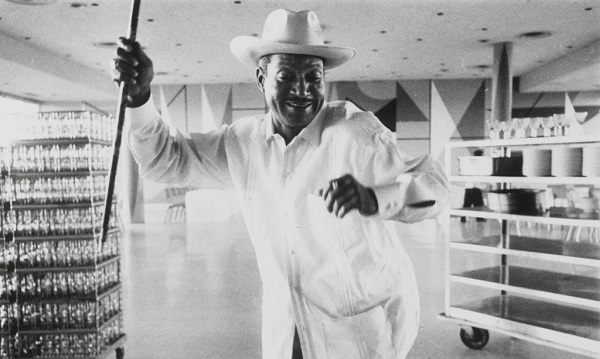
Benny Moré
Benny Moré

He was born on August 24, 1919 at seven in the morning in the Pueblo Nuevo neighborhood of the town of Santa Isabel de las Lajas, belonging to the Cienfuegos province. His parents were Virginia Moré and Silvestre Gutiérrez, and Benny was the oldest of 18 siblings. His last name Moré came from Ta Ramón Gundo Moré (slave of the Count Moré), who, according to the tradition of the Congos, was his first king in Santa Isabel de las Lajas.

Benny was gifted with a fluent tenor voice that gave life with great expressiveness and this context was definitive for his future career in music. He learned to play the insundi, the yuka drums, the Makuta and Bembé, invocators of deities, with whom he not only sang and danced to perfection, but also played the son, the guaracha and the rumba.

Since he was a child he expressed his great vocation for music, he would spend all day humming a song or improvising and directing ensembles composed of machetes, bongos made with milk cans, guitars made with a board and nails with strings of string sew, two sticks as keys, and so on.
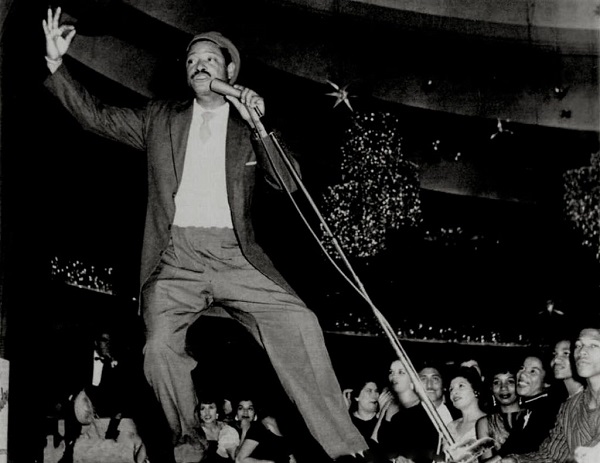
Benny Moré singing
Benny Moré singing

Moré was a teacher in all genres of Cuban music

The “Bárbaro del Ritmo” could always be found standing on a table singing and playing, surrounded by listeners. Bartolomé spent his childhood and adolescence, with no opportunity for study or permanent employment. Like his brother Teodoro, Bartolomé was enrolled in the School of Public Instruction “José de la Luz y Caballero”, where he always stood out for his conduct and application.

Why is the Bacardi symbol a bat?

Since he was a child, Moré had skills for singing and improvisation, which he demonstrated when he was barely seven years old, when he would run away for a few hours to entertain parties in the neighborhood and loved singing notes with his mother, to prevent her from sleeping while ironing late into the night.

His voice was particularly highlighted in the Son Montuno, the Mambo, and the Bolero
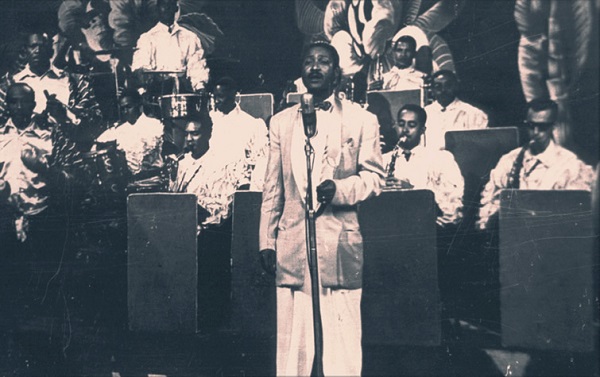
Benny Moré live
Benny Moré live

Benny went through a complicated life, but he was willing to do anything to achieve his dreams of triumph. With almost 20 years of age, in 1940 Bartolomé said goodbye to his mother at the Hotel Ritz in the Central Vertientes, where she worked, and traveled hidden, indistinctly, by train and truck to the City of Havana. He was definitely in the mission to try his luck in the bustling city!

Since then, he was seen by the famous neighborhood of Belen, with a guitar acquired in a pawnshop, wandering through cafes, bars, hotels, restaurants, and even brothels. That same year he told his cousin: “I stay in Havana, I rise up here or I sink”. From that moment began the saga of concerts at the bars of the port avenue … Once remembering those times, he confessed: “I threw myself into the street with a guitar on my shoulder to sing to tourists. I am not ashamed of it; Carlos Gardel also did it in Argentina and is the king of tango. ”

At that time, the CMQ station began broadcasting the Supreme Court of Art. Bartolomé Maximiliano Moré appeared in that program that Germán Pinelli and José Antonio Alonso encouraged. After presenting it and at the moment of beginning his presentation, they rang the bell.

Later Bartolomé returned to Monte and Prado to the Supreme Court and on this second occasion he won the first prize. Possessing a fresh voice, beautiful timbre, sensual and evocative. Bartolo sang with all the inner strength that claimed the Cuban rhythms.

In one of his raids, Siro Rodríguez, member of the famous Matamoros Trio, heard him sing in the bar of El Templete restaurant, on Avenida del Puerto, and was very impressed by the boy’s voice and tuning.

The entry of Bartolomé to the group of Miguel Matamoros was a fact and can be considered as his real debut as a professional singer, because with this group he had for the first time a steady job as a musician and made his first recordings on 78 revolutions per minute discs.

Benny knew he had a voice, the luck and a destiny. Perhaps he sensed it, intuited it, or simply trusted his triumph. When he started with Miguel Matamoros and his group, I already wanted to make changes in the picket line.

In Mexico, when Miguel became ill, he was able to direct the group, took control and enjoyed the “Cuates” in El Patio cabaret. When the contract ended, the Matamoros group returned to Havana, but without Bartolomé, who decided to try his luck by himself in Mexico.

When he communicated his decision to the famous author of El Son Siembra Su Maíz, Miguel Matamoros said: “It’s very good, but you have to change the name of Bartolo, which is very ugly. With that name you will not go anywhere”, You are right, Bartolo replied, from today I will call myself Benny, yes, Benny Moré. ”

The owner of the business was hypnotized by the very tasty atmosphere that Benny led as director. After singing with several push orchestras in Mexico, he planted himself beautifully with the most famous band of the 20th century: Pérez Prado and the Cuban mambo.

With this meeting two geniuses joined: Benny Moré had talent and natural intuition; in Pérez Prado, in addition to all that, the mastery of technique and an enormous facility to make music. With Perez Prado he conquered the noble Aztec people on tours of different states of that sister country.
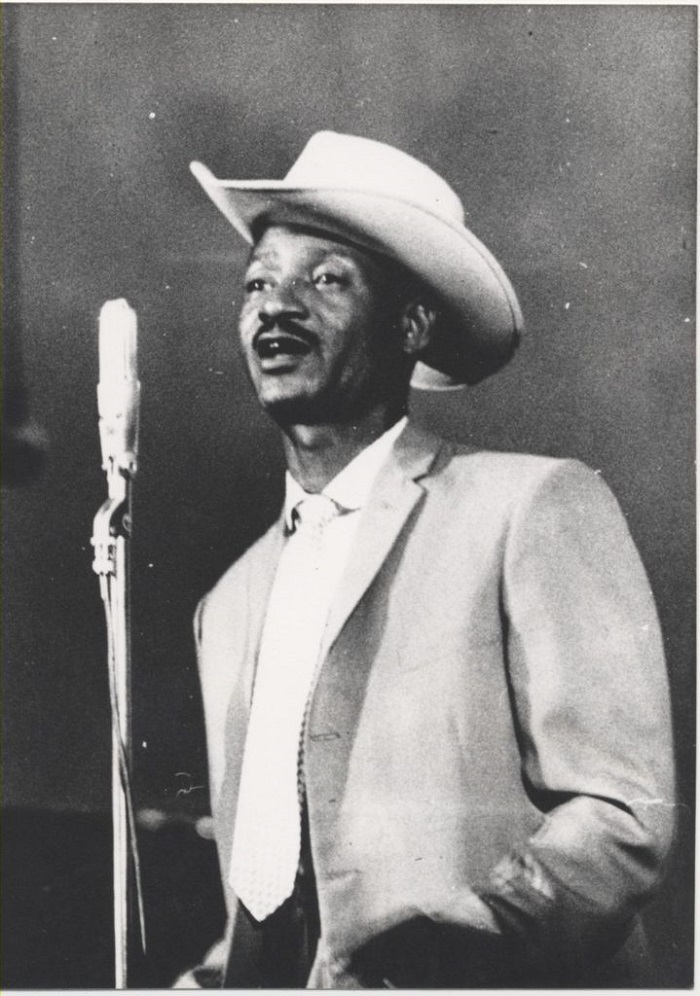
Benny Moré
Benny Moré

Due to the success achieved by Benny, the town gave him the title of “Prince of Mambo” and Pérez Prado, “King of Mambo“. He sang like nobody else in the world and began his international promotion.

By that time, Benny’s voice was known in Panama, Colombia, Brazil, Puerto Rico, Haiti, Venezuela, and of course, in his native Cuba.

In the joyful world of nightlife in Mexico City, the Cuban singer performed in many theaters, including Margo, Blanquita, Folliers and Cabaret Waikiki, alternating with renowned artists such as the legendary star Yolanda Montes (Tongolele), the Mexican Toña la Negra, and the outstanding cuban pianist and composer, Juan Bruno Tarraza, of whom Benny sang the bolero “It’s already twelve o’clock”.

Benny participates in many films and upon his return to Cuba, he was already certain that he had to be counted on.

The nostalgia for his family, friends, for the Homeland, and the desire to obtain laurels on his Island, where he considered that he was not known enough, made him return to his beloved Lajas at the end of the year 50. The ‘sonero mayor’ was definitely in Cuba, where he had left behind comforts, material and spiritual satisfactions, friends and even the loves that the successful do not usually lack.

During the following two years he acted by contract for a program called “De fiesta con Bacardí”, which was aired by the Eastern radio station with the orchestra of Mariano Mercerón, and the singers Fernando Álvarez Pacho Alonso.
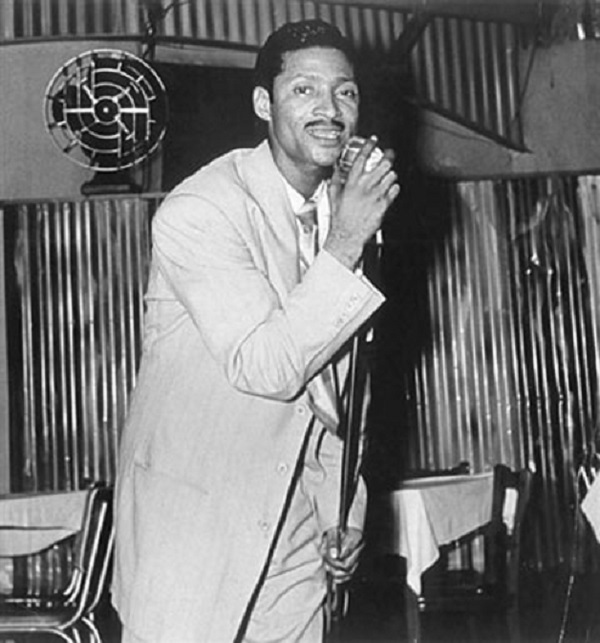
Benny Moré
Benny Moré

As Benny Moré was an exclusive artist of RCA Víctor, this firm claimed his presence in Havana to make different recordings. In order to fulfill this commitment he gave alternative trips to Havana and thus maintained his responsibility with the eastern radio station.

After the commitment at Casa Bacardí and maestro Mercerón, in 1952 Benny Moré returned to Havana.

Certainly, Benny concluded an era, closed a chapter of Cuban musical life, that stage of nightlife that was already declining.

Benny’s life was related to a world that has already disappeared. Then everything became myths and legends … Benny kept on singing, but now it would be on scratch discs, which were digitized.

The “oidores” (listeners) will be transported in time, imagine the bars of the Havana port full of curious tourists. From Chinese restaurants selling “complete” to poor people who passed their hats, after singing through the streets of Havana – Cuba.
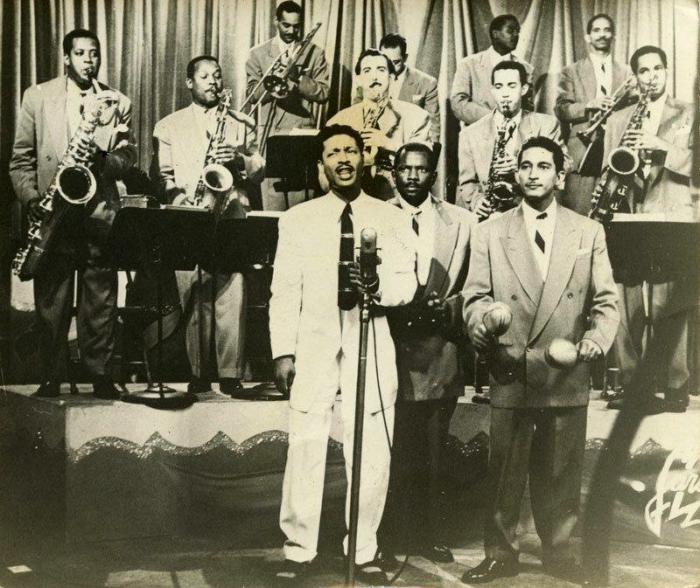

Benny Moré in concert

Meet Pablo Emmanuel Lemos and his classes at the School of Caribbean Rhythms “PA’ que lo Gozes”

Latinoamerica / Argentina / Punta Alta

On this occasion we had the opportunity to meet the dancer and teacher of the School of Caribbean Rhythms “PA’ que lo Gozes” Pablo Emmanuel Lemos. He tells us about the course of his career, profession, tastes and goals.

Unlike many dancers who started when they were little, at the age of 23 he (Pablo Emmanuel Lemos) began to dance different Latin rhythms and with the support of his classmates and teachers, he decided to do a Caribbean Rhythms teacher training at SAOCO. Later he began to teach at the academy where he began his apprenticeship, without imagining what his job would be today.

He mentions that he is passionate about teaching, sharing and giving his Salsa and Bachata classes in his work space and that at the moment he does not have his own academy; however, he gives his classes in Punta Alta, Argentina:

  • Monday and Wednesday at 8:15 p.m. at Humberto 1159 (Guapas Factory Gym) in Bahía Blanca.
  • Tuesday and Thursday at 8:00 p.m. in Spain 843 (Dance Pulse).

In general, competitions and/or recreational activities are held for those who wish to share these dynamic and joyful rhythms.

Pablo Emmanuel Lemos and his students

In one of our questions, to know what is necessary to learn to dance like a professional, he answers us:

“Knowledge is not what makes the dancer, but the desire, motivation and decision to learn from their peers and/or partners”.

For new Latinos, he tells them to “dare to dance… whatever the impulse that leads you to want to do it, without brakes, fear, or doubts…. Dancing is a wonderful art that has made a resounding change in my life. That is why I invite you all to dance and try this healthy discipline”

If you want to know more about his classes:

  • Facebook: @PabloEmmanuelLemos o @AleA.Abello
  • Teléfono: +54 2932554866 / +54 2915265613

Jerry Ferrao says in salsa key: “My life is a drum”.

With a lifetime dedicated to folk music, singer-songwriter Jerry Ferrao has been bringing us some good salsa for some time now. With seven recordings to his credit; Restauración, Esto sí es Navidad, Paisajes de mi Negrura, Puertorican Folkloric Jazz, Tiempo al Tiempo, De Guerreros y Batallas and Desafío, it is clear that the salsa path he decided to take a couple of years ago brought a lot of musical experience, and a very tasty one at that.

Jerry Ferrao afirma en clave de salsa “Mi vida es un tambor”

I invite you to listen to his latest single ‘Mi vida es un tambor’, also available on YouTube:

The track -whose musical arrangement is by Jerry Ferrao and John Rivera Rosa- features the participation of great recording studio musicians, such as: Efraín Hernández on bass; Juan Gómez on piano; Angie Machado, Jaimar Vázquez and Javier Meléndez on trumpets; Benny Marín, Víctor Román and Noel Abel on saxophones; Pedro Dueño on bongo; plus a parade of top-notch guests: Endel Dueño on timbal, Kachiro Thompson on tumbadoras and Luis Aquino, in a masterful trumpet solo.  Backing up Jerry Ferrao’s lead vocals, we hear the voices of Flor Angel Guilbe, Wiki Gonzalez and Nandy “El Sinsonte” on backing vocals.

“I do it first out of a desire to explore new horizons. I’ve been in the bomba and plena for many years. I was with La Familia Cepeda for more than 20 years and with Los Hermanos Ayala from the town of Loíza for six to seven years. I was a disciple of the great masters: Don Rafael Cepeda Atiles, Marcial Reyes Arvelo and Tomás Flores, among others. The time has come for me, I am a composer! I have composed songs for several orchestras and folklore groups, it was time to write for myself! I said to myself, I am a composer and singer and I am going to design my own music,” he said.

He lived in Buenos Aires, Argentina while studying cinematography. There, Ferrao sang with the salsa orchestra La Clave Genética. It may have been there that the definitive leap to salsa was conceived.

Following the scourge of Hurricane Maria in Puerto Rico (2017), Jerry dedicated a salsa track titled ‘Retoñando’ (available on YouTube) to the memory of all his compueblanos who left in the aftermath of the hurricane.

Jerry Ferrao relates that he began receiving suggestions for him to record salsa because his voice excelled in that sound. “That must be because I have been listening to salsa, enjoying and appreciating it since I was a child. I have a family of well-known musicians, particularly because they are percussionists, timbaleros, congueros, bongoseros,” he said.

Con toda una vida dedicada a la música folclórica, el cantautor Jerry Ferrao ha estado trayéndonos salsa de la buena

In 2012 he published what could be considered the most important documentary on the history of the Puerto Rican bomba, Ayeres de la Bomba. This document has been praised by prestigious ethnomusicologists, anthropologists, sociologists and researchers specializing in Puerto Rico’s black history. I add with certainty, that our Jerry Ferrao must be considered as the authority on our folkloric rhythms.

Since he was a child, he was influenced by the art of Afro-Antillean roots music, especially salsa and guaguancó. With uncles like percussionists Pedro Dueño, Ángel Dueño and Endel Dueño, nicknamed “Los Hermanos Dueño” in the popular artistic scene, who have been recognized in different parts of the world, mainly by salsa and Latin jazz lovers, it should come as no surprise that Ferrao has grown up immersed in the rhythm and flavor that continues to dictate his creativity.

Determined to focus on salsa, he affirms that his contribution to Borikua folklore was also his musical foundation. “Yes, it is something that lives with me and I will continue to cultivate it in some way. Who knows if in the future I will do my own little things for the public, that I will sneak in some bomba or plena between salsa and salsa. I have been in folklore since I was about eight years old”, Ferrao said shortly before affirming that with the album Desafío (2022), which contains 12 songs of his inspiration, he made his formal entry into salsa. Jerry Ferrao bets on salsa, and salsa fans bet on Jerry. His efforts have not gone unnoticed and as a salsa artist, the excellence with which he has produced his musical deliveries is striking. “I swear it was a tremendous challenge to do all this. For different reasons, the production took about three or four years. All the songs and arrangements are my own, and I don’t even play guitar, although I would love to!” he shared.

The images are by Kali Torres

Bella Martinez Puerto Rico


Also Read: ¡Attack Sergio! Unbreakable: A fun read because of the contradictory content

LATIN AMERICA / March 2024

Flora Purim has earned her two Grammy nominations for Best Female Jazz PerformanceEva Cortés at present, her music reflects the influences received from her cultural mestizaje.Lazarito Valdés & BamboleoJerry Ferrao afirma en clave de salsa: “Mi vida es un tambor”Calibrated maracas

DIRECTORY OF NIGHTCLUBS

Argentina flag
ARGENTINA

Aruba circular flag
ARUBA

Belize circular flag
BELIZE

Bolivia circular flag
BOLIVIA

Brazil flag
BRAZIL

Chile circular flag
CHILE

Colombia
COLOMBIA

Costa Rica circular flag
COSTA RICA

Cuba circular flag
CUBA

Dominican Republic
DOMINICAN REPUBLIC

Ecuador circular flag
ECUADOR

Guatenala circular flag
GUATEMALA

Mexico Circular flag
MEXICO

Panama circular flag
PANAMA

Peru circular flag
PERU

Puerto Rico circular flag
PUERTO RICO

Venezuela circular flag
VENEZUELA
MARCH 2024 FESTIVALS

Mexico Circular flag
MEXICO
Oaxaca 2024

Oaxaca Salsa & Bachata Festival

Mar 13 / 17 2024

Hotel Misión Oaxaca
Avenida Jalisco 15 Fraccionamiento San Felipe del Agua
Oaxaca City, 68020, Mexico

Puerto Rico circular flag
PUERTO RICO
Zalsa

Día Nacional de la Zalsa 2024

Mar 17 2024

Estadio Hiram Bithorn
Avenida F.D. Roosevelt
San Juan, 00920, Puerto Rico


Argentine-American composer and guitarrist Alejandro Meola kindly talked to us

There is a country we do not usually talk much about in this edition, but we have found the best moment to do so, and it is the land of tango and mate, Argentina. It turns out that, on this occasion, we talked with composer, singer and guitarist Alejandro Meola, who has honored us by accepting our invitation to this very special exclusive interview we had. 

Alejandro Meola is an artist who was born in the city of Miami, but his parents moved to Argentina when he was very young, so he spent his childhood and adolescence in the aforementioned country. In his accent, we can see how influential his upbringing in Buenos Aires was.   

Next, we will touch some of the most important issues related to his career and his life in general.  

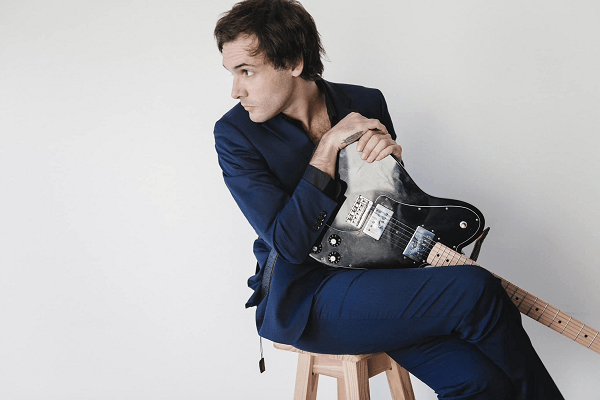
This is Alejandro Meola
This is Alejandro Meola, a very talented Argentine-American guitarist

Alejandro’s beginnings in music 

As is typical, Alejandro began to feel a great attachment to music and it all started with the guitar that was in the house he grew up, with which he played at an amateur level and began practicing slowly and improving his skills over time. He says he always knew that his vocation was music, even without being old enough to decide on these issues. 

Given that the guitar was the instrument with which he started in music, this will always be the most important element in his artistic life above any other. However, he is also capable of playing other instruments such as piano, drums and bass, which can transport him to places within his mind where the guitar does not always take him.   

With regard to composition, Alejandro started to develop in this area through the need to express those emotions he had on the inside and communicate what his feelings in an original way with the help of music and the melodies that compose it. ‘‘I like to communicate things that resonate in other people’s minds and that’s where my taste for composition came from. Besides, I think that practice and time improve your ability to communicate emotions and transmit messages to anyone who listens to you. That evolves with oneself” said the artist.  

Alejandro’s musical education 

Alejandro told us that he studied at a music school in Argentina where he specialized more on guitar and composition, but what he calls ”street training” also helped him a lot to polish his act as an artist. The experience gained out the academies is so important to Alejandro that he even defines it as ”a parallel university”, which is as important as formal academic training, if not more. 

”It’s the street that gives you the tools, the experience and the journey to be a more complete artist. Practice on real stages is critical to specialize in music as it should be” Alejandro said on the subject.  

street training is important for Alejandro
According to Alejandro, ”street training” is very important for any artist

Argentine and American roots in Alejandro’s work 

Hearing Alejandro play evidences that he is heavily influenced by legendary and world-famous Argentine rock and the artist confirms this stating that he listened a lot to Fito Paez, Soda Stereo, Charlie Garcia, Gustavo Cerati, Luis Albert Spinetta, Andres Calamaro, among others. Undoubtedly, all of these music luminaries played a very important role on how this young man would perceive music, adding to all the American rock and blues he would listen to upon arrival in the United States. 

However, he noted that being in the United States also allowed him to listen to a number of Latin artists and rhythms which he never planned on experimenting with, but he did. His song ”La Inmigración” is a good example of this. In that regard, living in New York has expanded his horizons and led him to discover salsa, Cuban and Puerto Rican music. He also says that he took inspiration from Héctor Lavoe, Cheo Feliciano and La Fania when doing one or two songs. 

”At the end of the day, my music is a mixture of who I am and the places I’ve lived. A little from there, a little from here and a little from nowhere (laughs). A little from everywhere and a little from nowhere” he said.  

Alejandro also said that he is always on the lookout for other rhythms and ideas that come his way, but always using rock and guitar as a starting point.   

Alejandro at The Bowery Electric
Alejandro Meola playing live at The Bowery Electric

Why Alejandro chose New York as his permanent residence 

Since he was very young, Alejandro had always wanted to experience the dream of living and working in his art in New York. In addition to that, he wanted to know other cities in the country where he was born because while it is true that he spent most of his life in Argentina, he was also very clear that his country of birth was the United States, so he was curious to know it better. 

Once in New York, I met all kinds of people and artists with a very high musical level, so I was able to learn a lot from all of them. I feel like the bar is rising here and that led me to want to improve further every day. In that sense, I feel that New York gives you thick skin, since there are many obstacles to overcome to be truly recognized in music” said Alejandro about the city.   

The artist has been living in New York for 10 years now and is at ease in the place in which he currently is. In addition, he has managed to find a niche singing in Spanish, which has made him very happy and satisfied with his career.    

How Alejandro deals with languages in his music 

Something very common that many well-known artists do is to record songs in both English and Spanish so that the audience they reach is bigger, but Alejandro does not believe in it. He thinks that each song must have its own language and feeling, so he prefers to do one version of each song in one language. 

When he arrived in New York, he experimented a lot with English and has several albums in this language, but noting that he could work with Spanish without problems, he began to focus his music in that direction. In fact, today, almost all of his concerts are in Spanish.   

Each language has its advantages and disadvantages in terms of sound, so I must always pay attention to that,” said Alejandro on the subject. 

It has been a great pleasure for us to count on the talented Argentinean singer Alejandro Meola for this edition and we wish him the greatest success in his career from now on. 

Read also: El Tresero Moderno San Miguel Perez 

  • « Go to Previous Page
  • Page 1
  • Interim pages omitted …
  • Page 12
  • Page 13
  • Page 14
  • Page 15
  • Page 16
  • Interim pages omitted …
  • Page 27
  • Go to Next Page »

International Salsa Magazine (ISM) is a monthly publication about Salsa activities around the world, that has been publishing since 2007. It is a world network of volunteers coordinated by ISM Magazine. We are working to strengthen all the events by working together.