• Skip to primary navigation
  • Skip to main content

International Salsa Magazine

  • HOME
  • Previous editions
    • 2026
      • ISM / March 2026
      • ISM / February 2026
      • ISM / January 2026
    • 2025
      • ISM / December 2025
      • ISM / November 2025
      • ISM / October 2025
      • ISM / September 2025
      • ISM / August 2025
      • ISM / July 2025
      • ISM / June 2025
      • ISM / May2025
      • ISM / April 2025
      • ISM / March 2025
      • ISM / February 2025
      • ISM / January 2025
    • 2024
      • ISM / December 2024
      • ISM / November 2024
      • ISM / October 2024
      • ISM / September 2024
      • ISM / August 2024
      • ISM / July 2024
      • ISM / June 2024
      • ISM / May 2024
      • ISM / April 2024
      • ISM / March 2024
      • ISM / February 2024
      • ISM / January 2024
    • 2023
      • ISM / December 2023
      • ISM / November 2023
      • ISM / October 2023
      • ISM – September 2023
      • ISM – August 2023
      • ISM July 2023
      • ISM Edition June 2023
      • ISM – May 2023
      • ISM April 2023
      • ISM March 2023
      • ISM February 2023
      • ISM January 2023
    • 2022
      • ISM December 2022
      • ISM November 2022
      • ISM October 2022
      • ISM September 2022
      • ISM August 2022
      • ISM July 2022
      • ISM June 2022
      • ISM May 2022
      • ISM February 2022
      • ISM January 2022
    • 2021
      • ISM December 2021
      • ISM November 2021
      • ISM October – 2021
      • ISM September 2021
      • ISM August 2021
      • ISM July 2021
      • ISM May 2021
      • ISM April 2021
      • ISM June 2021
      • ISM March 2021
      • ISM February 2021
      • ISM January 2021
    • 2020
      • ISM December 2020
      • ISM November 2020
      • ISM October 2020
      • ISM September 2020
      • ISM August 2020
      • ISM July 2020
      • ISM June 2020
      • ISM May 2020
      • ISM April 2020
      • ISM March 2020
      • ISM February 2020
      • ISM January 2020
    • 2019
      • ISM December 2019
      • ISM November 2019
      • ISM October 2019
      • ISM Septembre 2019
      • ISM August 2019
      • ISM July 2019
      • ISM June 2019
  • Spanish
  • Download Salsa App
    • Android
    • Apple

Search Results for: Bailatino

Joel Uriola

Latino America / Venezuela / Caracas

Joel Uriola “I am the best, because I surpass myself”

Very soon the theme will be released, Cuidadillo there ok

This Venezuelan pianist, arranger and musical producer was born on January 4, 1963 in Caracas, in the popular parish of Antímano, the same one that saw the birth of Sonero del Mundo Oscar D´ León, by chance or his destiny was already written and en route. towards a dream that over the years would come true; be the best and that your work is recognized both nationally and internationally.

In our gathering, Joel tells us that when he is classified as the best, he has nothing to do with competing with others or with airs of greatness, but with surpassing himself in everything he proposes, he tells us that “my path is longer, but I came as Joel Uriola”, his name is a seal that ensures quality work.

With 38 years of musical career, Joel Uriola has plenty of talent, level and experience, in each production he uses the best group of Venezuelan musicians and continues to be at the forefront of music, all this is demonstrated in the more than 1000 musical productions in which he has participated as a performer, director or musical producer, with national and international artists.
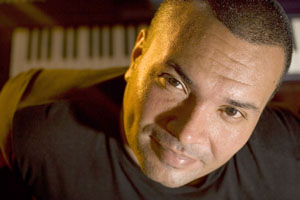
Joel Uriola
Joel Uriola

Joel Uriola The best?

“That’s right, metaphysics says that you can’t talk about yourself in a negative way, you can’t sell a product if you don’t have good marketing, you must see beyond, be your own manager, most record companies are in the hands of ignorant people. the music that drive the artist’s work”. “Artists have the obligation to cultivate themselves, learn and not only be musicians, we must project ourselves in a big way”.

How did your childhood develop and what was the atmosphere of the time like?

“I had a good education in my home, with values, a grandmother with character, who told me that no matter where you lived, your behavior would make a difference, she always motivated me, just like my mother who also instilled in me to prepare myself, my grandmother was an enterprising woman, my father was a rumba guitarist and a professor at the Católica”. “I remember that I saw the debut of the Trabuco Venezolano in the CC Propatria, as fate would have it, my mother had an office there, as did the people of the Latin Dimension.”

At what age did you start in music and with which orchestras did you take your first steps?

“My musical beginnings took place at the “Prudencio Esáa” School of Music, starting professionally at the age of 17 with a group called Galaxia, I was the conga player, it was a Son group and we rehearsed at the observatory”. “Then I became part of the Caracuchos of Joseito Rodríguez from 1977 to 1979, whom I met thanks to Jesús “Totin” Rebolledo, later with the Latin Dimension from 1979 to 1980, from Cesar Monges I learned a great deal, and from 83 to 87 with Oscar D´ León.

And why is there that change from the conga to the piano?

“Due to the noise I made in the house when I was rehearsing and the equipment turned on at full volume, my mother subliminally gave me an organ, it was less noise, and then I began to imitate what the pianists did in a self-taught way, I remember the theme of Pete Rodríguez… What things life has, life, life”. “Then my mother bought me a piano and took me to audition at the School of Music and I stayed, I was a student of teacher Tiero Pezzuti, Gerry Well and Samuel del Real”. “In the nightclubs of El Rosal I did many substitutions, there I polished myself, I had a good preparation and some great teachers who are my friends”.
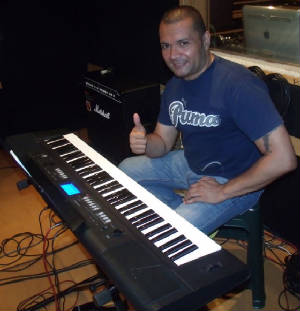
Joel Uriola - piano
Joel Uriola – piano

What anecdotes do you have about your experience of working alongside Oscar D´ León, and about that piano solo on the song “Cuídate bien”, did you ever think that being so young, almost 20 years old, your name would remain forever on the mind of the salsero?

“The time with Oscar was glorious, I got to know many places, we toured for 3 and 4 months, we enjoyed ourselves but we also had a lot of fun, I learned a great deal and disciplined.” “I had the blessing of meeting many musicians that I admired such as Eddie Palmieri, Salvador Cuevas, Barry Rogers, among others, with Domingo Quiñones I made a great friendship.” “As for improvisation, I feel great pride, it was something that came out at that time, I don’t know if it will come out again -laughs-“.

Which musician has been your biggest influence?

Markolino Diamond, Eddie Palmieri, Papo Lucca.

A pianist you admire?

“Markolino Diamond is my idol, a lot of what I do has to do with this guy, if he were alive he wouldn’t exist…”. “He was irreverent, crazy, he broke the schemes.”

How do you see the response of the salsa audience with your productions?

“There will always be admirers and detractors, with the level of awareness that you gain, it doesn’t bother you that there are people who don’t like your work, I make music for everyone”. “Public opinion can kill you if you are not prepared for it, but you must believe in what you do.”

How do you see the support of the media to spread your music?

“Thank God the record companies disappeared, those who knew the least about music controlled them, they decided that it was commercial and that it was not, in the alternative media there is response and support, however, social networks allow you to reach in a matter of seconds many places and you can do your own marketing”.

What do you think about the fusions that you are doing with salsa, for example, salsa and reggaeton?

“It works perfectly, it’s urban salsa, reggaeton with its lyrical content has improved a lot, they’ve softened it, reggaeton artists have great economic and communication support.” “The good things are guaranteed, reggaeton is seen as Salsa was seen in its beginnings, with bad eyes, but you see, Salsa is worldwide even the Chinese dance it, people consume what the radio puts on it, even if it’s bad, there’s room for everyone”.
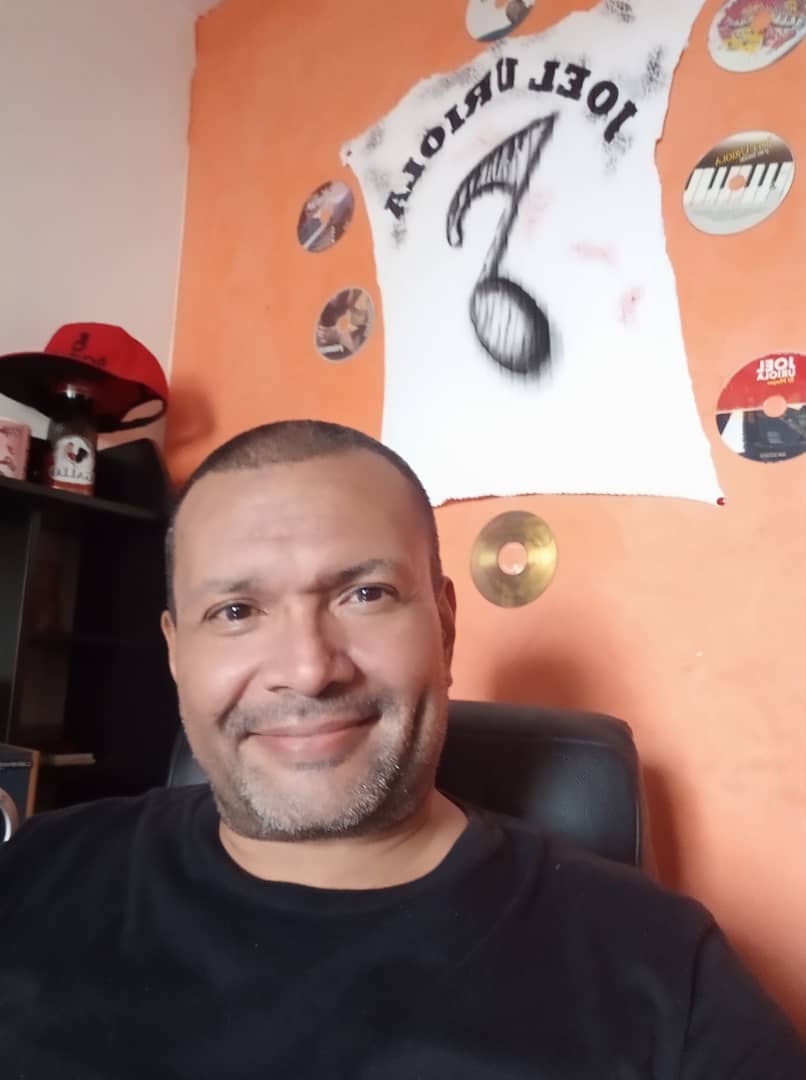
As a music teacher, what have you contributed to the country?

“Train the next generation, in values ​​and discipline, and that seed continues to germinate, help people regardless of how they sometimes pay you.”

Why musician and not another profession?

“I wanted to be Disip (Venezuela’s intelligence corps), but when one is born marked for something, that’s what goes… My destiny is music.”

How do you see the music industry right now?

“Everyone is recording with their own effort, you make a song, you upload it to the networks, we have that powerful tool in our favor; the record companies limited you, hardly any albums are recorded anymore”.

Can you live from music?

“Well… Thank God I can do it, every day I get up like a conuquero to work, I can live from music.”

Of the 9 productions under your belt, which do you think is the best or the most important for you?

“Babalawo (2009), the best achieved, the best worked in all aspects, was sold in all religious houses.”

What motivated you to form your own orchestra?

“I’ve always been a leader, that’s why I decided to form my own orchestra, everyone has their moment”.

Isn’t it a difficult job to compose and arrange?

“You are born for this, it is not difficult, you must study and prepare yourself, my muse can arrive at 3 a.m., I get up and add or season my music in my own way, I listen to traditional Cuban music, jazz that inspire me.”

What is Joel Uriola doing right now?

“Currently I dedicate myself to producing for other artists of the Salsero genre, always offering quality, the most recent is the work with the Mercadonegro Orchestra with the theme Rumba Negrito”.

You are the arranger of the 3 songs that made the Bailatino orchestra known internationally, you have been the Producer and arranger in five songs of “Rumberos del callejón”, among other Venezuelan artists. What does it feel like to contribute so that other Venezuelans are successful?

“At the moment you do things, you do it with the best intention, and that is the greatest satisfaction, helping others grow regardless of how they pay.”

Do you feel that unity and camaraderie are lacking in the salsa guild?

“Totally, without unity nothing is achieved.”

What do you think of copying, imitating and not creating?

“He who imitates is destined to fail, one must have personality, you must not cling to something foreign to survive, what you do has more value, you must have creative capacity”.

Future plans or present?

“I am recording two songs, Cuidadillo there ok composition by Maurice Melo, a salsa with tasty rhythmic elements, timba and hard sauce, and the second song You are the teacher has a Christian connotation, with the Praise Orchestra, the song is my own. , a cool sauce with Christian sauce”.

Joel reaffirms us “My road is long, but I arrive as Joel Uriola, I am who I am, I am the best”.

La Topa Tolondra & its Salsa with Criterion – Colombia

Latin America / Colombia / Cali

Something magical happens in a unique space in Cali – Colombia: Topa Tolondra

La Topa Tolondra & its Salsa with Criterion ¨ A magical place in a unique space in Santiago de Cali¨

Because what matters is the music and its only and great protagonist “la salsa” a whole universe of happy individuals united by the melody, and all this happens because the salsa is tattooed in the hearts of many caleños and visitors to the area who It becomes evident on the dance floor, where you can find that visiting salsa public from all over the world that dances professionally, there are also those who dance well and those who don’t dance, but who doesn’t give a damn? “nothing”.

Those who are stung or guilla of dancers, those who go in sandals, those who go with tennis, those who go with heels, those who go elegant, those who go relaxed, the dreadlocks with long hair, those with afros, the gentleman and the lady, the chickens, the urban cyclists and even the rockers… and the list is endless because what matters is the music and its only and great protagonist “salsa”

“Lovers of Salsa and Bolero romantics attend weekly without age limits” To the rhythm of the Charanga, the Pachanga, the Boogaloo, the Guajira and the Son Cubano, it is enjoyed every night at the Topa Tolondra. Something unique happens in that magical place and that is that everyone forgets what they will say and they enjoy it from start to finish. In addition, local and international artists such as:

Esteban Copete y su Kintelo Paci co, Habana con Cola, Los Hermanos Lebrón, Clandestina Orquesta, Africali, Ebano y Marl, Bailatino, La Negramenta, Bobby Valentín and among others. For special dates ¬these and events such as Halloween that is approaching are organized. In “La Topa” as it is already known in Cali, sounds resound that arrived in the city between the 50s and 70s, where Salsa shapes the body and bolero its spirit, and going a little deeper we also perceive inclusive energies.

“Having fun is the only requirement to attend” “The Environment” For an unforgettable night you need two halves. The first is a table, chairs, water and drinks. And the second, and perhaps the most important: music and hit.

In Topa Tolondra there is plenty of space for gozadera, to sit down, to toast. Time does not run and there is no decache… “La Música” Here they marry the old guard of Los Hermanos Lebrón, Ángel Canales, La Sonora Ponceña, Frankie Dante and La Flamboyán.

The curatorship of its owner Carlos Ospina, its disc jockey and owner, is to learn it. It is not at all about impressing, it is about knowing how to find the subject at the right time.

¨Variety¨ Mondays are for foreigners. On Tuesdays there is a cinema-forum space and separate classes that are included with the 3 for 1 promotion (for every 3 Salsa songs, one bolero). Wednesdays are the best dancers in the city, Thursdays are dedicated to live salsa.

Finally, Fridays and Saturdays are reserved for these traditional Topa. “To Many Degrees” If your hair is long, bring something to tie it up with. If you are wearing a long-sleeved shirt, roll up the sleeves. If you are one of those people who is not used to consuming water, be prepared to drink what has not been drunk in a year. In La Topa you feel the harsh heat, so it is necessary to establish breaks to go outside to cool off “the heat outside will seem cool to you.”

For a round night, the ideal combination is beer, brandy and water, in dosed sips. Does the temperature exhaust? Yes, but it doesn’t matter if the song that is playing touches your ¬bras and reaches your heart. If you don’t know La Topa Tolondra, be sure to go and if you want to get a clearer idea before visiting, visit their fan page on Facebook www.facebook.com/Latopabar but don’t stay intrigued! Location of La Topa Tolondra. Cl. 5 #13-7, Cali, Valle del Cauca, Colombia Telephone: +57 323 5972646

Alex Sánchez “Salsa has always had a special place. It is a genre that will never go out of style ”.

Latin America / Venezuela / Miranda

Mulato en Rumba his greatest bet Alexis José Sánchez:

He is a versatile artist, who like many other musicians begins his training from home, with his brothers he learned to play the cuatro and the guitar, this motivated him to continue his formal studies at the School of Music “José Lorenzo Llamozas”, where he also studied trumpet alongside maestro José “Cheo” Rodríguez; He jointly studies Afro-Latin percussion with maestro Orlando Poleo, Barloventeña percussion with Alfredo “Pandilla” Bolívar and Arturo Piñango, African percussion with José Shalons and Yonder Rodríguez.

At the “Nicomedes Marrero” Cultural Training Center in Tacarigua, he took piano lessons with professor Manuel Sepúlveda, Afro-Venezuelan percussion with maestro Alexander Livinalli and Choral Direction in the free art workshop of “Río Chico”.

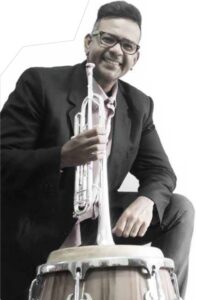
Photo- Alex Sánchez
Photo by Alex Sánchez

Although he was born in the city of Caracas, all his life he has lived in the Barlovento region, an area with a great cultural and musical richness, there he also performs the role of teacher, being a facilitator of the Afro-Barloventeña, Afro-Venezuelan and Afro-Venezuelan percussion chairs. Afro-Latin, in School District No. 4.

From a very young age he has been linked with the traditions of his town; Tacarigua. This young man is an active part of the cultural development of the area and together with his wife Yermy Martínez and his mother-in-law Zenaida Gamboa, founders of the group “Danzas Tacarigua”, they are in charge of training the youth of relief, in order to keep the demonstrations alive. traditional barloventeñas for many generations.

Sánchez, assures us that he has a great responsibility, to preserve the legacy that the Africans left in their path through our land, that despite the obstacles he gets along the way to carry out his work, he is overcoming them one by one with perseverance and dedication. that love he feels for music, his family, his traditions and his other passion for teaching.

Salsa and Venezuelan Folklore, two different worlds, each rich and varied in rhythms and styles, however, it takes them by the hand, something that is not strange in a country where the mixture abounds, that we Venezuelans are the product of an ethnic and cultural mix.

How were your beginnings in music?

“I started in music at home with my brothers. I learned with them to play cuatro and guitar. That was the fundamental basis of what has been my musical career up to now and it also inspired me to continue with formal studies in music ”.

Your musical training has been very broad. Why did you decide precisely to specialize with the trumpet?

“I decided on the trumpet, since it has been the traditional instrument in my family, first my great-grandfather Gregorio Machado, then my great-uncle“ Perucho ”Machado and my brother Wilman”.

A man from Caracas who decides to emigrate to Barlovento Why not Barquisimeto or another region?

“My whole family is from Barlovento, since I was born I have lived here in Tacarigua, Brión municipality. After studying music I realize the musical wealth that exists in this region. That is why I decide to bet on the musical production of my homeland and also be part of that artistic movement that represents Barlovento and that has given so much to our country ”.

Composing and arranging music, the work that leads its creators and orchestras to position themselves in the first places. Which of your works as a composer and arranger have been positioned in that place?

“That is the dream of every arranger, to achieve that an orchestra reaches the first places of popularity and in sales. I haven’t had that luck yet, but it’s my dream as a songwriter. I have arranged for many orchestras that have been quite popular and are playing in various countries ”.

Alex Sánchez
Mulato in Rumba your biggest bet

There are many orchestras for which you have done this work, could you name them?

“I have arranged for orchestras and singers such as: Bailatino, Cheo Linares and his Orchestra, Víctor Cardona and the Salsa Machine, Cheo Navarro and his Tribute, Francisco Pacheco and his People, Hildemaro Jr., Orquesta Sarayé (Colombia), Orquesta La Suprema (Panama), Orlando Watussi and my musical project “Mulato en Rumba”, among other national artists “.

Percussion is another of its virtues, of the different rhythms. Which of them is more difficult to teach or learn?

“Percussion is a world that allows you to express yourself and make contributions based on its rhythmic quality. All rhythms have difficulties, but their great musical richness and the magic of the ancestral charge make it possible for us to digest them naturally ”.

“I invite the musicians and the community in general to come to Barlovento to learn about the regional culture, so that they learn to play Mina, Culo e puya, Quitiplás, Fulía and Parranda.”

In the vineyard of the Lord there is everything and for everyone. What has been the most difficult thing about this profession?

“Music gives you a lot of satisfaction, but around it there are circumstances that create disappointments – they can scam you, you have friction with colleagues, etc. – you will find obstacles, but I think that all this is overcome with perseverance and dedication to work. That is what it takes to stay in the musical world ”.

The Music Producer is the architect of a record. What do you feel at the end of each record? What do you feel at the end of each work done?

“Music production is hard work, bringing together musicians, writing and selecting songs, directing, molding and creating a pleasing product for the public, where feelings are reflected on paper, which in turn become sounds that will mark the life of anyone who is a music lover. That is the greatest satisfaction ”.

Each era has its ups and downs, do you think you can make a living from music?

“Of course, if we think of music as an industry we can find that starting from being a composer, arranger, through instrumentalist, singer, among other things, always keeping in mind the quality of the work to be able to sell it, it can be said that we are prepared to live from what we love to do ”.

How does it feel to be part of the cultural development of Barlovento?

“It is a great responsibility to know and feel that you are the bearer of such an important heritage for the development of the culture of an area where the legacy of the Africans who populated our lands will always prevail. Maintaining, disseminating and promoting the culture of my people through workshops, talks and exhibitions will guarantee that tradition is not lost and that these children and young people, just like I started, will be the future protagonists of the traditional Barlovento demonstrations. ”

Tell us about the Black Theater of Barlovento and Danzas Tacarigua. How do you undertake the preparation of the new generations so that the traditions last over time?

“The Black Barlovento Theater, a group that has 43 years of artistic experience, also proudly carries the cultural heritage of the Miranda State. It is and has been a great school for me for 27 years when I made my first presentation with this great family. I say that it is a great school because it is characterized by being an avant-garde group and that it has given me the green light and total confidence to develop and put into practice all the knowledge acquired musically throughout my career through the different productions of the theatrical works brought to the scene ”.

“Following this example and great experience with the Black Theater of Barlovento, we have been working with the Danzas Tacarigua group, directed and founded by my wife Yermy Martínez and my mother-in-law Zenaida Gamboa for 20 years, training children and adolescents in terms of traditional Venezuelan culture, emphasizing the Barloventeña. They are currently part of the main actors in the traditions of my Tacarigua people. It is an arduous work in favor of the diffusion of the same ”.

His wife is an active part of the Cultural development of the young people of Barlovento, here we could say that “Next to a great man goes a great woman”?

“When one is passionate and responsible with what he does, with his profession, his home, that is accompanied by a great companion, I thank my wife very much, a large part of who I am and what I have achieved is accompanied by her great support, she is passionate about what she does, and that gives me a lot of strength ”.

Salsa and Venezuelan Folklor take you by the hand, how does it unfold between these two worlds?

“Despite the fact that they are two different worlds and from different markets, I have tried to take them by the hand, since from a very young age I was linked with the tradition of my town and the Barloventeño region in general, participating in the demonstrations held throughout of the holiday calendar. The salsa world has helped me understand and handle our culture in a more respectful way through arrangements, compositions, and also when interpreting it”.

Flyer Alex Sánchez
Alex Sánchez & Mulato in Rumba

How do you see the sauce right now?

“Salsa has always had a special place. It is a genre that will never go out of style. We must thank the DJs very much, who, whether they like it or not, have been a fundamental part of the salsa being maintained over time, since the media have lost that interest in promoting and promoting new salsa talents for their music. respective development.

In Venezuela the salsa movement has suffered a lot, since orchestras and producers have had little support at the level of the music industry, since it has diverted its attention to urban genres, which according to them is the most commercial. Despite all this panorama, many musicians, singers, producers have made efforts to continue working in favor of Venezuelan salsa with what we call “record pocket” -hahaha-. All this so that his musical work does not remain only in a dream ”.

Barlovento and its sauce, what can you tell us about “Trabuco Barlovento”? “Trabuco Barlovento is an initiative of my cousin Richard Frías. He told me one day at a salsa concert held in Mamporal, seeing that the great stars were accompanied by musicians from Barlovento, -with all those musicians who are there you can make a blunderbuss that represents Barlovento- and that is how the group was born ” Trabuco Barlovento ”, with more than 10 years of artistic life and 1 recording production to be finished.

I remember that among those musicians who accompanied the artists were Rodolfo Rada (trumpet), Ángel González (saxophone), Darlin Palacios (trombone), among others who are today the fundamental pillar of this group. It has 14 members, where I work as the musical director and main arranger of this prestigious group”.

Orlando Poleo, a national and international percussion reference. What anecdotes do you have of his training with him?

“Orlando Poleo arrived in Tacarigua in 1986 as a percussion teacher at the” Nicomedes Marrero “Cultural Training Center, which was a great experience for me, since he was venturing into the world of Afro-Caribbean music”.

“I remember that once he came with his orchestra“ Casino ”and as he was quite advanced in his classes, he rewarded me by playing a song. It was the glory for me to play with the maestro. It was a great experience for the musicians of Tacarigua and other nearby towns because it helped improve playing techniques and understanding of the use of the clave. Much of that learning I apply to create arrangements. ”

He is a teacher and a student, what is more difficult for you to teach or learn?

“Both are difficult, because to teach well you must learn well.”

You are working with a new musical proposal. What do you have in store for us with the Mulato en Rumba project?

“Mulato en Rumba is my biggest bet. This movement has more than 15 years, began as “Alex Sánchez and his Orchestra” to accompany artists and participate in ¬estas and salsa events in the area. One day recording for another orchestra, we met my brother Edward Plater, my compadre Yoryi Pacheco and I fine-tuning details of what we had already recorded. We saw each other’s faces and said -Why don’t we make an orchestra that is ours? -; we always record and produce for others ”.

“It is then that we decided to set up and start this musical project with our own songs composed by Yoryi Pacheco and myself and arrangements made by me as well. The main members are: Yoryi Pacheco (singer), Edward Plater (trumpet), José Madera Niño (tumbadora), Jonal Rivero (trombone), Rodolfo Frías (bassist) and Alex Sánchez (trumpet, piano and musical direction). Soon our first record production will be ready, which has been done uphill because it is financed by “Pocket record”

–”jajajajajajaja”-.

That name sounds like ¬esta, joy and sauce. How was the name Mulato born in Rumba?

“This name was given to him by my friend and brother Cheo Linares. I told him that we had a new project and he told me

-The mulattoes are going to start partying in Barlovento- and from that moment we call ourselves “Mulato en Rumba”.

Alex Sánchez
Alex Sánchez playing the trumpet

Creativity is in decline in Venezuela, you are a composer and arranger and many of the Salsa orchestras are betting on versions or tributes, they do not risk innovating, creating or inventing. What do you think about this matter?

“I think that covering is very fashionable, I think that for many people it is easier to live attached to the shadow of another than to risk producing their own.

Perhaps it is fear of failure due to the lack of support for the artist that exists in our country. There are those who do take risks and bet on other markets (other countries), where the appetite for good music is always thanks to the fact that in those countries there are people eager for new things. In our country that culture of wanting to hear something new and as the saying goes: “-No one is a prophet in his land-” has been lost.

If you bet on innovating and creating, what are the themes of your production?

“We have 10 songs, 2 versions and the other 8 songs are unpublished, we bet on ourselves, not to be in the shadow of others, here the lyrics and music are by José Madera Niño, and my person, Yoryi Pacheco also writes some of the topics. In the version of “Tú mi Delirio” I sing ”.

“The song, get ready, Dancer, the lyrics and the music are by Freddy Junior Solórzano.”

The support of the media is important to show the work done by national talent. Do you feel that there is little dissemination by the media to show the work done by the different groups?

“-Well-, in previous questions I have said that there is no support from the mass media. Hopefully that will end one day and they give importance to Venezuelan music and talent as much as they give it abroad.

La Payola, many criticize it and want it to disappear, however, there are musicians who contribute to this scourge that hurts everyone. Would you ever pay to play?

“I don’t agree with the Payola. Colleagues have told me that if they have done it that it is a rather shameful situation, since many times they have to play without any remuneration in exchange for playing on the radios several times a month. Personally, I would never pay for what he calls Payola ”.

What would be the good and not so good things about this beautiful but tough profession?

“I think there are more good things than bad things, and more when we take music as a profession. The musical world is very satisfying, since it makes you live unique experiences that fill your soul and spirit with joy ”.

Teacher, musician, arranger, music producer What do you feel you need to do?

“Learn, learn and keep learning to make good music and also be able to make” Mulato en Rumba “recognized nationally and internationally.”

His daughters have grown up in an environment full of music, tradition, folklore, they have the musical vein Sánchez, would you like them to be musicians, what legacy would you leave them?

“Hopefully they decide to be musicians, I would never force them to do something they don’t want to, because I think that everyone should do what they really like and are passionate about. The legacy that I will leave you will be all I can do in my musical life, since a large part of what I do is for my family. My daughters at their young ages have already been immersed in the artistic world, they sing, dance and participate in the cultural manifestations of our people. ”

In a word, who is Alex Sánchez?

“A fighter”.

Barlovento and Venezuela in one sentence

“My homeland, My Dear Homeland”.

Eiling Blanco Latin America Corresponded


Latin America – May 2023

Latin America – May 2023


  • « Go to Previous Page
  • Page 1
  • Page 2
  • Page 3
  • Page 4
  • Page 5
  • Page 6
  • Go to Next Page »

International Salsa Magazine (ISM) is a monthly publication about Salsa activities around the world, that has been publishing since 2007. It is a world network of volunteers coordinated by ISM Magazine. We are working to strengthen all the events by working together.