• Skip to primary navigation
  • Skip to main content

International Salsa Magazine

  • HOME
  • Previous editions
    • 2026
      • ISM / March 2026
      • ISM / February 2026
      • ISM / January 2026
    • 2025
      • ISM / December 2025
      • ISM / November 2025
      • ISM / October 2025
      • ISM / September 2025
      • ISM / August 2025
      • ISM / July 2025
      • ISM / June 2025
      • ISM / May2025
      • ISM / April 2025
      • ISM / March 2025
      • ISM / February 2025
      • ISM / January 2025
    • 2024
      • ISM / December 2024
      • ISM / November 2024
      • ISM / October 2024
      • ISM / September 2024
      • ISM / August 2024
      • ISM / July 2024
      • ISM / June 2024
      • ISM / May 2024
      • ISM / April 2024
      • ISM / March 2024
      • ISM / February 2024
      • ISM / January 2024
    • 2023
      • ISM / December 2023
      • ISM / November 2023
      • ISM / October 2023
      • ISM – September 2023
      • ISM – August 2023
      • ISM July 2023
      • ISM Edition June 2023
      • ISM – May 2023
      • ISM April 2023
      • ISM March 2023
      • ISM February 2023
      • ISM January 2023
    • 2022
      • ISM December 2022
      • ISM November 2022
      • ISM October 2022
      • ISM September 2022
      • ISM August 2022
      • ISM July 2022
      • ISM June 2022
      • ISM May 2022
      • ISM February 2022
      • ISM January 2022
    • 2021
      • ISM December 2021
      • ISM November 2021
      • ISM October – 2021
      • ISM September 2021
      • ISM August 2021
      • ISM July 2021
      • ISM May 2021
      • ISM April 2021
      • ISM June 2021
      • ISM March 2021
      • ISM February 2021
      • ISM January 2021
    • 2020
      • ISM December 2020
      • ISM November 2020
      • ISM October 2020
      • ISM September 2020
      • ISM August 2020
      • ISM July 2020
      • ISM June 2020
      • ISM May 2020
      • ISM April 2020
      • ISM March 2020
      • ISM February 2020
      • ISM January 2020
    • 2019
      • ISM December 2019
      • ISM November 2019
      • ISM October 2019
      • ISM Septembre 2019
      • ISM August 2019
      • ISM July 2019
      • ISM June 2019
  • Download Salsa App
    • Android
    • Apple
  • Spanish

Search Results for: Bobby Cruz

Bobby Escoto

North America / USA / California

Bobby Escoto, a percussionist, was born in East Los Angeles, from Mexican & Puerto Rican descent. Bobby Escoto III is the nephew to the great vocalist Bobby Escoto, who performed and recorded, with the great percussionist, Tito Puente.  Bobby Escoto III has been playing music, since the age of eight. Today, Bobby is considered one of the most prominent percussionists in the salsa genre, here in his hometown of Los Angeles.

Bobby Escoto has performed with many salsa icons in Los Angeles, New York, Europe, and Asia.  Such as Celia Cruz, La India, Jose Alberto “El Canario,”Lalo Rodriguez, Domingo Quinonez, Menique, Camilo Azuquita, Yolanda Rivera, “Fania All Star” violinist Pupi Legarreta, trombonist Jimmy Bosh, and legendary vocalist Tito Allen who performed and recorded, with the legendary ‘conguero’, Ray Barretto.  Bobby also takes pride in performing and directing his band to back up Frankie Vasquez, Herman Olivera, Pupy Cantor, Jorge Maldonado, and  Hector Tempo Alomar, vocalists to his favorite band, from NYC, Conjunto Libre.
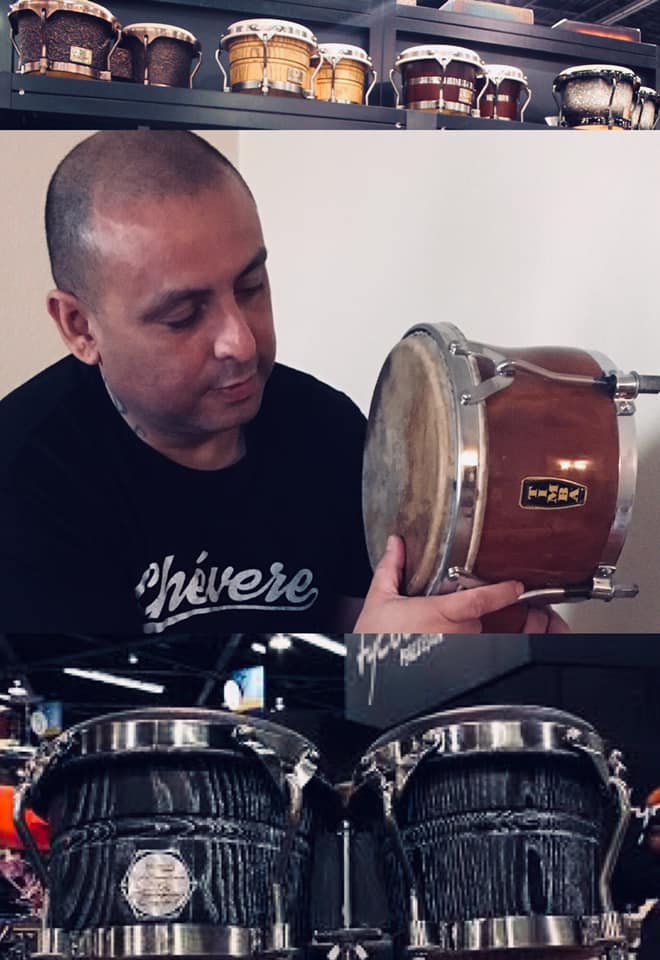
Bobby Escoto
Bobby Escoto

Bobby Escoto is the band leader, director and bongo player to his band, Conjunto Afro Son. They have performed at prominent salsa venues, as a back-up band, to salsa icons, due to their extensive educational background, training, and authenticity.  Bobby is also the band director and bongo player to The Granada All-Star Orchestra and The Salsa Divas (an all-female Orchestra) in the city of Alhambra, CA

Bobby’s goal is to increase awareness of the new generation, about the Afro Cuban and Puerto Rican music. Every Saturday you will find Bobby teaching percussion to underprivileged children in East Los Angeles. Bobby states: “it hasn’t been easy growing up in the streets of East Los Angeles, but my vision as a kid was to perform with great salsa icons.” Bobby Escoto believes that dreams do come true if you put your heart and effort into your talent.  No doubt, Bobby’s talent, passion for his art, leadership, and vision have no barriers.

Bobby Valentin, the King of Bass at the Fania All-Stars Machinery

Bobby Valentin The mind of a master

Roberto Valentin “Bobby Valentin” was one of the main collaborators and arrangers of the Fania All-Stars in the 1970s, over which time he also recorded numerous solo albums. Born in 1941 in the locality of Orocovis, Puerto Rico, he began playing guitar as a child and won a contest with a band that he conducted himself at the age of 11.

He began his trumpet studies at the age of 15 shortly before he moved with his family to New York, where he continued his studies under the direction of Carmina Caruso. In 1958 he started his professional career with the Joe Quijano’s Orchestra.

Bobby Valentin, the King of the Bass of Fania All-Stars Machinery
Bobby Valentin The mind of a master

Valentin spent the next several years working as a trumpeter, guitarist, bassist and arranger for artists such as Willie Rosario, Charlie Palmieri, Ray Barreto, Tito Rodríguez and Willie Bobo, until the year 1965, when he debuted with an orchestra to his name by releasing two albums, one of them was under Johnny Pacheco‘s Fania label.

Bobby Valentin, the King of the Bass

During the following years, Valentin continued to release albums to his name under the Pacheco’s label, but he also began recording and making arrangements for the label’s band, the legendary Fania All Stars, which had the presence of important figures as Rubén Blades, Celia Cruz, Willie Colon, Eddie Palmieri, Papo Lucca, Mongo Santamaría, among many others.

In 1975, he began recording for his own label, but his work with the Fania All Stars goes on until the day. Since then, the musician continues to perform with his orchestra for the most important salsa and jazz festivals from all over the world, while at the beginning of the decade Valentin contributed arrangements for some Pacheco‘s songs, it was only natural that he released his albums under his new label.

Fania All-Stars, to which he helped define the sound through his bass playing, in classic albums of the 1970s such as the Tribute to Tito Rodríguez or the live album at Yankee Stadium.
Bobby Valentín moved with his orchestra to Puerto Rico in 1968.

And while Bobby Valentin moved with his orchestra to Puerto Rico in 1968, he continued to travel often to New York to record for Fania, in addition to working and arranging songs for the label’s band, the Fania All-Stars to which he helped define the sound through his bass, on classic albums of the 1970s like the Tribute to Tito Rodriguez or the live album at Yankee Stadium.

In 1978 he began recording for his own label, Bronco Records, through which he recorded “La boda de ella“, a song that became one of the most important of his career.In addition to continuing to release albums for his own label, the latter of which saw the light in 2016 under the name “Mi Ritmo es bueno” and Mind Of A Master in 2018.

The pop classic The Twist composed by Hank Ballard and popularized by Chubby Checker in 1960, now sounds in salsa clave in a new version created by musician, arranger and composer Bobby Valentin y su Orquesta.

For award-winning Puerto Rican composer, arranger, producer and musical director, to remember is to live, as a result of which he presented the song in Spanish and dance in order to interest the new generations.

“When I was based in New York, this was a boom, Chubby Checker recorded it! At that time, what was done in rock & roll and today’s music is called salsa and it was all about dancing. There was the chachachá, the pachanga, the boogaloo… Everything was visual, with dancing! Chubby Checkerwas in all the TV shows… I recorded the song a year and a half ago, but the premiere was pushed back for the pandemic. I figured I could do it in salsa without losing the essence of that time,” he said.

Fania All-Stars
Fania All-Stars Roberto Roena, Bobby Valentín, Johnny Pacheco


The Twist https://youtu.be/zf-SjdhbH9M

Sources

Amarie Magazine

Fania

Johnny Cruz Present – July 2021

Bobby cruz

salsa harlem

Home

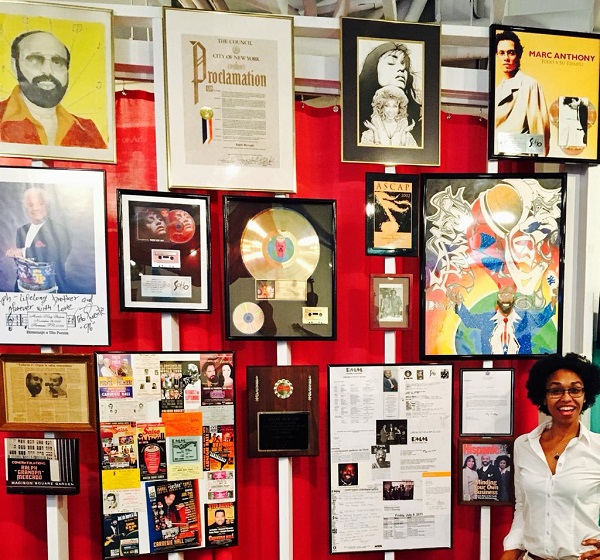
Ralph Mercado: The Visionary Who Turned the Rhythm of the Barrio into a Global Phenomenon

The Giant of New York Salsa

Ralph Mercado was a music promoter and an iconic figure of Salsa and Latin music in New York. More than just an entrepreneur, Mercado was the strategist who took Salsa out of local New York clubs and placed it on the world’s most prestigious stages.

Through his vision, the sound of Latin identity found a commercial language without losing its “street” essence, making him the most influential tropical music mogul of the 20th century.

Ralph Mercado, the visionary who transformed the rhythm of the neighborhood into a global phenomenon

Creator of “The Perfect Combination”; Early Days in the Bronx and Brooklyn

Of Puerto Rican and Dominican descent, Mercado was born on September 29, 1941, in Brooklyn. As a mere teenager, he was already organizing parties and dances as the president of a neighborhood social club.

He later founded the 3 & 1 Club on Atlantic Avenue, which hosted local bands and musicians such as Eddie Palmieri and Richie Ray & Bobby Cruz, among many others. Shortly thereafter, he created his first production and promotion company, Showstoppers, through which he promoted R&B acts of the caliber of James Brown, Aretha Franklin, Gladys Knight & the Pips, The Stylistics, and The Chi-Lites.

Expanding the Empire

He eventually ventured into Manhattan, where he helped expand the legendary Fania All-Stars, promoted dances at the Cheetah Nightclub, and presented Latin Jazz artists at venues like the Red Garter and the Village Gate. In 1972, Mercado established RMM Management, representing Palmieri and Ray Barretto.

Ralph Mercado was a music promoter and an emblematic figure of salsa and Latin music in New York

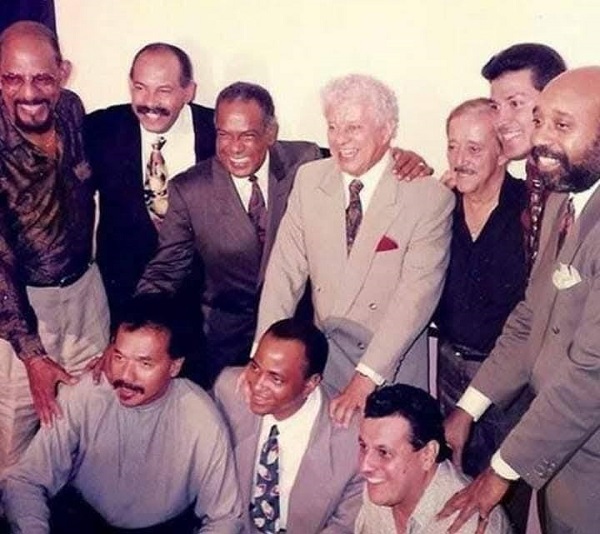
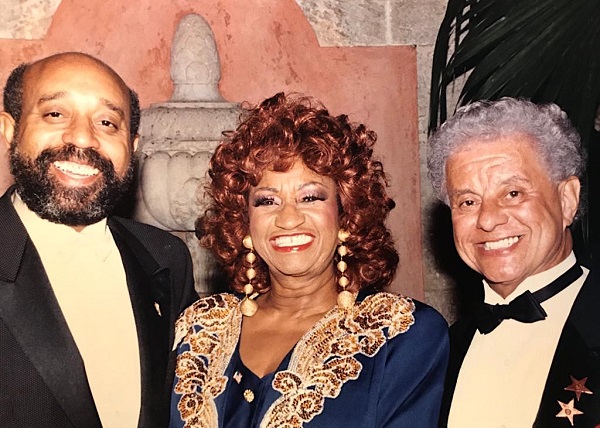
He managed the genre’s biggest stars, including Tito Puente and Celia Cruz, with whom he worked for 25 years. “I learned so much from her,” Mercado told the AP in July 2003, following the passing of the “Queen of Salsa.” “I witnessed the impact she had in every country we visited.”

Mercado credited Cruz and Puente with the internationalization of Salsa. “They were two artists with so much talent and such good hearts… something unrepeatable,” he expressed at the time.

The RMM Phenomenon

By 1987, his popular “Latin Tinge” nights at the Palladium attracted hundreds of salseros every Thursday. In 1992, he founded the independent label RMM, which branched into RMM Records, RMM Filmworks, and two publishing houses. With a catalog of over 140 artists, the label sold millions of albums annually.

Mercado brought Salsa to South America and to places as remote as Africa, Asia, and Israel. He personally discovered and launched the careers of talents like Marc Anthony, La India, Domingo Quiñones, Tony Vega, José Alberto “El Canario,” and Tito Nieves. For his work, he received numerous accolades, including the Billboard Lifetime Achievement Award in 1999.

Mercado creador de La Combinación Perfecta; RMM

The RMM Label: A Hit Factory

Mercado’s impact was solidified by his ability to adapt tradition to changing times. While others clung to the past, Ralph understood the potential of Salsa Romántica and the power of international collaborations. RMM didn’t just produce records; it produced culture, documenting the history of the rhythm through videos and massive concerts that redefined the concept of Latin entertainment.

His influence extended far beyond recording. As a promoter, he opened markets in Europe, Asia, and throughout Latin America, ensuring the tumbao was heard in every corner of the planet. He was a relentless negotiator and a protector of the legends’ legacies, ensuring that Latin Jazz and Salsa Dura maintained their academic prestige while dominating the pop charts.

An Indelible Legacy

“Without him, I don’t believe the Fania All-Stars would have achieved the success they did,” stated Eddie Palmieri. Meanwhile, promoter Leo Tizol remembered him as someone “accessible and noble” who never refused to share his knowledge with those starting out.

Mercado, Celia y Puene

Ralph Mercado passed away on March 10, 2009, surrounded by his wife Cynthia, his five children, his siblings, and his grandchildren. His departure left a void that as the greats of music often say can never be filled.

Source: RMM / Photo: Ralph Mercado Archives

Also Read: Hector Maisonave Manager of the Greatest Salseros in New York

Dominican bandleader and musical director Orlando Santana talks about La Makina and his career in general

Orlando Santana, the bandleader and musical director of La Makina, has made room in his busy schedule filled with studio recordings to talk about the most interesting topics of his career and, of course, the group that has given him more fame.

The Dominican artist has built an interesting career that led to his aforementioned group, which was founded in Borinquén (the name given to Puerto Rico before the arrival of the Spanish). Naturally, the genre by which La Makina is best known is merengue, implying that the Dominican Republic is still present in mind and heart.

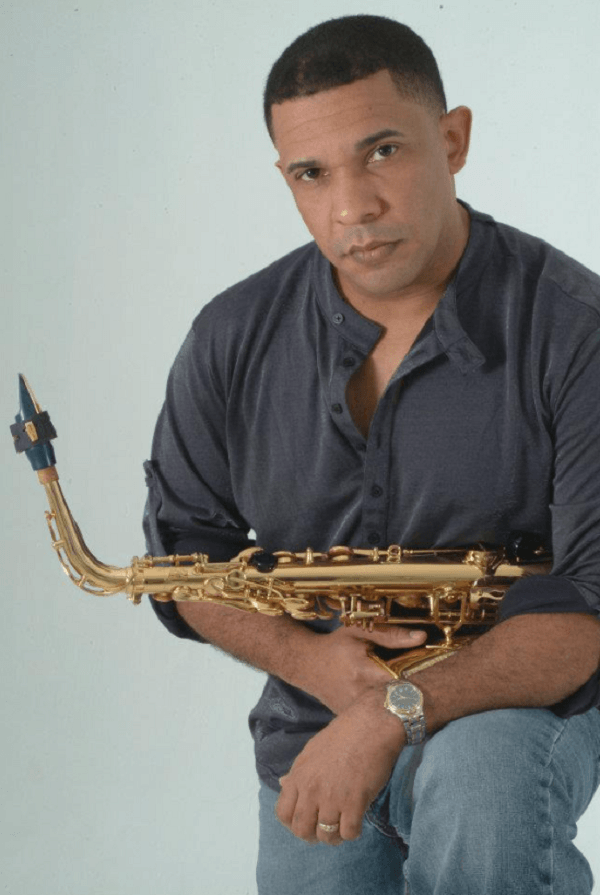
Orlando with his saxophone
Orlando Santana with his saxophone

Orlando’s Beginnings in Music

Orlando started his story by saying that music had a significant presence in his life because his father, Santiago Santana, was a music teacher who taught in their own home. He taught all types of instruments such as the saxophone, trumpet, flute, piano, bandoneon, clarinet, guitar, and many more. Additionally, he also knew about harmony, solfège (sung), and solfège (spoken).

This led to his son learning to play instruments at a very young age and being interested in this way of life. 

Orlando’s Music Education

When Orlando moved to Miami, he took private piano lessons for a while, just as his father did with his students, but it was from Richie Ray and Bobby Cruz whom he really learned. He attended their church and took advantage of his visits to receive some piano lessons from Richie, while his brother David Santana, who was already a veteran musician, bought him his first saxophone and taught him many other tricks of the trade.

Early experiences as a paid professional

As for the beginning of his professional practice, Orlando, as a 15-year-old boy, started with the orchestra Dioni Fernández y El Equipo, from which the great Sergio Vargas emerged. In fact, they entered together a television channel (Color Visión, Channel 9) on the same day in Santo Domingo. This group is still active today, and Sergio Vargas’s own brother, Caqui Vargas, is currently part of it.

Bobby and Orlando
Bobby Valentín and Orlando Santana

Some time later, he had the opportunity to perform along with Wilfrido Vargas, which he describes as an incredible experience, since Vargas’s orchestra had a very challenging repertoire and he had to prepare himself very well in order to play along with the merengue exponents and his musicians. Orlando came on as a substitute replacing his brother on some tours, where he showed he had the capacity to keep up with their pace and improvise just like Wilfrido did so with ease on stage.

Among the most important things this time taught him, the artist mentioned discipline, the importance of always practicing his instruments, and a permanent focus on what he wanted to achieve. Another thing he mentioned was the significant improvement in his ability to improvise and release new material constantly.

He also learned a lot from Toño Rosario, Peter Cruz, Cuco Valoy, Ramón Orlando, and Elías Santana (Orlando’s first cousin and trumpeter for Conjunto Quisqueya). With all of them, he also came to play both merengue and other genres. 

How La Makina Band was founded

Orlando met Fernando Colón in Toño Rosario’s orchestra, while he was a saxophonist, and Fernando entered as a bassist. At the same time, Orlando was writing some arrangements for Los Sabrosos del Merengue, and as it so happens that Fernando was also working with them, so they were always in constant contact.

When Orlando decided to found an orchestra, it was he who called him and accepted his proposal. That was when both artists founded La Makina in 1996, though the process started a year earlier when they set up a company for that purpose.

Orlando and Rafael
Orlano Santana and Rafael Ithier from El Gran Combo de Puerto Rico

His Role as producer and director

Regarding his role as producer and director of La Makina, he points out the importance of preparing and studying to exercise these areas of music. In his case, he had already spent many years working on important record productions, including those he did together with his cousin Cesar Cuesta, with whom he formed a small orchestra that covered songs by very famous bands. He created his own musical arrangements for these new versions to differentiate them from the original songs and wrote scores for other musicians.

In addition, he served as music producer for Grupomanía and wrote songs for artists such as Toño Rosario, Elvis Crespo, Oscarito, Manny Manuel, and many others.

Current Members of La Makina

Of the original members of La Makina, the only one left is Orlando himself, but he has been joined by other equally-talented musicians, including Carlitos Rivera and his own son, Anderson Santana.

Orlando and Johnny
Orlando Santana and Johnny Ventura in San Juan, Puerto Rico

Current projects

This conversation had been delayed a few times due to how busy Orlando was in the studio working on new music, so obviously we had to ask what it was all about.

He told us that he and the rest of the group were working on a remastering of La Makina’s greatest hits, but with other arrangements and a fresh color. They also plan to include songs recorded by other artists but written by Orlando for them. He did not want to say what these would be so they would be a surprise for the audience.

Read also: Don Perignon Y La Puertorriqueña releases his new album ‘‘Classique et Savoureux’’

  • « Go to Previous Page
  • Page 1
  • Page 2
  • Page 3
  • Page 4
  • Interim pages omitted …
  • Page 19
  • Go to Next Page »

International Salsa Magazine (ISM) is a monthly publication about Salsa activities around the world, that has been publishing since 2007. It is a world network of volunteers coordinated by ISM Magazine. We are working to strengthen all the events by working together.