• Skip to primary navigation
  • Skip to main content

International Salsa Magazine

  • Home
  • Previous editions
    • 2026
      • ISM / January 2026
      • ISM / February 2026
    • 2025
      • ISM / December 2025
      • ISM / November 2025
      • ISM / October 2025
      • ISM / September 2025
      • ISM / August 2025
      • ISM / July 2025
      • ISM / June 2025
      • ISM / May2025
      • ISM / April 2025
      • ISM / March 2025
      • ISM / February 2025
      • ISM / January 2025
    • 2024
      • ISM / December 2024
      • ISM / November 2024
      • ISM / October 2024
      • ISM / September 2024
      • ISM / August 2024
      • ISM / July 2024
      • ISM / June 2024
      • ISM / May 2024
      • ISM / April 2024
      • ISM / March 2024
      • ISM / February 2024
      • ISM / January 2024
    • 2023
      • ISM / December 2023
      • ISM / November 2023
      • ISM / October 2023
      • ISM – September 2023
      • ISM – August 2023
      • ISM July 2023
      • ISM Edition June 2023
      • ISM – May 2023
      • ISM April 2023
      • ISM March 2023
      • ISM February 2023
      • ISM January 2023
    • 2022
      • ISM December 2022
      • ISM November 2022
      • ISM October 2022
      • ISM September 2022
      • ISM August 2022
      • ISM July 2022
      • ISM June 2022
      • ISM May 2022
      • ISM February 2022
      • ISM January 2022
    • 2021
      • ISM December 2021
      • ISM November 2021
      • ISM October – 2021
      • ISM September 2021
      • ISM August 2021
      • ISM July 2021
      • ISM May 2021
      • ISM April 2021
      • ISM June 2021
      • ISM March 2021
      • ISM February 2021
      • ISM January 2021
    • 2020
      • ISM December 2020
      • ISM November 2020
      • ISM October 2020
      • ISM September 2020
      • ISM August 2020
      • ISM July 2020
      • ISM June 2020
      • ISM May 2020
      • ISM April 2020
      • ISM March 2020
      • ISM February 2020
      • ISM January 2020
    • 2019
      • ISM December 2019
      • ISM November 2019
      • ISM October 2019
      • ISM Septembre 2019
      • ISM August 2019
      • ISM July 2019
      • ISM June 2019
      • ISM May 2019
      • ISM April 2019
      • ISM March 2019
      • ISM February 2019
      • ISM January 2019
    • 2018
      • ISM December 2018
      • ISM November 2018
      • ISM October 2018
      • ISM September 2018
      • ISM August 2018
      • ISM July 2018
      • ISM June 2018
      • ISM May 2018
      • ISM April 2018
      • ISM March 2018
      • ISM February 2018
      • ISM January 2018
    • 2017
      • ISM December 2017
      • ISM November 2017
      • ISM October 2017
      • ISM September 2017
      • ISM August 2017
      • ISM July 2017
      • ISM June 2017
      • ISM May 2017
      • ISM April 2017
      • ISM March 2017
      • ISM February 2017
  • Download Salsa App
    • Android
    • Apple
  • Spanish

Search Results for: Charanga

Hansel and Raúl, The Charanga Legend duo

Hansel and Raúl, The Charanga Legend duo

Hansel and Raúl is a charismatic and transgressive Charanga duo of the line of romantic lyrics of the time. They positioned the Cuban “Charanga” rhythm on the top of global popularity, a danceable genre that they imposed on each stage they were invited to and which incorporated their unique Caribbean essence.

This particular duo with three decades of trajectory was born in Miami in 1984 after breaking from the orchestra “Charanga 76”, where they were co-founder members and their main vocalists. With this New York orchestra, born in Brooklyn, they won international recognition and their first Grammy for the album “Encore” in 1978.
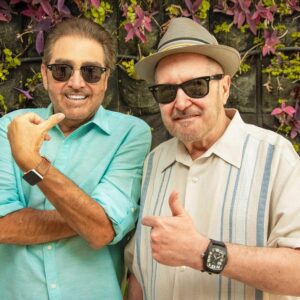
Photo of Hansel and Raúl
Hansel and Raúl – The Charanga Legend duo

“Many of the artists who recorded with them during their stay in “Charanga 76” include the renowned pianist – for many years – by Héctor Lavoe, Gilbert Colón and the first Jewish-American flutist woman, Andrea Brachfeld.”

Very pleasant memories come to Hansel‘s mind during this interview, especially his first composition “Si no te encuentras tú” for Charanga 76, his voice took a turn and he showed nostalgia as well as pride in remembering it: “I don’t sit to write a song with a guitar or piano. The Inspiration comes to me alone, there is nothing personal”.

Each anecdote that he tells us is remembered as facts that have led to their musical maturity. Each fun fact has been defined as part of their career, such was the case of the great master, Israel “Cachao” López, who with all his musical wisdom and mastery of his instrument, the Double Bass, taught the rhythmic base to the orchestra. “The conguero and the timbalero even the güirero he taught them to play well. He was a teacher of all, including us who learned a lot from him. R.I.P, he was a glory of music”, Hansel said to us.

But that wasn’t all he told us about the legend of Cuban music, “Cachao”, who was the Double Bassist of the “Charanga 76” orchestra for 12 years, also he told us that every time they wen a tour the “Inventor of Mambo” had them buy a plane seat to his Double Bass, he sat it next to him and even put the belt on the string instrument, as is dictated by airline regulations.

The funniest thing would come later when the Double Bass received the same attention as each member of the orchestra. Amazing! The Double Bass also had its portion of food during each trip as each musician of the orchestra, and when the flight attendant brought it was when the offer was presented by each musician for that fabulous portion, although the end was always the same, the trumpeter won!
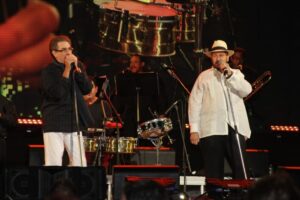

Hansel y Raúl - Photo
Hansel y Raúl concert
Photo in concert - Hansel and Raúl
Hansel and Raúl – Photo behind the scenes

Each experience with Charanga 76 made them evolve in music and although with this orchestra they made themselves renowned professionally, as a duo they flew the fence. They have received multiple musical awards, their sympathetic lyrics, and in some cases, satirical or burlesque have won the applause, admiration, and respect of colleagues in the music industry and the general public on three continents: America, Europe, and Asia.

“The Jersey Boys” was their first youth musical group with only 5 members and although the musical instruments they played were the basics of Rock, their rhythmic concept was Cuban music.

“María Teresa y Danilo” was one of the compositions that brought many satisfactions to this duo. Nowadays it’s still preferred by the fanatical public of the genre. Many debates and speculations were made about this song, but here we tell you the true story. “María Teresa y Danilo” dates its beginnings to the 80s when soap operas like “Dallas” were in fashion.

Hansel came up with the idea of diving and writing on this topic. He magically composed the lyric during the plane trip with San Francisco – Miami trajectory and the rest we already know, multiple copies sold, and hundreds of awards granted to them for the feeling that caused this popular theme.
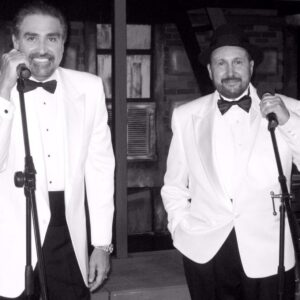
Photo of Hansel and Raúl

Photo of Hansel and Raúl in their beginnings

After such overwhelming success as a duo, Hansel and Raúl decides to separate in 1988. What was the reason?

Everyone wanted to make another kind of music. Each one followed a different path, for his part, Hansel recorded five solo albums including metals, more trumpets and trombones, and in three of these albums, he included neither the violin nor the flute, assuming almost completely the end of the Charanga rhythm in his music. However, a short time later he realized that this Caribbean rhythm was what identified with his audience and two years later he joined Raúl again to continue their successful career.

Hansel and Raúl has a total of 330 songs recorded and on December 31 this Charanga duo will have a performance in Los Angeles, CA and you may be lucky and they play your favorite single and if don’t you can ask for it. Classics such as “Soy”, “Se me nota”, “El ayer”, “María Teresa y Danilo”, “Kukucha kucha”, “Balancea mi corazón” (Yordano), “Ojos Verdes” (Alfredo Gutiérrez), among many others, will be present at this 1: 45min show.
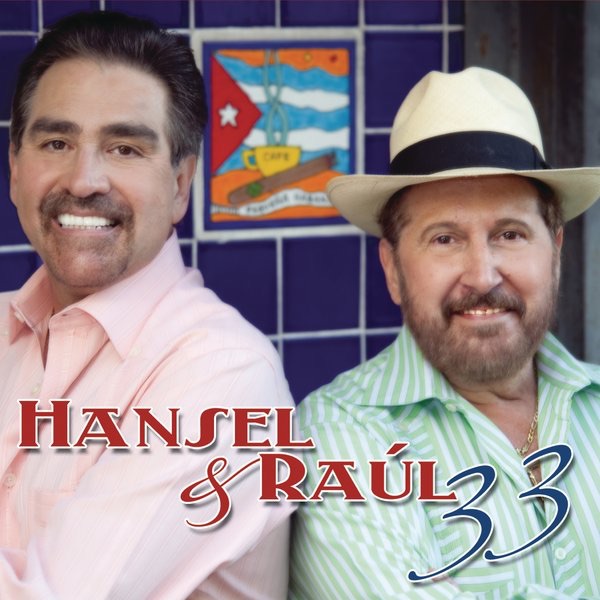
Hansel and Raúl
Cover of Hansel and Raúl, Discography 33

Purchase your Tickets quickly before it´s sold out

https://www.facebook.com/events/crown-plaza-hotel-and-casino/new-years-eve-2020-the-great-gatsby-presents-hansel-raul/271515257093512/

We hope to see them there singing each of their hits and if you later travel to New York, don’t be surprised to see Hansel in that city because he and his family will be celebrating their daughter’s sweet sixteen, on the second day of January 2020.

Is Hansel a stage name?

Although some may consider that Hansel is a characteristic name of the children’s story “Hansel and Gretel”, this name comes from Germany and it’s of Jewish origin. Hansel Enrique is the name of this singer and songwriter “Charanguero” and he is named so to differentiate himself from Hansel Horacio (father). In Cuba, the tradition is maintained that every male child must bear the name of his grandfather; this is the reason for all his cousins are called Hansel.


More Details visiting:

http://www.HANSELYRAUL.com

Social Channel:

https://www.facebook.com/pg/HANSELYRAUL/

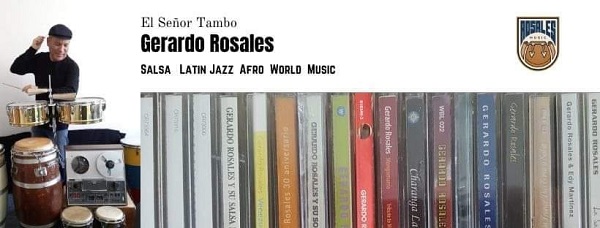
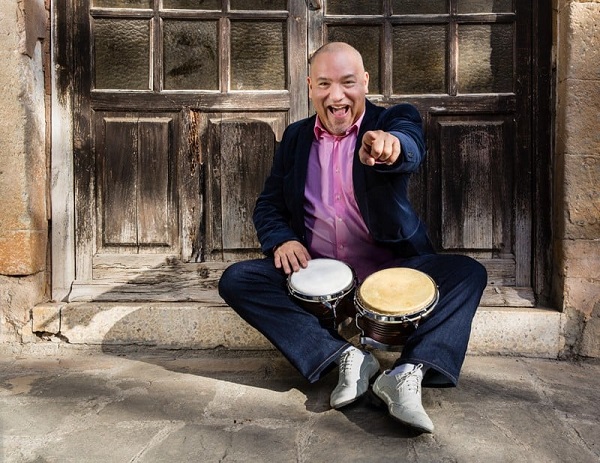
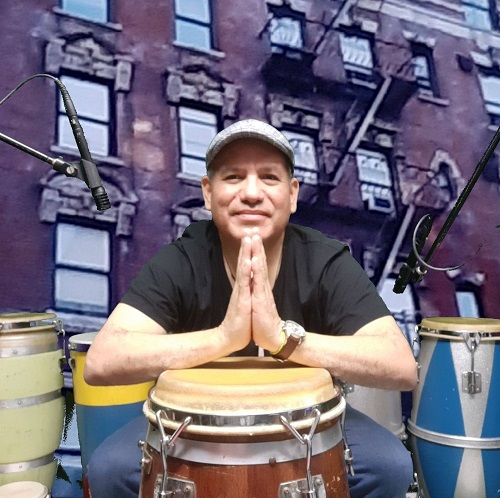
Gerardo Rosales is the creator and producer of Combo Mundial, Venezuela Masters and Charanga La Crisis

Gerardo Rosales was born in Caracas Venezuela on July 6, 1964. At the beginning of his musical career he was a percussionist for important figures of his country.

He has been living in Europe since 1992, and has taken up residence in Holland, a country that has served as a base for him to project his music around the world.

He has recorded 20 albums under his own name and more than 70 productions with other artists.

Gerardo Rosales’ specialty is creating musical projects in the styles of salsa and Latin jazz.

Gerardo Rosales is the creator and producer of El Combo Mundial, Venezuela Masters, Charanga La Crisis, Our Latin Groove, La Gran Charanga, Son del Sofá, Rítmico y Pianístico, Cachao Sounds and many more.

In his beginnings in his country Venezuela he performed with:  Orquesta Café, Orlando Poleo, José Rosario, Canelita, Soledad Bravo, Adrenalina Caribe, Ilan Chester, Cecilia Todd, Víctor Cuica, Alberto Naranjo, El Trabuco Venezolano, Joe Ruiz, Tabaco, Los Satélites, Nancy Ramos, Wilmer Lozano,Watussi, Trina Medina etc.

In Europe he has performed with: The Rosenberg Trio, Saskia Laroo, Hans Dulfer, Benjamin Herman, Peter Beets, Tango Extremo, Drums United, Nueva Manteca, New Cool Collective, Fra Fra Sound, Denisse Jannah, Laura Fygi, Izaline Calister, Metropole Orchestra, Holanda Big Band, Cubop City Big Band, Lilian Vieira, Rolf Sanchez, ChaChaChalina y Maite Hontelé etc.

Gerardo Rosales has accompanied on tours, recordings and performances in Europe artists such as Dee Dee Bridgewater, Benny Bailey, Paquito D Rivera, Bebo Valdés, Toots Thielemans, Jimmy Bosch, Juan Pablo Torres, Herman Olivera, Oscar D León, José Alberto El Canario “, Andy Montañéz, Meñique, Edy Martínez, Carlos” Patato “Valdés, Conexión Latina, Orlando Valle” Maraca “, Alfredo Rodríguez, Armando Peraza, Luisito Quintero, Ramón Valle, Larry Harlow, Adalberto Santiago, Frankie Vázquez, Oscar Hernandez, Africando, Chamaco Rivera, Luisito Carrion, Jorge Herrera, Edgar Dolor, Dorance Lorza, Luisito Rosario, Watussi, David Cada, and Tito Allen, etc.

The Records of Gerardo Rosales:

2016 Gerardo Rosales “Salsa Vintage” (Download – CD – LP)

2014 Gerardo Rosales “Son Del Sofa” (Single) ITunes

2013 Gerardo Rosales “Síguelo” (CD).

2011 Gerardo Rosales “Chano Pozo’s Music” (CD).

2011 Gerardo Rosales “30 Aniversario” (CD).

2010 Cachao Sounds “La Descarga Continúa” (CD).

2010 Gerardo Rosales “Buscando Chamba” (CD).

2009 Venezuelan Masters Orchestra “Toros y Salsa” (CD).

2008 Gerardo Rosales “Salsa Mundial” (CD).

2007 Our Latin Groove “Bringin’ it All On Back” (CD).

2005 Gerardo Rosales “Mongomanía” (CD).

2005 Charanga La Crisis “Salsa Antigua” (CD).

2004 Gerardo Rosales “Tribute to Fania” (CD).

2001 Gerardo Rosales “La Salsa es mi Vida” (CD).

2001 Gerardo Rosales & Edy Martínez “Rítmico y Pianístico” (CD).

1999 Gerardo Rosales “El Venezolano” (CD).

1998 Gerardo Rosales “Señor Tambó” (CD).

1996 Gerardo Rosales “Venezuela Sonora” (CD).

1992 Gerardo Rosales “Salsa Pa’lante de Venezuela” (CD).

1991 Gerardo Rosales “Salsa Pa’Lante de Venezuela” (33 RPM Vinyl).

Algunos discos grabados por Gerardo Rosales con otros Artista:

Orquesta Cafe “Criollisima” 1987 (Fama) Venezuela ( Salsa )

Joe Ruiz – Javier Plaza – Jose Torres – Gerardo Rosales

Bebo Valdes “Rides Again” 1994 ( Messidor) Germany ( Latin Jazz )

Paquito D Rivera – Patato Valdes – Amadito Valdes – Gerardo Rosales

Conexion Latina – “La Conexion” 1996 (Enja) Germany ( Salsa )

Rudi Fuesers – Leslie Lopez- Anthony Martinez – Nicky Marrero – Gerardo Rosales

David Rohschild “Looking Up” 1997 (Via) The Netherlands ( Salsa )

Adalberto Santiago – Banjamin Herman – Gerardo Rosales

Leslie Lopez “Bomba Moderna” 1999 (Buitenkunst) The Netherlands (Latin Jazz)

Ramon Valle – Joe Rivera – Nils Fischer – Gerardo Rosales

The Rosemberg Trio “Suenos Gitanos” 2001 (Polydor) The Netherlands ( Latin )

Toots Thielemans – Leonardo Amuedo – Gerardo Rosales

Ronal Snijders “Bijlmerjazz 2004 (Independent) The Netherlands (Jazz)

Randal Corsen – Jesse van Ruller – Gerardo Rosales

Cubop City Big Band “Arsenio 2004 (Tam Tam) 2004 The Netherlands (Cuban)

Lucas van Merwijjk – Edy Martinez – Nelson Gonzalez – Gerardo Rosales

Drums United “World of Rhythm” 2006 (Tam Tam) 2004 The Netherlands (World Music)

Lucas van Merwijk – Nils Fischer – Aly N ‘ Diaye Rose – Gerardo Rosales

Samba Salad – Metropol Orkest “Live Vredenburg” 2006 The Netherlands (World Music)

Herman Link – Dick Bakker – Maurice Luttikhuis – Rita Iny – Gerardo Rosales

Aquilez Baez “ La Patilla” 2007 (Cacao) Venezuela (Latin Jazz)

Anat Cochen – Huascar Barradas – Diego Alvarez – Gerardo Rosales

Maria Catharina “Obsecion” 2010 (Independent) The Netherlands (Jazz)

Adinda Meertins – Thomas Bottcher – Marc Bischoff – Gerardo Rosales

Masalsa “Resurreccion” 2012 (Independent) The Netherlands (Salsa)

Soeshiel Sharma – Ray de La Paz – Marcos Bermudez – Gerardo Rosales

Izaline Calister “Kandela” 2012 (Coast to Coast) The Netherlands (Latin)

Yumarya – Vernon Chatlein – Larc Alban Lotz – Gerardo Rosales

Africando “Viva Africando” 2013 (Sterms Music) France (Salsa)

Boncana Maiga – Oscar Hernandez – Doug Beavers – Luisito Quintero – Gerardo Rosales

Mezcolanza “Headbanger” 2015 (O.A.P Records) The Netherlands (Jazz)

Peter Wenk – Chistof May – David Barker – Mick Paauwe – Gerardo Rosales

Tango Extremo “ Havana” 2015 (JWA) The Netherlands (Latin)

Ben van den Dungen – Rob van Kreeveld – Tanya Schaap – Gerardo Rosales

Orquesta La Potente “ Potente “ 2018 (Independent) Colombia (Salsa)

Coco Ramirez – Guarnizo – Gerardo Rosales

Barry Hay & JB Meijers (Universal Music Group) 2019 The Netherlands ( Pop)

Barry Hay – JB Meijers – Gerardo Rosales

Estrella Acosta “Noche Cubana” 2020 (Independent) ( Cuban) Grammy Nominated

Carlitos Irarragorri – Pedro Luis Pardo – Gerardo Rosales

ChaChaChalina “Mira Antes de Saltar” 2021 (Independent) (Salsa)

Chalina Smit – Dani Brands – Gerardo Rosales

Actuaciones realizadas por Gerardo Rosales en diversos lugares del mundo:

Concerts & Events of Gerardo Rosales:

Poliedro de Caracas: Caracas – Venezuela

Centro Cultural BOD: Caracas – Venezuela

Feria de Cali: Cali -Colombia

North Sea Jazz: Rotterdam – The Netherlands

Toros y Salsa: Dax – France

SOBS: New York – USA

Club Babalu: New York – USA

Expo Sevilla 1992 : Sevilla – España

Festival Latinoamericando: Milano-Italia

Accessible Art Festival: Turquia – Mersin

Bimhuis: Amsterdam – The Netherlands

Melkweg: Amsterdam – The Netherlands

Concertgebouw: Amsterdam – The Netherlands

Paradiso: Amsterdam – The Netherlands

Oosterpoort: Groningen – The Netherlands

Glastonbury Festival: Glastonbury – England

Tabarka Jazz Festival: Tunesia

Music Haal: Berlin – Germany

Las Leyendas Vivas de la Salsa: Medellin – Colombia

Exit Festival: Serbia

La Topa Tolondra: Cali – Colombia

Punto Bare: Cali – Colombia

Cafe Libro: Bogota – Colombia

Bird: Rotterdam – The Netherlands

De Doelen: Rotterdam – The Netherlands

Paard van Troje: Den Haag – The Netherlands

Amazonico:Emiratos Arabes-Dubai

Home

Manhattan Latin Music by Jon Horn

In the year after the big war ended, a terrific hurricane tore across the island, and in the town of Santa Barbara de la Loma the Catholic church was destroyed, but the modest compound of Senora– devotee of the seven powers and gifted daughter of Yemaya, spirit of the seas – went untouched by the storm. The people of Santa Barbara were not surprised. They called Senora “La Poderosa,” the powerful one, for she could heal the sick better than doctors, break and cast spells – but only for good – and see beyond the now and here. Believers in the natural religion came weekly to the walled yard behind her neat, two-room bohio to praise the mighty spirits who might possess them as they danced and chanted to the inspired drumming of the tumbadores.

On the next full moon, Senora called her gente to a special midnight ceremony. Dressed as always in immaculate white robe and turban, smoking a long cigar and swigging from a flask of rum, she told the assembly that Hate was hard at work everywhere, and worse things than hurricanes or even the war just fought were soon to come. Now they must all concentrate their prayerful energies and send goodness in the guise of music to an evil world. The native rhythms of their island, produced from the potent mix of slaves, colons, and indios, could bring people of all kinds and colors together. As dark hands beat out on taut skins a deep, steady roll like distant thunder, Senora called up into the moonlit sky: “May the babies born of Mambo be bringers of justice and peace where there is none! Go, my Mambo! Go now and work your musical magic at the center of the biggest city in the strongest nation on the earth!”

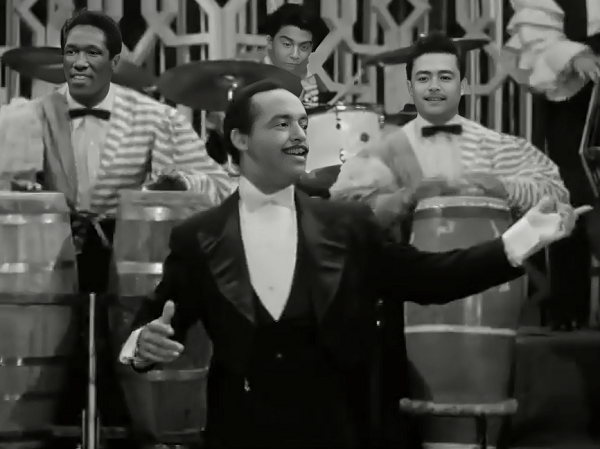
Damaso Pérez performing Latin music
The King of Mambo Damaso Pérez Pardo performing live

And the Mambo went and did all this, and much, much more…

Story goes that a certain midtown Manhattan dancehall was dying a slow death at the tag end of the Big Band era, just after the so-called “Good War.” The guy who was managing this musical venue (maybe for the Mob) was bemoaning the lack of customers to a canny Broadway promoter who poked a sallow finger at the bemoaner and said “Hey! If you don’t mind spics and
niggers in the joint, I can fill it six nights a week!” “At this point I don’t mind if it’s spics, niggers, or little green men!” “Done deal!”

Twas the season of Jackie Robinson “integrating” baseball’s major leagues. Smart money knew that American apartheid couldn’t last forever, at least not overtly. And where else would the winds of change blow first and hardest but in the Empire City, aka Nueva York? So the Palladium opened with a hot mambo policy, the best Afro-Cuban bands were hired, and lines formed around the block. Harlem and Spanish Harlem were now welcome in a big midtown venue. And not only “spics” and “niggers” showed up, but “wops” and yids” as well, the bridge-and-tunnel “mamboniks.” The word spread, and whitebread cafe-society mavericks came to check it out and stayed to shake a tail feather. For the next couple of decades it was the “place to be, thing to do” in NYC, if you wanted to move to and be sent by the best hot Latin sounds.

Around 1954/’55, the mambo crested in the Pop consciousness, with “Papa Loves Mambo,” “Mambo Italiano,” and “What The Heck is the Mambo?” on the mainstream Hit Parade. Perez Prado even took “Cherry Pink and Apple Blossom White” to Number One on the charts. But the real mambo, cha-cha- cha, guaracha, charanga, and son stayed underground, a niche thing, ethnic dance
music for Manhattan Latins and the cool cognoscenti. Raided and harassed by authorities who didn’t cotton to Mambo’s miscegenating powers, the Palladium lost its liquor license in the early ’60s and closed for good in ’66, just as the “new breed” wave of Latin Soul & Bugalu was making noise on the mean streets. And the beat goes on…

The Mamboniks were cool-looking Italian & Jewish guys & gals, out of high school but not in college, who hung out around Dubrow’s on the Hiway. If one of them had a dented sportscar or an old but flashy convertible, they’d congregate around the car at the curb, the dash radio loudly broadcasting Dick“Ricardo” Sugar’s mambo show of an evening, trying out hip-swinging cha-cha steps, casually dap guys and foxy girls in tight skirts; and tho the guys were not really hoods, they’d hang with future felons down the poolroom sometimes, and push a little weed to the hipper highschoolers, who whispered that these guys rolled queers in the Village for bucks and kicks…. but the big kick for the Mamboniks was the Latin Kick, hitting the Palladium at least once a week to hobnob with Ricans and Cubans and dap Harlem dudes and debs, all dressed up in continental suits and cocktail gowns, moving & grooving to the hot, blaring rhythms of Tito Puente and Tito Rodriguez, Eddie Palmieri, Joe Cuba, Orquesta Aragon, the La Playa Sextet, and many more smokin’ outfits who played en clave. Rest of the time they hung outside the cafeteria almost
under the BMT El, hanging on the Hiway but vibing they were too hip for the Hiway, still living at home in Brooklyn only ’cause it was free, but definitely on the way out and on up – or so it appeared to those a few years younger, hung up in mundane Midwood and Madison scenes. I didn’t really know the Mamboniks, but I knew who they were (the distance between 15 and 18 being even greater than between the Hiway and Broadway): one of them would fall with the felons and do time… another would marry his little sexpot cha-cha partner and go into the restaurant business downtown… yet another would become a musician/dope dealer, accent on the dope dealer. I only glimpsed these Mamboniks passing by Dubrow’s, but they called me (while ignoring me) to a more magical city than the one I knew as yet.

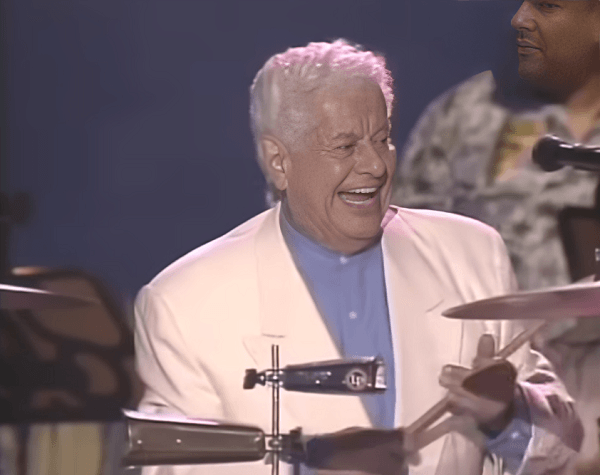
Tito Puente performing Latin music
Tito Puente performing ”Oye Como Va”

Jose de la Subway Speaks of Working the Mountains

There’s one or two agents book all the bands, and you best not get on their bad side! This guy I know from El Barrio, he plays timbales – he’s no Puente but he’s still young – he pulled me into this gig, subbing for the guy who was too fucked up on duji to make the job. We all meet at the bus terminal near the Dixie Hotel on the Deuce. Takes a couple hours to get up there and it’s real country, you can smell the trees! There’s these big Jewish hotels, they all book one Latin band to alternate with whatever square Pop band they got, and of course the biggest hotels get the big name bands and the smaller hotels get the cheaper bands who sometime hire kids just breaking in who look eighteen and can play some but don’t expect no union scale. You got this shack full of bunk beds to crash in, you eat leftover childrens’ meals – if there’s a hip Rican or Soul working in the kitchen you may get extras – and they don’t want to see your face around the place till showtime. Maybe they let you take a rowboat out on the lake, but you best stay away from the pool till you’re sent out there to play a cocktail set. They always call it an ‘Olympic-sized pool’ even if it’s four foot
deep! All these white chicks are out there in bikinis trying to get as dark as the people they don’t want in the pool with them. You play some cha-chas poolside late in the afternoon and you get to check out these chicks, some of them are hot, some give you the eye, but you wear shades and keep a stone face, and of course you’re high ’cause everybody be smokin’ weed in the band, that’s all you do, and you keep the job by keeping your distance from the hotel’s clientele. Some hustling bands be doubling, tearing around those mountain roads from one little hotel to another, making two jobs a night, wearing those ridiculous rhumba shirts with the big ruffled sleeves. After the last set everybody goes to eat and hang at Corey’s Chinese Restaurant in Liberty. When it’s Mambo Night at the Raleigh you sit in. And if you fuck up, or when the contract’s over, you’re back on the Hound to the Deuce, and you don’t have much loot to show for it. You’re paying your dues, you’re getting experience.

Musically, the late ’50s/early ’60s were dynamic times in NYC. Monk with Trane at the Five Spot, Ornette Coleman introducing “the new thing” aka “Free Jazz,” the hard-bop funk of “Moanin’” by Art Blakey’s Jazz Messengers, “Kind of Blue” by Miles, Trane’s classic quartet coming into its own with “Giant Steps” and “My Favorite Things.” And the Folk boomlet peaking in the Village
with Baez and Dylan, Paxton, Van Ronk, Ochs, and many more. R&B was in a slump and the Top 40 sucked bigtime… but over in Brooklyn and the Bronx, a new generation of Nuyoricans was coming of age, and tho they still dug the Afro-Cuban sounds, the mambo and the cha-cha-cha belonged to the (recent) past, so they were experimenting: Bronx Pachanga was revved-up charanga… trombones lent a harder edge to a conjunto like Eddie Palmieri’s La Perfecta… and “Latin Soul” was Doowop (a big influence en la calle) mated with the bolero feel and the bongo/congas beat. Joe Cuba knew he was onto something when his “To Be With You” (a bolero in English) became a street fave circa ’62/’63. Ace Cuban conguero Mongo Santamaria had a crossover hit of sorts with a jazzy horn chart on “Watermelon Man.” And Ray Barretto charted nationally with a speeded-up charanga featuring a streetwise Spanish rap superimposed: “El Watusi.” The times they were a-changin’ in the barrio. Joe Bataan was “Singin’ Some Soul.” Willie Colon was getting “Jazzy.” Eddie Palmieri’s hot, eight-minute jam on “Azucar Pa’ Ti” was a breakthru, played in its entirety on the radio by Symphony Sid and even by Dick Ricardo Sugar. Pete Rodriguez came on strong with the irresistible “I Like It Like That”… and the Latin Bugalu was a mid-’60s sub-genre (e.g. Johnny Colon’s “Boogaloo Blues”). But by the early ’70s, the newly branded “Salsa” hyped by Fania Records (the Latin Motown) prevailed, and Latin Soul’s swan songs were sung by Ralfi Pagan (“Make It With You”), and Paul Ortiz (“Tender Love & Sweet Caresses,” produced by “Subway Joe” Bataan). Musical artifacts remain, but as for the vibe, “You hadda be there, folks!”

That Latin Thing

The Afro-Cuban sounds, and the extensions and variations on those templates by their New York inheritors, were the hottest and coolest Latin sounds. Musicians have big ears, and there was always cross-fertilization between the seemingly segregated genres of Latin and Jazz (eventually producing – wait for it – Latin Jazz). So why aren’t more jazz buffs, and other musically savvy civilians, into the rich “Spanish Tinge” heritage? (They’ve always been into it in their own way down in Norlins.) Different languages as well as divergent styles, plus the commercial priorities of bottom-line execs who package musical product, perpetuate musically exclusive marketing niches, even unto today. But many stateside Jazz greats especially groovitated towards the Latin
thing. Dizzy Gillespie with Chano Pozo creating Cubop… Charlie Parker’s jams with Machito… Cal Tjader with Eddie Palmieri… Herbie Hancock’s “Watermelon Man” definitively rendered by Mongo Santamaria: these are some of the finest fruits of the Jazz + Latin marriages, and there have been many more in recent years. Yet the hardcore tipico and original classics are still all but unknown to generations of US Americans, and that’s a lowdown dirty shame.

Tio Jonny to the rescue! If you dig rhythms that won’t let you sit or stand still, or love to love a great love song, I’ve got two Latin strains to introduce into your musical bloodstream: superlative slow jams of yearning, ecstasy, betrayal, and loss in the best bittersweet boleros… and hip-shaking, toe-tapping dance classics of musica caliente. Maestro Cachao wasn’t just boasting when he titled one of his signature jam sessions in miniature “Como mi ritmo no hay dos.” There’s nothing quite like this Latin thing. But don’t take my word for it. Go check it out for yourselves, sis & bro!

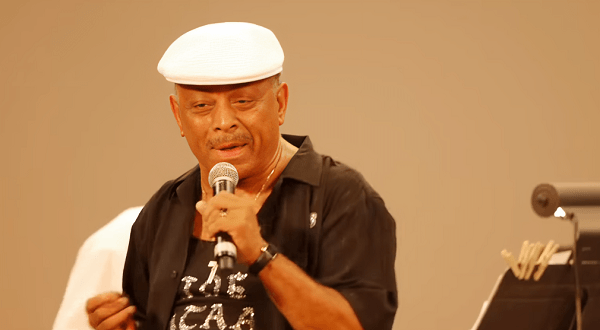
Joe Bataan singing Latin music
Joe Bataan singing ‘ ‘Gypsy Woman” some years ago

Musica Caliente 101

Salsa dura? Salsa Brava? Salsa romantica? Such consumer designations are so much caca de toro. To quote el rey Tito Puente, “Salsa is something you put on your food.” As a brand, “Salsa” moved a lot of units for Fania and other smaller labels in their heyday. But it was still music with Afro-Cuban roots, refined (or, purists might aver, debased) by Puerto Ricans and Nuyoricans, as insiders and aficionados well know. It was a music all about rhythm (we’ll consider the beautiful boleros shortly), pegged to the clave beat, where the Afro drums could sing melodiously while the Euro piano, violins, and horns remade themselves into rhythm instruments ( the repetitive, tension-building keyboard montunos, twin charanga fiddles, or twin trombones).

As the music morphed from Havana to New York, it got faster and louder (como no?), but the rhythms certainly didn’t cool down, tho they could sound hot and cool at the same time when vibes were featured, as in the ’50s party classic “Chop Suey Mambo” by Alfredito (Al Levy) or on many jams by T.P., Joe Cuba, or Latin-converso Cal Tjader. Anyone who felt this music in their bodies and souls (which are most definitely not separated in this art) would know this was musica caliente – and, as Ray Barretto titled one of his best workouts: “Que Viva la Musica.”

Say you’ve heard some of the great old school sounds and want to hear more? Tio Jonito is going to start you off with a sampler of the best (or at least some of my favorites) from the great days of this musica caliente, sometime in the late ’40s on into the ’70s. You go online and find these smokers on my list and you’ll not only get a little musical education but you’ll swing your butt off and have a ball. Vaya!

Orq. Casino de la Playa w/Miguelito Valdes: “Bruca Manigua”
Arsenio Rodriguez Orq.: “Dame un Cachito pa’ Huele”
Machito & his Afro-Cubans: “Tanga”
Chano Pozo: “El Pin-Pin” (nice later version by El Gran Combo)
Los Astros: “Que Lindo Yambu”
Arcano y sus Maravillas: “Rico Melao”
Sonora Matancera w/Celia Cruz: “Caramelos”
Sexteto La Playa: “Jamaiquino”
Randy Carlos: “Smoke” (“Humo”)
Fajardo y sus Estrellas: “Ay! Que Frio” (+ jazzy ’70s cover by Ocho)
Cortijo y su Combo w/Ismael Rivera: “El Negro Bembon”
Orquesta Aragon: “Caimitillo y Maranon”
Cachao y su Ritmo: “Malanga Amarillo”
Chappotin y sus Estrellas w/Miguelito Cuni: “Alto Songo”
Mongo Santamaria: “Afro Blue” “Para Ti”
Mongo Santamaria w/La Lupe: “Canta Bajo”
Tito Puente: “Oye Como Va” “Ran Kan Kan”
Eddie Palmieri & Cal Tjader: “Picadillo”
Tito Rodriguez & Orq.: “Mama Guela” “Ave Maria Morena”
Joe Cuba Sextet w/Cheo Feliciano: “El Raton”

Mon Rivera: “Lluvia con Nieve”
Orquesta Broadway: “Como Camino Maria”
Ray Barretto: “Cocinando”
Pete “Conde” Rodriguez w/Johnny Pacheco Orq.: “Azuquita Mami”
Willie Colon Orq. w/Hector LaVoe: “Abuelita”
Eddie Palmieri w/Charlie Palmieri: “Vamanos pa’l Monte”

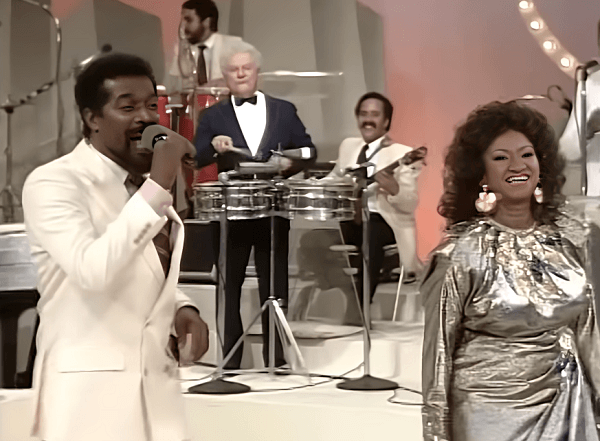
Pete, Celiz, and Tito performing Latin music
Pete El Conde Rodríguez, Tito Puente, and Celiz Cruz performing ”Qué Bueno Baila Usted”

Boleros 101

Boleros are Latin love songs, and the best are equal to any operatic aria, Broadway show-stopper, or Pop ballad, especially those written and sung from the 1940s through the ’60s, the era of the bolero. Behind even the slowest bolero there’s a rhythmic roll (maintained by bongos, congas, or light timbales taps), analogous to the roll of “r” in spoken Spanish. Can’t abide musica romantica? The bolero, friend, is not for you. Latin America – notably Cuba, Mexico, and Puerto Rico – turned out great boleristas in the epica de oro, and the tunes they sang were world-class, true standards which sound just as strong today as ayer. But leave me not wax rapturous; rather let me share some of my fave boleros with you, and point you YouTubeward to hear them all.

Beny More: “Como Fue” “Hoy Como Ayer”
Olga Guillot: “Mienteme” “Tu Me Acostumbraste”
Trio Los Panchos: “Nosotros” “Sabor a Mi” “Los Dos”
Vicentico Valdes: “Tus Ojos” “La Montana”
Tito Rodriguez: “Inolvidable” “En La Soledad”
Los Tres Ases: “Delirio” “Estoy Perdido” “El Reloj”
Cheo Feliciano (w/Joe Cuba sextet): “Como Rien” “Incomparable”
La Lupe w/Tito Puente Orq.: “Que te Pedi”

Santos Colon w/Tito Puente Orq.: “Ay Carino”
Armando Manzanero: “Mia”
Los Tres Diamantes: “La Gloria eres Tu”
Javier Solis: “Si Te Olvides (La Mentira)”
Los Tres Caballeros: “La Barca” “Regalame Esta Noche”
Los Tres Reyes: “No Me Queda Mas”
Pedro Infante: “Contigo en la Distancia” “No Me Platiques Mas”
Jacaranda Castillon: “La Gata Bajo La Lluvia”

Read also: Dominican bandleader and singer Papo Ross is triumphing in Montreal

Cache Live Music puts Miami to dance to traditional Latin music

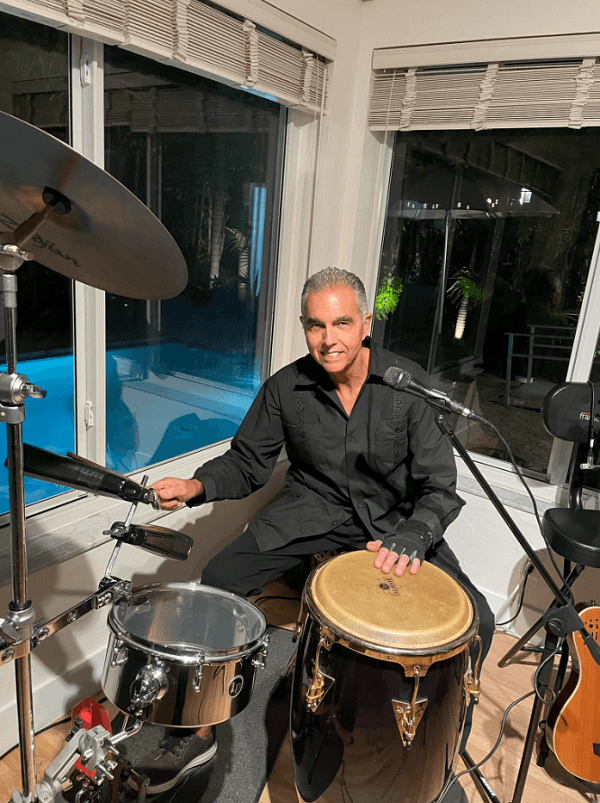
Roland Cache graced this edition with his presence to tell us about his beginnings, the subsequent creation of his band Cache Live Music, and his current career. The American of Cuban descent honors his roots with the music he and his collaborators play to delight their fans at any event they are hired, indicating the pride he feels in representing his parents’ country and how passionate he is about his craft.

Roland shared many interesting details about his musical life, and we are more than happy to share them with our readers in the following lines.

Roland Cache playing
Roland Cache playing drums live at an event

Roland’s musical beginnings as a teenager

As a child, Roland lived in Elizabeth, New Jersey, where some high school friends convinced him to play drums with them. Their favorite genre was the rock of the day, which was the 1960s. A few years later, specifically in 1973, another friend took him to a salsa concert at Madison Square Garden, and he liked what he heard so much that he became more involved in Latin music and left American music aside. 

Seeing great artists such as Tito Puente, Ray Barretto, and other artists of Puerto Rican descent, he learned to play timbales, tumbadora, and bongos, which allows him to play a combination of conga, timbales, and clave at the same time. 

Orchestras prior to Cache Live Music

Before creating his own band, Roland was part of other projects that were training him for what was to come in his career later. One of them was a band from New Jersey, whose members formed La Charanga Casino, which became very popular in that city.

Some time later, Roland could not play for a while, so he has been throwing himself into selling cars and other area businesses. Then, in 1998, he returned to music and created an American band that played rock and jazz with a touch of Latin music.

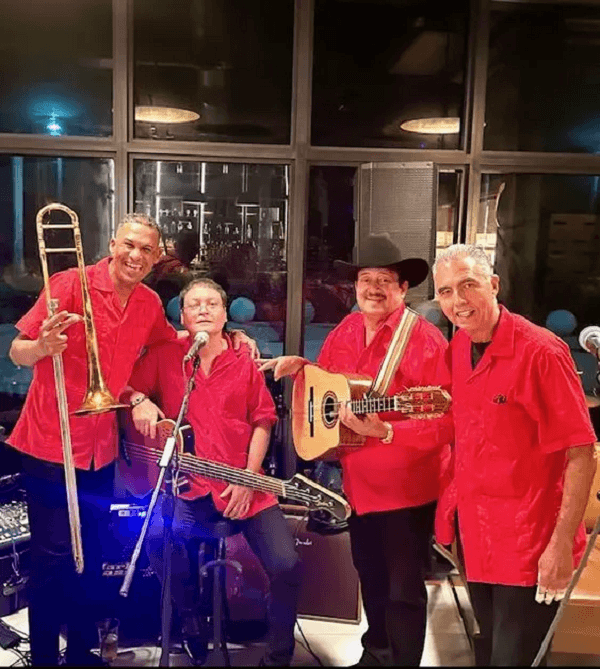
Roland Cache and the rest of the band
Roland Cache and the rest of Cache Live Music

Creation of Cache Live Music 

Eventually, he left the American band and founded a Latin band called Cache Live Music with a group of musicians, some of whom remain alongside Roland to this day. He met most of them through another musician friend who introduced them so he was knowing other artists who joined his project.

Cache Live Music was officially started in 1999, and according to its founder, the hardest thing about keeping a band like this together for so long was the search of opportunities in clubs and other kinds of places. However, Roland says that his experience as a salesman and negotiator has helped him a lot in winning contracts and the best conditions for him and his bandmates.

Current status of Cache Live Music

Today, the core of the band consists are three of its members: the guitarist, the bassist, and Roland, who is a multi-instrumentalist. More recently, Cache included a flutist, a trombonist, and sometimes a singer. This is how, depending on the requirements for a particular event, the group’s leader decides which members and instruments to include for every occasion in order to offer something different.

Cache at an Amazon event
Cache Live Music at an Amazon corporate event

Regarding the repertoire, they only perform covers, but they ensure that each and every song has their personal touch so that they resemble as little as possible to the original versions.

Anyone who wants to hire Cache Live Music can do so through its profile on The Bash by making a deposit and sending a contract to agree on the conditions of the event. However, it is important to note that they are already booked for December and January with corporate parties and weddings, for which we wish them every possible success because they already have the talent.

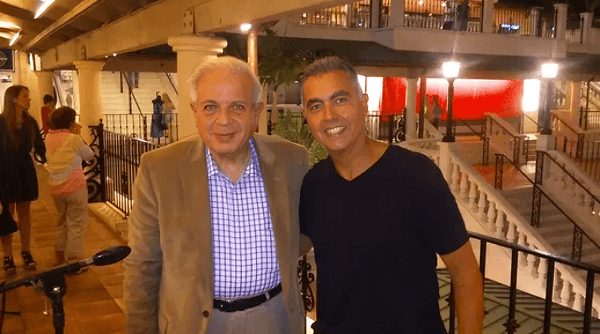
Tomas Pedro Regalado and Roland
Former Mayor of Miami Tomas Pedro Regalado and Roland Cache

Read also: The Williamsburg Salsa Orchestra: electrifying fusion and salsa flavored with indie rock

Venezuela violinist and former musician in El Sistema Ali Bello has many interesting things to say

Venezuelan musician Alí Bello has become one of the best Latin music violinists in New York, so we could not miss the opportunity to talk to him and learn as much as we could about his fascinating story. The young man has given his best to become a true icon of Latin Jazz in his current city of residence, so do not miss this great conversation.

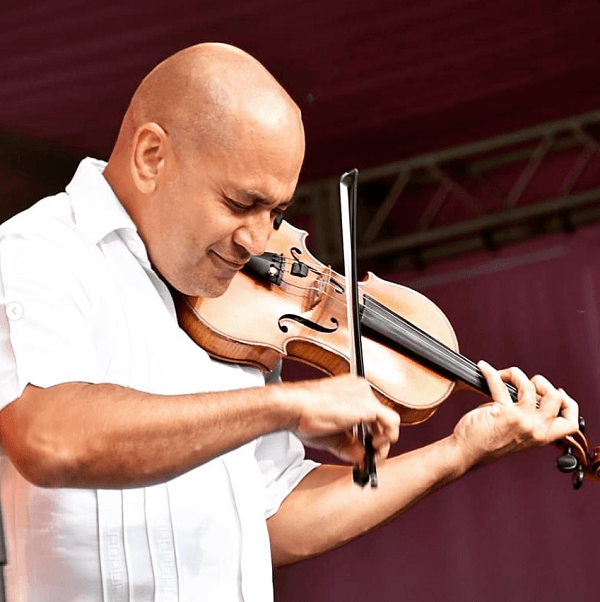
Ali playing the violin
Venezuelan musician Ali Bello playing the violin live

Alí’s beginnings in the world of music thanks to El Sistema

From a young age, Alí became interested in music, which led him to join the National System of Youth and Children’s Orchestras and Choirs of Venezuela, where he studied classical music as an extracurricular activity. This in order for Alí and his classmates to be busy in any activity until their parents came to pick them up after work.

This was when an orchestra or school of music was formed clase to his father’s work, so Bello was enrolled in these classes from 2 to 5 p.m. after school. So it went for him since he was in kindergarten, and he learned to play the xylophone and the recorder. When the boy was seven years old, the school orchestra located in La Rinconada, Caracas, was officially created, but due to how small Ali was, the only instrument the school could assign him according to his size was the violin, which he keeps playing diligently to this day.

After many years of being part of the National Youth Orchestra, he got ahead with his musical career and decided to go to the United States to continue his university studies and train as a professional musician.

Other instruments besides the violin

In addition to the violin, Alí also plays a lot of percussion, since he considers it very important. He thinks every folk and Latin musician must handle percussion as efficient as possible and each of its rhythms in order to internalize the style they want to play on any instrument.

“Percussion and singing have always fascinated me, so I try to devote myself to both even a little bit, but it is undeniable that the violin has always been my main instrument. I’ve tried to focus all styles and everything I work on towards the violin to turn it into the main element,” the musician added on this subject.

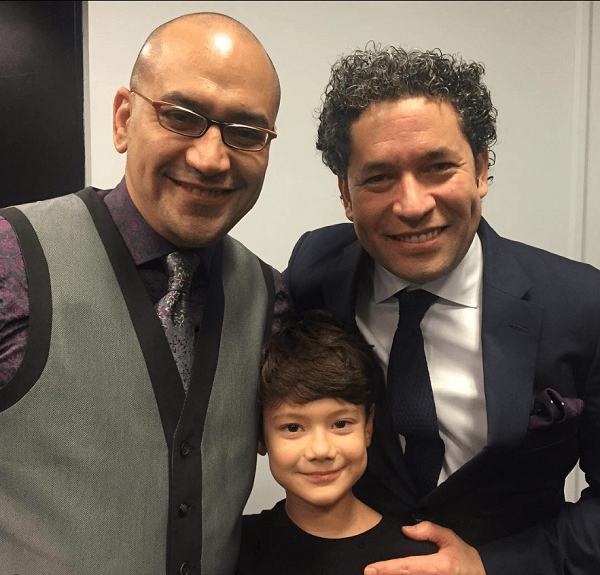
Ali and Gustavo
Ali Bello, his son and maestro Gustavo Dudamel

How the opportunity to study in the United States came about

Initially, Alí was supported by his violin teacher Margaret Pardee, who taught at the Juilliard School and went to Venezuela to give master classes. It was Pardee who encouraged Alí to continue his education in New York, which he finally achieved thanks to the Gran Mariscal de Ayacucho scholarship fund and the Simón Bolívar Musical Foundation.

This is how the Venezuelan artist obtained his bachelor’s degree, master’s degree, and PHD.

At college, he met Johnny Almendra, thanks to whom he discovered genres other than classical music, in which he was not only the performer of melodies but could also create his own music. He then discovered styles of Venezuelan and Latin music that inspired him to explore more varied rhythms different from what he had known before.

He played regularly with Johnny Almendra and his modern charanga group Los Jovenes del Barrio for a time and subsequently played for La Típica Novel and other orchestras. As Alí gained experience in the world of charanga and Latin music in general, he started having opportunities to learn and explore other genres such as Brazilian music, Afro-Cuban music, Latin jazz, and many more. 

Collaborations with major artists in the industry

All this hard-won ground gave Alí the opportunity and the honor to collaborate with great artists in the industry such as Tito Puente, Eddie Palmieri, Johnny Pacheco, Rudy Calzado, Pedro Cortés, José Fajardo senior, Pupi Legarreta, and many more. All these figures helped him not only to have a better understanding of the Afro-Cuban style and tradition, but also of the influence of New York on music.

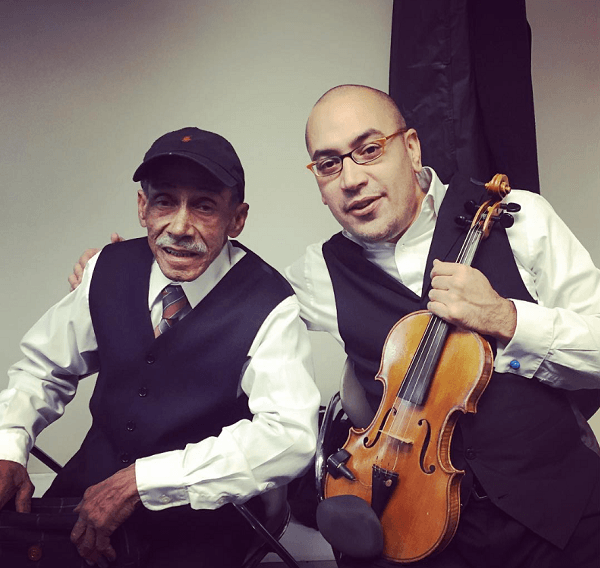
Ali and Pupy
Maestro Pupy Legarreta and Ali Bello

Thanks to this knowledge base, he had the courage to release a record album, La Charanga Syndicate, in which, as the name suggests, he uses charanga and all the influences coming from the musicians he has known and continues to know. For this reason, he feels he now has something to say and bring to the style. 

Another important thing for his career was his participation in Jay-Z’s concert to celebrate the anniversary of the release of his first album. The rapper wanted to mark the occasion by playing with a symphony orchestra, so hired many musicians of all kinds to make a great show at Radio City Music Hall in New York. Fortunately for Ali, he was well-known in the music scene at the time, so he was contacted to participate in the event.

In that sense, the violinist is very happy to be in New York, as the world’s greatest artists always take this city into account for their concerts, which gives musicians like him the opportunity to have access to these great figures in the industry.

Ali as an arranger

In addition to being a percussionist and violinist, Ali has also ventured into musical arrangements quite successfully thanks to all the academic training he had received up until then. However, as he became a more experienced professional, he began to notice that his own ideas and thoughts came to life in his work. So, having the theory in his head, he could take those ideas he had had and develop them within the rhythmic and stylistic elements which are willing to use on each occasion.

In addition to that, the artist also works on production and mixing a bit to achieve the necessary sound. He even has his own studio where he plays for his own productions and other artists’ records as a freelancer.

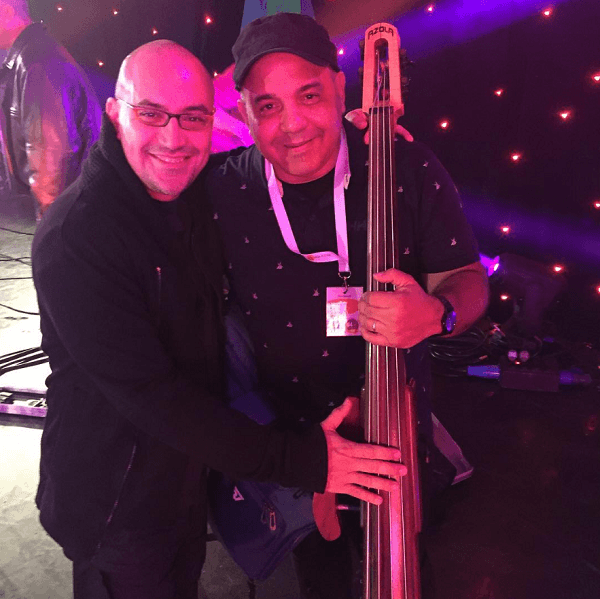
Ali and Juan
Ali Bello and Juan Carlos Formell from Los Van Van in Poland

Read also: Omar Ledezma Jr. shares with us the new from his project with Azesu

  • Page 1
  • Page 2
  • Page 3
  • Interim pages omitted …
  • Page 14
  • Go to Next Page »

International Salsa Magazine (ISM) is a monthly publication about Salsa activities around the world, that has been publishing since 2007. It is a world network of volunteers coordinated by ISM Magazine. We are working to strengthen all the events by working together.