• Skip to primary navigation
  • Skip to main content

International Salsa Magazine

  • HOME
  • Previous editions
    • 2026
      • ISM / April 2026
      • ISM / March 2026
      • ISM / February 2026
      • ISM / January 2026
    • 2025
      • ISM / December 2025
      • ISM / November 2025
      • ISM / October 2025
      • ISM / September 2025
      • ISM / August 2025
      • ISM / July 2025
      • ISM / June 2025
      • ISM / May2025
      • ISM / April 2025
      • ISM / March 2025
      • ISM / February 2025
      • ISM / January 2025
    • 2024
      • ISM / December 2024
      • ISM / November 2024
      • ISM / October 2024
      • ISM / September 2024
      • ISM / August 2024
      • ISM / July 2024
      • ISM / June 2024
      • ISM / May 2024
      • ISM / April 2024
      • ISM / March 2024
      • ISM / February 2024
      • ISM / January 2024
    • 2023
      • ISM / December 2023
      • ISM / November 2023
      • ISM / October 2023
      • ISM – September 2023
      • ISM – August 2023
      • ISM July 2023
      • ISM Edition June 2023
      • ISM – May 2023
      • ISM April 2023
      • ISM March 2023
      • ISM February 2023
      • ISM January 2023
    • 2022
      • ISM December 2022
      • ISM November 2022
      • ISM October 2022
      • ISM September 2022
      • ISM August 2022
      • ISM July 2022
      • ISM June 2022
      • ISM May 2022
      • ISM February 2022
      • ISM January 2022
    • 2021
      • ISM December 2021
      • ISM November 2021
      • ISM October – 2021
      • ISM September 2021
      • ISM August 2021
      • ISM July 2021
      • ISM May 2021
      • ISM April 2021
      • ISM June 2021
      • ISM March 2021
      • ISM February 2021
      • ISM January 2021
    • 2020
      • ISM December 2020
      • ISM November 2020
      • ISM October 2020
      • ISM September 2020
      • ISM August 2020
      • ISM July 2020
      • ISM June 2020
      • ISM May 2020
      • ISM April 2020
      • ISM March 2020
      • ISM February 2020
      • ISM January 2020
    • 2019
      • ISM December 2019
      • ISM November 2019
      • ISM October 2019
      • ISM Septembre 2019
      • ISM August 2019
      • ISM July 2019
      • ISM June 2019
  • Spanish
  • Download Salsa App
    • Android
    • Apple

Search Results for: Chucho Valdés

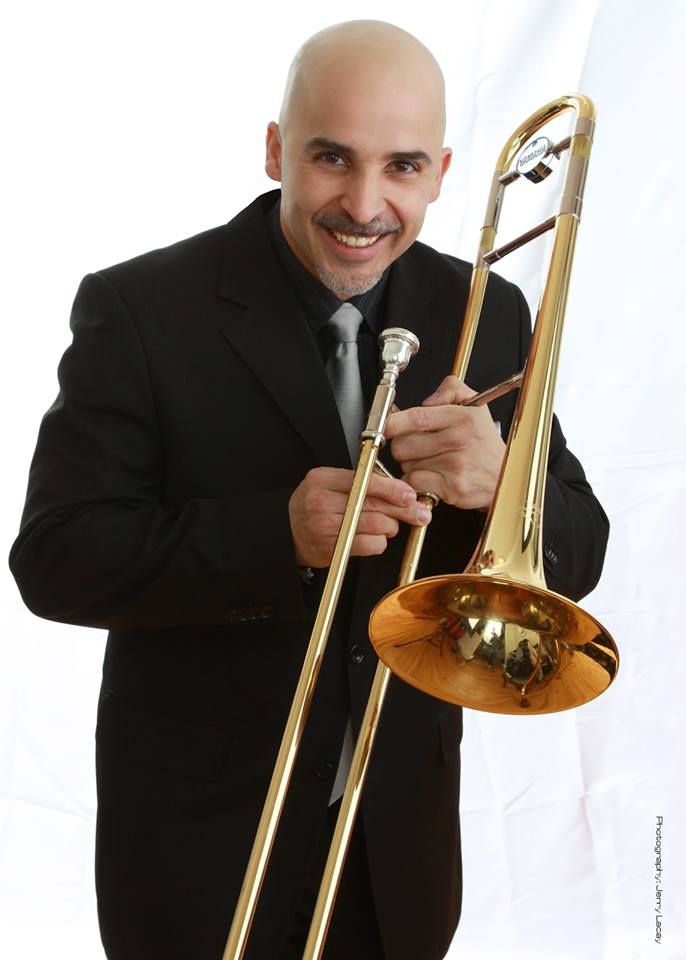
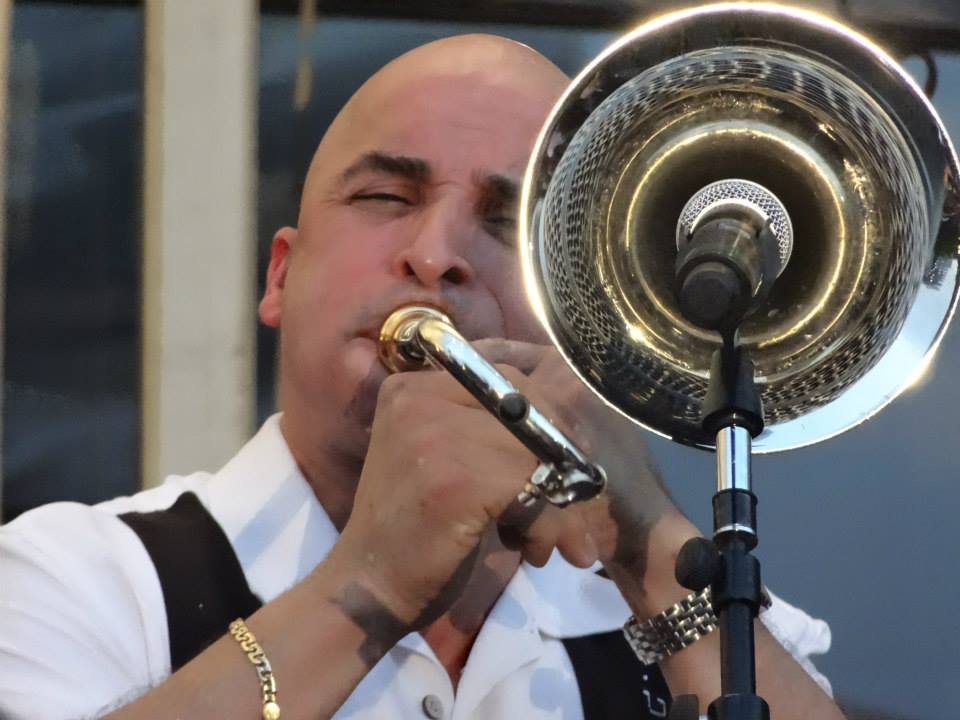
Papo Vázquez the Pirate & Troubadour of Our Latin Music

Papo Vázquez Enjoying the Bell.

Angel Vásquez, “Papo Vásquez”, was born on February 24, 1958 in Philadelphia, Pennsylvania, USA.

Papo Vazquez
Papo Vazquez

By age 15, Papo Vázquez was playing with local American bands in Philadelphia and accompanying guest artists such as Eddie Palmieri.

At just 17, he moved to New York and was hired to play for trumpet player Chocolate Armenteros’ band, and soon began playing and recording with other top artists on the salsa scene such as The Fania All-Stars, Ray Barreto, Willie Colón, Grupo Folklórico Neoyorquino, Eddie Palmieri, Larry Harlow, and Hector Lavoe.

Vazquez also became a key player in the burgeoning New York Latin jazz scene of the late 1970s, performing with Jerry Gonzalez, Hilton Ruiz, and more.

He began his studies with Slide Hampton, eventually recording and performing Slide Hampton’s World Trombones.

Papo Vázquez Photo by Ernie Gregory (Gone but not forgotten) Thank you Ernie!PV

A Grammy-nominated trombonist, composer, arranger, NEA Master Artist, he has a 50-plus year career in jazz, Latin and Afro-Caribbean music.

Musical Director of the National Puerto Rican Day Parade Orchestra, (NYC/WABC) 2016, 2017, 2018, 2019.

Commissioned by Wynton Marsalis to compose music for Jazz and Art series, conducted and performed with the J@LC orchestra, CD release August 2019 New York Pops Education, Board of Education certified, 2018 and 2019

New music commissioned for Afro Latin Jazz Alliance for the “Nueva Música” concert series.

Nominated for Grammy for Papo Vázquez’s Mighty Pirates, Marooned/Isolated, 2008

Born in 1958 in Philadelphia, Pennsylvania, although his early formative years were in Puerto Rico.

He went on to play and/or record with jazz luminaries Tito Puente, Dizzy Gillespie’s United Nations Orchestra, Chico O’Farrill, Ray Charles, Slide Hampton’s World of Trombones, Jerry Gonzalez Fort Apache, among many others. By the age of 22, Vazquez had traveled the world.

Papo Vázquez Mighty Pirates Troubadours 2023

Vázquez was deeply moved by jazz from a young age. His appreciation and knowledge of indigenous Caribbean music provides him with a unique ability to fuse Afro-Caribbean rhythms with the freer melodic and harmonic elements of progressive jazz.

Beginnings

After spending his early years in Puerto Rico, he grew up in the heart of North Philadelphia’s Puerto Rican community. He purchased his first trombone from a friend for $5 and joined the elementary school band.

At the age of 14, an uncle recommended him to a local salsa band, where he met trumpeter Jimmy Purvis. Purvis inspired Papo’s lifelong passion for jazz by giving him two records: J.J. Johnson’s Blue Trombone and John Coltrane Live at the Village Vanguard. By 15, Vazquez was performing with local Latin bands in Philadelphia and accompanying visiting New York artists such as Eddie Palmieri.

He was a founding member of Jerry Gonzalez’s Fort Apache and Conjunto Libre, as well as the popular Puerto Rican Latin fusion band Batacumbele.

With Batacumbele he performed, composed, arranged and recorded several albums from 1981 to 1985. Upon his return to New York, he joined Tito Puente’s Latin Jazz Ensemble, traveling with them as principal trombonist and touring Europe with Dizzy Gillespie’s United Nations Orchestra.

Leader, Composer and Innovator.

Vázquez has always been deeply moved by jazz, and specifically cites the music of John Coltrane and J.J. Johnson as having influenced him most. In addition, his appreciation and knowledge of the indigenous music of Caribbean peoples gives him a unique ability to fuse Afro-Caribbean rhythms, specifically those of Puerto Rico, with the freer melodic and harmonic elements of progressive jazz.

During his time in Puerto Rico with Batacumbele in the 1980s, he began experimenting with “bomba jazz,” a fusion of jazz and traditional Puerto Rican bomba. In 1993 he recorded his first album as a leader, Breakout. He continued to collaborate with a variety of Latin Jazz artists, contributing Overtime Mambo to Hilton Ruiz’s Manhattan Mambo and Contra Viento y Mareo to Descarga Boricua, Vol. 1.

In 1999, he released a live recording with a number of leading New York Latin and jazz artists, including bassist Andy Gonzalez, saxophonist Michael Brecker, among others. The release of Pirates & Troubadours At the Point, Vol. 1 was followed the next year by At The Point, Vol. 2.

Mighty Pirates Troubadours Songs del Yucayekepor Papo Vazquez
Mighty Pirates Troubadours Songs del Yucayeke
por Papo Vazquez

This project evolved into the Pirates Troubadours, an “Afro-Puerto Rican jazz band” that includes musicians such as Roberto Cepeda of Puerto Rico’s Familia Cepeda folklore group, Milton Cardona and Anthony Carrillo on percussion, and John Benitez, among others. The group performed at festivals around the world and released Carnival in San Juan in 2003, followed by From The Badlands in 2007.

Interest grew as a composer.

He was the first artist to receive a composer commission (Iron Jungle) for the Afro-Latin Jazz Orchestra, then a resident orchestra at Jazz at Lincoln Center.

His first classical composition, Palomita Suite Afro-Caribeña which to date was the first time Bomba y Plena had been performed with a Chamber Orchestra, was commissioned by the Bronx Arts Ensemble and premiered at the Hostos Center for Arts and Culture in the Bronx in 2004.

In 2007, on a commission from the Bronx River Arts Center, he wrote Sube el Río (River Rising) for its Mighty Pirate Orchestra for its 20th anniversary concert “Bronx River Sounds.”

Discography

Papo Vázquez Mighty Pirates Troubadours – Capítulo 10: Breaking Cover, Picaro Records 2020
Cuarteto Papo Vázquez – GV J.S. Bach, Picaro Records 2017
Papo Vazquez Mighty Pirates Troubadours – Spirit Warrior, Picaro Records, 2015
Papo Vazquez Mighty Pirates Troubadours – Oasis, Picaro Records, 2012
Papo Vázquez The Mighty Pirates – Marooned / Aislado, Picaro Records, Nominación al Grammy 2008
Papo Vázquez Pirates Troubadours – From The Badlands, Picaro Records, 2007
El Niño Josele – 2011
Tego Calderon – The Underdog / El Subestimado, Jiggiri Records, 2006
Shakira & Wyclef Jean – Tema de la final mundial de fútbol (“Bamboo”), 2006
Ray Barretto – Normas rican-ditioned, Zoho Music, 2006
Los Pleneros de la 21 Para Todos Ustedes, Smithsonian Folkways, 2005 – Nominación al Grammy,
Bebo Valdes – Bebo de Cuba, Calle 54, 2005 – Grammy, Mejor Álbum de Jazz Latino
Papo Vázquez Pirates Trovadores – Carnaval en San Juan, Cu-Bop Records, 2003
Wayne Shorter – Alegria, Verve, 2003 – Grammy, Mejor álbum instrumental de jazz
Jack Bruce – Sombras en el aire, Sanctuary Records Group, 2001
Freddie Cole Rio de Janeiro Blues, Telarc
Chico O’Farrill “Carambola” Fantasía
Banda sonora de la película Mo ’Better Blues de Spike Lee
Papo Vázquez “Piratas y trovadores – En el punto Vol. I” Cubop
Papo Vázquez “Piratas y trovadores – At the Point Vol. 2” Cubop
Milton Cardona “Cambucha” Clave americana
Arturo O’Farrill “Bloodlines” Fantasy
Chucho Valdés “All Stars Bronx Lebanon New Directions Project” RMM
“Jammin ‘in the Bronx” Papo Vázquez Band, Chucho Valdes & The Machito Orq RMM
Chart Busters con el Dr. Lonnie Smith, Lenny White, Hiram Bullock, Craig Handy, Papo Vázquez, et.al. Chico O’Farrill Fantasía “Pure Emotion”
Steve Berrios Fantasía del “primer mundo”
Descarga Boricua “Descarga Boricua” Tierrazo
Dave Valentin “Tropic Heat” GRP
Juan Luis Guerra 440 “Fogarate” 440
Papo Vázquez “Breakout” Timeless
Ruben Blades “Amor y Control” “Antecedente” & “Caminando” Sony
Hilton Ruiz “Manhattan Mambo” Telarc y “Hands on Percussion”
RMM Tito Puente “Fuera de este mundo” Tito Puente “100” RMM
Jerry Gonzalez Fort Apache Band “Obatala” “Live in Berlin” Enja & “Ya Yo Me Cure” American Clave
New York Latin Jazz All Stars “Feliz Navidad”
Bobby Valentin “Presenta al Cano Estremera” – Bronco Records
Batacumbele “Con Un Poco de Songo” & “En Aquellos Tiempos” Tierrazo
Ray Barretto “Ricanstruction” Fania
Slide Hampton “Mundo de trombones” WEST54
Chico O’Farrill “Calle 54”
Fania All Stars “Habana Jam” Fania
Willie Colon & Ruben Blades “Siembra” Fania
Willie Colon y Celia Cruz Fania
Héctor La Voe “De Ti Depende” – Feliz Navidad, Fania
Mon Rivera “Vuelvo a Vivir” Fania

Sources:

© 2017 por Papo Vázquez. Creado con orgullo.

Textos www.jazzismomedellin.com

Also Read: Eddie Palmieri brought salsa for the first time and live from Sing Sing Penitentiary in New York

His name is: Elio Osácar Douguet, and artistically we know him as: Sonny Bravo

Interview conducted by journalist and music researcher Robert Téllez M., on February 4, 2017 and originally published later on the SONFONÍA portal. Interview provided by the author for International Salsa Magazine (ISM).

His name is Elio Osácar Douguet, and artistically we know him as Sonny Bravo.

Robert: His name is: Elio Osácar Douguet, and artistically we know him as: Sonny Bravo When and where were you born?

Sonny: I was born on October 7, 1936 in West Harlem, New York City.

Robert: Are you of Cuban descent?

Sonny: Yes, my grandparents were born in Havana, three in Santiago de las Vegas and one (maternal grandfather) in Bejucal. My parents were born in Key West, FL, and raised in Tampa, FL.

Robert: Tell me about your father Santiago “Elio” Osacar.

Sonny: Obviously, my first mentor! Santiago Osácar Colomá, born October 12, 1911 in Key West, FL, raised in Tampa, FL. He and his two older brothers, Juan and Tomás, founded the Sexteto Tampeño in 1928. He married my mother, Elisa Douguet Bravo in February 1932 and they settled in New York around 1933. Shortly thereafter he joined the Caney Quartet as bassist and second voice. At that time he also formed and recorded with his own group, the Conjunto Moderno. Later he was also a member of Monchito y su Orquesta. But he always returned to Caney! Until his death in the summer of 1957, from a pancreatitis attack he suffered on the stage of the Chateau Madrid in NY.

Robert: Maestro Sonny, is it true that you played baseball, but due to an injury you turned to music?

Sonny: Yes, it was in an amateur league in Miami where I was raised, my father was the manager! I was a pitcher and after pitching a complete game, while it was drizzling; the shoulder pains started the next day and that’s as far as my brief career went.

Robert: Did you write arrangements for Conjunto Caney?

Sonny: I only wrote one, “Añorado Encuentro” (Piloto y Vera), but it was never recorded.

Robert: What groups did you work with in Miami?

Sonny: My first job was with the Conjunto Casino de Miami. I also worked with several orchestras (Juanito Sanabria) and several combos (Cheo Venero, Gonzalo Barr). From 1959 to 1961 I was with Conjunto Caney. Then (1961-1963) with Mandy Campo, with whom I made my first tour outside the U.S., it was to Aruba and San Juan, Puerto Rico. Between 1963 and 1964 I worked with José Fajardo. He played dances in Miami on Saturdays and in New York clubs the rest of the week. When he decided to stay in New York, he convinced me to return with him.

Elio Osácar Douguet
Elio Osácar Douguet

Robert: Is the Típico Charanga format your favorite?

Sonny: Yes! I would like to have the same format we used on Alfredo de la Fé’s LP (Toca, Alfredo Toca) with the modern harmonies that can be heard in my arrangement of “El casabe,” my adaptation of Humberto Perera’s arrangement of “Que rico bailo yo,” and my arrangement of my own song, “Toca, Alfredo toca.”

Robert: What pianists influenced your playing?

Sonny: Charanga genre: Jesús López. Ensemble genre: Lilí Martínez. Big band and combo genre: Pedro “Peruchín” Jústiz. Variety of genres: Rubén González.

Robert: How did you become involved with the José Fajardo Orchestra?

Sonny: In 1963, bassist Nilo Sierra took me to the Palladium to meet Fajardo. After I married my first wife, I returned to Miami, and was able to contact him. During 1963 I played with him the dances I mentioned above and also toured with him to Venezuela, Mexico, Santo Domingo, and Puerto Rico. Fajardo stayed to fulfill his contract at the San Juan Hotel, but Orestes Vilató and I returned to New York. Orestes because of melancholy, and I, because I found out that my wife was going to give birth in January 1965.

Robert: As I understand it, when you settle in New York, you start playing with: Willie Bobo, Bobby Valentin and Ray Barretto What would you highlight about your work with Barretto?

Sonny: Between 1965 and 1966 I was Raul Marrero’s musical director. Besides what you mentioned, I also played with Vicentico Valdés, Mauricio Smith, Cortijo, Maelo and La orquesta Broadway, at that time. With Ray Barretto (and his charanga format) I only worked for two weeks, that was in October 1966, until the return of his pianist, Edy Martínez, who had stayed in Colombia after a tour. I felt very comfortable with Barretto’s group and I would have liked to continue playing with him.

Sonny was born on October 7, 1936 in West Harlem, New York City.

Robert: How did your integration with La Tipica 73 come about?

Sonny: I was there from the beginning. The group (unnamed) started in the summer of 1972 with musicians from various orchestras in a “jam session” (descarga) format, with the purpose of filling out the week with stews on Mondays, Tuesdays and Thursdays, that is, the laziest days in clubs and dance halls. Alfredo de la Fe was one of the original musicians. He and I played with Fajardo at that time.

There was also Bobby Nelson (flute) from Charlie Palmieri’s orchestra. Instigated by Johnny “Dandy” Rodriguez and with the support of several promoters and club managers, we decided to strengthen the group, create an ensemble and take the risk of competing with the already established groups.

Robert: Where did the idea of making the record production “Intercambio Cultural” come from?

Sonny: Johnny Rodriguez made the connection when he went to Havana on vacation. When he returned, he convinced Jerry Masucci to initiate the arrangements so that he could record at EGREM’s studios.

Robert: Was Típica 73 blocked because they had performed and recorded in Cuba and that’s why the group disbanded? Or were there other reasons…

Sonny: That’s the only reason!

Robert: What do you remember about your experience with Conjunto Clasico?

Sonny:

Side A: A lot of work, good music, good musicians.

Side B: Out of 20 songs, there were 19 solos of three and only one piano solo!

Robert: Maestro Sonny, you were present in several stages of Tito Puente’s orchestra, did you replace Jorge Dalto?

Sonny: Yes, in the Latin Jazz Ensemble. Jorge had his own group called “InterAmerican Band”. In the salsa band, I replaced Ruben Rivera. Eventually, the two formats came together to form a super-combo.

Robert: Of all the arrangements you have done in your career, which is your favorite?

Sonny: I have several, by format.

COMBO:

Typical ’73:

  1. Chachagüere
  2. Tula
  3. Rumba caliente
Típica 73
Típica 73

BIG BAND:

Latin Giants of Jazz:

  1. Gua Cha Rumba
  2. I have to conform
  3. I don’t bother
Latin Giants of Jazz

Mambo Legends Orchestra:

  1. Conmigo, candela brava 2.
Mambo Legends Orchestra

CHARANGA:

Alfredo de la Fé:

  1. Toca, Alfredo Toca
  2. El Casabe
Toca, Alfredo Toca
Toca, Alfredo Toca

Robert: And your favorite piano solo?

Sonny: I have two. El casabe (Alfredo de la Fe LP), because of the relaxed son montuno tempo and because of my favorite format: ¡Charanga moderna! And ¿Adónde vas? (Tito Puente’s LP) because it was recorded live and I could extend the solo, and because it’s the King’s orchestra!

Robert: On January 28, 2003 there was a historic reunion in Puerto Rico, which culminated with the release of the album TIPICA 73 LIVE. How did you live that experience?

Sonny: The audience enjoyed it, but not me. There was flavor and swing, but the piano had a damaged key and I was almost completely out of tune and the choruses were pretty weak. The record was bootlegged before it was released.

Robert: Of today’s pianists, who would you single out?

Sonny: In the Afro-Caribbean Jazz genre (Latin Jazz) there are a ton of Cubans like Chucho Valdés, Gonzalo Rubalcaba, Hilario Durán, Ernán López-Nussa, Harold López-Nussa, Aldo López-Gavilán, Iván “Melón” Lewis, Alexis Bosch, Yan Carlos Artime, Rolando Luna, Ramón Valle, Manuel Valera, Daniel Amat, the Venezuelan Luis Perdomo, the Colombian Edy Martínez, etc. In the genre they call salsa, my favorite: Papo Lucca, the poet of the piano, impeccable flavor and swing. Eddie Palmieri is Eddie Palmieri! Oscar Hernandez, Ricky Gonzalez, Edwin Sanchez and Yeissonn Villamar.

Robert: What future do you see for salsa?

Sonny: Unfortunately, I think it is diminishing with the disappearance of the old guard. We need to remember and respect tradition, but we also need to move forward, developing genres and sub-genres. For example, in Cuba, dance is developed and danzonete and danzón emerge. They develop the son and the son montuno, the guaracha, the mozambique, the mambo, the ritmo pilón, the ritmo pa’ cá, etc., emerge. Then came the songo and the timba, all based on the son. Where is the development of the New York, Puerto Rican, Caribbean or South American “salsa”? It is still more or less the same since the day it was discovered. If it were not for the innovations in Cuba, there would be no groups such as: Los Van Van, NG La Banda, La Ritmo Oriental, Klimax, etc. And please don’t talk to me about “salsa monga” or “bachata” or “reggaeton”, which, in my humble opinion, are not innovations, but aberrations!

Exclusive interview with Sonny Bravo

Interview by music journalist and researcher Robert Tellez M.

Robert Téllez M.
Robert Téllez M.

Also Read: Robert Tellez is undoubtedly “El más que sabe de salsa” (The one who knows the most about Salsa)

Jimmy Bosch. The Creole Trombone of New York.

Norteamerica / USA / Nueva York

Jimmy Bosch was born on October 18, 1959 to a Puerto Rican family in the city of Hoboken in the state of New Jersey.

At the elementary school of his hometown, at the age of eleven Jimmy Bosch was offered a trombone which would give the starting point in his career. According to him, that metallic, valveless, long instrument (which was taller than him) was not necessarily what a child dreamed of; Perhaps, at that time, children dreamed of traveling to the moon, or with an electric guitar that would make them look like The Beatles or, failing that, the Rolling Stones. It didn’t take long for that 11-year-old boy to transform this instrument into an expression of his already visible creativity.

Jimmy Bosch
Jimmy Bosch

At the age of 13, the talented Jimmy was rehearsing with local bands and making his first foray onto the public stage a year or two later. His determination, the Latin blood that ran through his veins and the taste for the genre that had captivated him on so many occasions, led him to play with the most recognized band in the city: Manny Oquendo & Conjunto Libre. His dexterity and ingenuity in playing “moñas” (a section of trombone solos that enrich the melody) helped him to work with them since 1978, which is why it was alongside the Mythical Free Ensemble that Jimmy experienced the freedom to express himself musically with the trombone

On March 11, 1996, Jimmy Bosch debuted with his band at the internationally known S.O.B.’s nightclub. The result was immediate: Publications in the most prestigious newspapers in the Big Apple such as the “New York Times”, praising his excellence and a house full of loyal fans began to crown the dream of this tropical music worker. In this way he becomes a remarkably respected musician and an icon of Latin culture in New York.

His compositions reflect the creativity and depth of who Jimmy Bosch is. He takes his audience on a journey from Bronx-style “funk” to “hot” guajiras, melodious cha-cha-chás, and clearly poetic lyrics awash with feeling. Thus, Jimmy pays tribute to the other teachers who share their presentations generating remembrance and posterity in each one of them.

Jimmy Bosch playing trumpet

In 1998, under the Ryko Latino label, his first solo album, “Soneando trombone”, was released. Jimmy included a “Big Band” with renowned Latin virtuoso artists, such as trumpeter Alfredo “Chocolate” Armenteros, bassist Andy González, and singers like Jimmy Sabater and Pete “El Conde” Rodríguez. They played a mix of Latin styles, including “hard sauce,” of which Bosch is one of its greatest exponents. Bosch not only played a virtuoso trombone, but was also the musical director on that recording.

With his recording debut as a solo artist, Bosch scored a definite success on the international scene. In Europe critics welcomed his musical creations. And in the United States, newspapers such as the Los Angeles Times and The New York Times were full of praise for their brilliant performances.

Jimmy Bosch in concert

At the beginning of 1999, the popular musician returns to the charts with a new production: “Salsa dura“. In this production, including musicians like Steve Turre and Chucho Valdés, it was as diverse, strong, and tough as his first production. The recording also included songs like I’m Still Changing. For the release of “Salsa dura” the Creole trombonist traveled to Europe and performed on countless stages of the Old Continent.

Persevering in his creativity, in 2004 Bosch received new applause in Puerto Rico, presenting his musical proposal at jazz festivals. His bows have accompanied such important figures in the salsa industry around the planet as the aforementioned Free Ensemble of Manny Oquendo and Andy González, Eddie Palmieri, Ray Barretto, Rubén Blades, India, the Lebron Brothers, La Combinación Perfecta, Cachao, Spanish Harlem Orchestra and Celia Cruz among others. He was the musical director of the outstanding Puerto Rican performer Marc Anthony.

The late creator of the Mambo, Israel “Cachao” López, composed for him the song “Lluvia, viento y caña”. The legendary trombone solo can be heard on the Grammy-winning recording, “Master Sessions Vol. 1” produced by Emilio Estefan and Andy García.

This talented musician stamps his signature with his particular way of playing the trombone, becoming his personal stamp in the music industry. Today, Jimmy Bosch is famous for his explosive solos, full of melody, vibration and funk.

Jimmy Bosch live
Jimmy Bosch live

Known by many as “El Trombón Criollo” for the strength of his improvisations, Jimmy radiates his energy to any musical challenge. Jimmy brings us El airplane de la salsa, his latest production, surrounded by high-voltage musicians and soneros.

Founder of Yambu Productions and host of ”Alma Del Barrio” Guido Herrera-Yance

Singers, dancers, musicians and artists in general are usually the first thing the public sees during any type of event, but very little is spoken about the companies, producers and promoters that are in charge of managing all the logistics behind these shows, so we wanted to talk to Guido Herrera-Yence, founder of Yambu Productions, which is an important music production company based in Los Angeles, so he could tell us a little about all these subjects.   

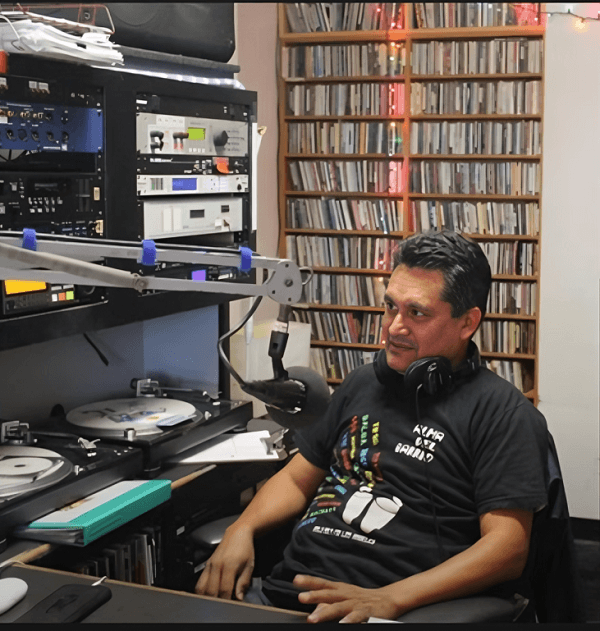
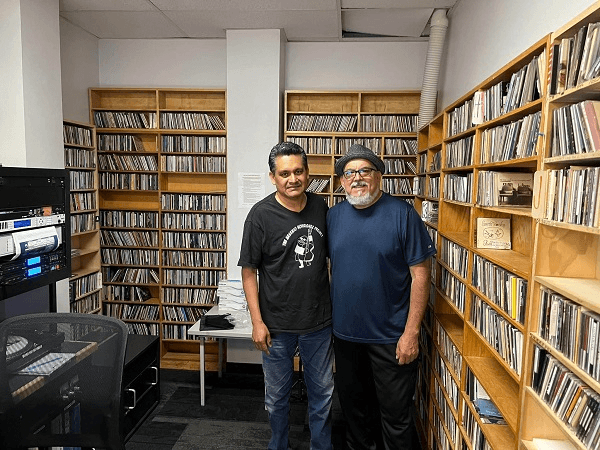
Guido working at KXLU 88.9 FM
”Alma Del Barrio” host Guido Herrera-Yance working at KXLU 88.9 FM

How Guido Herrera-Yance started in the world of music as a radio host 

Many years before Guido even thought about the idea of forming a company, he began to establish himself as a radio host on the popular public radio station KXLU 88.9 FM, specifically on the show ”Alma Del Barrio”, which is about to turn 51 years on the air in October. In Guido’s case, he has been hosting the show for more than 30 years, bringing the best Latin music and artistic news to all his listeners.   

The also producer confesses that he did not really like locution and that he was simply in the right place at the right time, resulting in the career he has built in this type of media. What it does say is that he was a frequent listener of several radio shows and a voracious music collector, which led him to meet certain personalities who saw potential in him to belong to ”Alma Del Barrio”. When a show was opened, he was the leading candidate for the job and accepted immediately. 

Guido did not have any kind of experience in radio, but his employers trained him and taught him everything he needed to know to carry out his tasks properly. 30 years later, Guido is still one of the main hosts of the show and a reference in terms of Latin music radio.    

From radio to event production   

In 1995, one year after having joined ”Alma Del Barrio”, a friend told him that Chucho Valdés was going to the United States after many years and proposed him to make a show together with the artist as the main attraction. When Guido accepted, they began to look for artists to accompany the Cuban that night and some of them were Alex Acuña, Justo Almario, Luis Conte, among others.   

The results were so good that Guido was left with the desire to keep experimenting with this field of the industry, so he continued to produce events of all kinds on a small and large scale since that year. 

As the years went on, he realized that he would need a bigger and more elaborate structure if he wanted to continue to work on this, so the idea of founding a music production company began to take shape in his mind.    

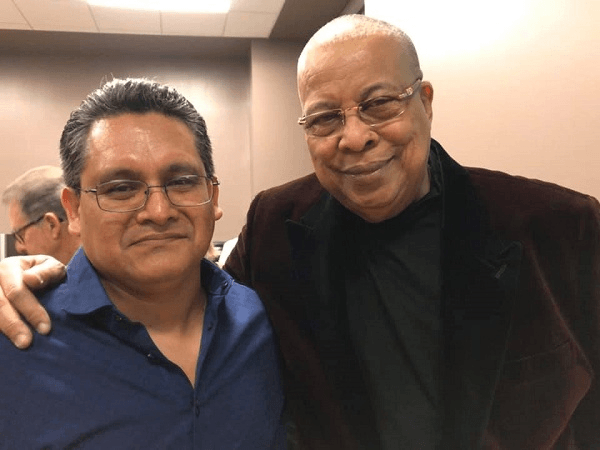
Guido and Chucho Valdés
Guido Herrera-Yance next to Cuban bandleader and pianist Chucho Valdés

How Guido created Yambu Productions   

On the creation of Yambu Productions, something that Guido highlighted is that, in the United States, ”everything must be done very formally”. In light of the obligation to declare the income from his musical activities, Guido saw the need to create a company that would facilitate the procedures related to taxes and issues of this sort in order to cover his back.   

Regarding the name ”yambu”, the businessman was inspired by a song by the Cuban popular music singer Carlos Embale, who was one of his favorite artists, so he wanted to honor him in that way. Taking this detail into account, it is not surprising that Cuban music and its exponents play a fundamental role in the events and groups that Yambu Productions seeks to promote, but it is not limited to nationalities or genres.   

The company has set up events for Los Papines, El Conjunto Folklórico Nacional de Cuba, Chucho Valdés, Los Van Van, El Gran Combo de Puerto Rico, Tito Nieves, José Alberto ”El Canario” and the list goes on. Guido is very proud that Yambu Productions was the one that produced the only concert given by Los Van Van Van and El Gran Combo in the United States, which was in the year 2029. He says he is a fan of both groups, so this was a dream come true for him.   

Upcoming Yambu Productions Events    

This year, Yambu Productions was about to hold the Cuban American Music Festival on 2 June this year, but it has been suspended due to multiple factors, but the main one is that Guido feels that many things have changed in the entertainment industry after the pandemic such as demographics and the public tastes. This has caused the producer to rethink many things, as he is not quite clear  what will be the path to follow by the company, so he prefers to wait. 

In addition to the above, Guido is focused on his own restaurant that opened just six months ago and needs to dedicate all his time and effort to this new project, so it is very possible that the previously festival will be back better than ever for the year 2025, when he will be clearer about what he wants to do with this event.   

However, he said he does not want to be away from live music, to which he attaches a great deal of importance in his work, so with the support of one of the most important jazz clubs in California, Catalina Jazz Club, he rolled up his sleeves and organized the Salsa Meets Jazz Concert Series for 26 April this year (at the time of publishing this article, the concert must have taken place). In this way, Guido wants to recreate that golden era of Latin jazz and salsa in New York, but in his own way. 

The Salsa Meets Jazz Concert Series is expected to pay tribute to a different artist who has contributed to these genres each edition and this year it was the torn for Tito Puente. In addition, Catalina Jazz Club proposed Guido to hold events of this type several times a year, so tribute concerts to Ray Barreto and Andy Gonzalez are also scheduled before 2024 is up. He maintained a close friendship with both musicians, especially with Gonzalez.  

Guido and Alfredo de La Fe
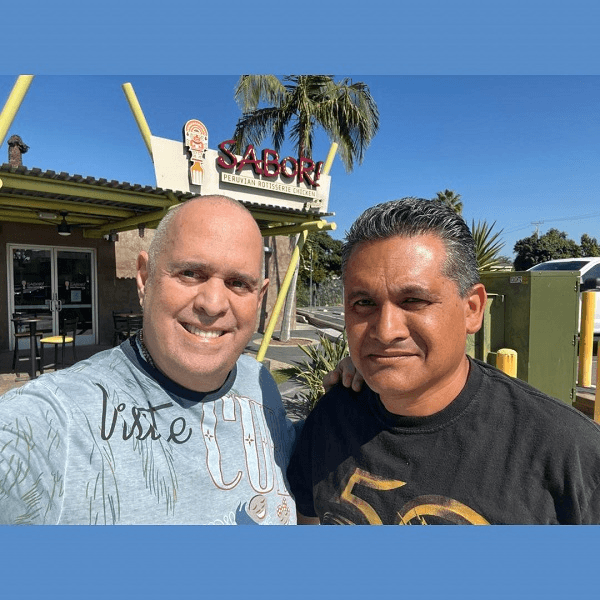
Cuban violinist Alfredo de La Fé next to Guido Harrera-Yance in front of Sabor! Peruvian Rotisserie Chicken, a venue in which Alfredo would perform some hours later

How are the logistics behind a Yambu Productions event? 

When Guido plans to hold an event, the first thing he should do is to find a venue that complies with the requirements for the type of show he plans, analyze the costs involved, find the best talent for the show, hire sound engineers, recruit the people who will be in charge of the logistics part, among other things. It is an arduous work of at least six months before the event takes place.   

An example of the above is the Cuban American Music Festival, which has always been held in May, so he should start organizing and planning for it since November or December of the previous year. This in order to have every detail ready on the day of the festival and to avoid any unforeseen problems that could put those involved down.  

On this subject, Guido said he feels lucky to be able to have so many friends in the world of music, to stay on ”Alma Del Barrio” for so many years and to know people like Nelson González, Johnny ”Dandy” Rodríguez, Genaro Rivera and many others who are always ready to come to Yambu Productions events without even asking about payment, since they know that Guido and his company are very responsible about these issues.  

How talent is selected for events 

”Everything falls on me. I believe that I have the capacity, knowledge and experience to know what the public wants. It is for the very reason that we will not be making the Cuban American Music Festival this year, since the pandemic changed everything in the industry and I have to accept that what sold yesterday is not the same as what sells today” said Guido when asked how he chooses the talent he wants for his shows. He also added that ”I’m still debating with myself on which way to go with the company after quarantine”. 

What Guido will never do is let go of live music because, in his words, ”it feeds his spirit”. As long as he is dedicated to music production and Yambu Productions is still operating, live events will always have a highly important place in the activities carried out by the company. 

Guido and Poncho Sánchez
Guido Herrera-Yance next to conguero, Latin jazz band leader, and salsa singer Poncho Sánchez

Read also: What The Namm Show is and how it works 

Yilian Cañizares, an excellent Cuban musician, studied in her hometown in the strictest tradition of the Russian school of violin

Yilian Cañizares is a Cuban and Swiss musician. She has lived in Switzerland since 2000.

Born in Havana, Yilian Cañizares began studying violin in her hometown, in the strictest tradition of the Russian violin school.

At the age of 14 she obtained a scholarship in Caracas and in 2000 she moved to Switzerland to complete her studies at the Freiburg Conservatory.

Soon after, the main orchestras in the area began to contact her and once settled in Lausanne, she collaborated for six years with different ensembles.

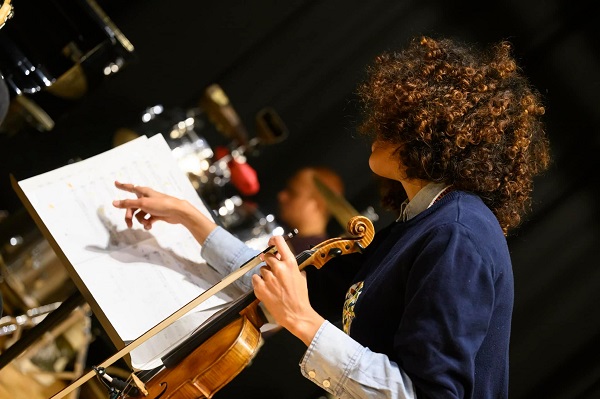
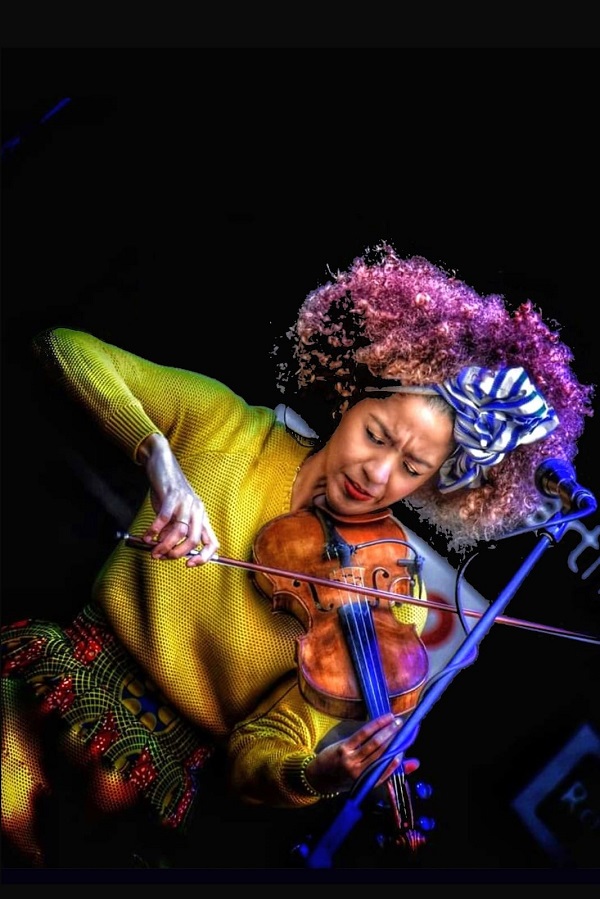
Yilian Cañizares excellent Cuban musician

In Switzerland, she opened up to jazz and decided to embark on a new musical path, including singing in her career as a professional artist.

It was during this period that the artist decided to form a quartet with musicians from Germany, Venezuela and Switzerland (and later Cuba), and the group “Ochumare” was born, with which, just six months after its creation, in 2008, she won the prize of the Montreux Jazz Festival Competition.

From that moment on, his career has been growing steadily. In recent years, she has shared the stage with Ibrahim Maalouf, Omar Sosa, Youn Sun Nah, Richard Bona, Chucho Valdés, Roberto Fonseca, Dhafer Youssef, the Lausanne Chamber Orchestra and El Comité.

She also teaches violin at the Ecole de jazz et de musique actuelle de Lausanne (EJMA).

The success of her albums “Ochumare”, an independent production released in 2013, followed by “Invocación”, under the direction of Alê Siqueira (who has collaborated with Roberto Fonseca, Omara Portuondo), has consolidated her notoriety as an innovative artist, capable of venturing and transcending musical boundaries.

Yilian Cañizares, an excellent Cuban musician, studied in her hometown in the strictest tradition of the Russian school of violin.

She was listed by the French weekly Le Nouvel Observateur as “revelation artist of the year” for her great virtuosity and charisma with which she is able to sing and play the violin.

“My sound reflects the richness and mix of cultures that I carry with me to this day and represents who I am: woman, Cuban, musician and citizen of the world”, said the artist.

Her second album “Invocación” reached the top of the Qobuz – World Music chart and was re-released in a Deluxe edition.

“Aguas”, the album produced in collaboration with Omar Sosa, saw the light of day in October 2018.

Accompanied by another compatriot, Inor Sotolongo on percussion, the duo created an intimate and personal album that reflects the views of two generations of Cuban artists living far from their homeland.

This album is a mix of energetic rhythms and emotional ballads that clearly reflect the unparalleled musical chemistry that exists between the two artists.

It constitutes a powerful and unique fusion of Afro-Cuban roots, classical music and jazz.

On November 15, 2019 was released the new album “Erzulie”, with its new formation Yilian Cañizares & The Maroons and dedicated to the Haitian deity of love and freedom.

This album was recorded in New Orleans and features the participation of numerous guests such as Christian Scott (trumpet), Michael League (double bass), Bill Laurance (piano), Bobby Sparks (organ) and Justin Stanton (keyboards).

Yilian Cañizares es una música cubana y suiza. Vive en Suiza desde 2000.

His style reflects the variety of his influences, with touches of jazz, classical music, Cuban music, with a large space left to improvisation.

The French magazine Les Inrockuptibles speaks of a jazz orchestration mixed with Yoruba ritual percussions.

She sings in Spanish, Yoruba and French and one of her distinctive features is that she sings and plays the violin at the same time.

There are so many influences on this album; Cuban, jazz, Venezuelan, Swiss, that it is difficult to pinpoint in each song which track falls into which category. In fact, they don’t.

Today it is too easy to want to pigeonhole music into one category: this is jazz; this is soul; this is funk. Yilian Canizares, in this wonderful album, breaks the stereotypes and that is why it is a pleasure to listen to it.

Sweet musical outbursts, explosions of improvisation that jump all over the place. He even finds a place to rap on “Iya Mi” and, obviously, it’s brilliant!

If we had to put a label on it, which I’m not thrilled about, I’d say this is a warm jazz album with Latin infused touches and tricks.

The meandering melody of “Beroni Abebe Osun”, the first track on the album, is a good indicator of this.

The throbbing bass, the heartbeat of the track, with its plucked violin, the blood pumping through his veins.

Cañizares is also a linguist, in case that wasn’t enough for us all to admire her.

The way he transitions from Spanish to perfect syllable-perfect French in his version of Edith Piaf’s “Je Ne Regrette Rien” (a beautiful version, by the way) is seamless and you could be forgiven for thinking it’s his first language.

It’s not easy to cover songs as big as Piaf’s classic, but Cañizares does it with style, class and, most importantly, grace.

Anything less than grace in a song like this makes it a bad version. It could be its own track, the strings perfectly light to complement the calmness of the voice and the ease with which Piaf’s lyrics take the weight of the world off our shoulders. I don’t regret a thing.” So simple. Yilian Canizares, we salute you.

And we’ll be on the lookout for the next album. 

(kreolmagazine)

Yilian Cañizares – Invocación (2015).

Musicians:

Yilian Cañizares (Violin and vocals).

Daniel Stawinski (Piano)

David Brito (Double bass and electric bass)

Cyril Regamey (Drums and percussion).

Guests:

Akua Naru on Iya Mi

Gabi Guedes Gã & atabaques Rum, Pi, lé

Blaise Lambelet English horn on Laïla

Caxeiras do Divino da Família Menezes, Graça Re Reis & Bartira Menezes Caxeiras & Bartira Menezes &

Brazilian choir in Beroni

Julia Stuller, Gàbor Barta, Ivan Zerpa strings in Non je ne regrette rien

Luis Carbonell Voice in Canciòn de cuna para dormir a un negrito (Lullaby to put a little black boy to sleep)

Juan Carlos Toca Voice in Mapucha

All the songs by Yilian Cañizares except Beroni Abebe Osun (traditional/ Y. Cañizares) and

Non je ne regrette rien (Vaucaire/Dumont)

String arrangement (Non je ne regrette rien ) by André Mehmari

Cyril Regamey uses exclusively Istambul cymbals, Vater drumsticks and Aquarian drumheads.

Information provided (December 30, 2023)

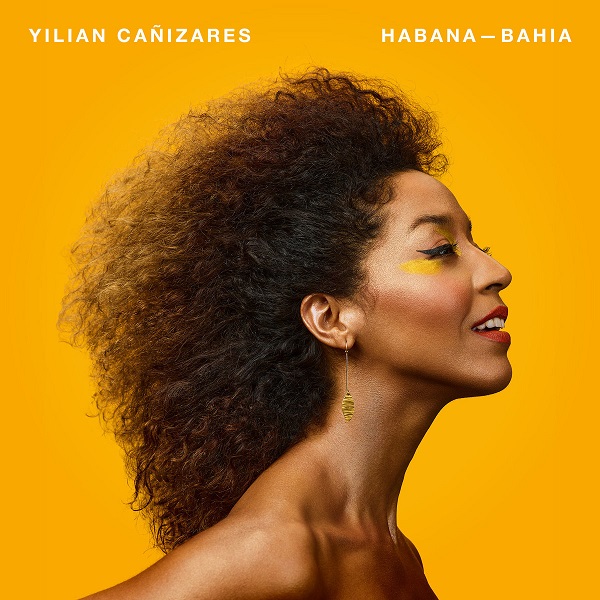
New CD AfroCuban & World Music HABANA BAHIA YILIAN CAÑIZARES 2023 2024

Yilian Cañizares

Also Read: José Alberto “El Canario” and his orchestra enjoy a great international reputation in the Latin music scene.

  • « Go to Previous Page
  • Page 1
  • Page 2
  • Page 3
  • Page 4
  • Page 5
  • Page 6
  • Interim pages omitted …
  • Page 10
  • Go to Next Page »

International Salsa Magazine (ISM) is a monthly publication about Salsa activities around the world, that has been publishing since 2007. It is a world network of volunteers coordinated by ISM Magazine. We are working to strengthen all the events by working together.