• Skip to primary navigation
  • Skip to main content

International Salsa Magazine

  • HOME
  • Previous editions
    • 2026
      • ISM / July 2026
      • ISM / June 2026
      • ISM / May 2026
      • ISM / April 2026
      • ISM / March 2026
      • ISM / February 2026
      • ISM / January 2026
    • 2025
      • ISM / December 2025
      • ISM / November 2025
      • ISM / October 2025
      • ISM / September 2025
      • ISM / August 2025
      • ISM / July 2025
      • ISM / June 2025
      • ISM / May2025
      • ISM / April 2025
      • ISM / March 2025
      • ISM / February 2025
      • ISM / January 2025
    • 2024
      • ISM / December 2024
      • ISM / November 2024
      • ISM / October 2024
      • ISM / September 2024
      • ISM / August 2024
      • ISM / July 2024
      • ISM / June 2024
      • ISM / May 2024
      • ISM / April 2024
      • ISM / March 2024
      • ISM / February 2024
      • ISM / January 2024
    • 2023
      • ISM / December 2023
      • ISM / November 2023
      • ISM / October 2023
      • ISM – September 2023
      • ISM – August 2023
      • ISM July 2023
      • ISM Edition June 2023
      • ISM – May 2023
      • ISM April 2023
      • ISM March 2023
      • ISM February 2023
      • ISM January 2023
    • 2022
      • ISM December 2022
      • ISM November 2022
      • ISM October 2022
      • ISM September 2022
      • ISM August 2022
      • ISM July 2022
      • ISM June 2022
      • ISM May 2022
      • ISM February 2022
      • ISM January 2022
    • 2021
      • ISM December 2021
      • ISM November 2021
      • ISM October – 2021
      • ISM September 2021
      • ISM August 2021
      • ISM July 2021
      • ISM May 2021
      • ISM April 2021
      • ISM June 2021
      • ISM March 2021
      • ISM February 2021
      • ISM January 2021
    • 2020
      • ISM December 2020
      • ISM November 2020
      • ISM October 2020
      • ISM September 2020
      • ISM August 2020
      • ISM July 2020
      • ISM June 2020
      • ISM May 2020
      • ISM April 2020
      • ISM March 2020
      • ISM February 2020
      • ISM January 2020
    • 2019
      • ISM December 2019
      • ISM November 2019
      • ISM October 2019
      • ISM Septembre 2019
      • ISM August 2019
      • ISM July 2019
      • ISM June 2019
      • ISM May 2019
      • ISM April 2019
      • ISM March 2019
      • ISM February 2019
      • ISM January 2019
    • 2018
      • ISM December 2018
      • ISM November 2018
      • ISM October 2018
      • ISM September 2018
      • ISM August 2018
      • ISM July 2018
      • ISM June 2018
      • ISM May 2018
      • ISM April 2018
      • ISM March 2018
      • ISM February 2018
      • ISM January 2018
    • 2017
      • ISM December 2017
      • ISM November 2017
      • ISM October 2017
      • ISM September 2017
      • ISM August 2017
      • ISM July 2017
      • ISM June 2017
      • ISM May 2017
      • ISM April 2017
      • ISM March 2017
      • ISM February 2017
      • ISM January 2017
    • 2016
      • ISM December 2016
      • ISM November 2016
      • ISM October 2016
      • ISM September 2016
  • Spanish
  • Download Salsa App
    • Android
    • Apple

Search Results for: Cuba

Antonio Laya a traditional artist

Latinoamerica / Mexico / Cancun

Antonio Laya  “He tells us a little about his new single Abre que voy”

Today we are pleased to learn a little about the life of Antonio Jose Laya Gonzalez (Antonio Laya), a Venezuelan who with his voice and his particular way of dancing has managed to climb and carve his way to success, this Taurean with a great career as a singer of good salsa and especially son, he presents us his new single, abre que voy, a success that has gradually positioned itself on the best musical platforms from his current hometown, the beautiful city of Mexico.

Antonio Laya
Antonio Laya

Good afternoon friend Antonio, thank you in advance for the time you give us to learn a little about your life and give our great readers a little about your son, but in letters, we know from your artistic review that you come from a cultural world. the dance? Why the singing?

I come from a family of musicians, teachers and athletes, in 1995/96 I started in the popular culture workshops of the “Fundación Bigott” (cultural house of great social impact in Venezuela) in the Afro-Venezuelan percussion workshops with Professor Jesús Raúl Paiva, where he gave me the opportunity to enter this world of culture…

Years later this would bear fruit, when I joined the Vasallos del Sol group, a representative entity of Venezuelan folklore, on one of their tours in Europe “Germany” to be exact, one of its dancers stayed, leaving an open vacancy, it was then that I received the invitation to audition, at a festival of San Juan of the foundation, where I was able to win a spot. From then on I became a vassal of the sun.

All this experience in the middle of the show made me lean towards dance, where I got to venture as direct from my own dance school destined to spread the Cuban casino. With Vasallos del Sol I had the opportunity to travel the world, Colombia, Cuba, Ecuador, Spain, Mexico, Korea, Japan, the United States,

How many years has it been since the idea of ​​entering the cultural world of your country?

22 years since I formally started at the Bigott Foundation.

How did the idea of ​​giving life to singing come about?

On the tour of the United States, I began to sing with the vassals accompanied by the guitar of Luis Gonzalez, assuring me later that it was there that he heard me and knew that I could sing, quickly and a few months later he called me and invited me to participate in a project that neither It didn’t even have a name, which would quickly begin to take shape and to date is known as the seventh bohemian.

I began to sing very badly, I lost my voice because I didn’t know how to use the phonator, I began to take classes with several teachers, the first of them Ronald Gonzalez, fundamental pillar to start singing, placing and improving my vocal technique, successively Fabby Olano, Gladys Salazar, Maigualida Ocaña, Dayan Montiel, Marcial, Gustavo Gerardo. We recorded 3 albums on national tours, the second of which is entitled “She takes me” a song that I believe made the Seventh Bohemia popular. Singing was not in the plans but it ended up being one of my great passions.
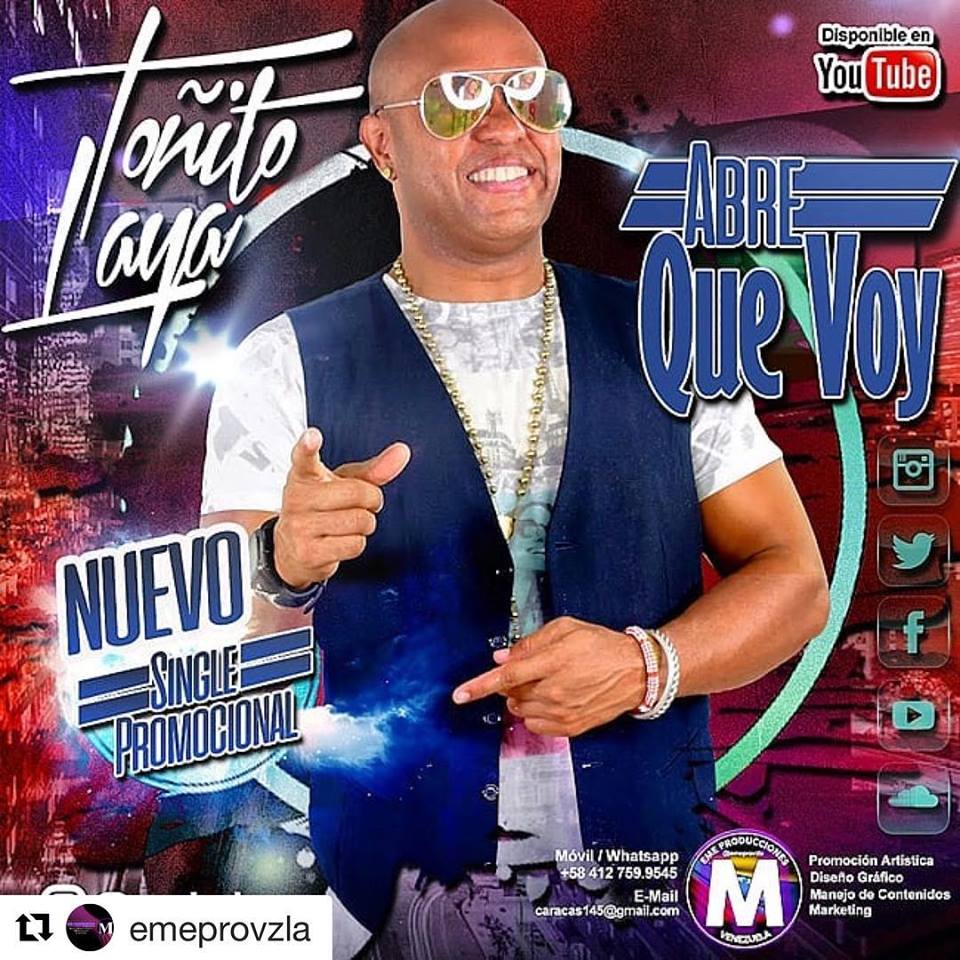
Antonio Laya
Antonio Laya

A song that marks you?

She sings: The earrings that the moon lacks, I have them saved to make you a necklace I found them this morning in the mist when I was walking next to the immense sea. Since I was a child I woke up very early listening to music by La Sonora Matancera, Felipe Pírela, Damiron and Danzón de Acerina, it fascinated me.

Let’s talk about the seventh bohemia. How do you join this septet?

I am a founder, just in the second rehearsal when only Luis Freites, Cesar “Chagu” Bolívar and Luis Gonzalez were there I was summoned along with Krlos Gonzalez to be part of the group, from then on I started singing “Bilongo” to be exact, hahaha I’m so in love with the black tomasa……….., El Jamaiquino, Me que, among others.

What is the greatest thing you have experienced so far with music? -You could perhaps refer to a concert or moment to share with an artist-

I think the greatest thing I have experienced in music is having shared the stage with great figures both Venezuelan and foreign, Francisco Pacheco, Canelita Medina, Trina Medina, among, Jose Alberto “el canario”, Cheo Feliciano, Alexander Abreu and his Habana de First, Manolito Simonet and his Trabuco, Tiburón Morales, El Septeto Santiaguero, among others. On the other hand, being at the 2014 and 2015 Pepsi Music Awards, the biggest thing, achieving 4 nominations for the 2015 Latin Grammys, a great privilege.

What has given you and what has taken away the artistic life you lead?

It has given me the satisfaction of feeling and receiving the applause of an audience, feeling the magic of a stage, dancing on the most important stages of Venezuela and the countries I visit, I don’t know if there is another artist who performed in the same weekend in two different facets and groups in the most important venue in Venezuela

The Teresa Carreño Theater where on Saturday I danced in my last Vasallos de Venezuela concert in the concert “Guiados por la Luz” occasion to baptize the latest production, with guests from the cultural movement and the next day singing with La Séptima Bohemia alternating with Francisco Pacheco, El Septeto Santiaguero, Jose Alberto “El Canario” Canelita Medina and El Tiburón Morales and as special guests all the best dance academies in Caracas.

Antonio Laya
Antonio Laya

Antonio let’s laugh a little. Tell us about the funniest thing that has happened to you at a concert and the most painful.

WUUAOOO, too many, Well, a concert with Los Vasallos where I went out to dance and my pants began to drop, at a concert at the Yerba Buena Garden Festival 2008 in San Francisco we got the foot burn of the century since the stage was al pure sun and linoleum floor and at the baptism of the album “She takes me” in the main hall of the Central University of Venezuela after the great presentation of the renowned Ramón Castro We went on stage and I couldn’t see anything through my glasses hahaha and I I put in the place of my partner Miguel Guanchez colliding spectacularly ahaha to start singing. What a laugh.

We know of the great success that you have had in Venezuela with the successes that you have sung and have marked the public, they have gone from a sound to a necessity for the dancer. What do you consider this great impact?

Definitely because I come from the world of dance, I’m a dancer and a dancer and I understood perfectly that I needed the same audience that the casineros came from, those of us who at some point went to the Goiticoa school or the Monagas house. By the way, as a curious fact, I was the one who organized one of the first casino parties in a place called Beisboland, a party where I dare say it was the second presentation of one of the most important dance groups in the Venezuelan casino Son Rumbero, where they danced “Cuentas Verdes y Amarillas de Adalberto Álvarez.

How has your foray into Latin music in Mexico been?

Since my arrival in Mexico I have participated in several musical projects, Los Panas.com, La Formula Perfecta, Swing Latino to mention a few, it has not been easy since musically Cancun has a particularity and that is that the music that is danced is still that of the 80s when they talk about salsa, of course with its exceptions, but it has cost me to adapt but in the end it is what is consumed here. Here the forte is the hotel industry, so the Latin genres that marked an era are what is worked on, that’s why as a salsero it has been difficult for me to adapt, although I have worked anyway.

Antonio Laya and his Orchestra

The Salsa or the Son? Which one do you lean towards?

Definitely La Salsa, I grew up in the middle of the Salsa de La Sonora Ponceña, Willie Rosario and the great Ray Barretto to name a few. Son also became my passion but I have to be realistic! came into my life thanks to the Seventh.

Open, I’m coming. Tell us a little about this great topic?

When I got on the plane to leave my country, in addition to nostalgia, I only had one thought, to make my album as a soloist first, I knocked on many doors, I looked for a lot of help, until I finally reached what today is called “Abre que I’m going” in that search the day came when I remembered that I had a buddy who was Omo Aña (Drummer) Maurice Melo and that after conversations, long conversations we would take a first step, start aggravating a theme, my first promotional single.

What surprise do we have to see from Antonio Laya during this 2019?

With God’s favor, to continue recording my album, including my first music video, if money allows me, hahaha For this 2019 I’m going to release my second single, it’s called… (Thinks) Not yet, let’s leave it as a surprise , do a launch concert and seek my respective nomination for the 2019 Pepsi Music Awards and the 2019 Latin Grammys.
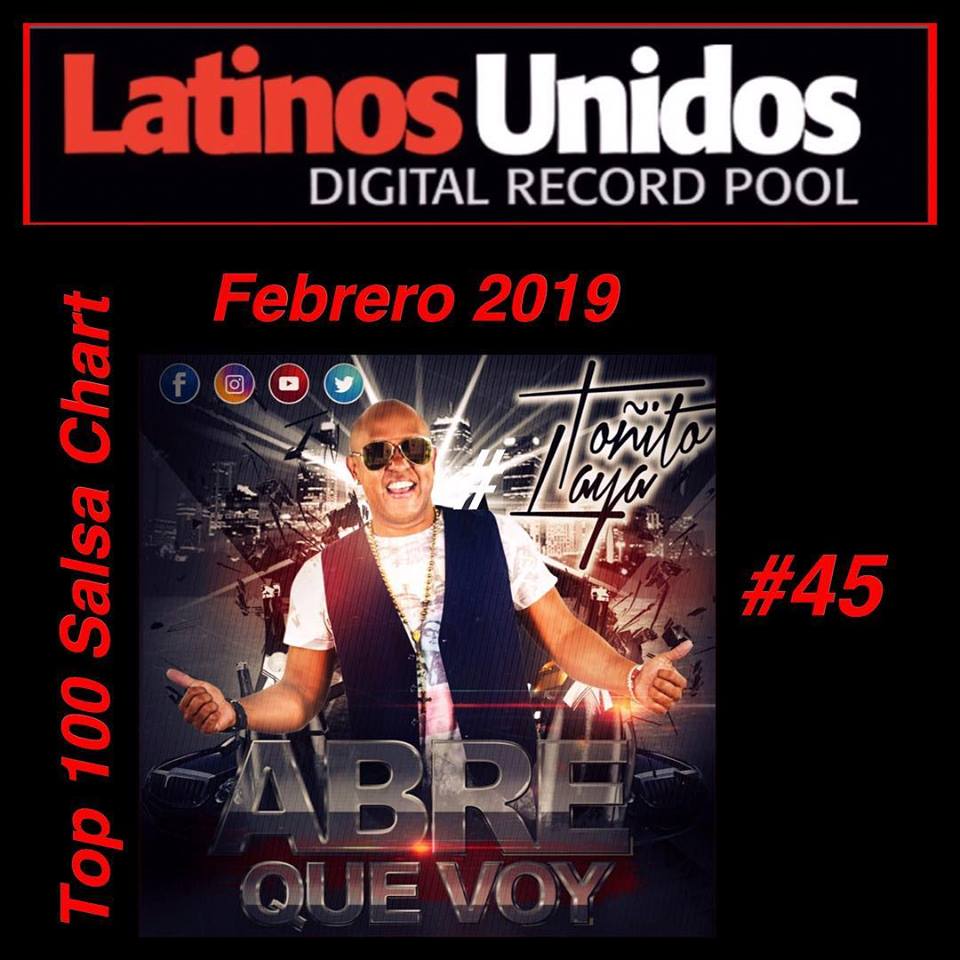
Antonio Laya February 2019

Where can our followers find you?

My social networks Facebook and Instagram through @ToñitoLaya, on twitter as @Negrolaya and through my YouTube channel, Toñito Laya
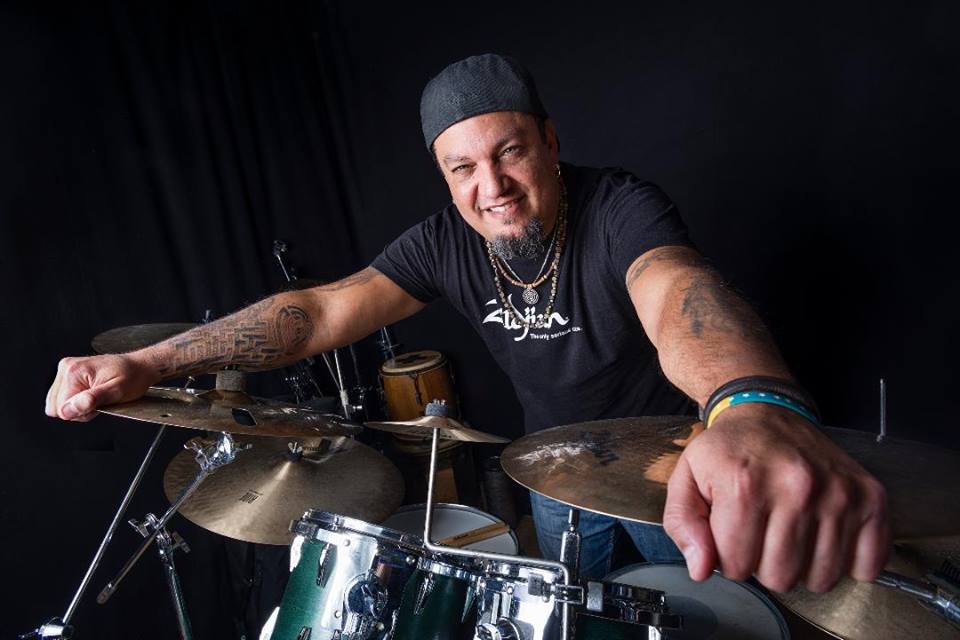
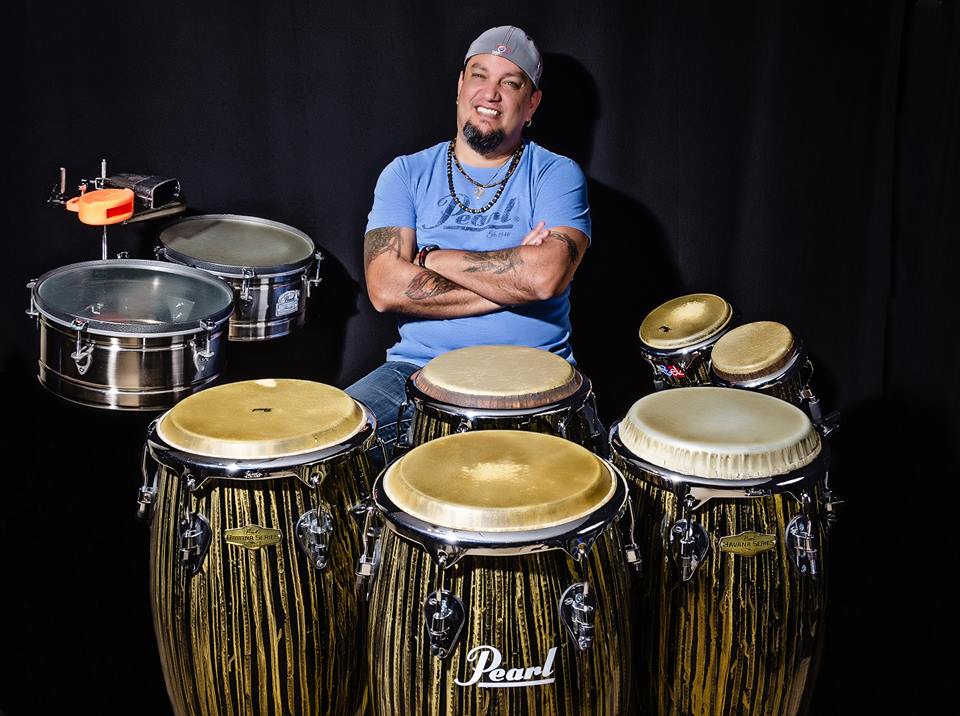
 

Marco Toro. The Versatile of Percussion

Europa/ Holanda

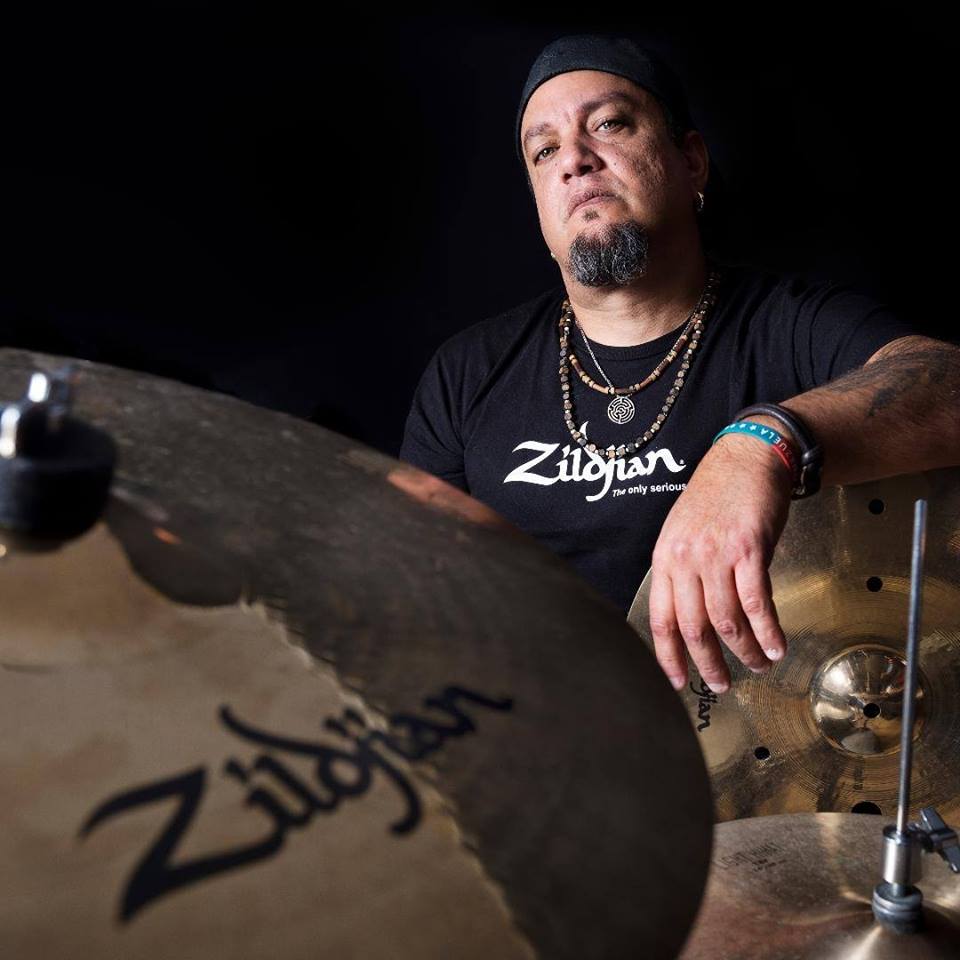
Marco Toro is a versatile drummer, percussionist and composer born in Caracas, whose roots are embedded in Venezuelan popular music and culture.

Marco Toro
Marco Toro

In October 2015 he released his latest work, this time it’s about Latin jazz: Marco Toro presents Zambo Jazz, a mix of rhythms and flavors that reminds the listener of places like Africa, South America and New Orleans.

Marco Toro once again shows his diversity on drums and percussion, playing as always with top-notch musicians who also share credits on this production.

Marc Bischoff, from Germany on piano, wrote two of the eight songs: Oh Lame Saint and Mojitos and Daikiries, trumpeter Oscar -Chucky- Cordero, from Venezuela, wrote The Tour. Michael Simon, also from Venezuela, arranged Marialí. James 2 AM It is a composition by Chilean Alekos Vuskovic and Let It Walk is by trumpeter and arranger Francisco Peña from Colombia. Matthias Konrad plays the trombone; He is also from Germany and the Venezuelan Samuel Ruiz plays the bass.

Marco Toro
Marco Toro

In addition to playing drums, timbales, congas, bongos and cowbells, he also plays typical Afro-Venezuelan instruments such as cumaco, culo e puya, bell drum, tamboras, maracas, etc.

He not only plays all kinds of percussion instruments, he also plays a wide variety of styles.

Already in 2004 he embarked on a solo project: Marco Toro y su Ensamble, exploring South American rhythms such as Son, Joropo and Salsa, among others. With this group he released eight albums; The last CD is from 2017: Marco Toro y su Ensamble 12+1 Anniversary more info (www.toro-ensamble.com).

Marco Toro is currently playing with Lucas van Merwijk’s Drums United and Cubop City Big Band since 2008, touring Europe, the United States, Canada, South America, China and Thailand.

In 1989 Marco Toro formed Laberinto, a rock band that became known for creating “Metalatino”, a unique blend of heavy metal and Latin percussion.

In 1992 Laberinto moved from Caracas to Amsterdam, where the band released eight albums between 1996 and 2010.

Dutch rap legend Osdorp Posse appears on The World Might Suck, since 2008.

A ninth album: The best of Labyrinth was released in Venezuela.

After years of successful and extensive touring in Europe, Colombia and Venezuela went their separate ways.

Marco Toro
Marco Toro

He has shared the stage and recorded with many renowned artists such as:

  • Andy González
  • La India, Jimmy Bosch
  • Pedro Arroyo
  • Metropole Orkest
  • Laberinto, Osdorp Posse
  • Def P
  • Beatbusters, Lucas van Merwijk’s Drums United
  • Cubop City Big Band
  • Ricky Luis N’Clave
  • Zambo Jazz
  • De Pana
  • Beatbusters and Def P
  • Santanico,
  • G. Clarinda y la Rítmica
  • Primera Plana Orchestra
  • Bembe Orchestra
  • El Trabucombo by Gerardo Rosales
  • Marejada, Tierra Caliente
  • Rudy Albano
  • Jacqueline Castro
  • Subject to change
  • Tumbao
  • Grupo Kilele
  • Javier Plaza and his Orquesta Sonrisa
  • FP La Banda
  • Chucky y su Trabuco Guarimba
  • Barrio Nuevo
  • La Misma Gente
  • Marike Jager Kuenta i Tambu
  • King of the bongo
  • Carmen Gabriela Lozada
  • Grupo Mate
  • Alejandro Carbajal
  • Flaco Carrillo
  • Silicon Head
  • Wereld Kinder Festival
  • The virtual school of Bart Noorman
  • Pistoleros de la Paz
  • Download Amsterdam
  • Ensemble Amsterdam
  • Cabo Cuba Jazz
  • The Soul of Spanish Harlem
  • Jean Paul Tamayo

among others.

Marco Toro
Marco Toro

Marco Toro is sponsored by Zildjian Cymbals, Pearl Percussion and Evans Drumheads.

Latin America – March 2019

Young Puerto Rican singer Jeremy Bosch supports the Spanish Harlem Salsa Museum

There are many people who believe that salsa is a genre of past generations that does not have worthy youth representatives who stick up for this set of rhythms that has been keeping so many people dancing for so long, but fortunately they are wrong. Jeremy Bosch, whom we had the opportunity to interview at The Johnny Cruz Shw a few weeks ago is a god example of this.   

We are honored to know that one of the new sensations of Latin music, specifically salsa, supports one of the most important institutions dedicated to the genre such as the Spanish Harlem Salsa Museum, so we want to take advantage to talk a little about the career of this young singer and everything he has achieved so far.   

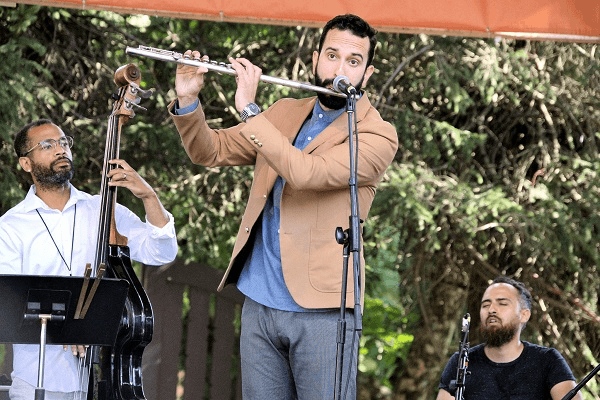
Jeremy playing the flute
Jeremy Bosch playing the flute live

Jeremy’s beginnings in this world 

Jeremy Bosch is a singer and flutist born in the city of Ponce, Puerto Rico, who began his journey in the world of music singing and playing percussion in the church on his block while growing up listening to a great variety of artists including Hector Lavoe to Chicago and Tonny Bennett, so he had influences of all kinds.   

Not much time would past before Jeremy took achevable steps towards the direction he was meant to take. At only 17 years old, he won a scholarship to study at Berklee College of Music in the city of Boston, United States, and graduated in 2023, specializing in jazz composition. From then on, what followed for the young artist have been successes and great proposals he could seize.   

One of thse things he is best known for is having been the vocalist and flutist of the acclaimed group Spanish Harlem Orchestra, but that has not stopped him from collaborating with great figures in the industry such as musical director and Grammy-winning percussionist Pete Perignon, with whom he recorded the social short called ”Sería Una Pena”.   

Johnny and Jeremy
Johnny Cruz and Jeremy Bosch posing for the camera

Jeremy’s professional career 

Sometime later, he would have the opportunity to realize one of the most important works of his career, which is the tribute to the late Cheo Feliciano, which was recorded live at the Dizzy Club in New York City and was titled ”The Music of Cheo Feliciano. In addition, the project included Nelson Gonzalez, Johnny ”Dandy” Rodriguez and Spanish Harlem Orchestra leader Oscar Hernandez.   

With regard to this great night for his career, Jeremy commented that since his debut both he and arranger and vibraphonist Felipe Fourniel had long time wanting to work on something about Cheo Feliciano and his legacy for a long time until they finally made it. This show was the sign that Jeremy has everything to become an icon of salsa and Afro-Caribbean music in general.   

As for his solo career, he has made a few remarkable recordings and one of them was ”Prologo Hoy”, which included the participation of Nicaraguan singer Luis Enrique and Cuban vocalist and guitarist Alain Perez. It is a five-song EP that focuses a lot on Afro-Colombian and tropical music, while including some covers in English such as ”Love Holiday”, which gives a distinct flavor to the material as a whole. 

Jeremy and Johnny on the set
Jeremy Bosch and Johnny Cruz on the set of The Johnny Cruz Show

Later on, Jeremy released ”Epilogo: la clave del tiempo”, which includes 11 tracks and is basically a mix of Afro-Cuban rhythms, soneo, urban genres, modern synthesizers, among other elements. The album starts with ”Locura” and continues with singles such as ”Try Again”, ”La Mala”, ”Autopsia” and a few more.   

Support for the Spanish Harlem Salsa Museum 

In the social networks of the director of the Spanish Harlem Salsa Museum, Johnny Cruz, there is a clip in which the The Johnny Cruz Show host introduces Jeremy as his special guest on that occasion, promotes the interview with him and describes him as the sensation of the moment. Then, the camera goes n Jeremy’s face, who thanks the invitation with a smile and assures that they both will have a good time talking about his life and career. 

We are honred to support young talents like Jeremy and, at the same time, to get the same support and love back because that is what salsa and the Latin music scene in general needs, that all those involved join together around it to keep it alive. 

Johnny Cru ISM corresponde in New York City


Read also: Paquito D’Rivera supports the salsa museum 

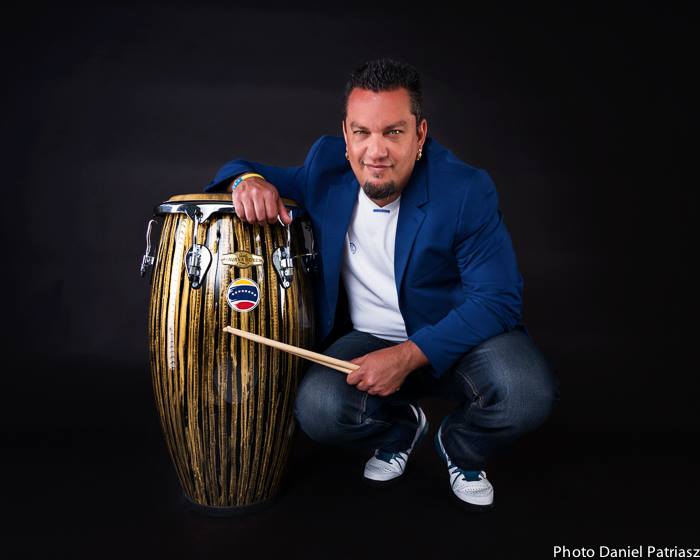
Career and interesting facts about Venezuelan singer and musician Omar Ledezma Jr.

Venezuelan singer, percussionist and music teacher Omar Ledezma Jr. has already talked to us in the past and has revealed important details regarding his life and career, but this time, our editor Eduardo Guilarte has been in charge of interviewing him and revealing some unknown details about his different facets professionally and personally.  

Is such a pleasure to have the chance to talk to one of the most talented Latin musicians who currently lives in the San Francisco Bay Area and know so many things that the artist had not previously revealed.   

Venezuelan percussionist Omar Ledezma
This is Omar Ledezma Jr., Venezuelan singer, percussionist and music teacher

Omar Ledezma’s beginnings in music and childhood 

Omar Ledezma Jr. was born on February 17, 1972 in Caracas, Venezuela, and was raised in a very close family that gave him a lot of love and care since he was a child. Both the Ledezma and López families were very important in his growth, but it was from the Ledezma’s that he got his musical vein.   

His mother and cousin José Vicente Rodríguez López decided to enroll him in the marching band at the Claret School, where he had his first contact with music by playing the snare drum, an instrument he was first assigned to play. It is also in the band where he started making friends with other teens who were already forming gaitas groups to compete in contests related to this traditional Venezuelan genre.   

When he turned 16, he began to participate in these gaitas inter-school competitions in 1987 and 1988. In 1989, he participated in his first big musical event at the nightclub Mata de Coco. Omar assures that this was the official start of his career in a more professional way. A few years later, going hand-in-hand with his father, he began to take a deeper interest in music as a profession and wanted to experiment with other genres such as Afro-Cuban music and Latin jazz.   

This path led him to join the orchestra La Charanga Clásica led by Mr. Frank Luzón. While playing there, he met several inspiration timbaleros such as Daniel Cádiz (from the Andy Durán Orchestra). 

In parallel with all of the above, Omar was admitted to study in law school at the Santa María University, so he shared his time between his university studies and his professional musical activities. In his spare time outside the university, he played Latin jazz and was formed as a percussionist with his orchestra.   

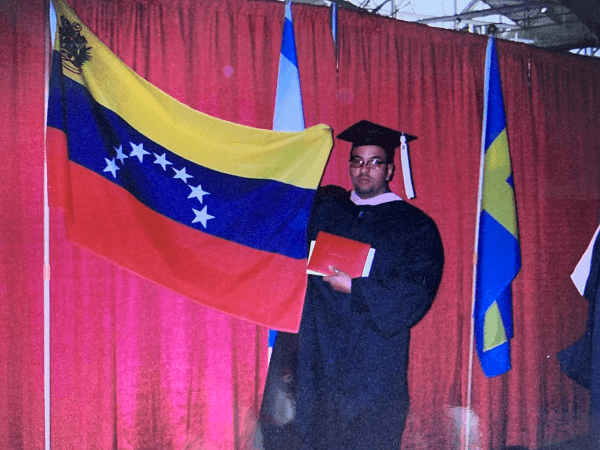
In 1995, Omar graduated as a lawyer as part of the class ”Honor a Venezuela” ranked in 12th place among his classmates. Although today he is not engage in law at all, he considers that having continued his studies was very important to him as a person because he would have a base on which to stand on in case his plans with music fell through.   

However, the artist never thought about practicing law, since he was very clear that it would be difficult to do so due to the legal situation in Venezuela, so he continued to focus on his great passion, which was music. Besides, after analyzing it, he decided that he did not have a natural talent for that career. 

In parallel, during those years as a law student, he made a trip to Cuba, which he claims changed his life completely. Some friends he made there, when seeing his skills as a musician, told him that he could be studying law, but that his life was and would be music forever.  

Omar graduating as a lawyer
Omar Ledezma Jr. graduating from Berkee College of Music

The United States and Berklee College of Music 

Just a few years after graduating, specifically in 1998, Omar made the decision to move to the United States looking for new opportunities and describes this trip as an exploring experience because many of his friends, orchestra fellows and acquaintances from the musical environment in general started taking new directions in the mid 90’s. The young man knew he wanted to do the same and chose the city of Boston to settle in at first.   

Although he finally moved to Boston in 1998, already in 1997, his mother gave him the idea of going to the United States with an open ticket so he could decide whether to stay permanently or return. In the end, he opted not to use the return ticket and stayed in Boston to try to enter any music school through a scholarship.   

After checking several options, he chose Berklee College of Music because it was the only college that allowed him to study composition and arranging as hand percussionist, so he auditioned to be admitted and was selected in the fall of 1999. He obtained a 70% scholarship, but he had to work hard to get the remaining 30%. In that sense, Omar assures that the same school helped him to obtain the corresponding permits to work legally in the country and thus be able to pay the percentage that is not covered by the scholarship. 

Omar also told us that it was his friend Gonzalo Grau who helped him do the demo with which he auditioned to enter Berklee and it was a song of his own titled ”Cacao”. Today, he assures that that recording gave him one of the greatest opportunities he has ever had in life, which was to study there. He spent a total of four years studying in that institution and graduated in 2003. 

During his undergraduate studies at Berklee, Omar had the option to study business and intellectual property and his lawyer’s training made it easier for him, but he defines himself as a ”natural born performer” and his life was the stage, so he did not see himself stuck in an office solving cases.   

One of the first jobs Omar had in Los Angeles was replacing the singer from Johnny Polanco’s prestigious orchestra and that one that helped him take that place was Ray Barreto’s flautist, the late Artie Webb. The concert was held at the Mayan.  

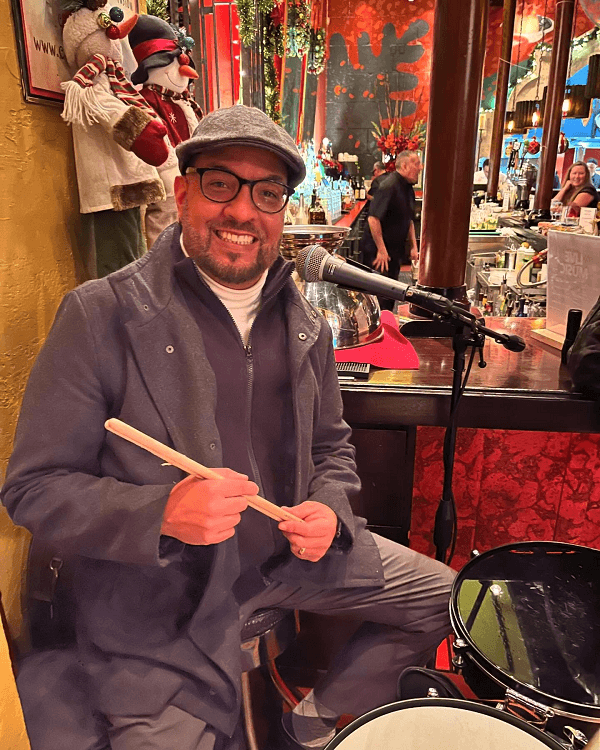
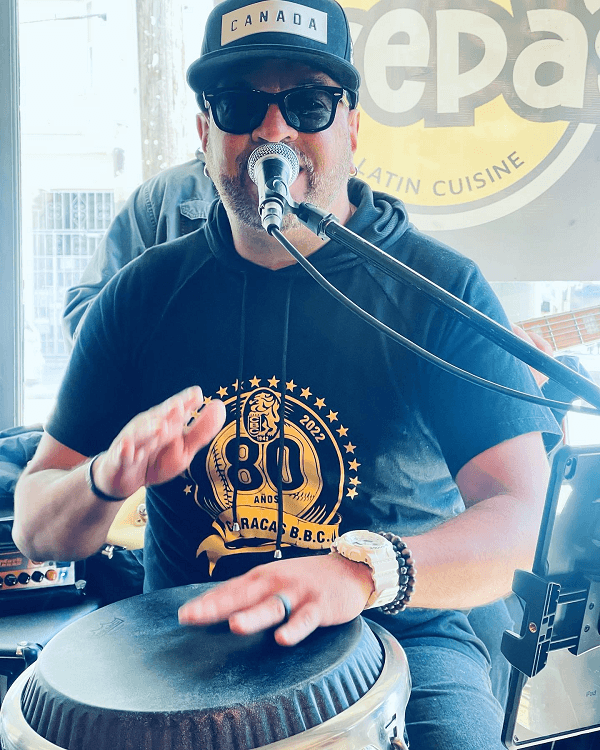
Omar playing the conga
Omar Ledezma Jr. playing the conga in a live performance

Family 

As to the family part, Omar told us that he had married his wife Jennifer Radakovich about seven or eight years ago, but they have no children for the moment. This is because they are still analyzing their opportunities to settle permanently in the state of California, so he assures us that they are still building their future as a couple and as a family. 

Jennifer’s family comes from Serbia and settled in Detroit, Michigan. They had to leave their country, which was then the former Yugoslavia because of the war that went on in the territory at the time. In fact, at a family reunion, his in-laws told him that his wife’s father arrived in the country on the boat anchored in Long Beach, California, The Queen Mary.  

Pacific Mambo Orchestra 

Omar Ledezma started his journey with Pacific Mambo Orquesta practically since its foundation in October 2010, when he started playing at Café Cocomo. Santana’s timbalero Karl Perazzo, who was already included in the lineup of the venue, proposed him to go to this place to play as a percussionist on Monday nights. The problem was that there was no money to pay him for the moment. 

That’s when the directors of Pacific Mambo, Christian Tumalan and Steffen Kuehn, proposed to the owners of Cafe Cocomo to give them some space to have band practice. These Monday meetings ended up being paid rehearsals open to the public in exchange for 10 dollars a night. This lasted some years in which the 20 members of the orchestra were in charge of developing much of the repertoire that has made them famous internationally. 

About this time, Omar said that, on several occasions, he and his orchestra fellows sat down to talk about the continuity of the band owing to the lack of money. The wonderful thing is that everyone always voted in favor of their stay in the group despite the adversities. According to the Venezuelan musician, it was this hunger and desire to succeed that made the orchestra what it is today.   

Omar, Eric, Karl, and Edgardo
Omar Ledezma Jr., percussionist Eric Rangel, music producer Karl Perazzo, and bandleader Edgardo Cambon

These efforts worked and Pacific Mambo Orquestra managed to win their first and only Grammy so far in 2014. That year began with the orchestra’s appearance in one of the main banners of the iTunes page for a little over a week, which gave them a lot of popularity at that time and was not common for Latin artists and groups. 

That same year, the group began touring with Tito Puente Jr. in August and were so successful that Omar and five other members of the group decided to begin campaigning for that year’s Grammys via e-mails to all the members of the jury promoting their latest album. Then, on tour, they received the news of their nomination (the second of Omar’s career), but they did not think they would win. 

Much to the surprise of Omar, in January 2014, he received word that Pacific Mambo Orquesta won its first Grammy in the category of Latin Tropical Album of the Year. This event changed the lives of everyone in the group to the extent that large media outlets started looking at them. One of them was world-famous Billboard magazine, which published a piece talking about the band and its talents. 

It is important to stress that, although it was an experience the musician will never forget in his life, he is aware that this is in the past and has to look ahead and focus on his future successes. At this moment, Omar and his companions are focused on making up for time lost during the pandemic and performing all the activities that confinement prevented them from doing. 

Read also: Arranger, composer and pianist Carlos Ordiano 

  • « Go to Previous Page
  • Page 1
  • Interim pages omitted …
  • Page 70
  • Page 71
  • Page 72
  • Page 73
  • Page 74
  • Interim pages omitted …
  • Page 148
  • Go to Next Page »

International Salsa Magazine (ISM) is a monthly publication covering salsa activities around the world and has been publishing since 2007. It is a worldwide network of volunteers coordinated by ISM Magazine. Together, we work to strengthen salsa events around the world.