• Skip to primary navigation
  • Skip to main content

International Salsa Magazine

  • HOME
  • Previous editions
    • 2026
      • ISM / May 2026
      • ISM / April 2026
      • ISM / March 2026
      • ISM / February 2026
      • ISM / January 2026
    • 2025
      • ISM / December 2025
      • ISM / November 2025
      • ISM / October 2025
      • ISM / September 2025
      • ISM / August 2025
      • ISM / July 2025
      • ISM / June 2025
      • ISM / May2025
      • ISM / April 2025
      • ISM / March 2025
      • ISM / February 2025
      • ISM / January 2025
    • 2024
      • ISM / December 2024
      • ISM / November 2024
      • ISM / October 2024
      • ISM / September 2024
      • ISM / August 2024
      • ISM / July 2024
      • ISM / June 2024
      • ISM / May 2024
      • ISM / April 2024
      • ISM / March 2024
      • ISM / February 2024
      • ISM / January 2024
    • 2023
      • ISM / December 2023
      • ISM / November 2023
      • ISM / October 2023
      • ISM – September 2023
      • ISM – August 2023
      • ISM July 2023
      • ISM Edition June 2023
      • ISM – May 2023
      • ISM April 2023
      • ISM March 2023
      • ISM February 2023
      • ISM January 2023
    • 2022
      • ISM December 2022
      • ISM November 2022
      • ISM October 2022
      • ISM September 2022
      • ISM August 2022
      • ISM July 2022
      • ISM June 2022
      • ISM May 2022
      • ISM February 2022
      • ISM January 2022
    • 2021
      • ISM December 2021
      • ISM November 2021
      • ISM October – 2021
      • ISM September 2021
      • ISM August 2021
      • ISM July 2021
      • ISM May 2021
      • ISM April 2021
      • ISM June 2021
      • ISM March 2021
      • ISM February 2021
      • ISM January 2021
    • 2020
      • ISM December 2020
      • ISM November 2020
      • ISM October 2020
      • ISM September 2020
      • ISM August 2020
      • ISM July 2020
      • ISM June 2020
      • ISM May 2020
      • ISM April 2020
      • ISM March 2020
      • ISM February 2020
      • ISM January 2020
    • 2019
      • ISM December 2019
      • ISM November 2019
      • ISM October 2019
      • ISM Septembre 2019
      • ISM August 2019
      • ISM July 2019
      • ISM June 2019
    • 2016
      • ISM December 2016
  • Spanish
  • Download Salsa App
    • Android
    • Apple

Search Results for: Cuban music

Five Latin – Caribbean artists who triumph in Canada

Canada is another of the countries that has been influenced by the arrival of Latin music. Its beginnings are attributed to the immigration of Latin Americans to their lands.

Canada's map
Canada’s map

By sharing borders, the United States and Canada tend to have similarities in the musical field. In the 90s, Latin music was present in Canada. However, Spanish pop singers such as Julio Iglesias and Gloria Estefan, as well as Lydia Mendoza, an interpreter of Tejano music, were already known.

Having Latin Americans started a kind of Latino roots, allowing Latin music to gain more ground on Canadian soil. Singers like Celia Cruz, Willie Colón and Rubén González made their songs sound in Canada. However, the beginnings of Latin music in the country are attributed to Ferdinand Morton, known in the artistic field as Jelly Roll Morton, an American jazz pianist.

Starting in 1999, Latin music had a greater growth, beginning to be heard on radio stations, events, festivals and national television stations. By that time singers like Ricky Martin were already being heard in other parts of the world.

Selena, Buena Vista Social Club and Jennifer López. Arriving in Canadian lands was no exception. In fact, Buena Vista Social Club’s album broke a record by becoming the highest-selling Latin album in Canada.

Surprisingly, Canadian artists were also captivated by the benefits of Hispanic countries, by the Caribbean flavor and the warmth of its people. Nelly Furtado, singer, songwriter and producer born in Canada was inspired by the island of Cuba for her album “Mi Plan”. Furtado recorded what would be his fourth album entirely in Spanish. It featured the participation of renowned Latin artists such as Juan Luis Guerra, Alejandro Fernández and the Latin American Julieta Venegas.

“I think this album has several of my first true love songs. They are not complicated. They were not over-thought and I discovered that it is liberating to be able to sing in a Latin language and express my Latin soul,” he said.

Mi Plan obtained great merits and was positioned as the album in Spanish with the highest sales numbers recorded by a Canadian singer. Undoubtedly, a suitable place for many Latino musicians of birth or descent who have wanted to try their luck outside their borders. Some have succeeded and today are among the most loved in Canada.

Some representatives of Latin music in Canada

Hilario Durán, Cuba

Photo by Hilario Duran

Hilario Durán

Hilario was born in Havana in 1953. He moved to Canada in the late 90’s, after touring the world with his band “Perspectiva”. He is a famous jazz pianist who fell in love with Canada and decided to live on its streets. He joined the Afro-Cuban jazz band “Spirit of Havana” belonging to Jane Bunnet, a Canadian lover of Cuban culture. In fact, Bunnet regularly travels to Havana to perform with Cuban musicians.

Hilario Durán has become known in Canada and other parts of the world thanks to his orchestra (Big Band), where together with his friend Roberto Occhipinti, a Canadian musician, they bring together Cuban and Canadian musicians. Leaving Latin jazz high. In 2007 he was nominated for a Grammy for his album “From the Heart”, along with Roberto D’Rivera. In addition, it obtained three Juno Awards and different awards in Canada.

Amanda Martínez, Mexico

Photo - Amanda Martínez in concert

Amanda Martinez in concert

Amanda Martínez was born in Toronto, Canada with Latino blood. His father is Mexican. Martínez studied biology and business administration but decided to take a course in his life and dedicate himself to what he really loved: music. The artist was not wrong in her decision. He has left his roots high by venturing into Latin jazz.

In 2007 and then in 2009 she was nominated for the Latin Jazz Artist of the Year Award at the National Jazz Awards in Canada. He has three albums to his credit and his first album “Sola” won the Best World Music award, selling around 6,000 copies.

Martínez has performed on famous stages and renowned events; she sang at the Winter Garden Theater, at the Koerner Hall in Toronto, the Festival Centro Histórico de México, at the Montreal Jazz Festival

Ogguere, Cuba

Ogguere's photo

Ogguere

Aka Edrei Riveri, is a Cuban singer and songwriter who resides in Canada. It has become famous for its musical fusions. He walks through rap, hip hop, jazz and la chacuba. A mix of cha-cha and rap. It is registered as the first mix between both styles.

Ogguere has two solo albums, “Solar” released in 2011 which earned two nominations for a Cubadisco award and “Raíces”. He moved to Toronto in 2010 and has since become an immediate reference in jazz and hip hop.

Natasha Roldán, Colombia

Photo by Natasha Roldan
Natasha Roldán

Born in Colombia and based in Toronto, Canada, Natasha Roldán breaks stereotypes in the musical field. She walks between jazz and bossa.

The artist has a fair complexion and very light eyes. From what anyone would believe, she is a native Canadian singer. However, her Colombian roots run deep in her career.

For Natasha it is important that the musical boundaries collapse. It promotes pattern-free Latin music.

“I think that above all I break many stereotypes because people in Canada whenever they think of Latin music, identify it directly with salsa or bachata. Well, and now reggaeton (laughs). And everything is linked to a super sexy image of the Latin woman, who dresses spectacularly and clearly I am not like that.

Therefore, it is very gratifying to share another type of music that people do not know such as bambuco, cumbia, Argentine zamba, Brazilian music aside from bossa nova … and whenever I talk to someone and they discover that I am always Colombian They ask me why I don’t play such music or dance this.

Suddenly I break with the stereotype but not because it is a bad stereotype but because other things have to be shown as well ”, she expressed in an interview for the Hispano Phone portal.

Her music has allowed many Canadians to have access to the Latin culture and to experience sounds with different influences.

Henry Vivel, Colombia

Photo by Henry Vivel

Henry Vivel

Henry was born in Colombia but moved to New York and later to Toronto. In New York he had the opportunity to study music with Enrique Gil, musician and composer. After his arrival in Toronto, he worked in Sky’s Banda, a group that performed at weddings and different events. He sang Latin music.

In 2009 he became the leader of the Tropicanada Orquesta. Pioneer Latin Orchestra in Toronto. They have participated in different salsa festivals and radio stations. Henry and the band have also been a part of different charities in Canada and other countries. In the same way, Henry has joined social causes for the inclusion of immigrants, he has taught them English and part of Canadian culture.

In 2013 he was nominated for the Oye Awards and 10 Most Influential Latinos in Canada. The singer is very pleased with the affection of the Canadian public.

“The chemistry is so great, especially with those who don’t understand my songs in Spanish, which makes the language barriers dissolve into enjoying themselves, dancing and having a good time. With the orchestra I have been able to witness how people enjoy the beauty of Latin music and it makes me very happy to be a Colombian who sings to Canadians and who puts up our musical roots ”, he commented

Toronto has been a city with great Latin influence. Canada has received mixtures of different cultures and they have formed a variety of styles that locals and visitors enjoy. It has been one of the countries that receive the foreign musicians as part of a great family and give them the opportunity to present their work. They have a great affection for Caribbean music.


Fanny Almenara better known in the salsa environment as “La Sonera del Callao”

Sonera of Callao, who maintains an impeccable musical career, loving music and recording numerous songs as a soloist and with various singers of first order of the Afro Latin Caribbean genre.

The salsa singer named Fanny Almenara, better known in the music scene as the Peruvian Sonera, was born in Callao, daughter of Don Hector Almenara and Carmen Barreto, the second of 9 siblings.

Fanny studied singing thanks to her mother, she met the best teacher, Mrs. Ana Maria Parodi and entered music at a very early age in the lyrical genre.

Juan Canevello: Percusionista, Antonio Cartagena: Cantante, Fanny Almenara: Cantante y Oscar Huaranga Bajista y Productor Musical

Her salsa collector father made her listen to the best of the best exponents such as Justo Betancourt, La Lupe, Candido Fabre, Benny More, Ismael Rivera, Los Papines, Irakere, Luis “Perico” Ortiz, etc.
At the age of 16 she fell in love with the genre called salsa and had the honor of singing with Junior Gonzales for the first time and alternated Grandes with Peruvian Orchestras such as Peru Salsa de Beto Villena, Las Estrellas de la Máquina de Boris Gómez, HIt Parade Latino del Callao, La Nueva Generación de Franco Crovetto.
She was chosen as the best new voice of the salsa genre in the 80s.

La cantante de salsa llamada Fanny Almenara mejor conocida en el ambiente como la Sonera Peruana

She made recordings for different groups, and also recorded an unpublished song of her own entitled “Yo te Espero”.

Between the 70s and 80s came to Peru Las Leyendas Latinas with Ray Barreto and Adalberto Santiago, gave him the great opportunity to sing with them Quítate la Máscara.

Then with Linda Caballero (lLa India), the song Mi Primera Rumba, then with the pharaoh of salsa Oscar D’ León the song Toro Mata, also with the great Hermanos Lebrón the song sin negro no hay guaguancó.
With the owner of Soneo Carlos “El Cano” Estremera the theme Ámame en Cámara lenta, with Frankie Vázquez the theme Cuarto de Tula, with Yolanda Rivera the theme Rumba en el Patio, Vity Ruiz brother of Frankie Ruiz the theme La Cura, with Aldalberto Santiago the theme Nadie se salva de la rumba.

Primera sonera del Callao, que mantiene una carrera musical impecable

And so with her imposing voice Fanny captivated the attention of the greats of salsa, representing Callao and for which the people of Chalaco named her “La Sonera del Callao” (The Sonera of Callao).
For her vast artistic career she was awarded by different musical associations and by the company Pilsen Callao.
(H3) Asocosalsa Peru (Tite Curet Ceremony, Hector Lavoe Bust, Charlie Palmieri and 25th anniversary of artistic life (Okonkolo Association).
Fanny Almenara, continues her impeccable musical career, loving music and recording a song entitled Amor de Mis Amores, salsa version with the Orquesta Ng del Callao director Franco Crovetto.
Although she was in a halt due to the pandemic, she recorded a Challenger “El Virus Se Mata Con Musica” invited by a Cuban musician, which was also recorded by Cuban artists in different parts of the world.

Fanny Almenara
Fanny Almenara

After her voice reached Cuban websites such as “Benny More” “Un Millón De Adalsoneros” “Al Son Del Pinar Del Rio” she was invited to the “Son 8 de mayo” days led by the gentleman of the son Adalberto Alvarez.
Then she also recorded a song written by the King of merengue Milly Quezada “Gracias A Ti” dedicated to those who are always on the front line as doctors and nurses in the Covid 19 and the last thing she has recorded the production of the song La Sitiera Tribute to the diva of Cuba Omara Portuondo in which in that production participated Nelson Gonzales in the tres: Eddie Montalvo on congas, Nohelia Zambrano on violin and Luis Perico Ortiz on trumpet.

Website: Fanny Almenara Oficial

Yaroldy Abreu Robles is one of the talents of the new generation present in Cuba

Yaroldy Abreu Robles was born on February 22, 1977 in Sagua de Tánamo, Holguín, Cuba.

Excellent percussionist and arranger. Among the many talents of the new generation of Cuban experts in Cuban rhythms of French-Haitian origin and knowledge of Afro-Cuban folklore, Yaroldy is an imaginative and expressive percussionist, with great technique and virtuosity, with an original style.

Yaroldy Abreu Robles es uno de los talentos de la nueva generación presentes en Cuba

A member of a new batch of Cuban percussionists, he stands out for his genius and mastery, to hear him play is an enjoyment for the senses.
He radiates vitality and joy, his hands seem to fly and at the same time caress the drums causing a magical and contagious effect on those who listen to him. He is currently one of the members of the Maestro Chucho Valdés Quintet.

He grew up in an environment rich in traditions and with his grandmother he learned about the activities of Tumba Francesa de Bejuco.

Yaroldy Abreu Robles

This is an association of solidarity that preserves and enhances the folklore of French-African-Caribbean origin through cultural recreational meetings, and especially the celebrations organized by the slaves of Haiti.
He is not a great connoisseur of the Yoruba culture, he is not a believer, but he feels attracted by the symbolism and the music of the magic Afro-Cuban religious cults.

He began studying guitar as his first instrument at the Casa de la Cultura. Then at the age of nine he began classical percussion at the Escuela Vocacional de Arte de Holguín and in 1996 he entered the ISA (Instituto Superior de Arte) in Havana, where he graduated in 2001. Sound in the whole range of percussion of academic character and those of the Afro-Cuban tradition.

Yaroldy Abreu Robles Pintura por la Artista Inés Garridos

The first band where he played was called Son de Sagua, in which he played guitar with a mixed repertoire. His debut was with percussion, bongo in several groups and then with a wider range of instruments.

He began working with the group Piapá, doing experimental percussion, and a classical percussion quintet.

Also with dance music groups such as Pupy and Los Que Son Son and others. In 1997 he became a professional with Maraca and Otra Visión internacional, in 2000 he joined Irakere and in 2001 he joined the quartet of Chucho Valdés, the great protagonist of Cuban music in the last forty years as composer, director and discoverer of talents.
Among the young Cuban percussionists who continue to renew the grammar and pronunciation of the Afrolatino tumbadora in jazz, one of the most influential names is the thirty-one Yaroldy Abreu, whose point of reference is the work of the great immortal masters such as Chano Pozo, Tata Güines, Mongo Santamaría, Jorge “El Niño” Alfonso and Miguel “Angá” Díaz.

Discography in which he has participated
Yaroldy Abreu Robles

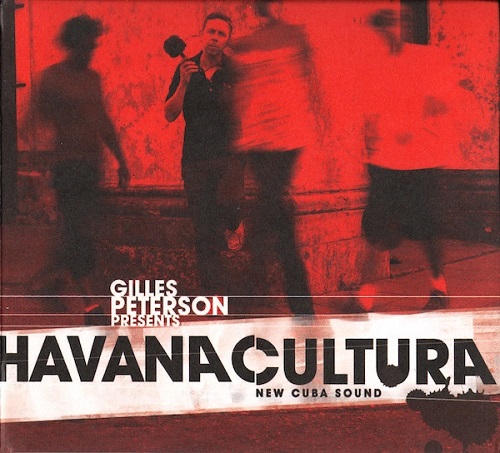
Gilles Peterson Presents Havana Cultura – New Cuba Sound Año 2009
Gilles Peterson Presents Havana Cultura 2010
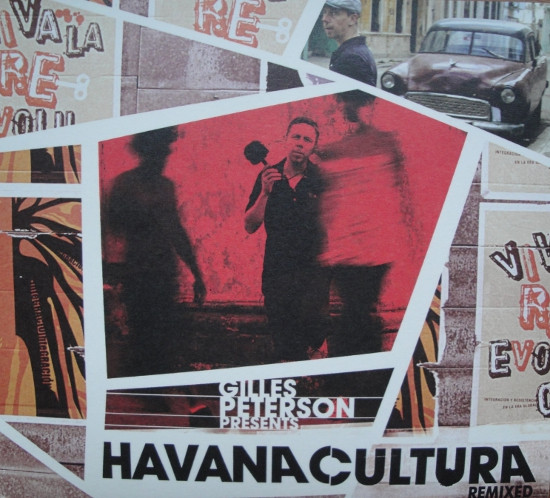
Gilles Peterson Presents Havana Cultura Remixed 2010
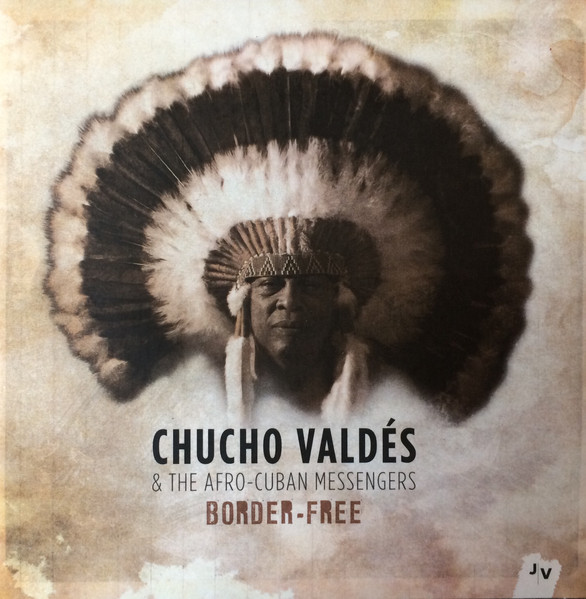
Chucho Valdés & The Afro-Cuban Messengers 2013

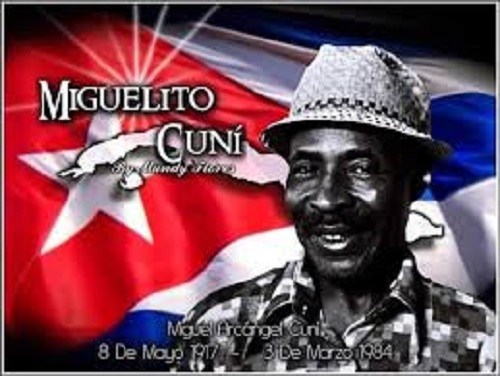
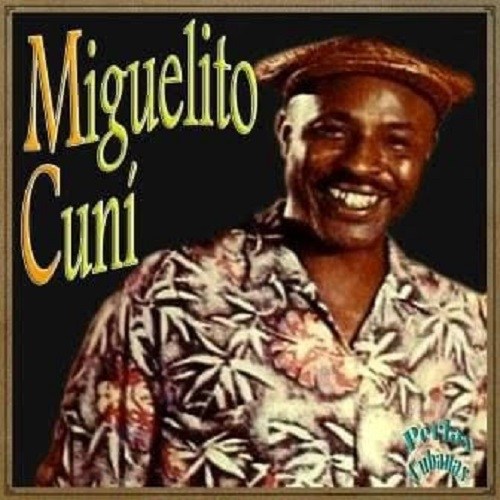
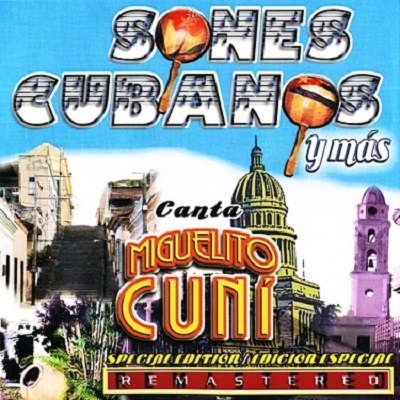
Miguelito Cuní recognized among the best soneros of Cuba

Miguelito Cuní. Pinareño recognized among the best soneros of Cuba, who shared the stage with Benny Moré, Arsenio Rodríguez, Félix Chapotín, Richard Egües, Enrique Jorrín, among others.

Miguel Arcángel Conill, better known as Miguelito Cuní (Pinar del Río, May 8, 1917 – Havana, March 3, 1984), was a Cuban music singer. He was one of the emblematic voices of Cuban son in the 1940s and 1960s.
He was born in Pinar del Río, the westernmost province of the island of Cuba, into a humble family.

Miguelito Cuní Pinareño reconocido entre los mejores soneros de Cuba

During his school days he dedicated himself to the exercise of minor trades to help support the family. In 1932, at the age of fifteen, he began as a vocalist in the group “Los Carameleros”.
Soon after, he was the vocalist of Septeto Lira, Septeto Caridad and other groups in his province.
In 1938, already in Havana, he joined Arsenio Rodríguez’s group, and also worked actively with the orchestras “Melodías del 40” and Arcaño y sus Maravillas, making recordings and performing live and on the radio.

Miguelito Cuní
Miguelito Cuní

During the forties he developed an intense artistic life, he lived two years in Panama and in 1949 he settled in New York, as director of the orchestra of trumpeter Félix Chappottín.

He worked with Cuban music icons such as Beny Moré and in 1956 he traveled to Caracas to work with the “Bárbaro del Ritmo” with the group “La Tribu”. In 1960 he returned to New York, where he made several presentations, including the famous “Palladium”.

He returned to Cuba in 1966 where he founded his own group.
He participated in the film “Nosotros, la música” and other documentaries.

Some of the melodies that reached popularity in his voice were Con maña se rompe, No hay amor sin caridad, Viejo Socarrón, Nos estamos alejando, Canallón, Quimbombó, Yo sí como candela, Ay qué Canuto, Ya tú ves campeón, Cuento na’ ma, Mi son, mi son, mi son, mi son, Alto Songo, Canto al monte, Cuchillo para la piña cubana, Sacando palo del monte, Camina y prende el fogón, Rompe Saragüey, Convergencia, La protesta de Baraguá, Todos bailan con la guajira, Cárdenas, Guachinango, El carbonero, among others, most of them recorded with the group Chappottín y sus Estrellas, a group with which he achieved great projection and in which he sang until his death.

Sones Cubanos con Miguelito Cuni

In his last recording he interpreted the bolero “Lágrima” from the long-playing record entitled “De nuevo Arcaño”. His last trip abroad was to Mexico in 1982.

Composer

Besides being a singer, he ventured into the world of musical composition, of his authorship are cited: Congo africano, Ay mamita!, Batanga africana, A bailar con la guajira.
Sones montunos from the late 1950’s, the boleros: Lloró Changó, Toque santo, Las ansias mías, A ti, Benny Moré.
And the guaracha “Esto no se ve”, among other titles.

He died in Havana on March 3, 1984, three months after his dear friend and companion of countless days, Félix Chapotín, who had passed away on December 21, 1983.

Tribute

Miguelito Cuní was admired by all those who knew him, highlighted by all his friends and close ones as a man of excellent human qualities, in homage to his trajectory the Commander of the Revolution, Juan Almeida composed the lyrics “Este son homenaje”, which was interpreted by the singer-songwriter Pablo Milanés.
In the artistic field, he deserved the recognition of his colleagues and thousands of admirers, and in the personal field, those who treated him remember him as a man of impeccable words and good speech, Miguelito Cuní was a true Creole gentleman.

Source: Ecured

Pacifica Radio, history, shows and controversy

This is Pacifica Radio

Pacifica Radio has been one of the largest radio networks in the United States in recent decades and its importance remains enormous today despite the time elapsed. It has given voice to figures of all kinds of political and ideological trends and artists from all genres who sought a platform in order to be heard. However, such popularity does not make this organization to be free from controversy that, like its history and shows, we would also like to explore with the greatest possible respect.

Next, we will talk about the most outstanding to observe about this radio station since its beginnings from 1946 to this day, since talking about Pacifica Radio is also talking about communication in the United States and the role played played by Latino culture and music in all of this.

Logo of Pacifica Foundation

Beginnings of Pacifica Radio

Pacifica Foundation is a non-profit organization that owns five independent radio stations financed from listener contributions. It is widely known for its progressive and liberal tendencies and is located next to KPFK in Los Angeles, California.

This organization is also responsible for managing everything related to Pacifica Network, which, in turn, runs much more than a hundred affiliated stations with all kinds of shows and content, although it specializes on political and social issues to varying degrees. It is the oldest radio network in the country and the oldest non-profit network in the world, which speaks of Pacifica’s relevance compared to other media.

It was founded in 1946 by E. John Lewis and Lewis Hill after the Second World War. Both men were totally anti-war and refused to perform military service as conscientious objectors. They joined other pacifists to create Pacifica Foundation, whose first station started to air on April 15, 1949 in Berkeley, California.

Being true to the beliefs with which they started this project, the founders gave voice to all those who were against the Korean War the following year along with many other minorities who could not find means of communication to express their views contrary to the majority position of the time.

The station started operating in several cities over the years due to its enormous success and the following radio stations were created in several cities: KPFA/94.1 and KPFB/89.3 in Berkeley, California (San Francisco Bay Area), KPFK/90.7 in Los Angeles, WBAI/99.5 in New York, KPFT/90.1 in Houston and WPFW/89.3 in Washington, DC.

Lewis Hill, co-founder of KPFA and Pacifica Radio

Operation

Pacifica is governed by a board of directors that sets out the policies that determine the organization and oversees the network operations. The board is comprised of representatives from each of the stations that comprise the foundation, as well as directors elected by the Pacifica community.

The members of this board are elected and replaced every three years and have regular meetings to discuss issues related to the operation of the foundation and decision-making regarding the management of the network. It is from there that the use of resources donated by the audience is being decided.

The board members are as follows:

Lydia Brazon (Chair), representing KPFT in Houston, Texas

Sabrina Jacobs (Vice-Chair), representing KPFA in Berkeley, California

Alex Steinberg (Secretary), representing WBAI in New York City, New York

Donald Goldmacher (Treasurer), representing KPFA in Berkeley, California

Christina Huggins, representing WPFW in Washington, D.C.

T.M. Scruggs, representing WBAI in New York City, New York

Janet Coleman, representing WBAI in New York City, New York

Cerene Roberts, representing KPFA in Berkeley

Pacifica Foundation’s Latino shows

If there is something Pacifica Radio has stood out is for the enormous space provided to the Latino community to spread its music and culture in general. That is why there have been many shows entirely dedicated to these topics and whose hosts have been Latinos or children of Latinos.

KPFA has Luis Medina and Emiliano Echeverría, who are in charge of hosting the show ”Con Sabor”, which specializes in artists and news related to salsa, Latin jazz, Afro-Cuban and Afro-Caribbean music, among other genres. In addition, they also interview these artists, provide the audience with the musical calendar and offer concert tickets.

Broadcasters Luis Medina, Chata Rodríguez, and Emiliano Echeverria

In the case of KPFK, the Latin community has the well-known show ”Canto Tropical” hosted by Kathy Diaz and Hector Resendez, whose work is focused on promoting the main Latin music genres such as Latin jazz, Afro-Cuban music and salsa. They also focus on interviewing and giving space to both local and foreign artists to promote their talent and be made known to the widest possible audience.

Host of ''Canto Tropical'' Kathy Díaz and host of ''Alma Del Barrio'' Eddie López
Host of ”Canto Tropical” Kathy Díaz and host of ”Alma Del Barrio” Eddie López

On WBAI, ”Salsa Con Candela” is a weekly celebration of the rich history and diversity of the salsa music genre. The show hosted by DJ Candela includes a mix of classic and contemporary songs, as well as interesting and enlightening interviews with artists and important figures in Latin music culture.

Another noteworthy Latin program is ”Salsa y más” on KPFT, which explores in detail the world of salsa and other important Latin genres. The program hosted by DJ Leonard Trujillo, as well as ”Salsa Con Candela” also offers a mix of Latin and contemporary songs along with interviews with local and international artists.

And finally, WPFW has ”Latin Flavor”, a program dedicated to the most important Latin genres such as salsa, Latin jazz and many others. The show hosted by DJ Jim Byers explores the cultural and historical roots of Latin music and provides a platform to present new artists from around the world.

Locutor Jim Byers
Locutor Jim Byers

Controversy

Since the beginning of this foundation, its stations have been embroiled in a series of scandals that have not gone unnoticed by telecommunications and the community at large, especially political and ideological. Among the many events suffered by Pacifica, we cannot fail to mention the requests from the government to obtain the recordings of some shows, controversial interviews such as the one with Che Guevara, reports about embezzlement of funds, financial crisis, among many other things.

In 2020, it was learned that some Pacifica listeners, volunteers and donors have created an organization called Pacifica Safety Net with which they seek to expose mishandling and attitudes of Pacifica’s board members, whom they accuse of compromising the main mission of the station network. The members of this group have filed a lawsuit against this board for prevarication and mismanagement, assuring that the board’s lack of leadership resulted in the loss of many revenues in the station network and, therefore, caused a serious problem of solvency in the organization.

KPFA's building
KPFA’s building

A great example of this mismanagement is the reduction from 120,000 to 40,000 members the network has today, as was the case in just a few years. There are also many complaints about the type of programmes broadcast by the network in recent years due to their high content of hate, conspiracy theories, racism and a lot of things that did not represent the values upon which Pacifica Foundation was based.  

In that sense, the members of the aforementioned committee make an urgent call to all members of the radio network to recover these spaces to go back to the main mission of the foundation, which unfortunately has been taken by other interests completely unrelated to those of the donors, workers and listeners.

In 2019, the network was able to get a $3 million loan that would allow it to pay part of the debt accumulated up to that date, but the possibility of the foundation achieving long-term financial stability is not even close to being a fact. Due to mismanagement, the foundation is not able to pay this amount back, so it is forced to cut costs. This reduction in income is causing the board of directors to seek to sell the building where WBAI operates, which had been given by the Empire State Realty Trust (ESRT) in exchange for a rental agreement that is quite detrimental to the foundation from the point of view of current and former workers.

The Empire State Building, where WBAI FM is located now

Wit regard to this issue, Mexican broadcaster Jesse ”Chuy” Varela, who worked for several years at KPFA, told us a little about the irregularities presented both there and at other stations where he worked. The radio professional points out that there have always been serious communication problems between administrations and workers. ”The board always thinks they can do something better with the money raised and spend a lot of resources without notifying the audience about what they are doing. When you ask for money from the listeners, they have to trust that when they give it to you, you are going to put it to good use” declared Varela.

”I knew of many cases where executives who had meetings in different cities, stayed in expensive hotels and ate in exclusive restaurants. I consider this is an abuse and a lack of respect for those who donate their money. I have seen this in all the stations where I worked unfortunately. In this sense, trade unions play a fundamental role to avoid these kinds of problems” the broadcaster continued.

Announcer Jesse ''Chuy'' Varela at KCSM Jazz 91
Announcer Jesse ”Chuy” Varela at KCSM Jazz 91

As for other announcers and former Pacifica Radio employees or managers, they did not want to make comments in this respect. We presume that this could be because of possible reprisals due to the power accumulated by the largest radio network in the United States.

It should be noted that everything written here is based on testimonies of others that have not yet been confirmed, so we neither confirm nor deny any of the facts as presented here.

Read also: Two radio programs of the salsa movement in California

  • « Go to Previous Page
  • Page 1
  • Interim pages omitted …
  • Page 34
  • Page 35
  • Page 36
  • Page 37
  • Page 38
  • Interim pages omitted …
  • Page 103
  • Go to Next Page »

International Salsa Magazine (ISM) is a monthly publication about Salsa activities around the world, that has been publishing since 2007. It is a world network of volunteers coordinated by ISM Magazine. We are working to strengthen all the events by working together.