• Skip to primary navigation
  • Skip to main content

International Salsa Magazine

  • Home
  • Previous editions
    • 2025
      • ISM / November 2025
      • ISM / October 2025
      • ISM / September 2025
      • ISM / August 2025
      • ISM / July 2025
      • ISM / June 2025
      • ISM / May2025
      • ISM / April 2025
      • ISM / March 2025
      • ISM / February 2025
      • ISM / January 2025
    • 2024
      • ISM / December 2024
      • ISM / November 2024
      • ISM / October 2024
      • ISM / September 2024
      • ISM / August 2024
      • ISM / July 2024
      • ISM / June 2024
      • ISM / May 2024
      • ISM / April 2024
      • ISM / March 2024
      • ISM / February 2024
      • ISM / January 2024
    • 2023
      • ISM / December 2023
      • ISM / November 2023
      • ISM / October 2023
      • ISM – September 2023
      • ISM – August 2023
      • ISM July 2023
      • ISM Edition June 2023
      • ISM – May 2023
      • ISM April 2023
      • ISM March 2023
      • ISM February 2023
      • ISM January 2023
    • 2022
      • ISM December 2022
      • ISM November 2022
      • ISM October 2022
      • ISM September 2022
      • ISM August 2022
      • ISM July 2022
      • ISM June 2022
      • ISM May 2022
      • ISM February 2022
      • ISM January 2022
    • 2021
      • ISM December 2021
      • ISM November 2021
      • ISM October – 2021
      • ISM September 2021
      • ISM August 2021
      • ISM July 2021
      • ISM May 2021
      • ISM April 2021
      • ISM June 2021
      • ISM March 2021
      • ISM February 2021
      • ISM January 2021
    • 2020
      • ISM December 2020
      • ISM November 2020
      • ISM October 2020
      • ISM September 2020
      • ISM August 2020
      • ISM July 2020
      • ISM June 2020
      • ISM May 2020
      • ISM April 2020
      • ISM March 2020
      • ISM February 2020
      • ISM January 2020
    • 2019
      • ISM December 2019
      • ISM November 2019
      • ISM October 2019
      • ISM Septembre 2019
      • ISM August 2019
      • ISM July 2019
      • ISM June 2019
      • ISM May 2019
      • ISM April 2019
      • ISM March 2019
      • ISM February 2019
      • ISM January 2019
    • 2018
      • ISM December 2018
      • ISM November 2018
      • ISM October 2018
      • ISM September 2018
      • ISM August 2018
      • ISM July 2018
      • ISM June 2018
      • ISM May 2018
      • ISM April 2018
      • ISM March 2018
      • ISM February 2018
      • ISM January 2018
    • 2017
      • ISM December 2017
      • ISM November 2017
      • ISM October 2017
      • ISM September 2017
      • ISM August 2017
      • ISM July 2017
      • ISM June 2017
      • ISM May 2017
      • ISM April 2017
  • Download Salsa App
    • Android
    • Apple
  • Spanish

Search Results for: Cuban music

Businessman, producer and broadcaster Jimmy Castro promotes his Ritmo Caribe Promotions Radio

Jimmy Castro and his radio station Ritmo Caribe Promotions Radio

We had the pleasure of interviewing businessman, producer and broadcaster Jimmy Castro, who started his radio show “El Toque Latino” on radio station WTCY 1400 AM from 1998 to 2002 in Harrisburg, Pennsylvania. He then worked as a producer on “The Latin Jazz & Salsa Show” in Richmond, Virginia on station WCLM 1340 AM between the years 2008-2014. He eventually launched his own online Radio station Ritmo Caribe Promotions Radio in 2018 through the link www.ritmocaribepromotionsradio.com. Here, listeners can find salsa, Latin jazz and Afro-Cuban music.

Producer, promoter, and broadcaster Jimmy Castro

Here is our conversation:

You founded Ritmo Caribe Promotions in 1998. What made you found this company and why focus on setting up festivals and concerts?

I started the company as a DJ Record Pool called Caribbean Rhythms Record Pool in 1996 in Harrisburg Pennsylvania. I began meeting many of the artists that I was receiving music from, who began asking me if I would bring them to Harrisburg, Pennsylvania to perform. That’s when I changed the company name to Ritmo Caribe Promotions, and produced many concerts and festivals there featuring artists to include Larry Harlow, Tito Puente, Cano Estremera, Hector Tricoche, Van Lester, Miosotis, Edgar Joel, Yomo Toro, Eddie Palmieri, and more.

Why focus specifically on salsa, Latin jazz and Afro-Cuban music?

I used to promote more genres when I began such as Merengue, Bachata, Reggaeton, and Mexican but as the years went on it began getting more difficult because I was receiving so much music but I had a limited staff to and wouldn’t be able to focus on so many artists. I decided to limit it to the genres I had the most experience in.

Jimmy Castro while leading his old show “El Toque Latino”

I knew that Ritmo Caribe Promotions has co-produced songs by several well-known artists. Let’s talk a bit about your role as producer and record label.

Throughout the years, I have always dreamed of producing a Salsa song with my company. In 2020, I had the opportunity to co-produce my first Salsa song with JA Creations entitled “Mariana” by Colombian Salsa vocalist Jaime Andres featuring Frankie Vazquez “El Sonero del Barrio!” Since then I have co-produced 3 more Salsa tunes, “Nuestro Camino” by Leonardo Garcia featuring country vocalist Cat Beach, Max Rosado, and special guest Nestor Torres, “Mi Motivo” by Leonardo Garcia featuring Grammy nominated Miss YaYa, and “Lo Afortunado Que Soy” by William Mendoza’s Latin Heartbeat Orchestra featuring Cuban vocalist Amauri Menocal. Finally, on August 15, 2022 I will be releasing my first Salsa tune as Executive Producer entitled “Historia de Un Amor” featuring a vocalist from The Netherlands, Julie Huard.

What leads you to launch your own online radio station in 2018?

I started in radio broadcasting in 1997 with my own radio show called “El Toque Latino” on a commercial radio station, WTCY 1400 AM in Harrisburg, Pennsylvania. I was on the air for 5 years. I then moved to Richmond, Virginia where I worked as a producer on The Latin Jazz & Salsa Show on WCLM 1450 AM / WHAP 1340 AM for 8 years. I was also the entertainment producer for 10 years for the annual Latin Jazz & Salsa Festival, with The 15th Annual Latin Jazz & Salsa Festival scheduled this year on August 27th, in which I will be bringing headline artist Herman Olivera.

Finally, in 2018, I no longer was interested in working on everybody else’s radio station, and decided to launch my own 24/7 internet radio station, Ritmo Caribe Promotions Radio, where I am able to program exactly the way I want to. www.ritmocaribepromotionsradio.com.

Jimmy Castro with the “King of Timbales” Tito Puente

You have also produced theatrical plays and film productions. Give us more details about that.

The play I am most proud of was produced by my company Ritmo Caribe Promotions and Yamile Music (Los Angeles) entitled “Melena: A Cultural & Musical Journey into my Afro-Cuban Roots” which was the true story of Afro-Cuban latina percussionist Melena, and her journey from Cuba and becoming one of the best female percussionist in the world. You could check out the play in 3 parts on YouTube by searching for “Melena: A Cultural & Musical Journey into my Afro-Cuban Roots (Part 1, 2, and 3).”

You also receive music in mp3 format from the audience to place on the station. What basis do you have for choosing between the tracks you receive?

I accept music from artists from around the world, again Salsa, Latin Jazz, and Afro-Cuban music, and I listen to all the music I receive and focus on the quality of the production, ensuring I receive mp3/wave along with the album cover image, and last but not least the music has to be GOOD! I also send it to many Salsa dancers who I am connected with to get their opinion on the tune.

What you can say about your show “El Toque Latino”? How has this show changed with the passage of time?

I mentioned “El Toque Latino” in a question above, however, this show is no longer on the air. Now, it is only “Ritmo Caribe Promotions Radio” 24/7 at www.ritmocaribepromotionsradio.com.

Jimmy Castro with Puerto Rican salsa singer Cano Estremera


Home

Cabaret Sauvage’s 25th Anniversary with Latin Essence

This atypical room located in the Parisian capital will offer Latin music for a month

Originally, Cabaret Sauvage was a Magic Mirror installed for only a few weeks in 1994.

A quarter of a century is the occasion for Cabaret Sauvage will celebrate its anniversary month with a Latin music festival. From July 1st to August 6th enjoy a colorful summer at Parc de la Villette – 59 boulevards Macdonald 75019 Paris, France.

This mythical place was created by Méziane Azaïche in December 1997. This first urban cultural park located in the heart of Parc de la Villette is surrounded by nature, has a terrace overlooking the Canal de l’Ourcq, has a circular dance floor, tables, benches, lights, and beveled mirrors. In the summer of 2019, they modernized this place with a new tent making it the first soundproof Magic Mirror in the world.

At Cabaret Sauvage you can eat, drink, dance, meet your neighbor from the next table, or even lounge on the terrace. Through its diversified program, you will be surprised by the quality of circus shows, dances, and night concerts with artists from all over the world.

During this anniversary month, Cabaret Sauvage https://www.cabaretsauvage.com/agenda welcomes attendees in a spirit of unity and acceptance with mixes of rhythmic genres for their knowledge and enjoyment, starting with Yuri Buenaventura on Saturday, July 9th. Doors open at 7:30 PM and the price is €35.

Yuri’s Salsa is marked by the lyricism of Europe and the drums of Africa. During his childhood, he listened to Gregorian chants, French songs, and classical music (melodies admired by his father) just as he enjoyed moving to the rhythm of percussion, marimba, and songs from the African continent that still sounds on the Buenaventura’s beaches (Colombia), his native island.

Máximo Francisco Repilado Muñoz “Compay Segundo” was the leader of the Compay Segundo y Sus Muchachos band.

The Latin music festival continues with Grupo Compay Segundo – Buena Vista Social Club on Friday, July 15th, and tickets are €25.99 (pre-sale price). Doors open from 8 PM on this day.

This group revives Cuban music before the revolution and expresses its distinguished stamp with a warm and unique sound.

This ecliptic music venue will bring Los Van Van in August, specifically on Friday, August 5th, and the doors open at 7:30 PM, and the ticket price is €35. On this occasion, César “Pupy” Pedroso will join this orchestra.

Los Van Van or better known by many in Latin America as “the Rolling Stones of Salsa” are a band created by Juan Formell in 1969 and has been a school for many current Salsa artists.

Cabaret Sauvage’s anniversary month ends with Chico Trujillo + Sidi Wacho on Saturday, August 6th. Doors open at 7:30 PM and the price of admission is €27.

Chico Trujillo began his musical career in Valparaíso (Colombia) in 1999. His project combines traditional Colombian Cumbia with Punk and has become today the standard-bearer of this new wave of traditional Colombian music accepted by many fans and exported for a long time to the European and American stages.

Likewise, the Sidi Wacho group is nomads born on the island of Valparaíso (Colombia), Roubaix (France), Lima (Peru), and Barbès (France). Their band is made up of two MCs (Rap vocalists), a trumpeter, an accordionist, and a percussionist who mix sounds and dialects accompanied by their war cry “La Lucha Sigue” (the fight continues) in an environment of Cumbia, Balkans, and Hip Hop.

Concerts: Servando & Florentino and Los Van Van in London

The two Salsa bands will perform at the Electric Brixton´s stage in the English capital

Servando & Florentino are descendants of Alí ​​Primera (singer-songwriter of social themes)

The duo Servando & Florentino will visit London with their “En Tu Ciudad” tour on Sunday, July 17th at the Electric Brixton https://www.electricbrixton.uk.com/ located at 1 Town Hall Parade SW2 1RJ London, United Kingdom. Ticket prices are £41.25 and those under 14 must be accompanied by a representative. In Your City Tour 2022, it will also arrive during this month of July in four cities in Spain (Valencia, Tenerife, Barcelona, and Vigo) and will step on the stage of The Button Factory in Dublin (Ireland) on July 18th.

“Europe, we will also see you in Your City! We are very excited to meet all of you and that you can enjoy the Primera Experience that we have prepared.” The publication was made by the duet on April 20th on their Facebook page. Online tickets have been available since April 22nd, and you can get them on their Los Primera website. www.losprimera.com

The Servando & Florentino brothers were born in the early 1980s in the popular area of ​​Valle in Caracas (Venezuela) and began their careers at a very early age as main members of the Salserín orchestra in the mid-1990s.

The Primera brothers with this orchestra led by the singer and composer, Manuel Guerra, had great hits such as “De Sol a Sol” and “Yo sin ti” from the studio album Salserín con mucho swing released in 1996. With this success, they became a youth phenomenon equaled to the Pop group, Menudo. Salserín crossed the Venezuelan borders achieving the same fury in countries like Peru, Ecuador, Colombia, Mongolia, Italy, Spain, and Mexico, managing to gather up to 500,000 people in some concerts.

Years later, they continue their careers abandoning this youthful salsa phenomenon, and began their internationalization as a Salsa/Pop duo signing with the record label Hecho a Mano belonging to the artist Ricardo Montaner. With him, they made the albums: Los Primera (1997) and Muchacho Solitario (1999) then followed by Paso a Paso (2000), for a total of seven record productions with different record labels.

After twelve years, the Primera brothers meet again with their salsa audience in Europe, and you can’t miss it.

“London! We are waiting for you VanVaneros. The Train is Normal but a little Accelerated.” Text published by the orchestra on their Facebook account

On the other hand, Los Van Van will also be performing on this same stage located in south London on Sunday, July 31st with their Havana To London concert. Tickets cost £35.50 and an ID is required to access the show. The doors will be open to welcome you from 8 PM.

Los Van Van has been called by many the “Rolling Stones of Salsa”. This band was founded in 1969 by bassist and composer Juan Formell, a legend of Cuban music, accompanied by José Luis Quintana known as “Changuito”, and César “Pupy” Pedroso invented the “Songo”, a Cuban rhythm predecessor of “Timba” or “Salsa Cubana”, which would generate “Salsa – Son” with a Cuban sound that has made generations dance.

In 2018, they recorded their first record production “Legado” since the physical departure of Juan Formell in 2014. This tribute album has 14 songs with 3 new versions of the international singles Te extraño, Por qué lo haces y Amiga mía.

The Salsera Fiesta Returns To Rome

The wait is over and Fiesta opens its doors with a new season of Latin concerts during the summer

Festival Fiesta has been the point of reference in Italy for Latin American concerts and events for 27 years.

Since 1995 the Fiesta club has been the point of reference for Latin American culture in Italy during summer nights in Rome.

Fiesta is located in the Rosati Tourist Park (Parco Rosati -Eur) and has an area of ​​5,000 square meters with a capacity of 3,500 people. Its distribution consists of an outdoor music room equipped with a stage with a led wall for live music and two dance rooms for different musical styles (Salsa, Mambo, Cha Cha Cha, Bachata, Rumba, Merengue, Timba, reggae, and reggaeton).

“The objective of this festival is to build a permanent cultural bridge between Italy and Latin American citizens living in Rome, promoting the value of integration between peoples and respecting different identities.” Fragment extracted from the website. https://fiestafestival.it/

In this regard, the artistic director Mansur Naziri expressed the following: “Over the years I have witnessed several changes in the audience of Fiesta. Now, we have reached the new generations, those the children of immigrants who were born in Italy feel Italian but still keep their traditions alive, even through music. Next to them are the Italians who dancing and listening to Latin songs have also learned a little Spanish, giving life to a beautiful cultural fusion…”

The most representative Salsa artists who have come to this evocative stage of the Eternal City have been Celia Cruz, Los Van Van, Rubén Blades, Gilberto Santarosa, Tito Puente, Oscar D’ León, and Marc Anthony, among many others.

This year the club with its Fiesta festival will continue to offer the best of the Latin music scene from the traditional to the most current. Here are the Salsa artists who will be performing in the cool of Rome’s nights from June to August.

PUPY Y LOS QUE SON SON

Pupy was the pianist in the Revé Orchestra

The Cuban traditional music orchestra created and directed by the pianist, composer, and director César Pedroso Fernández better known as “Pupy” will be performing on Wednesday, June 1st, and tickets don’t exceed €17.

Pupy is recognized for being one of the most important figures in Timba and traditional Cuban music. He participated in two emblematic orchestras during his career: Orquesta Revé and Los Van Van. In this last-mentioned band, he was one of the founders along with his partner and friend Juan Formell.

After 32 years of artistic career, on October 4th, 2001, he formed his band Pupy y Los Que Son Son. Its name derives from the recognition of “Son” as a musical genre where his roots come from, and the style of the band is the fusion of the different instrumental formats with the “Tumbao”.

HAVANA D’PRIMERA

Alexander Abreu spent his childhood in Cienfuegos city (Cuba), where he began playing the trumpet at ten years old.

The band of more than ten musicians created in 2008 and founded by the Cuban trumpeter, singer, and composer Alexander Abreu will take the Fiesta stage on Friday, June 3rd, and you can get the ticket for €30.

Alexander Abreu has become one of the most versatile and acclaimed Cuban musicians in Afro-Cuban music. “I have always seen Havana D’Primera with 15 people on stage, and everyone said that it was impossible, that it would be too expensive, too difficult to move… It is how we started: 14 or 15 of us and a lot of positive energy, now we are stronger than ever.” Abreu commented.

Havana D’Primera’s first album is Haciendo Historia released in 2009, followed by Cantor del Pueblo (2018), A Romper el Coco (2019), and Será que se acabó (2021).

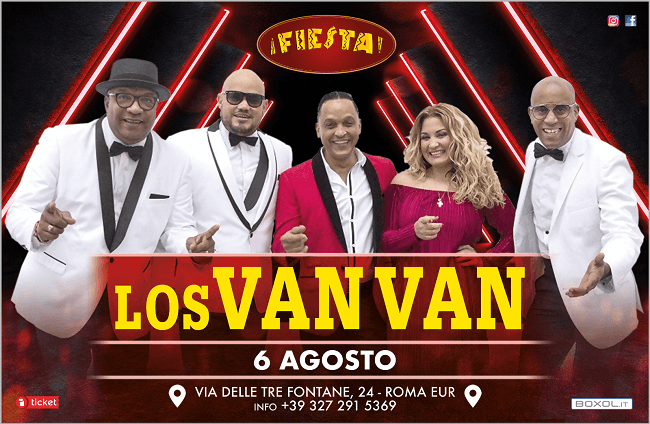
LOS VAN VAN

Los Van Van was the first Cuban group to replace a solo singer with a vocal quartet.

The musical orchestra founded by Juan Formell in Havana (Cuba) in December 1969 will arrive on Saturday, August 6th. They will present their fusion of Cuban Son, Jazz, and Rock with the incorporation of percussion, trombones, keyboards, electronic violins, flutes, bass, and drums for a rhythmic and harmonic sound that complements the quartet of voices, and you can get tickets for a value of €30.

Sr Ortegón is a big success in Hollywood

Our nice talk

Good afternoon, we have here José Miguel Ortegón. He is a music producer, composer, DJ and violinist. Pleasure to meet you, Mr. Ortegón, how are you feeling?

I’m fine. Thank you very much for the invitation.

Your name is José Miguel Ortegón, but you are known as Sr Ortegón in artistic circles. Why?

I think that is a cultural tradition in the Hispanic world. Men are always called by their last name. That was natural and came spontaneously. Taking advantage of that señor is a Latin cliché, it was perfect for the work I was doing.

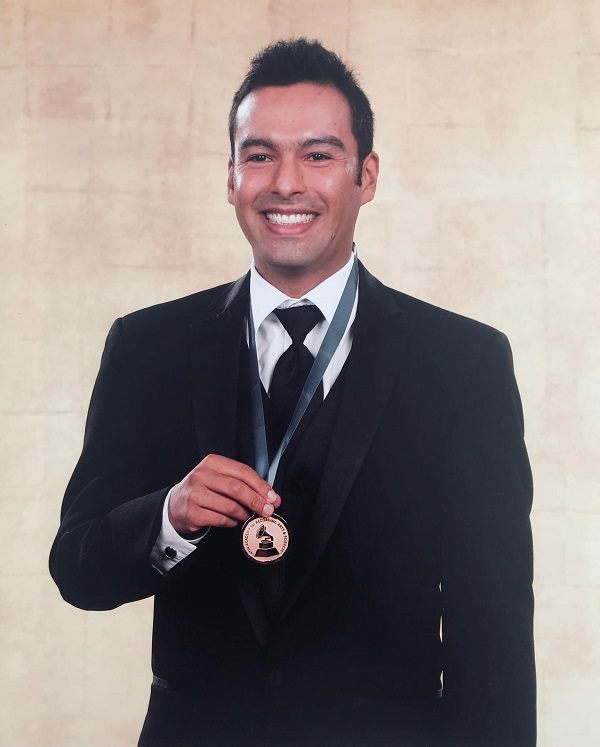
José Miguel Ortegón at the Latin Grammys

What was your first approach to the entertainment world?

I started recording with Guayacán, which is a salsa orchestra from Cali, Colombia. I received a lot of help from maestro Zumaque, who is a musician that does contemporary and classical fusion with Latin American rhythms. This was during my teens.

Then, you ventured into other facets, correct?

That’s correct. I started studying music at the conservatory when I was five years old and was in some rock bands. You know that our culture is divided into two musical styles in Latin America, which are classical and popular music. My first professional recordings came with the first computer we had at home as well as most of my generation. When the first computers came to our homes, the concept of music also changed.

How did you go from playing rock and classical rhythms to boogaloo and urban rhythms? How was that transition?

Cali has always been very linked to pachanga, boogaloo and charanga. Rock comes from blues and boogaloo is more or less part of the same trend, so it’s not uncommon for rockers to want to experiment with those rhythms I mentioned at the beginning. I also had teachers at the conservatory who taught classical music during the day, but played with professional orchestras at night. For me, that transition is inevitable.

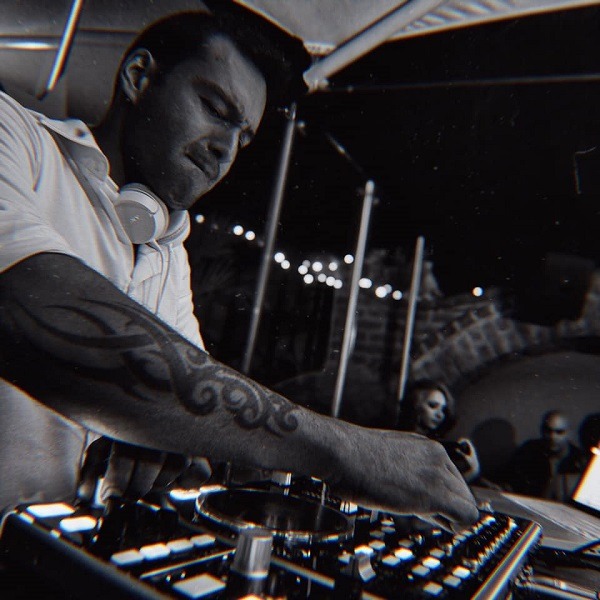
Sr Ortegón doing his job as a DJ

You have created music for series, movies, digital platforms, Disney, Netflix, animated series, etc. Did you think your career would go that far?

Thank you for your words. I make music. I have the same worry since I started in this world, I think I still have a lot to learn and maturing ideas, The truth is I never imagined it. I simply took the opportunity before me in Europe, where I was studying musicology at the Sorbonne. It is true that Latin music is very exotic there because there are not many Latin composers and producers.

At university, I got a chance to make music for a television channel. Subsequently, there was a snowball effect, a colleague who is now working in Hollywood contacted me for one of those jobs and that was my big opportunity. When I got the script, it was a Dominican series, which made me immediately discard salsa and mariachis. I thought about using bachata or something that really belonged to the Dominican Republic.

When you talk about Hollywood, it should be emphasized that there are several generations of Latinos born in the United States of any origin. A Cuban knows that a ranchera is not Cuban but from Mexico. Such a thing happenned a lot in the industry in previous years. The same rhythms and mixes were always used regardless of the Latin country involved in a production like, for example, West Side Story. I love that movie and think it’s excellent, but the music they used doesn’t sound Puerto Rican at all. That’s why I thought I should take this opportunity to respect the rhythms and traditions of each country. I know we all speak Spanish but each country has its own identity, so I respectfully take each rhythm and use it to make it authentic.

Latin music in Hollywood

When you did music for any series or film, were you given parameters to follow or did you have to be free to experiment with your music?

That’s one of the best questions I’ve ever been asked because the vast majority of producers are American and not connected with Latin culture, so salsa and merengue are the same for them. I just tell them to trust me, send me some samples to guide me, we analyze everything and move on. If the director or the editor doesn’t like what I did, we reach an agreement. Nowadays, this process is easier because there is more musical and cultural education on the part of the producers in the United States.

Sr Ortegón at the party in the Jetset Magazine

You were nominated for a Latin Grammy thanks to a mix of boogaloo and urban rhythms that you made. How did you think of it?

I’m 40 years old, so I spent my adolescence at the time when Californian hip hop was in full swing. Cali is one of the most Americanized cities in Colombia, so you were always listening to all those American groups and songs. Mixing all those rhythms with boogaloo has always seemed very interesting to me and I had no idea how to do that until I learned.

Since a mix between hip hop and Latin music is complex to make, a lot of people gsurrended and opted for reggaeton as culture. There are other groups such as Control Machete that have done an excellent job, but I felt they were lacking something. That’s how I started to learn, but it took me a long time because of lack of resources, since I didn’t have the right elements to respect the codes. So, I did a boogaloo song and a hip hop beat to mix them, which made me realize that they are sister rhythms. This work was very popular and even appeared in series and movies.

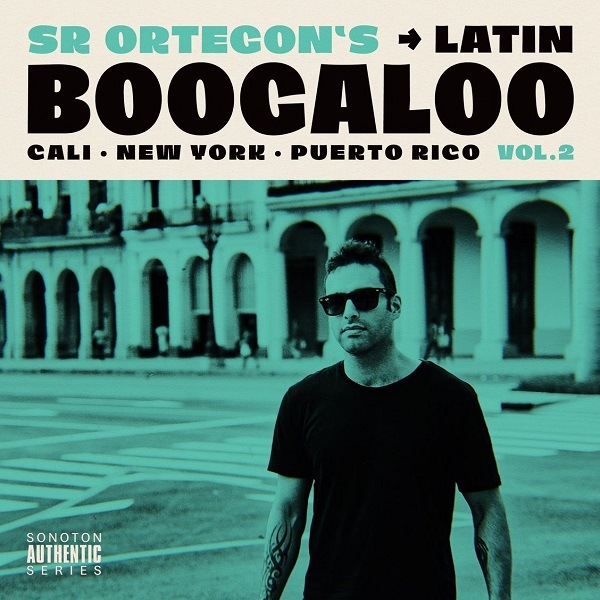
In fact, I heard about you from an email that included your new album entitled Latin Boogaloo Volume 2. I also listened to Volumen 1 and noticed the difference. What is the main difference between one volume and the other?

Volume 1 includes what I called Boogaflow, which is boogaloo with flow. Volume 2 is pure boogaloo. I tell you this because, for example, salsa is a term, but it’s really Afro-Cuban music made by Nuyoricans in New York if we go back to basics. Prior to that New York sound known as salsa, there was that phenomenon called boogaloo, shingaling or Latin soul.

I had to listen to disco to get to those rhythms because nobody teaches you anything about those genres. Unfortunately, those who created those rhythms are already dead or doing other things like Joe Cuba, Jimmy Sabater, the people from Sexta All Stars, Eddie Pamieri, Ray Barreto and many others. That fashion lasted about six or seven years and that was that. Every time I go to create a boogaloo, I have to listen very well because there are no scores or models to follow. Poncho Sanchez is one of the few who brings up the torch of that sound, although he is inclined more to Latin jazz.

I wanted to do a boogaflow, but my editor David Santiago proposed to me that we make two versions, one boogaloo version and the a little more acoustic one. What we were looking for was to please both audiences, the one who wants something urban and the one that wants something classic.

Which of the two volumes was more successful?

I know you have the answer (laughs). Volume 2 was the most successful. Number one has put me in touch with my salsa friends, but I didn’t want to tell them that I was going to make a volume two because boogaloo is not a very common rhythm.

Cover of the album Latin Boogaloo Vol. 2

  • « Go to Previous Page
  • Page 1
  • Interim pages omitted …
  • Page 35
  • Page 36
  • Page 37
  • Page 38
  • Page 39
  • Interim pages omitted …
  • Page 96
  • Go to Next Page »

International Salsa Magazine (ISM) is a monthly publication about Salsa activities around the world, that has been publishing since 2007. It is a world network of volunteers coordinated by ISM Magazine. We are working to strengthen all the events by working together.