
 |
 |
 |
 |
 |
|
 |
|
 |
|
 |
|
 |
|
 |
|
 |
|
“We are the True Latin music world network” |
|
 |
 |
|
|
|
|
|
|
|
|
|
|
|
|
|
|
|
|
|
|
“We are the True Latin music world network” |
|
|
|
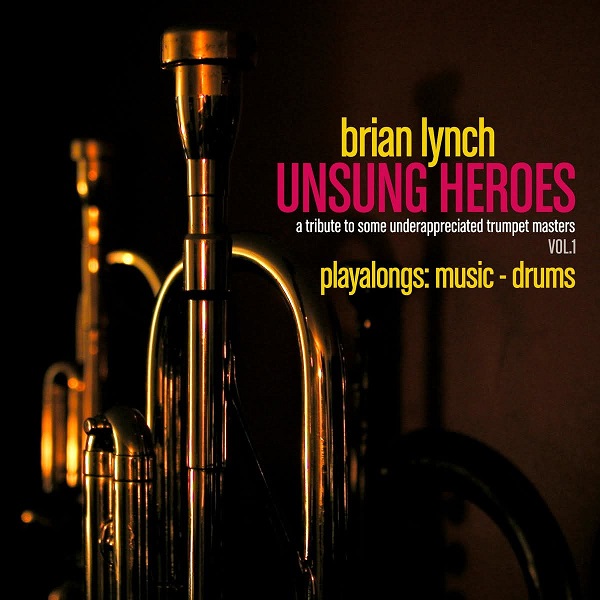
Lynch has been on the jazz scene for the better part of the last three decades. He is known primarily for his work as a sideman for many of the top musicians in jazz and as co-leader of a major Latin ensemble alongside Eddie Palmieri. For a long time, he has championed the music of the great trumpet players who preceded him.

On this album, which is a natural follow-up to his 2000 album, Tribute to the Trumpet Masters, Lynch pays homage to the works of some of the most prominent, yet undeservedly unknown, jazz trumpeters, such as Joe Gordon, Claudio Roditi, Tommy Turrentine, Louis Smith, Idrees Sulieman, Charles Tolliver, and Kamal Adilifu (also known as Charles Sullivan).
Some of the tributes consist of performing compositions by these artists. In other cases, Lynch performs a tune he composed in the artist’s honor. In all cases, Lynch and his team, which includes Vincent Herring and Alex Hoffman on saxes and Rob Schneiderman on piano, are more than up to the task. They make each of the honorees proud.

In short, Unsung Heroes is Brian Lynch’s best album as a leader in his long career. The musical mastery is top-notch, the compositions are always interesting, and the backstory of the whole project is a compelling history lesson for jazz trumpet fans who want to dig deeper than Miles, Diz, and Satchmo. The best news is that there’s more where that came from: this is only Volume 1 of the project; Volumes 2 and 3 are currently available online as downloads.
Paying tribute to the unsung masters of the jazz trumpet is a natural project for trumpeter and flugelhorn player Brian Lynch (the original text mentioned “Bryan Lynch” in this section, it is assumed to be a typo), who has been immersed in the hard-bop lineage since he was part of Horace Silver’s band in the 1980s.
He is accompanied by a mid-sized group that includes Vincent Herring on alto saxophone, Alex Hoffman on tenor saxophone, Rob Schneiderman on piano, David Wong on bass, Pete Van Nostrand on drums, and Vicente “Little Johnny” Rivero on congas.
Brian Lynch – Unsung Heroes Vol. 1 (2011)
Tracks:
Recorded October 12-13, 2008 and December 22, 2009 at Knoop.
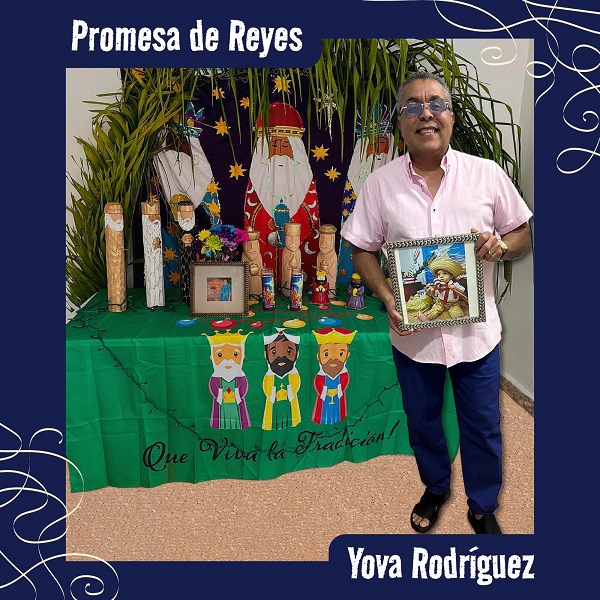
The most recent track, titled “Promesa de Reyes,” is something I’ve wanted to do for a long time. I have to tell you that producing a Christmas production is a bit difficult because the season is so short, and it’s hard to develop the theme as it should be. But I was determined to do it because it’s a gift or tribute to the memory of my mother, Doña Delia Ruiz.
The inspiration for “Promesa de Reyes,” in reality, when you listen to the song, what you’ll realize is that it’s a narration. That is, in this track, I’m going to describe, from when I was a child, how I used to watch my mom carry out the process of her “Promesa de Reyes,” from the time they sent someone to cut the palm leaves to make the altar, until that altar with the Three Wise Men was completed, and the next day, well, we knew we had the party.
I’ve been incredibly lucky because the track was arranged by Leo Morales, originally from Colombia. It turns out that Leo is influenced—he learned to play the trombone and became a musician because of Willy Colón’s Asalto Navideño records. So, he told me that since then, he started studying the authentic, folk music of Puerto Rico to find out where Willy got those kinds of ideas. This is a very special track because we managed to include Puerto Rican danza (dance), Puerto Rican bomba (drumming and dance), and salsa.
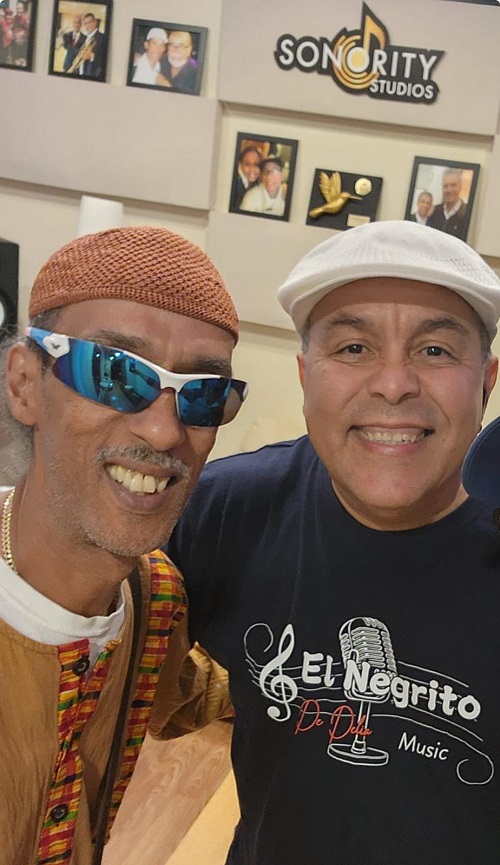
I sing and I wrote the song. On piano is Vicente Báez, the current pianist for Sonora Ponceña. On bass is Puri Matos, a master based in New York. He was recommended by Anthony Carrillo and has been doing all my projects with me for two years. Anthony Carrillo did all the percussion. On trumpet is Agustín Someillan from the Cuban National Sextet. The chorus singers are Nino Segerra, Danny Dávila, and Caneca Rosa. Manny Trinidad, recommended by Nino Segarra, played the Puerto Rican cuatro.
The recording studio was Nino Segarra’s. This is about the fourth or fifth track we’ve done there in his studio with Nino.
Nino, besides being a singer, is a professional teacher. He’s an expert who knows how to guide you, how to explain things the way they should be; he doesn’t pressure you; he lets you develop. In other words, I feel extremely comfortable working with Nino; the experience of working with Nino is very satisfying.
People tell me, “Yova, you’re crazy. You get on a plane just to go record a voice track,” and I tell them yes, for two reasons:
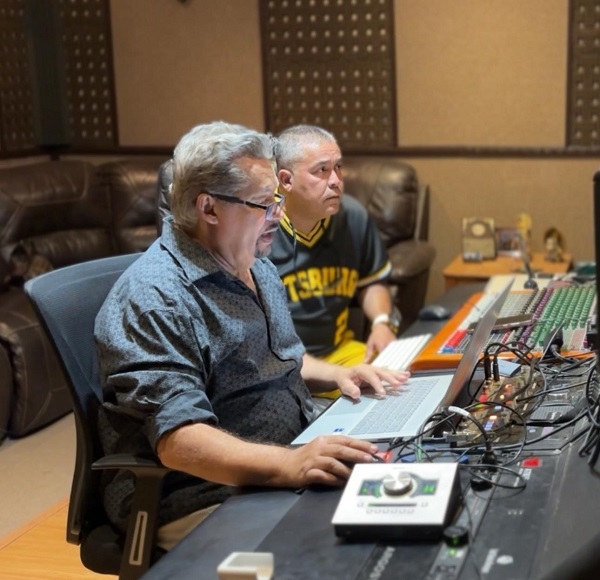
Yova, the time in the studio to make the track is very important. Talk a little about that.
Look, Augusto, remember that depends on the type of musician you have there, right? There are musicians who are sight-readers of the first caliber.
These musicians tell you, “Send me the charts two days before,” they skim them. When they get to the studio, they’re done with their part in half an hour, 20 minutes, 15. But there are others who you have to take at a slower pace. For example, in Anthony’s case, Anthony told me, “Send me the demo, and I’ll listen to it.”
But Carrillo is from another planet. I send him his demo; he listens for two days beforehand. And he tells me, “Let’s go to the studio.”
And Anthony recorded flawlessly. Anthony didn’t take three hours to do four instruments; he did it in about two hours, and everything was excellent.

Victoria listens to you and works with what you ask for. The experience with her was excellent, and I hope it continues to happen many more times.
Piano: Vicente Báez
Bass: Puri Matos
Puerto Rican cuatro: Manny Trinidad
Conga: Anthony Carrillo
Bongó: Anthony Carrillo
Snare Drum (Redoble): Anthony Carrillo
Puerto Rican güiro: Anthony Carrilllo
Cuban güiro: Edwin Caneca Rosas
Trumpets: Agustín Someillan
Chorus: Nino Segarra, Edwin Caneca Rosas, Danny Dávila
Singer: Yova Rodríguez
Studios: Sonority in New Jersey (Recording of all Percussion). Engineers: Nino Segarra
Mix: Héctor Mora, HM
Producción Medellín Colombia
Arrangement: Leo Morales
Video Production: Jhonatan Chávez
Composition: Yova Rodríguez.
Graphic Designer: Victoria Rivas Rojas.
Also Read: Yova Rodríguez. The jibarito of Mayagüez





| Events – November 2025 | ||
|
|
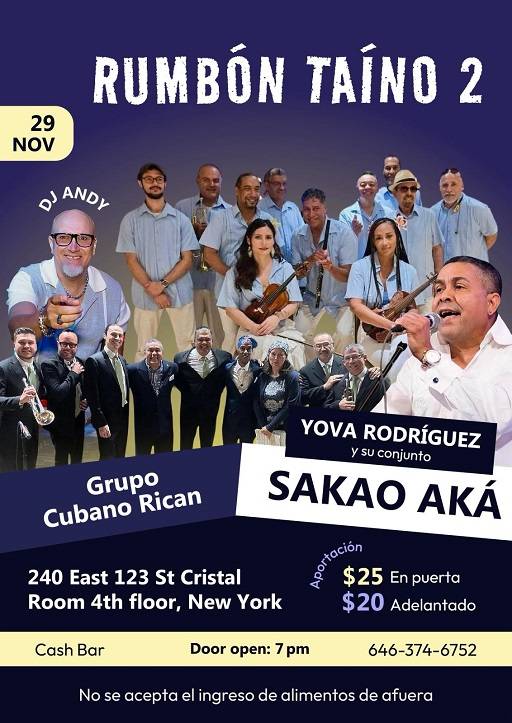 |
RUMBON TAINO 2Nov 29, 2025 240 East 123 St $ 25 |
| Next Event – December 2025 | ||
|
|
 |
AzesuDec 06, 2025 Rhythmix Cultural Works +1 510-865-5060 |
| Festivals – November 2025 | ||
|
|
 |
San Francisco SBK CongressNov 21 / 23 2025 Hyatt Regency San Francisco |






Directory of North American nightclubs |
||
|
|
||
|
|
|
|
|
|
||

CALIFORNIA |
|

ILLINOIS |

MICHIGAN |

NEW JERSEY |

NEW YORK |
|
|
|
|
|
|
|
|
Latin America / Argentina/ Buenos Aires
Kadenza Dance School is a dance academy located in Buenos Aires, Argentina. They don’t just teach people the steps of a musical rhythm; they demonstrate through their teaching that dancing nourishes the spirit of those who practice it. Not only that, but dance also allows for a connection with emotions, giving students more freedom for their spirit or soul.
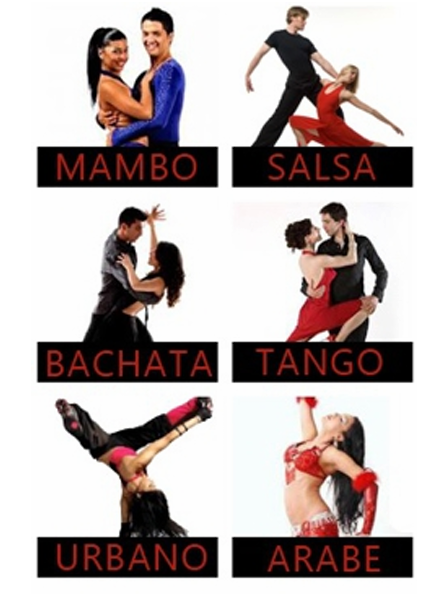
KADENZA is a school geared toward students of all ages and with different goals, whether they wish to pursue a professional path or use dance as a form of recreation or therapy. All their students and teachers benefit from a comfortable reception area, spacious studios equipped with mirrors, barres, wooden floors, high-quality sound systems, and Wi-Fi throughout the studio. In short, it’s an ideal place to learn with passion, as the atmosphere is full of joy, respect, and good vibes, where one can enjoy what they love to do most… which is dancing.
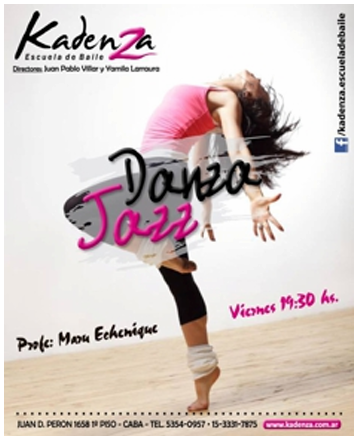
They also state that they are seriously committed to the quality of instruction, where qualified professors and instructors give their best in every class. This ensures their students incorporate the essentials of each technique and develop the maximum potential of their learning in the rhythms chosen by the student.
The School’s Directors are Yamila Larraura and Juan Pablo Villar, who mention that, “Anyone can open an Academy, but few are the ones that make a difference.”
If we want to know more about the history of these two directors, we can start with Yamila Larraura, who was born in Argentina. Since she was a child, she began listening to Afro-Latin music thanks to her father, “Jorge Washington Larraura,” who was of Uruguayan origin. When she was 14, she went on vacation to Villa Gesell with her parents and a friend of theirs. It was on this trip that her interest in Salsa was awakened, as she went to a place near the beach that played Salsa music and offered classes in the afternoon with all the people from the beach.
One of the songs heard back then was “El Muerto se fue de Rumba” by the group “Las Sabrosas Zarigüellas,” which was very catchy for everyone who heard it. After her vacation, she decided to enroll in Salsa classes, where her teachers were Pablo Demaro and Kimena Puente.
As for Juan Pablo Villar, during his youth, he worked as a waiter in a bar and took theater classes, which also included lessons in national folklore and Latin rhythms (Salsa). This was his first contact with dance, and from that moment, he developed an interest in it. One day, a person came to the bar and mentioned that they taught classes in a studio, asking if they could leave flyers at the bar for people who wanted to dance. Knowing this, Juan Pablo Villar decided to go to the Salsa classes taught by Professor Pablo Demaro.
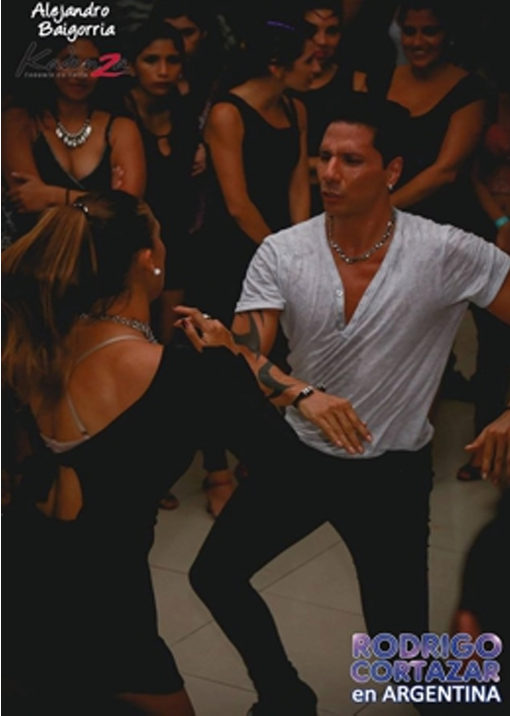
They explain that the Salsa classes back then were in a Cuban style, which featured fairly simple movements and figures. It was in these very classes that the future directors of KADENZA, Juan Pablo Villar and Yamila Larraura, first met.
To gain a better experience, and to teach and give classes, they had to learn new techniques. They decided to seek out the best teachers in Argentina, who at that time were from the “Escuela de Mambo en Dos,” led by teachers Liz Paredes and Carlos Aragón, until they moved to Italy in 2007.
Afterward, they formed a dance group with their colleagues called “Combo Bayres,” during which time they toured the country and performed on various stages. In 2007, Liz Paredes and Carlos Aragón returned from Italy and formed the “Compañía Mambo en Dos,” where Yamila Larraura and Juan Pablo Villar joined the project. They gained great experience in the artistic world, traveling to different Argentine cities like Mar del Plata, Rosario, among others.
They also had the opportunity to travel abroad, attending the Salsa Congress in Uruguay, and later going to the United States, to New York City, to present at the Salsa Congress where they met great dance legends like Eddie Torres. Another great experience they had was the honor of being the official dancers for the famous Venezuelan Salsa singer “Oscar D’León” and the Dominican Salsero José Alberto, also known as “El Canario.” By 2010, they left the Mambo en Dos company to start their own school.
The academy’s beginning went without a name for a year, simply referred to as Pablo and Yamila’s school, but they were always looking for a name that would identify the essence they wished to convey. They eventually came up with “Cadenza,” which in Italian means “style of free rhythms.” To make the name more original, they changed it to “KADENZA,” feeling proud of their choice.
For more information, contact them at:


