• Skip to primary navigation
  • Skip to main content

International Salsa Magazine

  • HOME
  • Previous editions
    • 2026
      • ISM / May 2026
      • ISM / April 2026
      • ISM / March 2026
      • ISM / February 2026
      • ISM / January 2026
    • 2025
      • ISM / December 2025
      • ISM / November 2025
      • ISM / October 2025
      • ISM / September 2025
      • ISM / August 2025
      • ISM / July 2025
      • ISM / June 2025
      • ISM / May2025
      • ISM / April 2025
      • ISM / March 2025
      • ISM / February 2025
      • ISM / January 2025
    • 2024
      • ISM / December 2024
      • ISM / November 2024
      • ISM / October 2024
      • ISM / September 2024
      • ISM / August 2024
      • ISM / July 2024
      • ISM / June 2024
      • ISM / May 2024
      • ISM / April 2024
      • ISM / March 2024
      • ISM / February 2024
      • ISM / January 2024
    • 2023
      • ISM / December 2023
      • ISM / November 2023
      • ISM / October 2023
      • ISM – September 2023
      • ISM – August 2023
      • ISM July 2023
      • ISM Edition June 2023
      • ISM – May 2023
      • ISM April 2023
      • ISM March 2023
      • ISM February 2023
      • ISM January 2023
    • 2022
      • ISM December 2022
      • ISM November 2022
      • ISM October 2022
      • ISM September 2022
      • ISM August 2022
      • ISM July 2022
      • ISM June 2022
      • ISM May 2022
      • ISM February 2022
      • ISM January 2022
    • 2021
      • ISM December 2021
      • ISM November 2021
      • ISM October – 2021
      • ISM September 2021
      • ISM August 2021
      • ISM July 2021
      • ISM May 2021
      • ISM April 2021
      • ISM June 2021
      • ISM March 2021
      • ISM February 2021
      • ISM January 2021
    • 2020
      • ISM December 2020
      • ISM November 2020
      • ISM October 2020
      • ISM September 2020
      • ISM August 2020
      • ISM July 2020
      • ISM June 2020
      • ISM May 2020
      • ISM April 2020
      • ISM March 2020
      • ISM February 2020
      • ISM January 2020
    • 2019
      • ISM December 2019
      • ISM November 2019
      • ISM October 2019
      • ISM Septembre 2019
      • ISM August 2019
      • ISM July 2019
      • ISM June 2019
    • 2016
      • ISM December 2016
  • Spanish
  • Download Salsa App
    • Android
    • Apple

Search Results for: Cuban music

Federico Betancourt “Pioneer of Salsa in Venezuela”

Latin America / Venezuela / Carabobo

Jesús Federico Betancourt was born in the city of Valencia, Carabobo state, on March 22, 1940. He was always attracted to music from a very young age.

Photo of Federico Betancourt on stage

In his adolescence, he liked Cuban rhythms, being influenced by Sonora Matancera, Mon Rivera, Eddie Palmieri and Joe Cotto. Before entering the entertainment world, he works at the Bank of Venezuela.

He affirms that he has not carried out formal studies at the musical level, learning the necessary theory to be able to perform as an orchestra conductor, but without interest in interpreting any instrument, but with a well-tuned ear, which has allowed him to remain in the music business for decades. , in fact on certain occasions he is named as the King of the Güiro.

Photo by Federico Betancourt

His career began when he entered the Los Selectos Orchestra, where they played songs by the Billos Caracas Boy’s and the Los Melodicos Orchestra, which were at their peak in the 1960s, all this in a particular way, said Orchestra did not go beyond that.

In 1965, Federico Betancourt decides to satisfy his artistic restlessness and founds a band called Federico y su Combo Latino. The members that made up this band were chosen from among the founder and together with Roberto Monserrat.

But it was not until the middle of 1966, when the twenty-six (26) year old undertook the recording of the LP that would make him famous forever. This record production entitled LLEGO LA SALSA, would mark an important stage in Venezuelan Salsa, because it was the first LP that made use of the word SALSA in the country.

Federico Betancourt
Federico Betancourt

Federico Betancourt himself recounts that the Venezuelan announcer Phidias Danilo Escalona had a Radio Program called LA HORA DE LA SALSA, EL SABOR Y EL BEMBÉ, where all the Cuban and Puerto Rican Caribbean rhythms that were fashionable at the time were placed, among those who highlighted La Sonora Matancera with Celia Cruz, Tito Puente, Joe Cuba, Tito Rodríguez among others, and who was the one who supported them the most in terms of recording the album.

The production was recorded under the Palacio label, and the LP was titled LLEGÓ LA SALSA, he affirms that the title was chosen without taking into account the importance that it would revert in the future, he also affirms that it was not the name that gave him success , the album was a “bump” in sales, since all the songs were the most requested at the time, using his words: “The album sold like hot cakes”.

The music lovers of the time requested it on specialized sites such as the LA SALSA album. Federico says: “The father of the word SALSA was Phidias Danilo Escalona, ​​he used it for the first time in his radio program, and I, humbly, with the success of my LP, gave him the push for its mass use.”

Federico Betancourt - Photo
Federico Betancourt – Photo

In Venezuela, the word SALSA was welcomed by the public willingly, since it suggested a mixture of flavors, which was exactly what happened in the Phidias program, but at the level of rhythms. After the appearance of Federico’s album, all the shows that were performed at the level of Caribbean and Cuban rhythms, carried the name of SALSA.

It is important to name the musicians who took part in this historic production: The musicians are: Ali Rojas Bongo and Cencerro, Roberto Monserrat Music Director and Timbal, Pedro Medina Congas, Alfredo Arcas Trombone, César Pinto Trumpet, Enrique Iriarte Piano, Rafael Prado Bass, Carlín Rodríguez Singer and maracas, Dimas Pedroza Singer, Federico Betancourt Güiro and Director of the Orchestra. The musical arrangements were by the famous trumpeter Eduvigis Carrillo (RIP). Production themes:

Llego la Salsa CD - Federico su Combo Latino
Llego la Salsa CD – Federico su Combo Latino
1.- Cocolía

2.- Conmigo
3.- El Pachanguero

4.- Sancocho Caliente
5.- Guaguancó Manía

6.- Celosa

7.- Despierta Rumbero

8.- No Critiquen
9.- Saoco

10.- Baila Yemaya
11.- Café Y Pan

12.- Que Me Querías

After the success obtained with the record work, the time came for the first international outing, which was to Colombia, in 1969. It happened because the singer of Los Melodicos, Víctor Piñero, informed Betancourt that he was stuck in Cartagena and Barranquilla with the themes El Cobrador and Federico Boogaloo. After the information, the young musician went to the neighboring country and got a contract for the famous Reina del Mar parties, in Cartagena, on November 11, 1969.

The experience of the band was so good, that in 1970 they returned to visit the country. From then until our days Federico y su Combo continues to be an emblematic and legendary band in Venezuela, for this reason the WEB of the classy salsero SALSA BRAVA, offers its respects to such an important salsa figure.

Discography
1966 Llegó La Salsa Palacio (LPS-6171)
1966 Salsa y Sabor Palacio (LPS-6185)
1967 Más Salsa Palacio (LPS-6205)
1967 Durísimo – Vol. 4 Palacio (LPS-6216)
1968 Federico Boogaloo Palacio (LPS-6228)
1968 Psicodélico Con Salsa Gilmar (LPG-110)
1969 Mejor Que Nunca Gilmar (LPG-111)
1969 Vibración y Ritmo Sonus (102-17080)
1970 Dos Sets Velvet (LPV-1539)
1970 La Machaca Velvet (LPV-1539)
1973 Federico Si Te Pone A Bailar Palacio (LPS-6332)
1975 Derrape De Salsa BASF (10.068)
1976 Siguelo Ahí…. a Lo Cortico BASF (10.070)
1977 Ayer y Hoy BASF (10.076)
1977 Esto Es Lo Mejor Palacio (LPS-6372)
1978 Mis Exitos y Más BASF (10.079)
1978 Sabor Foca (LPF-10.037)
1979 Federico y Su Combo Foca (LPF-10.120)
1979 Federico y Su Orq. – El Maestro Discomoda (DCM-1128)
1980 Federico y Su Orq. con Memo Morales Discomoda (DCM-1148)
1982 No Le Digan Integra (PF-14.075)
1983 Nuevamente Palacio (LPS-66.541)
1984 SaaaBroooSo! Palacio (LPS-66.552)
Compilation
1996 Mis Exitos y Más…Vol.1 Sonograma
1996 Mis Exitos y Más…Vol.2 Sonograma
1996 Mis Exitos y Más…Vol.3 Sonograma
2005 El Pionero De La Salsa Palacio
2008 Salsa De Oro Gilmar


The Son Rumbero Academy: E-Learning in virtual classrooms reached the world of dance

Latin America / Venezuela / Caracas

The Son Rumbero Academy, in step with technological advances, now opens a virtual classroom that will allow you to access an interesting range of online courses open to all through distance education processes with invited international instructors.

The teaching and learning processes are led hand in hand by education professionals, people who handle various tools and techniques that allow reaching the objectives of generalized instruction, now, the means and the contexts that affect this process are in the same way. of great importance to meet the aforementioned goals, hence the institutions invest so much time in physical improvements for the setting of the spaces destined to unite these processes.

It is not new to speak that technological means have invaded all areas of knowledge, there is no longer an area or content that is not already in process or in the process of being taught through the internet, hence the term distance learning. It is not something that escapes from the normality of our day to day.

Professor José Manuel Pérez, director of the Son Rumbero Academy with a great career in the field of salsa and education professional in the area of ​​computer science, is carrying out a process of teaching dance through virtual means, in this case, using the so famous virtual classrooms, where it focuses on asynchronous and asynchronous communication processes by which, the didactic interaction with the students predominates as the elementary basis of teaching, the student becomes the main center of self-information managing their learning through tutors and classmates from the open classroom for the specific dance specialty, is learning to dance by learning, it is doing it between appropriate means and environments.

Aula Virtual - Son Rumbero Academy
Aula Virtual – Son Rumbero Academy

The ways and methods of how to educate in the world of dance have always been maintained, in fact many people look for different alternatives given the circumstances of their tasks, work, home, occupations, in itself, an endless number of causes motivate the desertion when it comes to complying with schedules and routines in dance halls or gyms…

How many do not avoid entering this face-to-face modality due to little free time or the long time it takes to travel to a location, hence new ideas arise that facilitate access to world of dance from any corner of the world and at the time you want, and who would not like to adjust their classes to the hours and days they prefer, even more so if they can change them weekly according to their availability.

The Son Rumbero Academy project is not an original project, E-Learning and virtual classrooms have been in the educational world for several years, only that for the context of dance it was present in tutorial videos, a positive element but more of the same circle for some:

With a virtual classroom, the teaching process is extended, it not only depends on what the student has seen and practiced, in this we obtain constant supervision of the process, teachers dedicated to nourishing theoretical information and practicing something extremely important when understanding music and shaping it in dance it is about taking evaluations, participating in forums or conversations with several students in the same classroom, surveys, tutorial videos, correction process by videos sent to the teacher, easy access to multimedia elements…

from songs to explanatory audios, a world full of of elements that support to a greater degree the fact of learning from any dance discipline, not to mention seminars or professional courses, certifications of improvements in methodological processes in teaching for teachers and instructors, going from evaluation processes for dance competitions to complete percussion courses, a whole world of knowledge and elements given to the me You work in dance and now in music.

Son Rumbero Academy
Son Rumbero Academy

For this month of April, the project will begin with 3 high-impact courses, one on Cuban folklore dictated by Mr. Damian Ballester, a certification for instructors based on planning, evaluation and methodological processes of teaching by Professor José Manuel Pérez , closing with a theoretical-practical seminar on the complex of the rumba soon dictated by a professional in this area, director of one of the largest Cuban groups and participate in endless documentaries oriented to the complex of the rumba, a surprise that They will give us soon.

In the same way, they are betting on a new teaching method for beginners, those who perhaps want more privacy when starting steps in the world of salsa or another genre, new media that can contribute to the development of the diffusion of salsa in the world.

The invitation is now open for you to follow the accounts of the son rumbero academy on Instagram and Facebook at @sonrumbero, by the numbers of its offices in Colombia +573022582306, Venezuela +584122110104, Chile and soon in Peru and Argentina.

Nicaraguan composer and pianist Donald Vega’s hard-luck story

The character’s story we are going to talk about today is extremely fascinating, since the challenges he has had to endure did not prevent him from becoming the great musician he is now. We are talking about Donald Vega and the inspiration he is for those who believe their dreams and goals impossible to achieve.

Donald and his piano
Nicaraguan composer and pianist Donald Vega and his piano

Donald Vega and his interesting story

Donald Vega is a composer and jazz pianist born in Masaya, Nicaragua, whose family has had musicians for several generations. His grandfather, Don Alberto Gutiérrez Laguna was a composer and multi-instrumentalist and had a love for music that was passed down through his children as they grew older. This was the case of his uncle, Tránsito Gutiérrez, who was honored in 2022 at the Rubén Dario National Theater for his great artistic career.

Tránsito was one of the great inspirations for his nephew to become interested in music and play the piano at the tender age of three, guided only by his ear. His grandfather Alberto, seeing this, wanted to teach his grandson Donald to read music and prepare him as well as possible for the future. As part of this preparation, he attended the conservatory to study the greatest exponents of classical music such as Beethoven, Chopin and Mozart. 

Unfortunately, his parents quickly understood that the country was not safe for their son to pursue his dreams. 

Challenges of adolescence 

At that time, 15- and 16-year-olds were forced to join the Nicaraguan army, so his mother left the Central American country to find a way to get him and his siblings out of there and give them a better future far from armed conflict. Something that struck him at that time was that there were many wakes in his neighborhood where the body was not even present, but some parts of the military uniform such as the helmet or boots. This led his mother to want to get her son out of the country, so she got him a visa to go to Mexico so he could cross the land border into the United States with his godmother. 

Donald and Poncho
Donald Vega when playing with Poncho Sanchez some years ago

His first stop was Los Angeles, where he joined his mother and applied for political asylum. At that moment, he did not have any resources to buy instruments, but he received a scholarship at a conservatory where he got much support to train properly despite the want of money.

While in school, a music teacher heard him play the piano and invited him to participate in a national music competition in Los Angeles where he won first place and was given 5000 dollars and a piano as a gift. It can be said that this was his official start in the world of music, so he is very grateful to have participated in the competition.

Sometime later, he received a scholarship to study at the Manhattan School of Music in New York and the Juilliard School of Music, of which he is now a music teacher.

Golden Striker Trio

The opportunity to belong to the Golden Striker Trio is described by Donald as incredible, since it has been a fascinating experience with an interesting beginning.

It all started when a Ron Carter’s student at Juilliard, with whom Donald made a recording together in New Orleans to be shown to Professor Carter to determine what aspects needed to be improved. Carter was so fascinated with Donald that he asked to meet him and talk with him to learn more about his work.

When they met, the professor proposed the artist to watch him live in one of his performances. After that, he had him come to his home to tell him that he was giving him the opportunity to participate in his Golden Striker Trio as a pianist, since the previous one wanted to dedicate more time to his own group. Donald has been working with Carter and his group for more than 15 years and is very grateful for what he has achieved and learned. 

Donald, Ron, and Russell
Donald Vega, maestro Ron Carter, and guitarist Russell Malone from Golder Striker Trio

Backcountry Jazz   

Backcountry Jazz is a non-profit organization that seeks to support talented youngsters with limited resources to achieve their dreams in the music industry. Donald has become part of this noble initiative motivated by the teachings of his parents, who have always told him to be generous and give of his time to others. It is for this same reason that he also teaches at the Juilliard School of Music, since sharing his time and knowledge with others gives him an incredible satisfaction.

Due to the situation he himself experienced with lack of money and instruments in order to get ahead in his passion, he understands perfectly how children and young people who do not have the resources to be successful with music feel, so he seeks to give them a hand through this organization and his mentoring.

Grammy Nomination for As I Travel

Donald talks about ”As I Travel” as a description of the path he had to pass to become the musician he is today. He was also inspired by his journey across more than 44 countries he has visited with different musicians including, of course, Ron Carter.

The whole album is inspired by his experiences. An example of that is ”Baila! Dance Like No One’s Watching”, which is inspired by the happiness of those around him, especially his son, his biggest inspiration for writing the song. It is a celebration of life, family and his countrymen in Nicaragua.

Donald and Ruben
Rubén Blades and Donald Vega posing for the camera

Another example worthy of mention is ”I Know I can Fly”, which was inspired by the host of challenges he faced upon arrival to the United States and the whole process of adapting to the country, its lifestyle, its climate and its language. It was also inspired by his determination to succeed despite all the challenges he faced along the way. 

Read also: Cuban pianist Daniel Amat achieves his dream abroad

Yerba Buena Gardens Festival 2018 Begin this May in the heart of San Francisco

North America / USA / San Francisco

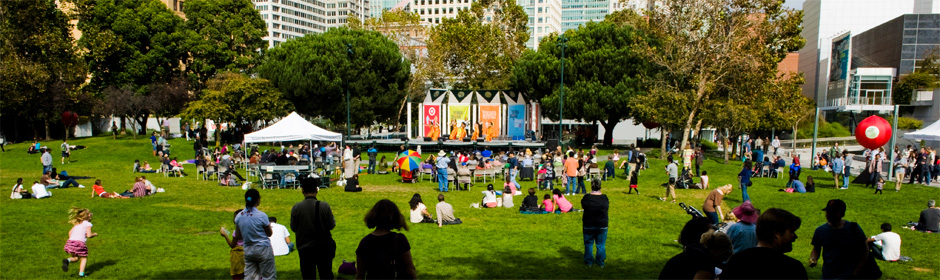
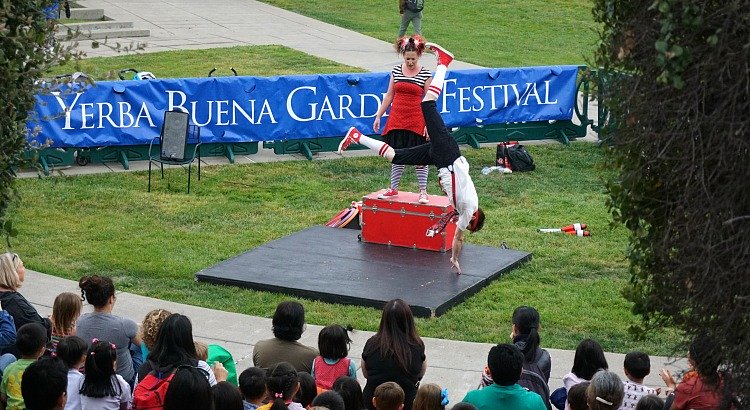
2018 Yerba Buena Gardens Festival (YBG Festival) proudly announces the lineup for its 18th Season.

The tradition continues to downtown in San Francisco! Hang out this new season with the first all-female mariachi ensemble, Mariachi Flor de Toloache + Mexican vocalist, composer, and guitarist Diana Gameros on Sunday, May 6 at 1:00pm, the first concert of this year’s 100 admission-free events.

2018 Yerba Buena Gardens Festival (YBG Festival)

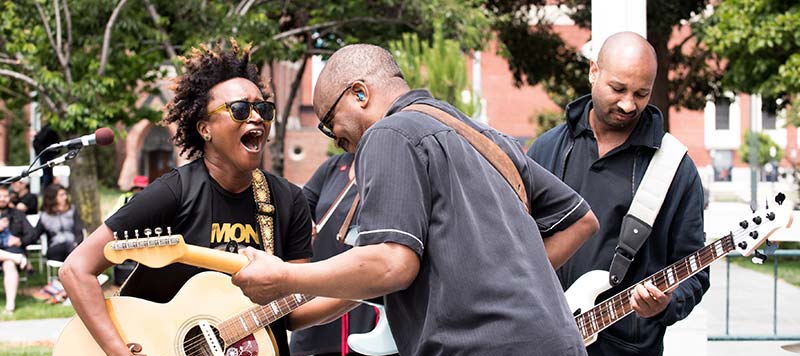
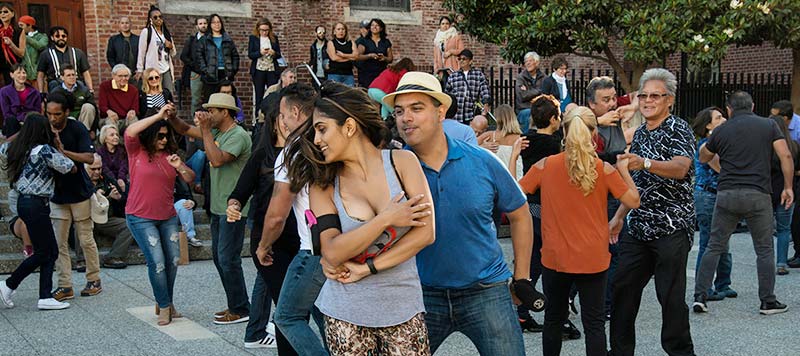
The very popular series Let’s Go Salsa@Jessie also will have the best Latin artists, such as: “New Mambo Retro Salsa” group Cabanijazz Project on May 17, the nine-piece combo Bululú led by Venezuelan-born percussion master and vocalist Lali Mejia on June 21, the Bay Area’s inventive Cuban band Pellejo Seco on July 19, among many others. YGB Festival offers you entertainment FREE completely: music, theater, circus, dance, poetry & culture programs to children and entire family with artists from the Bay Area and International guests.

Cabanijazz Project
Cabanijazz Project

Named one of the Best Urban Green Spaces in North America by Local Medias, YGB Festival is a world-renowned cultural destination that offers three outdoor stages to performances for Bay Area residents, families, workers, and visitors alike. Yerba Buena Gardens Festival take place outdoors in Yerba Buena Gardens, off Mission Street between 3rd and 4th Streets, San Francisco.

Photo - Thursday lunch with various artists
Photo – Thursday lunch with various artists

YBG Festival Executive/Artistic Director Linda Lucero says, “Get inspired! Treat yourself and treat your family, friends, and co-workers to the most diverse performing arts experience in the Bay Area. Yerba Buena Gardens Festival is Free, Outdoors, and fresh!”

During these 6 months (May – October) YBG Festival includes the highly acclaimed Let’s Go Salsa@Jessie! Dance series, the family-friendly Children’s Garden Series, Poetic Tuesdays with Litquake, and Thursday Lunchtime Concerts.

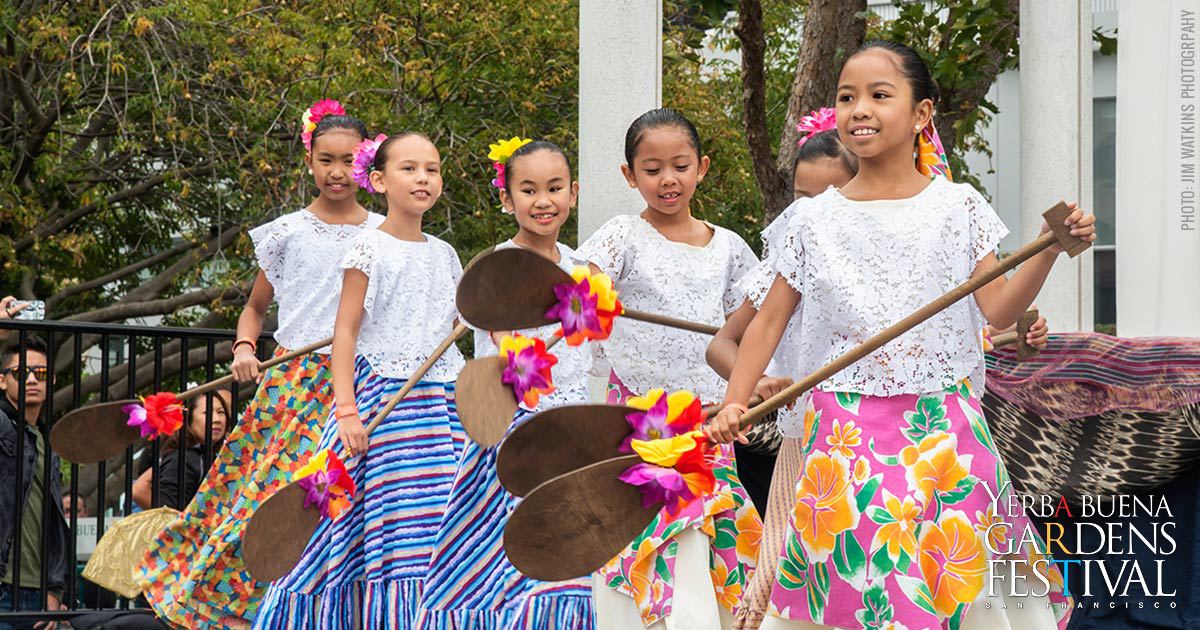
Pistahan Children at the Yerba Buena Gardens Festival

Each and every week and weekend, the Festival presents a curated lineup of musicians, dancers, poets, and artists from around the world including the Moroccan trance music of Innov Gnawa with Book of J on May 12, northwestern Indian dance with Garba in the Gardens on May 19, the 2nd Annual Yerba Buena Gardens ChoreoFest on June 2 and 3, the most celebrated gamelan ensemble outside of Bali, Gamelan Sekar Jaya.

On June 9, powerhouse Afro-Venezeulan vocalist Betsayda Machado y La Parranda El Clavo with VNote Ensemble on June 16, three performances from Festival favorites Circus Bella on June 22 and 23, the all-women klezmer group direct from New York City Isle of Klezbos with San Francisco’s Fanfare Zambaleta on July 7, Ukulenny and Cynthia Lin’s SF Uke Jam Summer Uke-Splosion! 

On July 14, Cuban saxophonist Yosvany Terry Sextet on July 28, the 40th Anniversary performance of the San Francisco Lesbian/Gay Freedom Band on July 29, one of Vietnam’s most celebrated traditional artists Vân Ánh Võ & The VA’V on August 25, Manila Disco Fever on September 1, and the Yerba Buena Gardens Festival commissioned piece from Marcus Shelby Orchestra – Blackball: The Negro League and the Blues on September 8. The Festival closes with the 18th Annual Halloween Hoopla on Sunday, October 28.

The Yerba Buena Gardens Festival Social (YBG Festival)

The popular series Let’s Go Salsa@Jessie!, the open-air salsa dance party in Jessie Square (near the Contemporary Jewish Museum), takes place on the third Thursday of each month from May to September from 6:00pm – 7:30pm.

Performers are the ‘New Mambo Retro Salsa’ group Cabanijazz Project on May 17, the nine-piece combo Bululú led byVenezuelan-born percussion master and vocalist Lali Mejia on June 21, the Bay Area’s inventive Cuban band Pellejo Seco on July 19, the U.S. State Department-sponsored Latin Jazz Ambassadors and the Mission’s own Annette A. Aguilar & StringBeans on August 16, and Los Mocosos vocalist and master salsero Manny Martinez y la Rebeldia on September 20.

This Festival brings the delightful Children’s Garden Series features interactive performances specially designed for kids and families every Friday from June to August in the Yerba Buena Children’s Garden at Fourth and Howard Streets.

The series presents performances by kid favorites: the 2018 Grammy-nominated Alphabet Rockers, Non Stop Bhangra,Māhealani Uchiyama, Parangal Dance Company, Circus Bella, Unique Derique, Caterpillar Puppets, Chelle! & Friends, Pi Clowns, Red Panda Acrobats, Venezuelan Music Project, Crosspulse, and Ka-Hon. The series ends with the wildly popular 18th Annual Halloween Hoopla on Sunday, October ­28.

Yerba Buena Gardens Festival San Francisco

Between these 100 free performances in YBG Festival are Thursday Lunchtime Concert Series that take place most Thursdays from 12:30pm to 1:30pm and is a favorite destination of downtown workers, shoppers, tourists, and students.

This year features the very best of local and international musicians including New World String Project on May 10, Community Music Center Older Adult Choirs on May 17, Dogon Lights on May 24, Kitty Pak on May 31, Latin Jazz Youth Ensemble of San Francisco on June 7, the Swedish Consulate’s Jenny Lind Concert on June 21, Dalia & the Big Violin on June 28, Manring Kassin Burr on July 5, Maikaze Daiko on July 12, Solate on July 19, Sol Development with Mino Yanci on August 2,

LINES Dance Center on August 9, Highest Ani on August 16, Faun Fables on August 23, La Patronal on August 30, John Brothers Piano Company on September 6, Daniel Riera: Future Flutist with Electric Ensemble on October 4, and Rice Kings on October 11.

CMC Older Adult Choirs

This amazing event also celebrates annually: the 21st Native Contemporary Arts Festival on June 17, the 18th Annual AfroSolo in the Gardens featuring a Tribute to Duke Ellington featuring Denise Perrier and Nina Causley with David Hardiman’s San Francisco All-Star Big Band on August 4, the 25th Annual Pistahan on August 11 and 12, and Brazil in the Gardens: Pragandaia with special guest Margareth Menezes on August 18.

Poetic Tuesdays on the second Tuesday of each month with Guest curated by Litquake, Poetic Tuesdays run from 12:30pm-1:30pm and feature an array of poets and music as well as three performances of a new one-ring circus from Circus Bella on June 22 and 23. Conceived and directed by Abigail Munn and Joel Baker for Circus Bella, the show includes static trapeze, rope walking, juggling, contortion, unicycle, original clowning, acrobatics, and more.

Free Outdoors Fresh
Free Outdoors Fresh

Let’s Go Salsa Series’ Schedule (Every Third Thursday of month from 6:00pm to 7:30pm):

  • May 17: Cabanijazz Project
  • June 21: Bululú
  • July 19: Pellejo Seco
  • August 16: Annette A. Aguilar & StringBeans
  • September 20: Manny Martinez y la Rebeldia

Venue: 760 Howard Street, San Francisco, CA 94103.

For more information and complete 18th Season Schedule, please visit www.ybgfestival.org

Virgilio Martí was an excellent rumbero and composer of the classic “Cuba Linda” where he was vocalist and percussionist in Grupo Folklorico Experimental Newyorkino

Virgilio Martí, born in 1919 in Havana, Cuba.

Virgilio Marti
Virgilio Marti

Fine Rumbero, Singer, Composer, Arranger, Percussionist, Actor and Orchestra Director well known since the late 40’s, especially as a guaguancó singer.

He began touring the world in 1949 and met his later wife in 1960 in Peru.

That same year, he settled in New York, participating in the local scene. He participated in the LP “Patato y Totico” in 1967, he also participated with his brother Eloy Martí in a Quintet accompanied by Gene Golden for the year 1979.

Israel López (Cachao), Arsenio Rodríguez, Héctor Cadavieco, Francisco Valdés, Papaíto, Tony Mayari and Mario Cadavieco also worked on that album.

He participated in the “Grupo Folklórico Experimental Newyorkino” where he was their vocalist and percussionist in 1975. During his stay with them, he composed the song “Cuba Linda”.

Another work of Martí of great remembrance is the album titled: “Saludando A Los Rumberos” published by the Caimán label in the early 80’s and in which the Cuban acts as vocalist and main star.

Grupo Folklórico Experimental Newyorkino

In it Martí is involved with talents such as: Tony Cofresí, Andy and Jerry González, Yomo Toro, Paquito Pastor, Ray Romero, Claudio Roditti and Ignacio Berroa, among others.

“Iya Modapue” is in itself a guaguancó with open rumba, being at the same time the favorite number of the ‘Grupo Folklórico’, and even the first groove to be recorded.

The levels of experimentation and the freedom to unload several rhythms in a single musical performance are the factors producing the attraction of the musicians for “Iya Modupue” (which means Thank You Mother).

The vocal part is in the hands of Virgilio Martí. The trumpet of “Chocolate” Armenteros, the trombones of José Rodríguez and Reinaldo Jorge, the flute of Gonzalo Fernández and the percussion of Frankie Rodríguez stand out.

“Se Me Olvidó” a bolero by Lolita de la Colina but adapted in guaguancó to the style of the Grupo Folklórico, which, by the way, turned out to be the piece of greatest radio diffusion in the tropical environment and therefore, the one that would open the doors to the group.

The song was interpreted by Virgilio Martí, who also plays the congas. In “Se Me Olvidó”, the violin of Cuban Alfredo de la Fe, the quinto of Julito Collazo, the street redoblante of Jerry González and a Mexican marimba played by Andy González in counterpoint to the notes of the double bass, also played by Andy, stand out. Here it is worth mentioning that Alfredo de la Fe is a virtuoso violinist and among his many performances, I remember his work with Eddie Palmieri, Larry Harlow (the wonderful Jew), the Fania All-Stars and the avant-garde Típica 73.

In the early 80’s he formed a band with brothers Andy and Jerry González, and percussionist Ignacio Berroa.

It is worth mentioning Virgilio Martí’s 1985 performance in the film by Cuban filmmaker León Ichaso entitled “Crossover Dreams” (Sueños truncados).

In it, the Havana native plays the role of “Cheo Babalú” and vocalizes the song “Llora Timbero”.

In that film production made in New York City, he also participates with actor Rubén Blades, who plays the role of “Rudy Veloz”, where they sing the song “Todos Vuelven”.

In 1990, he contributed to the “Soundtrack” of the movie Azucar Amarga.

He maintained a great skill in converting songs from other genres into rumba arrangements.

We can mention the adaptation of the theme of the Brazilian composer Jorge Ben, “Más Que Nada” in which he appears on the LP with Patato and Totico.

Martí died on October 17, 1995.

Virgilio Marti – Guaguanco (1979)

Tracks:

  1. Amanecer (Armando Manzanero)
  2. Todos vuelven (Rafael Otero)
  3. A tus pies (D.R.) (Agustin Lara)
  4. My childhood (Laureano Martinez)
  5. Saluting the rumberos (Manolo Albo)
  6. I’m going to divide it (R. Livi)
  7. Acanapon (D.R.)
  8. The little handkerchief (D.R.)
  9. Que susto (Virgilio Marti)
  10. Odiame (Rafael Otero)
Virgilio Marti - Guaguanco (1979)
Virgilio Marti – Guaguanco (1979)

Information realized (June 1, 2024)

Also Read: Carlos “Nene” Quintero comes from a family of musical prodigies

Contributor: Dj. Augusto Felibertt (International Salsa Magazine)

  • « Go to Previous Page
  • Page 1
  • Interim pages omitted …
  • Page 60
  • Page 61
  • Page 62
  • Page 63
  • Page 64
  • Interim pages omitted …
  • Page 103
  • Go to Next Page »

International Salsa Magazine (ISM) is a monthly publication about Salsa activities around the world, that has been publishing since 2007. It is a world network of volunteers coordinated by ISM Magazine. We are working to strengthen all the events by working together.