|
|
|
|
|
|
|
|
|
|







|
|
|
|
|
|
|
|
|
|
There are many Latin artists residing in Canada who have gone to the North American country to seek opportunities in music and, little by little, they have found them thanks to people like Tracy Jenkins and her label Lula World Records.
Tracy Jenkins, with whom we had the opportunity to talk a few days ago, is one of the co-founders of Lula World Records, part of the Lula Lounge nightclub team and an artist manager.
We found it very interesting to discover a record label belonging to a project focused on managing artists who make Latin music, which is a great opportunity to further promote our culture and genres that have been disseminated throughout the world in recent years.
Tracy has done an immeasurable work to guide and make known soloists and groups from all over Latin America and we want to recognize her great work with the most important details of the conversation we had with her.

When we wanted to know a little about the context of creating Lula World Records, Tracy told us that this was a project born from the vibrant Latin music scene at the Lula Lounge club, which has 21 years of operation in the city of Toronto.
During this time, the venue has established itself as one of the best places to enjoy live Latin music throughout the city of Toronto and Canada in general. Attendees can usually enjoy live singers, orchestras and DJs on Fridays and Saturdays, although there can be more days.
Currently, it is the only place in Canada that offers a total of 12 salsa orchestras and each one has its own sound and repertoire. It is the club that gave rise to what would later become known as Lula World Recodrs, which was born as a means to share the best quality salsa music produced in Toronto with a much more global audience.
The first official release of the project took place in 2012, but in the form of a musical complication under the name ”Lula Lounge Essential Tracks”, including the best tracks from artists such as Roberto Linares Brown, Yani Borrell, The Puentes Brothers and many other important names in the Canadian music industry.
Tracy says that, from that moment, they saw the opportunity to continue producing and releasing albums and tracks from other renowned singers and groups such as Lula All Starts, Conjunto Lacalú, Lengaïa Salsa Brava, Salsotika, La Borinqueña and El Charangon del Norte led by Wilver Pedrozo.

”We have centered our efforts on Latin music because of the relationship this project has with Lula Lounge, which opened its doors in 2022 with a concert by Isaac Delgado. From that point, the club has been remaining current for more than 20 years, time in which it has been the birthplace of new projects and emerging artists who have used the venue as a platform to develop and promote their music to local salsa fans,” Tracy said.
Among the many genres supported by Lula World Records all this time, we can mention salsa, Latin jazz, merengue, Cuban son, samba, bossa nova, reggae, classic tumbao, Latin-leaning funk, among many others. However, Tracy and his team are not limited to Latin genres, as they have also promoted Caribbean, Arab and European styles.
Something else Tracy said is that it is highly unlikely that the line followed by the label will change, since there are many migratory waves from Latin America that Canada continues to receive, so he knows that the Latin scene will keep growing in the coming years.
As with any other music label, Lula World Records has its own requirements for managing an artist, Tracy explained that she and her team generally engage with artists who have made great strides in recording, mixing and mastering their own music.
During the evaluation process carried out by them, aspects such as the quality of the songs, excellence in production, catchiness of the tunes and the overall authenticity and originality of the project are taken into consideration.
The label has a particular interest in original and innovative mixes of diverse musical elements and used as an example an Afro-indigenous punk rock group of Brazilian origin called Xocô, which recently released one of its latest albums. Two other great examples of this diversity are Ahmed Moneka, the creator of Arabic and Afro-Iraqi jazz, and Nastasia, a Ukrainian soul singer.
Another detail they take into consideration is the artist’s ability to collaborate with them during the process of releasing their albums. Releasing a record production requires a lot of work from start to finish and a lot of things to do such as marketing and promotion of music. Lula World Records wants artists who fully live up to their commitment and use all the platforms and tools available to promote what they are doing.
To close the conversation, Tracy told us that any artist who want their musical work to be promoted can submit their EPK to the company for evaluation by the board of directors. They are still a small label, but hope to grow a lot more over the next two years and even manage artists outside of Canada.
Read also: Christmas salsa albums to listen to this December
Editor’s note: Famed saxophonist Leandro “Gato” Barbieri passed away on Saturday, April 2, 2016, in New York City. He was 83 years old.
In 2015, the Latin Grammy Award for Musical Excellence was presented to Argentine composer Gato Barbieri, one of the most deserving musicians to be honored for his extensive career, throughout which he created a bridge between Latin music and an international audience.
In love with jazz since his formative years in the city of Rosario, Barbieri trained playing with great figures of American jazz during the 1960s.
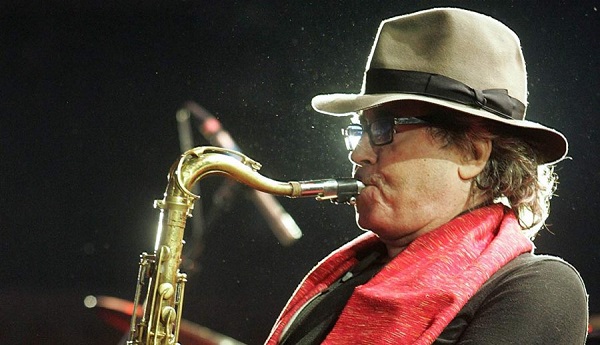
But his heart never left his Latin American sensibility. When he came to fame as a soloist and leader of his own group, he sold millions of records, forging a personal language that draws inspiration from tango, Brazilian cadences, the sounds of the Andes and South American folklore.
Over the past few years, Barbieri, who turns 83 on November 28, has suffered several health complications. From his home in New York, the musician spoke with remarkable sincerity about this new stage of his life, now far from his youth, but full of acceptance and hope.
You recently performed at the Blue Note club in New York and sold out. How does it feel to be a jazz legend at the age of 80-something?
When I play here at the Blue Note, people come from Russia, from Europe, from everywhere, because people identify with what Gato has done.
Now, I’m a little sick and it’s hard for me to walk. I don’t like that. I have to do exercises and things like that. I’m going to be 83 years old and it’s necessary to do these things that put me in a horrendous mood [laughs].
Life is like that, it has nice things and ugly things, and you have to keep walking, walking, walking…It’s like a tango. If you pay attention, tango talks about beautiful things: people, siblings, loves, the sweet details of existence. To this day, there are some tango songs that I find incredible.
What memories do you cherish from the beginning of your career?
When I started playing with the Casablanca orchestra, when I was 17. We played bebop music, which for me was something incredible. We used to perform at carnivals in the provinces of Argentina.

I also have fond memories of playing in Europe with trumpeter Don Cherry, because I learned so much. He never said anything; he didn’t talk to us or explain anything about the music we were going to play. When we played together, we improvised, and he never stopped changing his compositions. It was a great thing.
And then, in 1972, came the music for Last Tango in Paris, which brought you international fame. What was it like to write the soundtrack for such a controversial film?
It was a magical thing, because Bernardo [Italian director Bernardo Bertolucci] is an incredible guy, an incredibly talented director. I was in good spirits, but it wasn’t an easy job because there were 50 moments in the film that needed music.
I remember we took a piano up to Pepito Pignatelli’s [owner of a legendary jazz club in Rome] house, which was on the fifth floor. Doing something like that 50 years ago was not easy, but when we recorded it, it was a beautiful thing. Sometimes the difficult things are the most beautiful.
And that unforgettable main theme, which is repeated throughout the film, how did it come about?
Bernardo called me and asked me to present him with several melodies, and that they should be as beautiful as possible. We had just gone to Italy to play some concerts, and we met Bernardo. I played him three or four tunes, and he immediately chose one and said: “This is the theme from The Last Tango in Paris”.
What do you think has been the secret of your success?
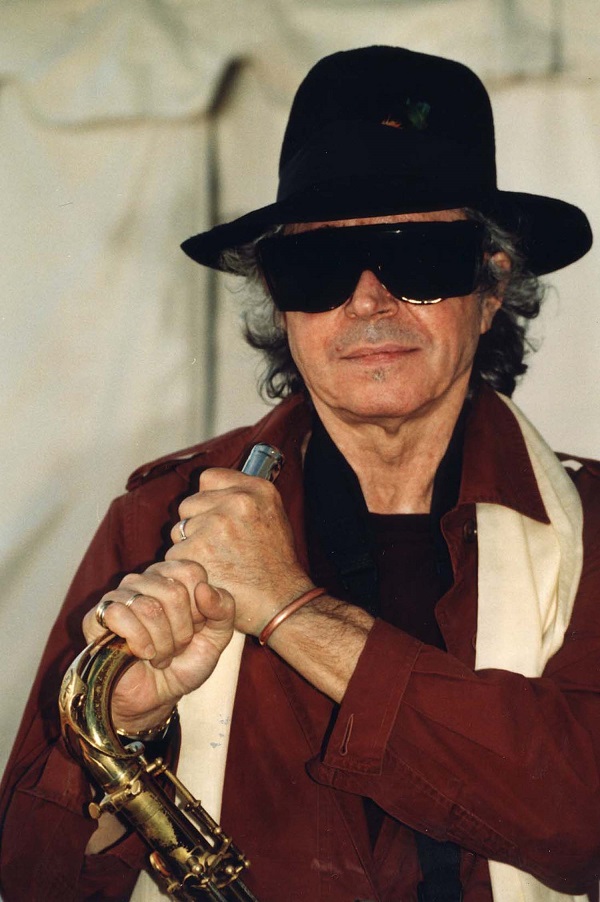
From 1970 onwards, I recorded about 45 records. That’s a lot. I was a guy who was always doing something, for me that lifestyle was a great satisfaction. As for the sax, I never knew much about chords. I make up my own chords, put one thing on top of them… and that’s it.
It’s hard to explain why I made the artistic choices I did. I wanted to do a little bit of everything, play an Argentine chacarera, or record with an Italian singer like Antonello Venditti [the hit ballad “Modena”, in 1979]. I always chose to play music from many different countries, and people identify with that.
Undoubtedly, you have lived a privileged life….
Yes, in a certain way, yes. Michelle [his first wife, who died in 1995] helped me a lot. She’s always in my heart, because she was incredible. She knew about film, art, so many things. In that sense, I learned a lot from her. And now I am living with Laura, my wife, who is a great person.
She has given me my only son, who is now 17 years old. He is tall and very intelligent, although a bit lazy, as I was myself at his age. It must be hereditary [laughs].
EL PAMPERO (1971)
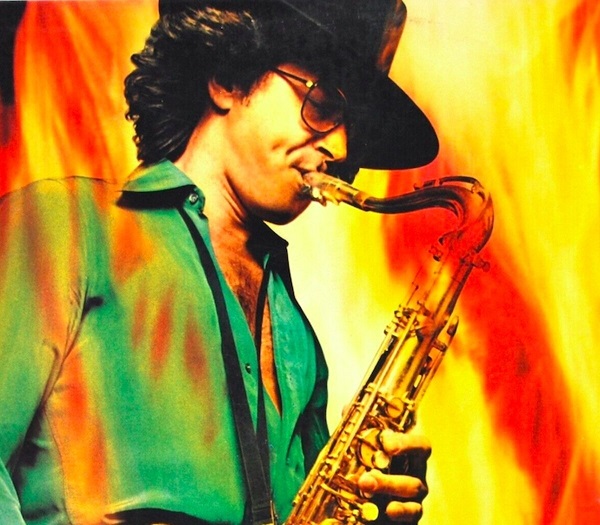
Gato Barbieri: Latin ‘jazz’ with a touch of pop and South American folklore.
By: Ernesto Lechner
His five albums as a leader, two as co-leader (MOZART’s BLUE FANTASIES and BACH’s SECRET FILES) as well as his work on over a hundred albums, scores for five feature films, three Broadway Musicals and multiple other projects, showcase his wide-ranging area of expertise.

After several nominations as a sideman, two of his five solo CDs were nominated for a GRAMMY Award (REFUGEE, 2008, and SECOND CHANCE, 2010).
He arranged and performed parts of the score of Ang Lee’s OSCAR-nominated movie EAT, DRINK, MAN, WOMAN.
His first professional recording was at age 18 (Mikis Theodorakis’s “Canto General”) while one of the most recent was on legendary rock band CHICAGO’s latest production, the Latin-tinged “EXITOS”.
He has written symphonic orchestrations, performed and recorded by the Russian Philharmonic Orchestra and compositions like ABRE LOS OJOS, CIERRA LOS OJOS, commissioned and premiered by the MUSICA DE CAMARA STRING ORCHESTRA at St Patrick’s Cathedral in April 2011.

As a requested sideman he has toured the world with such greats as Paquito D’Rivera, Ray Barretto, Gato Barbieri, Steve Turre, Don Byron, Tito Puente and was featured pianist with Max Roach’s PROJECT AMERICA at the 92 St Y.
His joy of teaching has made him a requested guest-lecturer and performance teacher in music faculties and academies in several countries of Europe, Japan, North- and South America.
Hector wrote an instructional book on Latin piano commissioned and published by Hal Leonard, the SALSA PIANO BOOK.
Martignon’s abilities as a pianist have always been enriched by his interest in varied musical genres.
He paid for his studies of classical piano and composition at the prestigious Freiburger Musikhochschule in Germany by performing with the best Afro-Cuban and Brazilian bands of Europe, backing stars like Celia Cruz and Ismael Quintana on their European tours, and recording with Tata Güiness and Arturo Sandoval.
At the same time he was attending seminars of contemporary composition with masters like Gyorgi Ligetti, Luigi Nono and Karl Heinz Stockhausen.
He also performed classical music in recitals and concerts in Germany, Italy and his native Colombia, specializing in Chopin, Bach and Debussy.
Living in Brazil for a one-year love affair with that country and its music, Martignon soon became a requested studio musician and worked for star producer Carlinhos Brown.

Since relocating to New York City, Martignon has been one of the most sought-after pianists on the Latin jazz scene.
He’s toured North and South America, Europe, and Asia with the bands of Mongo Santamaría, Gato Barbieri, Steve Turre and Don Byron, who had him record in his latest CD.
He was featured pianist with the bands of Tito Puente, Mario Bauzá, Chico O’Farrill, Paquito D’Rivera, and Max Roach in his “Project America.” Most notably, Martignon was pianist for the late Ray Barretto’s various ensembles.
During his eight-year association with Barretto, his contributions as pianist, arranger, and composer were fundamental in shaping the sound of the now famous New World Spirit Sextet.
One of his last collaborations with Barretto, “My Summertime,” was a favorite nominee for a Grammy award. Martignon’s versatility has also made him extremely active in the film and television industries.
He is composer of the original music of two feature films, one of which, “Septimo Cielo”, won international awards. He also collaborated in the production of many Broadway musicals (“Chronicle of a Death Foretold”, Paul Simon’s “The Capeman”, “Selena Forever”) as conductor, arranger, and co-composer. In the fall of 2003 Hector visited Slovenia and Russia to collaborate with singer-songwriter Vitaly Osmsçko’s first symphonic CD.
The Russian Philharmonic Orchestra recorded in Moscow the orchestrations written by Hector.
As a composer, producer and arranger of TV and radio music his record is no less impressive. In 2001 he landed two spots for HBO Latino, and one for Coca Cola.
HECTOR” S FOREIGN AFFAIR In 1998 Martignon performed with his quartet “Foreign Affair”at the Brooklyn Academy of Music’s famed annual festival “The Next Wave” on a triple bill with Tito Puente’s “Top Percussion” and Don Byron’s “Music for six Musicians”.
This proved to be a turning point for him and his ensemble, which evolved from the strictly acoustic trio sound of the first two CDs to a more eclectic and electric quartet sound.
The new configuration that evolved from that memorable concert started a series of concerts and recordings, with guitarist Mark Whitfield, Cameroonian bassist Richard Bona and Cuban drummer Horacio “Negro” Hernández.
This quartet performed and recorded live during a weeklong stint at New York’s famous Birdland.
The group has also performed on BET television festivals, at jazz clubs in Manhattan, and made various appearances in clubs and open-air festivals in his native Colombia and in Europe.
Martignon’s third solo project, to be released in the fall of 2003, is not only a reflection of the group’s new musical direction but also of his interaction with other world class musicians.
Eddie Gomez, Jeff Watts, Mathew Garrison, John Benitez, Dafnis Prieto, Willard Dyson have all made their unique contribution to this, Martignon’s new sound of Jazz.

Hector Martignon never fails to surprise, challenge and delight us. Stay tuned and get involved in this affair.
Site: Héctor Martignon
Also Read: “El Sol de la Música Latina” el primer premio Grammy para el histórico disco de Salsa Eddie Palmieri
Latin talent can be found where you might least expect it and, this time we found it in the city of Montreal, Canada, a place that is cultivating an increasingly large and vigorous Latin music scene. On this occasion, we were thrilled to be able to talk to Giany-Frantz Huyghues-Despointes, who is the leader and founder of the orchestra Lengaïa Salsa Brava.
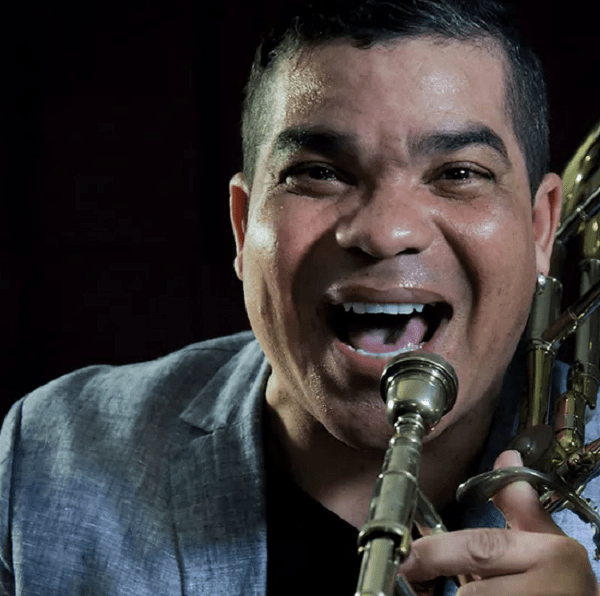
Lengaïa Salsa Brava is a 12-member salsa orchestra that was created in 2012 by Giany, who was also a trombonist and had some experience in the world of music before daring to create his own group.
The effort of all its members has enabled them to collaborate with great performers of the genre and win important awards such as the Canada Latin Awards in the category of ”Salsa Group of the Year” in a row in 2017 and 2018 respectively.
Lengaïa Salsa Brava has also performed approximately 30 concerts a year since its foundation and has participated in important festivals such as Toronto Salsa Festival, Festival Nuit Blanche de Montreal, Nuits d’Afrique, among others. The group was greatly helped by the fact that its members come from different countries such as French Guyana, Cuba, Colombia, Peru, Quebec, Spain and Venezuela.
This interesting journey shows us how hard this group has worked to achieve a place within the industry and all the potential they have to achieve much more than what was obtained. Today, Giany, its founder, shares a little more about himself and his orchestra Lengaïa Salsa Brava.
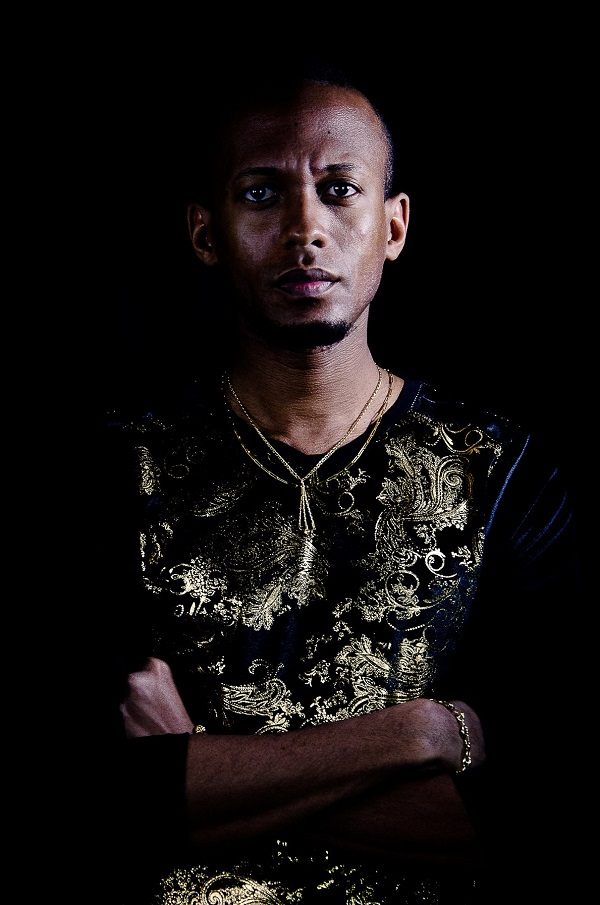
Although the trombone is the instrument for which Giany is known, he started playing the trumpet from 10 years of age, which is when he began his interest in this branch of the art.
An important point is that in French Guyana, the country where Giany was born, salsa is not a predominant genre, since the most played by the French Guyanese is the mazurka, which is very similar to the Haitian compas. In the case of Giany’s family, they listened to a bit of everything, including salsa.
A turning point for the artist was watching Celia Cruz singing on tv one day. The musician had never heard the Cuban singer before and it was an incredible experience for him, as her deep voice, colorful outfit and wig caught his attention at the time.
Because of her deep voice, he thought she was a man, but his mother explained to him who Celia was and, months later, took him to a concert to see her live. That performance of ”La Guarachera de Cuba” marked him so much that he would begin to lean towards music in the future. Today, he says that Celia is a spiritual mother to him, as she was his great inspiration.
Along with being a fan of the Cuban singer, he wanted to learn to play instruments and initially opted for the piano and the guitar, but that changed when his Spanish teacher at school gave him a trumpet and he discovered that he really liked to play it.
Some time later, he graduated from the national school of music in his country and, by the time he turned 18, Giany noticed that his musical skills excelled more with the trombone than the trumpet. This is how he decided to choose the trombone as his main instrument and so it has been to the present time.
He started playing classical music with that instrument but soon discovered that he wanted to return to the genre that captivated him when he was just a child, so he dared to create a group in France, where he studied aviation. The thing is that he went to live in Canada six months later and had to abandon the plans he had at that time.
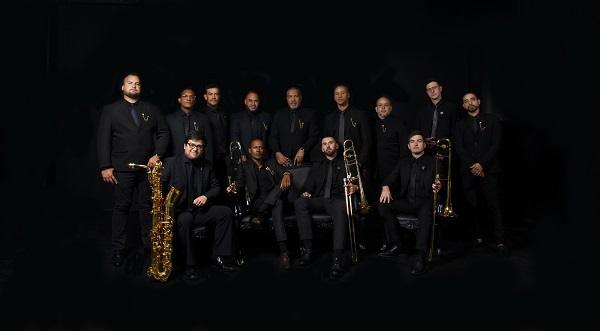
Giany arrived in Canada with the vision to create another group in his new country of residence, but he did not know any musicians yet, so he moved into action and started placing ads on social networks and other virtual means to communicate with artists who were interested in joining his project.
The results were amazing and there were many musicians who contacted Giany because of their interest in the concept proposed by him. With this group, he started assembling the orchestra in order to give form to what Lengaïa Salsa Brava is today. The orchestra has six years with the same staff and format it presents to the public today.
As for the large number of nationalities living in the orchestra, Giany has said that all ”are part of a big family” hinting that national origins have not been a problem for the smooth development of the group. In addition to that, the salsa brava is a genre widely known worldwide, so the members of the orchestra knew in advance what they were getting into.
To what we must add that these guys work or have worked in other salsa brava orchestras, so they were pretty much steeped in everything related to this beautiful music.
Giany says it is very easy to work with his musicians because they always know how to perfectly interpret what he wants.
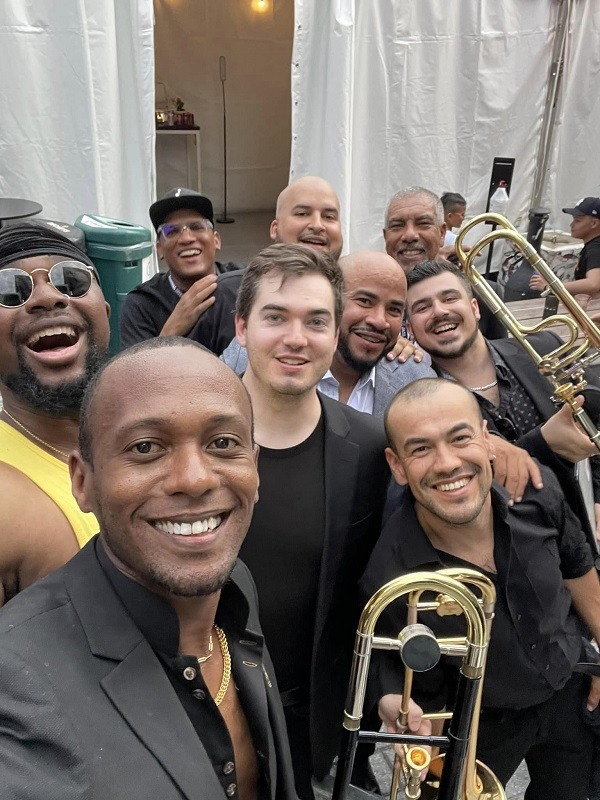
When Giany was looking for a name for the group, he wanted something different and not very Latin sounding. He also wanted people to ask what the name meant, so we have fallen into the trap.
The musician explained that he wanted something that refers to how explosive, energetic and aggressive his music is, so he chose the name inspired by a Tanzanian volcano called Ol Doinyo Lengaï that spews black lava. ”When you see a volcano exploding, you imagine something explosive and aggressive at the time. That’s what we want to reflect with our music”. Also, the fact that its lava is black is something different from other volcanoes, as is the group’s orchestration and technique,
Giany wanted to emphasize that all the members of Lengaïa Salsa Brava have other jobs and work activities outside the orchestra. In his particular case, he works as a commercial pilot, but in his spare time, he devotes himself as much as he can to his great passion which is music.
So far, Giany and the other members of the orchestra are unable to live solely on music, but they do their best to keep the group together and are there to fulfill Lengaïa Salsa Brava whenever necessary.
Although the orchestra has been a second employment option, it is undeniable that this is their great vocation and the engine that moves his life, so there will always be space for it.