• Skip to primary navigation
  • Skip to main content

International Salsa Magazine

  • HOME
  • Previous editions
    • 2026
      • ISM / May 2026
      • ISM / April 2026
      • ISM / March 2026
      • ISM / February 2026
      • ISM / January 2026
    • 2025
      • ISM / December 2025
      • ISM / November 2025
      • ISM / October 2025
      • ISM / September 2025
      • ISM / August 2025
      • ISM / July 2025
      • ISM / June 2025
      • ISM / May2025
      • ISM / April 2025
      • ISM / March 2025
      • ISM / February 2025
      • ISM / January 2025
    • 2024
      • ISM / December 2024
      • ISM / November 2024
      • ISM / October 2024
      • ISM / September 2024
      • ISM / August 2024
      • ISM / July 2024
      • ISM / June 2024
      • ISM / May 2024
      • ISM / April 2024
      • ISM / March 2024
      • ISM / February 2024
      • ISM / January 2024
    • 2023
      • ISM / December 2023
      • ISM / November 2023
      • ISM / October 2023
      • ISM – September 2023
      • ISM – August 2023
      • ISM July 2023
      • ISM Edition June 2023
      • ISM – May 2023
      • ISM April 2023
      • ISM March 2023
      • ISM February 2023
      • ISM January 2023
    • 2022
      • ISM December 2022
      • ISM November 2022
      • ISM October 2022
      • ISM September 2022
      • ISM August 2022
      • ISM July 2022
      • ISM June 2022
      • ISM May 2022
      • ISM February 2022
      • ISM January 2022
    • 2021
      • ISM December 2021
      • ISM November 2021
      • ISM October – 2021
      • ISM September 2021
      • ISM August 2021
      • ISM July 2021
      • ISM May 2021
      • ISM April 2021
      • ISM June 2021
      • ISM March 2021
      • ISM February 2021
      • ISM January 2021
    • 2020
      • ISM December 2020
      • ISM November 2020
      • ISM October 2020
      • ISM September 2020
      • ISM August 2020
      • ISM July 2020
      • ISM June 2020
      • ISM May 2020
      • ISM April 2020
      • ISM March 2020
      • ISM February 2020
      • ISM January 2020
    • 2019
      • ISM December 2019
      • ISM November 2019
      • ISM October 2019
      • ISM Septembre 2019
      • ISM August 2019
      • ISM July 2019
      • ISM June 2019
    • 2016
      • ISM December 2016
  • Spanish
  • Download Salsa App
    • Android
    • Apple

Search Results for: Cuban music

José Hildemaro Hugas Amarista “El Sonero del Amor” from Venezuela to the world

José Hildemaro Hugas Amarista, better known artistically as “Hildemaro, El Sonero Del Amor”, was born on November 10, 1957 in Caripito, a city in the eastern Venezuelan state of Monagas.

He is a Venezuelan singer-songwriter whose interest in music began at a very young age, participating in various children’s programs on the radio station in his hometown and in Maturin, the capital of the state of Monagas.

In 1970 he won the first “Festival De La Canción Inédita” held in Caripito.

Then he moved to Carúpano, where he began to sing with different musical groups of that city, such as “Los Bravos” and “Soles De Media Noche”.

"El Sonero del Amor" from Venezuela
“El Sonero del Amor” from Venezuela

Later he was called by the “Combo Melorítmico” of Maturín, where he stayed for a year. He always wanted to sing in the capital.

In 1976 his dream came true when he was called to be a part of the Front Train Orchestra “Los Satélites”, for seven (7) months, the proposed goals began to be different and began to work to achieve them. In 1979 he joined the “Orquesta Ideal”, with which the song “Contigo Besos Salvajes” was played all over the country and was successively imposed among the first places.

In 1981 he joined the “Supercombo Los Tropicales” of Maracaibo, then the “Noche Caliente” orchestra and later the “Porfi Jimenez” orchestra.

In 1985 he joined the orchestra of Renato Capriles: “Los Melódicos”, which gave him the greatest and best experience, given the popularity, prestige and discipline imposed by its director.

In 1986, as a soloist, he recorded his first LP of tropical music under the name “El Jr. de la música tropical” for the record label “Sur Americana del Disco”, , with the name “El Jr. de la música tropical.”

In December 1987 he received a wonderful offer from the record label “Top Hit (T.H.. ) and in 1988 he records his first LP, as a “sensual salsero” for Venezuela, titled “Amanecí Contigo” under the pen of José “El Flaco” Bermúdez, who is also the creator of the style that pushes him towards the international market, where all his songs hit with great acceptance and have his greatest impact in Peru (his second home as he usually calls it), starting his successful career as “Hildemaro, El Sonero Del Amor”.
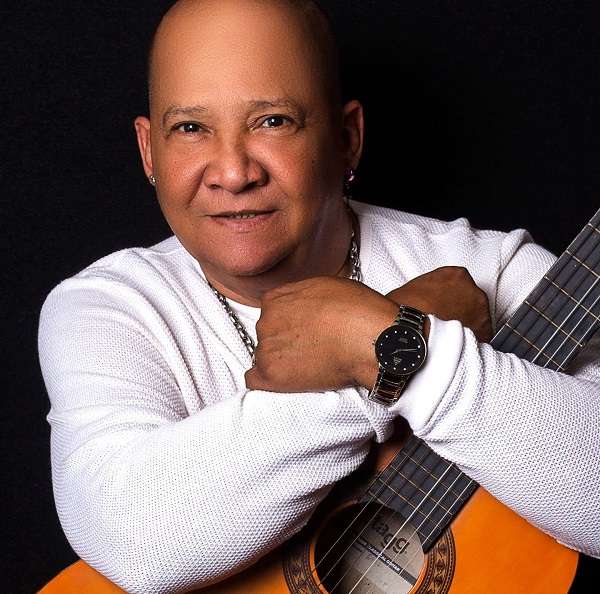
José Hildemaro Hugas Amarista "El Sonero del Amor" from Venezuela to the World
José Hildemaro Hugas Amarista “El Sonero del Amor” from Venezuela to the World

In 1989 he recorded his second LP entitled “Sin Tabú”, which went gold a few weeks after its release, and this album took him back to Peru, where he is considered one of the main idols of Salsa Sensual. Panama, Mexico, Colombia, Ecuador, Argentina, Chile, Dominican Republic, Puerto Rico, Costa Rica, United States, Europe (Spain, Italy, France, Holland, Switzerland, among others), Asia (Japan), among many other countries, have joined his successful career.

In 1990 he recorded his third album called “Romantic and Sensual”, consolidating himself as one of the best voices of Latin American and Caribbean Salsa, qualities that were also reflected in his fourth production entitled “Lo Mejor De Mí” in 1991.

In 1993 he recorded his fifth album under the name “Al Natural”.

In 1994 he was invited to participate in the recording of the album “Con Ganas” by the Cuban Issac Delgado, where he performed a duet of a song composed by José L. Cortes called “Que Pasa Loco”, which quickly became an international success and took him to other latitudes.

In 1995 he released his sixth production with the title “Lo Que Siento”. One year later he signed a contract with the Mexican label “Balboa Records”, where he recorded the album “La Mejor Salsa Con Hildemaro”.

"El Sonero del Amor" from Venezuela and Viti Ruiz
“El Sonero del Amor” from Venezuela and Viti Ruiz

In 1999, he was invited by the Venezuelan group “Melody Gaita”, along with other artists, to record a tribute song to his friend and colleague Oscar D’ León.

In 2001, “Orquesta La Constelación” decided to record an album with several artists, in which he participated with two (2) songs (Peruvian waltzes), “Cuando Llora Mi Guitarra”, in duet with Andy Montañez, and “Jamás Impedirás”, which allowed him to sound nationally and internationally.

In 2002, he is called by another Venezuelan group “Pajarito Vola Show”, along with other artists, this time to participate in a well-deserved tribute to Betulio Medina. In 2002 and 2003 he burst in the national and international radio stations with two (2) singles “Corazón Loco” and “El Celular”.

In 2016, he begins to sound again in the radio stations with the song “Que Voy a Hacer Sin su Amor”.

In addition to his talent to sing Salsa Romántica, he is recognized for his interpretation of the Bolero. And on stage he has shared the stage with artists of the stature of: Oscar De León, Tito Rojas, Tito Gómez, Paquito Guzmán, Andy Montañez, Maelo Ruiz, Viti Ruiz, Gilberto Santa Rosa, David Pavón, Ismael Miranda, El Gran Combo de Puerto Rico, Tony Vega, Nino Segarra, José Alberto “El Canario”, among many others.

"El Sonero del Amor" from Venezuela and El Canario
“El Sonero del Amor” from Venezuela and El Canario

Among his many facets is his love for sports, especially volleyball, which he has practiced since he was very young. He is an honorary member of the FUCUFOCA Foundation, which has been responsible for the organization of the Festival de la Canción Inédita de Caripito for fifty-one (51) years. Faithful collaborator of the Friends of Palencia Foundation and sponsor of several institutions.

Through his foundation HH Productions, he has carried out social actions such as Collaboration in the construction of the Virgen del Rosario Church in Caripito;

Donations of medicines and food to the needy, assistance to sports teams with equipment and clothing, organization of charity concerts and support of the “Amigos de la Palencia” Foundation.

Through his foundation HH Productions, he has carried out social actions such as Collaboration in the construction of the church “Virgen del Rosario” in Caripito;

Donations of medicine and food to people in need, help to sports teams with equipment and clothing; Realization of benefit concerts and concerts of popular attraction in collaboration with the end of year festivities of his hometown.

He has always given value to new talents, helping them in their first steps with his advice and teachings, such as Angel “Tu Angel”, Hildemaro Jr. “La Continuación”, Gilberto Hugas, among others.

Between the years 2022 and 2023 he will celebrate his forty (40) uninterrupted years of artistic life, with a long international tour in countries such as: Colombia, Bolivia,

Peru, Panama, United States, Canada and Europe. He is now promoting the songs “Si Tú Te Vas” and “Amigos Especiales” from his new production, which he is preparing with his inseparable director and producer, José “El Flaco” Bermúdez.


Also Read: Carlos “Nene” Quintero comes from a family of musical prodigies
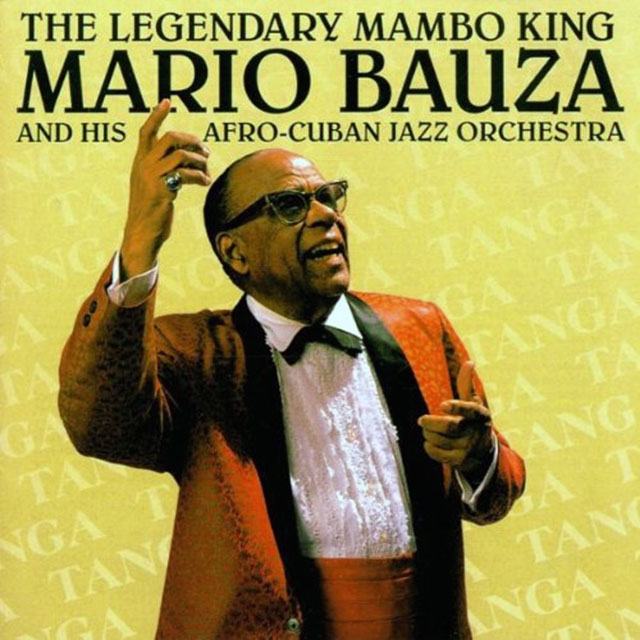
Mario Bauza

North America / United States / New York

Mario Bauza, Pioneer of Afro-Cuban jazz in New York, Clarinetist, saxophonist, trumpeter and arranger

Mario Bauzá (Havana, April 28, 1911 – Manhattan, July 11, 1993) was a Cuban saxophonist, clarinetist, trumpeter, arranger and composer.

Known above all for having been the musical director of the Machito orchestra (of whom he was also a brother-in-law), he was a pioneer of what is now known as Afro-Cuban jazz.

Mario Bauza The Legendary Mambo King
Mario Bauza Pioneer of Afro-Cuban jazz in New York

Bauzá played the clarinet in the Havana Philharmonic Orchestra. However, after traveling to New York in 1927 with the Antonio María Romeu orchestra, he was so impressed by the Big Bands of Paul Whiteman, Fletcher Henderson and Tommy Dorsey, and by the Harlem music revues, that in 1930 he decided to emigrate definitively to USA.

During the trip, he became friends with Antonio Machín. Mario Bauzá would return on the same boat in which Don Aspiazu’s orchestra was travelling, who immediately began the arrangements to record El manisero.

Upon arriving in New York, Bauzá went to live in Harlem with his cousin, the trumpeter René Endreira. Bauzá began playing the saxophone at house parties with pianist Lucky Roberts and began to absorb African-American culture.

Mario Bauza
Pioneer of Afro-Cuban jazz in New York

Between 1930 and 1931, he was a trumpeter in the Antonio Machín quartet and made important recordings with this group in New York City. Anecdotally, it is said that he had learned to play the trumpet in just two weeks.

His first jobs were with the orchestras of Cass Carr, Noble Sissle and Sam Wooding.

In 1933 he entered Chick Webb’s orchestra as first trumpet, where he ended up as music director. He then worked with Don Redman and Fletcher Henderson, eventually landing Cab Calloway.

Being in that band, Mario brought the young trumpeter Dizzy Gillespie to the orchestra.

Bauzá married Estela Gutiérrez, sister of Francisco Raúl Gutiérrez Grillo, known as Machito.

On December 3, 1940, he debuted with Machito at the Park Plaza, a dance hall, with the Afro-Cubans, later working for almost four years at the La Conga club.

Bauzá works for Machito as artistic director, taking care of the arrangements and hiring the musicians.

The style of the Afro-Cubans mixes the son montuno of Cuba with features of swing bands.

Mario Bauzá Pioneer of Afro-Cuban jazz in New York

Thanks to this, musicians like Dizzy Gillespie or James Moody introduced Afro-Cuban rhythms into jazz, starting in 1947.

He became interested in jazz when he heard Frankie Trumbauer play the saxophone performing Rhapsody in blue with the Paul Whiteman orchestra.

In the forties, Mario will develop the sound of Afro-Cuban jazz. His work as a clarinetist, trumpeter, saxophonist and arranger in the Machito orchestra constitutes one of the main pillars in the emergence and development of that Cuban genre.

Juan Antón ”El Blanco” from La Clave Del Blanco

Everything started in Peru for Juan

There is always a pool of new talents to be known and analyzed, since our Latin countries are the cradle of great artists of all kinds, especially in the area of music. Today it was the turn of the talented Peruvian Juan Antón.  

We have taken the audacity to contact the leader of the orchestra La Clave Del Blanco, Juan Antón, to know the most important details of his professional life and his current group. We are very pleased to present to our readers the most important details of this pleasant and enlightening conversation, which lasted for almost half an hour.   

Peruvian singer Juan Antón
Peruvian singer Juan Antón, Leader of La Clave Del Blanco

First contacts with music 

Juan Antón was born in Peru, specifically in El Callao, a port city near Lima which is well known to all salsa lovers. Like most of the salseros who have passed through International Salsa Magazine, Juan started getting interested in music since he was a child and enjoyed La Sonora Matancera and, later on, the salsa music that came from New York. 

However, although he was always a lover of the aforementioned musical genre, his career began with Peruvian Creole music, which is composed of waltzes, jarana, black music, among other variants. 

When he leaned towards this kind of music, he sang with guitar, cajón and bass at parties in a bohemian way. He had some proposals to work with Creole music in a more professional way, but he accepted due to the pile of responsibilities he had with his work and studies. He was doing well at the time, but admits that he regrets that decision today because it would have been a good start.  

United States 

While it is true that his first steps in the world of music were taken in Peru, it was in the United States that he finally began to be part of more professional groups. 

Juan’s first opportunity in that respect came when he was at a Peruvian party where his compadre was given a Creole music ensemble. Knowing those present that he sang, they invited him to accompany the ensemble and perform with them, which Juan accepted and did. 

The musicians of the group liked his work so much that they asked him for his number and later called him to sing with them. At that time, he met Jorge Del Castillo, a well-known guitarist from the San Francisco Bay Area, who invited him to join a group he was forming and gave him a CD, asking him to learn those songs. The group would be called Kokos Band.   

When Juan was listening to the CD in his car, he found out that it was salsa and not Creole music. When he went to tell Jorge that he gave me the wrong CD, he said it was the correct one and the future group would be singing salsa. 

Since Creole music and salsa are very different, Juan had to learn a number of details such as the clave, the signals to the musicians, the way of singing, among other things. 

Some time later, the story repeated itself. The conguero of Kokos Band proposed him to join the orchestra he was creating, with which he became much more successful and went to more renowned events such as the inauguration of a museum for Puerto Rican and Cuban baseball players. Its name was Orquesta Liberazión. 

Being Peruvian, Juan was really proud that attendees mostly from Puerto Rico and Cuba complimented his work the way they did. Considering that both countries have been the cradles of the main exponents of salsa, the congratulations from this group were very important to him.   

The third and last orchestra he played with was Saboriche. His time with this group made him realize that he had what it took to become independent and create his own project.   

Juan Antón at The Cigar Bar
Juan Antón and La Clave del Blanco performing at The Cigar Bar & Grill

La Clave Del Blanco 

One of Juan’s greatest inspirations to devote himself to music was La Clave Del Callao, since the music of this band influenced him and he liked it very much. In addition to that, the name by which many began to know Juan in the San Francisco Bay Area was ”El Blanco”.  

Both of these things led him to name his own orchestra ”La Clave Del Blanco”. 

Salsa Con Caché  

In addition to his facet as a singer, Juan also had a radio show at La Grande 1010 AM and its name was ”Salsa Con Caché”, which was on the air for only one year. Its cancellation was due precisely to the professional commitments the artist had with his music.   

He decided to call ”Salsa Con Caché” to this space because ”caché” in many countries means ”elegant” and ”refined”. This is precisely the salsa style he has always liked. 

One of the things that set this program apart from others of their kind in the San Francisco Bay Area is that Juan always talked about the history of the artists and the orchestras playing on the air so that listeners would know all this information. Other programs only played background music and did not add more elements to the programming. 

Juan was so successful that he received hundreds of phone calls daily and was even appeared in the now defunct San Francisco Chronicles as one of the best salsa shows at the time. 

This success was due to the enormous constancy and important information the announcer had. Although Juan does not regard himself as a scholar in the matter, he assures us that he had what it took to keep listeners hooked to his knowledge. He even commented that he had a private collection of more than 600 original CDs in all languages, which he bought gradually.   

This extensive music collection helped him a lot to offer a varied repertoire during the time when ”Salsa Con Caché” was on the air.   

Juan Antón as an announcer
Juan Antón was also an announcer and his show was called ”Salsa Con Caché”

Recruiting talent for La Clave del Blanco 

During his journey through the orchestras where he played, Juan got to know a lot of musicians, especially during his time with Orquesta Liberazión. He became friends with many of them and, when he started forming his own orchestra, he asked them to be part of it. 

Since he managed to establish his group, the singer has always made sure to deliver what he promises. This means that, if he makes an offer for the work done, he always honors the full amount. For Juan, ”The most important thing in this business is the given word”, so you always have to deliver what you promise at the beginning. 

With respect to the above, Juan has lived this same situation with orchestras he has worked with, so he does not want to have debts with the musicians he hires. This is how he has gained their trust and, whenever he needs them, they are there for him. 

Read also: Guantanamo music director, arranger and composer Julio Avila 

Roberto Quintero

North America / United Stated / New York

Roberto Quintero, The Master in the Congas, Bongo & Timbales NY

Roberto Quintero was born in Caracas, Venezuela, surrounded by Afro-Venezuelan and Afro-Cuban rhythms and music.

Roberto Quintero
Roberto Quintero – New York

His father, a respected composer, singer and percussionist, tutored and encouraged Roberto Quintero on percussion throughout his adolescent years.

Roberto Quintero comes from a long line of outstanding musicians, including his Uncle Carlos Nene Quintero and cousin Luisito Quintero.

Roberto Quintero and his congas

Roberto Quintero studied at the Conservatory of Music in Caracas, Venezuela and Sinfonica Orchestra Juvenil from Venezuela.

Besides his skillful Congas work, Roberto is also well known for his work on Bongos, Drum set, Djembe, Timbales and a wide variety of assorted percussion instruments.

He (Roberto Quintero) has played with Dave Samuels, Dave Weckl, Chicago, Gato Barbieri, David Sanchez, Roy Hargrove, David Sancious, Eddie Palmieri, Jack DeJohnette, Roy Haney, Marc Anthony, Timbalaye, Celia Cruz and countless other high-profile music acts in all genres, from symphonic to Jazz, Latin Jazz and Latin House.

Roberto Quintero
Roberto Quintero

Brazil Directory 2023

Root Hookah Lounge
Root Hookah Lounge
Av. Professor Nilton Lins, 1591 – Flores, Manaus, Brazil, Manaus, AM, Brazil

Antonieta Bar and Lounge
Antonieta Bar & Lounge
Centro, Rio de Janeiro – State of Rio de Janeiro, 20230-150, Brazil

Bar Bip-bip Nightclub
Bar Bip-bip Rua
Almirante Gonçalves, 50 22060-040 Rio de Janeiro, RJ, Brazil

Club Mix Bar
R. do Mercado, 25, Rio de Janeiro, Brazil, 20010-120

Rio Scenarium
Rio Scenarium
Pavilhão da Cultura Rua Lavradio 20 – Centro, Rio de Janeiro, RJ, Brazil

L'apero Bar and Restaurant
L’apero
Avenida Litorânea, 4A , São Luís, MA, Brazil

Azucar Club Cubano Nightclub
Azucar Club Cubano
Rua Aspicuelta, 366, São Paulo, SP, Brazil

Bona Casa de Musicahttps://www.bona.art.br/
Bona Casa de Música
Rua Doutor Paulo Vieira, 101, São Paulo, SP, 0 01257-00, Brazil


  • « Go to Previous Page
  • Page 1
  • Interim pages omitted …
  • Page 71
  • Page 72
  • Page 73
  • Page 74
  • Page 75
  • Interim pages omitted …
  • Page 103
  • Go to Next Page »

International Salsa Magazine (ISM) is a monthly publication about Salsa activities around the world, that has been publishing since 2007. It is a world network of volunteers coordinated by ISM Magazine. We are working to strengthen all the events by working together.