• Skip to primary navigation
  • Skip to main content

International Salsa Magazine

  • HOME
  • Previous editions
    • 2026
      • ISM / April 2026
      • ISM / March 2026
      • ISM / February 2026
      • ISM / January 2026
    • 2025
      • ISM / December 2025
      • ISM / November 2025
      • ISM / October 2025
      • ISM / September 2025
      • ISM / August 2025
      • ISM / July 2025
      • ISM / June 2025
      • ISM / May2025
      • ISM / April 2025
      • ISM / March 2025
      • ISM / February 2025
      • ISM / January 2025
    • 2024
      • ISM / December 2024
      • ISM / November 2024
      • ISM / October 2024
      • ISM / September 2024
      • ISM / August 2024
      • ISM / July 2024
      • ISM / June 2024
      • ISM / May 2024
      • ISM / April 2024
      • ISM / March 2024
      • ISM / February 2024
      • ISM / January 2024
    • 2023
      • ISM / December 2023
      • ISM / November 2023
      • ISM / October 2023
      • ISM – September 2023
      • ISM – August 2023
      • ISM July 2023
      • ISM Edition June 2023
      • ISM – May 2023
      • ISM April 2023
      • ISM March 2023
      • ISM February 2023
      • ISM January 2023
    • 2022
      • ISM December 2022
      • ISM November 2022
      • ISM October 2022
      • ISM September 2022
      • ISM August 2022
      • ISM July 2022
      • ISM June 2022
      • ISM May 2022
      • ISM February 2022
      • ISM January 2022
    • 2021
      • ISM December 2021
      • ISM November 2021
      • ISM October – 2021
      • ISM September 2021
      • ISM August 2021
      • ISM July 2021
      • ISM May 2021
      • ISM April 2021
      • ISM June 2021
      • ISM March 2021
      • ISM February 2021
      • ISM January 2021
    • 2020
      • ISM December 2020
      • ISM November 2020
      • ISM October 2020
      • ISM September 2020
      • ISM August 2020
      • ISM July 2020
      • ISM June 2020
      • ISM May 2020
      • ISM April 2020
      • ISM March 2020
      • ISM February 2020
      • ISM January 2020
    • 2019
      • ISM December 2019
      • ISM November 2019
      • ISM October 2019
      • ISM Septembre 2019
      • ISM August 2019
      • ISM July 2019
      • ISM June 2019
    • 2016
      • ISM December 2016
  • Spanish
  • Download Salsa App
    • Android
    • Apple

Search Results for: Cuban

Anacaona Orchestra

Latin America / Cuba / Havana

Anacaona Orchestra. Women of Cuba Since 1932

Genesis Founded in 1932

Anacaona Orchestra founded on February 19, 1932 by Concepción Castro Zaldarriaga and her sisters, being then the first female sextet of Son Cubano and in 1934 expanded to the Jazz Band and Charanga Típica format, projecting itself to the world from the famous ¨Aires Libres of the Saratoga Hotel. ¨ in the Havana Prado.

Anacaona Orchestra
Anacaona Orchestra

Between the 1940s and 1960s, these talented women toured throughout North to South America, the Caribbean and France.

In Mexico, one of the countries most visited by the orchestra at this stage, its images and sounds were recorded in some film of Mexican Cinema, such as: ¨the night is ours¨, ¨I do not deny my past¨ and ¨Women of theater¨ in which they alternated with film and music artists from that country. Also at that same time they recorded with the RCA Víctor label.
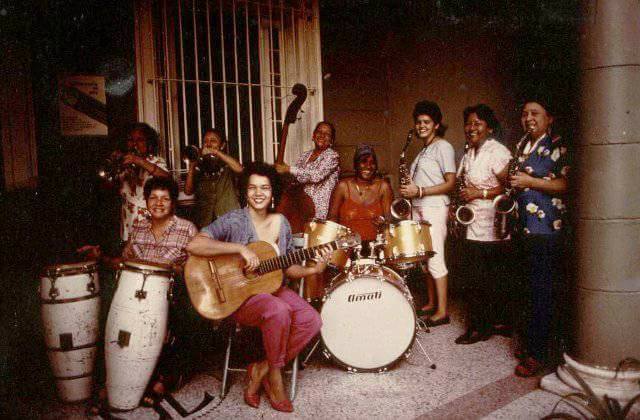
Anacaona Orchestra photo

The Aguirres

The sisters Giorgia and Dora Aguirre, with a solid musical background, specializing in Double Bass and Saxophone, recently graduated from the ¨Amadeo Roldan¨ Music Conservatory, joined the Anacaona Orchestra with its original founders in 1983, under the direction Alicia Castro, with whom they learned the most genuine genres of Cuban popular music, the rigor and discipline in this profession.

Anacaona Orchestra
Anacaona Orchestra

3rd Generation


After the retirement of the Castro sisters in December 1987, she assumed the direction of the Georgia Aguirre Orchestra, who, together with her sister and other young women who had also graduated from music schools, continued the work begun by the founders, consolidating a style that combines tradition with modernity, to preserve and enhance the history of Anacaona.

Anacaona Orchestra
Anacaona Orchestra

Tours

Internationally, they have traveled to more than 30 countries in Europe, Asia, Africa, America and the Caribbean, performing at important festivals and multiple stages, among which the most outstanding are:

Anacaona Orchestra
Anacaona Orchestra

The tour of 34 countries in the People’s Republic of China; his participation in the play ¨El Burgués Tropical¨ under the direction of Gerome Sabarì, inspired by Moliere’s classic, El Bourgeois Gentleman”; the tour made through some cities in the United States in which they also had a very emotional meeting with Graciela Pérez, singer and founder of Anacaona and the show “Sabor de la Habana” that opened the season of Cuban shows at the Cabaret Del Gran Casino Monte Carlo of the Principality of Monaco,

In addition to other important jazz and summer festivals in Spain, Germany, Belgium, Sweden, Holland, Canada, Jamaica, Aruba, Curacao, French Guiana, Guadeloupe, Martinique, Saint Lucia, Peru, Honduras, Venezuela and Mexico, among others.


Anacaona Orchestra flyer

Europe / July 2024

Calibrated maracasMartinez attorney

fRANCE FLAG
FRANCE
DIRECTORY OF NIGHTCLUBS

Salsabor
Salsabor Paris
31 rue Chapon 75003
Paris, France
+33 1 42 71 61 61

Selsero
Salseroparis
9 Rue du Petit Pont, 75005
Paris, France
+33 6 50 16 74 76

La Peña
La Peña Saint Germain
3 passage de la Petite Boucherie 75006
Paris, France
+33 1 46 33 19 89

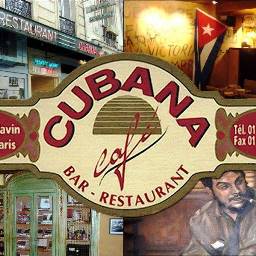
Cubana
Cubana Café
47 rue Vavin 75006
Paris, France
+33 1 40 46 80 81

Canela
Canela Club Latino Paris
77 Rue du Faubourg du temple 75010
Paris, France
+33 6 46 78 28 35

Balajo
Le Balajo
9 rue de Lappe 75011
Paris, France
+33 01 47 00 07 87

La Pachanga
La Pachanga Officiel
8, rue vandamme 75014
Paris, France
+33 1 40 47 63 69

Pachamama
Pachamama PARIS
46 rue du Faubourg Saint Antoine 75012
Paris, France
+33 1 55 78 10 00

Cuba Compagnie
Cuba Compagnie Café
48 BD Beaumarchais 75011
Paris, France
+33 1 48 06 07 11

O'Sullivans By The Mil
O’Sullivans Backstage By The Mill
92 Boulevard de Clichy 75018
Paris, France
+33 1 53 09 08 49

Germany circular Flag
GERMANY
DIRECTORY OF NIGHTCLUBS

Clärchens
Clärchens Ballhaus
Auguststraße 24
10117 Berlin, Germany
+49 30 555785440

Havanna
Havanna Berlin
Hauptstr. 30
10827 Berlin-Schöneberg, Germany
+49 30 78899655

SODA
Soda Club Berlin
Schönhauser Allee 36
10435 Berlin, Germany
+49 30 44056071

Zapatissimo
Zapatissimo Dance School
Kolonnenstrasse 29
10829 Berlin, Germany
+49 176 20470772

Brotfabrik
Brotfabrik Frankfurt
Bachmannstr. 2-4
60488 Frankfurt, Germany
+49 69 24790800

Latin Palace Changó
Latin Palace Changó
Münchener Strasse 57
60329 Frankfurt, Germany
+49 69 27220807

Cascadas
Cascadas
Ferdinandstr. 12
20095 Hamburg-Mitte, Germany
+49 69 27220807

Spain Flag
SPAIN
DIRECTORY OF NIGHTCLUBS

ACM City
ACM CitY
Carrer Can Pallarès 2, Cerdanyola del Vallès
08290 Barcelona, Spain
+34 675 30 26 64

Antilla
Antilla Barcelona
C/ d’Aragó, 141
08015 Barcelona, Spain
+34 610 90 05 58

Mojito
Mojito Club
Rosselló, 217
08008 Barcelona, Spain
+34 654 20 10 06

Morena
Morena Barcelona
calle 11 num.29
08860 Castelldefels, Spain
+34 691 46 57 72

Que Chimba
¡Qué Chimba!
Av. del Vallès, 117
08223 Terrassa, Barcelona, Spain

Seven Dance
Seven Dance (Dio Club)
Carrer del Perill 10
08012 Barcelona, Spain
+34 934 51 61 18

Azucar
Azúcar SalsaDisco
Calle de Atocha, 107
28012 Madrid, Spain
+34 639 64 29 06

El Son
Discoteca El Son
C. de la Victoria, 6
28012 Madrid, Spain
+34 671 05 67 91

Prisma Discoteca
Discoteca Prisma
C. de Alcalá, 192
28028 Madrid, Spain
+34 638 92 16 98

Sala Olvido Madrid
Sala Olvido
C/ Olvido 15
28026 Madrid, Spain
+34 619 22 29 19

The Host Madrid
The Host
C/ Ferraz nº 38
28008 Madrid, Spain
+34 918 05 36 48

Disco Bar Cuba Live
Cuba Live
Ramón y cajal número 2
07011 Palma de Mallorca, Spain
+34 618 86 78 20

Discoteca El Edén Boliviano
El Edén Boliviano
Carrer Gremi de Tintorers, 49A
07009 Palma, Illes Balears, Spain
+34 676 64 68 26

United Kingdom circular flag
UNITED KINGDOM
DIRECTORY OF NIGHTCLUBS

Rosies
Rosies Birmingham
259-262 Broad St
B1 2HF Birmingham, UK
+44 121 632 4936
Revolucion de Cuba
Revolucion de Cuba Leeds
64-68 Call Lane
LS1 6DT Leeds, UK
+44 113 350 6556


All Stars Salsa
All Stars Salsa Fridays
122 Oakleigh Road North
N20 9EZ London, UK
+44 7956 941172

Salsa Soho
Bar Salsa Soho
96 Charing Cross Rd
WC2H 0JG London, UK
+44 20 7379 3277
Salsa Temple
Bar Salsa Temple
Victoria Embankment, Temple
WC2R 2PH London, UK
+44 20 7395 3690


Earl's Court
Earl’s Court Salsa & Bachata Club
St Philips Church, Upper Grand Hall, Earls Court Road
W86QH Earl’s Court, UK
+44 7831 715368

Juju's
JUJU’s Bar & Stage
Ely’s Yard 15 Hanbury Street
E1 6QR London, UK
+44 020 7770 6109
LightHouse
The LightHouse Bar & Club
62 Rivington Street
EC2A 3AY London, UK
+44 20 3325 9745


Wimbledon Salsa Bachata
Wimbledon Salsa & Bachata Club
Drake House, 44 ST George Road
EC2A 3AY London, UK
+44 7831 715368

Promo Aquae Flaviae 2024​

JULY 2024 FESTIVALS by Karina Bernales

France circle flag
FRANCE
Kizomba Castle 2024

Kizomba Castle Exkiz

Jul 11 / 14 2024

Chateau de Montbraye
Route de Brette Les Pins
Parigne , France,72250

€ 61.54

2K Festival July 2024

2K Festival

Jul 19 / 21 2024

Palais des Congrès
Place de l’Hermitage
Touquet-Paris-Plage, France,62520

Tempo Latino 2024

Tempo Latino

July 25 / 27 – 28, 2024

Vic-Fezensac 31 Avenue Edmond Bergès
32190 Vic-Fezensac, France

€441.10

Germany circular Flag
GERMANY
Bachata Explosion

Bachata Explosion

Jul 26 / 28 2024

Prinzenstraße 1
Berlin, Germany,10969

€75.00 + 0.90

Greece circular flag
GREECE
Sensual Summer Weedend 2024

Sensual Summer Weekend

Jul 12 / 14 2024

Peristeri Exhinition Center
Dodekanisou 106
Peristeri, Greece,12134

€ 70

Hungary circular flag
HUNGARY
Huangariam Festival Summer 2024

Hungarian Summer Salsa

Jul 02 / 08 2024

Balaton Conference Center
Horvath Mihaly St.
Balatonfured, Hungary,8230

€ 127

Lithuania circle flag
LITHUANIA
Vilniuos Kizomna 2024

Vilnius Kizomba Summer

Jul 11 / 14 2024

Ponas Tadas Hotel
Naugarduko g. 76
Vilnius, Lithuania,03202

€ 60

Netherlands circular flag
NETHERLANDS
Adam Bachata 2024

Adam Bachata Experience

Jul / 15 2024

CanDance Studios
28 Isolatorweg
Amsterdam, Netherlands,1014 AS

€ 95

Amsterdam Sensual Dance 2024

Amsterdam Sensual Dance Fest

Jul 19 / 21 2024

CanDance Studios
28 Isolatorweg,
Amsterdam, Netherlands,1014 AS

€ 120

Viva Kizomba 2024

Viva Kizomba Amsterdam

Jul 31 / Aug 05 2024

Van Der Valk Hotel
Rijksweg A 4 Nr 3
Amsterdam, Netherlands,2132 MA

€ 124.36

Poland flag
POLAND
Bachata Stars 2024 BachataStars Poland

Jul 05 / 07

Warszawski Dom Technika NOT
ul.T.Czackiego 3/5
Warsaw, Poland,00-0432024

€ 61

Kizz Me More

Kizz Me More

Jul 11 / 14 2024

Novotel Warszawa Airport
1 Sierpnia 1
Warsaw, Poland,02-134

€ 75

Bailame Cracow 2024

Bailame! Summer

Jul 19 / 22 2024

Studio Club
Witolda Budryka 4
Cracow, Poland,30-072

€ 66

Slovenia circular flag
SLOVENIA
Salsa Dance 2024

Salsa Dance Festival

Jul 23 / 29 2024

St. Bernardin
Oballa 2, SI
Porto Rose, Slovenia,6320

€ 119

Spain Flag
SPAIN
Loves Kizomba 2024

Loves Kizomba

Jul 03 / 08 2024

Hotel Abades Benacazón
Carr. Sevilla-Huelva, km 16
Benacazon, Spain,41805

€ 97

Love Dance 2024

Love Dance

Jul 05 / 07 2024

Hotel Don Angel
Carrer del Pla de la Torre, 14
Santa Susana, Spain,08398

€ 89

Hot Weekend 2024

Dance HOT Weekend

Jul 26 / 29 2024

Hotel Don Angel
Carrer del Pla de la Torre, 14, Santa Susanna
Barcelona, Spain,098398

€ 90

Switzerland circle flag
SWITZERLAND
Genere French 2024

Geneva French Kizz

Jul 19 / 22 2024

Mövenpick Hotel & Resorts Genėve
Rte de Pré-Bois 20
Geneva, Switzerland,1215

€ 90

United Kingdom circular flag
UNITED KINGDOM
Summer Salsa 2024

Summer Salsa Weekender

Jul 05 / 08 2024

Prince of Wales Hotel Southport
Lord St.
Southport, United Kingdom,PR8 1JS

£ 85

Latin Notion 2024

Latin Notion

Jul 05 / 07 2024

Brighthelm Centre
Brighton And Hove, North Rd, Brighton And Hove
Brighton, United Kingdom,BN1 1YD

London Salsa 2024

London Salsa Marathon

Jul 26 / 29 2024

Haverstock School
24 Haverstock Hill, Chalk Farm
London , United Kingdom,NW3 2BQ

£ 99

So-We-Kiz 2024

So We Kiz Congress

Jul 26 / 29 2024

University of the West of England
Bristol, United Kingdom,BS16 1QY

£ 80


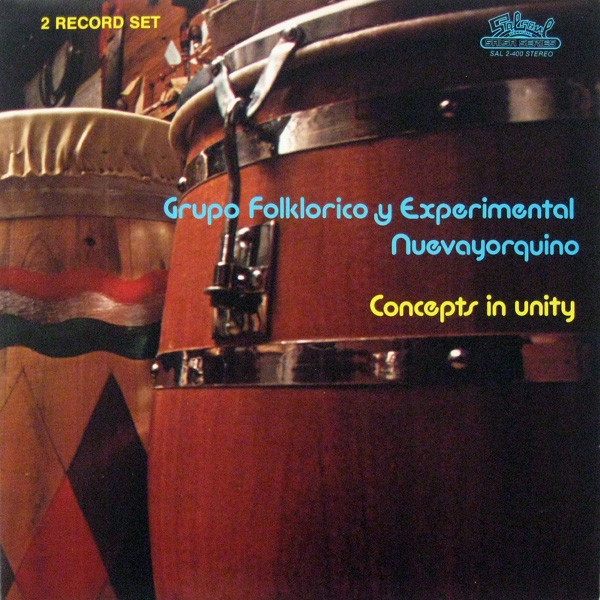
Virgilio Martí participated as aVirgilio Martí participated as a vocalist in the Grupo Folklórico Experimental Newyorkino in which he composed the song “Cuba Linda”

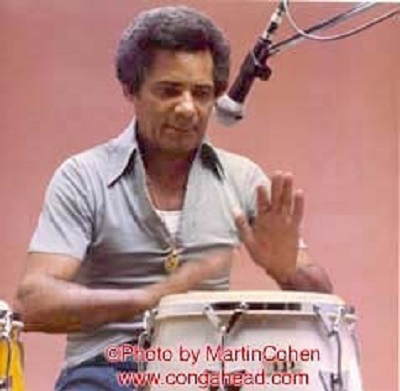
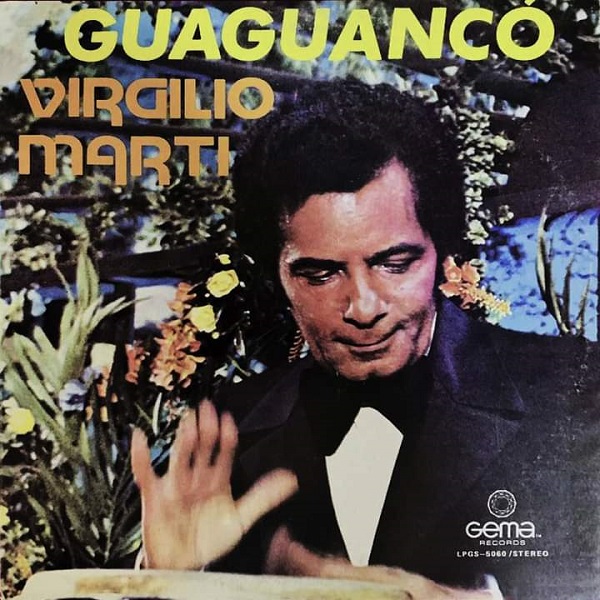
Virgilio Martí, born in the year 1919 Havana, Cuba, Rino Rumbero, Singer, Composer, Arranger, Percussionist, Actor and Orchestra Director, well known since the late 40’s, especially as a guaguancó singer.

He began touring the world in 1949 and met his later wife in 1960 in Peru.

Virgilio Martí participated as a vocalist in the Grupo Folklórico Experimental Newyorkino in which he composed the song "Cuba Linda".
Virgilio Martí participated as a vocalist in the Grupo Folklórico Experimental Newyorkino in which he composed the song “Cuba Linda”.

That same year, he settled in New York, participating in the local scene.

He participated in the LP “Patato y Totico” in 1967, he also participated with his brother Eloy Martí, in a Quintet accompanied by Gene Golden, for the year 1979.

Israel López (Cachao), Arsenio Rodríguez, Héctor Cadavieco, Francisco Valdés, Papaíto, Tony Mayari and Mario Cadavieco also worked on that album.

He participated in the “Grupo Folklórico Experimental Newyorkino”, where he was their vocalist and percussionist, in 1975. During his stay with them, he composed the song “Cuba Linda”.

"Grupo Folklórico Experimental Newyorkino, donde fue vocalista y percusionista del mismo, en 1975
“Grupo Folklórico Experimental Newyorkino, donde fue vocalista y percusionista del mismo, en 1975

Another work of Martí of great remembrance is the album entitled: “Saludando A Los Rumberos”, published by the Caimán label in the early 80’s and in which the Cuban acts as vocalist and main star. In it, Martí is involved with talents such as: Tony Cofresí, Andy and Jerry González, Yomo Toro, Paquito Pastor, Ray Romero, Claudio Roditti and Ignacio Berroa, among others.

Virgilio Martí, born 1919 Havana, Cuba.

“Iya Modapue”, constitutes in itself, a guaguancó with open rumba being at the same time the favorite number of the “Grupo Folklórico”, and even the first groove that was recorded.

The levels of experimentation and the freedom to unload several rhythms in a single musical performance are the factors producing the attraction of the musicians for “Iya Modupue” (which means Thank You Mother).

The vocal part is in the hands of Virgilio Martí. The trumpet of “Chocolate” Armenteros, the trombones of José Rodríguez and Reinaldo Jorge, the flute of Gonzalo Fernández and the percussion of Frankie Rodríguez stand out.

“Se Me Olvidó” – a bolero by Lolita de la Colina – but adapted in guaguancó to the style of the Grupo Folklórico, which, by the way, turned out to be the piece with the greatest radio airplay in the tropical environment and, therefore, the one that would open the doors to the group. The song was performed by Virgilio Martí, who also plays the congas. In “Se Me Olvidó”, the violin of Cuban Alfredo de la Fe, the quinto of Julito Collazo, the street redoblante of Jerry González and a Mexican marimba played by Andy González in counterpoint to the notes of the double bass, also played by Andy, stand out.


Here it is worth mentioning that Alfredo de la Fe is a virtuoso violinist and among his many performances, I remember his work with Eddie Palmieri, Larry Harlow (the wonderful Jew), the Fania All-Stars and the avant-garde Típica 73.

In the early 80’s he formed a band with brothers Andy and Jerry González, and percussionist Ignacio Berroa.

It is worth mentioning Virgilio Martí’s 1985 performance in the film by Cuban filmmaker León Ichaso entitled: “Crossover Dreams” (Sueños truncados). In it, the Havana native plays the role of “Cheo Babalú” and sings the song “Llora Timbero”.

In this film production made in New York City, the actor Rubén Blades, who plays the role of “Rudy Veloz”, also participates. There they sing the song “Todos Vuelven”.

In 1990, he contributed to the “Soundtrack” of the movie Azúcar Amarga.

He maintained a great skill in converting songs from other genres into rumba arrangements. We can mention the adaptation of the song by Brazilian composer Jorge Ben, “Más Que Nada”, which appears on the LP with Patato y Totico. Martí died on October 17, 1995. (Tom Data “Facebook”)

Virgilio Marti - Guaguanco (1979)
Virgilio Marti – Guaguanco (1979)

Virgilio Marti – Guaguanco (1979)

Tracks:

  1. Amanecer (Armando Manzanero)
  2. Todos vuelven (Rafael Otero)
  3. A tus pies (D.R.) (Agustin Lara)
  4. My childhood (Laureano Martinez)
  5. Saluting the rumberos (Manolo Albo)
  6. I’m going to divide it (R. Livi)
  7. Acanapon (D.R.)
  8. The little handkerchief (D.R.)
  9. Que susto (Virgilio Marti)
  10. Odiame (Rafael Otero)

Information realized (June 1, 2024)

Sources:

DiscoGS

Spotify Virgilio Marti

Virgilio Marti Youtube

Also Read: Justo Betancourt Querol Cuban sonero and singer famous for his interpretation of the song “Pa’ bravo yo”

Exclusive with tres player Iván Camblor from the group Pellejo Seco

Cuban musicians have always found the way to stand out in the entertainment world thanks to their talent and commitment and one of those examples is Ivan Camblor, tres player and vocalist with whom we have had the privilege to talk about his career and what was achieved with the group led by him right now, which is Pellejo Seco. 

During the conversation, the artist elaborated on a few topics we found relevant to discuss and we were pleased to hear some of the most important data of one of the most important Cuban son groups in the Bay Area today.   

Ivan playing the tres
Cuban musician Iván Camblor playing the Cuban tres live

Iván Camblor’s beginnings in music   

As is the case of many other artists of his kind, Ivan showed a very early interest in music, specifically since he was at school in his hometown, Havana, Cuba. He defines himself as a self-taught composer who began his musical learning on the street, while he attended classes like any child his age.   

From a very young age, many veteran musicians saw in him the enormous potential he had for music, so they began teaching him all they knew, leading him to the path of Cuban son and traditional Cuban music. Today, these genres is still his north after so many decades. 

The Felix Varela School of Music 

When he was old enough, Iván attended the Félix Varela School of Music, where he studied music appreciation theory, but unfortunately the island’s economic situation affected that part of his learning. Over time, the conditions of the institute started to worsen, making many teachers resign and leave students without chances to continue their studies, including Ivan, who could not see the classes he wanted because of the lack of staff. 

Being unable to study what he wanted, Ivan decided to continue learning on his own with the musical groups he had contact with and that is how it continued until today. 

His singing, composition and ability to play the Cuban tres came with the experience he acquired on the street and with friends who knew more about music than he did. He refers to guitarist and tres player Octavio Sánchez ”Cotán” and El Niño Rivera as his greatest teachers and influences.   

With the experience gained, he had the opportunity to go through all the Cuban music companies, since there were not many tres players at that time and tres teaching was very new.  

Ivan with Chucho Valdez
Pellejo Seco vocalist Sulkary Valverde, Cuban pianist Chucho Valdez, and Iván Camblor

Music composed by Iván for films 

Just as Iván was in several groups, he also had the opportunity to compose original music for films and such was the case of the film ”Hacerse El Sueco” directed by his great friend Edesio Alejandro, who contacted him to support him in the musical part of the production.   

It is then when he proposed him to write four or five original tracks to be used for the film, but Ivan did not mind getting credit, but helping his great friend with his project, so all the material is under his label Orula Music.    

However, he is grateful for the experience and the opportunity to help a good friend who needed his talent at that moment.   

Ivan’s coming to the United States   

Ivan remembers his coming to the United States as one of the most difficult things he had to do, since it is not easy to leave his roots and everything he knows to seek a different kind of future in other lands.   

At first, Ivan was not at all convinced of this decision, but his then partner and mother of his only son made him see that it was the best for them to leave Cuba and go to the United States to try their luck, to which the artist finally agreed.    

For many years, the tres player thought the worst of his host country because of the ideas the he grew up with in Cuba, but upon arrival, he found that the reality was very different from the propaganda he was bombarded with in his childhood and youth.   

Once he was there, he started working on the area of music that he liked most since he was in Cuba, composition. It was then that the idea of forming his own musical group started going round his head.    

Iván creó el Pellejo Seco
Iván Camblor conceived Pellejo Seco as a Cuban son and traditional Cuban music group

How the group Pellejo Seco was created   

Ivan conceived Pellejo Seco as a project in which he would pay homage to the Cuban community, so he tried to find the best musicians for the task. One of them was Cuban trumpeter Marcos Diaz, Puerto Rican Hector Lugo, trumpeter Mario Silva, Liban Montoya, Mexican singer Rogelio Maya and singer German Donatien. This is the original group with which the artist started his band, but others have already joined other orchestras or have started something on their own.   

That was more than 20 years ago and, today, Pellejo Seco has managed to consolidate itself as one of the main Cuban music groups in the Bay Area. Now, it is the most required traditional Cuban music sextet in the area. 

As for the name of the band, Ivan chose the name ”Pellejo Seco” as a tribute to the Cuban peasants whose skin is hard and dry as leather due to the sun and the working conditions that they are exposed to. 

Read also: Israel Tanenbaum from The Latinbaum Jazz Ensemble in ISM 

Marimba is the name given in Spanish to a very old musical instrument that, over time, has gained visibility and importance in many countries.

The marimba is a musical percussion instrument with a rich history that spans continents and cultures.

Although its exact origin is debated, it is believed that the marimba has its roots in Africa and was developed by different African cultures such as the Bantu and the Marimberos.

The term “marimba” comes from the Bantu “marimba” or “malimba”, meaning “single bar xylophone”.

In America, historical records indicate that diatonic xylophones, precursors of the modern marimba, were introduced in Central America between the XVI and XVII centuries.

The first known marimba in America dates from 1545 in the Santa Lucia hacienda, in the municipality of Jiquipilas, Chiapas, Mexico. In Guatemala, historian Domingo Juarros documented in 1680 the use of marimbas with gourd resonators by Mayan musicians.

Musical Duo of a Guitarist and a Marimba player in Guanacaste in Costa Rica dates back to 1888

Throughout the 17th to 19th centuries, the marimba spread throughout most of the Americas and became a typical element of Mayan and Ladino ensembles.

Today, the marimba is considered a patriotic symbol of Guatemala and Costa Rica, and its music, along with the traditional songs and dances of Colombia’s South Pacific region and Ecuador’s Esmeraldas province, was inscribed in 2010 on UNESCO’s Representative List of the Intangible Cultural Heritage of Humanity.

The modern marimba, like the one seen in the image provided, consists of a series of wooden slats of different sizes, arranged from largest to smallest, each with a different sound pitch.

They are struck with mallets to produce musical notes, and each key has its own soundboard.

The development of the modern chromatic marimba was established in Chiapas, Mexico, around 1890.

This instrument has been integrated into a variety of musical genres, from traditional Latin American music to academic concerts, jazz and martial bands.

The marimba remains a vital instrument that celebrates the cultural heritage and musical creativity of the regions where it is loved and played.

Image of a musical duet between a guitarist and a marimba player dated Guanacaste, 1888.

Learning about the materials and components of the marimba, being aware of the playing techniques and learning about the existing varieties helps to broaden cultural knowledge and to discover a wonderful universe of particular sounds.

Marimba Moderna
Marimba Moderna

It is enriching to know, among other things, that a series of woods of multiple sizes arranged from longest to shortest are essential to assemble the keyboard. For the soundboard, on the other hand, it is necessary to work on the tuning so that each wood of this structure is in tune with each key.

As for playing procedures, the four-stick technique and the art of glissando appear as alternatives to keep in mind. Of course, the most advisable thing to do is to attend a marimba workshop in order to master the techniques correctly.

Nor should we forget that, since ancient times, many types of marimbas have been made and used and have contributed their characteristic sounds to multiple musical genres and styles.

Thanks to those who dare to experiment with instruments and musical compositions without being conditioned by prejudices, for example, the folk marimba and the midi marimba can coexist in harmony, to cite two specific cases.

Marimba Antonko-AMC12

Saurce: Recuperando la historia en Guanacaste

Also Read: Son Cubano is one of the most popular musical styles in Cuba and Kiki Valera is one of its leading exponents

  • « Go to Previous Page
  • Page 1
  • Interim pages omitted …
  • Page 41
  • Page 42
  • Page 43
  • Page 44
  • Page 45
  • Interim pages omitted …
  • Page 116
  • Go to Next Page »

International Salsa Magazine (ISM) is a monthly publication about Salsa activities around the world, that has been publishing since 2007. It is a world network of volunteers coordinated by ISM Magazine. We are working to strengthen all the events by working together.