
• Skip to primary navigation
  • Skip to main content

International Salsa Magazine

  • HOME
  • Previous editions
    • 2026
      • ISM / April 2026
      • ISM / March 2026
      • ISM / February 2026
      • ISM / January 2026
    • 2025
      • ISM / December 2025
      • ISM / November 2025
      • ISM / October 2025
      • ISM / September 2025
      • ISM / August 2025
      • ISM / July 2025
      • ISM / June 2025
      • ISM / May2025
      • ISM / April 2025
      • ISM / March 2025
      • ISM / February 2025
      • ISM / January 2025
    • 2024
      • ISM / December 2024
      • ISM / November 2024
      • ISM / October 2024
      • ISM / September 2024
      • ISM / August 2024
      • ISM / July 2024
      • ISM / June 2024
      • ISM / May 2024
      • ISM / April 2024
      • ISM / March 2024
      • ISM / February 2024
      • ISM / January 2024
    • 2023
      • ISM / December 2023
      • ISM / November 2023
      • ISM / October 2023
      • ISM – September 2023
      • ISM – August 2023
      • ISM July 2023
      • ISM Edition June 2023
      • ISM – May 2023
      • ISM April 2023
      • ISM March 2023
      • ISM February 2023
      • ISM January 2023
    • 2022
      • ISM December 2022
      • ISM November 2022
      • ISM October 2022
      • ISM September 2022
      • ISM August 2022
      • ISM July 2022
      • ISM June 2022
      • ISM May 2022
      • ISM February 2022
      • ISM January 2022
    • 2021
      • ISM December 2021
      • ISM November 2021
      • ISM October – 2021
      • ISM September 2021
      • ISM August 2021
      • ISM July 2021
      • ISM May 2021
      • ISM April 2021
      • ISM June 2021
      • ISM March 2021
      • ISM February 2021
      • ISM January 2021
    • 2020
      • ISM December 2020
      • ISM November 2020
      • ISM October 2020
      • ISM September 2020
      • ISM August 2020
      • ISM July 2020
      • ISM June 2020
      • ISM May 2020
      • ISM April 2020
      • ISM March 2020
      • ISM February 2020
      • ISM January 2020
    • 2019
      • ISM December 2019
      • ISM November 2019
      • ISM October 2019
      • ISM Septembre 2019
      • ISM August 2019
      • ISM July 2019
      • ISM June 2019
    • 2016
      • ISM December 2016
  • Spanish
  • Download Salsa App
    • Android
    • Apple

Search Results for: Cuban

Europe / August 2024

Calibrated maracasMartinez attorney

fRANCE FLAG
FRANCE
DIRECTORY OF NIGHTCLUBS

Salsabor
Salsabor Paris
31 rue Chapon 75003
Paris, France
+33 1 42 71 61 61

Selsero
Salseroparis
9 Rue du Petit Pont, 75005
Paris, France
+33 6 50 16 74 76

La Peña
La Peña Saint Germain
3 passage de la Petite Boucherie 75006
Paris, France
+33 1 46 33 19 89

Cubana
Cubana Café
47 rue Vavin 75006
Paris, France
+33 1 40 46 80 81

Canela
Canela Club Latino Paris
77 Rue du Faubourg du temple 75010
Paris, France
+33 6 46 78 28 35

Balajo
Le Balajo
9 rue de Lappe 75011
Paris, France
+33 01 47 00 07 87

La Pachanga
La Pachanga Officiel
8, rue vandamme 75014
Paris, France
+33 1 40 47 63 69

Pachamama
Pachamama PARIS
46 rue du Faubourg Saint Antoine 75012
Paris, France
+33 1 55 78 10 00

Cuba Compagnie
Cuba Compagnie Café
48 BD Beaumarchais 75011
Paris, France
+33 1 48 06 07 11

O'Sullivans By The Mil
O’Sullivans Backstage By The Mill
92 Boulevard de Clichy 75018
Paris, France
+33 1 53 09 08 49

Germany circular Flag
GERMANY
DIRECTORY OF NIGHTCLUBS

Clärchens
Clärchens Ballhaus
Auguststraße 24
10117 Berlin, Germany
+49 30 555785440

Havanna
Havanna Berlin
Hauptstr. 30
10827 Berlin-Schöneberg, Germany
+49 30 78899655

SODA
Soda Club Berlin
Schönhauser Allee 36
10435 Berlin, Germany
+49 30 44056071

Zapatissimo
Zapatissimo Dance School
Kolonnenstrasse 29
10829 Berlin, Germany
+49 176 20470772

Brotfabrik
Brotfabrik Frankfurt
Bachmannstr. 2-4
60488 Frankfurt, Germany
+49 69 24790800

Latin Palace Changó
Latin Palace Changó
Münchener Strasse 57
60329 Frankfurt, Germany
+49 69 27220807

Cascadas
Cascadas
Ferdinandstr. 12
20095 Hamburg-Mitte, Germany
+49 69 27220807

Spain Flag
SPAIN
DIRECTORY OF NIGHTCLUBS

ACM City
ACM CitY
Carrer Can Pallarès 2, Cerdanyola del Vallès
08290 Barcelona, Spain
+34 675 30 26 64

Antilla
Antilla Barcelona
C/ d’Aragó, 141
08015 Barcelona, Spain
+34 610 90 05 58

Mojito
Mojito Club
Rosselló, 217
08008 Barcelona, Spain
+34 654 20 10 06

Morena
Morena Barcelona
calle 11 num.29
08860 Castelldefels, Spain
+34 691 46 57 72

Que Chimba
¡Qué Chimba!
Av. del Vallès, 117
08223 Terrassa, Barcelona, Spain

Seven Dance
Seven Dance (Dio Club)
Carrer del Perill 10
08012 Barcelona, Spain
+34 934 51 61 18

Azucar
Azúcar SalsaDisco
Calle de Atocha, 107
28012 Madrid, Spain
+34 639 64 29 06

El Son
Discoteca El Son
C. de la Victoria, 6
28012 Madrid, Spain
+34 671 05 67 91

Prisma Discoteca
Discoteca Prisma
C. de Alcalá, 192
28028 Madrid, Spain
+34 638 92 16 98

Sala Olvido Madrid
Sala Olvido
C/ Olvido 15
28026 Madrid, Spain
+34 619 22 29 19

The Host Madrid
The Host
C/ Ferraz nº 38
28008 Madrid, Spain
+34 918 05 36 48

Disco Bar Cuba Live
Cuba Live
Ramón y cajal número 2
07011 Palma de Mallorca, Spain
+34 618 86 78 20

Discoteca El Edén Boliviano
El Edén Boliviano
Carrer Gremi de Tintorers, 49A
07009 Palma, Illes Balears, Spain
+34 676 64 68 26

United Kingdom circular flag
UNITED KINGDOM
DIRECTORY OF NIGHTCLUBS

Rosies
Rosies Birmingham
259-262 Broad St
B1 2HF Birmingham, UK
+44 121 632 4936
Revolucion de Cuba
Revolucion de Cuba Leeds
64-68 Call Lane
LS1 6DT Leeds, UK
+44 113 350 6556


All Stars Salsa
All Stars Salsa Fridays
122 Oakleigh Road North
N20 9EZ London, UK
+44 7956 941172

Salsa Soho
Bar Salsa Soho
96 Charing Cross Rd
WC2H 0JG London, UK
+44 20 7379 3277
Salsa Temple
Bar Salsa Temple
Victoria Embankment, Temple
WC2R 2PH London, UK
+44 20 7395 3690


Juju's
JUJU’s Bar & Stage
Ely’s Yard 15 Hanbury Street
E1 6QR London, UK
+44 020 7770 6109
LightHouse
The LightHouse Bar & Club
62 Rivington Street
EC2A 3AY London, UK
+44 20 3325 9745


EUROPE 2024 FESTIVALS by Karina Bernales

Croatia circle flag
CROATIA
Latina Istriana

Salsa Latina Istriana Festival

Aug 23 / 26 2024

Dom Hrvatskih Branitelja
Leharova 1
Pula, Croatia 52100

€ 113.03

France circle flag
FRANCE
Avoriaz 2024 Avoriaz Danse Festival
Aug 24 / 30 2024
Avoriaz 1800
44 Promenade du Festival
Avoriaz, France 74110€ 100
Dealers De KIZ Festival

Dealers De KIZ Festival

Aug 01 / 05 2024

Hôtel C Suite
152 Rue Claude Nicolas Ledoux
Nimes, France 30900

€ 91.19

XL Bachata Festival

XL Bachata Festival

Aug 02 / 04 2024

Casino Grand Cercle Aix-les-Bains Hotel
200 Rue du Casino
Aix-Les-Bains, France,73100

€ 80

Germany circular Flag
GERMANY
Berlin Salsa Marathon

Berlin Salsa Marathon

Aug 09 / 12 2024

Gaststätte Tegeler- Seeterrassen
Wilkestraße 1
Berlin, Germany,13507

€ 129

Bailamos! Salsa Festival Chemnitz

Bailamos! Salsa Festival Chemnitz

Aug 16 / 18 2024

Subbotnik
Vettersstraße 34a
Chemnitz, Germany 09126

€ 42

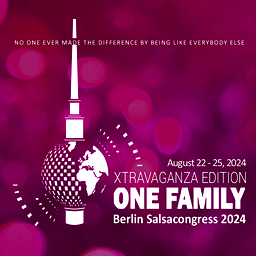
Berlin Salsa Congress 2024

Berlin Salsa Congress

Aug 22 / 25 2024

Groundplan Tempodrom
Mockernstrabe 10
Berlin, Germany 10963

€135.80

Italy circle flag
ITALY
Roma Sensual Symposium 2024 Roma Sensual Symposium

Aug 22 / 26 2024

Hotel Cristoforo Colombo
Via Cristoforo Colombo, 710
Rome, Italy 00144

€ 95

Netherlands circular flag
NETHERLANDS
I Love Kizomba Sensual Festival 2024

I Love Kizomba Sensual Festival

Aug 05 / 12 2024

Novotel Amsterdam Schiphol Airport
Taurusavenue 12
Hoofddorp, Netherlands 2132 LS

€ 105

Latin Village Festival 2024 Latin Village Festival
Aug 18 2024
Spaarnwoude Park
Genieweg 46
Velsen-Zuid, Netherlands 1981 LN

Poland flag
POLAND
Bachaturo Festival 2024

Bachaturo Festival

Aug 16 / 18 2024

Katowice International Conference Centre
Plac Sławika i Antalla 1
Katowice, Poland 40-163

€ 100

Portugal Circular Flag
PORTUGAL
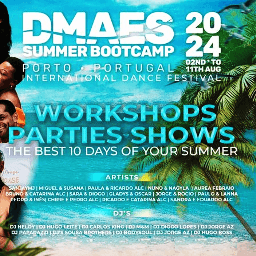
Dmaes Summer Bootcamp 2024

Dmaes Summer Bootcamp

Aug 02 / 12 2024

Muxima Bar
Rua Maurício Lourenço de Oliveira, No 206
Vila Nova de Gaia , Portugal 4405-034

€ 150

Romania Flag
ROMANIA
Gozadero Latin Fest 2024

Gozadero Latin Fest

Aug 13-19 2024

Club D’or
Strada Ion Creanga 15
Vama Veche, Romania 905500

€ 175

Slovenia circular flag
SLOVENIA
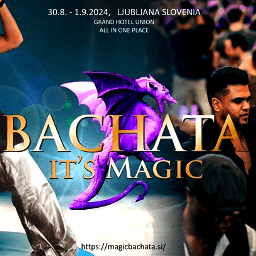
Bachata It’s Magic

Bachata It’s Magic

Aug 30 / Sep 01 2024

Grand Hotel Union Eurostars
Miklošičeva cesta 1
Ljubljana, Slovenia

€ 110

Spain Flag
SPAIN
LIONS Alicante 2024

LIONS Alicante

Aug 01 / 04 2024

University of Alicante
Carr. de San Vicente del Raspeig
Alicante, Spain 03690

€ 70

Bachatazo Beach 2024

Bachatazo Beach

Aug 29 / Sep 01 2024

Hotel Gandia Palace
C/ Rioja 41-43
Gandia, Spain,46730

€ 65

Switzerland circle flag
SWITZERLAND
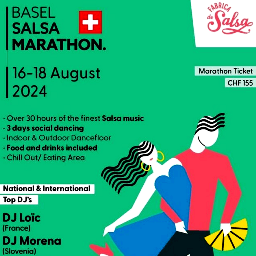
Basel Salsa Marathon 2024

Basel Salsa Marathon

Aug 16 / 18 2024

Basel Salsa Marathon
Dance Studio
Steinenvorstadt 33
Basel, Switzerland,4051

CHF 135

Turkey circle flag
TURKEY
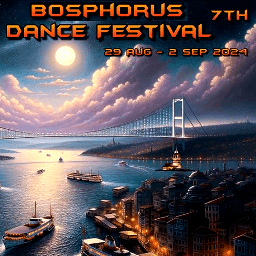
Bosphorus Dance Festival 2024

Bosphorus Dance Festival

Aug 29 / Sep 02 2024

Selectum City Hotel
Ataşehir Brandium, Dudullu Cd. Ataşehir Yaşam ve Alışveriş Merkezi
Istanbul, Turkey 34750

€ 70

Yes, I speak the ancient African Lucumi toungue: The second language of salsa

Many Latin Americans have left the name of their culture very high around the world, making people from other nationalities and even continents feel fascinated by these elements and end up adopting them as their own. Such is the case of Nigerian Oluwakemi Odusnya, better known as Kemi, who has been kind enough to share with us a little of her story, her knowledge of the Lucumi language and her relationship with Latin music.   

people practicing Yoruba
A group of people practicing the Yoruba religion

Kemi’s coming to the United States   

Kemi tells us that she was born in Nigeria, but moved to the United States when she turned 18 in search of a better future for herself. That was more than 10 years ago, so the young woman already had a good idea of how things are handled in her country of residence.   

Taking advantage that this is the land of opportunity, she studied computer science and graduated as a software engineer, the profession she is in now.   

Additionally, she discovered other passions and hobbies such as Latin music and dancing, especially tango, but we will talk about that a little later on.   

In his country of origin, he learned to speak English, which is the official language of Nigeria, and Lucumi, which we will talk about in the next section.   

Lucumi and its relationship with Latin music   

After talking a little bit about her personal life, Kemi went on to explain what the Lucumi language was and how it was perceived today. Contrary to what many online sources might say on the subject, the Nigerian explained that Lucumi and Yoruba were pretty much the same thing, but with a different name.   

The group of people who spoke Locumi are no longer called that way because many Nigerians have moved to other countries, so there are other terms to define them today.  

Kemi moved on by explaining that, in her country, there are about 300 languages in general, but the official one is English. This in order that the speakers of the other languages can communicate with each other without any problem. Among these native languages, we can mention the ”Pidgin English” which is the result of mixing English with elements from local languages.   

In the specific place Kemi grew up, villagers speak Yoruba, which was formerly known as Lucumi. The name change of the language and many terms used in it have been the direct reault of the immigration of many Nigerians to other countries, especially to the West.    

In Kemi’s particular case, she was pleasantly surprised to discover the lyrics of Celia Cruz and to find many of the words of her own Lucumi language.    

Yoruba dancing
Yoruba dancing and singing in Cuba

Lucumi and Latin music 

For Kemi, the relationship between Lucumi and a part of Latin music is more than evident. Something that particularly caught his attention was that several songs by Cuban artists constantly made reference to the Yoruba divinities: Oshun, Yemayá, Changó, Elegguá, Oggun, Oyá and Obbatalá.   

”For me it was very impressive to see the extent of our culture, since there are many Africans who have had to leave their lands in search of a better place to live, but they do not want to distance themselves emotionally from their country. On the contrary, they want to be as connected as best they can to their country and Latin music, specifically Cuban music, is an excellent tool to stay bonded to their roots” said Kemi on the subject.   

”Many just like me who have come to this country find in Latin music and dance a way to stay connected to our traditions. Sometimes, even we feel that we and Latinos have the same ancestors,” Kemi says with a laugh.   

How new generations perceive Yoruba culture and its elements   

Something Kemi pointed out is that the new Nigerian generations no longer perceive Yoruba culture in the same way. In fact, a large portion of the immigration from the African country no longer feels a real connection with the customs of their own country because they became ”westernized” in some way, especially the younger part.  

Another important detail highlighted by Kemi is that, in today’s Nigeria, Santeria and other religions like that have begun to be perceived as dark, so many people no longer feel comfortable practicing these cults. In fact, there has been a rise of Christianity and Islam in the country, so not a few locals ended up designing their own ritual by mixing these religions with Yoruba culture so that the latter is not seen as impure.   

Those who practice the Yoruba religion in Nigeria are aware that their worship is a mixture of Yoruba culture and Christianity, but they can not say it openly because it looks bad,” Kemi says about this.   

To close, Kemi also said that she is neither a Santera nor a practitioner of any religion. Her family is Muslim and she grew up adhering to Islam, but that changed when she moved to the United States. Today, she has a great deal of respect for these aspects of the Yoruba religion, but does not perform any of these practices.  

Kemi in our interview
Kemi during our interview via Zoom

Kemi’s love for tango 

Kemi has a great love for tango, to the point that she practices it two or three times a week for entertainment and physical activity. 

Initially, Kemi enjoyed dancing salsa because it reminded her so much of the music of her homeland and Yoruba culture, but after some health complications on her hips, she had to opt for something slower and calmer. That’s when she started to try tango and ended up liking it very much. 

After the pandemic, she found that there was a dance academy near he rhome, which motivated her to dance tango to the point where these lessons have become a very important part of her life. She also sees dancing as a way to connect with others and be on the same page.   

Read also: Patrón Latin Rhythms manager talks about the band and its plans 

Learn to dance to the rhythm of Son Rumbero

Latin America / Colombia / Bogota

The Son Rumbero academy dresses up with the grand opening of its offices in Bogotá in Colombia and Santiago in Chile.

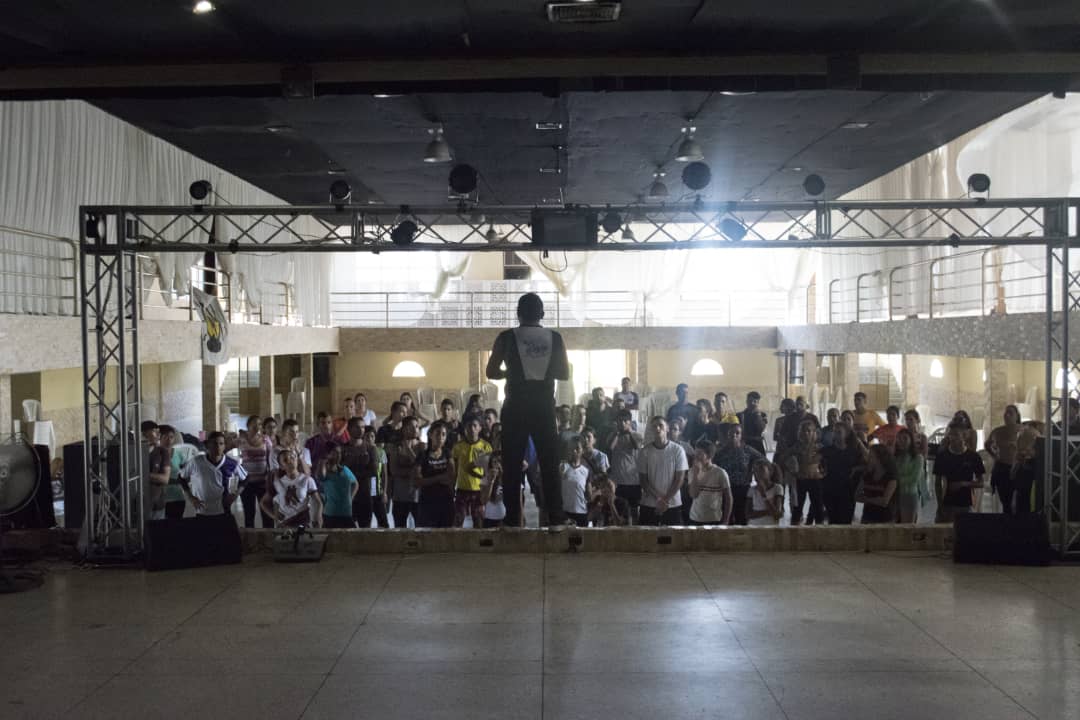
Photo of dancers by Son Rumberos

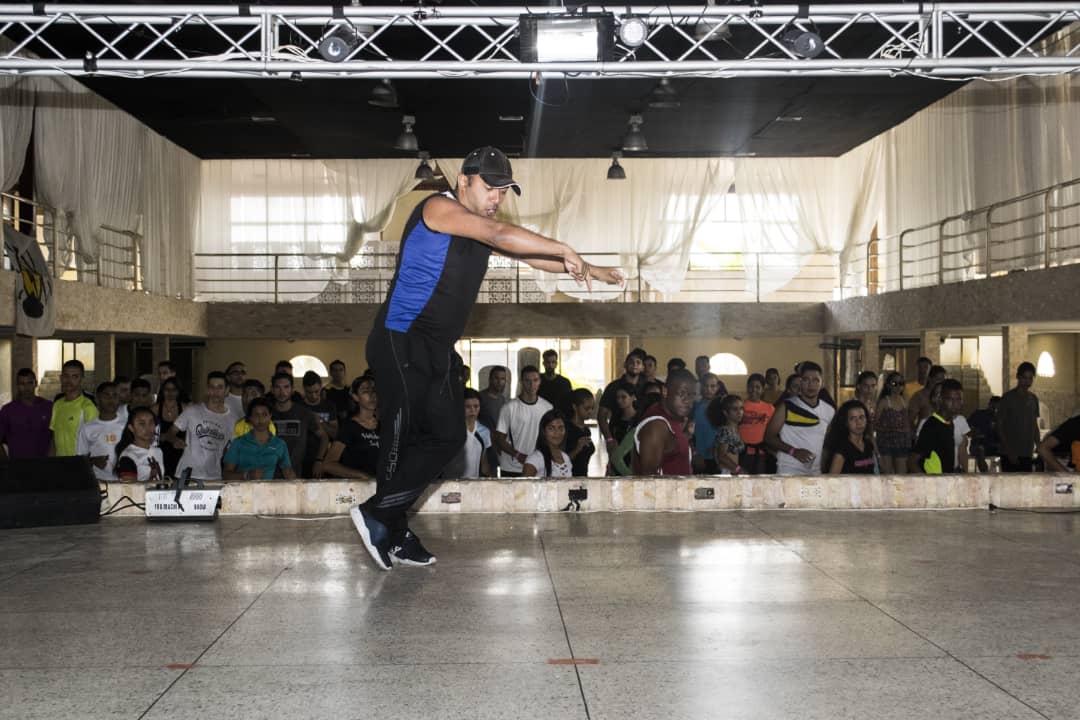
They offer dance classes based on 3 profiles, for the youngest and adolescents of the “Kids” house, the fitness line and Latin dances, join the dance trend, give your body health and distraction, it’s been 15 years of experience and consolidation, they have been one of the distinguished schools of Salsa in Venezuela, now, they dedicate hard work in giving improvements and innovations to the dance of the capitals of Colombia and Chile.

Son Rumbero social
Son Rumbero social

In Bogotá they will begin to offer salsa tourism, if as you hear it, you could have 5 days of tourism in Bogotá under an innovative and very formal proposal. This tourist proposal begins with more than 24 hours of formal classes in the disciplines of Afro-Cuban music, learn rumba, cha cha, son, salsa, mambo and many more, together with the tourist tour of the city, closing every night in local and spaces destined for enjoyment, dance all night without stopping with the dancers taxis assigned for this great experience. To learn more about this great proposal, be sure to visit www.sonrumbero.com in our SALSERO TOURISM section soon to be published.

Jose Perez teaching in Son Rumberos
Photo of Jose Perez teaching in Son Rumberos

Everything is in the hands of lovers of good music and dance, do not forget to give yourself the opportunity to do a different tourism, full of experiences that you hardly get in the world, study, dance and get to know the best tourist sites. Follow the social networks of the academy by @sonrumbero on Instagram, Facebook and twitter.

Son Rumbero Logo
Son Rumbero Logo

Toñito Laya

Latinoamerica / Venezuela / Caracas

On this occasion we have the privilege of meeting the new Venezuelan talent Toñito Laya (singer), son of Maestro Antonio “20 DEDOS” Laya, who was one of the most significant conga players in the Venezuelan salsa movement in the 1980s, director of the “ Banbankere Orchestra” of Petare with two musical productions; giving him more than enough reason to grow in Latin music, such as “el Son”, “la Rumba“, “la Guaracha”, “el Danzón”, “Boogaloo”, “la Timba” and “la Salsa” being This is the beginning of his artistic and musical career.

Starting in the 90s, he (Toñito Laya) entered the Bigott Foundation where he had the opportunity not only to learn the various rhythms in Afro-Venezuelan percussion, but also developed as a dancer in one of the most important groups in Venezuela when it comes to popular traditions. “Vasallos del Sol”, eventually becoming “Vasallos de Venezuela” in 2016, where he had 16 concerts, productions, albums and national and international tours; Colombia, Mexico, United States, South Korea and Japan, among others.

Toñito Laya flyer
Toñito Laya flyer

In 2006, a project called “Comprehensive School of Latin Tradition Dance 100% Tumbao” began, where many dancers were trained in the Cuban Salsa Casino genre, combining this training with Venezuelan traditions, making them understand that traditions come first. Venezuelans. Then they participated in the most important events and competitions in Venezuela, they even became Latin American Champions of “CUBAMEMUCHO 2009” in the city of Caracas-Venezuela, thus managing to represent the country in the grand final to be held in the city of Munich-Germany, 2010.

He also tells us that in 2009, they were invited to participate in a new project but this time not to dance, but to “sing” in a group that by then had no name but a particular genre such as “Son Cubano” . From that moment Toñito began his musical career to develop in a somewhat unexpected way, he was a founder and assumed the commitment of being in charge of this group as one of its leading singers for more than 7 years, where the themes arose: To me that, La Ruñidera, Bilongo, El Jamaiquino, I hear a drum, among others; They were part of his first musical repertoire.

With two record productions together with the already structured band “La Séptima Bohemia” he consolidated his musical career as a singer, going through a training process with different teachers and vocal coaches such as: Ronald González, Fanny Olano, Gustavo Gerardo and Marcial Istúriz, among others. others, who would help him develop in the middle of music.

National tours, award nominations and concerts allowed him to share the stage alongside large-scale national and international groups such as: Francisco Pacheco, Canelita Medina, Alexander Abre y su Habana de Primera, Manolito y su Trabuco, El Septeto Santiaguero, José Alberto “El Canario” to mention a few. Toñito records for the year 2012, the song “She takes me”, a song that in turn would be the title of the second album becoming an icon of parties, dances and social events not only in Venezuela but in many salsa and salsa dancing countries. casino in the world.

In the year 2016 Toñito Laya arrives in Aztec land to embark on a new path, he begins by residing in the city of Cancun-Mexico to sing in some local groups and participate in various projects such as: Los Panas.com, La Formula Perfecta, Grupo Swing Latin among others.

This new stage as an artist prompts him to consider a new musical challenge but this time as a solo singer with a well-defined and focused vision, his pleasant experience as a dancer motivates him to dedicate his first promotional single “ABRE QUE VOY”, this being the complement of an orchestra, for the musicians and their singers “EL BAILADOR”.

“ABRE QUE VOY” is the result of the work of talented and renowned Venezuelan musicians who give an important plus to this Musical production of “Maurice Melo”, this first single is created, performed by Toñito Laya, in the company of the Venezuelan talent of the following musicians:

  • Piano and arrangement: Joel Uriola.
  • Bass: Jesús Torres “Mandinga”
  • Percussion: Yomar Méndez “Caballo”
  • Trombone: Jhonal Rivero.
  • Trumpet: Edward Platter.
  • Baritone sax: Michel Peña.
  • Choirs: William “Wywy” Buznego, Carlos Guzmán and Ramfis Fajardo.
  • Recorded in the studio: A Tempo Records by Heyzer Cabrera.
  • Mixing and Mastering: Heyzer Cabrera. Caracas – Venezuela 2018

If you want to meet or contact Toñito, you can follow him through:

  • Correo: [email protected]
  • Facebook: https://www.facebook.com/tonito.laya
  • YouTube: https://www.youtube.com/channel/UCUkjU7SFnPc_W-XJDlMMzRg
  • Instagram: https://www.instagram.com/tonitolaya/
  • Twitter: https://twitter.com/negrolaya


Papo Lucca. The Giant of the South

Latin America / Puerto Rico

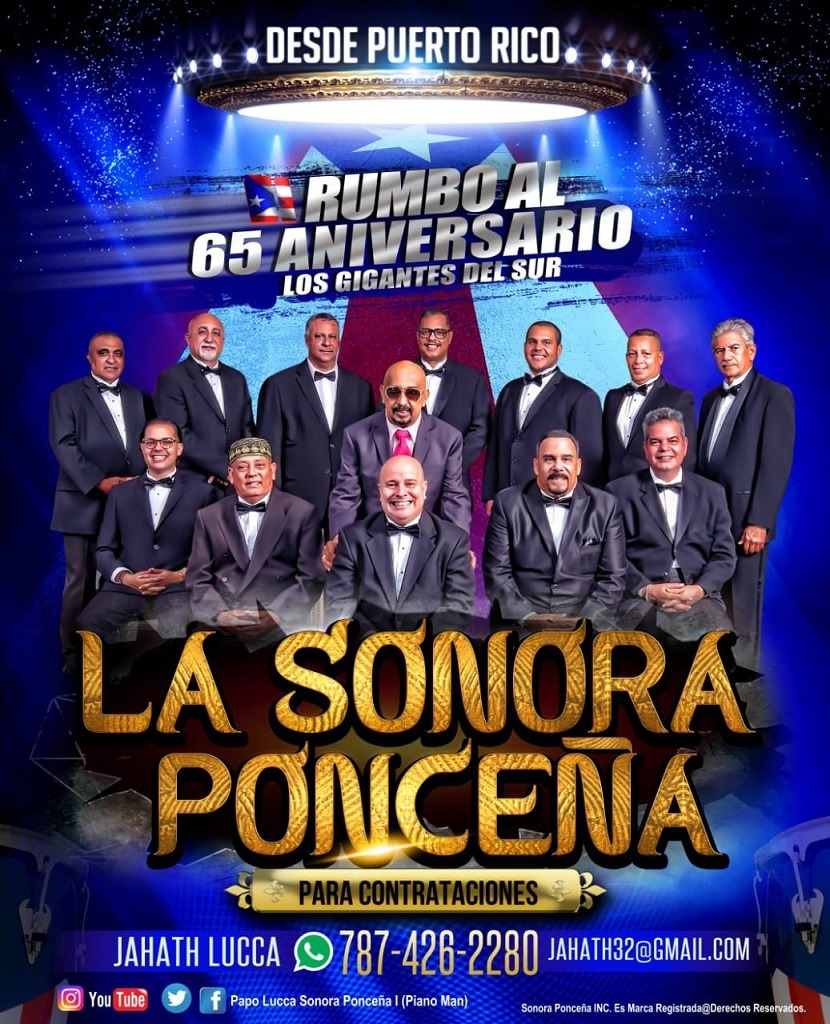
Papo Lucca born in Ponce, Puerto Rico on April 2, 1946, Enrique ‘Papo’ Lucca began playing the piano at age 11 with his father’s orchestra. Initially, La Ponceña played versions of tropical hits of the moment by bands like Cortijo y su Combo and La Sonora Matancera.

Papo Lucca. The Giant of the South

In the late 1960s, Papo became the orchestra’s musical director, beginning a profound transformation that would eventually establish la Ponceña as one of the most progressive groups in the history of Afro-Caribbean music. Papo’s orchestrations were bold, experimenting with elements of jazz, rock, and Brazilian music. Representing the authentic spirit of Puerto Rican salsa, his piano solos were velvety, displaying elegance, restraint, and infinite swing.

During the mid-’70s, La Ponceña began to enjoy unprecedented success with critics and the public. The band recorded for the Inca label, which eventually became part of the Fania empire. Papo was invited to arrange and play on sessions for the company’s biggest artists, including Johnny Pacheco, Celia Cruz and Cheo Feliciano. He also recorded and toured with the Fania All Stars.

This compilation pays tribute to the art of Papo Lucca through 14 classic songs recorded between 1967 and 1981. Although Lucca has recorded as a solo artist and also collaborated with a multitude of salsa stars, it is his work with La Ponceña that best expresses the clarity of his vision.

The music we make has to make people happy, as well as make them dance. That’s what it’s all about, says Lucca from her home in Puerto Rico. When the public can dance, no matter how complicated the music is. The first theme that this genre had was to divulge the things that happened in the different communities, as if it were a newspaper.

Our journey begins with two fiery songs from the beginnings of La Ponceña: “Hachero Pa’Un Palo” and “Fuego En El 23” are versions of songs by Cuban Arsenio Rodríguez. La Ponceña always had a soft spot for Puerto Rican folklore, but she also found inspiration in the golden age of Cuban music.

La Sonora Ponceña
La Sonora Ponceña

The precise moment in which La Ponceña becomes a mature orchestra in total control of its aesthetics can be found in the six songs from the Musical Conquest/Conquista Musical and El Gigante Del Sur albums. Launched on the market in 1976 and 1977 respectively, they represent the pinnacle of the salsa movement.

These songs combine a musical skill that approaches virtuosity with deep lyrics and a generous sense of humor. “Ñáñara Caí” is a hilarious narrative of pure magical realism, describing a world where everything is turned upside down (my favorite phrase: I saw a cow/Hit with Pacheco). Also included in Musical Conquest, “El Pío Pío” achieves the perfect cross between Afro-Cuban rhythm and contagious pop. This hit is a mandatory part of all La Ponceña concerts.

The opening theme of the El Gigante Del Sur album, “Boranda” seems to offer a salsa version of progressive rock. Its lyrics contain an important sociopolitical message, and the sophistication of its arrangement is a slap in the face for all those who believe that this music is only for dancing. “Soy Tan Feliz” combines bolero climates with an electric piano solo that recalls the psychedelic sound of jazz-rock from the ’70s. “Noche Como Boca ‘E Lobo” creates a tasty collision between salsa fever and Brazilian rhythms.

Lucca was not alone in his mission to reinvent the rules of Puerto Rican dance music. It was also benefited by the prowess of some of the best instrumentalists on the island. Furthermore, his instinct for choosing singers was always irreproachable.

Some of the vocalists of la Ponceña that appear here are Tito Gómez, who would later find fame with the Grupo Niche de Colombia; the inimitable Luigi Texidor, who gave a sense of placidity to all the songs he performed; and Yolanda Rivera, who added variety to the band’s sound with her unique timbre.

One of Rivera’s happiest moments is included here: Coming from 1980’s Unchained Force, Johnny Ortiz’s “Borinquen” is a soulful anthem to Puerto Rico, blessed with a sinuous melody and subtle instrumental arrangement–one of Rivera’s happiest moments. transcendental within the Ponceña canon.

The golden days of salsa are a distant memory in the new millennium, but Papo Lucca hasn’t stopped shining. Perhaps precisely because he continues to record new music, he refuses to idealize the past when I ask him what his favorite album with “La Ponceña.”

The last one, the most recent, he explained in his characteristically introverted tone. All the albums are very important in the career of the orchestra. They all fulfilled their mission at the time, which was to reaffirm the previous one. That’s the way to maintain a pool after 50 years.

Papo Lucca
Papo Lucca

The teacher was a little more direct when I asked him about his favorite concert of all time.

It was my first concert with the Fania All Stars at Madison Square Garden, back in 1974, he said. All the stars of the Fania were still alive. A few years later we played in front of 47,000 people in Cali. My knees always shake before I go on stage, but this time they shook a little more.

  • « Go to Previous Page
  • Page 1
  • Interim pages omitted …
  • Page 40
  • Page 41
  • Page 42
  • Page 43
  • Page 44
  • Interim pages omitted …
  • Page 116
  • Go to Next Page »

International Salsa Magazine (ISM) is a monthly publication about Salsa activities around the world, that has been publishing since 2007. It is a world network of volunteers coordinated by ISM Magazine. We are working to strengthen all the events by working together.