
Thousands of Venezuelan artists have left the name of the South American nation high in recent years and today we will talk about one of the best harpists of his generation. It is great Angel Tolosa, with whom we had the joy of having a very pleasant exchange in which we touched on certain issues related to his fruitful musical career.
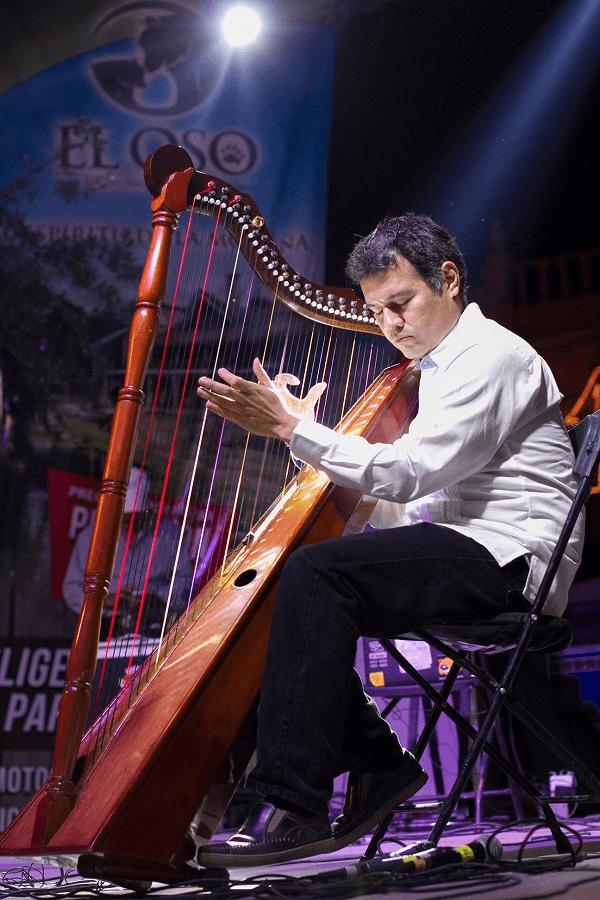
Something very important we have to mention about Angel is that he was born in the city of Caracas, Venezuela, so he managed to have a lot of contact with musical genres that were not only Venezuelan, but also from all over the world such as jazz, bossa nova, Cuban son and many others. This gave him a better understanding of music in general and a wider range of genres to choose from.
There are many genres he likes, but without a doubt, Venezuelan music captivated him from the first time he heard it and, as he studied and analyzed it, he became much more aware of everything it had to offer at an artistic level. Ángel claims that ”no one can love what they don’t know”, so he has always been careful to learn as much as he could about Venezuelan music, so his is a knowledge-based love.
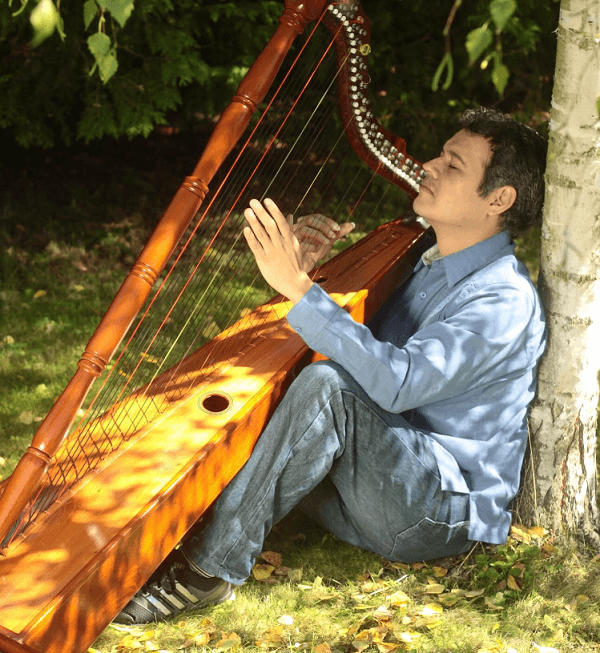
One advantage that Angel had is that he grew up in a profoundly musical environment, since music was always very important in his home. This led him to get started in folk singing when he was only four years old, which in turn, interested him in the piano and the Venezuelan cuatro. However, what definitely most caught his attention at so early an age until today was the harp, which according to Angel, was part of the life plan that God has for him.
The musician even laughing says he believes that ”instruments are like their owners” since the harp interested him for being peculiar, versatile, elegant and demanding in terms of discipline to be played. These are characteristics that the artist perceives in himself when playing any piece, so he affirms that this is the instrument that most closely resembles his personality and style.
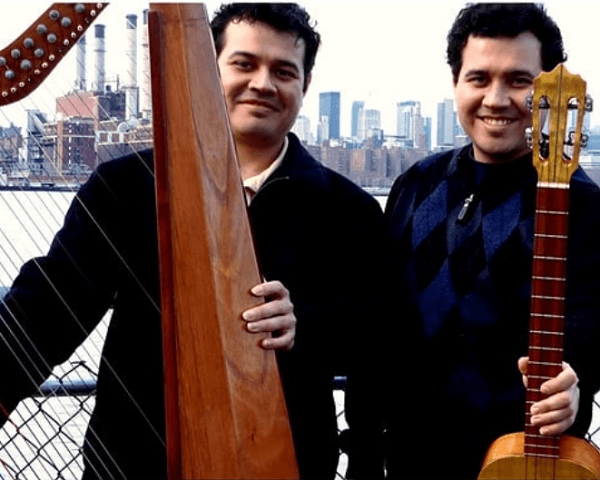
When Ángel and his brother José Luis noticed the talent they both had for music and the fabulous combination of what they made in this field, they decided they had to create something together and took the risk of creating Ensamble A Contratiempo, with which they sought to establish a platform on which they could share their musical interests with total freedom and without any restrictions. Angel defines it in short as ”a band with a universal sound, but with well-defined Venezuelan roots”.
Ensamble A Contratiempo’s specialty is the so-called Afro-Venezuelan jazz and blends genres such as jazz, universal music, electronic elements and Afro-Venezuelan roots, resulting in a fresh and original urban sound that leaves no one who might listen to it indifferent.
Something that characterizes this group is that it uses conventional instruments to play in unconventional ways. Ensamble A Contratiempo usually plays the harp, the cuatro, the violin, the bass and Afro-Venezuelan percussion.
Both Ángel and his brother José Luis have enormous prestige and are seen as two of the most prolific art entrepreneurs of their generation and pioneers in the genres in which they perform, so this musical initiative was very well received in all sectors in which it has been heard.
Together, the Tolosa brothers have even been able to design an essential vocabulary for learning to play the Latin harp and even contributed to the redesign of the Venezuelan harp as it was known before them.
Within their extensive discography, we can mention some important titles such as ”Venezuelan Sounds”, ”Katuketi” and ”Ancien Roots”.
As if this were not enough, Angel has also worked as a teacher and an important member of the Agrupación Oficial de Cultura de la Zona Educativa del Estado Táchira.
In this regard, Angel explained that he worked for the Venezuelan Education Ministry for more than four years, an experience that helped him to design the educational services he currently offers in his cultural company, which also creates projects for various cultural institutions, universities and art centers around the world.
On the subject of music education, the artist also emphasized that ”this is essential for the cognitive development of each person, the benefits that music has on those who not only have contact with it, but also play it have been demonstrated. Music is so demanding that it drives to have a structured life ruled by profound ethical principles and spirituality”.
Angel has said that his Bachelor of Arts has been extremely important for his career as a musician, since from his point of view, ”music is a profession in which all disciplines of the world converge”. Everything he learned during his degree has allowed him to build diverse musical and business concepts under a much more orderly system. This career has offered him the necessary structure for the projects he has started with music, which he appreciates.
In addition to this, Angel has also studied ethnomusicology, which can be defined as an academic area that involves various approaches to the study of music, but with special emphasis on social, cultural, identity aspects and more of this kind. This way of studying and perceiving music combines details that come from folklore, psychology, cultural anthropology and musicology at their most conventional.
On the above, the harpist pointed out that ”Venezuela has a very deep sense of identity” and that the identity of a country is like the face and fingerprint that allows us its distinguishing features and what makes its inhabitants part of a whole. Of course, the typical music of the place is an essential part of what we have said.
Since Angel is a lover of everything about Venezuela, he takes as a starting point his own profession to understand his own country in a much broader and rational sense, which he thinks Venezuelan society should do as a whole. It is necessary to know the concept of nation and of what we are and I don’t see any other road but culture” said the artist on the subject.
It is clear that for the entrepreneur, studying music and its genres from its purest roots is a way to pay homage to the culture which we come from, an example that we should all replicate, even those who are not dedicated to music.
Read also: Founder of Yambu Productions and host of ”Alma Del Barrio” Guido Herrera-Yance





| DIRECTORY OF NIGHTCLUBS | ||
|
|
|
|
|
|
|
|
|
|
|
|
|
|
|
|
|
|
|
|
|
|
|
|
Each year, the Hollywood Salsa Fest focuses on the importance of salsa music, recognizing that Afro-Latin music fuses us into a culture that draws from diverse roots. This year’s festival – sponsored by the city in a public-private partnership with various businesses – was held at the Artspark at Young Circle.
As masters of ceremony, the festival featured the winning team of “Meca” from Salseo Radio and “El Cacique” from Zeta 93 FM, Puerto Rico’s leading salsa radio station. On the decks was DJ “Boricua loco” with a tremendous selection of salsa, in addition to coordinating from his musical corner the dance exhibitions by the salsa dancers of YC Dance Studios.
The first orchestra in charge of starting the concert, Latin All Stars, counted with the vocal and scenic mastery of Marlon Mendioroz, Yorman Clay, Adrián Marchant, Yomil Rivas and Frank Cróquer, backed by a musical team that did not fall short of the expectations of those who waited patiently for the stage to light up with good salsa. Latin All Stars was followed by “Juano, tu cantante” from Cali, Colombia. The team of musicians of the orchestra with the second shift shined accompanying who for 16 years was part of Orquesta Guayacán.
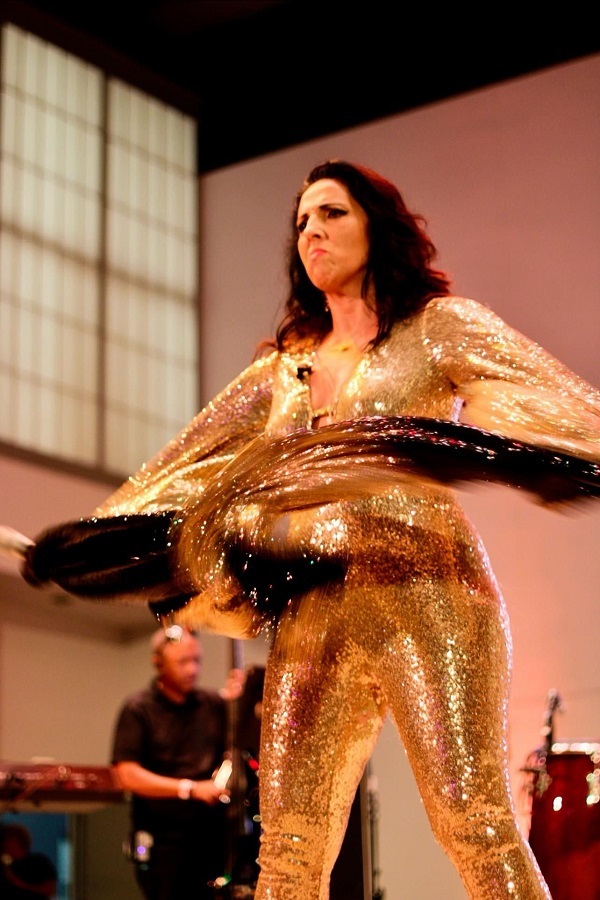
At around 6:00 p.m., it was the turn of the Cuban sound known as timba, with the Julio Montalvo Orchestra and Miami’s Huracán. Once the hurricane winds that accompanied Julio Montalvo ceased, tribute was paid to the late Venezuelan percussionist Robert Vilera thanks to the staging of Vilera Son. The tribute to Vilera’s legacy featured the talents of Los Gaitanes from Panama, Avelino Romero from Venezuela, El Mola and Braidsman from Cuba, as well as Robert Vilera’s first singer, Felix Argenis.
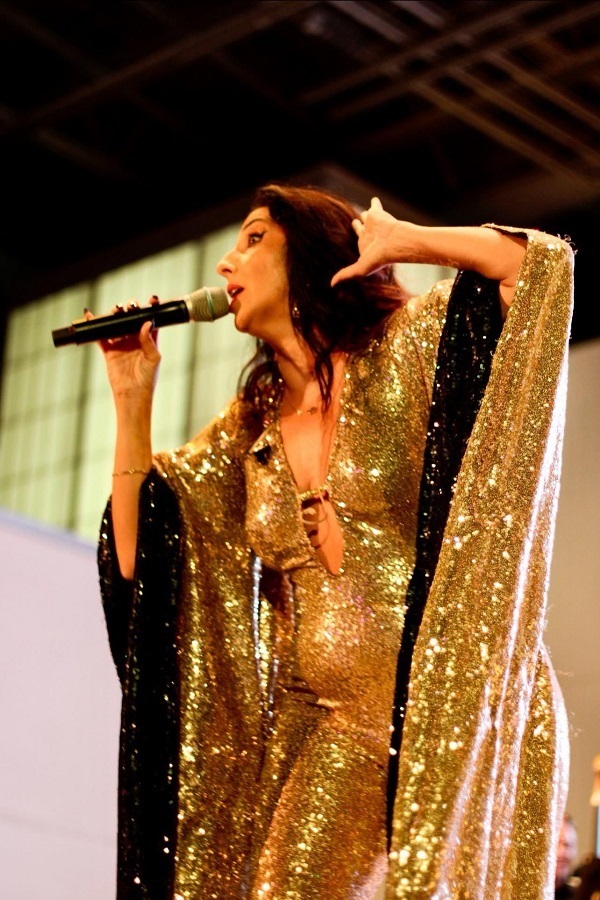
“La muñeca de la salsa”, Melina Almodovar, was backed by Luigi Flores from Costa Rica on piano and musical direction, Johnny Fortunato from Dominican Republic on bass, Pablo Molina from Venezuela on timbales, Juan Pablo Camacho from Venezuela on tumbadoras, Carlos Molina from Venezuela on bongo, Carlos Perez from Cuba on first trombone, Ramon Benitez from Colombia on second trombone, Carlos Frank from Cuba on first trumpet and Julian Cifuentes from Colombia on second trumpet.
On backing vocals, Melina was backed by: Joe Arroyo from Puerto Rico and Freddy Lugo from Cuba. Melina gave us a first class show. As part of Melina’s performance, “El Calvito Reyes” joined her for the first time to perform the recently released single ‘Dos pa`lante’ as a live duet.
During the afternoon, the festival took place under a beautiful blue sky that kept the crowd’s enthusiasm positive. During the night, the clear Floridian skies kept the attendees dancing at full steam. Of course, to that end, the aforementioned talents kept the stage in salsa.
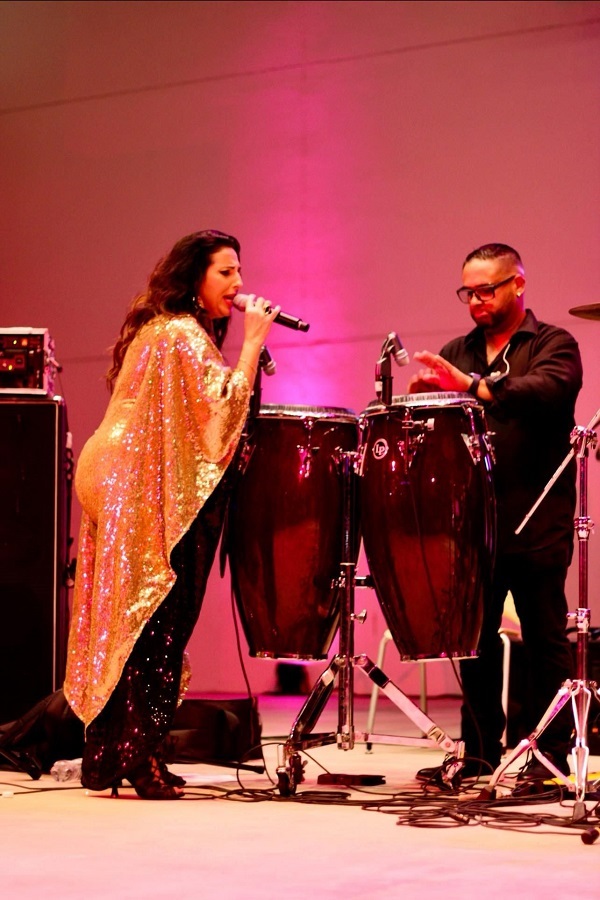
Christian delighted us with his repertoire shortly before inviting us to listen to his recently released CD entitled El legado continúa. To bid farewell to the musical day, which lasted nearly ten hours, the grand finale invited the group of singers who had paraded on stage during the day and part of the night to come in and jam with the “papa de los pollitos” (father of the chicks).
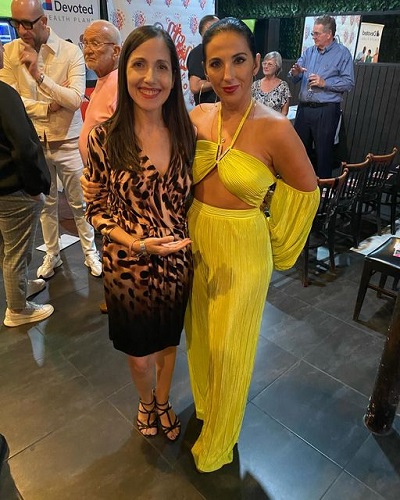

Also Read: A party of dancers at the concert to celebrate Willie Rosario’s 100th birthday
Remembered man of the Cuban rumba to which he imprinted his own styles.
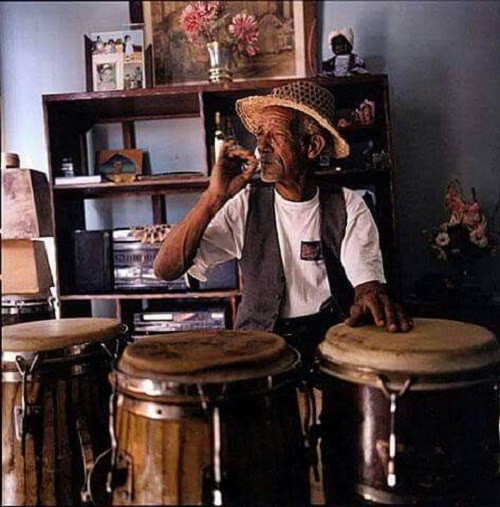
He accompanied for a long time with his percussion the Las D’Aida Quartet and the Canadian artist Jane Bunnett.
Considered as one of the great rumberos of Cuba by introducing new styles in the Cuban rumba whose artistic baptism was given in the famous comparsa of Los Dandys.
He performed in several groups such as Los Componentes de Batea, Los Guaracheros de Regla and other groups whose banner was the tambor bata, he had a brief stint with the Sonora Matancera and played in the orchestra that accompanied the Cuarteto Las D’Aida at the Tropicana Club.
Later he founded the Guaguancó Marítimo Portuario, a group that became the popular Yoruba group Andaba, which performed with the Canadian artist Jane Bunnett, with whom Pancho Quinto collaborated in other productions, and in the twilight of his career he had three productions as a soloist. This rumbero percussionist lived 71 years.
He was preceded by the sonorous echo of Pablo Roche’s bata lucumí juramentados. Such was the heritage that little Pancho gathered when he arrived in this world in the arms of his great-grandmother Camila, with no other identity than his African blood and his diagonal marks on his face, as was the ancestral custom of his family Ilé in the Gold Coast.
That night the conch shells spoke, and from that moment the child was consecrated to the deity of Shangó, god of music and drums.
He received on his right wrist a leather strap with fine bells, which, according to custom, would protect him and his drums from the bad influences of destiny.
Perhaps that is the reason why Pancho Kinto, when he played, knew that his music reached his ancestors in Oyó, beyond time, light and the Atlantic.
This man, a port man for most of his life, inherited the natural wisdom of those princes who came as slaves to Cuba.
Both built and endowed with religious foundations the first set of bata drum that was born in the island, and from that remote time the sacred song of the orchestra consecrated to the lucumí altar was heard.
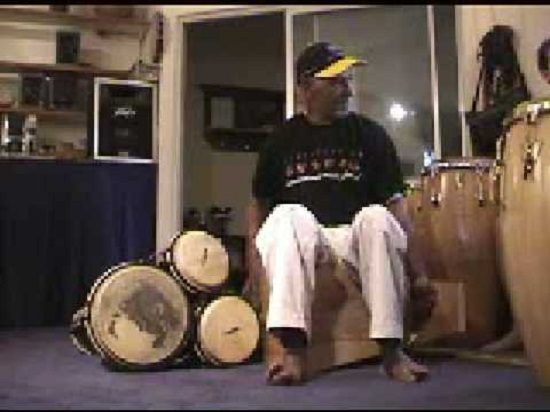
It could be said that they were the survivors of the total of slaves that arrived to America, there is an estimate of fifteen million according to data that I heard the Cuban investigator Leovigildo Lopez say when the first Yoruba congress, celebrated in the Palace of the Conventions in Havana.
But to that fantasy that leads men to the inspiration of that mysterious and mythical love towards life, to that renewed and novel way of singing, dancing, playing, turning the palpable into spiritual and the intangible into vital, men like Francisco Hernández Mora pay tribute, exponent of those traditions that merged in our continent and whose result is none other than the embrace between blacks and whites, although there are groups or castes that do not assimilate it as it is.
I learned a lot with Pablo,” said Pancho in this interview in 1994, when he was just beginning to play with flutist Janet Brunet, with whom he toured internationally, recorded and filmed in Canada.
Pablo was called Akilakua, powerful arm, he was a big black man, he goes on talking, with all gold teeth, ugly as his mother’s pussy, but with something special in his personality.
Of the historical drums he commented that they passed from the hands of the olú batá Andrés Roche to those of his son, later considered one of the greatest bataleros of these times.
Pablo’s father was called the Sublime, because of the way he played the original African bata, he did whatever he wanted with those hands. he added.
Paradoxically, the life of both has always been an unknown for those who try to unravel it or look for a chronological order, as it has almost always happened with many rumberos and composers, I am thinking now of Tío Tom or Chavalonga, but that is not the subject now, What I want to say is that these musicians have been teachers and inspiration for a pleiad of Cuban artists and of other nationalities that with luck have heard of the touches of those drums that officiated in the sacred ceremonies of the orisha pantheons.
From those drums, he commented, were born all the drum sets of secret foundation, because from one is born another, like children.
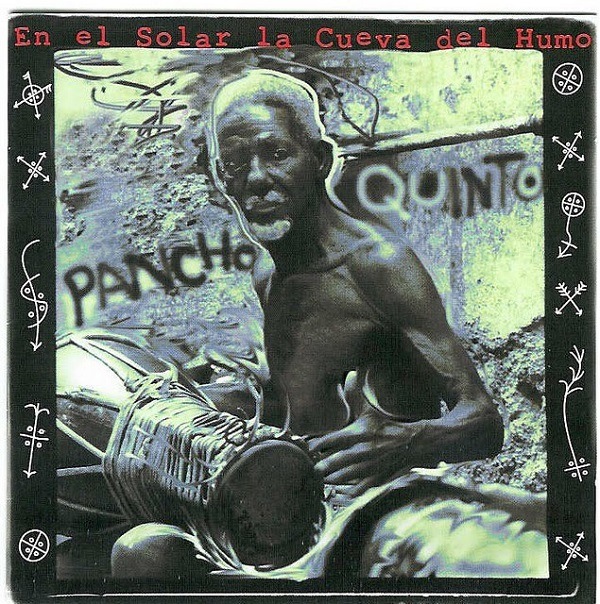
Pancho kinto played with those sworn drums when in the town council of Regla they took out the procession of the virgin, although it was Jesus Perez, another of Roche’s students, to whom it corresponded to offer the first public concert with a robe orchestra, a sacrilege for many at that time, and much more if it was an act in the Aula Magna of the University of Havana.
However, five decades after the writer and ethnologist Fernando Ortiz sponsored that concert, Pancho Kinto played the bata in the same university campus to pay homage to the memory of his ancestors with his sonority.
Pancho was a Cuban musician who learned to play quintiar from a very young age and along with this he made his drums and cajones in his own way, his own inventions, as he said, playing the tumbador with a spoon in his left hand, he was just a party of bata and cajon, I saw him do that many times in the fabulous rumbas that were celebrated in a lot in Campanario, where the group Yoruba Andabo used to meet in its beginnings.
There he became known for being a member of the Cayo Hueso group, but Pancho had been playing with them since they were Guaguancó Marítimo Portuario in the port of Havana.
Originally they were Geovani del Pino, Chang, el Chori, Palito, Fariñas, Callava, Marino, Pancho and others, many are gone forever like Pancho, whose unexpected death surprised everyone on February 11, 2005.